


Global Healthcare Private Equity Report


|
At a Glance
This article is part of Bain's 2023 Global Healthcare Private Equity and M&A Report. The life sciences deal market—that is, marketed biopharma products and the ecosystem of companies supporting their research, development, and commercialization—has been an attractive place for private equity (PE) to put capital to work. These markets—which include life sciences tools (LSTs), diagnostics (Dx), lab services, outsourced biopharma services, and pharma software/IT—are historically recession resistant and have all been driven by strong end-market growth tailwinds. These sectors have also seen strong returns within healthcare, which itself is an attractive industry vertical. Given all of these dynamics, the volume of PE dealmaking has increased significantly in this area, and it has become a must-win sector for funds. Deal volume in the past five years in biopharma and life sciences tools has increased 115% compared with the previous five-year period (see Figure 1). Payer, provider, and medtech deal activity increased only 55% across those same two time periods. We count 650 unique buyout deals globally for life sciences assets completed since 2018 (excluding preclinical and clinical stage therapeutic investments given their risk/return profile).
Figure 1


The internal rate of return (IRR) for life sciences deals over the past 10 years has been around 25%, with the top quartile achieving more than 50% IRR across biopharma products and services and life sciences tools and services. The variance in returns in life sciences sectors is also wider than other healthcare investment areas, highlighting the effects of technology and regulatory risk embedded in these investments and the value of specialization in mitigating those risks. These deals tend to be earlier in the life cycle of an asset, and therefore bear a spikier risk/return profile. Placing the right bets: Subsectors within biopharma and life sciences tools matterA sector-by-sector analysis of the deals done in the US and Europe reveals that eight subsectors represent the vast majority (85%–90%) of the deals done within private equity (see Figure 2). Given that each sector has very different business models, sets of assets, and winning investment theses, it is our strong belief that funds need to develop a custom view on which assets they are going to “hunt” for. Out of the roughly 410 unique life sciences deals completed for US/EU assets between 2017 and mid-2022, 75%–80% were pharma-related; the remaining 20%–25% were in life sciences tools or diagnostics. Within biopharma deals, there were five major sectors of activity that each represented at least 25 deals—contract research organizations (CROs); contract development and manufacturing company (CDMOs)/contract packing organizations/distribution businesses; commercial pharma products; commercialization services; and pharma IT. Within life sciences tools, two major sectors of activity represented at least 25 deals—reagents/instruments/tools and diagnostics. Clinical lab services represented a smaller number of deals completed but were mostly all in the EU.
Figure 2
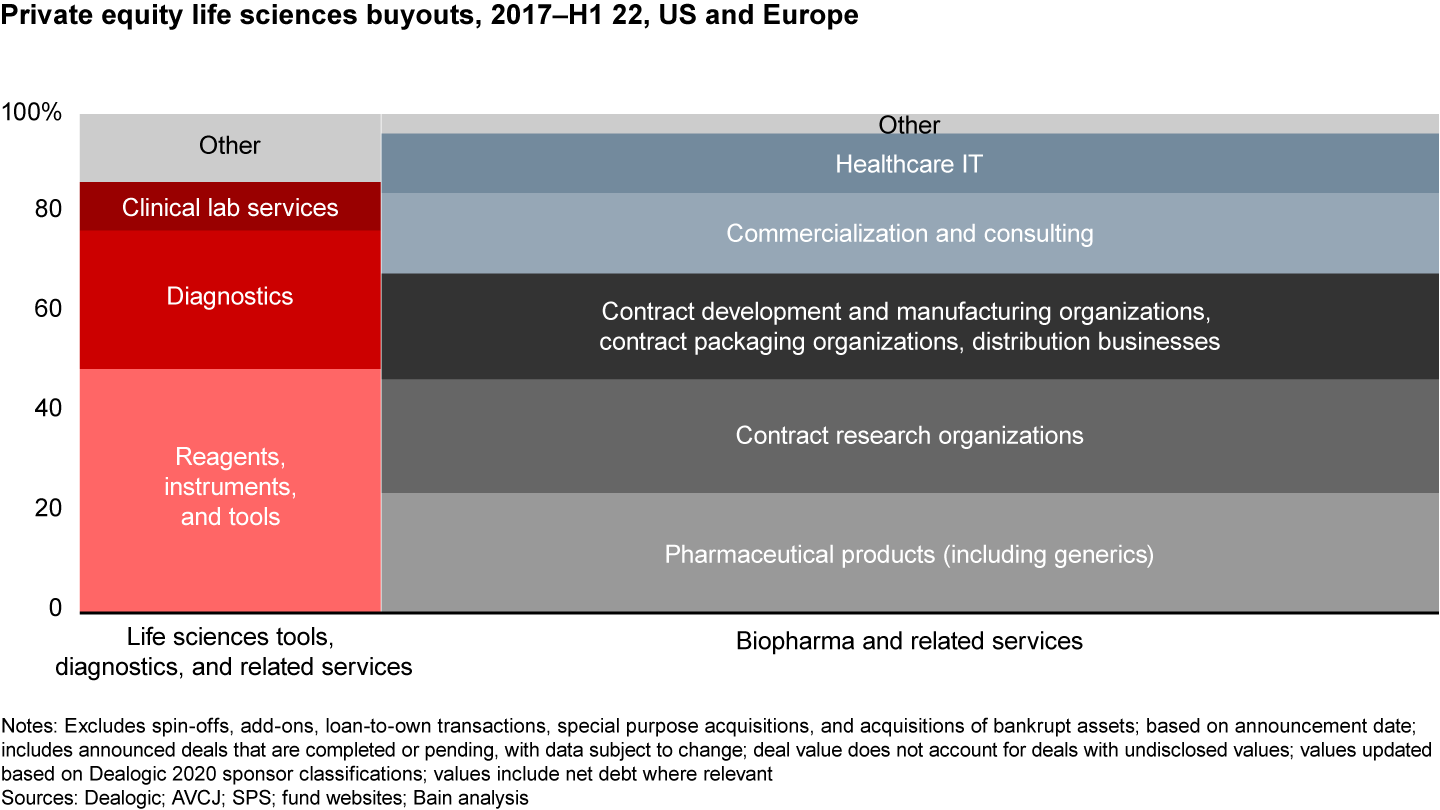

Life sciences landscape: Despite upside, biopharma and life sciences tools remain fragmented, challenging spaces to playPrivate equity buyout participation in biopharma and the life sciences tools subsector is widespread, with around 200 funds participating in around 410 unique deals. However, there is a concentration of high-velocity PE dealmakers who are responsible for most of the activity. A large fraction of dealmakers are the midmarket life sciences specialists, although some large-cap funds have been high-velocity dealmakers as well. There were roughly 460 PE transactions for US- and European-based biopharma and life sciences tools assets between 2017 and the end of the first half of 2022. Roughly 410 were “unique” deals, and roughly 50 deals were multifund. In total, around 200 private equity firms participated in at least one life sciences deal, and around 170 of those made one to two investments during that time. The number of unique funds participating in a life sciences deal increased from about 45 in 2017 to around 80 in 2021, reflecting not only the presence of more “hunters,” but also the increased productivity/activity of funds focusing on life sciences as a sector. Some 45 to 50 private equity firms were responsible for 290 deals (65%) of those closed (at least three-plus closed deals). Midmarket PE funds with a life sciences focus represent 40%–50% of the top 50 dealmakers (which include Arsenal Capital Partners, Ampersand Capital Partners, GHO, ArchiMed). Some large-cap PE funds each closed four-plus life sciences deals—Carlyle, EQT, Astorg, GTCR, Nordic Capital, Advent, Blackstone, and KKR. As the level of interest in biopharma and life sciences tools investments has increased, we have also observed changes in the deal processes—exacerbated by the boom in post-Covid dealmaking—and changes in the underlying nature of the businesses being acquired that have created additional complications for potential investors: Auction processes: Sellers used auction processes with larger pools of bidders, shortened bid periods, and limited access to management data to drive more aggressive valuations and outcomes. Competition with strategics: Rapid maturation and inflection points in demand related to areas such as cell and gene therapy created intense interest from strategic buyers for smaller assets that historically have traded sponsor to sponsor, driving multiples higher and creating a scarcity of available assets:
Diligence complexity: Differentiation in subsectors is increasingly driven by the quality of science and depth of expertise in a specific disease or technology, and thus more challenging for many investors to evaluate. Together, these challenges have raised the bar for private equity firms to execute successful investments within the biopharma and life sciences tools landscape. Funds that have closed five or more deals in biopharma and life sciences tools often have focused teams, great relationships with venture capital and small-cap-focused feeder funds, and a willingness to participate in more deals at smaller ticket sizes with a higher risk profile. Lessons learned from dealmakers: Sponsors can mitigate the challenges within biopharma and life sciencesAnalysis of life sciences deal activity reveals the ways in which dealmakers have been thoughtful about where to play and how to win. They have deployed a set of strategies to overcome some of the main challenges we see in life sciences deal participation for private equity: Networking: Build and utilize a wide network of outside advisers with scientific and commercial acumen to proactively vet scientific trends, identify subsectors of focus and gem assets within those areas, and prioritize deal strategies and value creation opportunities early in the investment process. Talent strategy: Deal teams with scientific backgrounds (PhDs, MDs) focused on the life sciences sector—and sometimes subsectors within life sciences—can overcome scientific, technical, and regulatory expertise hurdles needed to build conviction on a theme and target early in a process (or preprocess) and effectively prewire and manage challenging dynamics with generalist investment committees to ensure competitive positioning in processes. Portfolio effects: Dealmakers often double down and make multiple investments within a sector and across subsectors to leverage shared, collective expertise and employ pattern recognition to create value across their platforms:
Risk profile: While the risk profile of preclinical/clinical stage assets is addressable only for a subset of PE funds, some large-cap funds have been building out capabilities to support investment in this area. Flexibility: Given vendor fragmentation, scale asset scarcity, and rich valuation multiples on category leaders, dealmakers have gotten creative in their structures to access a wider range of deals. Examples include:
Forging a path forward for private equity: Sponsors will need to define their unique strategiesWe continue to believe that life sciences will be a long-term attractive place for private equity to participate, although there may be some nearer-term noise given the factors currently impacting the economy and the biotech funding-cycle dynamics. That said, it is not an easy place for funds to navigate successfully. We believe that funds have to wrestle with a number of questions to define their strategy:
Given the opportunities for compelling returns within life sciences, the bar is high to win the right deals as competition for these assets holds strong and valuations have run up, even within the current macro context. Clearly defining a life sciences strategy—where a fund will choose to play and what gives that fund a right to win—will be critical, both in the face of a downturn and beyond. Read our 2023 Global Healthcare Private Equity and M&A Report |