
Skip to Content
  • Offices

    Offices

    North & Latin America
    • Atlanta
    • Austin
    • Bogota
    • Boston
    • Buenos Aires
    • Chicago
    • Dallas
    • Denver
    • Houston
    • Los Angeles
    • Mexico City
    • Minneapolis
    • Monterrey
    • Montreal
    • New York
    • Rio de Janeiro
    • San Francisco
    • Santiago
    • São Paulo
    • Seattle
    • Silicon Valley
    • Toronto
    • Washington, DC
    Europe & Africa
    • Amsterdam
    • Athens
    • Berlin
    • Brussels
    • Copenhagen
    • Dusseldorf
    • Frankfurt
    • Helsinki
    • Istanbul
    • Johannesburg
    • Kyiv
    • Lisbon
    • London
    • Madrid
    • Milan
    • Munich
    • Oslo
    • Paris
    • Rome
    • Stockholm
    • Vienna
    • Warsaw
    • Zurich
    Middle East
    • Doha
    • Dubai
    • Riyadh
    Asia & Australia
    • Bangkok
    • Beijing
    • Bengaluru
    • Brisbane
    • Ho Chi Minh City
    • Hong Kong
    • Jakarta
    • Kuala Lumpur
    • Manila
    • Melbourne
    • Mumbai
    • New Delhi
    • Perth
    • Seoul
    • Shanghai
    • Singapore
    • Sydney
    • Tokyo
    See all offices
  • Alumni
  • Media Center
  • Subscribe
  • Contact
  • Argentina | Español

    Select your region and language

    Global
    • Global (English)
    North & Latin America
    • Brazil (Português)
    • Argentina (Español)
    • Canada (Français)
    • Chile (Español)
    • Colombia (Español)
    Europe, Middle East, & Africa
    • France (Français)
    • DACH Region (Deutsch)
    • Italy (Italiano)
    • Spain (Español)
    • Greece (Elliniká)
    Asia & Australia
    • China (中文版)
    • Korea (한국어)
    • Japan (日本語)
  • Saved items (0)
    Saved items (0)

    You have no saved items.

    Bookmark content that interests you and it will be saved here for you to read or share later.

    Explore Bain Insights
  • Industries
    Main menu

    Industries

    • Aeroespacial y Defensa
    • Agroindustria
    • Químicos
    • Construcción e Infraestructura
    • Productos de Consumo
    • Servicios Financieros
    • Salud y Ciencias de la Vida
    • Maquinaria y Equipo Industrial
    • Medios y Entretenimiento
      Industries
      Medios y Entretenimiento
      • Media Lab
    • Metales
    • Minería
    • Petróleo y Gas
    • Papel y Empaque
    • Private Equity
      Industries
      Private Equity
      • Due Diligence
      • Exit Planning
      • Firm Strategy & Operations
      • Portfolio Value Creation
    • Sector Público y Social
    • Retail
    • Tecnología
    • Telecomunicaciones
      Industries
      Telecomunicaciones
      • Capital Expenditure
      • Telco Digital Transformation
    • Transporte
    • Viajes y Turismo
    • Servicios Públicos y Energías Renovables
  • Consulting Services
    Main menu

    Consulting Services

    • Customer Experience
    • Sustainability
    • Innovation
    • M&A
    • Operations
    • People & Organization
    • Private Equity
    • Sales & Marketing
    • Strategy
    • AI, Insights, and Solutions
    • Technology
    • Transformation
  • Digital
  • Insights
    Main menu

    Insights

    • Industry Insights
    • Services Insights
    • Bain Books
    • Webinars
    • Bain Futures
    View all Insights
    Featured topics
    • Tariff Response
    • Artificial Intelligence
    • Thriving in Uncertainty
    • Executive Conversations
    • Macro Trends
    • M&A Report
    • Healthcare Private Equity Report
    • Paper & Packaging Report
    • Technology Report
    • CEO's Guide to Sustainability
    • CEO Insights
    • CFO Insights
    • COO Insights
    • CIO Insights
    • CMO Insights
    View all featured topics
  • About
    Main menu

    About

    • What We Do
    • What We Believe
    • Our People & Leadership
    • Client Results
    • Awards & Recognition
    • Global Affiliations
    Further: Our global responsibility
    • Sustainability
    • Social Impact
    • World Economic Forum
    Learn more about Further
  • Carreras
    Main menu

    Carreras

    • Trabaja con Nosotros
      Carreras
      Trabaja con Nosotros
      • Find Your Place
      • Nuestras Áreas de Trabajo
      • Equipos Integrados
      • Estudiantes
      • Internships & Programs
      • Eventos de Reclutamiento
    • La Vida en Bain
      Carreras
      La Vida en Bain
      • Historias Profesionales
      • Nuestra Gente
      • Dónde Trabajamos
      • Apoyando tu Crecimiento
      • Grupos de Afinidad
      • Beneficios
    • Impact Stories
    • Nuestro Proceso
      Carreras
      Nuestro Proceso
      • Qué Esperar
      • Entrevistas
    FIND JOBS
  • Offices
    Main menu

    Offices

    • North & Latin America
      Offices
      North & Latin America
      • Atlanta
      • Austin
      • Bogota
      • Boston
      • Buenos Aires
      • Chicago
      • Dallas
      • Denver
      • Houston
      • Los Angeles
      • Mexico City
      • Minneapolis
      • Monterrey
      • Montreal
      • New York
      • Rio de Janeiro
      • San Francisco
      • Santiago
      • São Paulo
      • Seattle
      • Silicon Valley
      • Toronto
      • Washington, DC
    • Europe & Africa
      Offices
      Europe & Africa
      • Amsterdam
      • Athens
      • Berlin
      • Brussels
      • Copenhagen
      • Dusseldorf
      • Frankfurt
      • Helsinki
      • Istanbul
      • Johannesburg
      • Kyiv
      • Lisbon
      • London
      • Madrid
      • Milan
      • Munich
      • Oslo
      • Paris
      • Rome
      • Stockholm
      • Vienna
      • Warsaw
      • Zurich
    • Middle East
      Offices
      Middle East
      • Doha
      • Dubai
      • Riyadh
    • Asia & Australia
      Offices
      Asia & Australia
      • Bangkok
      • Beijing
      • Bengaluru
      • Brisbane
      • Ho Chi Minh City
      • Hong Kong
      • Jakarta
      • Kuala Lumpur
      • Manila
      • Melbourne
      • Mumbai
      • New Delhi
      • Perth
      • Seoul
      • Shanghai
      • Singapore
      • Sydney
      • Tokyo
    See all offices
  • Alumni
  • Media Center
  • Subscribe
  • Contact
  • Argentina | Español
    Main menu

    Select your region and language

    • Global
      Select your region and language
      Global
      • Global (English)
    • North & Latin America
      Select your region and language
      North & Latin America
      • Brazil (Português)
      • Argentina (Español)
      • Canada (Français)
      • Chile (Español)
      • Colombia (Español)
    • Europe, Middle East, & Africa
      Select your region and language
      Europe, Middle East, & Africa
      • France (Français)
      • DACH Region (Deutsch)
      • Italy (Italiano)
      • Spain (Español)
      • Greece (Elliniká)
    • Asia & Australia
      Select your region and language
      Asia & Australia
      • China (中文版)
      • Korea (한국어)
      • Japan (日本語)
  • Saved items  (0)
    Main menu
    Saved items (0)

    You have no saved items.

    Bookmark content that interests you and it will be saved here for you to read or share later.

    Explore Bain Insights
  • Industries
    • Industries

      • Aeroespacial y Defensa
      • Agroindustria
      • Químicos
      • Construcción e Infraestructura
      • Productos de Consumo
      • Servicios Financieros
      • Salud y Ciencias de la Vida
      • Maquinaria y Equipo Industrial
      • Medios y Entretenimiento
      • Metales
      • Minería
      • Petróleo y Gas
      • Papel y Empaque
      • Private Equity
      • Sector Público y Social
      • Retail
      • Tecnología
      • Telecomunicaciones
      • Transporte
      • Viajes y Turismo
      • Servicios Públicos y Energías Renovables
  • Consulting Services
    • Consulting Services

      • Customer Experience
      • Sustainability
      • Innovation
      • M&A
      • Operations
      • People & Organization
      • Private Equity
      • Sales & Marketing
      • Strategy
      • AI, Insights, and Solutions
      • Technology
      • Transformation
  • Digital
  • Insights
    • Insights

      • Industry Insights
      • Services Insights
      • Bain Books
      • Webinars
      • Bain Futures
      View all Insights
      Featured topics
      • Tariff Response
      • Artificial Intelligence
      • Thriving in Uncertainty
      • Executive Conversations
      • Macro Trends
      • M&A Report
      • Healthcare Private Equity Report
      • Paper & Packaging Report
      • Technology Report
      • CEO's Guide to Sustainability
      • CEO Insights
      • CFO Insights
      • COO Insights
      • CIO Insights
      • CMO Insights
      View all featured topics
  • About
    • About

      • What We Do
      • What We Believe
      • Our People & Leadership
      • Client Results
      • Awards & Recognition
      • Global Affiliations
      Further: Our global responsibility
      • Sustainability
      • Social Impact
      • World Economic Forum
      Learn more about Further
  • Carreras
    Popular Searches
    • Agile
    • Digital
    • Strategy
    Your Previous Searches
      Recently Visited Pages

      Content added to saved items

      Saved items (0)

      Removed from saved items

      Saved items (0)

      Brief

      China’s Global Push in Retail: What Executives Need to Know

      China’s Global Push in Retail: What Executives Need to Know

      Chinese e-commerce players are outgrowing their domestic market—as Singles Day 2025 is set to show.

      By Weiwen Han, Melanie Sanders, Derek Deng, and David Yang

      • min read
      }

      Brief

      China’s Global Push in Retail: What Executives Need to Know
      en
      Executive Summary
      • In Bain’s third Retail Holiday Newsletter of 2025, we preview the world’s biggest shopping festival, Singles Day, which is becoming more international amid China’s economic slowdown.
      • Its cross-border expansion is part of a global push that has seen Chinese retailers build strong positions in Southeast Asia and a foothold in the US, aided by disruptive capabilities.
      • However, China’s e-commerce giants must now contend with tightening global regulation, formidable incumbents, and deep-lying differences in how some nations shop.

      Singles Day has a decidedly international flavor this year at Taobao. The Alibaba-owned e-commerce platform is running simultaneous Singles Day promotions in 20 countries—a noteworthy expansion of its previous cross-border selling efforts during the Chinese shopping festival.

      Taobao’s move is just one sign of the increasing globalization of Chinese e-commerce—a trend that reaches well beyond promotional set pieces such as Singles Day, which reaches a peak on November 11, and the rival 618 event, held each June.

      Consider Southeast Asia. In Indonesia, Thailand, and the Philippines, Chinese-owned players—led by Alibaba’s Lazada and ByteDance’s TikTok Shop—account for as much as half of business-to-consumer e-commerce (see Figure 1). This strong position has been built up through a combination of organic expansion and acquisition, underpinned by low prices that meet the needs of many developing market consumers.

      Figure 1
      Chinese retailers are a force in Southeast Asia and have a solid presence in Latin America, the Middle East, and Africa
      visualization

      Note: TikTok Shop includes Tokopedia in Indonesia; other Chinese players include Trendyol, Xiaomi, Suning, Daraz, Miravia, and Metro China

      Sources: Flywheel Digital; Bain & Company

      Progress has been made by Chinese retailers in other regions, too. In Latin America, the Middle East, and some parts of Europe, the likes of AliExpress (Alibaba’s global third-party marketplace), Shein, and Temu (part of PDD Holdings, which also owns the Pinduoduo platform in China) have established a solid presence. And in the US, the biggest retail market of all, Chinese e-commerce players now have a high-profile (and highly sensitive) foothold.

      This international expansion has been fueled by China’s preeminence in e-commerce and the speed with which the domestic market continues to evolve. Although South Korea’s e-commerce penetration is higher than China’s, its domestic market is a fraction of the size (see Figure 2). Only the US comes even vaguely close to China’s potent combination of a colossal market and widespread adoption of e-commerce.

      Figure 2
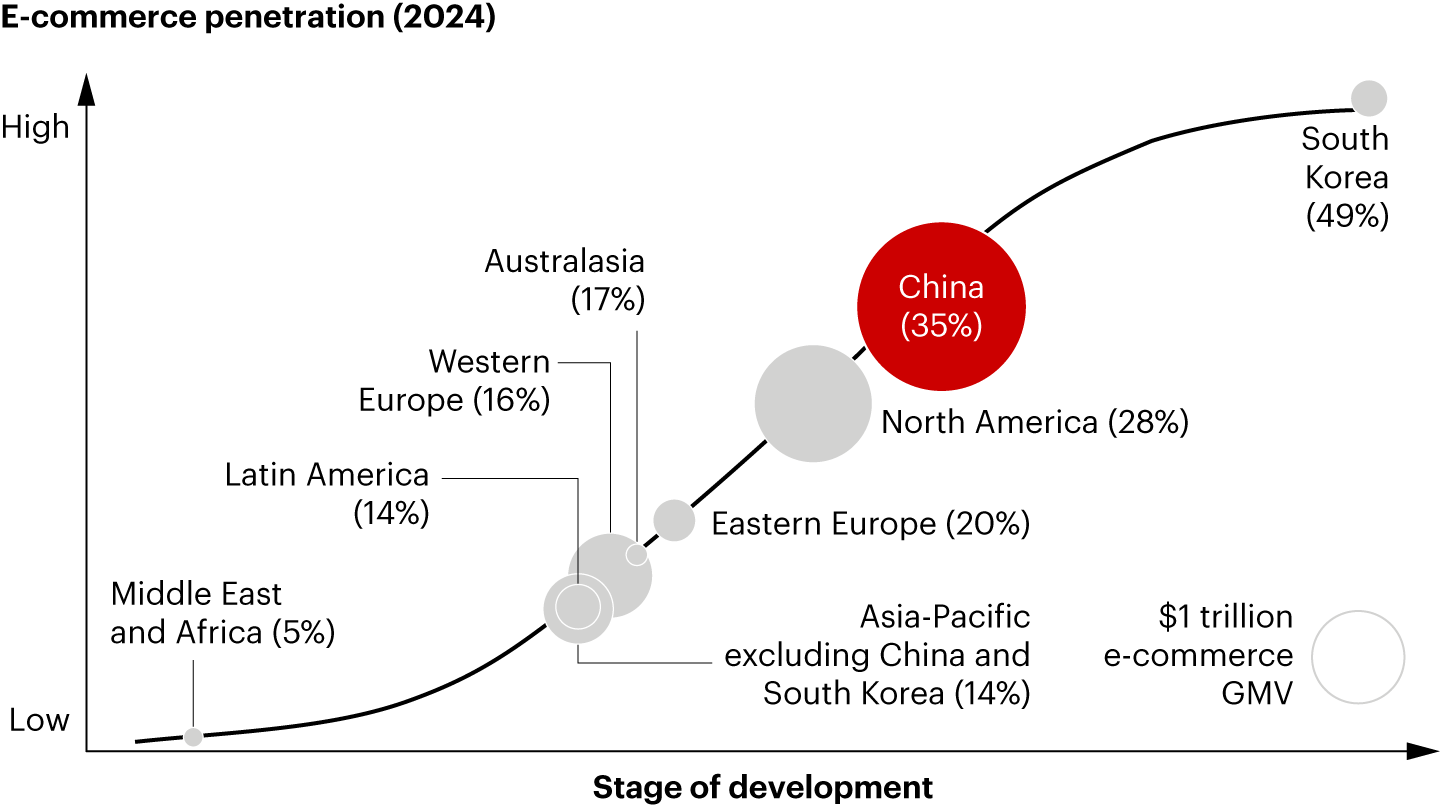
      High e-commerce penetration and a vast market size set China apart in global retail

      Notes: Penetration measured as e-commerce share of gross merchandise value (GMV); Australasia includes Australia and New Zealand; includes only business-to-consumer e-commerce

      Sources: Euromonitor; Flywheel Digital; Bain & Company

      Crucially, the dizzying progression of the Chinese domestic market—from old-school e-commerce toward new frontiers of social media–driven retail and near-instant fulfillment—has given Chinese players disruptive capabilities that have allowed them to compete successfully in foreign markets.

      These homegrown capabilities include:

      • rapid product innovation, exemplified by Shein’s “test and react” approach, in which clothing designs are made in small batches, with winners scaled up in days;
      • creative demand generation, showcased in TikTok’s use of must-watch content to spur impulse purchases;
      • accelerated fulfilment, honed in a domestic market where delivery times are increasingly a matter of minutes;
      • visionary expansion of digital ecosystems that both enriches the customer experience and opens up new profit pools in areas such as financial services and logistics; and
      • skillful use of artificial intelligence in applications such as Temu’s recommendation engine, AliExpress’ vendor tools, and Shein’s inventory management.

      However, for all their progress so far, Chinese e-commerce groups now face challenges that will make the next phase of their global expansion both more important and harder to achieve—as this year’s Singles Day is likely to show.

      Singles Day or Singles Month?

      Known for deep discounts from a wide range of retailers on everything from beauty products to electronic gadgets, clothing, pet care, and furniture, the Singles Day festival is easily the biggest shopping event in the world. It dwarfs Cyber Week, the post-Thanksgiving surge in US buying that includes Black Friday.

      Singles Day has developed a strong international component since it was launched in 2009, featuring prominent marketing campaigns and promotions in other parts of Asia. Last year, for instance, Alibaba boasted of strong Singles Day sales of ballet shoes in Japan and gaming keyboards in South Korea.

      Nevertheless, Singles Day’s once-stellar growth has been maturing for several years, held back by increased competition from a proliferation of rival sales events, the difficulty of increasing Chinese consumer participation beyond its already-high levels, and the general economic slowdown in China.

      The event has also succumbed to a certain middle-age spread—in its duration, at least. Last year, the promotional period for Singles Day more than doubled from 11 days to 28 days. The headline revenue metric for the festival, gross merchandise value (GMV), duly rose 27% to RMB 1.442 trillion in 2024, not including locally fulfilled Singles Day purchases made in foreign markets (see Figure 3).

      Figure 3
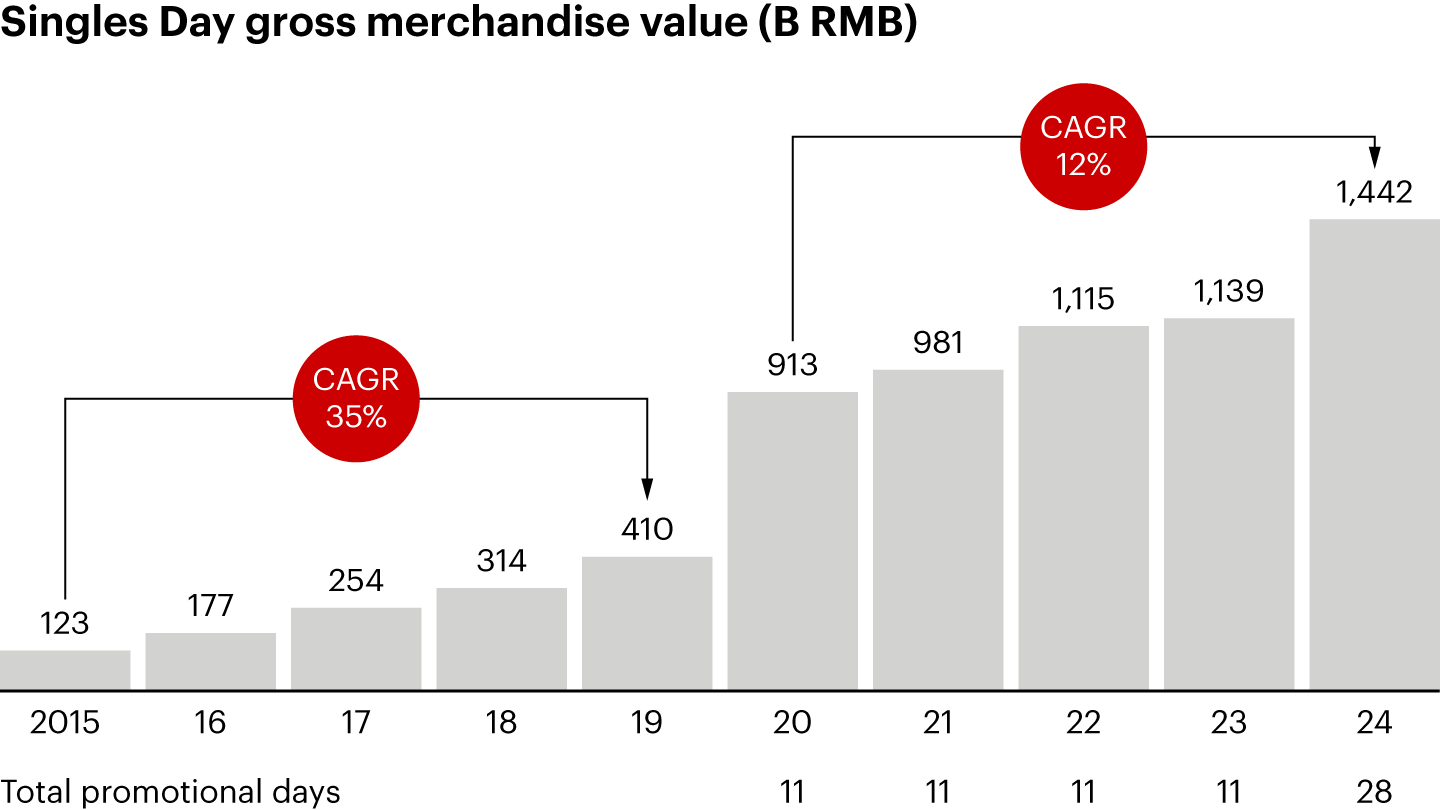
      Last year, Singles Day sales were artificially boosted by the festival’s extension to 28 days

      Notes: 2014–19 includes sales only on November 11; 2020–24 festival duration defined by promotional schedule of largest player amid variation by retailer; 2021 gross merchandise value restated to avoid double-counting Diantao

      Sources: Syntun; Flywheel Digital; Bain & Company

      On one level, the 27% growth rate is a throwback to the punchy 35% compound annual growth that Singles Day achieved between 2015 and 2019. However, the 2024 surge was massively inflated by the expansion of the festival period: Average GMV per promotion day fell by half, even with the early impact of government economic stimulus measures offering trade-in subsidies for home appliances, phones, and other goods.

      How will Singles Day sales turn out this year? On one level, the festival may continue to benefit from stimulus subsidies in 2025. The ongoing consumer incentives boosted sales during this year’s 618 festival, helping to increase GMV by 15.2% to RMB 856 billion, although the strong gain was also distorted by an extension of the promotional period, like that of Singles Day 2024.

      That said, there are question marks over how long the stimulus measures will be funded. Overall, economic conditions remain challenging, too, amid faltering retail sales growth, continued deflationary pressure, lingering real estate market weakness, and other negative factors.

      Chinese retailers are likely to have realistic expectations about growth in Singles Day GMV, a metric they’ve already stopped highlighting. That’s not to say anyone has given up on the event. All players continue to work hard to maintain sales momentum while using this time of year to showcase innovation. But Singles Day’s relative stagnation underlines the need for Chinese retailers to find revenue growth beyond China—fast.

      Three international challenges for Chinese e-commerce groups

      As international expansion becomes more important for Chinese e-commerce groups, it’s also likely to grow more difficult, largely due to three key factors: tightening global regulation, formidable local competition, and deep-lying differences in how some nations like to shop.

      Tightening regulation: This year, the US removed “de minimis” exemptions for low-value postal consignments after a surge in exports from Chinese e-commerce groups using the loophole; the European Union has been looking at taking a tougher approach in this area, too. Chinese e-commerce groups also face concerns over data privacy, national security, product safety, and other elements of consumer protection, as well as unfair competition with local businesses. Chinese players are responding in a variety of ways. Temu, for instance, has moved toward a model in which goods are held in overseas warehouses rather than sent directly from China to shoppers. Some Chinese retailers have used their international breadth to take a portfolio approach, moving resources to less challenging markets.

      Formidable incumbents: Chinese e-commerce groups and their low prices have won a lot of market share from brick-and-mortar retailers, but other e-commerce specialists have proved formidable competitors. In key Southeast Asian markets, for instance, Lazada has lost share to Singapore’s Shopee. In the US, taking on tech-savvy incumbents such as Amazon and Walmart was always going to be hard, even before regulation tightened. Amazon’s launch of its bargain shopping platform Amazon Haul—a direct threat to Chinese rivals—is just one sign that competition is now heating up. The incumbent challenge is also formidable in Latin America, where Mercado Libre will be hard to beat due to its powerful ecosystem, deep regional understanding, strong brand trust, and scale. International competition between Chinese retailers shouldn’t be underestimated, either.

      Consumer differences: Consumers in countries that have embraced Chinese retailers the most share two characteristics. They are highly price-sensitive due to their limited purchasing power, and they are very open to making impulse purchases from their phones (see Figure 4). In markets such as the US, the UK, and Japan, consumers are more likely to start a purchase with an online search, while browsing and shopping in brick-and-mortar stores also remains a powerful habit. These differences help to explain why it isn’t going to be easy for Chinese e-commerce groups to replicate their Southeast Asian success in more developed markets. It’s not just a matter of premiumizing their low-cost offerings; it’s also about catering to deep-lying differences in consumer behavior in markets that limit the use of 360-degree data to target shoppers precisely. 

      Figure 4
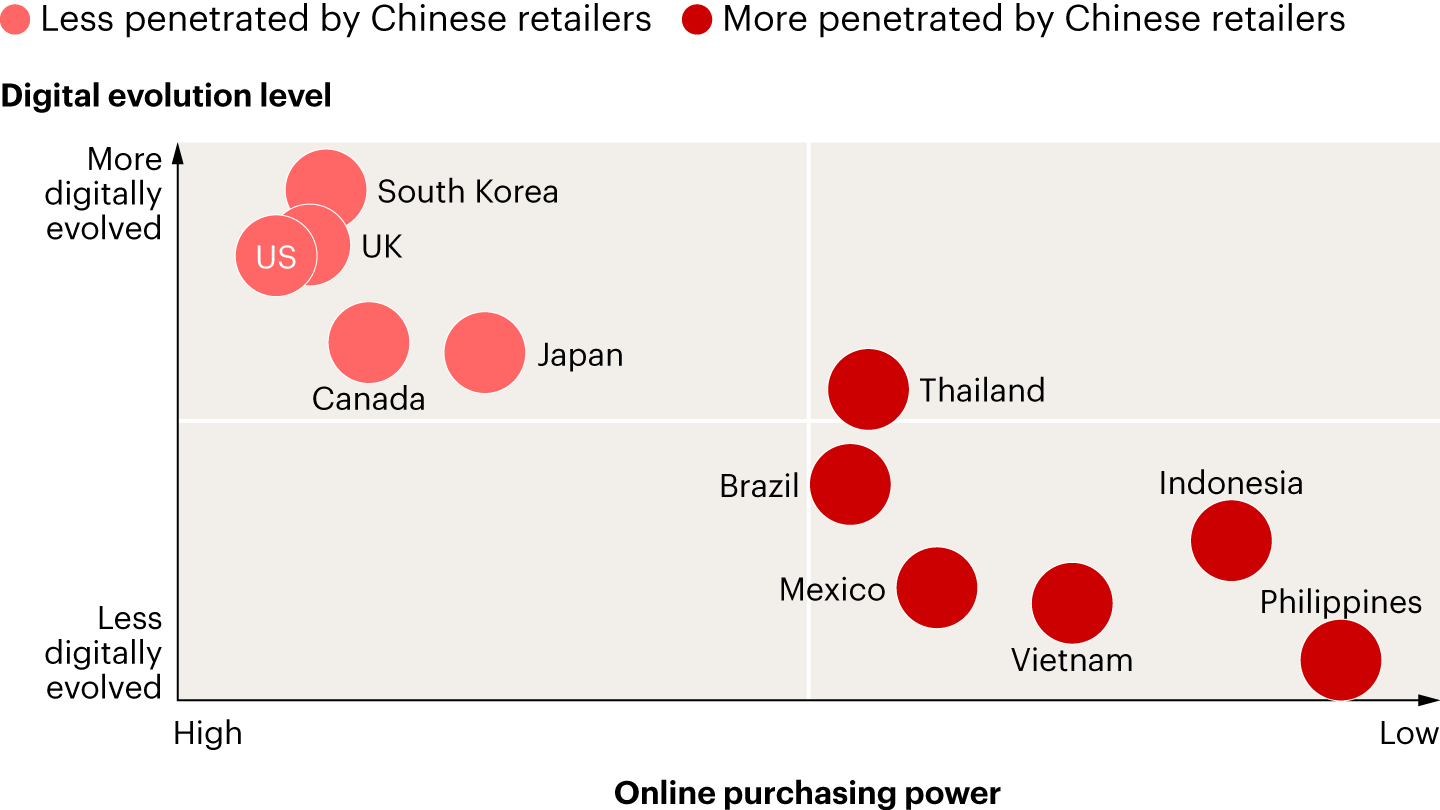
      So far, Chinese retailers have tended to succeed in markets with lower online purchasing power

      Notes: Online purchasing power is e-commerce gross merchandise value per head; digital evolution is a measure of the digitalization of an economy

      Sources: Digital Evolution Index by Mastercard and Tufts University; World Population Review; Euromonitor; Flywheel Digital; Bain & Company

      A new phase of Chinese global expansion in retail

      Far from being killed off by tariffs, the internationalization of Chinese retail is entering a new phase. In July, for instance, JD.com announced it was buying a majority holding in Germany’s Ceconomy, owner of the MediaMarkt electronics chain. Then, in September, it emerged that JD.com had been in abortive talks to buy Argos, a British omnichannel general merchandise retailer, from J Sainsbury.

      As China’s retailers gear up for another international Singles Day, rivals around the world need to prepare themselves for an intensification of competition and the possibility of further mergers and acquisitions activity, including partnerships. They also shouldn’t neglect the strategic opportunity to strengthen their own businesses by learning from the rise of these disruptive innovators—and from the cutting-edge Chinese e-commerce market they have now started to outgrow.

      The authors would like to acknowledge the contributions of Emma Gu to this brief.

      Authors
      • Headshot of Weiwen Han
        Weiwen Han
        Partner, Hong Kong
      • Headshot of Melanie Sanders
        Melanie Sanders
        Partner, Melbourne
      • Headshot of Derek Deng
        Derek Deng
        Partner, Hong Kong
      • Headshot of David Yang
        David Yang
        Partner, Sydney
      Related Industries
      • Retail
      Retail Holiday Newsletter
      The 2026 Retail Executive Agenda

      Here are letters to the C-suite to help strengthen strategy, catalyze collaboration, and expand value creation in the AI age.

      Read more
      Retail
      The 2025 Chinese Personal Luxury Goods Market

      Recalibration, resurgence, and more selective consumers are edging China’s personal luxury market toward recovery.

      Read more
      Retail Holiday Newsletter
      2030 Forecast: How Agentic AI Will Reshape US Retail

      Bain estimates that AI agents could be responsible for 15% to 25% of US e-commerce sales.

      Read more
      Retail
      2026 Global Retail Sales Outlook

      What can retailers in the US, UK, France, and Germany anticipate from shoppers this year?

      Read more
      Retail Holiday Newsletter
      Agentic AI in Retail: How Autonomous Shopping Is Redefining the Customer Journey

      As agentic AI transforms retail economics, industry leaders will compete for shoppers and agents alike.

      Read more
      First published in octubre 2025
      Tags
      • Retail
      • Retail Holiday Newsletter

      How We've Helped Clients

      Inspiring retail employees to think and act like owners

      See more related case studies

      Retailer's performance improvement boosts shareholder value

      See more related case studies

      Omnichannel strategy boosts fashion company

      See more related case studies

      Want to continue the conversation

      We help global leaders with their organization's most critical issues and opportunities. Together, we create enduring change and results

      Bain Insights. Our perspectives on critical issues global businesses face in today's challenging environment, delivered monthly.

      *I have read and understand Bain’s Privacy Notice.

      Please read and agree to the Privacy Policy.
      Bain & Company
      Contact us Sustainability Accessibility Terms of use Privacy Modern Slavery Act Statement Cookie Policy Sitemap Log In

      © 1996-2026 Bain & Company, Inc.

      Contact Bain

      How can we help you?

      • Business inquiry
      • Career information
      • Press relations
      • Partnership request
      • Speaker request
      See all offices