

An inside look at an AI engineering internship at Bain
An inside look at an AI engineering internship at Bain
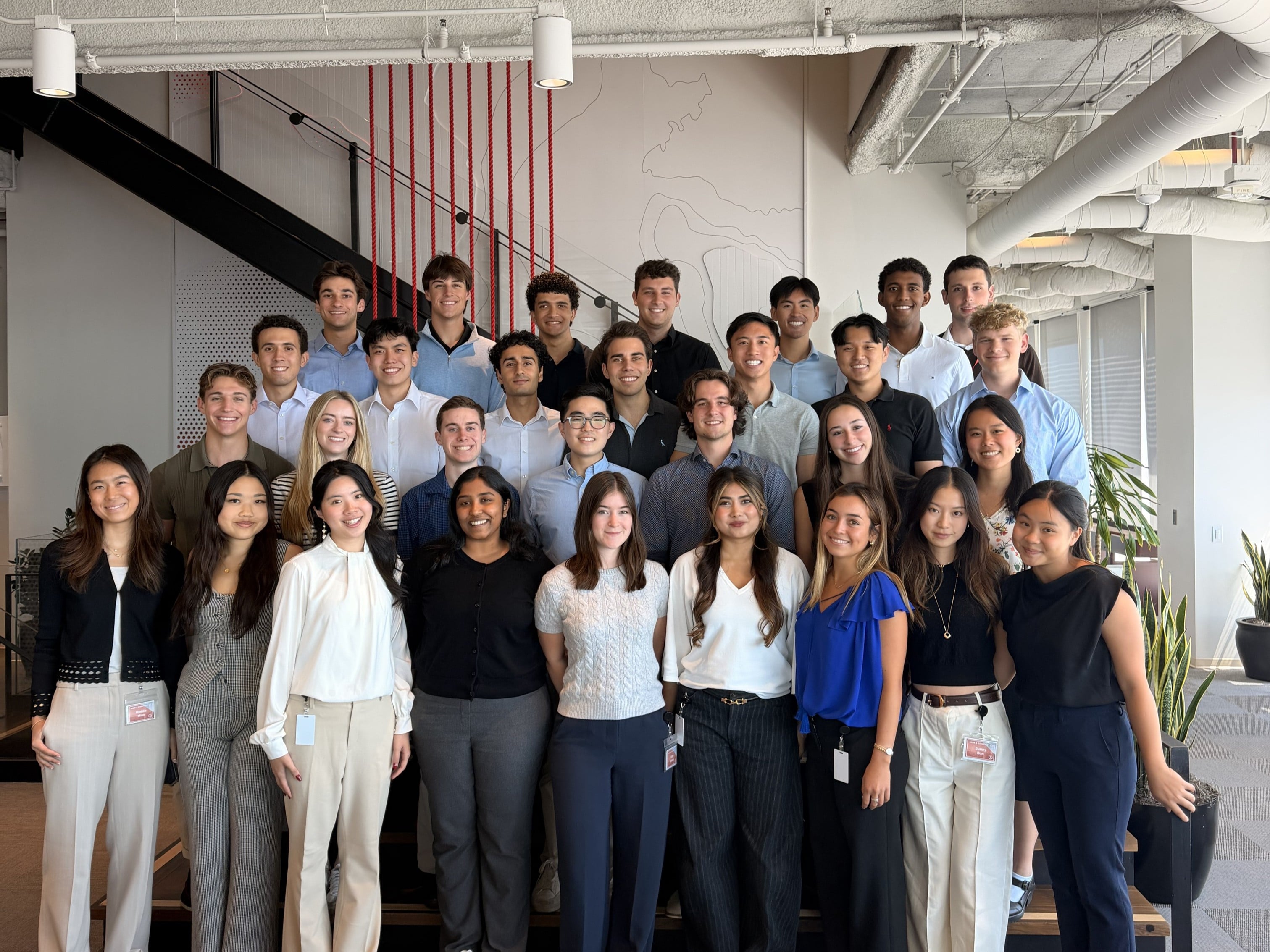
Two AI/ML interns share what it's like to do technical work at a consulting firm — and why Bain stood out from traditional tech internships
What does it look like to do engineering work at a consulting firm? Sean Noh, a computer science and math student at Dartmouth, and Angel Zou, a machine learning engineering student at Vanderbilt, both spent their summers at Bain as AI/ML interns with Bain’s tech and AI teams. Here, they share what they built, what surprised them, and what they'd tell anyone thinking about applying.
The opportunity to work with clients directly and see your work tied into a live application is something I didn't expect going in.
Sean Noh
AI/ML Intern
What drew you to an internship at a consulting firm?
Sean: I came across the listing through a Handshake notification. I wasn't actively searching for Bain because, like most people in my field, I thought of it as a consulting firm. But when I saw there was an AI/ML role, I was immediately curious. Doing AI at a consulting firm felt different from a pure software company, and I wanted to see what that would look like.
Angel: My prior experience was mostly academic — machine learning research and coursework at Vanderbilt — and I wanted to move from theoretical work into applying AI in a real business context, which felt like exactly where the field is heading. What drew me to the AIS role specifically was that it wasn't just about the technical work itself; it was about doing that work inside Bain's business context, where I'd get exposure to clients and consultants across a wide range of industries.
What was the interview process like?
Sean: The interview process was fast, which I appreciated. It was three rounds: a live coding problem, a systems design round where I walked through a potential solution, and a final conversation with a partner on LLMs and ML architecture; things like attention mechanisms, autoencoders, and LSTMs. I enjoyed that last round a lot. It felt more like a technical conversation than a test.
Angel: The process included back-to-back interviews covering live coding and system design. The one that stuck with me most was a system design interview where I was given a real Bain case: a payroll email automation project. Rather than steering me toward one fixed answer, my interviewer let me follow my own instincts and design thinking. Afterward, he told me the case was one the actual Bain team had spent six months on without landing on a fully polished solution, which said a lot about what Bain values: being challenged by real, applicable problems that prompt genuine thinking, not tested against one "correct" answer.
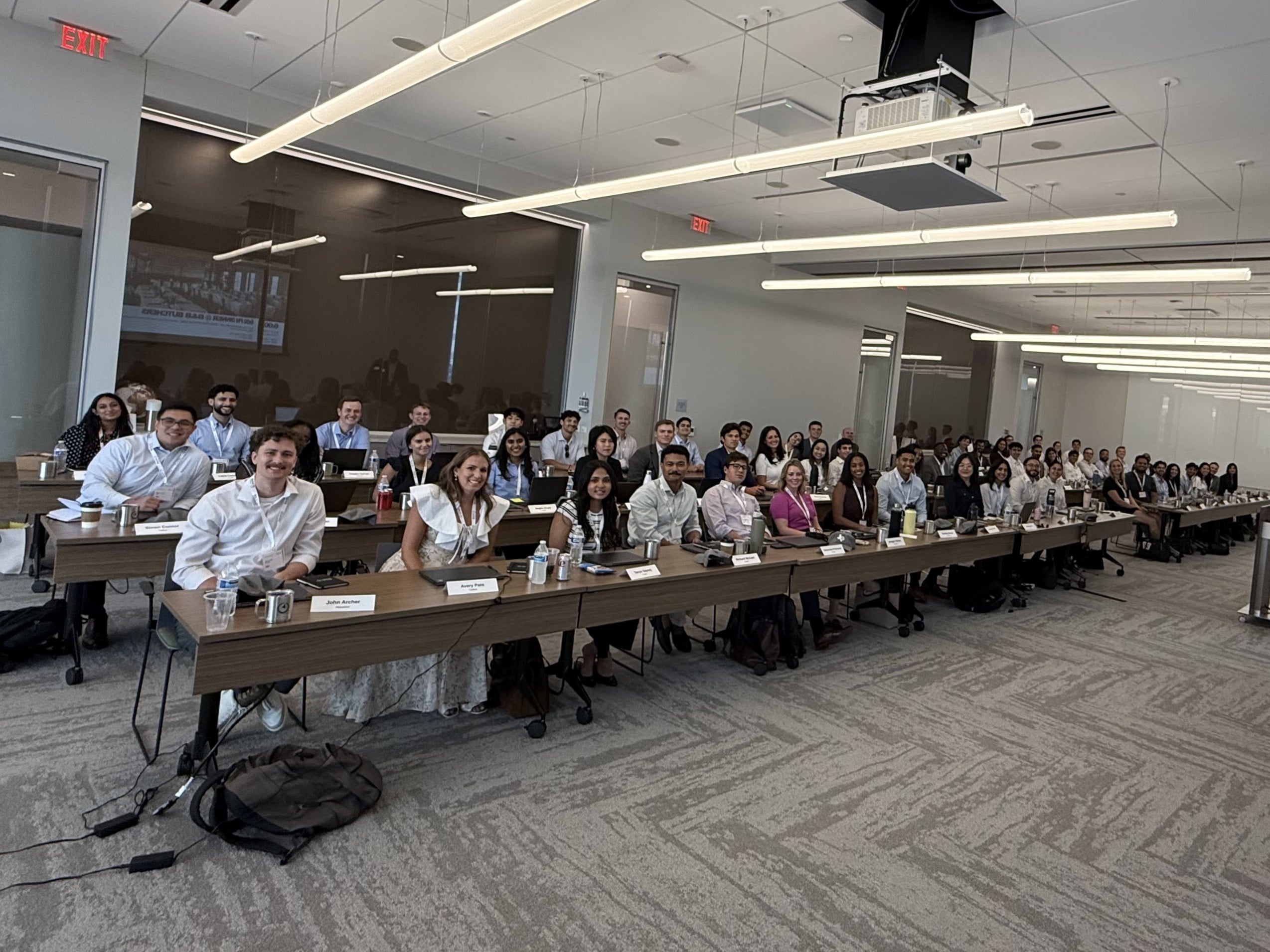
Interns across programs kick off the summer together, a shared week of training that builds community across the intern class from the start.
What type of projects did you work on during your internship?
Sean: I was placed on a case in the Software as a Service space. The goal was to integrate AI to add a new layer of value to their existing software product. We built an application that analyzes complex documents. I owned the semantic matching component of the pipeline, taking an uploaded document, segmenting it into sections, and mapping each section to the corresponding part of the client's template along with an associated analysis. It was a self-contained piece of the system, which I liked. I could move quickly without a lot of dependencies, and then at the end I got to tie it into the live application where it would live.
Angel: Most of my work centered on turning weeks of onboarding and ramp-up, learning the codebase, the data, the business context, into an actual working script. I was building an agentic workflow platform for a consumer products client case that spans multiple Bain offices, with the consulting team mostly based in Munich. The kind of agentic workflow I was building could realistically reduce 20-30% of the manual, time-consuming work once it's in production, which felt like a genuinely structural improvement rather than just a productivity add-on.
What did the experience teach you that you couldn't get from coursework?
Sean: On the infrastructure side, I got hands-on with task queue architecture and worker routing patterns I hadn't seen before. Seeing how a production pipeline handles orchestration was very cool. And on the agentic coding side, one of my teammates had built an impressive multi-agent setup where you could monitor what each agent was doing and drop in to give instructions in real time. That opened my eyes to where that space is heading.
Angel: Going in, I expected more traditional ML work; instead, most of what I did fell under the newer umbrella of AI engineering, specifically using LLMs and agents to build a platform that accelerates part of our current case workflow. What surprised me most was how much I ended up relying on Claude Code, built directly into VS Code on my virtual machine. That said, this kind of acceleration only works responsibly if you already understand the material well. When we first incorporated our evaluation framework, Claude Code produced a version that ran and generated output, but we later discovered some real issues in the underlying logic. The lesson for me was that tools like this genuinely accelerate your work once you understand the problem well, but they're not a substitute for that understanding in the first place.
How would you describe the team culture at Bain?
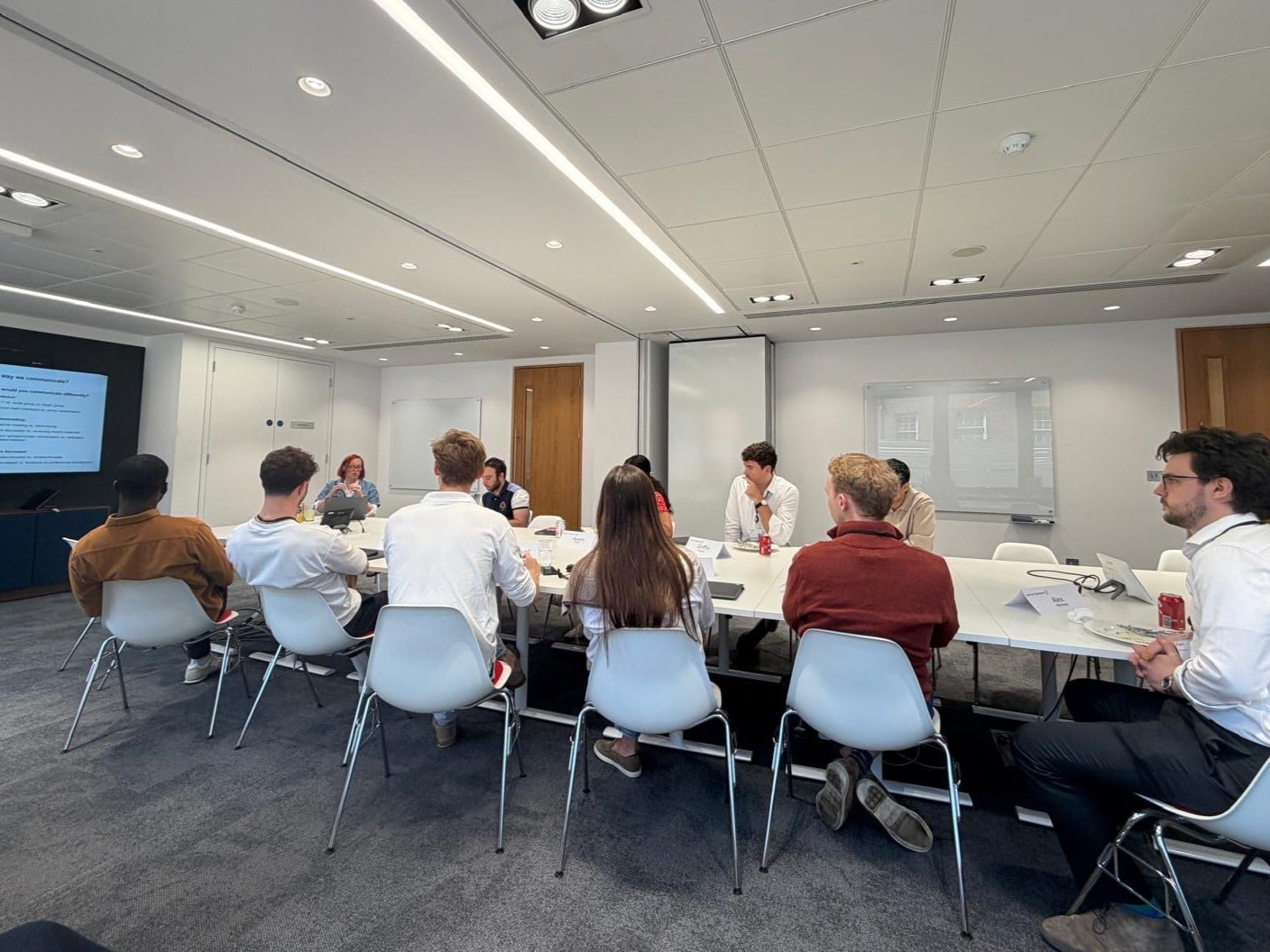
AIS interns spend time in structured learning sessions alongside colleagues, building both technical and consulting skills from day one.
Sean: Everyone was friendly and willing to help, whether that was answering questions or just talking through things. I had a professional development advisor and a colleague I was paired with throughout, and both were easy to talk to and very helpful. What surprised me was how much overlap there was with the consulting intern class too. We did a full week of shared training at the start alongside the general consulting and senior associate interns, so there was a strong class feel from day one.
Angel: Mentorship was a highlight. Beyond my manager, who gave me both technical and professional development guidance, I had a dedicated professional development advisor who never made a question feel too basic or too small, and a colleague I could ask even the smallest logistical questions about Bain without ever feeling like I should already know the answer. One of the things that stood out most was the co-location: my manager traveled from Chicago to San Francisco to work with me in person before I wrapped up. We could sit down together with a specific problem, pull up code side by side, or go through a deck slide by slide, the kind of hands-on support that would have been much harder to replicate remotely.
What advice would you give someone thinking about applying?
Sean: Be solid on your fundamentals, especially AI/ML if that's the role you're going for. The systems design and final rounds are more about thinking through open-ended problems clearly and explaining your reasoning. And just be genuinely curious about the consulting side of things, knowing what makes it different from a typical tech internship, and being excited about that, comes through.
Angel: Definitely go for it, but come in ready for more than just the technical work. This is a business and commercial case context, which means working with stakeholders who may see the problem differently than you do. One of the most valuable skills I built was learning how to translate technical work for a non-technical audience, understanding what a stakeholder needs without overwhelming them with jargon, and communicating back in a way that lands.


