
Skip to Content
  • Offices

    Offices

    North & Latin America
    • Atlanta
    • Austin
    • Bogota
    • Boston
    • Buenos Aires
    • Chicago
    • Dallas
    • Denver
    • Houston
    • Los Angeles
    • Mexico City
    • Minneapolis
    • Monterrey
    • Montreal
    • New York
    • Rio de Janeiro
    • San Francisco
    • Santiago
    • São Paulo
    • Seattle
    • Silicon Valley
    • Toronto
    • Washington, DC
    Europe & Africa
    • Amsterdam
    • Athens
    • Berlin
    • Brussels
    • Copenhagen
    • Dusseldorf
    • Frankfurt
    • Helsinki
    • Istanbul
    • Johannesburg
    • Kyiv
    • Lisbon
    • London
    • Madrid
    • Milan
    • Munich
    • Oslo
    • Paris
    • Rome
    • Stockholm
    • Vienna
    • Warsaw
    • Zurich
    Middle East
    • Doha
    • Dubai
    • Riyadh
    Asia & Australia
    • Bangkok
    • Beijing
    • Bengaluru
    • Brisbane
    • Ho Chi Minh City
    • Hong Kong
    • Jakarta
    • Kuala Lumpur
    • Manila
    • Melbourne
    • Mumbai
    • New Delhi
    • Perth
    • Seoul
    • Shanghai
    • Singapore
    • Sydney
    • Tokyo
    See all offices
  • Alumni
  • Media Center
  • Subscribe
  • Contact
  • Chile | Español

    Select your region and language

    Global
    • Global (English)
    North & Latin America
    • Brazil (Português)
    • Argentina (Español)
    • Canada (Français)
    • Chile (Español)
    • Colombia (Español)
    Europe, Middle East, & Africa
    • France (Français)
    • DACH Region (Deutsch)
    • Italy (Italiano)
    • Spain (Español)
    • Greece (Elliniká)
    Asia & Australia
    • China (中文版)
    • Korea (한국어)
    • Japan (日本語)
  • Saved items (0)
    Saved items (0)

    You have no saved items.

    Bookmark content that interests you and it will be saved here for you to read or share later.

    Explore Bain Insights
  • Industries
    Main menu

    Industries

    • Aeroespacial y Defensa
    • Agroindustria
    • Químicos
    • Construcción e Infraestructura
    • Productos de Consumo
    • Servicios Financieros
    • Salud y Ciencias de la Vida
    • Maquinaria y Equipo Industrial
    • Medios y Entretenimiento
      Industries
      Medios y Entretenimiento
      • Media Lab
    • Metales
    • Minería
    • Petróleo y Gas
    • Papel y Empaque
    • Private Equity
      Industries
      Private Equity
      • Due Diligence
      • Exit Planning
      • Firm Strategy & Operations
      • Portfolio Value Creation
    • Sector Público y Social
    • Retail
    • Tecnología
    • Telecomunicaciones
      Industries
      Telecomunicaciones
      • Capital Expenditure
      • Telco Digital Transformation
    • Transporte
    • Viajes y Turismo
    • Servicios Públicos y Energías Renovables
  • Consulting Services
    Main menu

    Consulting Services

    • Customer Experience
    • Sustainability
    • Innovation
    • M&A
    • Operations
    • People & Organization
    • Private Equity
    • Sales & Marketing
    • Strategy
    • AI, Insights, and Solutions
    • Technology
    • Transformation
  • Digital
  • Insights
    Main menu

    Insights

    • Industry Insights
    • Services Insights
    • Bain Books
    • Webinars
    • Bain Futures
    View all Insights
    Featured topics
    • Tariff Response
    • Artificial Intelligence
    • Thriving in Uncertainty
    • Executive Conversations
    • Macro Trends
    • M&A Report
    • Healthcare Private Equity Report
    • Paper & Packaging Report
    • Technology Report
    • CEO's Guide to Sustainability
    • CEO Insights
    • CFO Insights
    • COO Insights
    • CIO Insights
    • CMO Insights
    View all featured topics
  • About
    Main menu

    About

    • What We Do
    • What We Believe
    • Our People & Leadership
    • Client Results
    • Awards & Recognition
    • Global Affiliations
    Further: Our global responsibility
    • Sustainability
    • Social Impact
    • World Economic Forum
    Learn more about Further
  • Carreras
    Main menu

    Carreras

    • Trabaja con Nosotros
      Carreras
      Trabaja con Nosotros
      • Find Your Place
      • Nuestras Áreas de Trabajo
      • Equipos Integrados
      • Estudiantes
      • Internships & Programs
      • Eventos de Reclutamiento
    • La Vida en Bain
      Carreras
      La Vida en Bain
      • Historias Profesionales
      • Nuestra Gente
      • Dónde Trabajamos
      • Apoyando tu Crecimiento
      • Grupos de Afinidad
      • Beneficios
    • Impact Stories
    • Nuestro Proceso
      Carreras
      Nuestro Proceso
      • Qué Esperar
      • Entrevistas
    FIND JOBS
  • Offices
    Main menu

    Offices

    • North & Latin America
      Offices
      North & Latin America
      • Atlanta
      • Austin
      • Bogota
      • Boston
      • Buenos Aires
      • Chicago
      • Dallas
      • Denver
      • Houston
      • Los Angeles
      • Mexico City
      • Minneapolis
      • Monterrey
      • Montreal
      • New York
      • Rio de Janeiro
      • San Francisco
      • Santiago
      • São Paulo
      • Seattle
      • Silicon Valley
      • Toronto
      • Washington, DC
    • Europe & Africa
      Offices
      Europe & Africa
      • Amsterdam
      • Athens
      • Berlin
      • Brussels
      • Copenhagen
      • Dusseldorf
      • Frankfurt
      • Helsinki
      • Istanbul
      • Johannesburg
      • Kyiv
      • Lisbon
      • London
      • Madrid
      • Milan
      • Munich
      • Oslo
      • Paris
      • Rome
      • Stockholm
      • Vienna
      • Warsaw
      • Zurich
    • Middle East
      Offices
      Middle East
      • Doha
      • Dubai
      • Riyadh
    • Asia & Australia
      Offices
      Asia & Australia
      • Bangkok
      • Beijing
      • Bengaluru
      • Brisbane
      • Ho Chi Minh City
      • Hong Kong
      • Jakarta
      • Kuala Lumpur
      • Manila
      • Melbourne
      • Mumbai
      • New Delhi
      • Perth
      • Seoul
      • Shanghai
      • Singapore
      • Sydney
      • Tokyo
    See all offices
  • Alumni
  • Media Center
  • Subscribe
  • Contact
  • Chile | Español
    Main menu

    Select your region and language

    • Global
      Select your region and language
      Global
      • Global (English)
    • North & Latin America
      Select your region and language
      North & Latin America
      • Brazil (Português)
      • Argentina (Español)
      • Canada (Français)
      • Chile (Español)
      • Colombia (Español)
    • Europe, Middle East, & Africa
      Select your region and language
      Europe, Middle East, & Africa
      • France (Français)
      • DACH Region (Deutsch)
      • Italy (Italiano)
      • Spain (Español)
      • Greece (Elliniká)
    • Asia & Australia
      Select your region and language
      Asia & Australia
      • China (中文版)
      • Korea (한국어)
      • Japan (日本語)
  • Saved items  (0)
    Main menu
    Saved items (0)

    You have no saved items.

    Bookmark content that interests you and it will be saved here for you to read or share later.

    Explore Bain Insights
  • Industries
    • Industries

      • Aeroespacial y Defensa
      • Agroindustria
      • Químicos
      • Construcción e Infraestructura
      • Productos de Consumo
      • Servicios Financieros
      • Salud y Ciencias de la Vida
      • Maquinaria y Equipo Industrial
      • Medios y Entretenimiento
      • Metales
      • Minería
      • Petróleo y Gas
      • Papel y Empaque
      • Private Equity
      • Sector Público y Social
      • Retail
      • Tecnología
      • Telecomunicaciones
      • Transporte
      • Viajes y Turismo
      • Servicios Públicos y Energías Renovables
  • Consulting Services
    • Consulting Services

      • Customer Experience
      • Sustainability
      • Innovation
      • M&A
      • Operations
      • People & Organization
      • Private Equity
      • Sales & Marketing
      • Strategy
      • AI, Insights, and Solutions
      • Technology
      • Transformation
  • Digital
  • Insights
    • Insights

      • Industry Insights
      • Services Insights
      • Bain Books
      • Webinars
      • Bain Futures
      View all Insights
      Featured topics
      • Tariff Response
      • Artificial Intelligence
      • Thriving in Uncertainty
      • Executive Conversations
      • Macro Trends
      • M&A Report
      • Healthcare Private Equity Report
      • Paper & Packaging Report
      • Technology Report
      • CEO's Guide to Sustainability
      • CEO Insights
      • CFO Insights
      • COO Insights
      • CIO Insights
      • CMO Insights
      View all featured topics
  • About
    • About

      • What We Do
      • What We Believe
      • Our People & Leadership
      • Client Results
      • Awards & Recognition
      • Global Affiliations
      Further: Our global responsibility
      • Sustainability
      • Social Impact
      • World Economic Forum
      Learn more about Further
  • Carreras
    Popular Searches
    • Agile
    • Digital
    • Strategy
    Your Previous Searches
      Recently Visited Pages

      Content added to saved items

      Saved items (0)

      Removed from saved items

      Saved items (0)

      Brief

      Funding the Future of Retail Through Cost Transformation

      Funding the Future of Retail Through Cost Transformation

      Sector champions integrate cost-cutting with strategy and game-changing thinking.

      By Kurt Grichel, Jon Webber, Karl Zimmermann, and Christian Fenner

      • min read
      }

      Brief

      Funding the Future of Retail Through Cost Transformation
      en
      Executive Summary
      • To fund growth, retailers face massive investment demands that cannot be met by the fragmented and narrow cost-productivity drives of the past.
      • Executives who scour the entire cost bar for savings can create a surprisingly large pool of funds for reinvestment, aided by radical thinking and digital tools.
      • These cutting-edge integrated cost-reduction programs achieve their full potential when they’re closely linked to strategy and customers, as the sector’s cost champions show.

      Although they’re beset on all sides by challenges, traditional retailers still have an opportunity to redefine the way they engage with shoppers and outmaneuver competitors—putting themselves on a more even footing with the digital natives that have lured away many of their customers.

      Embracing that opportunity requires a ratcheting up of strategic investments way above the historic norm. Walmart, for instance, has had to intensify spending on its omnichannel capability—adding pickup capabilities for online grocery orders in thousands of stores, say—while also using mergers and acquisitions to digitalize faster, through deals such as its $16 billion purchase of a majority stake in Indian e-commerce group Flipkart, and the 2016 purchase of online marketplace Jet.com for $3.3 billion.

      To fund these strategic investments, retailers are constrained by the industry’s low margin structure. Curbing spending is one of the only practical options, but that means reducing costs far more extensively or comprehensively than most retailers have done so far.

      That’s a huge challenge, but not an impossible one, especially when you look at the true scale of the possibilities for sustained cost-cutting—and the value created by the minority able to pull it off. Bain research has shown that 9% of listed US retailers increased productivity for five straight years from 2012 to 2017. The reward for shareholders? Superior stock performance, in good years and bad: Total shareholder returns rose by 25% a year, more than double the sector average of 10% (see Figure 1).

      Figure 1
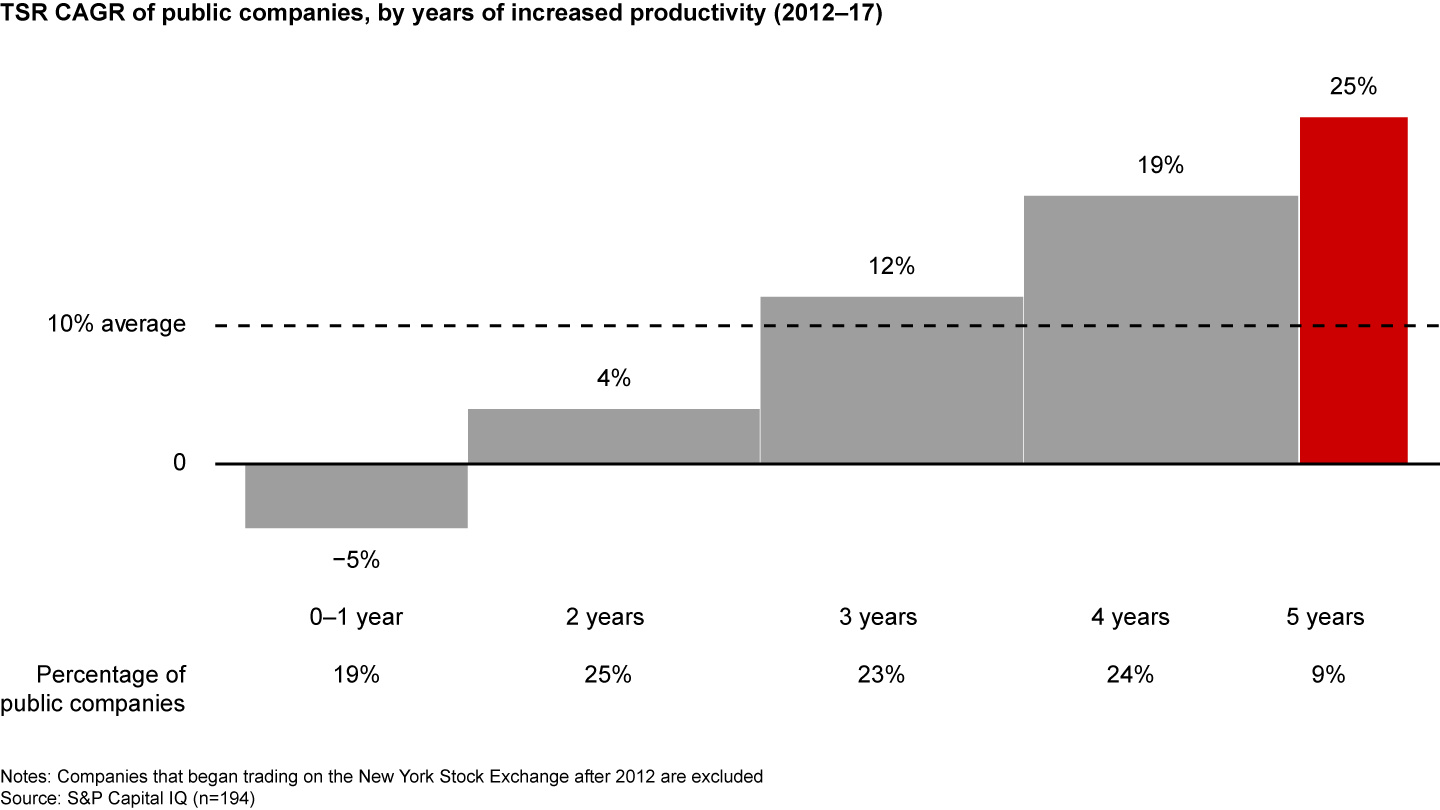
      Retailers with consistent productivity gains have the highest total shareholder returns
      Retailers with consistent productivity gains have the highest total shareholder returns
      Retailers with consistent productivity gains have the highest total shareholder returns

      A big reason most retailers miss out on these benefits is that they don’t take an enterprisewide view of cost reduction. They focus only on a narrow part of the cost bar, largely because that has worked in the past, picking off just enough savings to maintain the status quo. That’s not an option anymore, given the size of the investments required and the fact that most of the low-hanging fruit was reaped during multiple cost-productivity drives in the past.

      Shifting to an across-the-board approach is only part of the solution, however. To realize the savings hiding in plain sight, retail executives also need to apply game-changing thinking to each element of the cost bar. Crucially, they then link this cost transformation with strategic goals, ranging from the development of seamless omnichannel shopping, to simple price cuts, to the mastery of new digital capabilities in areas such as personalization and advanced data analytics.

      Infographic

      Transforming Costs in Retail to Fund Future Growth

      Retailers need to take an enterprise-wide view of cost-savings opportunities.

      Fighting costs on all fronts = more money to reinvest

      So only one in eleven US-listed retailers is a cost champion. That’s actually better than average. Across all industries, the figure is one in seventeen. But there’s a grim reason why retail executives are a little further along this road: the existential challenges they face are more severe than in many other industries.

      They must confront a broad range of strategic issues. Technology is enabling shoppers to behave in dramatically different ways; generational shifts in behavior, such as the rise of personalization, are even more jarring than usual. Consumers expect more: convenience, low prices, easy switching between online and offline shopping, and a long list of other nonnegotiables.

      Retailers are trying to upgrade their digital capabilities on multiple fronts to cope with these changes. They know they have to invest heavily in advanced analytics and their often-creaking IT infrastructure. But at the same time, they face increasingly challenging trading conditions. Operating headwinds—including pricing pressure, inflation, minimum-wage hikes and the short-term effect of changing shopping patterns—could knock as much as 500 basis points off their earnings before interest and taxes (EBIT) margin over the next five years, according to Bain estimates.

      Just as they fight on all fronts externally, retailers need to fight on all fronts internally to transform their cost structures. This means looking at all parts of the cost bar with fresh eyes to create a larger pool of funds to reinvest in high-priority areas. That’s a big shift from the incremental view that many are taking today. It’s also a much more concentrated strategy than the “try to do everything” approach weighing down many retail leaders. Executives can significantly improve long-term performance if they take the leap.

      Game-changing thinking across the cost bar

      The good news is that retail leaders can identify savings opportunities quickly. In a matter of weeks, they can discover the most promising “hot spots.” Data-driven executives have an advantage in finding and then realizing these savings, but not if they rely solely on benchmarking. Customer focus is key, too.

      Take cost of goods sold (COGS). Historically, retailers have followed a crude “just buy it cheaper” mantra, but blanket demands for 1% or 2% off each unit aren’t going to produce the fuel needed for reinvestment today. Cost leaders are already getting much better results from an analytics-driven approach linked to category strategy. It’s the only way to get a deep enough understanding of which products consumers really value.

      Armed with this data, leaders manage negotiations in a way that creates clear winners and losers among suppliers, calling the bluff of those whose products won’t be missed on the shelves and rewarding those that actually drive the category. The result? A gross profit-margin boost of 150 to 300 basis points (see Figure 2).

      Figure 2
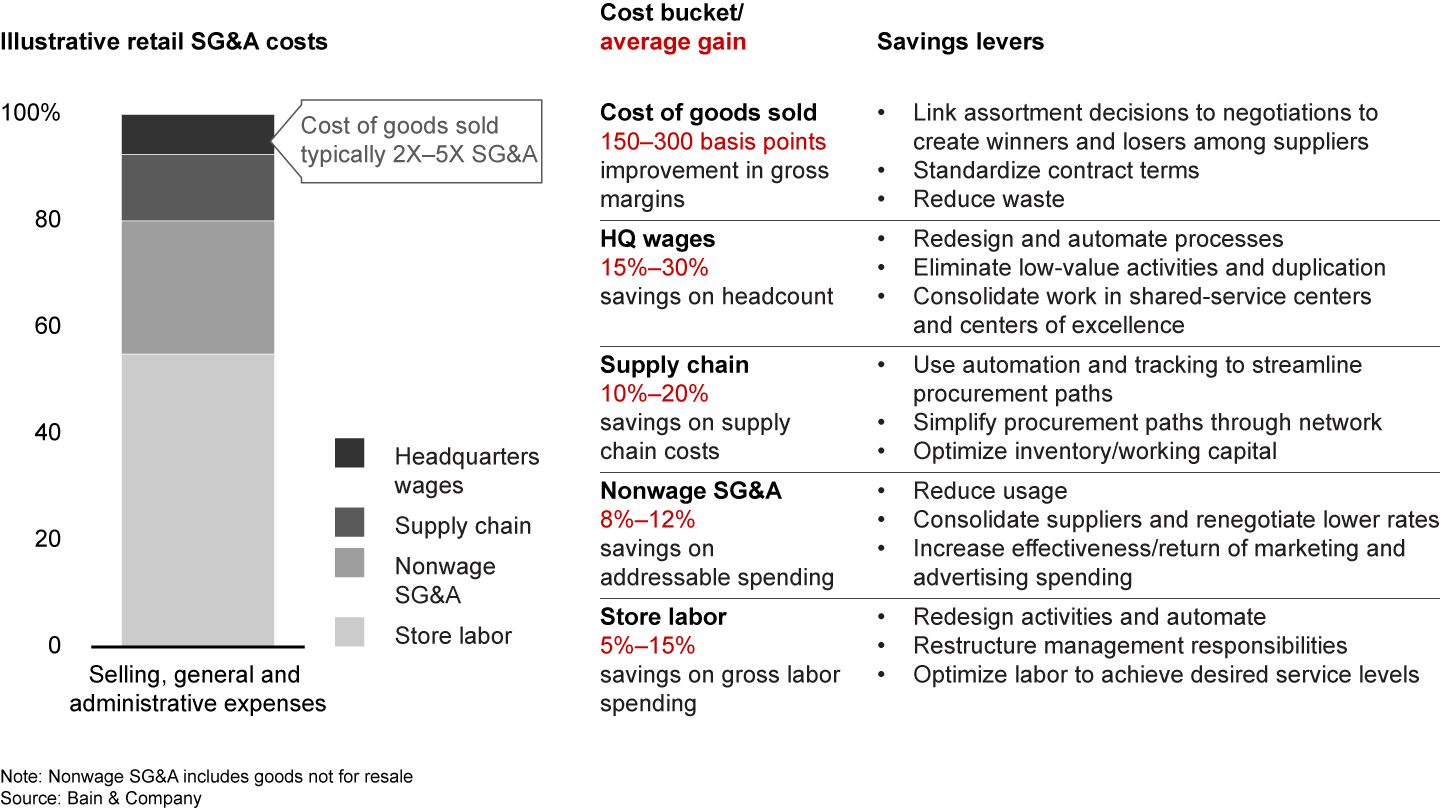
      Cost transformation requires a hard look at all parts of a retailer’s cost bar
      Cost transformation requires a hard look at all parts of a retailer’s cost bar
      Cost transformation requires a hard look at all parts of a retailer’s cost bar

      One retailer adopted this radical approach to COGS after losing sales to discounters that had undermined its reputation for value. Within one year, it had captured savings equivalent to 4.2% of COGS, later improving this to 5.7%. It boosted its negotiating power by deepening its analysis of category data, benchmarking suppliers, leveraging big data and advanced analytics to analyze loyalty and substitution, and other measures. While negotiating robustly with suppliers—partly by creating more competition in its supplier base where necessary—it also took pains to inject a collaborative note into talks, highlighting “win-win” situations for both parties and using its authoritative command of facts to gain trust.

      Advanced analytics is transforming retail supply chains, meanwhile. It offers unprecedented visibility over the way items flow through distribution networks and the costs they incur along the way. This data enables executives to make better decisions on everything from when to offer free shipping to which SKUs should be pruned. With other measures such as targeted automation, advanced analytics can cut supply chain costs by 10% to 20%, a gain that would have been inconceivable in the analog era.

      One US retailer realized it could reap 10% distribution labor savings by routing products differently through its warehouses. The product flow modeling that enabled this insight involved 600 million rows of customer transaction data and led to the creation of a “supply chain P&L” to shape future decisions.

      In the long term, automation will transform another area of the cost bar: store staffing. In the short term, however, surprising gains are now possible through more traditional productivity measures in this area, such as smarter scheduling and cross-training staff to handle multiple activities.

      Cost champions know what their shoppers care about and invest in these areas, making sure that they get credit from customers for nailing the most important things. They also know what customers don’t care about. That’s where they take costs out, redesigning processes and introducing automation where possible to cut workload. Savings can reach 5% to 15% of gross labor spending if this playbook is followed. Some of these funds can be reinvested to deploy staff in underserved areas, improving the customer experience and increasing sales.

      Store labor savings can require the most patience of all the cost-bar efficiencies. Self-checkout took a fair bit of time to become commonplace. Other innovations—such as robots that scan shelves and electronic shelf prices that change based on expiration codes of products and inventory levels—may soon follow. Retail has so far been largely immune to labor innovation and automation, with employment broadly rising along with output in the US. Industries such as mining, manufacturing and healthcare show how much productivity can grow when labor innovation and automation kick in (see Figure 3).

      Figure 3
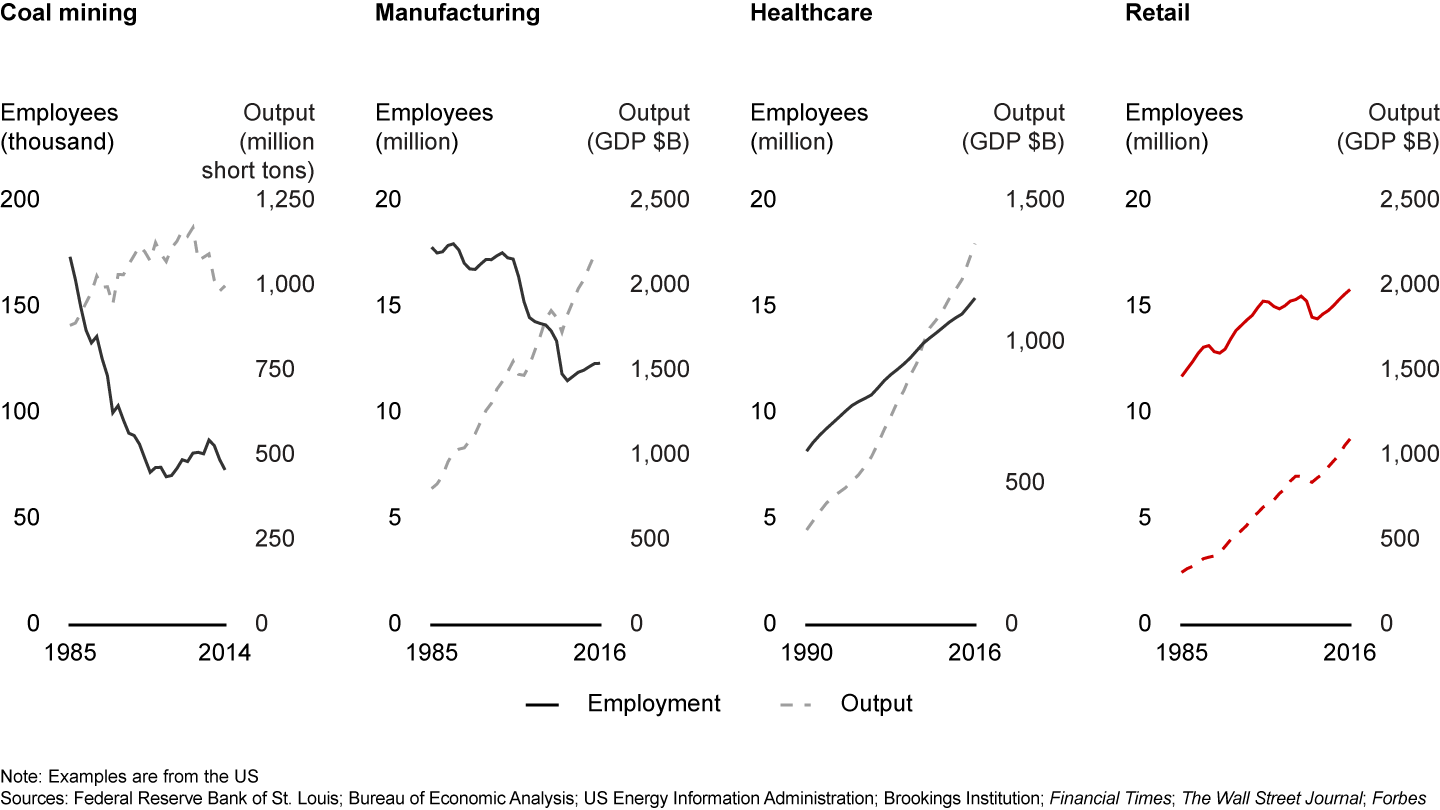
      Unlike other industries, retail has been largely immune to labor innovation and automation
      Unlike other industries, retail has been largely immune to labor innovation and automation
      Unlike other industries, retail has been largely immune to labor innovation and automation

      When it comes to nonwage selling, general and administrative (SG&A) expenses such as store supplies, maintenance and services, the traditional approach focuses on supplier savings. Some executives are now gaining an edge by questioning whether those goods or services need to be bought at all. What’s more, they avoid the most common mistake in nonwage SG&A: generating savings only to see them swallowed up by another part of the business. That rigor—often supported by zero-based budgeting—enables savings worth 8% to 12% of addressable spending.

      Finally, game-changing thinking can also reduce corporate and back-office costs. In the past, many companies trimmed headquarters spending in the expectation that 90% of the staff could do 100% of the old workload. Incumbent retailers need bigger savings today. Some have already realized that they have to do less as a consequence, and then carry out the remaining work differently. They therefore take a clean-sheet approach to their headquarters activities and ditch work that customers (both internal and external) don’t value, then use digital tools to streamline what’s left. This can save 15% to 30% of headcount costs, with half hitting the P&L in year one.

      Putting it all together

      Few retailers have run a full potential, integrated cost-savings push. Except for cost champions, most efforts have been disconnected one-offs, not a continuous drive tied to company strategy. This pick-and-mix approach means executives are used to postponing investments. When funds wouldn’t stretch, it wasn’t fatal to say, “Put home delivery on hold.” Those days are over. Executives at traditional retailers know that they have to invest on all fronts to have a shot at staying relevant (or afloat) in an Amazon-led era. They need to bankroll a reinvention of the customer experience, massive IT upgrades and scores of other improvements.

      A fully integrated program can help them achieve the long-term cultural change needed for this digital transition, as well as generate the cash to power it. Cost champions have shown the way by linking cuts to strategy. They connect savings with the need to fund growth. They know when their stores and services must be best in class, and when they can be good enough (best in cost). What’s more, having identified savings, they shepherd them through to the P&L. They avoid the curse that afflicts many CFOs: All business units declare “mission accomplished,” but the benefits somehow don’t hit the bottom line.

      When they can’t attack all options simultaneously, the more effective executives sequence their integrated savings program to minimize investment and maximize impact (see Figure 4). In the early days, they use quick wins such as nonwage SG&A savings to fund later steps; they might also start out by tackling wages at headquarters to set a frugal tone for the broader company.

      Figure 4
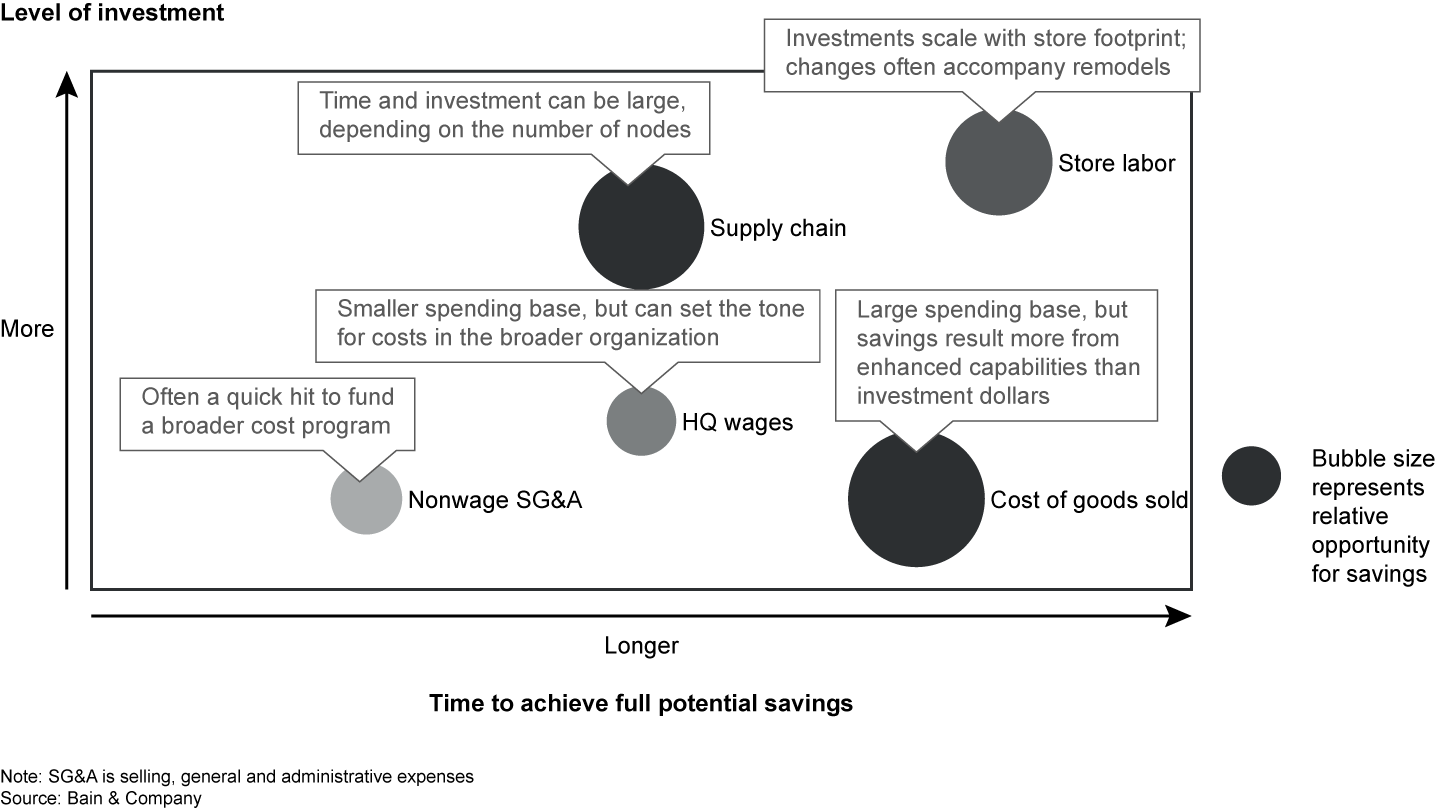
      The opportunities for savings, as well as the time and investment needed, vary across the cost bar
      The opportunities for savings, as well as the time and investment needed, vary across the cost bar
      The opportunities for savings, as well as the time and investment needed, vary across the cost bar

      A checklist for successful integrated cost reduction

      Executives can start by asking themselves seven questions before embarking on an integrated cost-reduction program:

      • Are we tying cost transformation to our broader strategy and reshaping how scarce resources are allocated?
      • Are we setting a bold goal—and using that goal to frame conversations about bigger trade-offs and the most difficult choices?
      • Will we generate near-term savings to make the program self-funding?
      • Do we understand where we need to be best in class and where we can be best in cost?
      • Does our thinking start with what the customer needs—and how we can stop funding work that doesn’t meet those needs?
      • Are we changing how our work is done by simplifying our organization, processes and systems?
      • At the end of the program, will we have built the discipline and culture to sustain the cost reductions over time?

      Kurt Grichel is a Bain & Company partner based in Seattle. Jon Webber is a partner based in Atlanta. Karl Zimmermann is a partner based in Boston. Christian Fenner is a partner based in Munich. All are members of Bain’s Retail practice.

      Read the Related Brief

      The Zero-Based Cost Revolution in Retail

      Why traditional belt-tightening is not enough.

      Authors
      • Headshot of Kurt Grichel
        Kurt Grichel
        Partner, Seattle
      • Headshot of Jon Webber
        Jon Webber
        Partner, Atlanta
      • Headshot of Karl Zimmermann
        Karl Zimmermann
        Partner, Boston
      • Headshot of Christian Fenner
        Christian Fenner
        Partner, Munich
      Related Industries
      • Retail
      Related Consulting Services
      • Accelerated Performance Transformation
      How We Can Help
      • Store Operations
      Future of Retail
      The Future of Retail in Asia-Pacific: Digital Leaders, Fast Modernizers and More

      Segmenting Asia-Pacific countries by digital disruption and market maturity can make sense of a disparate industry’s likely evolution.

      Read more
      Future of Retail
      Digital Product Passports Introduce New Sources of Value

      Most brands are pursuing DPPs for compliance. Those that adopt a consumer-centric position can create new value from their investment.

      Read more
      Retail
      The 2026 Retail Executive Agenda

      Here are letters to the C-suite to help strengthen strategy, catalyze collaboration, and expand value creation in the AI age.

      Read more
      Accelerated Performance Transformation
      Don’t Underestimate the Cost of Overcapacity

      Overcapacity is endemic to the paper and packaging industry, but these actions can help you maintain margins.

      Read more
      Future of Retail
      NRF APAC 2025: Data Is Redefining Retail

      No longer a mere optimizer, data has become a strategic driver.

      Read more
      First published in junio 2019
      Tags
      • Accelerated Performance Transformation
      • Future of Retail
      • Retail
      • Store Operations

      How We've Helped Clients

      Inspiring retail employees to think and act like owners

      See more related case studies

      Retailer's performance improvement boosts shareholder value

      See more related case studies

      Omnichannel strategy boosts fashion company

      See more related case studies

      Want to continue the conversation

      We help global leaders with their organization's most critical issues and opportunities. Together, we create enduring change and results

      Bain Insights. Our perspectives on critical issues global businesses face in today's challenging environment, delivered monthly.

      *I have read and understand Bain’s Privacy Notice.

      Please read and agree to the Privacy Policy.
      Bain & Company
      Contact us Sustainability Accessibility Terms of use Privacy Modern Slavery Act Statement Cookie Policy Sitemap Log In

      © 1996-2026 Bain & Company, Inc.

      Contact Bain

      How can we help you?

      • Business inquiry
      • Career information
      • Press relations
      • Partnership request
      • Speaker request
      See all offices