

Brief


|
|
Although most oil and gas companies are closely focused on preserving margins to weather the low-price storm, many are also looking ahead and thinking about how digital technologies and data analytics will transform their industry. Of course, analytics are not new to oil and gas. Unlike other industries that are enjoying a sudden embrace of analytic benefits, energy companies have long depended on rich pools of data to discover and better understand the potential in their reservoirs and other production opportunities. Even so, most have yet to capture the full potential of their data because they haven’t been able to generate actionable insights or make better and faster decisions based on data. That will change as oil and gas companies upgrade their digital capabilities and improve the way they connect these insights to their operating model. We expect to see dramatic cost savings and significant improvements in productivity and revenue. Cisco estimates companies could see 11% earnings growth across the value chain, with most of the cost savings upstream. One integrated oil company managed to save about 10% on unit costs by digitizing a remote offshore operations center. Another reduced operating costs per barrel by about 10% and improved recoverability of reserves by applying selective applications in intelligent oilfields through collective computing and sharing real-time information at all company levels. Even so, few have undertaken a structured and holistic approach to identifying which digital technologies can help create long-term sustainable advantage. Most of today’s digital initiatives don’t seek to disrupt operating or business models. Instead, companies are making improvements in technical or operational capabilities. These include predictive maintenance, completed analysis on wells and using geological data from similar oilfields to build geophysical models and choose drilling patterns. One reason for this incremental approach is that there is already a large, untapped potential in existing data, which companies can use to generate new insights with advanced analysis techniques. Another is that most companies aren’t ready for a big transformation because they lack the people, processes and capital required to make it happen. Challenges to going digitalGiven the challenging economics of the day, oil and gas companies need to put their investments in analytics where they will deliver the most bang for the buck (see Figure 1). 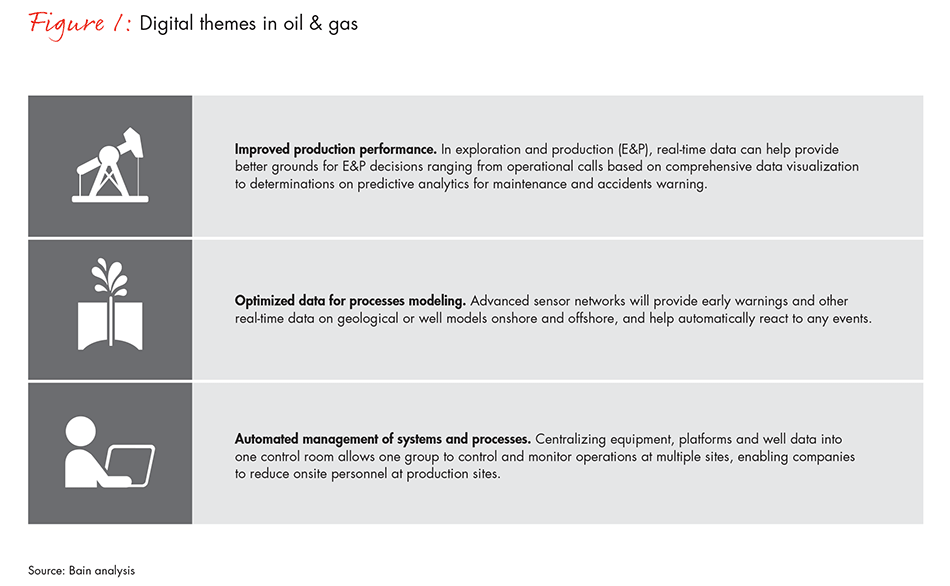 However, in our work, we frequently see companies facing three common challenges that are sure to limit their digital potential over the long term.
Tapping the full potentialGreater changes will come over time, but today most companies are still preparing the groundwork for the larger and more disruptive transformations that will come as oil and gas companies implement a broader range of digital technologies. As they put in place specific digital capabilities that can deliver fast results at reasonable costs, executives need to develop a strategic roadmap encompassing the digital strategy, operating model changes and, most importantly, people capabilities. Approaches differ, of course, from one company to the next, depending on appetite for risk, potential gains from digital and readiness for the transformation. But they typically include five key elements:
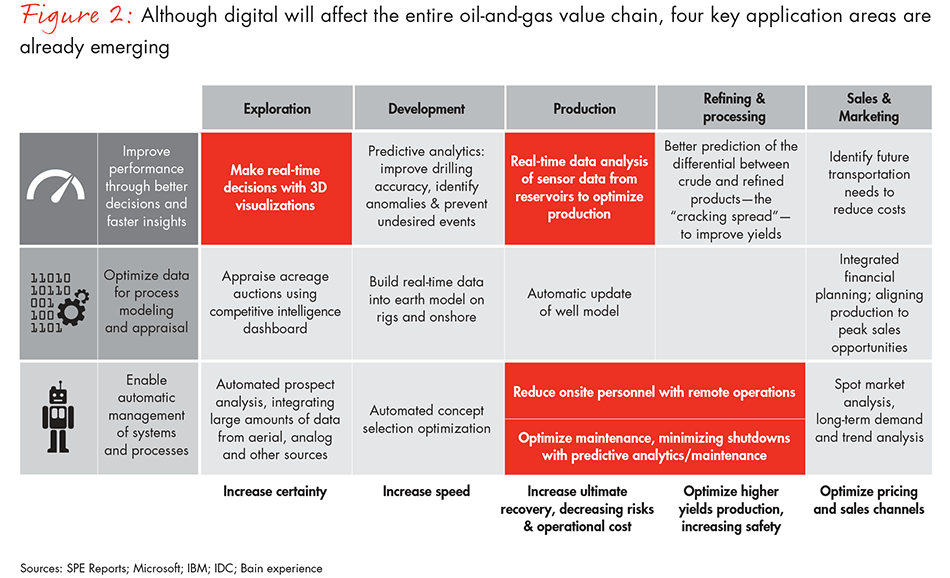 Every oil and gas company’s digital journey will differ, depending on their industry position, ambitions and opportunities. Digital leadership is not always the best strategy, and it can be expensive. However, at a time when low oil and gas prices are restricting investment capacity, this is one area of the business where cost has been decreasing and tools rapidly improving—so it should merit an increasing share of budget and focus. But whether a leader or fast follower, every oil and gas company will need to develop a strategic plan for how it will use digital technology to gain a competitive advantage over the next three to five years. All of these plans should include initiatives that offer short-term gains and build capabilities to develop long-term competitive advantage. Perhaps most importantly, they should all include details on how the flow of information necessitates changes to the operating model, and how each company plans to upgrade its talent and capabilities to make the most of its potential. Lodewijk de Graauw is a partner in Bain’s Perth office and Dmitry Naberezhnev is a Bain partner in Moscow. All three work with Bain’s Global Oil & Gas practice. |