Skip to Content
  • Offices

    Offices

    North & Latin America
    • Atlanta
    • Austin
    • Bogota
    • Boston
    • Buenos Aires
    • Chicago
    • Dallas
    • Denver
    • Houston
    • Los Angeles
    • Mexico City
    • Minneapolis
    • Monterrey
    • Montreal
    • New York
    • Rio de Janeiro
    • San Francisco
    • Santiago
    • São Paulo
    • Seattle
    • Silicon Valley
    • Toronto
    • Washington, DC
    Europe & Africa
    • Amsterdam
    • Athens
    • Berlin
    • Brussels
    • Copenhagen
    • Dusseldorf
    • Frankfurt
    • Helsinki
    • Istanbul
    • Johannesburg
    • Kyiv
    • Lisbon
    • London
    • Madrid
    • Milan
    • Munich
    • Oslo
    • Paris
    • Rome
    • Stockholm
    • Vienna
    • Warsaw
    • Zurich
    Middle East
    • Doha
    • Dubai
    • Riyadh
    Asia & Australia
    • Bangkok
    • Beijing
    • Bengaluru
    • Brisbane
    • Ho Chi Minh City
    • Hong Kong
    • Jakarta
    • Kuala Lumpur
    • Manila
    • Melbourne
    • Mumbai
    • New Delhi
    • Perth
    • Seoul
    • Shanghai
    • Singapore
    • Sydney
    • Tokyo
    See all offices
  • Alumni
  • Media Center
  • Subscribe
  • Contact
  • Chile | Español

    Select your region and language

    Global
    • Global (English)
    North & Latin America
    • Brazil (Português)
    • Argentina (Español)
    • Canada (Français)
    • Chile (Español)
    • Colombia (Español)
    Europe, Middle East, & Africa
    • France (Français)
    • DACH Region (Deutsch)
    • Italy (Italiano)
    • Spain (Español)
    • Greece (Elliniká)
    Asia & Australia
    • China (中文版)
    • Korea (한국어)
    • Japan (日本語)
  • Saved items (0)
    Saved items (0)

    You have no saved items.

    Bookmark content that interests you and it will be saved here for you to read or share later.

    Explore Bain Insights
  • Industries
    Main menu

    Industries

    • Aeroespacial y Defensa
    • Agroindustria
    • Químicos
    • Construcción e Infraestructura
    • Productos de Consumo
    • Servicios Financieros
    • Salud y Ciencias de la Vida
    • Maquinaria y Equipo Industrial
    • Medios y Entretenimiento
      Industries
      Medios y Entretenimiento
      • Media Lab
    • Metales
    • Minería
    • Petróleo y Gas
    • Papel y Empaque
    • Private Equity
      Industries
      Private Equity
      • Due Diligence
      • Exit Planning
      • Firm Strategy & Operations
      • Portfolio Value Creation
    • Sector Público y Social
    • Retail
    • Tecnología
    • Telecomunicaciones
      Industries
      Telecomunicaciones
      • Capital Expenditure
      • Telco Digital Transformation
    • Transporte
    • Viajes y Turismo
    • Servicios Públicos y Energías Renovables
  • Consulting Services
    Main menu

    Consulting Services

    • Customer Experience
    • Sustainability
    • Innovation
    • M&A
    • Operations
    • People & Organization
    • Private Equity
    • Sales & Marketing
    • Strategy
    • AI, Insights, and Solutions
    • Technology
    • Transformation
  • Digital
  • Insights
    Main menu

    Insights

    • Industry Insights
    • Services Insights
    • Bain Books
    • Webinars
    • Bain Futures
    View all Insights
    Featured topics
    • Tariff Response
    • Artificial Intelligence
    • Thriving in Uncertainty
    • Executive Conversations
    • Macro Trends
    • M&A Report
    • Healthcare Private Equity Report
    • Paper & Packaging Report
    • Technology Report
    • CEO's Guide to Sustainability
    • CEO Insights
    • CFO Insights
    • COO Insights
    • CIO Insights
    • CMO Insights
    View all featured topics
  • About
    Main menu

    About

    • What We Do
    • What We Believe
    • Our People & Leadership
    • Client Results
    • Awards & Recognition
    • Global Affiliations
    Further: Our global responsibility
    • Sustainability
    • Social Impact
    • World Economic Forum
    Learn more about Further
  • Carreras
    Main menu

    Carreras

    • Trabaja con Nosotros
      Carreras
      Trabaja con Nosotros
      • Find Your Place
      • Nuestras Áreas de Trabajo
      • Equipos Integrados
      • Estudiantes
      • Internships & Programs
      • Eventos de Reclutamiento
    • La Vida en Bain
      Carreras
      La Vida en Bain
      • Blog: Inside Bain
      • Historias Profesionales
      • Nuestra Gente
      • Dónde Trabajamos
      • Apoyando tu Crecimiento
      • Grupos de Afinidad
      • Beneficios
    • Impact Stories
    • Nuestro Proceso
      Carreras
      Nuestro Proceso
      • Qué Esperar
      • Entrevistas
    FIND JOBS
  • Offices
    Main menu

    Offices

    • North & Latin America
      Offices
      North & Latin America
      • Atlanta
      • Austin
      • Bogota
      • Boston
      • Buenos Aires
      • Chicago
      • Dallas
      • Denver
      • Houston
      • Los Angeles
      • Mexico City
      • Minneapolis
      • Monterrey
      • Montreal
      • New York
      • Rio de Janeiro
      • San Francisco
      • Santiago
      • São Paulo
      • Seattle
      • Silicon Valley
      • Toronto
      • Washington, DC
    • Europe & Africa
      Offices
      Europe & Africa
      • Amsterdam
      • Athens
      • Berlin
      • Brussels
      • Copenhagen
      • Dusseldorf
      • Frankfurt
      • Helsinki
      • Istanbul
      • Johannesburg
      • Kyiv
      • Lisbon
      • London
      • Madrid
      • Milan
      • Munich
      • Oslo
      • Paris
      • Rome
      • Stockholm
      • Vienna
      • Warsaw
      • Zurich
    • Middle East
      Offices
      Middle East
      • Doha
      • Dubai
      • Riyadh
    • Asia & Australia
      Offices
      Asia & Australia
      • Bangkok
      • Beijing
      • Bengaluru
      • Brisbane
      • Ho Chi Minh City
      • Hong Kong
      • Jakarta
      • Kuala Lumpur
      • Manila
      • Melbourne
      • Mumbai
      • New Delhi
      • Perth
      • Seoul
      • Shanghai
      • Singapore
      • Sydney
      • Tokyo
    See all offices
  • Alumni
  • Media Center
  • Subscribe
  • Contact
  • Chile | Español
    Main menu

    Select your region and language

    • Global
      Select your region and language
      Global
      • Global (English)
    • North & Latin America
      Select your region and language
      North & Latin America
      • Brazil (Português)
      • Argentina (Español)
      • Canada (Français)
      • Chile (Español)
      • Colombia (Español)
    • Europe, Middle East, & Africa
      Select your region and language
      Europe, Middle East, & Africa
      • France (Français)
      • DACH Region (Deutsch)
      • Italy (Italiano)
      • Spain (Español)
      • Greece (Elliniká)
    • Asia & Australia
      Select your region and language
      Asia & Australia
      • China (中文版)
      • Korea (한국어)
      • Japan (日本語)
  • Saved items  (0)
    Main menu
    Saved items (0)

    You have no saved items.

    Bookmark content that interests you and it will be saved here for you to read or share later.

    Explore Bain Insights
  • Industries
    • Industries

      • Aeroespacial y Defensa
      • Agroindustria
      • Químicos
      • Construcción e Infraestructura
      • Productos de Consumo
      • Servicios Financieros
      • Salud y Ciencias de la Vida
      • Maquinaria y Equipo Industrial
      • Medios y Entretenimiento
      • Metales
      • Minería
      • Petróleo y Gas
      • Papel y Empaque
      • Private Equity
      • Sector Público y Social
      • Retail
      • Tecnología
      • Telecomunicaciones
      • Transporte
      • Viajes y Turismo
      • Servicios Públicos y Energías Renovables
  • Consulting Services
    • Consulting Services

      • Customer Experience
      • Sustainability
      • Innovation
      • M&A
      • Operations
      • People & Organization
      • Private Equity
      • Sales & Marketing
      • Strategy
      • AI, Insights, and Solutions
      • Technology
      • Transformation
  • Digital
  • Insights
    • Insights

      • Industry Insights
      • Services Insights
      • Bain Books
      • Webinars
      • Bain Futures
      View all Insights
      Featured topics
      • Tariff Response
      • Artificial Intelligence
      • Thriving in Uncertainty
      • Executive Conversations
      • Macro Trends
      • M&A Report
      • Healthcare Private Equity Report
      • Paper & Packaging Report
      • Technology Report
      • CEO's Guide to Sustainability
      • CEO Insights
      • CFO Insights
      • COO Insights
      • CIO Insights
      • CMO Insights
      View all featured topics
  • About
    • About

      • What We Do
      • What We Believe
      • Our People & Leadership
      • Client Results
      • Awards & Recognition
      • Global Affiliations
      Further: Our global responsibility
      • Sustainability
      • Social Impact
      • World Economic Forum
      Learn more about Further
  • Carreras
    Popular Searches
    • Agile
    • Digital
    • Strategy
    Your Previous Searches
      Recently Visited Pages

      Content added to saved items

      Saved items (0)

      Removed from saved items

      Saved items (0)

      Report

      India SaaS Report 2021

      India SaaS Report 2021

      India’s next wave of technology giants will be SaaS companies.

      By Arpan Sheth, Aditya Shukla, Prabhav Kashyap Addepalli, and Gustaf Ericson

      • min read
      }

      Report

      India SaaS Report 2021
      en

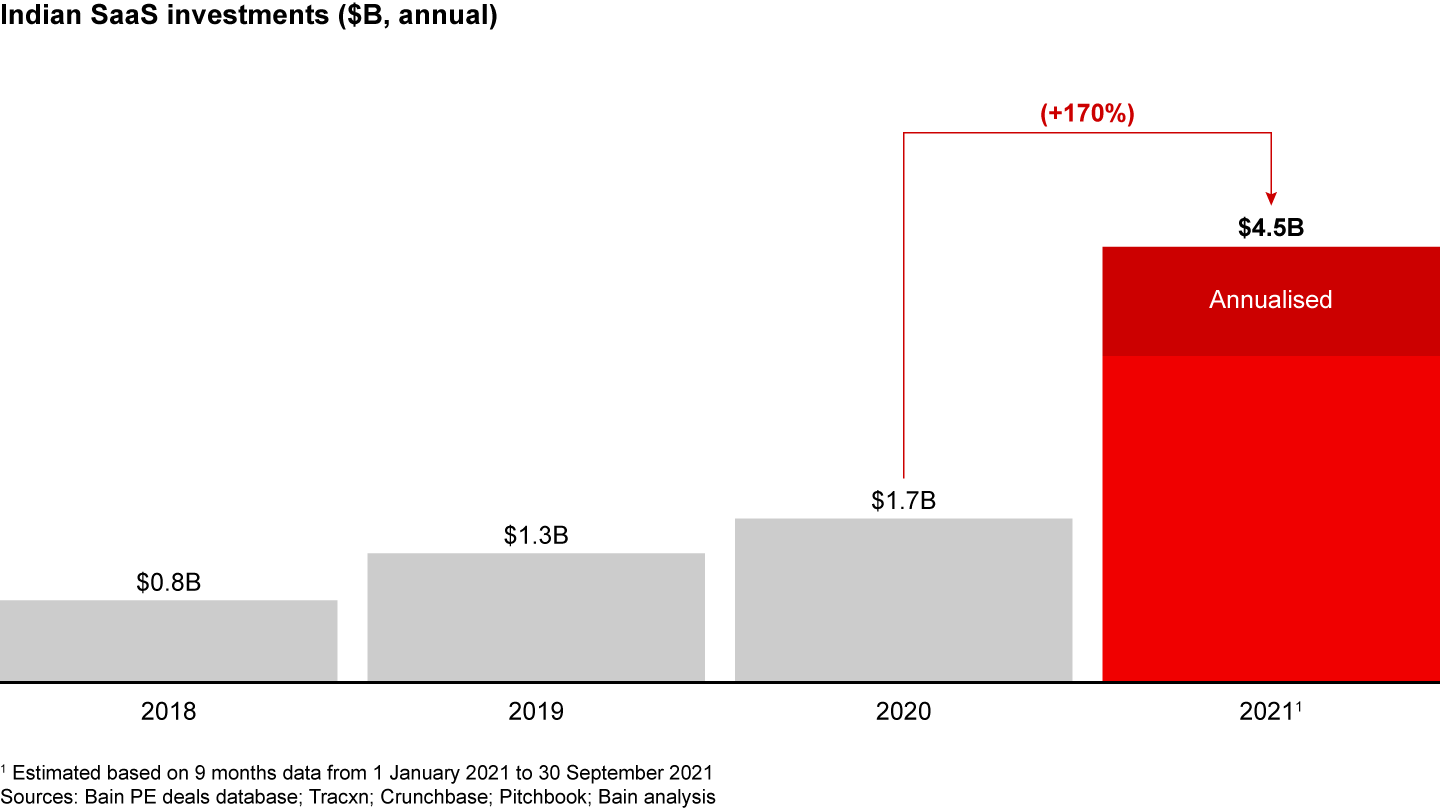
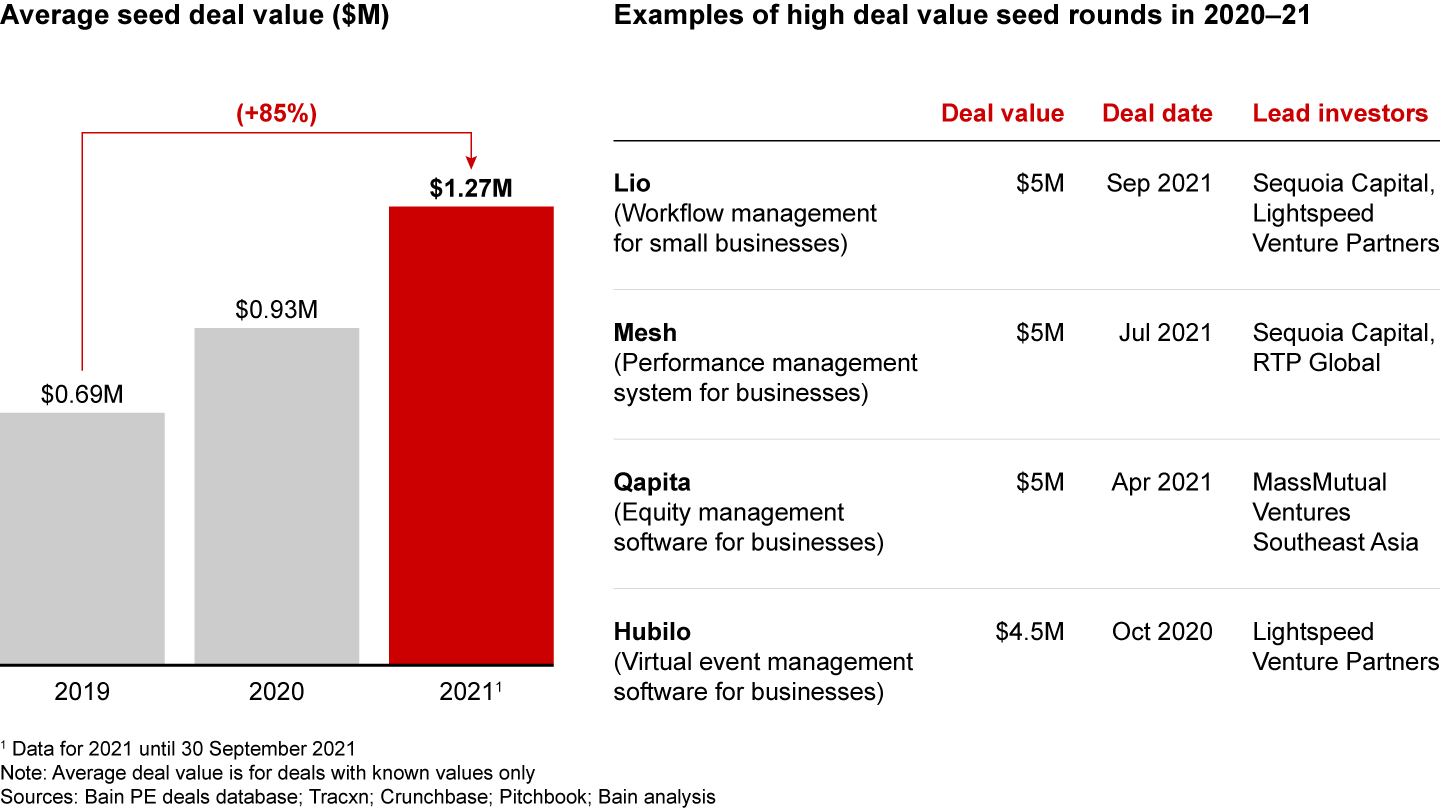
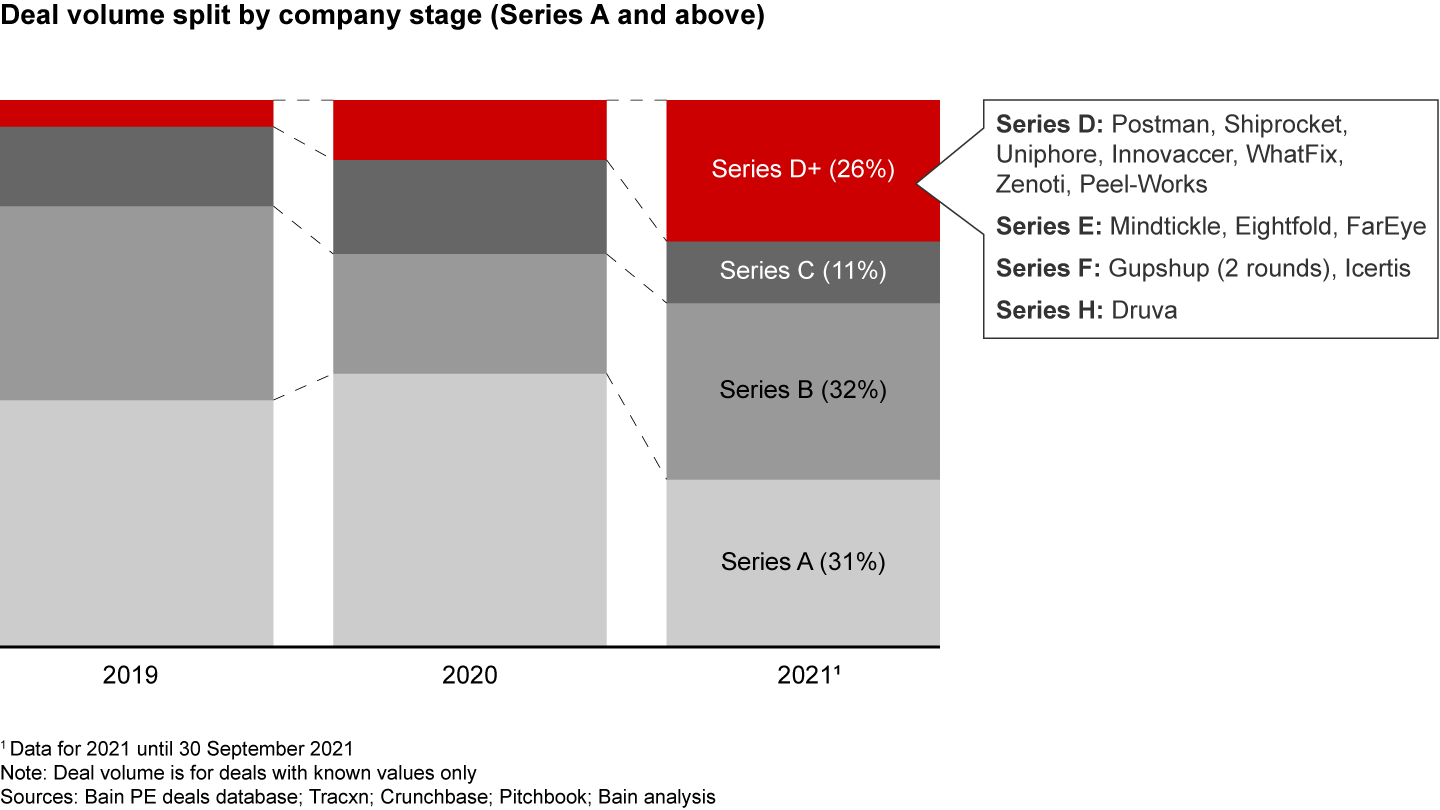
      The Indian Software as a Service (SaaS) landscape continues to mature rapidly, with more companies reaching larger scale and driving heightened investor interest. Investment in SaaS increased 170% over 2020 and is expected to reach $4.5 billion in 2021, accounting for 8% of the overall private equity and venture capital deal value in India. This interest spans both early-stage Indian SaaS companies, with an 85% increase in average value of seed rounds over 2019, and later-stage SaaS companies, with a 20 percentage point increase in share of Series D+ funding rounds over 2019.

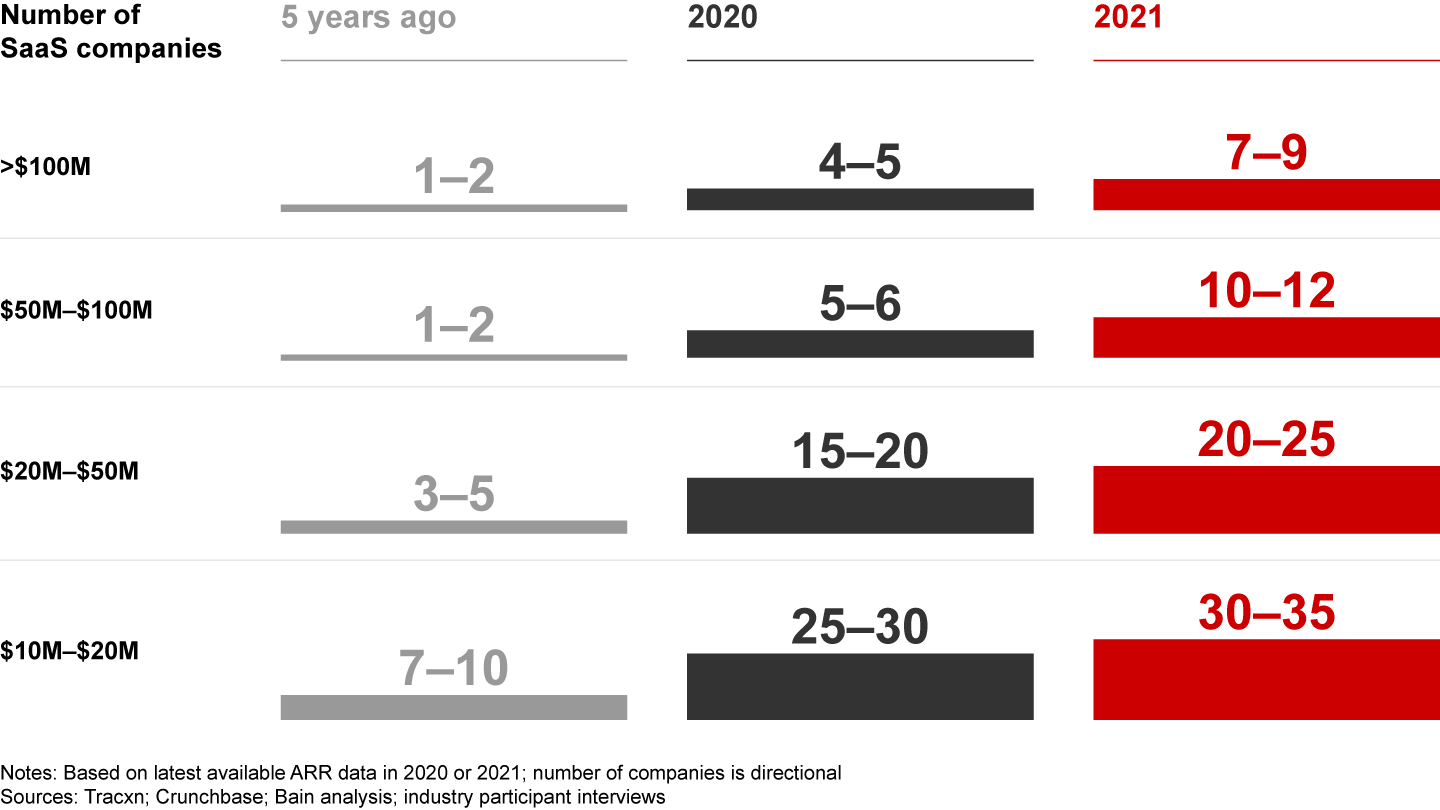
      Indian SaaS companies that are maturing and have proven scalability are driving this heightened interest across investment stages. In 2021, more than 35 Indian SaaS companies had $20M+ annual recurring revenue (ARR)—a sevenfold increase over five years—with between seven and nine of these companies reaching the $100M ARR milestone (versus one to two companies five years ago).

      India’s SaaS transformation is driving value creation in four ways:

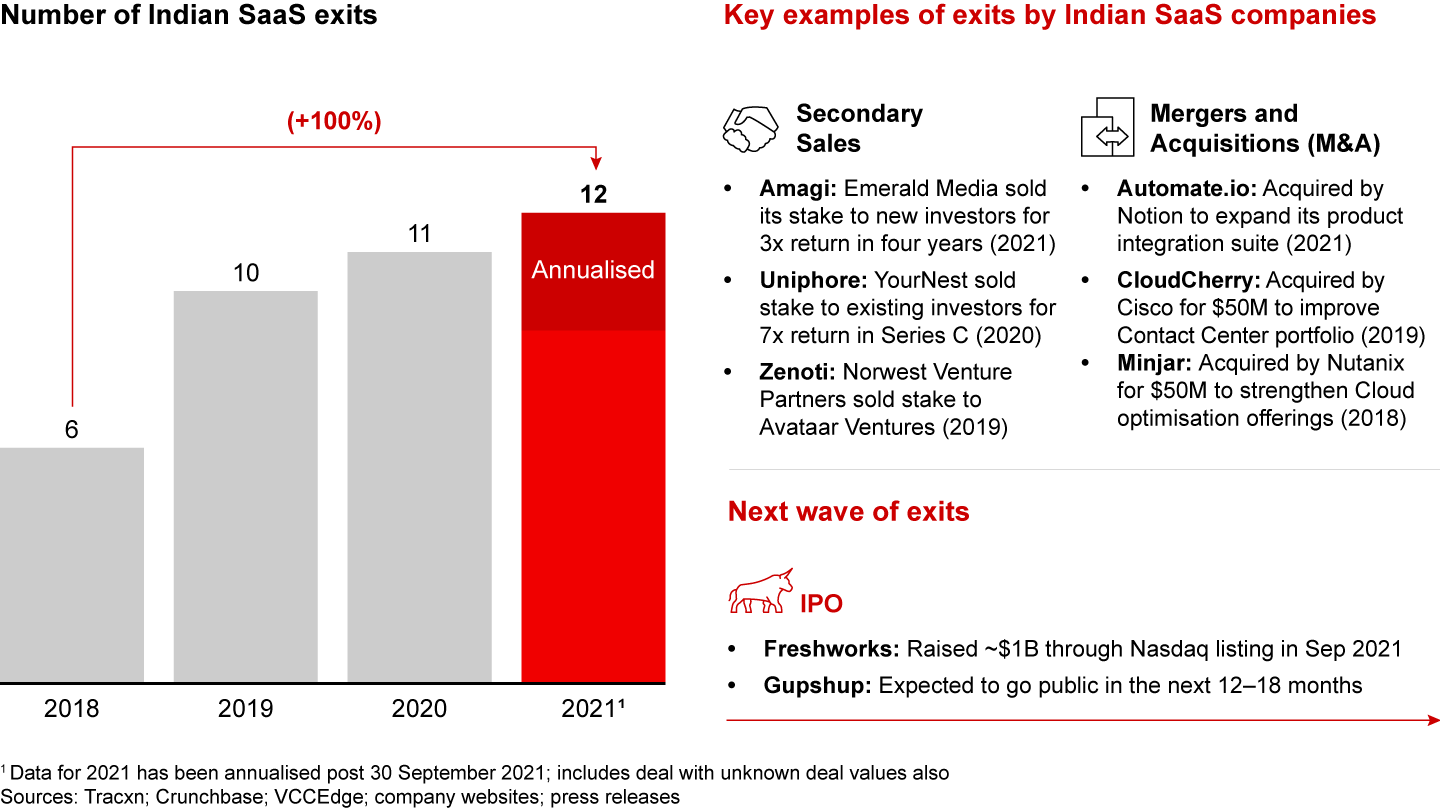
      1. Growth in exits: The number of Indian SaaS exits increased 100%, from 6 in 2018 to 12 in 2021, with the Freshworks initial public offering (IPO) initiating a new wave of exits.
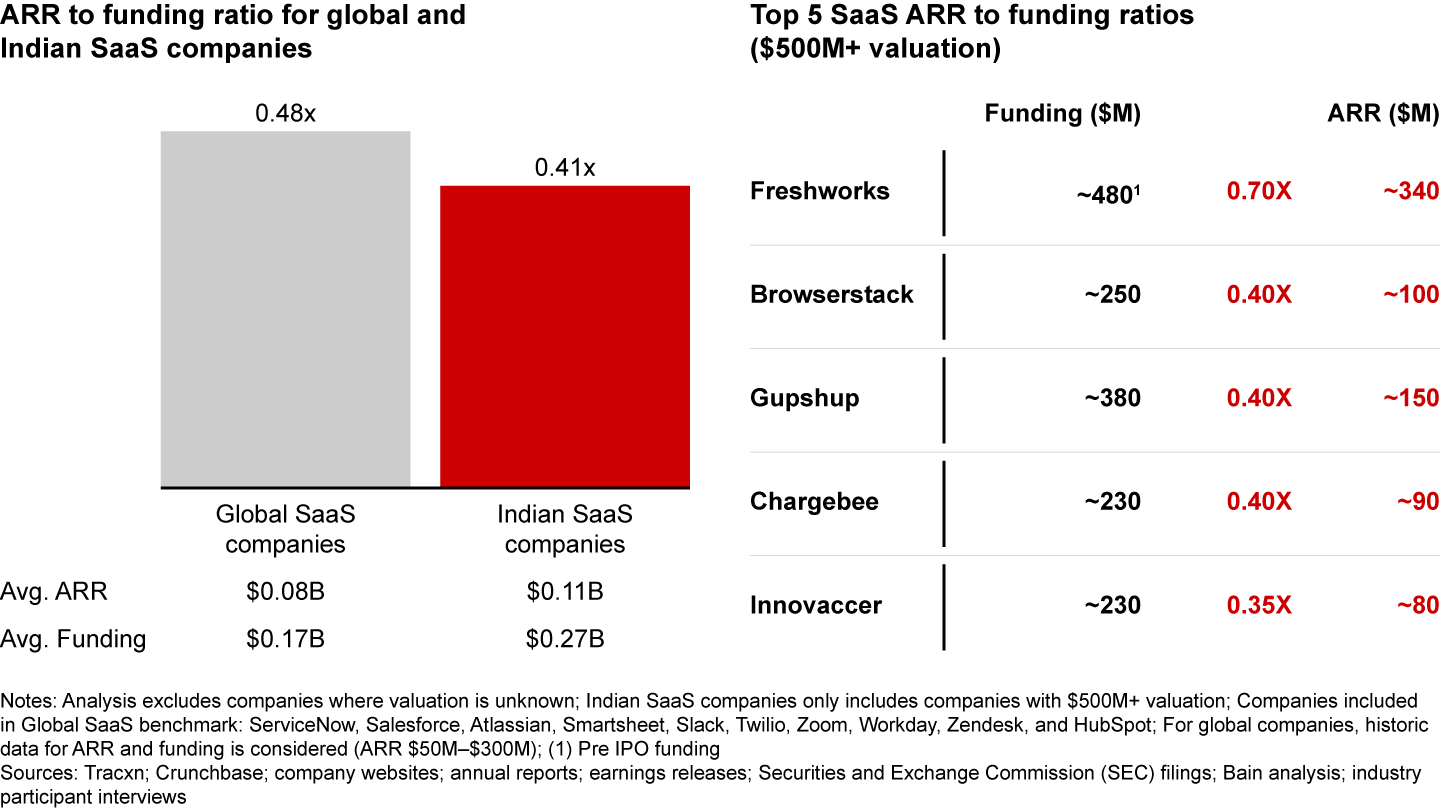
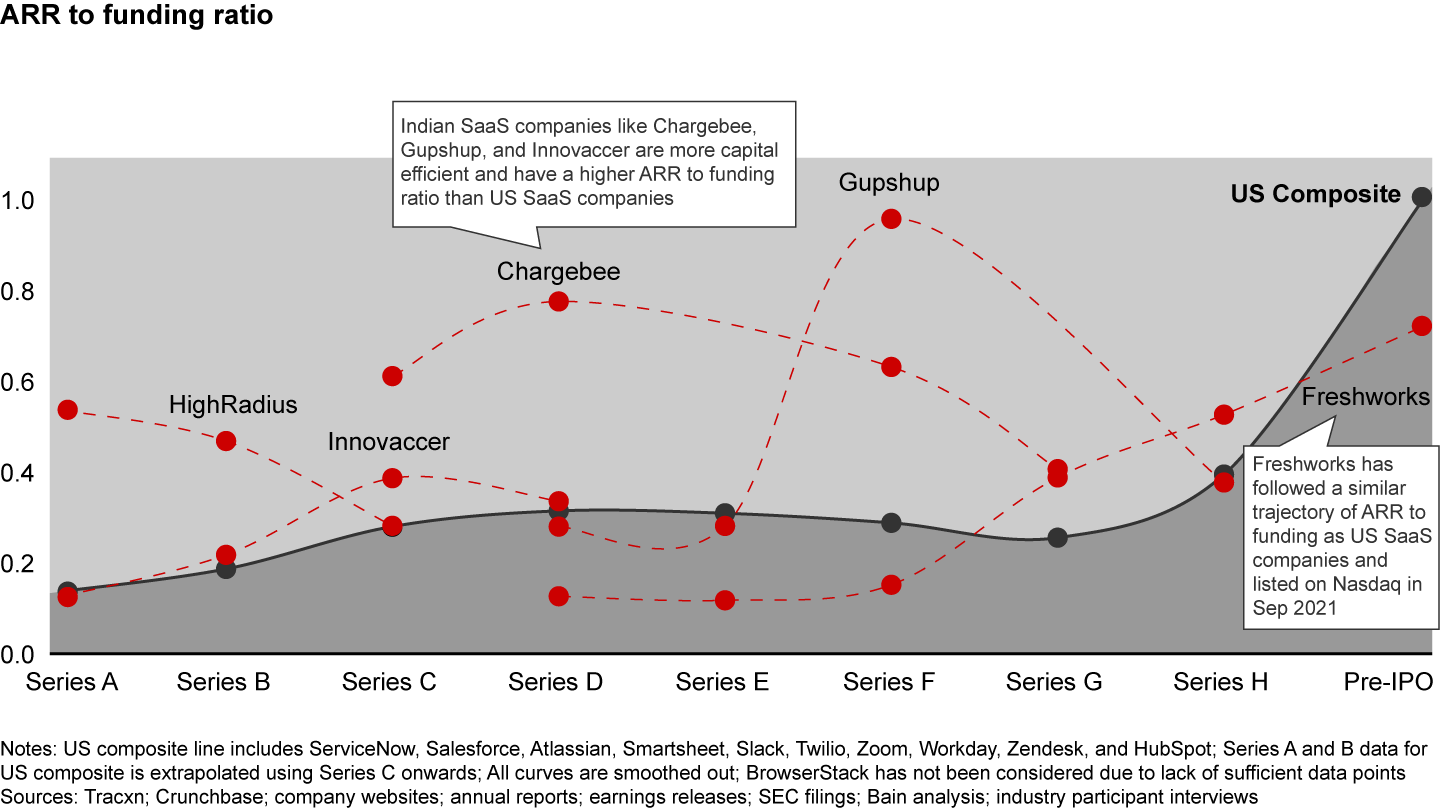
      2. High capital efficiency: Indian SaaS firms have excellent ARR-to-funding ratios, in line with global SaaS peers, with select Indian companies even outperforming their US counterparts.
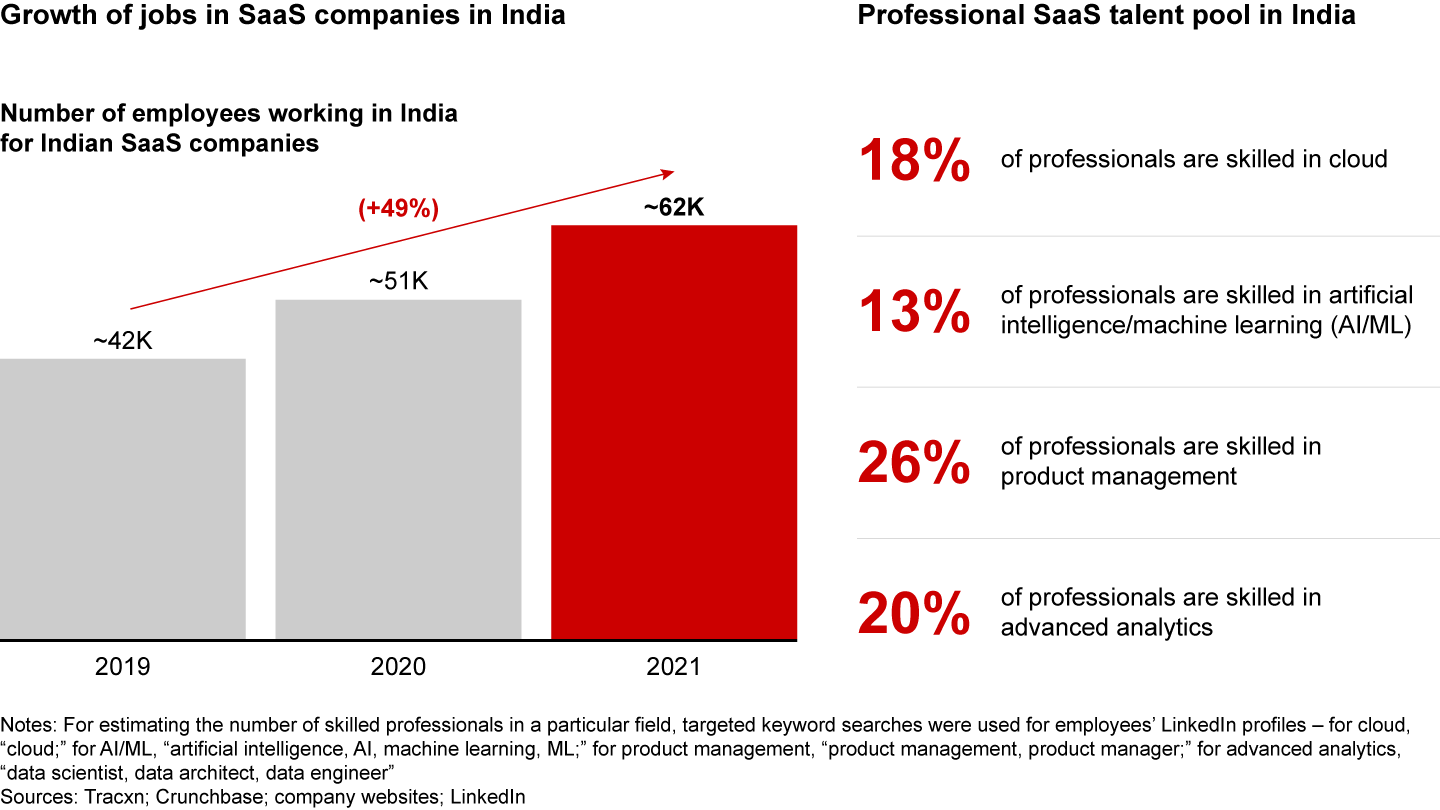
      3. Creation of talent pools: Indian SaaS companies are building a talent pool of professionals with SaaS-relevant skills and currently employ more than 62,000 people in India.
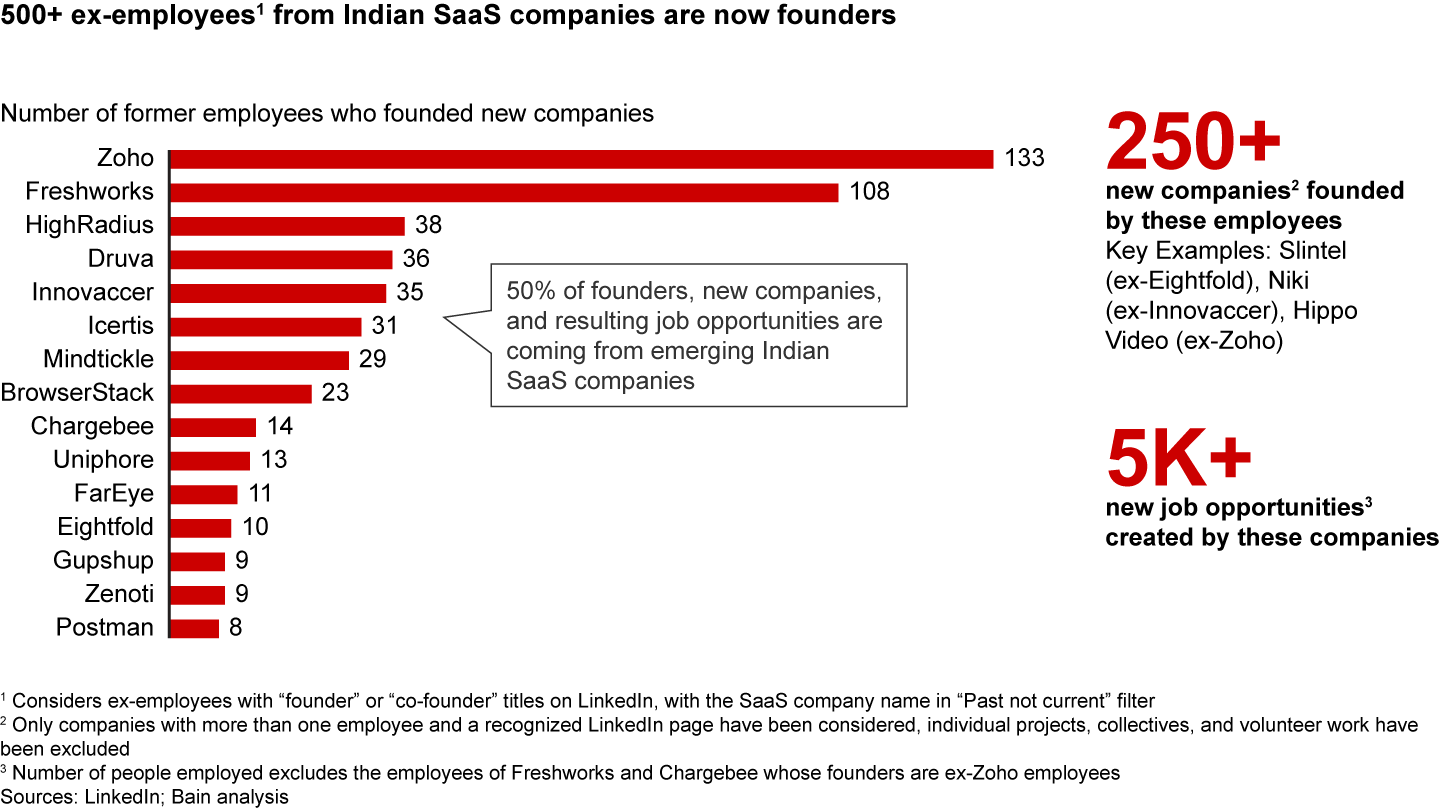
      4. Cascade effects: More than 250 new Indian firms have been founded by former employees of Indian SaaS companies and now employ more than 5,000 people.

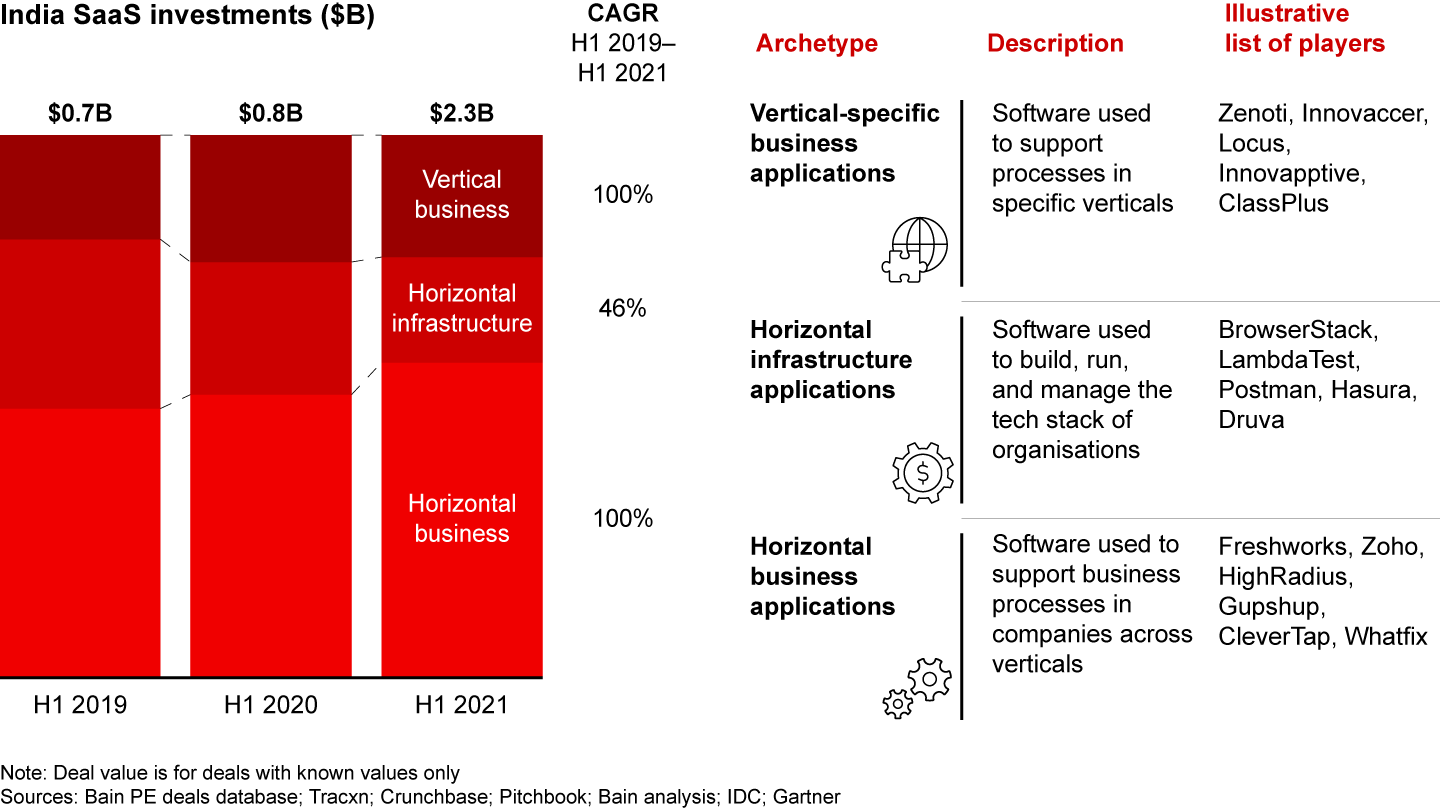
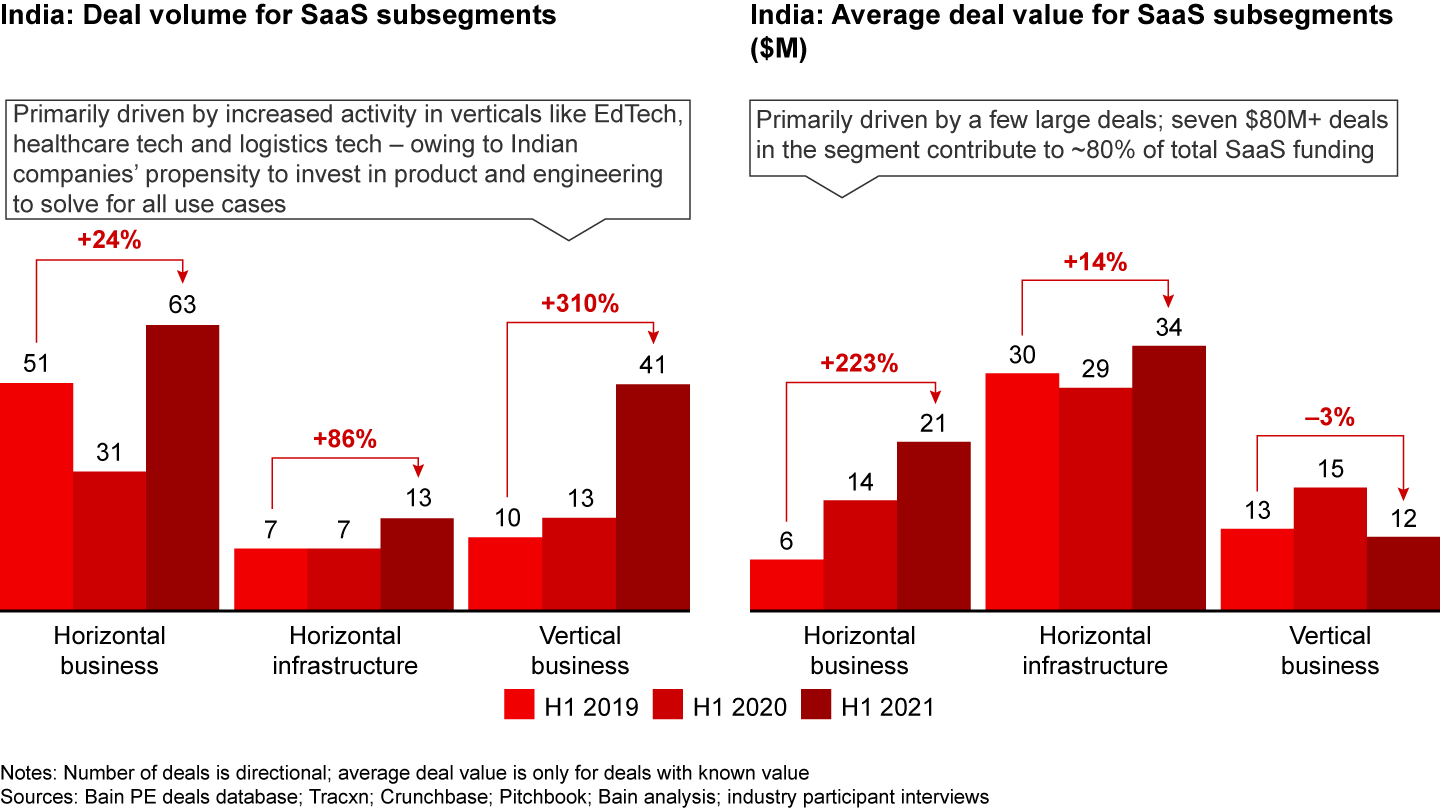
      Horizontal business software remains the largest subsegment from an investment standpoint, accounting for more than half of all SaaS funding in India (with vertical business software and horizontal infrastructure software composing the remainder). Vertical business software has seen 100% year-over-year growth, with several Indian success stories emerging. Growth is primarily driven by an increased number of deals for vertical business software and larger deal sizes for horizontal business software.

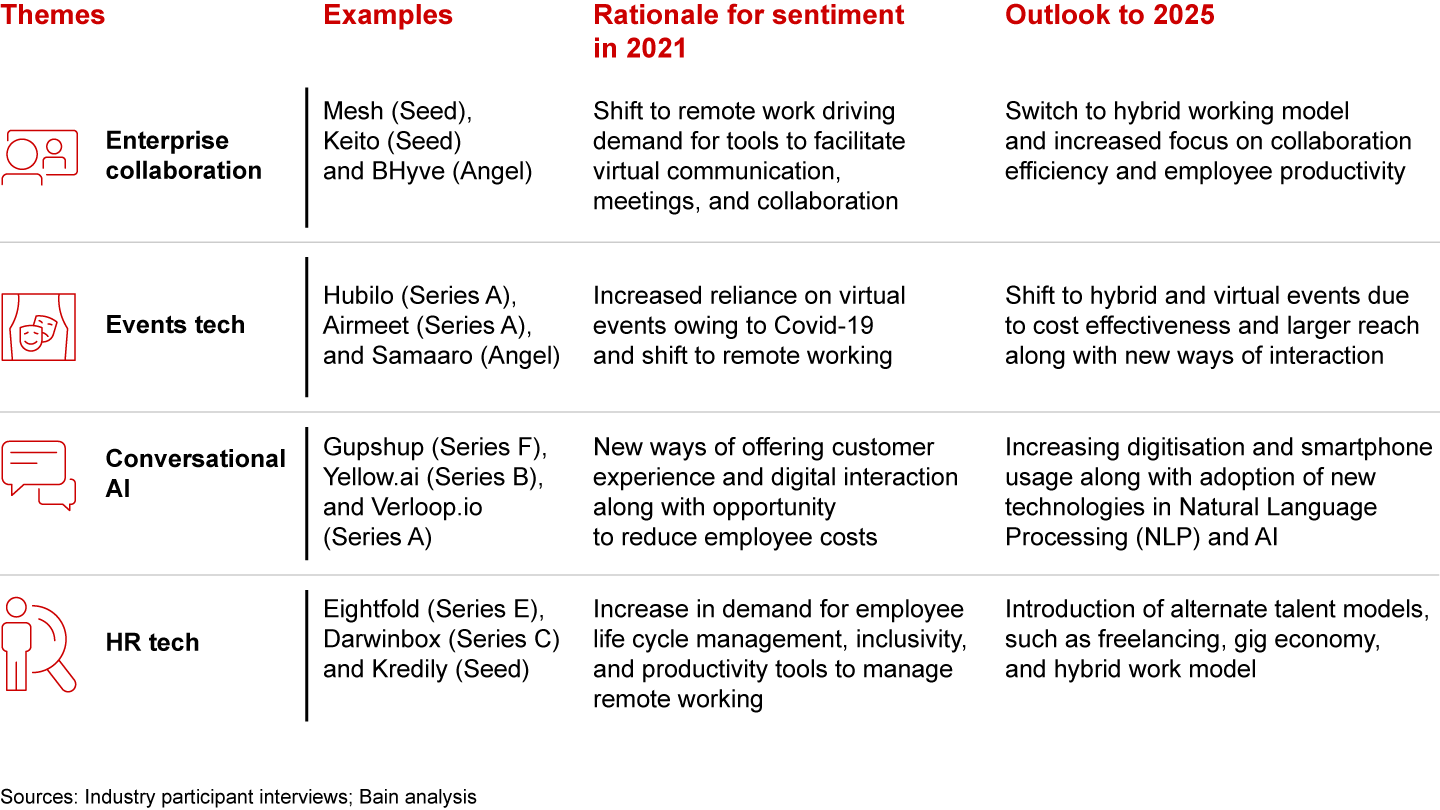
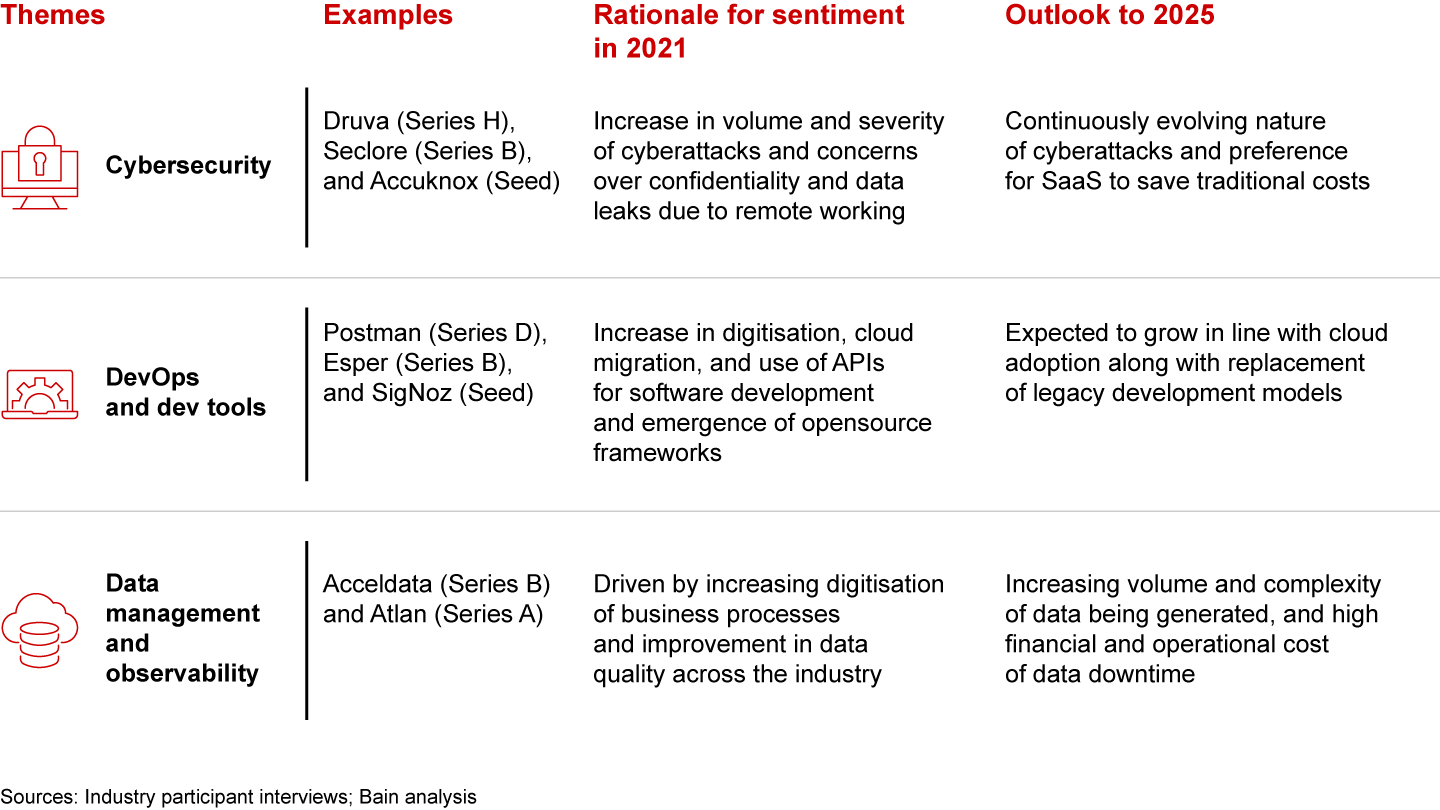
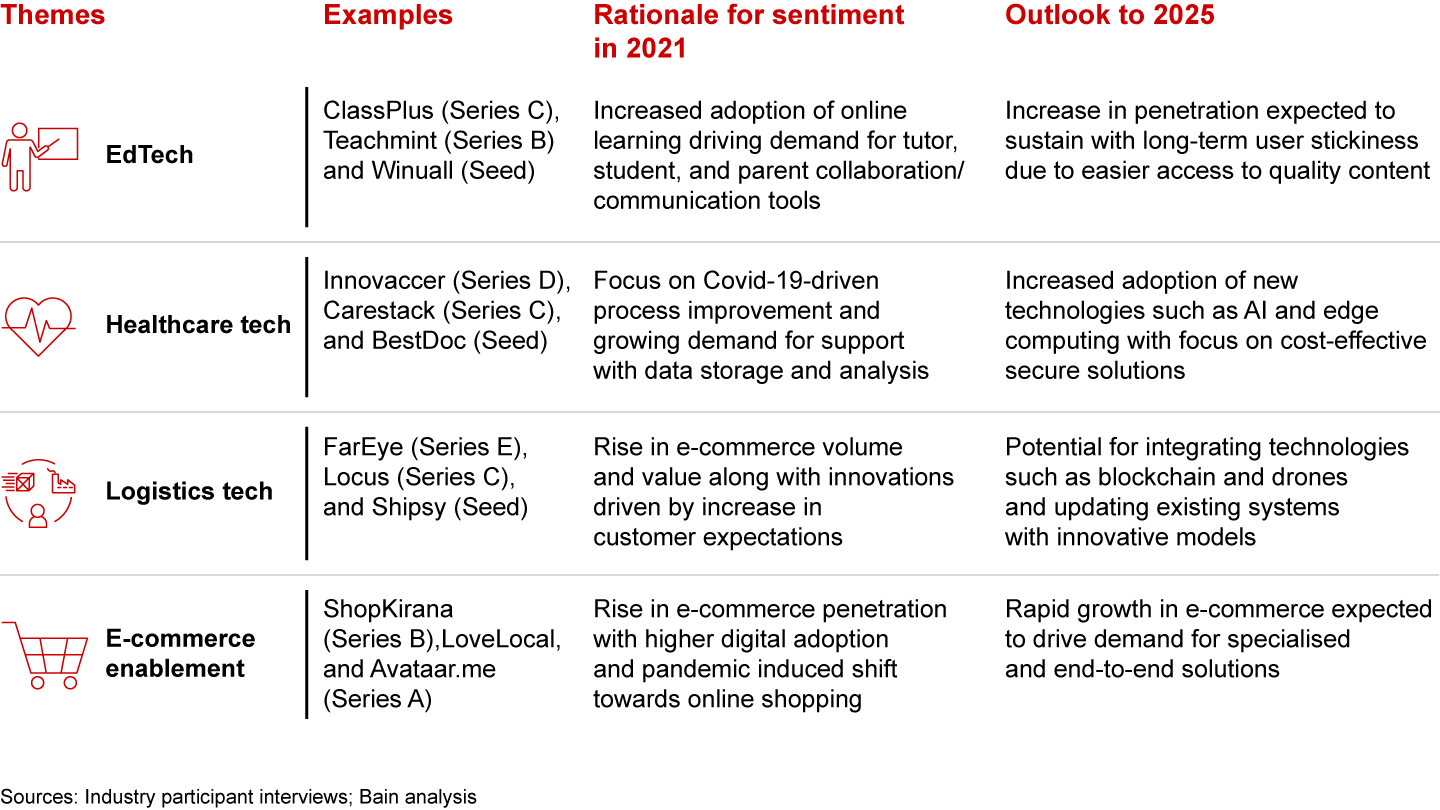
      Within these SaaS subsegments, we see numerous noteworthy themes, based on the presence of both mature and highly promising early-stage companies:

      • Horizontal business software: enterprise collaboration, events tech, conversational artificial intelligence (AI), and human resources (HR) tech
      • Horizontal infrastructure software: cybersecurity, DevOps and dev tools, and data management and observability
      • Vertical business software: edtech, healthcare tech, logistics tech, and e-commerce enablement

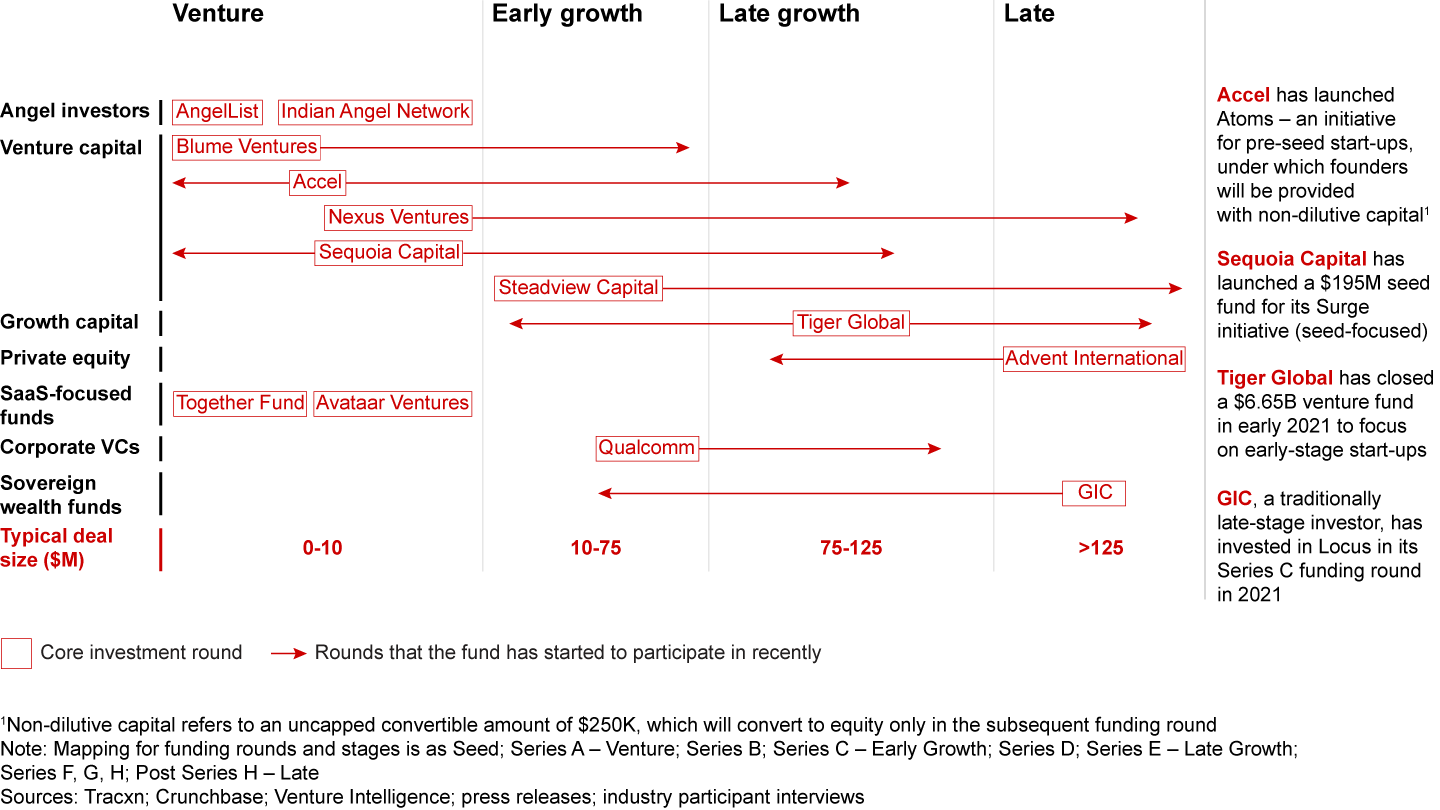
      The continued growth in Indian SaaS funding has attracted an increasingly diverse investor base. India has witnessed the emergence of SaaS-focused funds, combined with growing interest from new investor categories, such as corporate venture capital (VC) and sovereign wealth funds. Investors are also increasingly active across investment stages, with traditionally early-stage investors now focusing on growth investments and later-stage investors participating in earlier rounds. As an example, Accel has invested in seed-stage start-ups like Airmeet and Zomentum, as well as Series C+ start-ups like Zinier and Mindtickle.

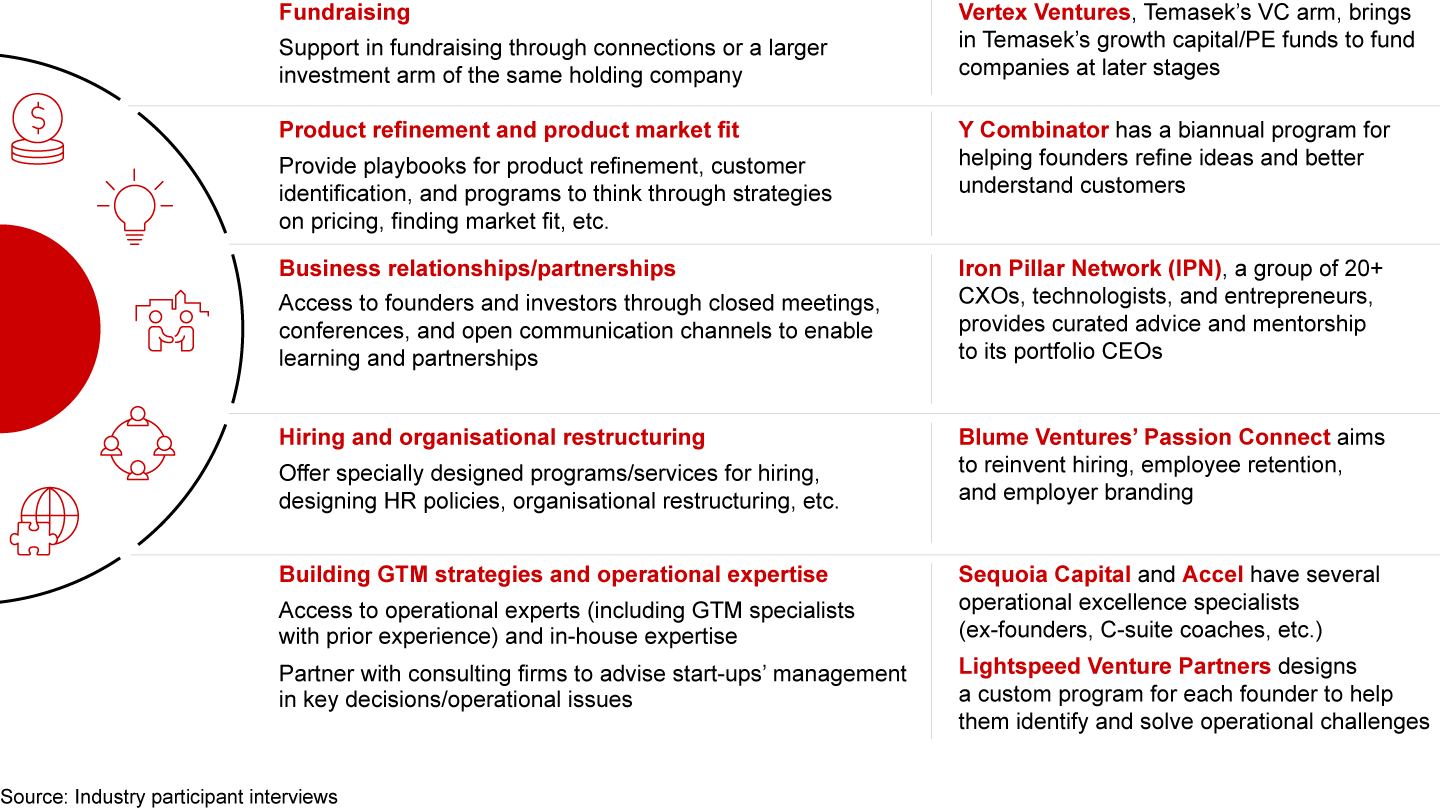
      As the Indian SaaS landscape matures, founders have begun to expect greater involvement from investors. Investors are increasingly seeking to add value beyond simply providing capital and connections by providing operational support on go-to-market (GTM), product growth, expansion, and recruitment.

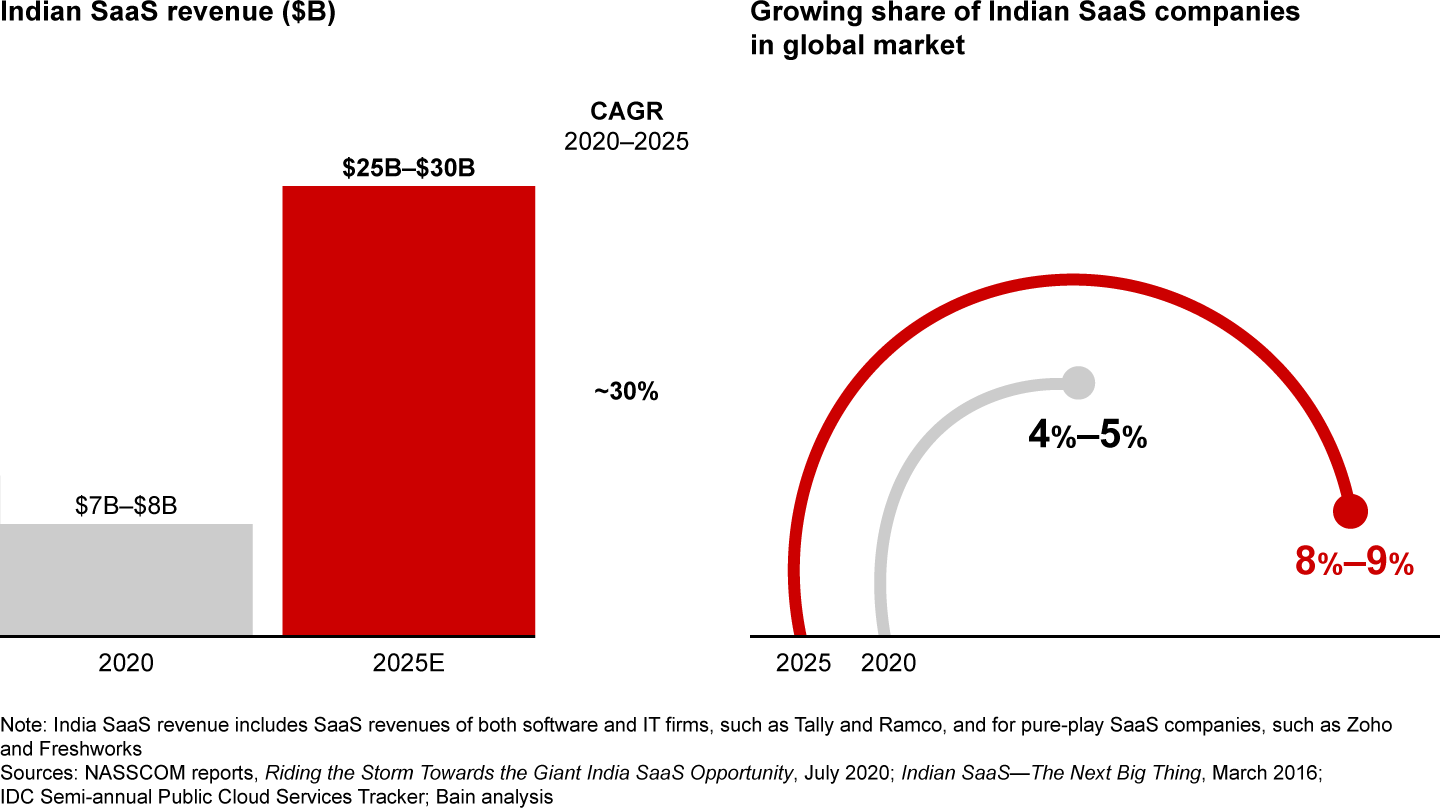
      With a growing number of world-class founders and strong investor support, Indian SaaS companies are poised to reach $30 billion in revenue by 2025, capturing an 8% to 9% share of the global SaaS market.

      Winning formula for Indian SaaS founders

      In our experience, winning SaaS companies exhibit a combination of the following key characteristics:

      • Vision and strategy: playing in a large, well-defined market and having a thoughtful, differentiated product vision
      • Winning approach: investing time in achieving the right product-market fit, designing pricing and GTM actions to support the product, and maintaining a strong focus on customer success
      • Enablers: setting up a global organisation with a culture of innovation and teamwork

      We repeatedly encounter three business focus areas among Indian SaaS companies as they scale:

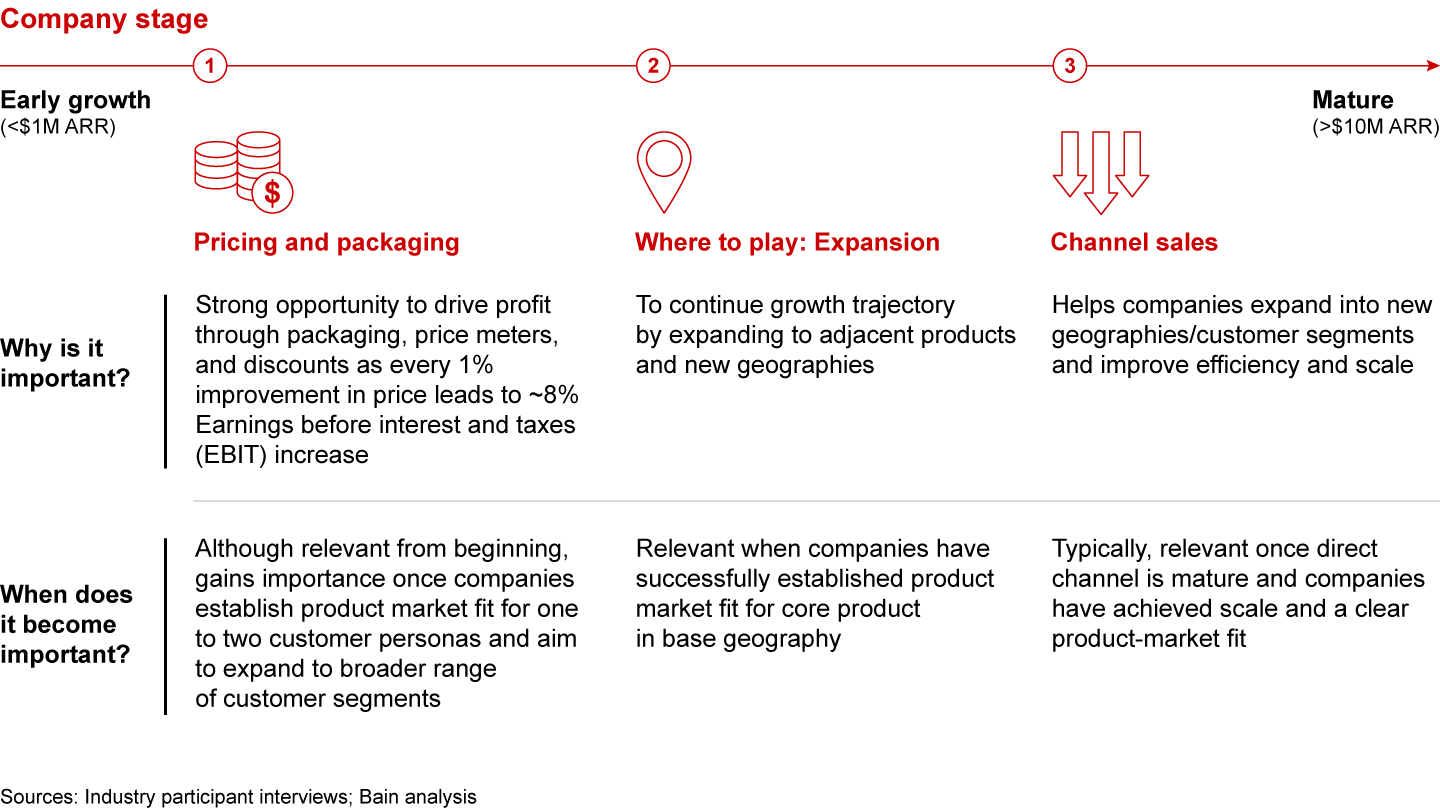
      • Pricing and packaging that serve a broader range of customer segments and drive profit through a suitable price meter and level
      • Entering adjacencies across products and geographies to continue driving growth
      • Setting up effective channel sales to expand into new geographies or customer segments and to improve efficiency at scale

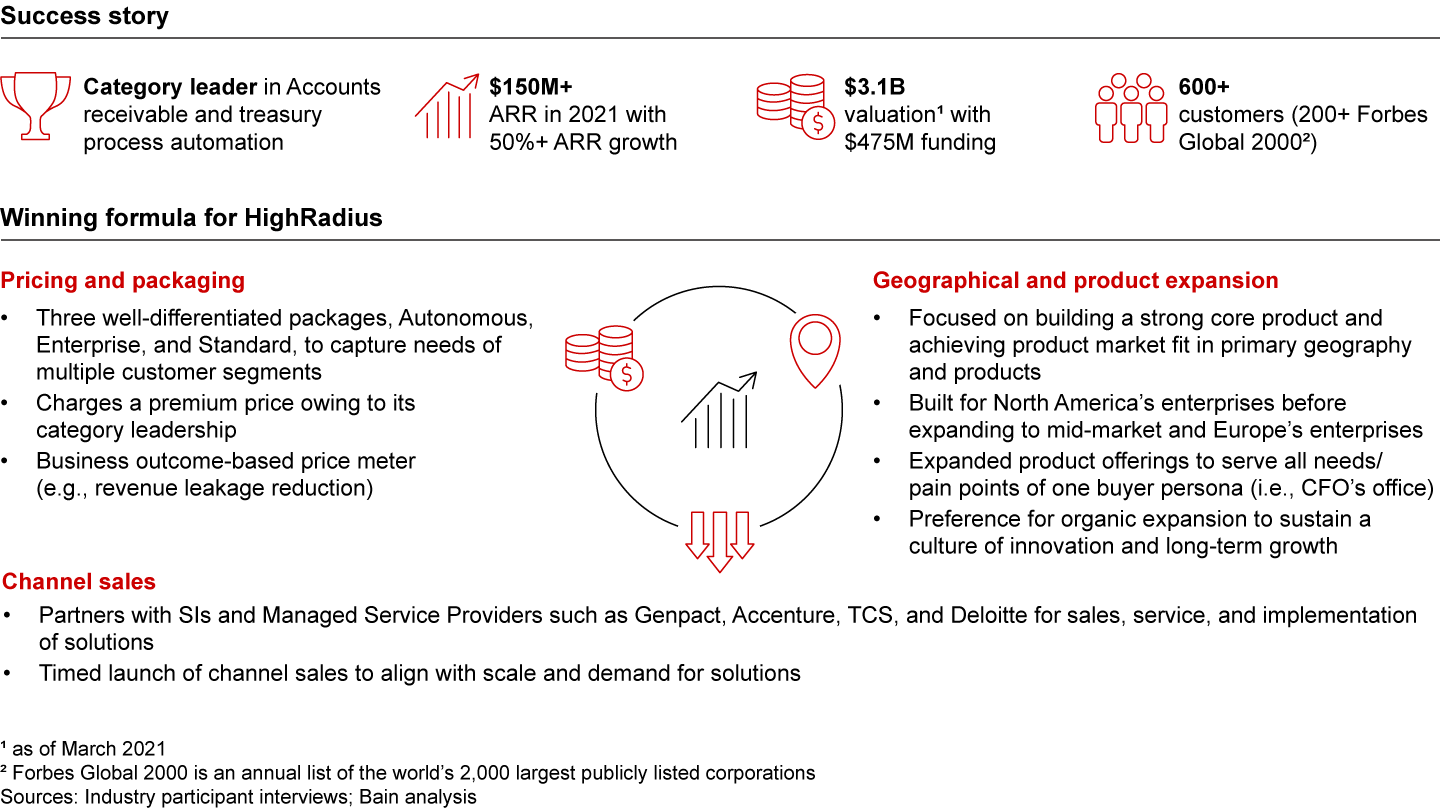
      Getting these winning business elements right can deliver tremendous business growth. HighRadius, for example, has exhibited several of these winning characteristics over the course of its journey. Before expansion to Europe and small and medium-sized businesses (SMBs), HighRadius focused on building a strong core product and achieving product market fit for North American enterprises. The company supported this growth through carefully curated packages and an outcome-based price meter. With scale, HighRadius started effectively engaging with channel partners for sales and implementation.

      Ecosystem enablement

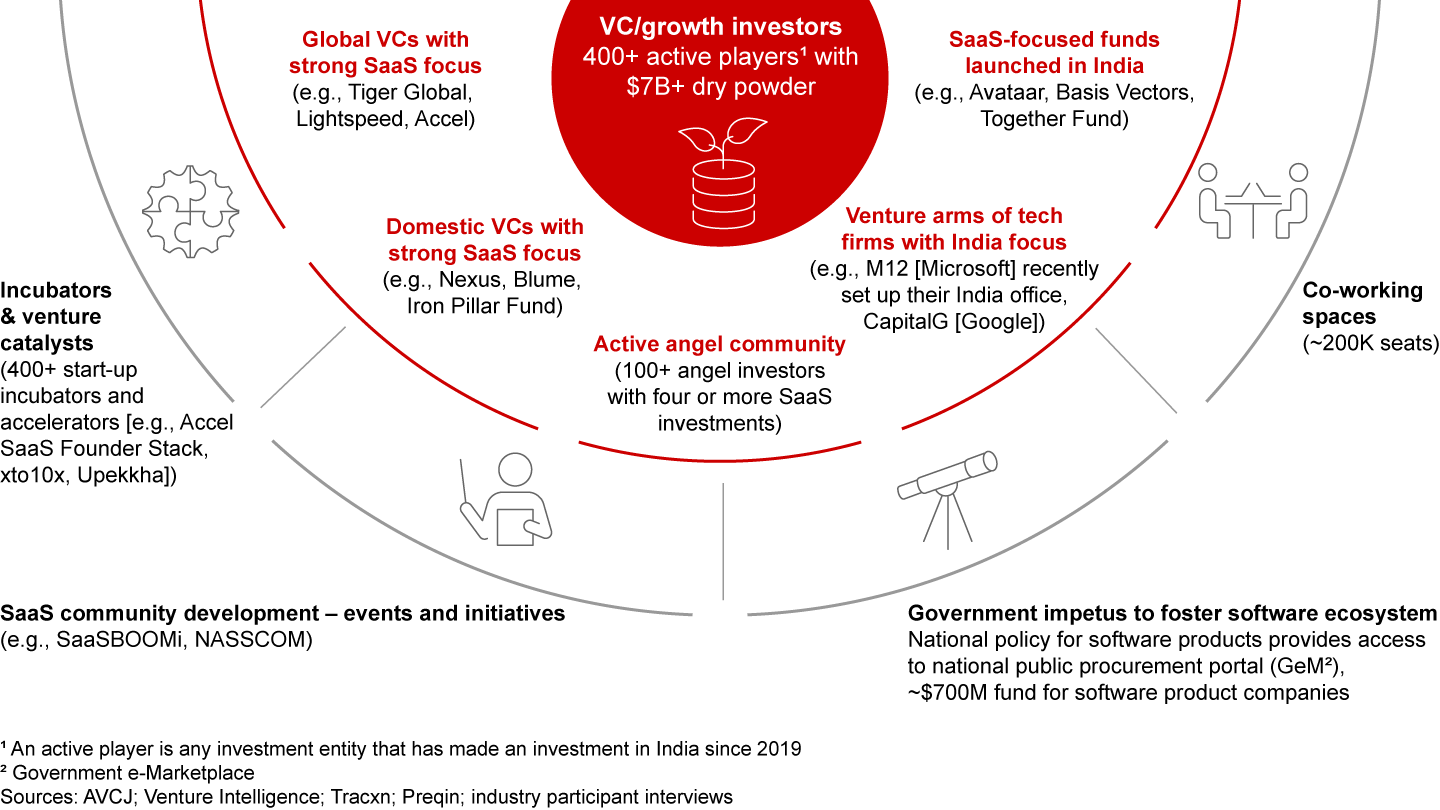
      India has a thriving ecosystem of SaaS enablers, including domestic and global investors, numerous incubators and accelerators (such as xto10x and Upekkha), and events and initiatives sponsored by communities such as NASSCOM and SaaSBOOMi.

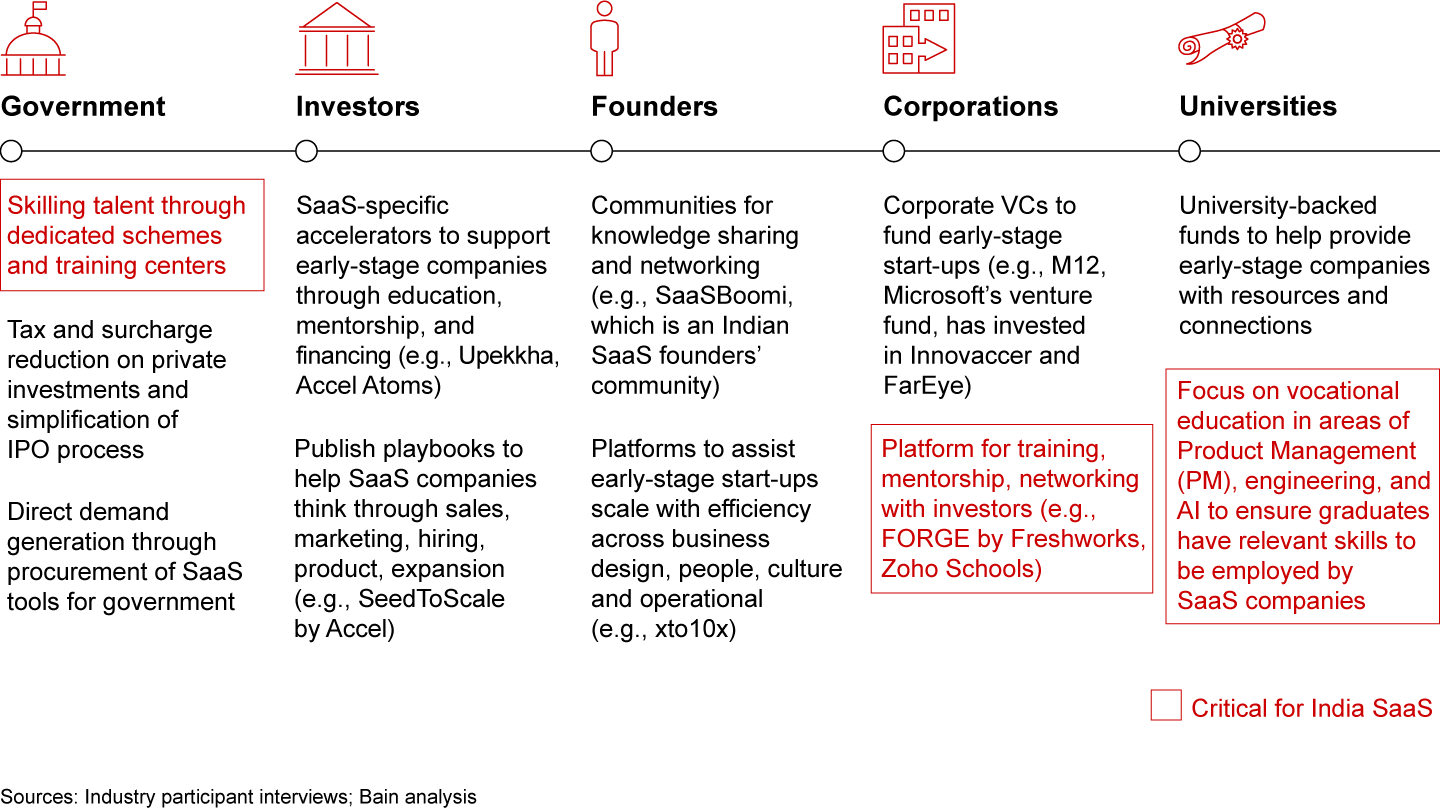
      To further strengthen India’s SaaS ecosystem, stakeholders can take several initiatives:

      • Government: Train talent and simplify regulations related to taxation and IPOs
      • Investors: Help founders by providing mentorship, funding, and access to founder and investor communities and publishing playbooks to help refine products, sales strategy, and the hiring process
      • Founders: Enable knowledge sharing and networking to help one another grow efficiently.
      • Corporates: Provide funds, training, and mentorship to Indian SaaS companies
      • Universities: Incorporate vocational training to produce talent with relevant skills

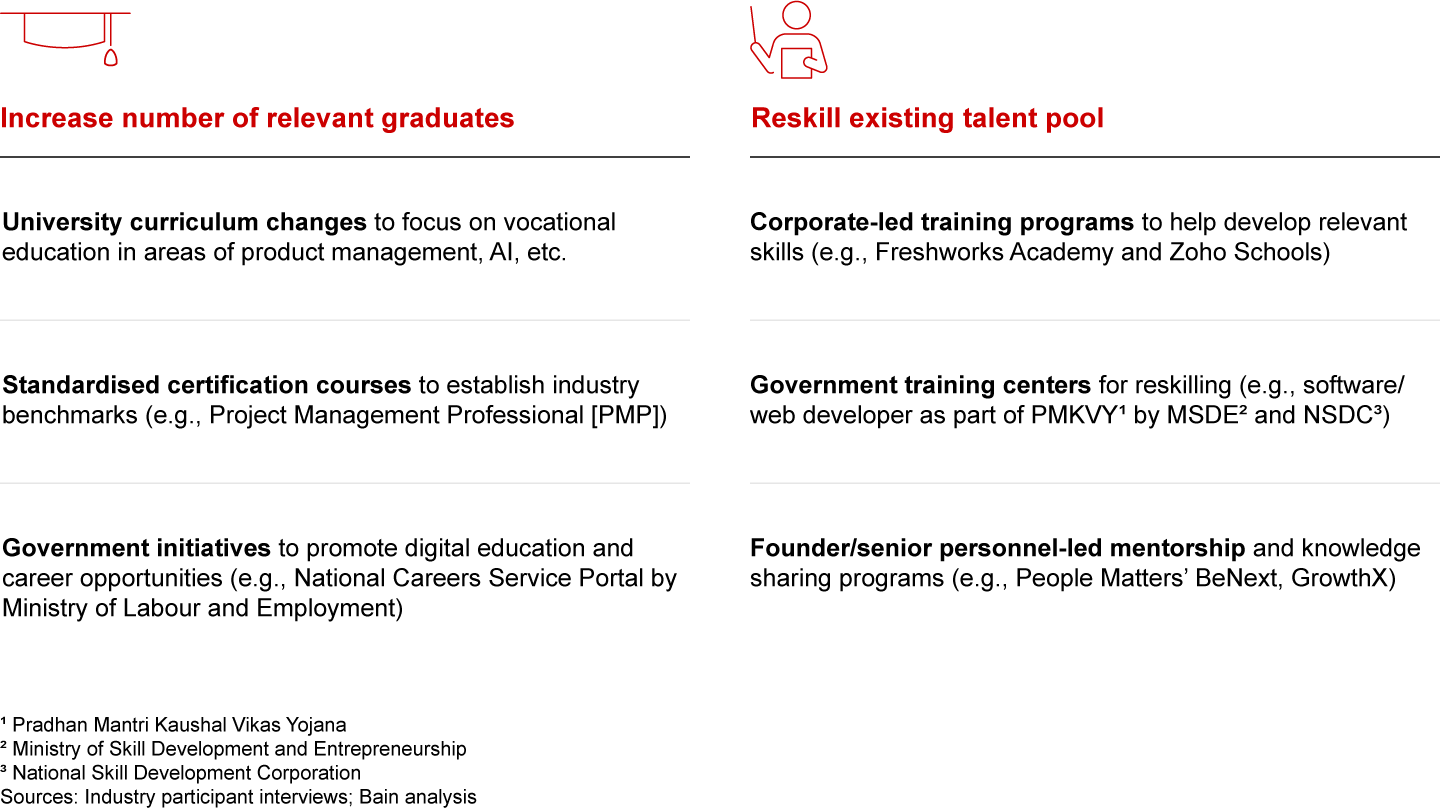
      Initiatives that focus on improving talent are especially critical, given that the talent demand-supply gap remains a key issue for Indian SaaS companies. To meet the growing demand for talent, India should focus on increasing the number of graduates with relevant skills while reskilling the existing talent pool to better equip them for an evolving workplace.

      We have seen countries such as the US and Canada successfully implement initiatives across stakeholders to support SaaS growth. Israel has also developed a robust SaaS ecosystem, especially in cybersecurity, through targeted interventions from government and universities.

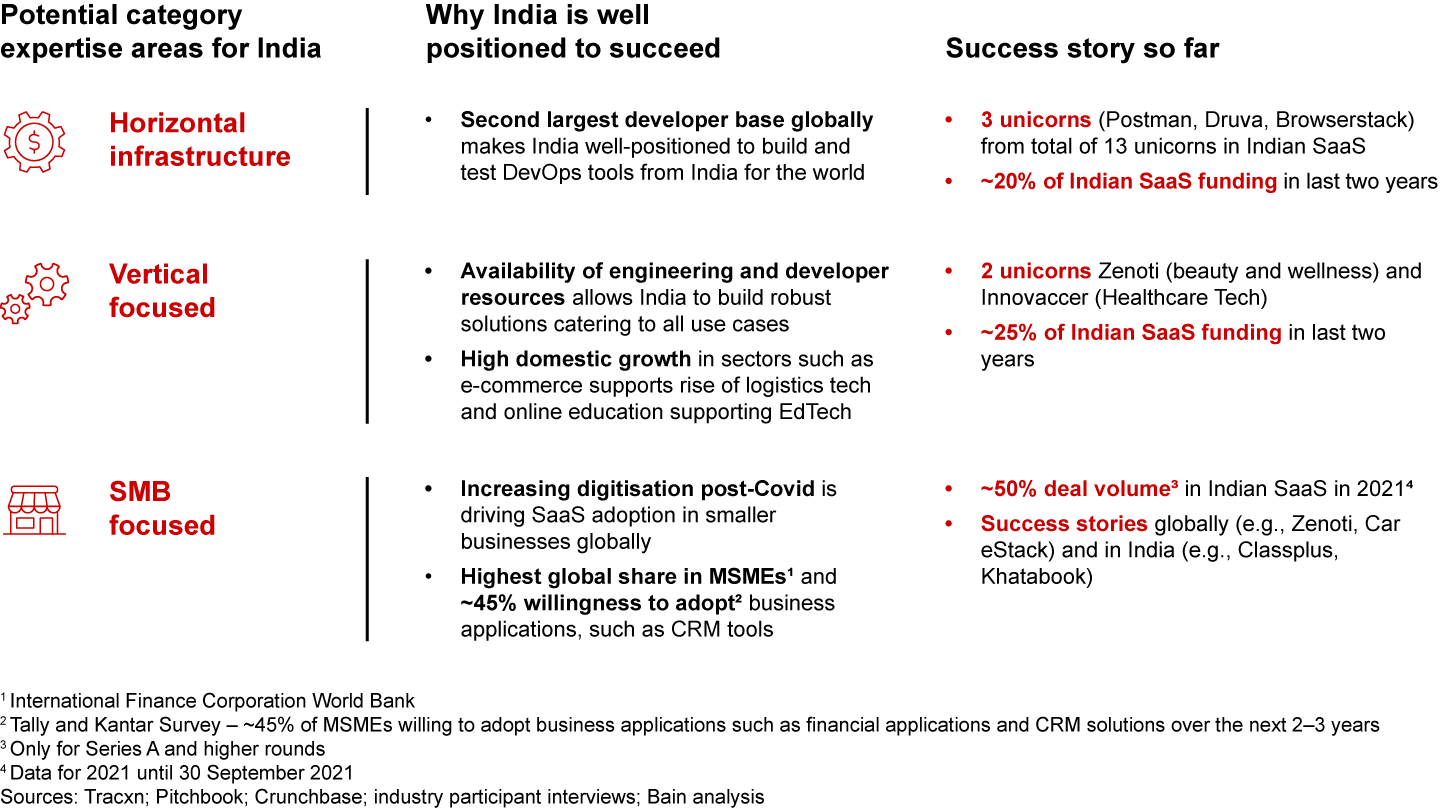
      Going forward, India has the opportunity to develop a true niche in horizontal infrastructure software, vertical business software, and SMB-focussed SaaS companies. Although the Indian SaaS market is rapidly maturing, we believe ample growth still lies ahead.
      Glossary

      Indian SaaS landscape overview

      • The Indian SaaS landscape is maturing rapidly, with the number of SaaS firms doubling and 60+ SaaS firms having received Series C+ funding over the past five years.

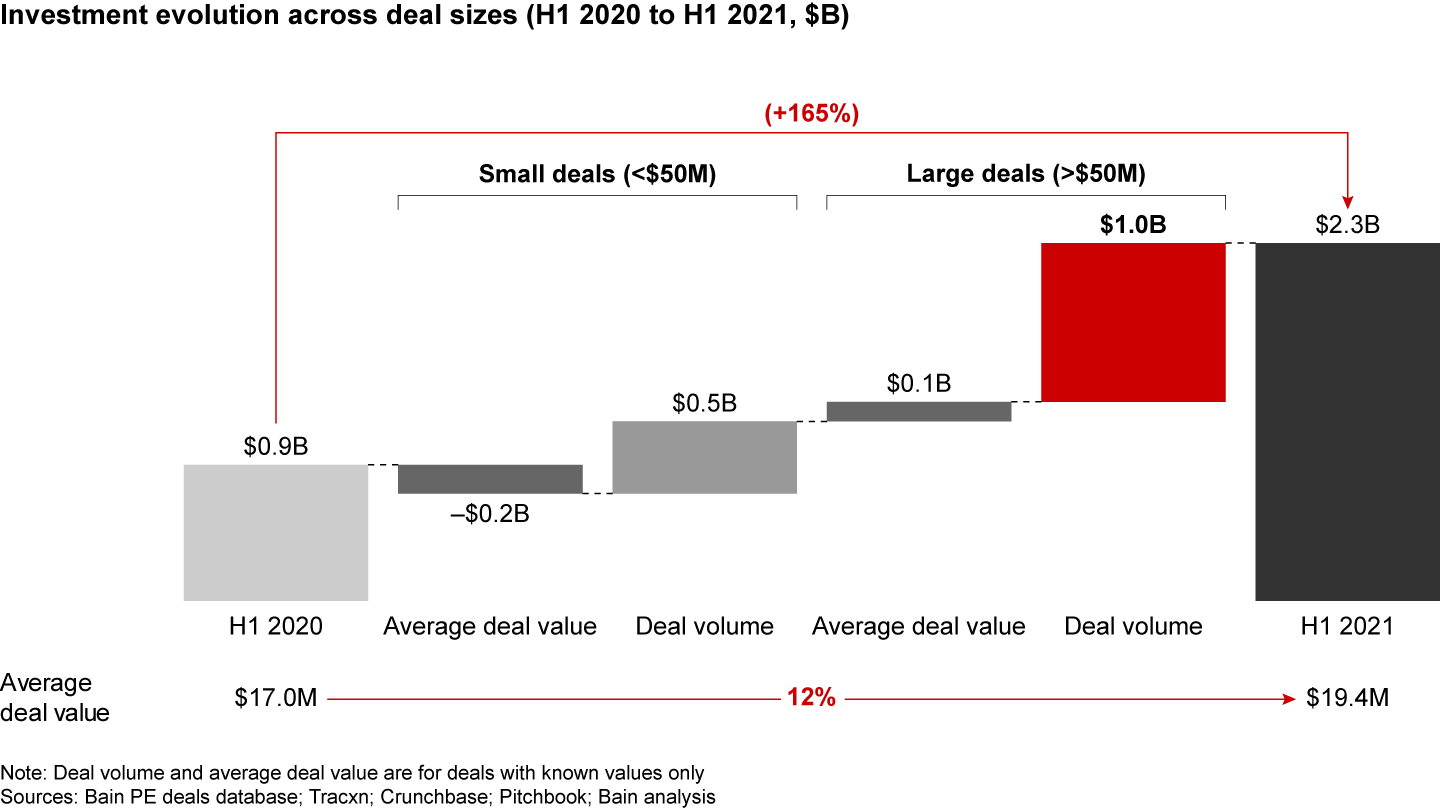
      • Investment in Indian SaaS rose to $4.5 billion in 2021, an increase of 170% from 2020, with growth driven primarily by an increase in the number of $50 million-plus deals.

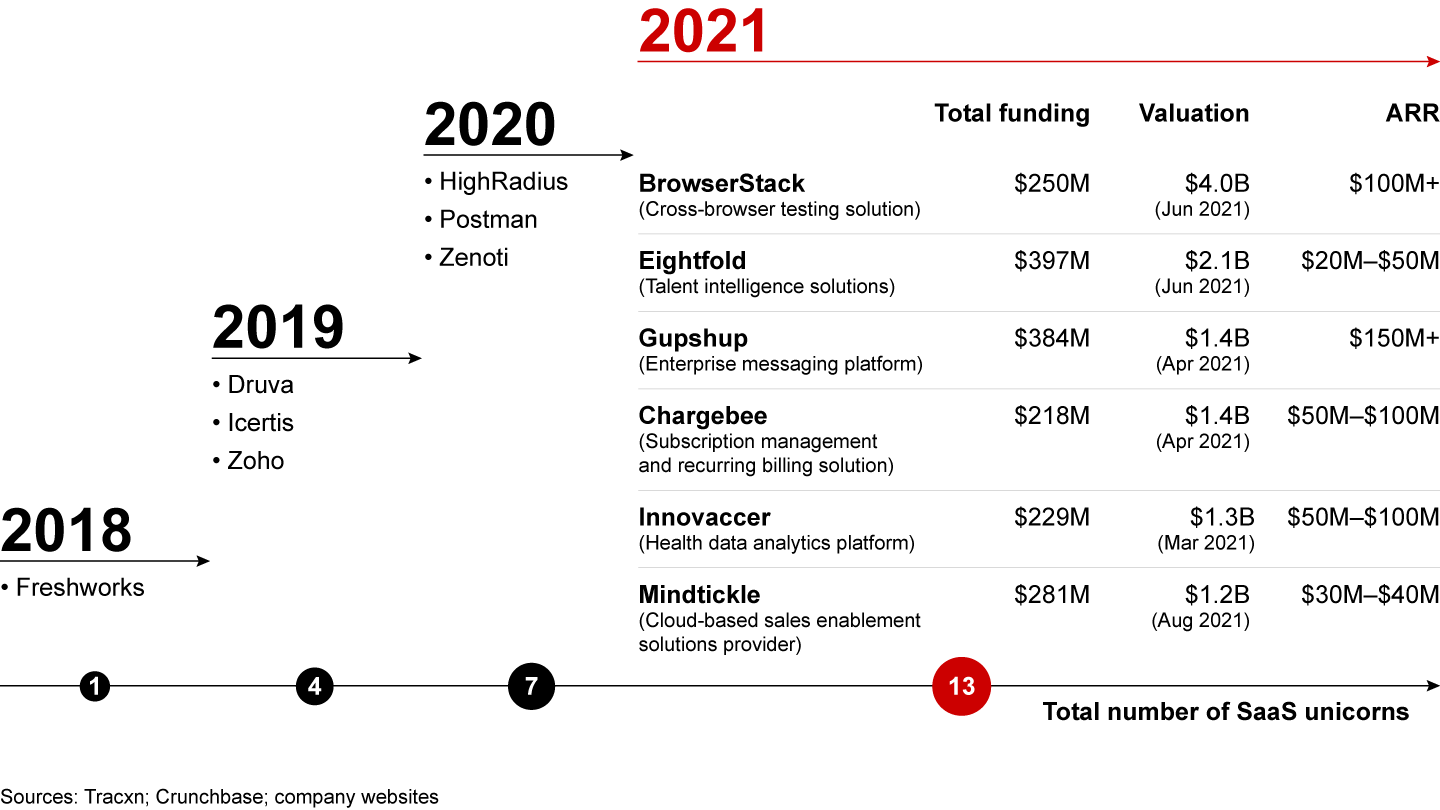
      • Increasingly mature companies with demonstrable scale are propelling greater investor interest across both early- and late-stage Indian SaaS companies. India now has 13 SaaS unicorns and seven to nine companies with $100M+ ARR.

      • Indian SaaS is driving value creation in four key ways:
        • 100% growth in exits in 2021 over 2018
        • Strong ARR-to-funding ratio in line with global SaaS peers
        • Creation of a strong talent pool with SaaS-relevant skill sets
        • New companies founded by former employees of Indian SaaS companies

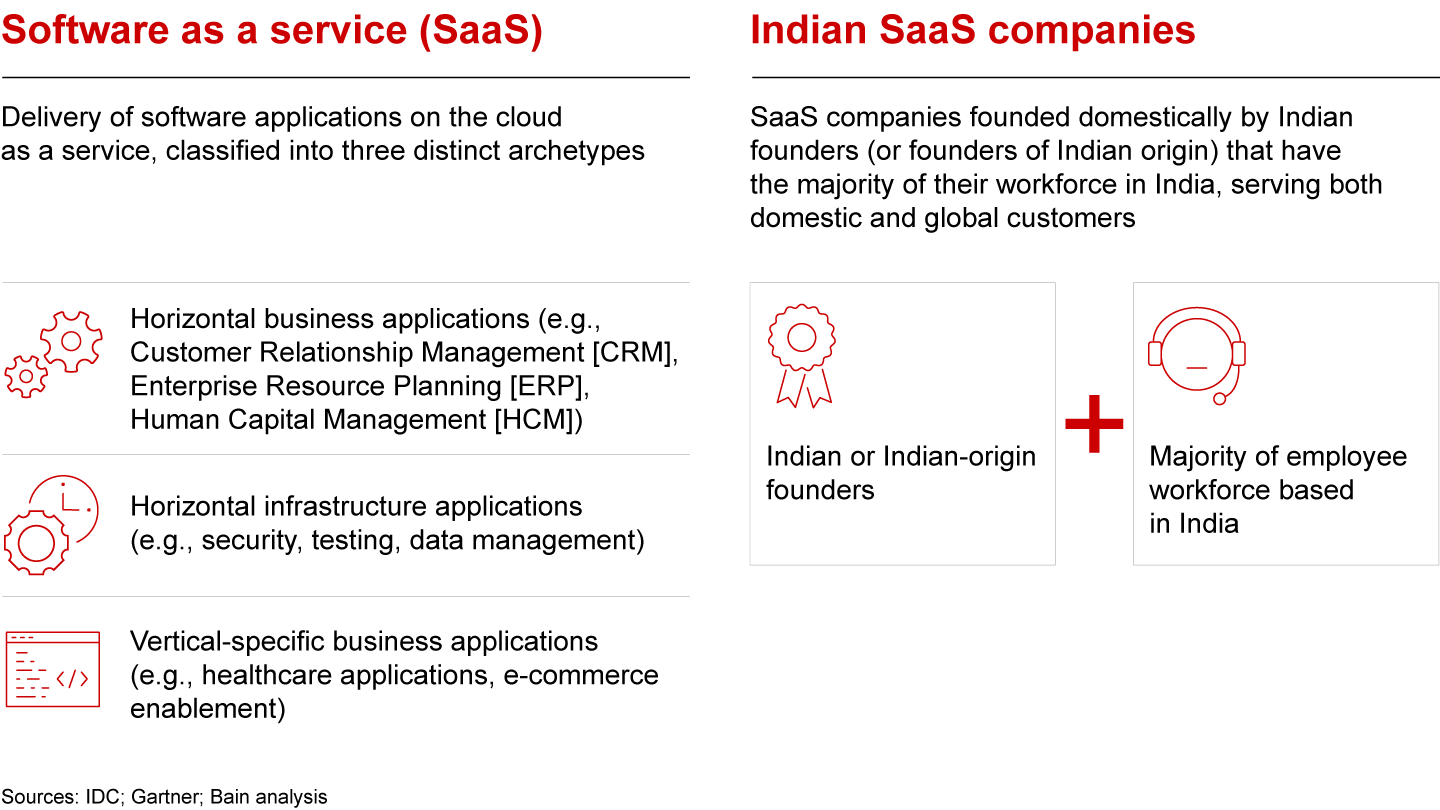
      • Indian SaaS can be classified into three distinct archetypes with several key themes:
        • Horizontal business: enterprise collaboration, events tech, conversational AI, and HR tech
        • Horizontal infrastructure: cybersecurity, DevOps and dev tools, and data management and observability
        • Vertical business: edtech, healthcare tech, logistics tech, and e-commerce enablement

      • With continued growth, the investor landscape has also diversified, and investors are increasingly investing outside of their traditional investment stages.

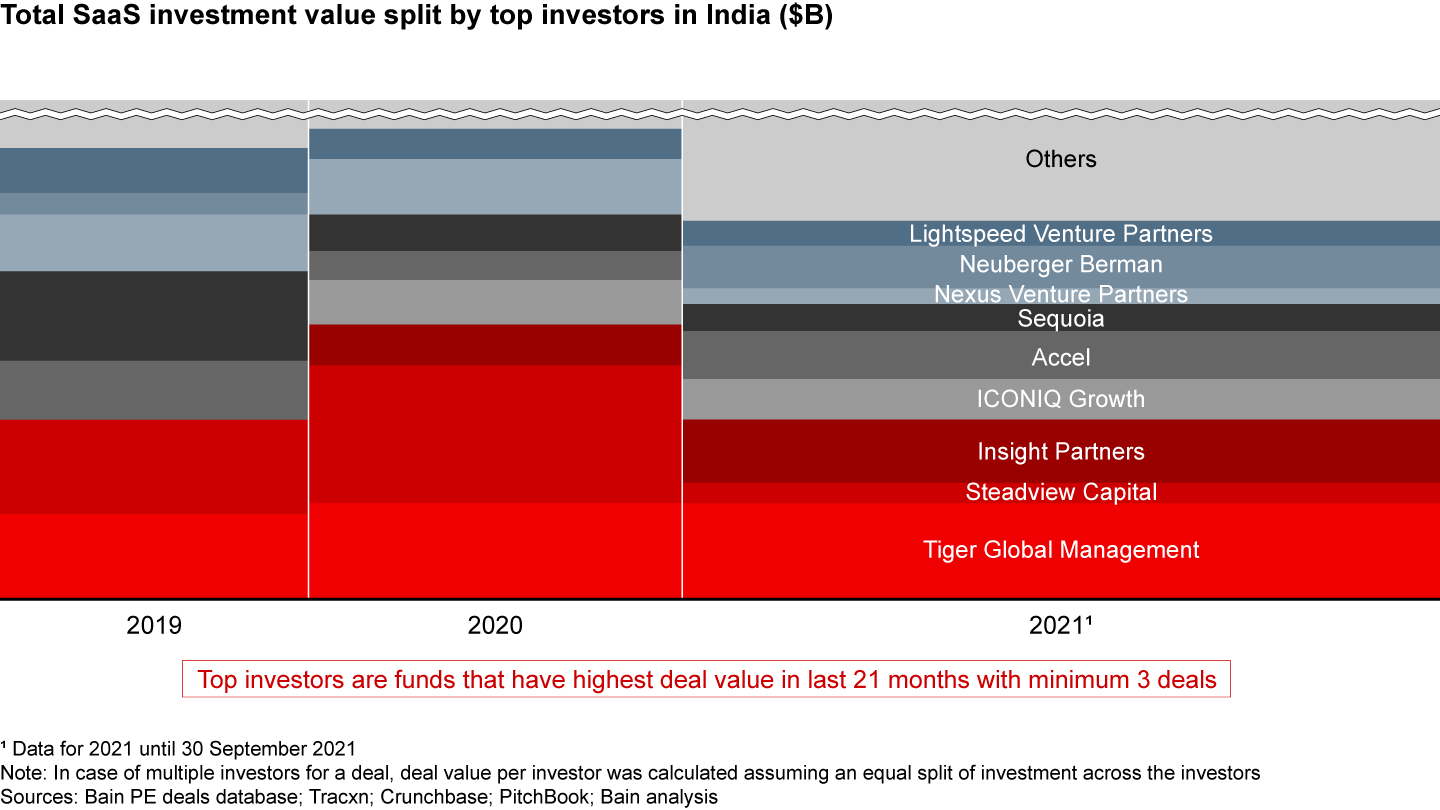
      • The top 10 investors’ share in total deal value across 2019–2021 was 30%–35%, with Tiger Global (by value) and Sequoia (by volume) being most active over 2020–2021.

      • To address rising expectations from founders beyond capital requirements and network, investors now also provide operational and advisory support for GTM, product growth, and recruitment.

      • With an increasing number of world-class founders and strong investor support, Indian SaaS companies are poised to reach $30B in revenue, capturing an 8% to 9% share of the global SaaS market by 2025.

      Figures 1-10: Figure 1
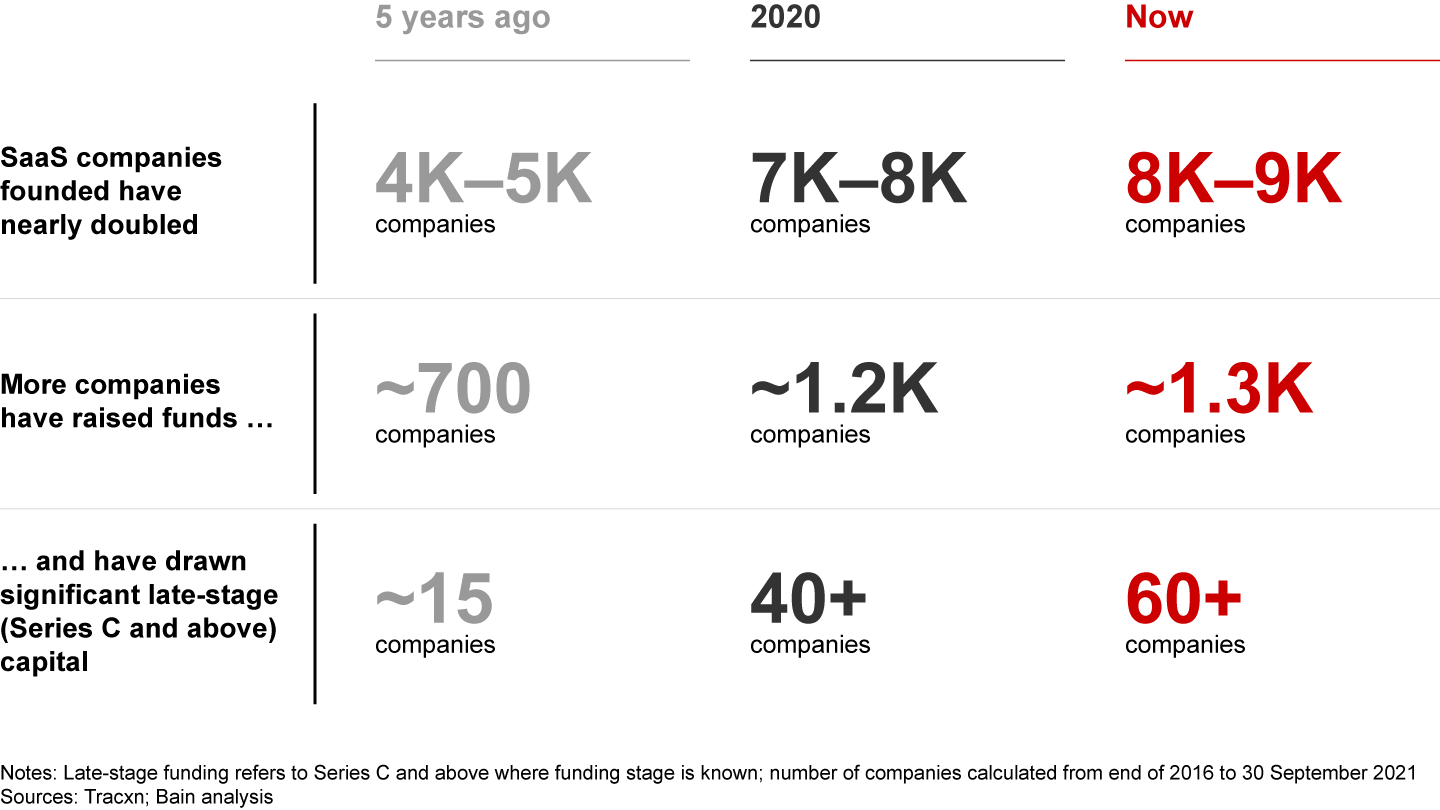
      The Indian SaaS landscape has witnessed substantial growth over the past five years, with more companies as well as more and larger fundraising

      Figures 1-10: Figure 2

      Investment in Indian SaaS is well on its path to increase by 170% from 2020 to 2021, reaching a record $4.5B

      Figures 1-10: Figure 3

      Growth from H1 2020 to H1 2021 was primarily driven by an increase in the number of large deals ($50M+)

      Figures 1-10: Figure 4

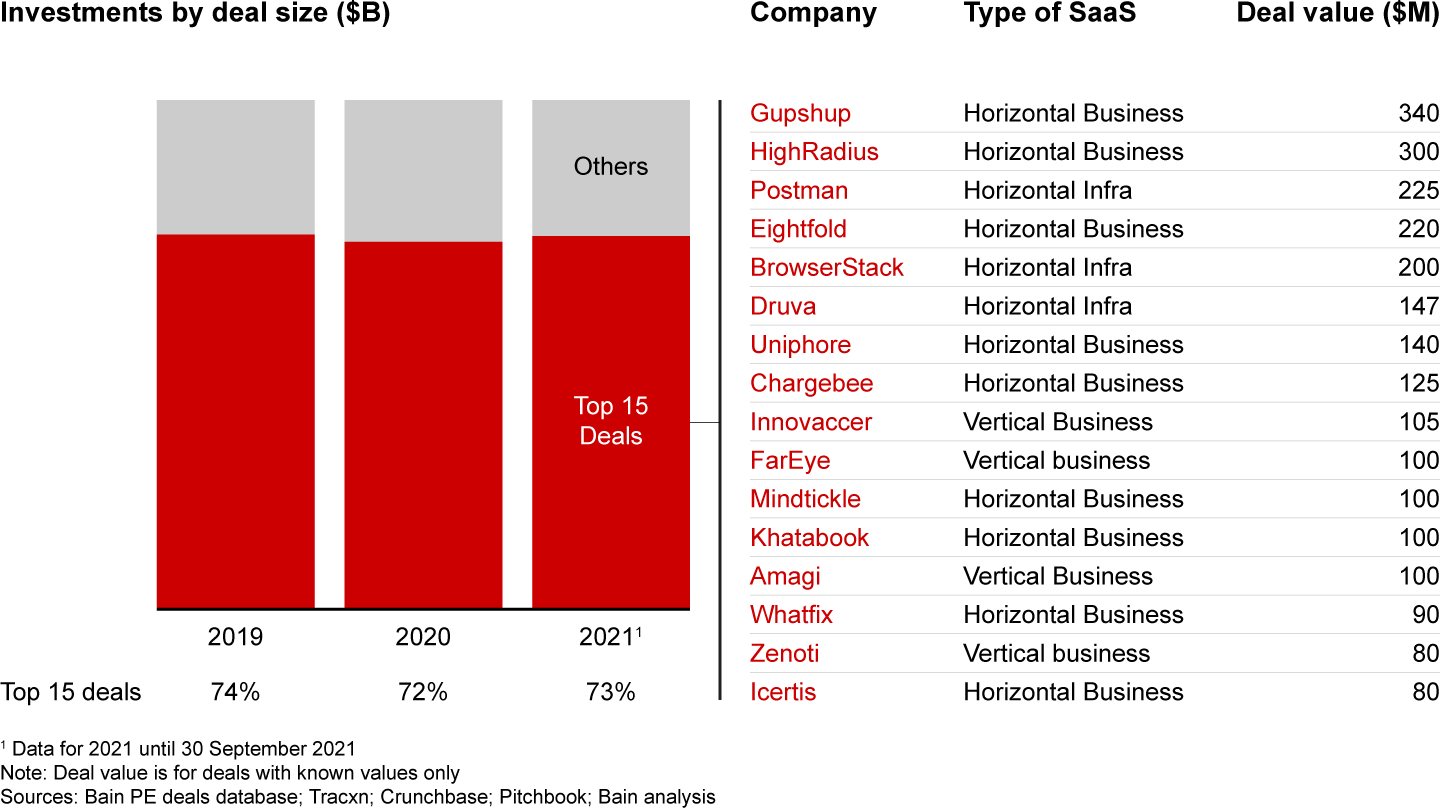
      The top 15 deals constituted ~75% of total deal value in 2021, like prior years, with numerous large marquee deals that were greater than $80M

      Figures 1-10: Figure 5

      Early-stage interest in Indian SaaS has increased, with significant growth in average seed round value over the last two years

      Figures 1-10: Figure 6

      Interest in late-stage investments (Series D+) is growing as more companies achieve product-market fit and increase focus on GTM

      Figures 1-10: Figure 7

      Increased investor interest is supported by increasing Indian SaaS revenue maturity, with seven to nine companies now having reached $100M+ ARR

      Figures 1-10: Figure 8

      Indian SaaS has seen a rapid increase in the number of unicorns from 1 in 2018 to 13 in 2021

      Figures 1-10: Figure 9

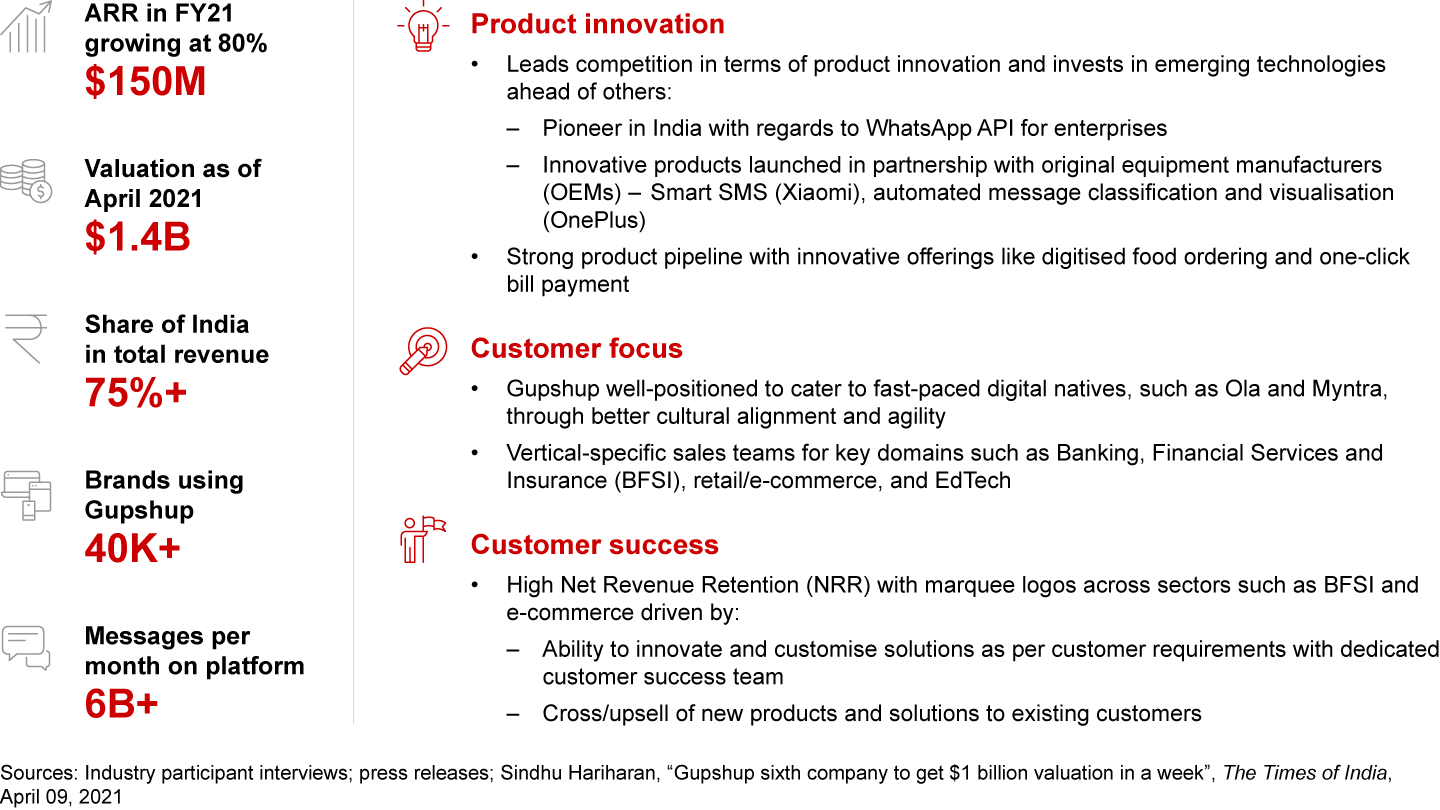
      Gupshup, for example, has exhibited tremendous growth in the last year, capitalising on its historic strengths in product innovation and customer centricity

      Figures 1-10: Figure 10

      Exit momentum has improved over the last three years across secondary transactions and M&A, with IPOs opening a new exit path for Indian SaaS companies

      Figures 11-17: Figure 11

      Indian SaaS companies are generating value in line with global SaaS peers, with a comparable ARR to funding ratio

      Figures 11-17: Figure 12

      Select leading Indian SaaS companies are even outperforming US SaaS peers in terms of capital efficiency

      Figures 11-17: Figure 13

      Indian SaaS companies have added 62K+ jobs in India, creating a strong SaaS talent pool for further growth

      Figures 11-17: Figure 14

      5K+ new jobs have been created by companies founded by ex-employees of top Indian SaaS companies

      Figures 11-17: Figure 15

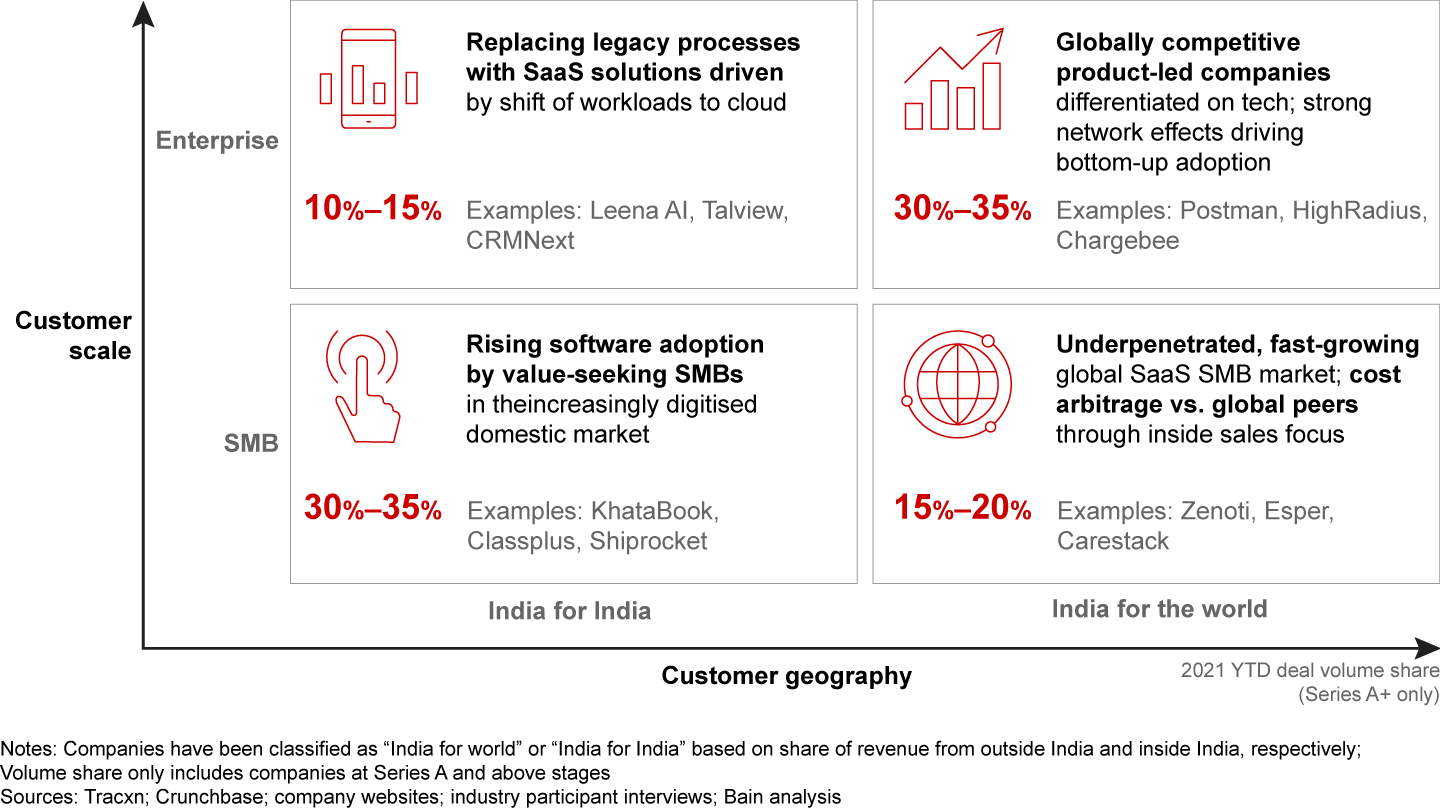
      SMB-focused India for India and enterprise-focused India for the world companies are attracting most of the funding, with 65%–70% deal volume share in 2021

      Figures 11-17: Figure 16

      Horizontal and vertical business software have grown at a rapid pace over the last two years

      Figures 11-17: Figure 17

      Vertical business software growth is driven by larger number of deals, while horizontal business software growth is due to higher average deal values

      Figures 18-22: Figure 18a

      Interest is growing in enterprise collaboration, events tech, conversational AI, and HR tech in horizontal business software

      Figures 18-22: Figure 18b

      In horizontal infrastructure software, cybersecurity, DevOps and dev tools, and data management and observability are emerging themes

      Figures 18-22: Figure 18c

      Edtech, healthcare tech, logistics tech, and e-commerce enablement are gaining traction in vertical business software

      Figures 18-22: Figure 19

      Indian SaaS has attracted a diverse group of investors in the last two years, with investors increasingly playing across investment stages

      Figures 18-22: Figure 20

      Top investors comprise ~35% of India SaaS investments by value from 2019 to 2021

      Figures 18-22: Figure 21

      Investors have launched several initiatives to strengthen their value proposition for the next generation of SaaS founders

      Figures 18-22: Figure 22

      In the future, Indian SaaS companies are expected to grow at ~30% CAGR over 2020–25 and double their share in the global market to 8%–9% by 2025

      Winning formula for Indian SaaS founders

      • Successful SaaS companies showcase key strengths across three pillars:
        • Vision and strategy: playing in a large, well-defined market with enough headroom to grow
        • Winning approach: investing time in achieving product-market fit and optimizing pricing and packaging with appropriate GTM strategies
        • Enablers: setting up a global organisation with an employee-centric culture focused on innovation and teamwork

      • As SaaS companies grow, they should focus on three key commercial areas:
        • Pricing and packaging can drive increases in revenue and profit through suitable choices across price meter, discounts, and packages
        • Entering adjacencies enables companies to continue their growth trajectory by venturing into new geographies or product segments
        • Setting up effective channel sales can help improve efficiency and achieve scale as companies mature and supplement established direct sales channels

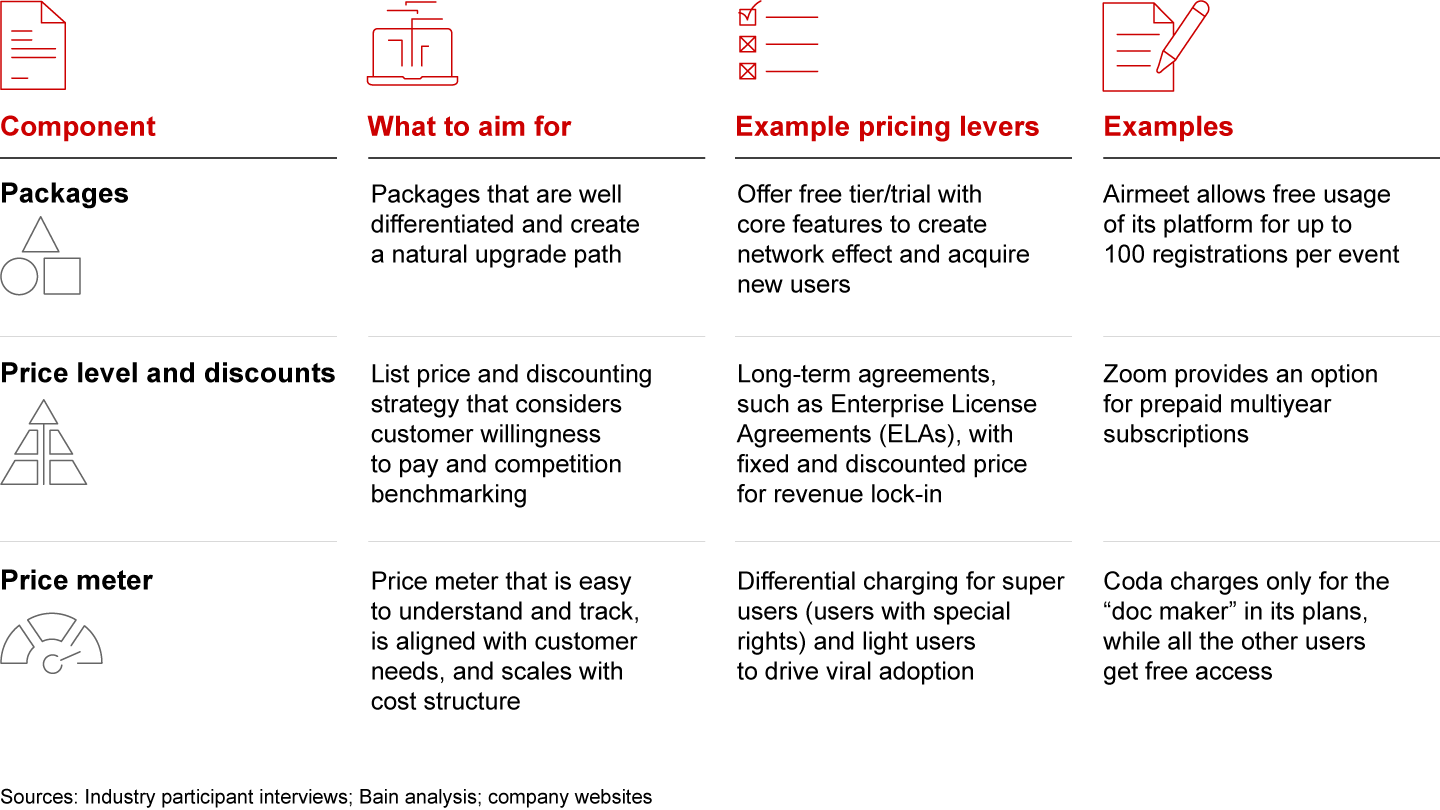
      • Pricing and packaging strategy consists of three key components: packages that offer the right coverage across customer segments, pricing levels that establish the correct market positioning, and price meters that drive value as usage grows.

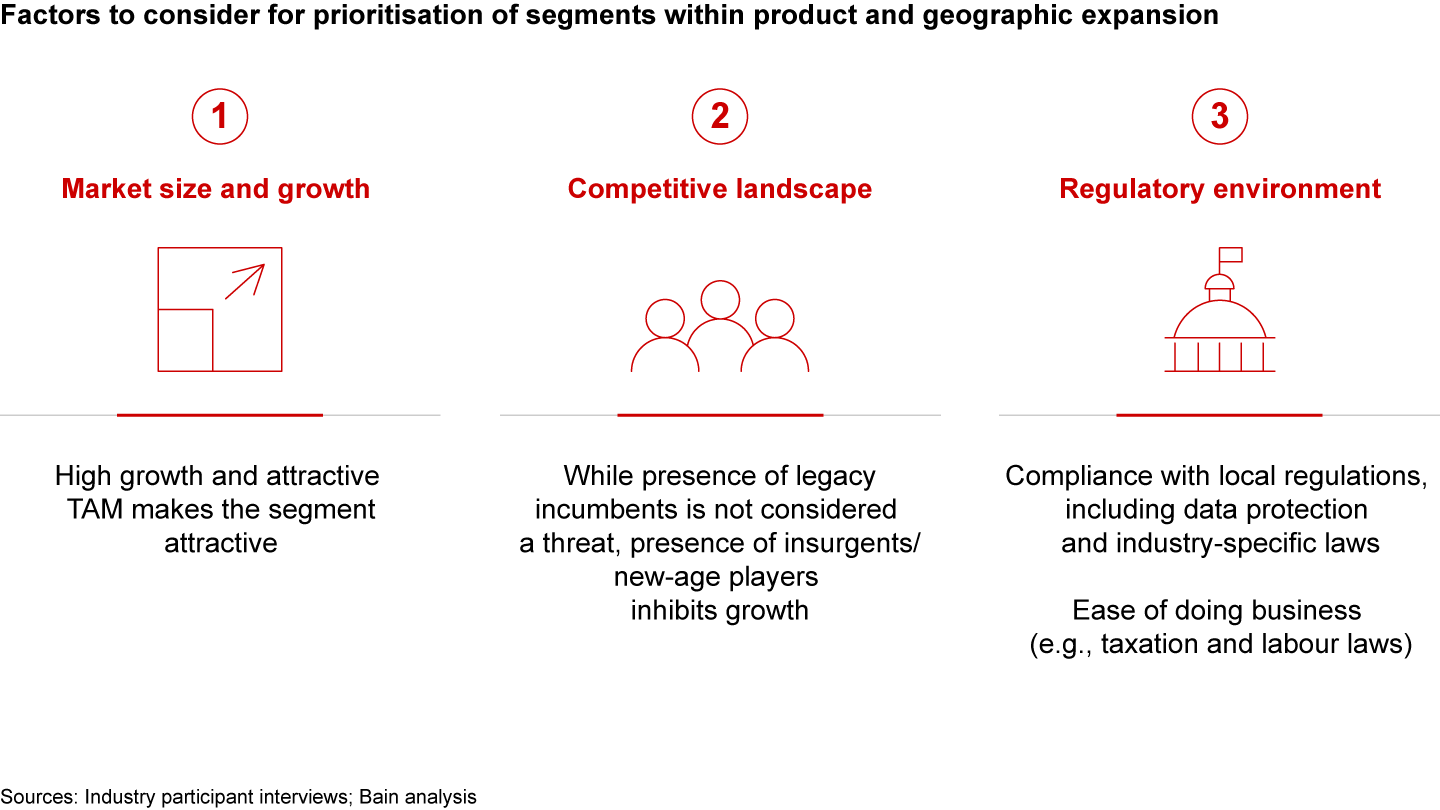
      • Product and geographic expansion choices are typically determined by three common factors: market size and growth, the competitive landscape, and the regulatory environment. Companies should consider certain nuances:
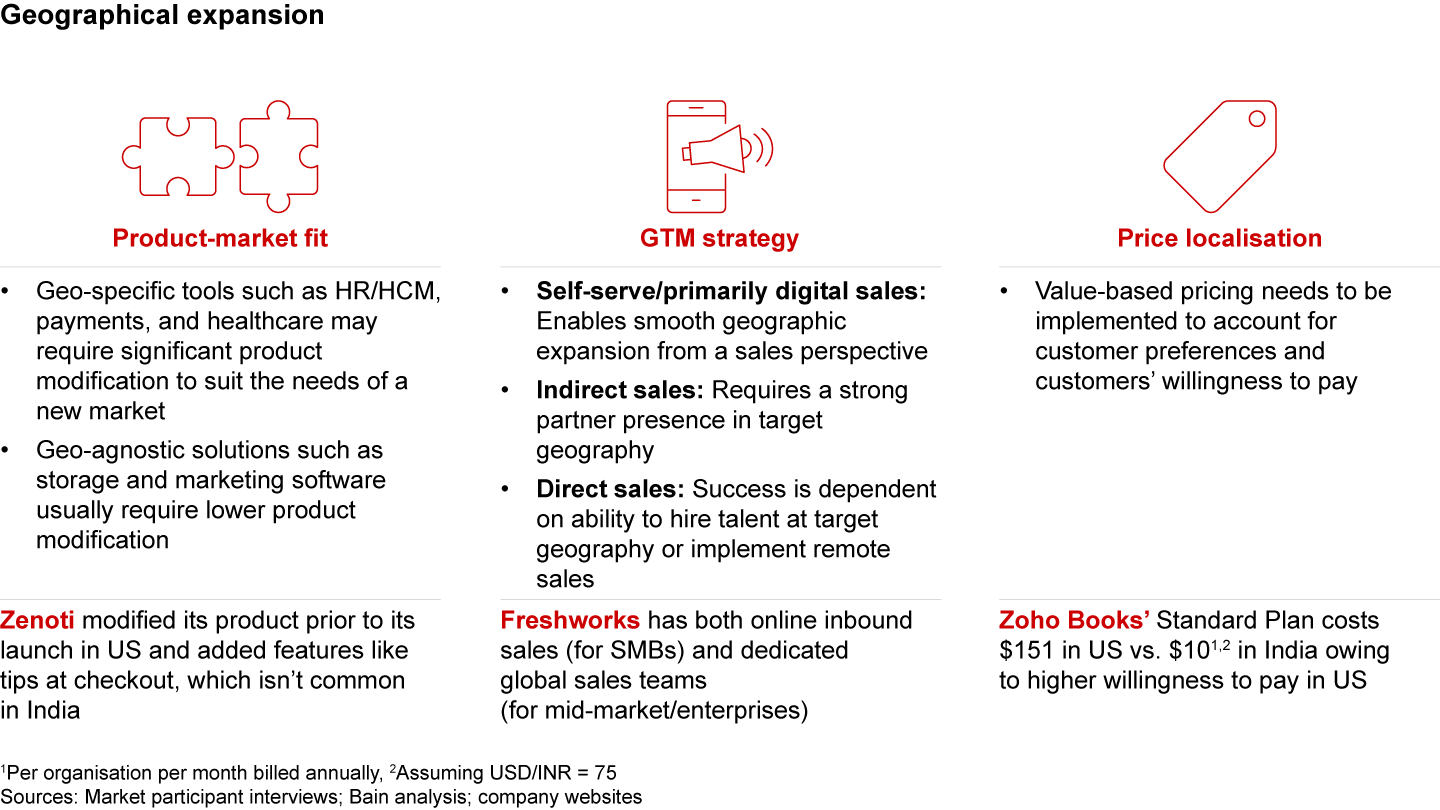
        • For geographic expansion, companies should focus on product-market fit and GTM, including price localisation in the target geography
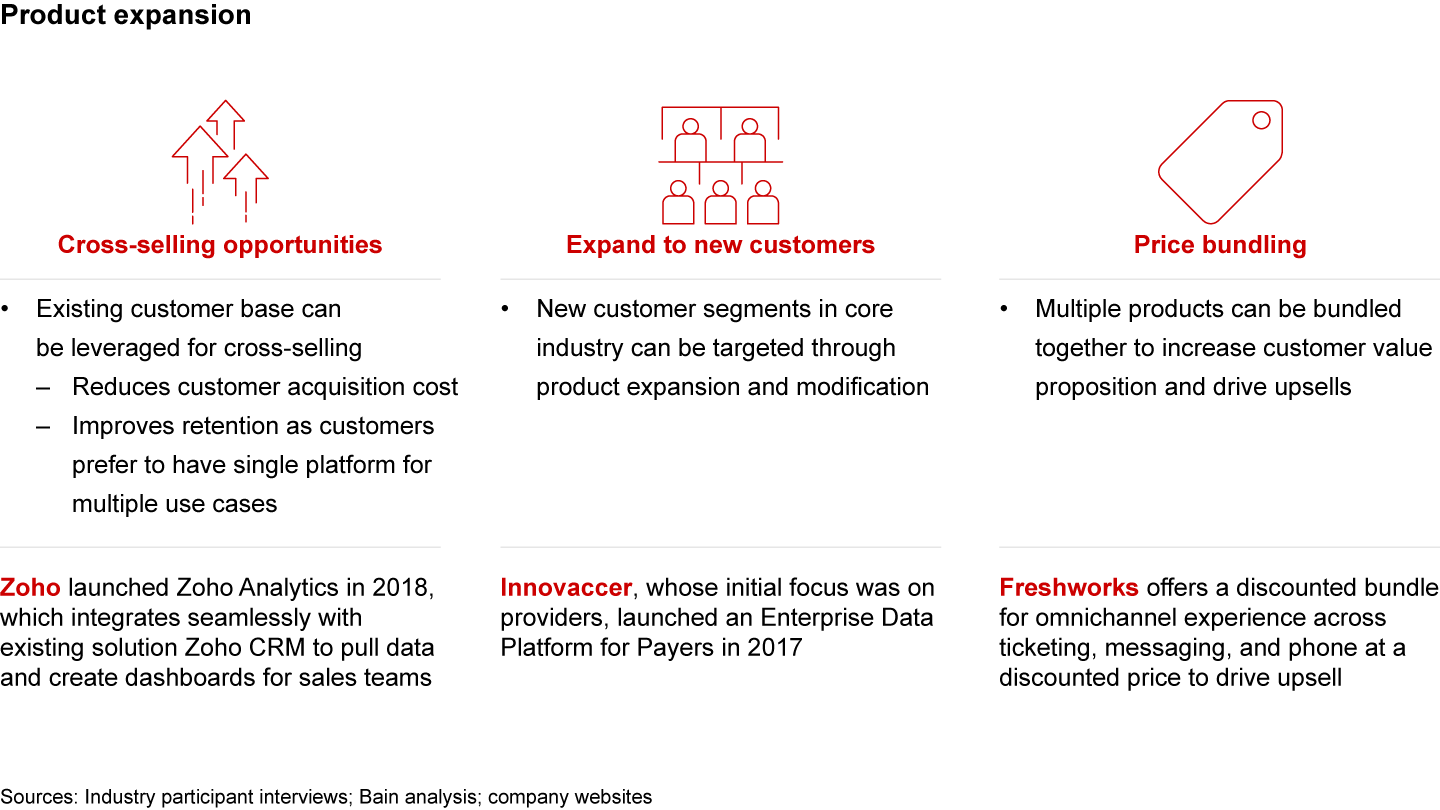
        • For product expansion, companies should evaluate cross-sell opportunities and use case synergies

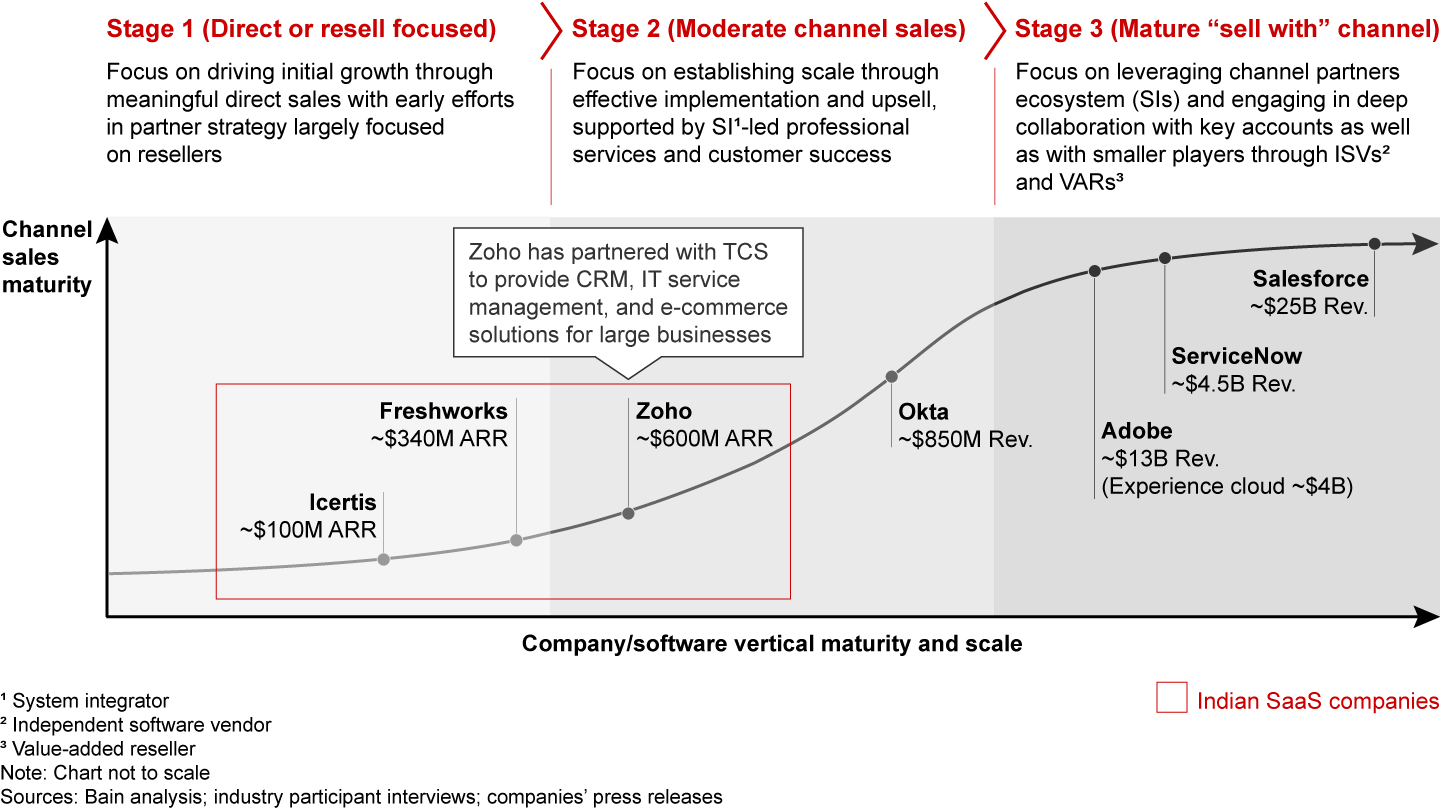
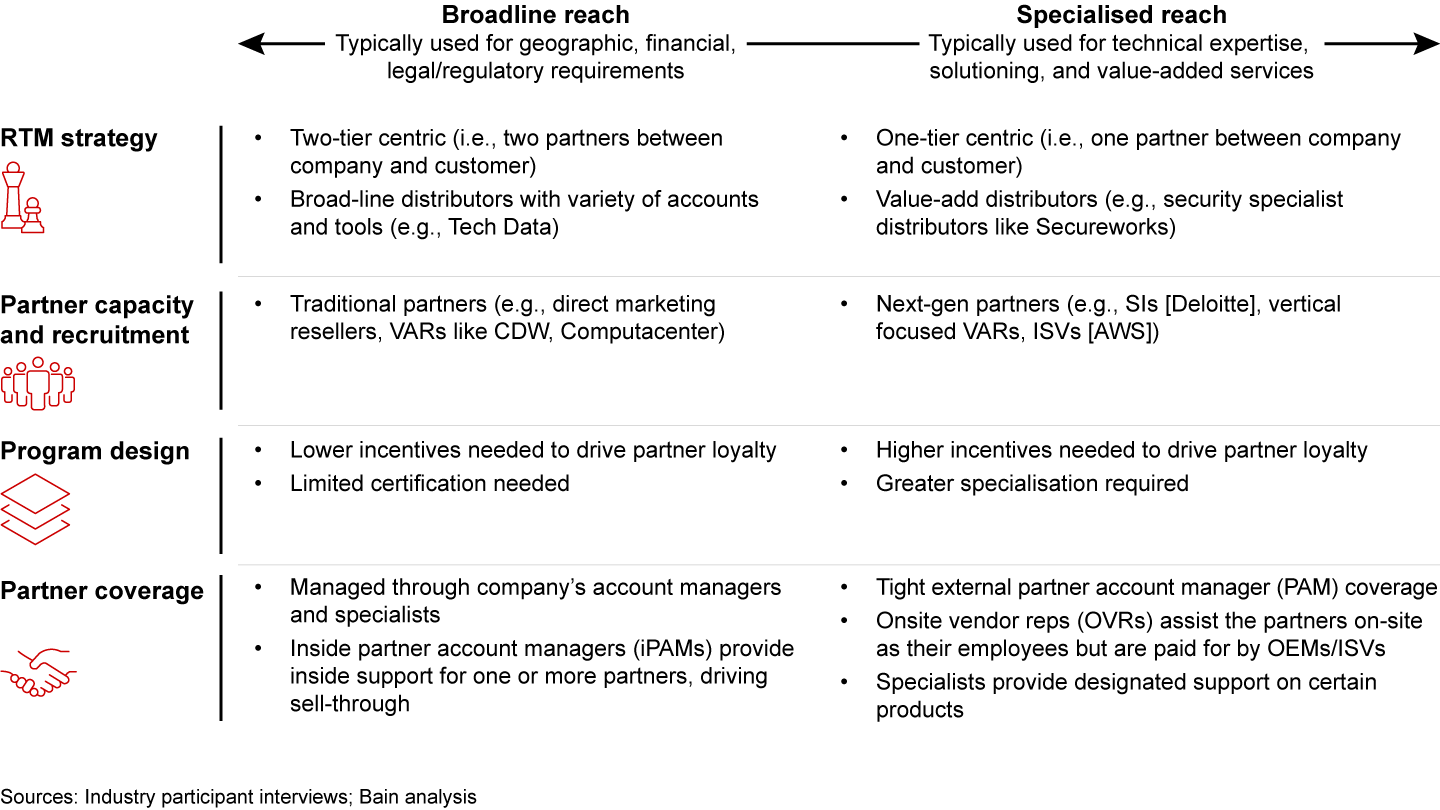
      • Channel sales can be a powerful tool for SaaS companies to drive growth. However, no one-size-fits-all approach to indirect sales exists. Designing a powerful channel sales strategy involves making the right decisions across route-to-market (RTM) strategy, partner choice, program design, and coverage models based on product characteristics.

      Figures 23-29: Figure 23
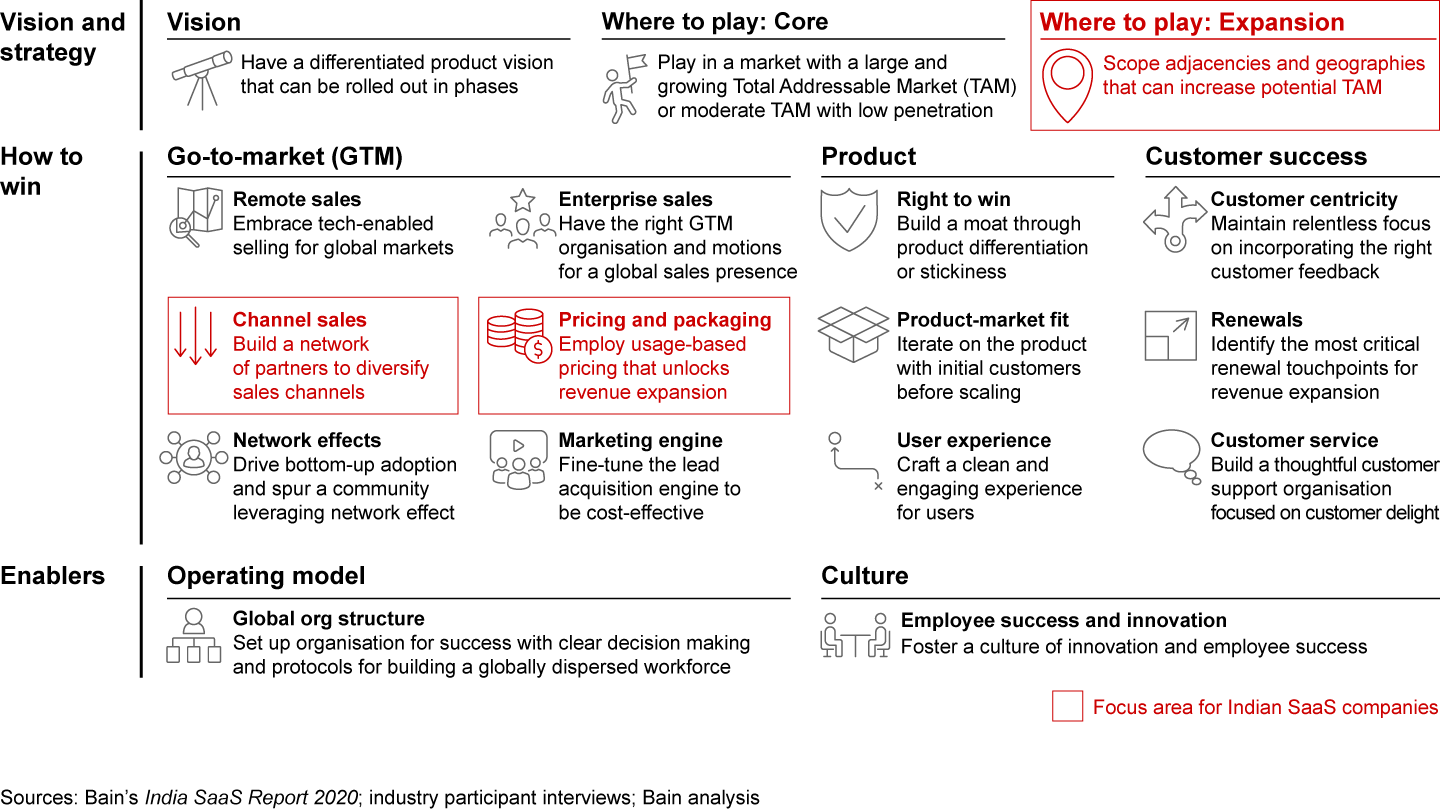
      Leading SaaS companies exhibit a combination of key winning characteristics during their journey

      Figures 23-29: Figure 24

      SaaS companies typically have three commercial focus areas as they scale up

      Figures 23-29: Figure 25

      Within pricing, companies need to think carefully about packages, price level, and price meter—each of which has different levers attuned to pricing objectives

      Figures 23-29: Figure 26

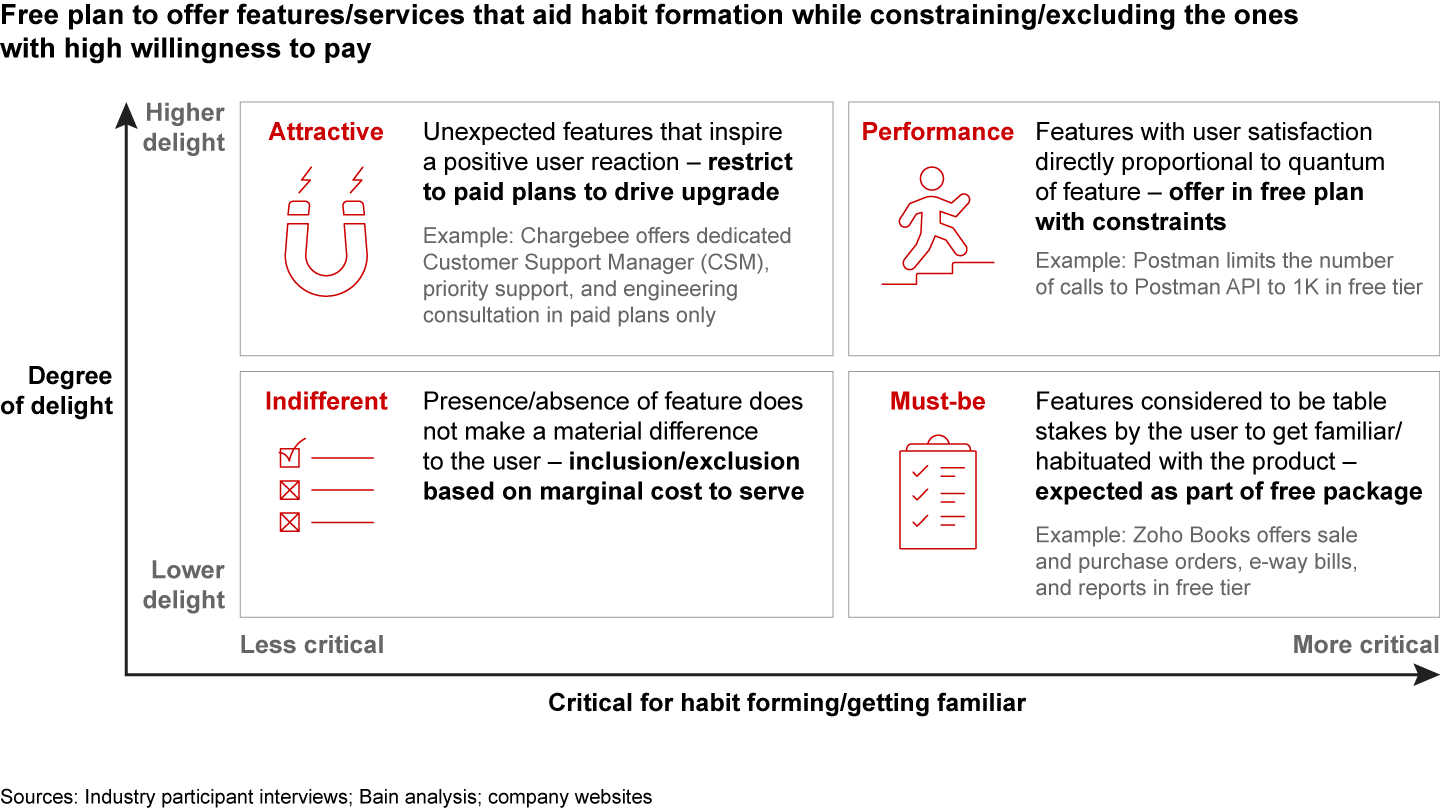
      While creating tiers, companies need to consider user satisfaction to differentiate between table stakes and good-to-have features

      Figures 23-29: Figure 27

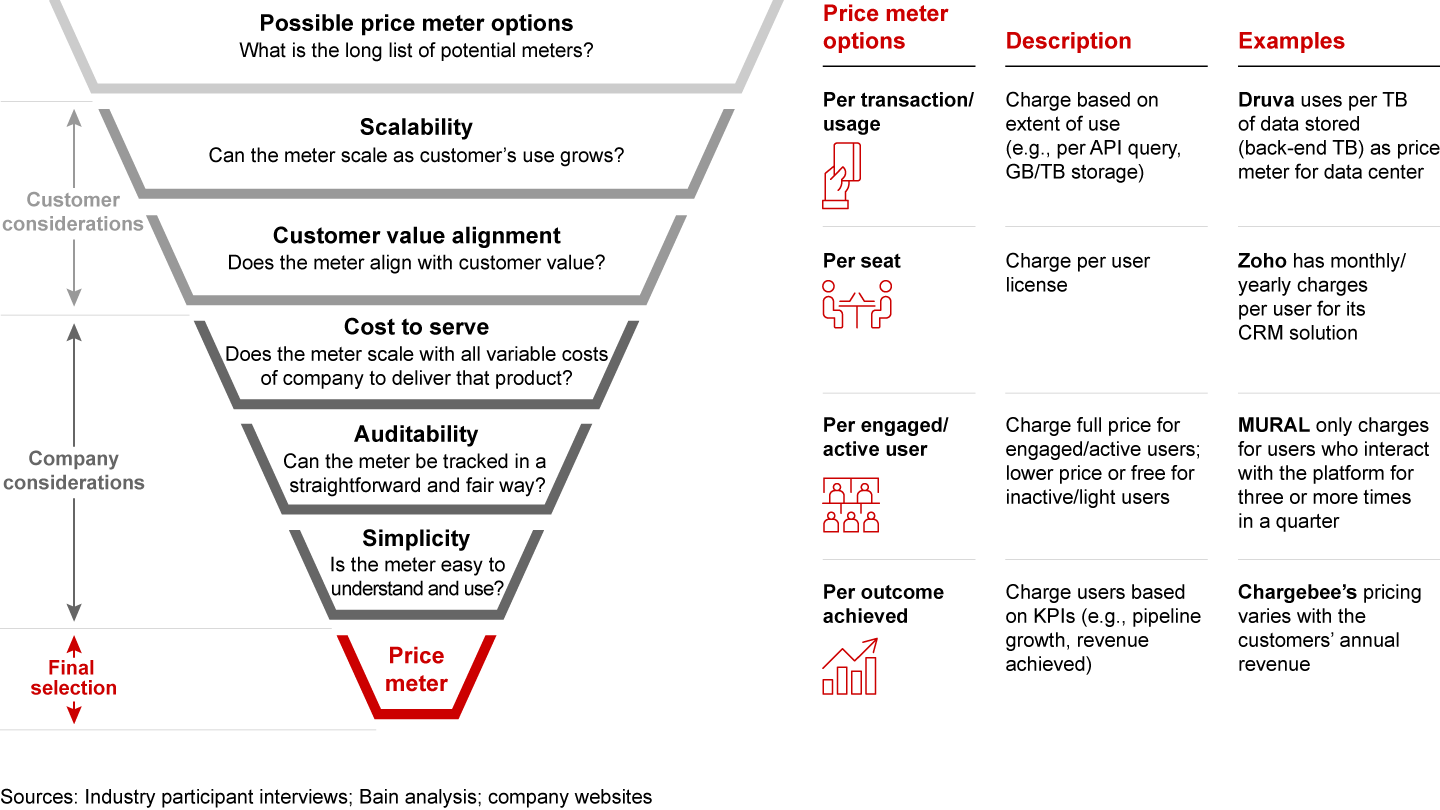
      Companies have multiple price meter options and can select the best suited one based on cost and customer preferences

      Figures 23-29: Figure 28

      Before expanding product portfolio or going to new geographies, companies need to evaluate market size, competition, and regulations

      Figures 23-29: Figure 29

      Success in a new geography is driven by suitability of product and price level along with a strong GTM motion

      Figures 30-34: Figure 30

      Opportunities for cross-selling, expanding to new customers, and bundling can help companies benefit from product expansion

      Figures 30-34: Figure 31

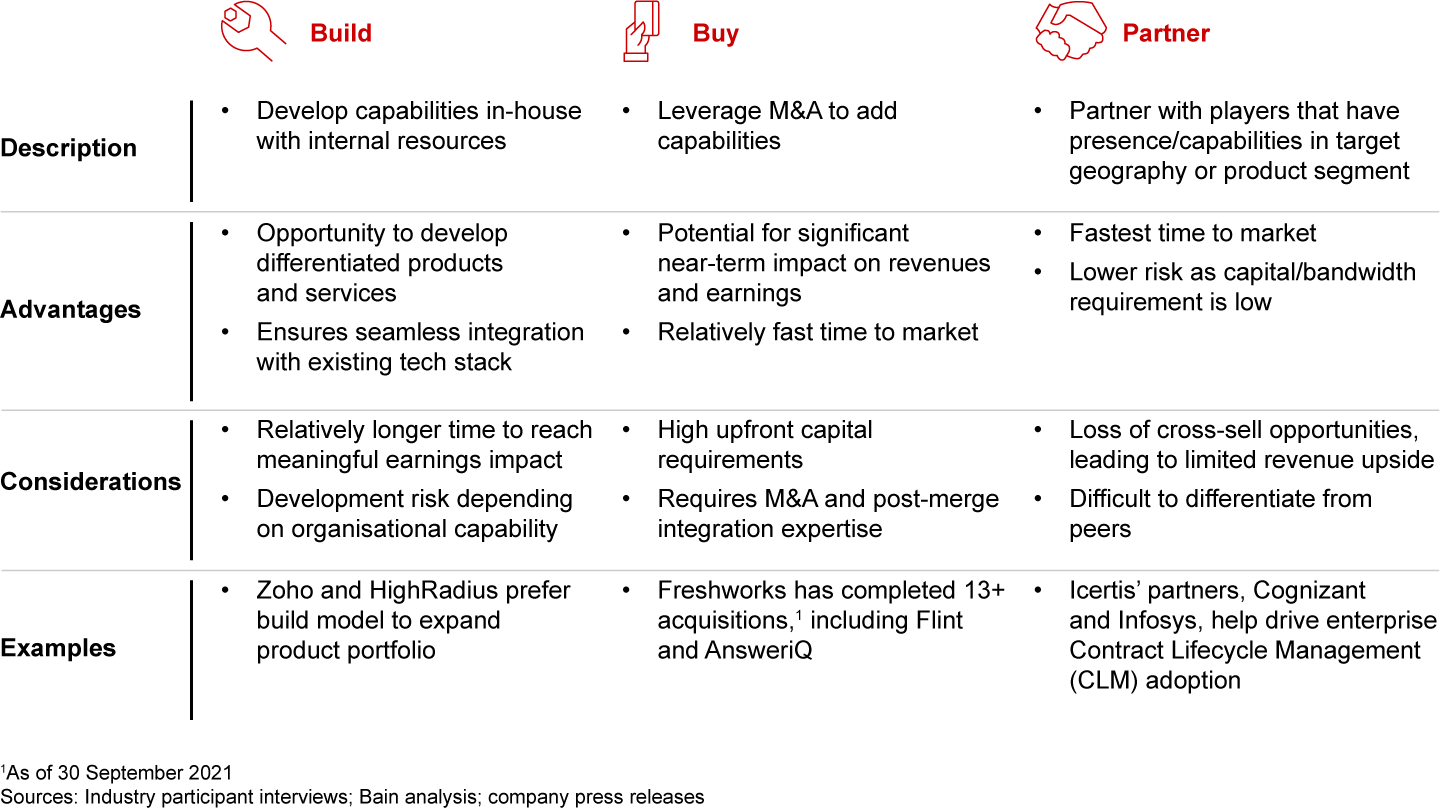
      SaaS companies need to carefully consider build, buy, and partner options before entering any new geography or product segment

      Figures 30-34: Figure 32

      Channel sales is a natural evolution for SaaS companies with scale, driving more partners and their involvement over time

      Figures 30-34: Figure 33

      SaaS companies can select the channel design based on the role that channel partners will serve

      Figures 30-34: Figure 34

      HighRadius has scaled meaningfully with a high-quality product, strong sales engine, and effective pricing

      Ecosystem enablement

      • The Indian start-up ecosystem remains robust, with a strong base of funded start-ups and unicorns. An increase in engineering graduates and Internet users is expected to further support the growth of this ecosystem.

      • Specifically, for SaaS, India has a thriving ecosystem comprising 400+ SaaS investors, 500+ incubators and accelerators, and numerous communities and government initiatives to foster the ecosystem.

      • To further strengthen the growth of SaaS in India, the following initiatives are required across stakeholders:
        • Government: Focus on talent skilling and demand generation, along with simplification of tax and IPO regulations
        • Investors: Provide mentorship and publish playbooks along with ongoing fund-raising assistance
        • Founders: Build communities for knowledge sharing and learning
        • Corporates: Support SaaS through funding and partnerships with SaaS companies
        • Universities: Incorporate vocational training in curriculum to produce graduates with SaaS-relevant skills

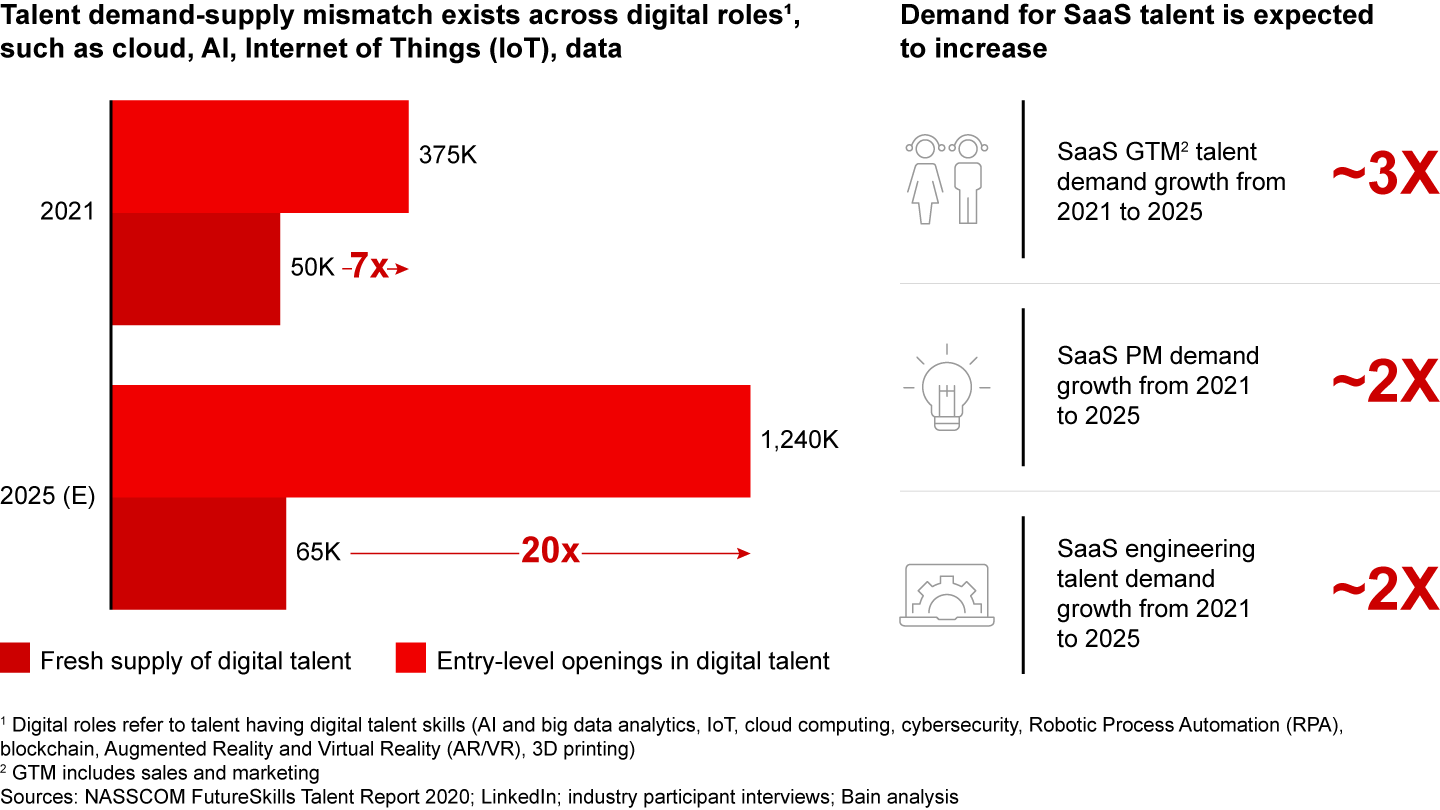
      • The talent demand-supply gap is a key constraint for future growth, with SaaS-specific talent demand expected to grow two to three times in the next five years. To bridge this gap, India can increase the supply in two ways:
        • Increase the base of employable graduates through changes in university curriculum, introducing standardised certification courses and government initiatives for digital employment
        • Reskill the existing talent pool through trainings, courses, and mentorship programs by founders, corporates, and the government

      • India has begun to develop pockets of strength in SaaS, specifically in horizontal infrastructure, vertical business, and SMB-focused SaaS. Its position can be further strengthened through ecosystem development, along the lines of other countries’ successful initiatives:
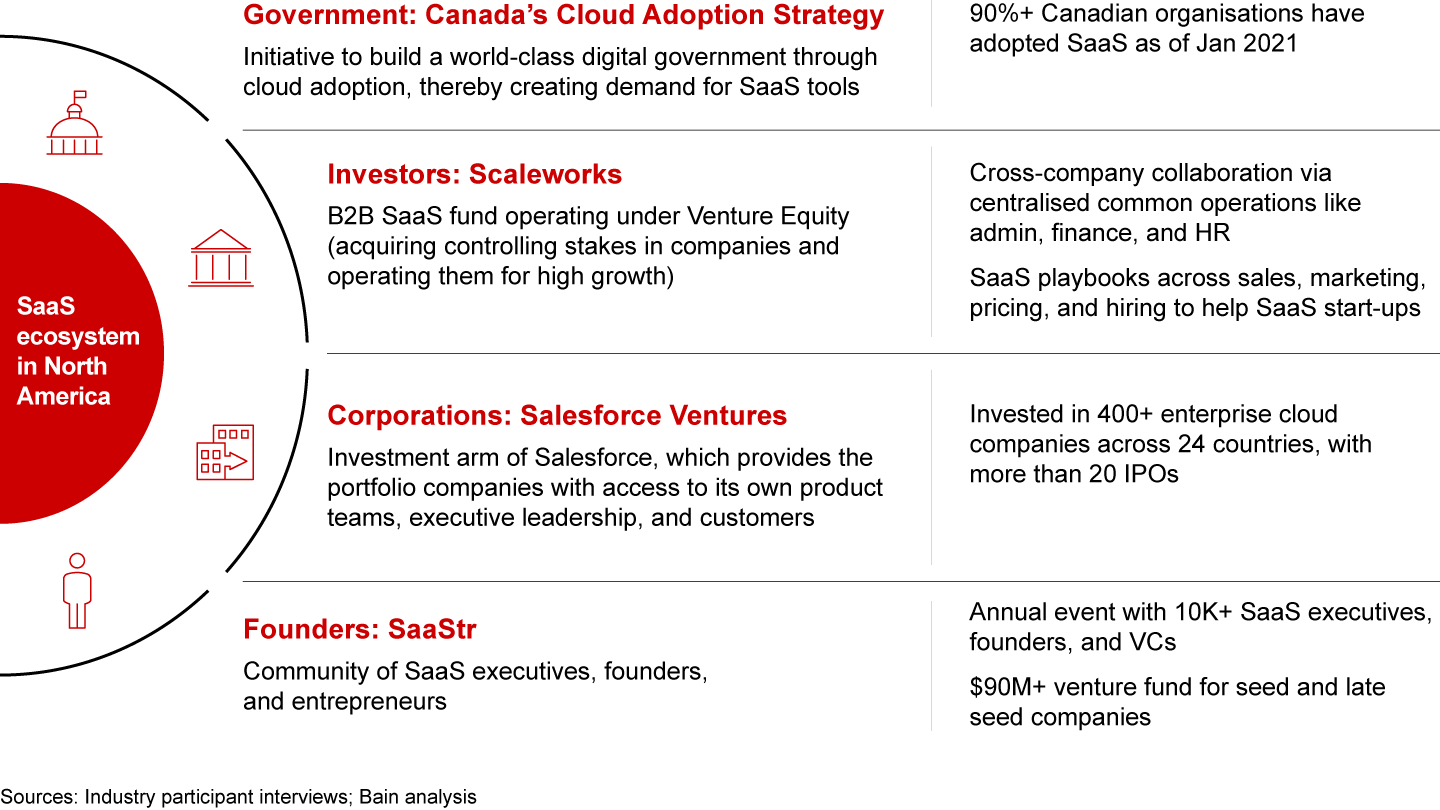
        • The US and Canada have spurred SaaS growth through governments generating demand, corporates providing funding, and the industry developing communities for knowledge sharing
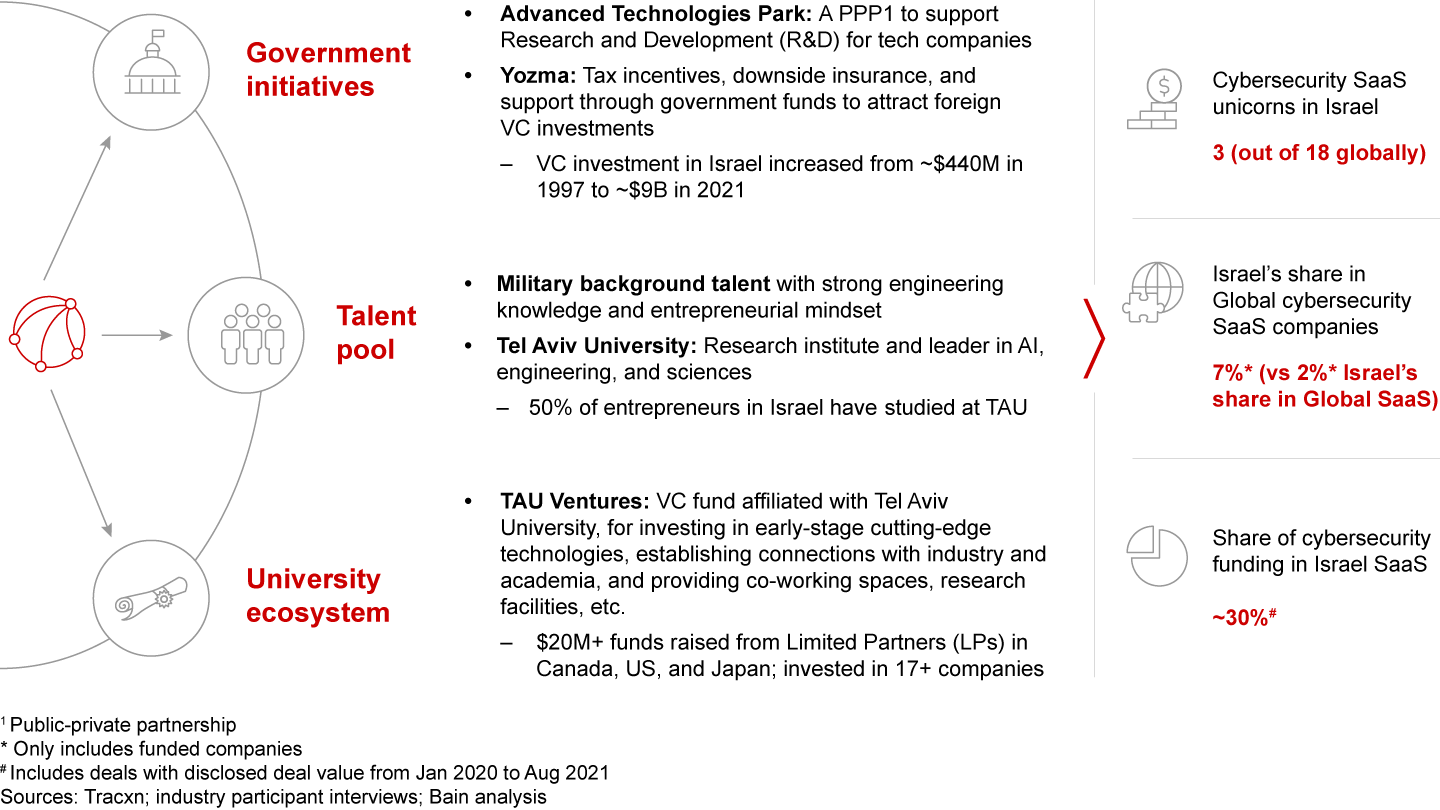
        • Israel has successfully developed category expertise in cybersecurity through a strong talent pool with military backgrounds, strong engineering knowledge, and entrepreneurial mindsets, as well as government and university initiatives, including tax incentives and university-affiliated VC funds

      Figures 35-42: Figure 35
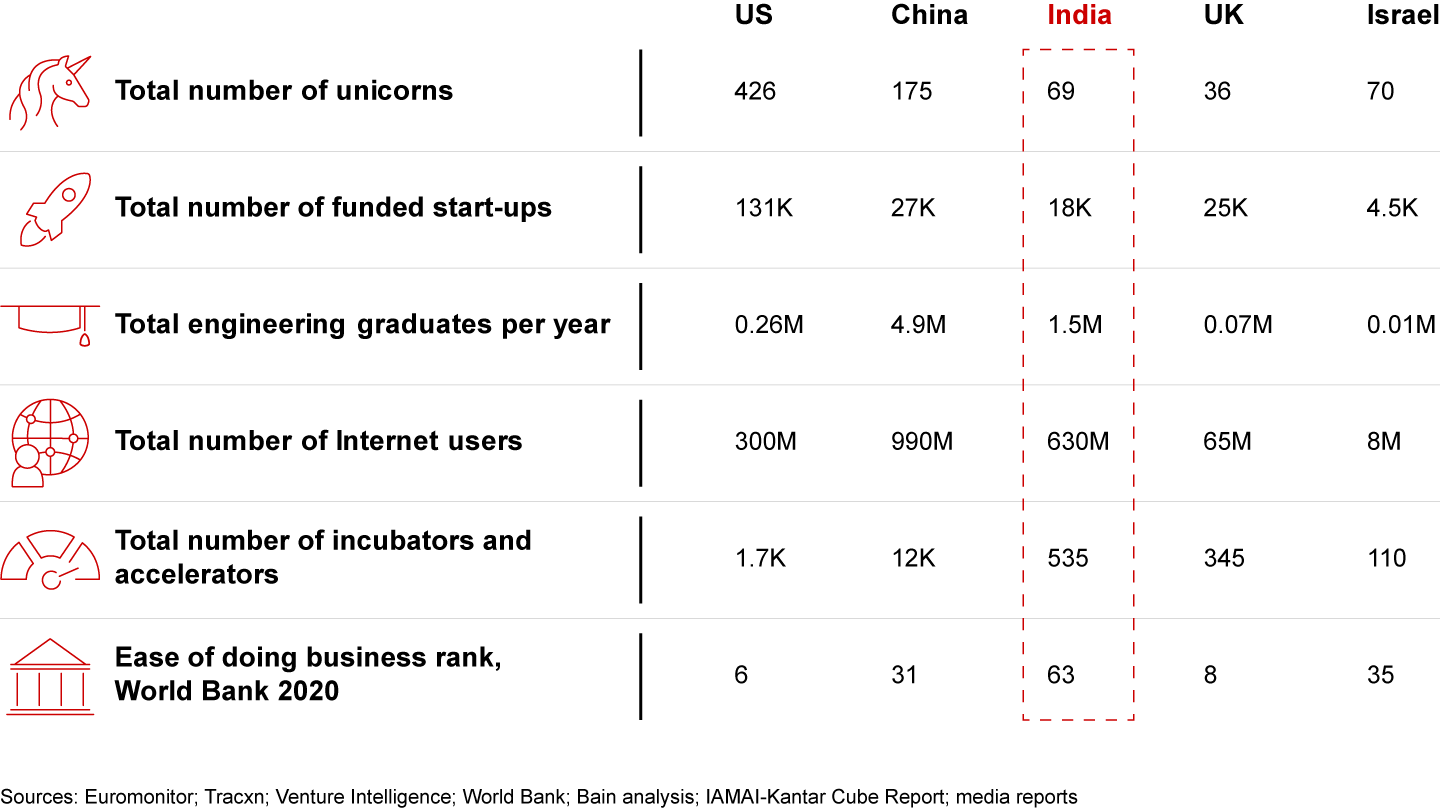
      India has one of the top five start-up ecosystems in the world

      Figures 35-42: Figure 38

      India has a robust ecosystem of enablers to support entrepreneurs in their journey—VCs, active angel community, incubators, community development initiatives, etc.

      Figures 35-42: Figure 37

      To further strengthen the Indian SaaS ecosystem, numerous key initiatives need to be taken by various stakeholders

      Figures 35-42: Figure 38

      Talent demand in India for digital and SaaS-specific roles is expected to grow by three times from 2021 to 2025 with a lower increase in talent supply

      Figures 35-42: Figure 39

      India can bridge this talent demand-supply gap by increasing the number of relevant graduates and reskilling the existing talent pool

      Figures 35-42: Figure 40

      North America, as an example, has successfully implemented initiatives across stakeholders to support SaaS growth

      Figures 35-42: Figure 41

      Israel, through ecosystem development by government initiatives, talent pool, and universities, has been able to establish category expertise in cybersecurity

      Figures 35-42: Figure 42

      India is also beginning to develop its own pockets of strength, specifically in horizontal infrastructure and vertical business and SMB-focused SaaS
      Authors
      • Headshot of Arpan Sheth
        Arpan Sheth
        Partner, Washington, DC
      • Headshot of Aditya Shukla
        Aditya Shukla
        Partner, Mumbai
      • Headshot of Prabhav Kashyap Addepalli
        Prabhav Kashyap Addepalli
        Partner, New Delhi
      • Headshot of Gustaf Ericson
        Gustaf Ericson
        Alumni, Mumbai
      Related Industries
      • Private Equity
      • Software
      • Technology
      Software
      Deals Rise in 2025, But Easy Wins May Be Over

      Riding growth used to be easy in software. Now investors have to go out and find it efficiently.

      Read more
      Software
      Investing to Win in a Shifting Technology Market

      With private equity investors targeting profits—not just growth—value creation is all about operational acumen.

      Read more
      Software
      An Enduring Strategy for Just About Any Time

      Hg’s Matthew Brockman describes the technological trends that could reshape the workplace for decades to come.

      Read more
      Software
      A Resilient Strategy for Uncertain Times

      Hg’s Matthew Brockman explains how sector specialization can deliver stable returns, even through unsettling times.

      Read more
      Software
      Software M&A

      The good news: Most deal best practices still apply to AI acquisitions.

      Read more
      First published in diciembre 2021
      Tags
      • Private Equity
      • Software
      • Technology

      How We've Helped Clients

      Rapid Tech Due Diligence Helped a Private Equity Firm Invest with Confidence

      See more related case studies

      Helping a Midsize ERP Player Compete against the Giants

      See more related case studies

      Video: A Marketing Transformation Puts a Software Leader Back on Top

      See more related case studies

      Want to continue the conversation

      We help global leaders with their organization's most critical issues and opportunities. Together, we create enduring change and results

      Bain Insights. Our perspectives on critical issues global businesses face in today's challenging environment, delivered monthly.

      *I have read and understand Bain’s Privacy Notice.

      Please read and agree to the Privacy Policy.
      Bain & Company
      Contact us Sustainability Accessibility Terms of use Privacy Modern Slavery Act Statement Cookie Policy Sitemap Log In

      © 1996-2026 Bain & Company, Inc.

      Contact Bain

      How can we help you?

      • Business inquiry
      • Career information
      • Press relations
      • Partnership request
      • Speaker request
      See all offices