


Report


|
Executive Summary
Has private equity dealmaking finally bottomed out? Based on data through May 15, the answer would be a tentative yes—though we’ve yet to see anything resembling a “normal” pace of investments and exits. The industry’s precipitous decline in deal count over the past two years leveled off in early 2024, and buyout funds globally are now on track to finish the year essentially flat vs. 2023’s count total. While exits also appear to have arrested their freefall, activity has landed at a very low level. And as limited partners (LPs) wait for distributions to pick up, most funds are still struggling to raise fresh capital (see Figure 1).
Figure 1


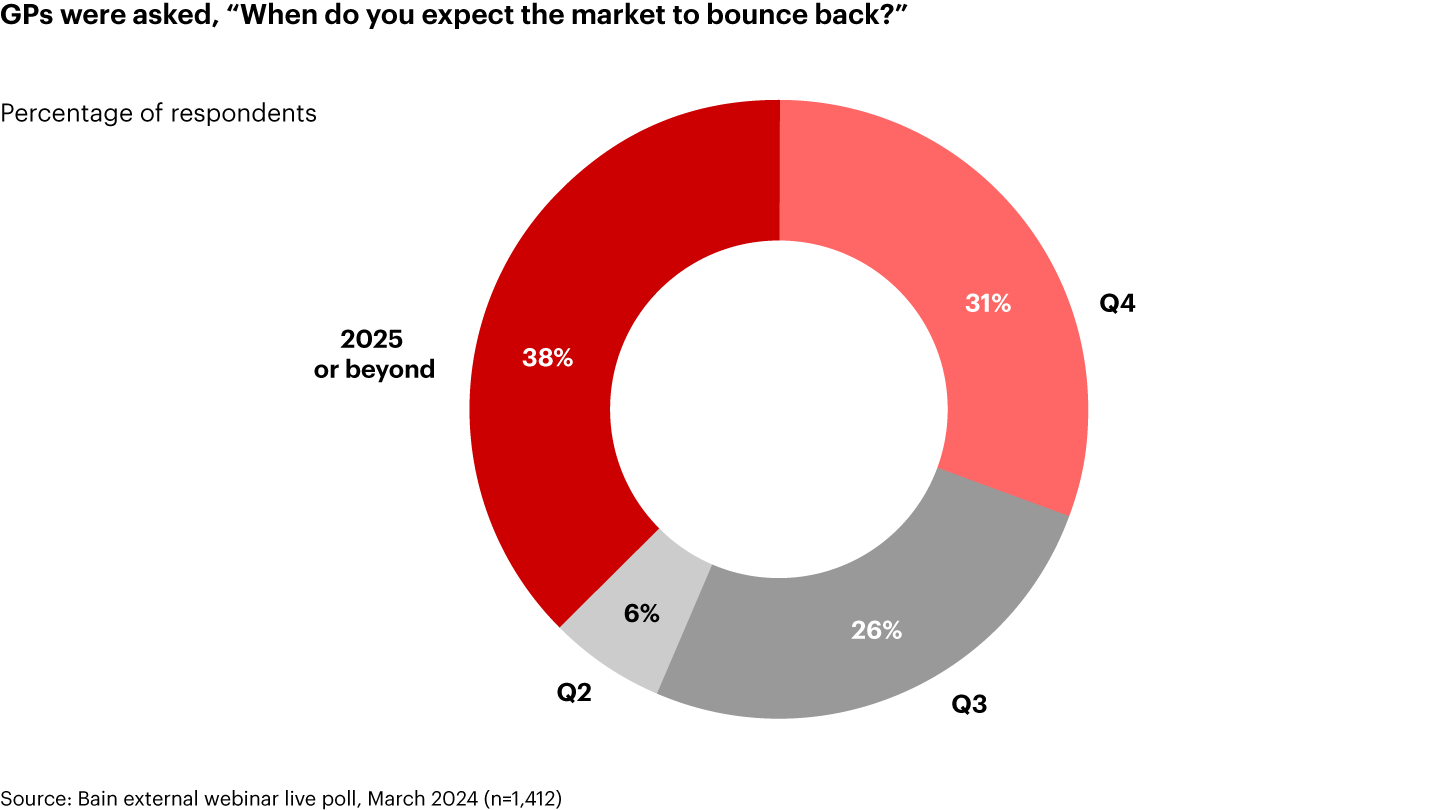
Given that 2024 deal value will likely approach that of the buoyant years preceding 2021’s anomalous postpandemic spike, it’s tempting to assume that normal isn’t so far off. But activity relative to the mountain of dry powder available remains stunted by historical standards. For comparison, 2024 deal value is on track to roughly match 2018’s total, yet there is more than 1.5 times as much buyout dry powder today as there was back then. With the exception of very large headline deals like the $15.5 billion acquisition of Truist Insurance led by Stone Point Capital and Clayton, Dubilier & Rice or Permira’s $6.9 billion bid to take Squarespace private, there’s little empirical evidence that the market is truly on the upswing. How soon that might change is the million-dollar question. When Bain & Company surveyed more than 1,400 market participants in March to find out when they expected dealmaking activity to bounce back, around 30% said they don’t expect any pickup until the fourth quarter, and close to 40% predicted it would take until 2025 or beyond (see Figure 2). Yet informal discussions with general partners (GPs) globally suggest that deal pipelines are already starting to refill, and many see the green shoots of a recovery beginning to poke through.
Figure 2

The bigger issue is the industry’s persistently low levels of distributed to paid-in capital (DPI). The prolonged slump in exits is having a measurable impact on funds’ ability to raise new capital and keep their LPs satisfied. Finding ways to generate DPI strategically across the portfolio is rapidly becoming a point of competitive differentiation. It may determine which funds meet their fund-raising goals in the years ahead and which fall by the wayside. The macro environment—which Karen Harris, managing director of Bain’s Macro Trends Group, described in a recent Dry Powder podcast as “calm, but not stable”—is probably the biggest hurdle to closing transactions. Although the Federal Reserve has held steady for almost a year, interest rates haven’t retreated as expected in 2024. And while the US economy appears to be defying gravity, the yield curve is still inverted, inflation-driven prices are still too high (way too high if you factor in financing costs), and ongoing geopolitical uncertainty in the Middle East, Ukraine, and China continues to rattle nerves. The looming US presidential election, meanwhile, only dials up the uncertainty. In Europe, slow (or no) growth will likely induce the European Central Bank to follow Switzerland and ease rates this year. And though that may spark consumer spending, especially in markets where adjustable-rate mortgages predominate, Europe’s elevated public spending requirements (defense, infrastructure, the debt brake in Germany) remain an anchor. Overall, the growth picture will likely be muted. Added to the challenge of managing rate-related issues within existing portfolios, this broad-based macro uncertainty has left dealmakers distracted and wary on either side of any transaction. Through May, that caution was playing out across the value-creation cycle. Here’s a closer look at the implications. InvestmentsMomentum in private equity means more and bigger deals getting done, and by the first measure, momentum has been absent so far this year. Buyout deal count through May 15 was tracking down 4% globally on an annualized basis compared with 2023. And while global deal value is on pace to finish the year at $521 billion, an 18% increase over the $442 billion tallied in 2023, the gain is attributable to a higher average deal size (up from $758 million to $916 million), not more deals. Regionally, early results were mixed. North America set a pace to increase deal value by 67% in 2024 on a 4% drop in deal count. A few big transactions buoyed early results, and sectors across the board did a little bit better. Those results, however, were counterbalanced by sharp declines in Europe and Asia, where economic lethargy weighed most heavily (see Figure 3).
Figure 3
The market is clearly still getting used to the notion that interest rates may stay higher for longer and that valuations derived amid much friendlier monetary policy will ultimately have to be adjusted. Anecdotal evidence suggests that buyers and sellers are feeling each other out, albeit slowly, and trying to find creative ways to break the stalemate over price expectations. Existing data suffers from a small sample size, but deal multiples appear to be easing somewhat as investors focus on company performance and business fundamentals. Any lingering hope that simple multiple expansion will carry a deal to a strong return has receded sharply. The first-half bump up in deal value, however, suggests that a thaw may be in its early stages. And GPs still face plenty of heat to do deals given the $3.9 trillion in dry powder sitting in their coffers ($1.1 trillion in buyout funds). GPs flush with capital earning fees are under mounting pressure to justify those fees by putting money to work. ExitsThe pressure on the exit side is even greater. The total number of buyout-backed exits is essentially tracking flat on an annualized basis while exit value is trending to finish at $361 billion, a 17% increase from the 2023 total (see Figure 4). Although that’s certainly a move in the right direction, 2024 is still shaping up to be the second-worst year for exit value since 2016.
Figure 4
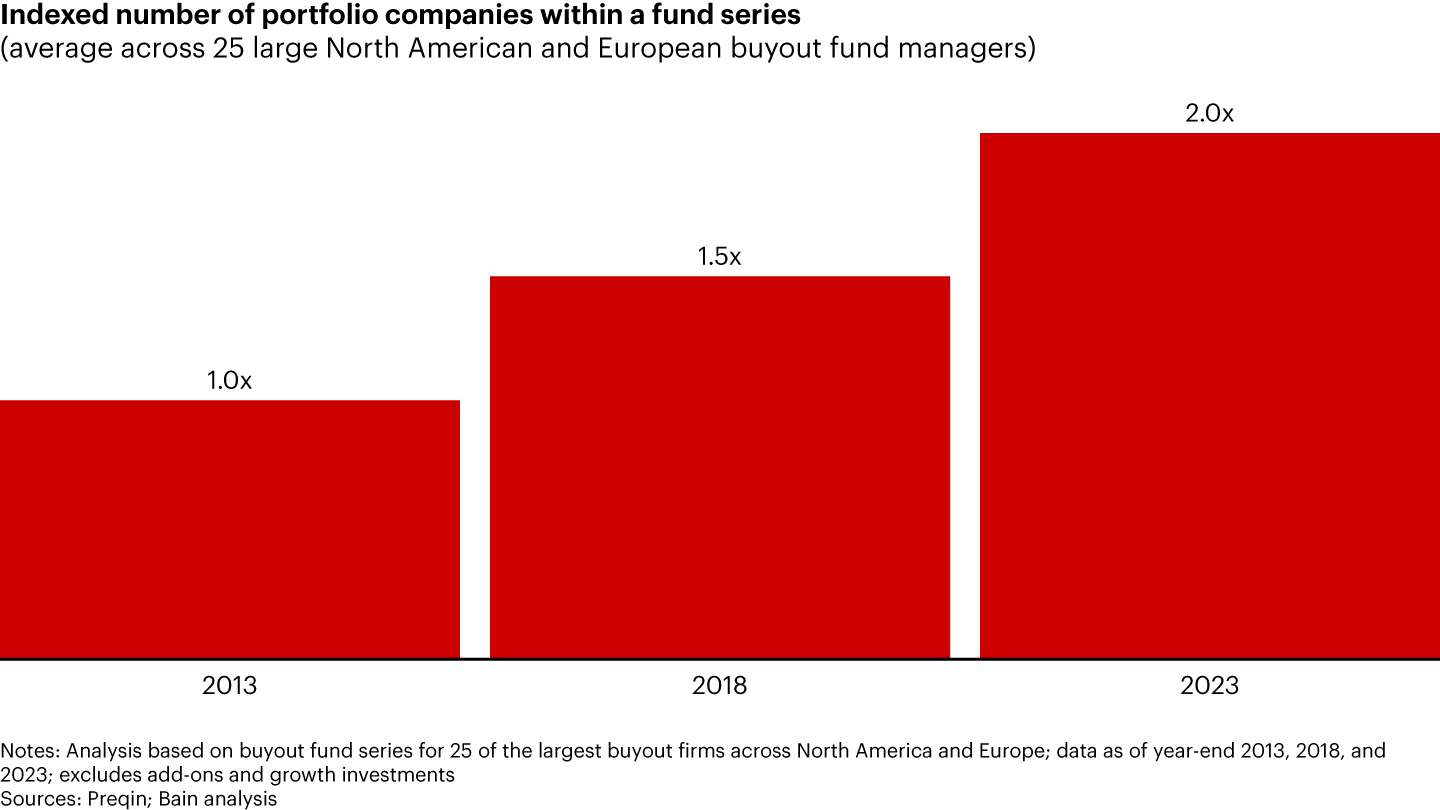
A bright spot is the reopening of the initial public offering market, sparked by the surge in public equities over the past six months or so. That has produced several large exits in Europe, most notably EQT’s $2.6 billion IPO of Galderma Group, but the channel still represents just a sliver of the exit total. The major exit channels—corporate deals and sponsor-to-sponsor transactions—were largely flat. The overall exit slowdown is making life increasingly uncomfortable for GPs in several ways. Among them is a sharp rise in the number of active portfolio companies over the past several years—a result of dealmaking outpacing exits and funds holding assets for longer. An analysis of fund series at 25 of the largest buyout firms shows that the number of portfolio companies they manage has doubled over the last decade, leaving sponsors with twice as many claims on their limited resources and bandwidth (see Figure 5).
Figure 5

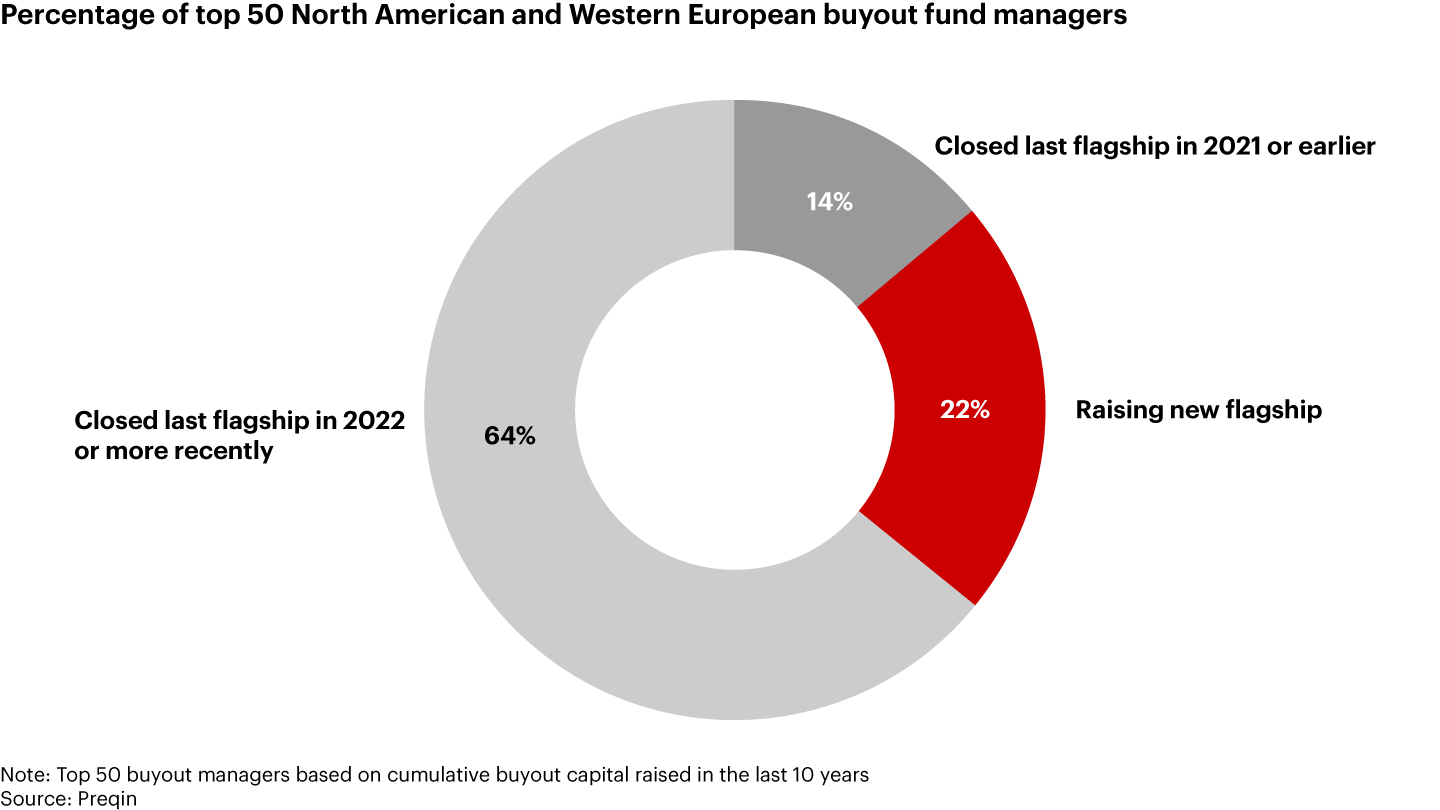
At the same time, the interest rate spike has raised the stakes of holding an asset longer. Not only are balance sheets under pressure from the rising cost of adjustable-rate loans, but the outlook for many assets has become less certain in the inflationary environment. Getting a clear picture of how much strain portfolios might be under has gotten more difficult as private debt plays an ever greater role in financing buyouts. But anecdotal evidence suggests that, while red lights aren’t flashing among the big private lenders, portfolio managers are spending a lot more of their day negotiating with lenders and overseeing operational issues. Fighting fires within portfolios consumes the time, energy, and confidence of both operating and senior investment professionals, which tends to check new activity. Funds continue to find buyers for their shiniest assets. But for everything else, sponsors are quietly shopping things around under the radar, testing the market and seeing whether hoped-for valuations might fly. The fear is that a formal process launched in this environment may fall short and leave the firm with a potentially tainted asset. Yet each day of waiting begs a crucial set of questions: Is scratching for the next turn of multiple really worth the risk of alienating LPs who are increasingly starved for distributions? How will that affect the relationship and our ability to raise the next fund? Fund-raisingTo some extent, the run-up in public equities over the last year has eased some of the liquidity pressure on LPs. Many large GPs are also sitting at a relatively comfortable place in the fund-raising cycle, at least when it comes to their bigger vehicles. Of the top 50 buyout funds in the US and Europe, over 60% have closed a flagship since 2022. Another quarter are on the road now (see Figure 6).
Figure 6

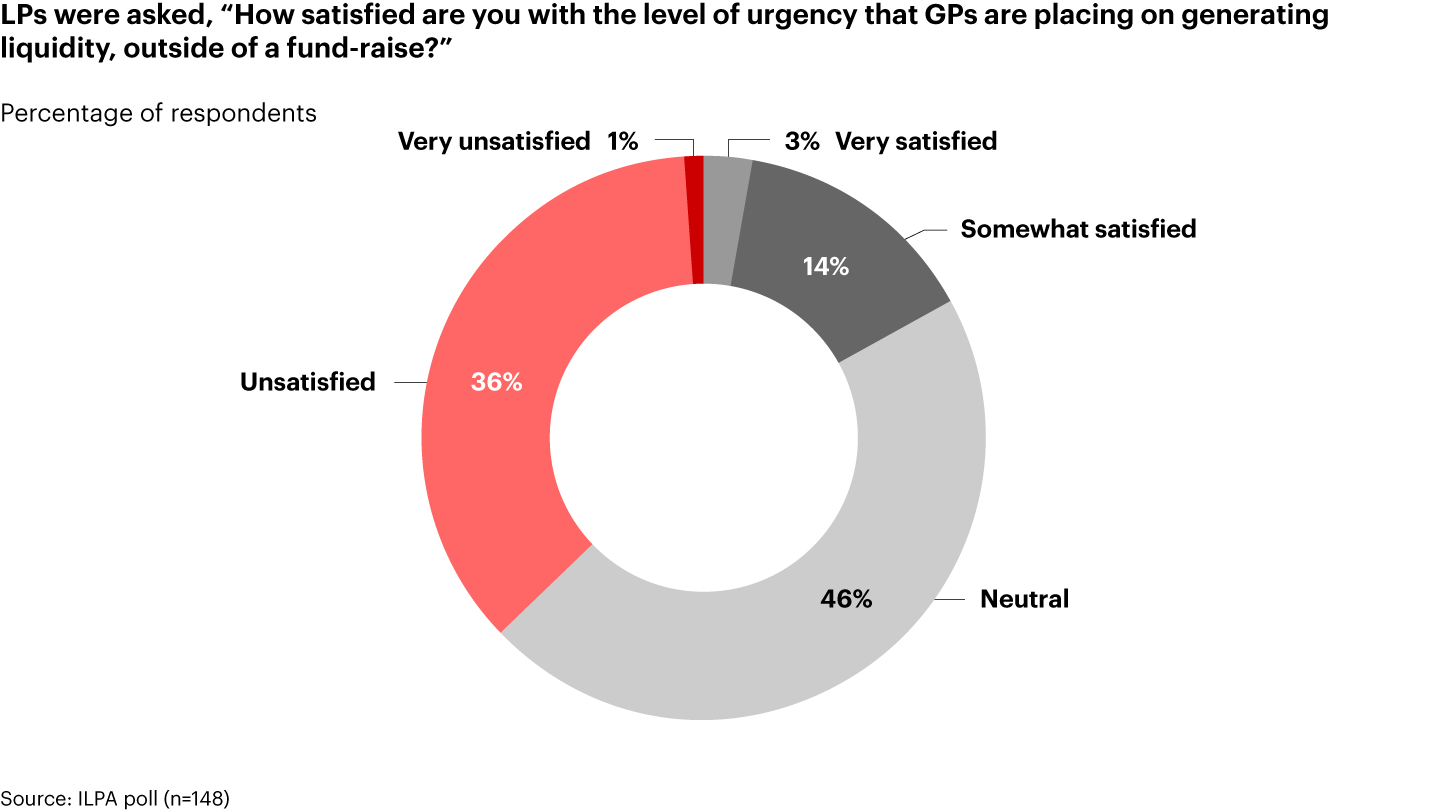
None of this, however, suggests that the industry’s current level of inactivity is sustainable over the long term or that LPs aren’t losing patience with the pace of distributions. Indeed, only a small minority of the respondents in a recent poll by the Institutional Limited Partners Association said they were satisfied with the urgency GPs are placing on increasing liquidity (see Figure 7).
Figure 7

Meanwhile, the fund-raising environment remains a tale of haves and have-nots. Through May 15, the global industry raised $422 billion, vs. $438 billion over the same period a year earlier. That suggests an annualized total of $1.1 trillion in 2024, which would be a 15% drop from 2023 (see Figure 8). Buyout funds dominated with $199 billion raised, and the category is setting up to post $531 billion by year-end, representing a 6% increase from the 2023 total.
Figure 8
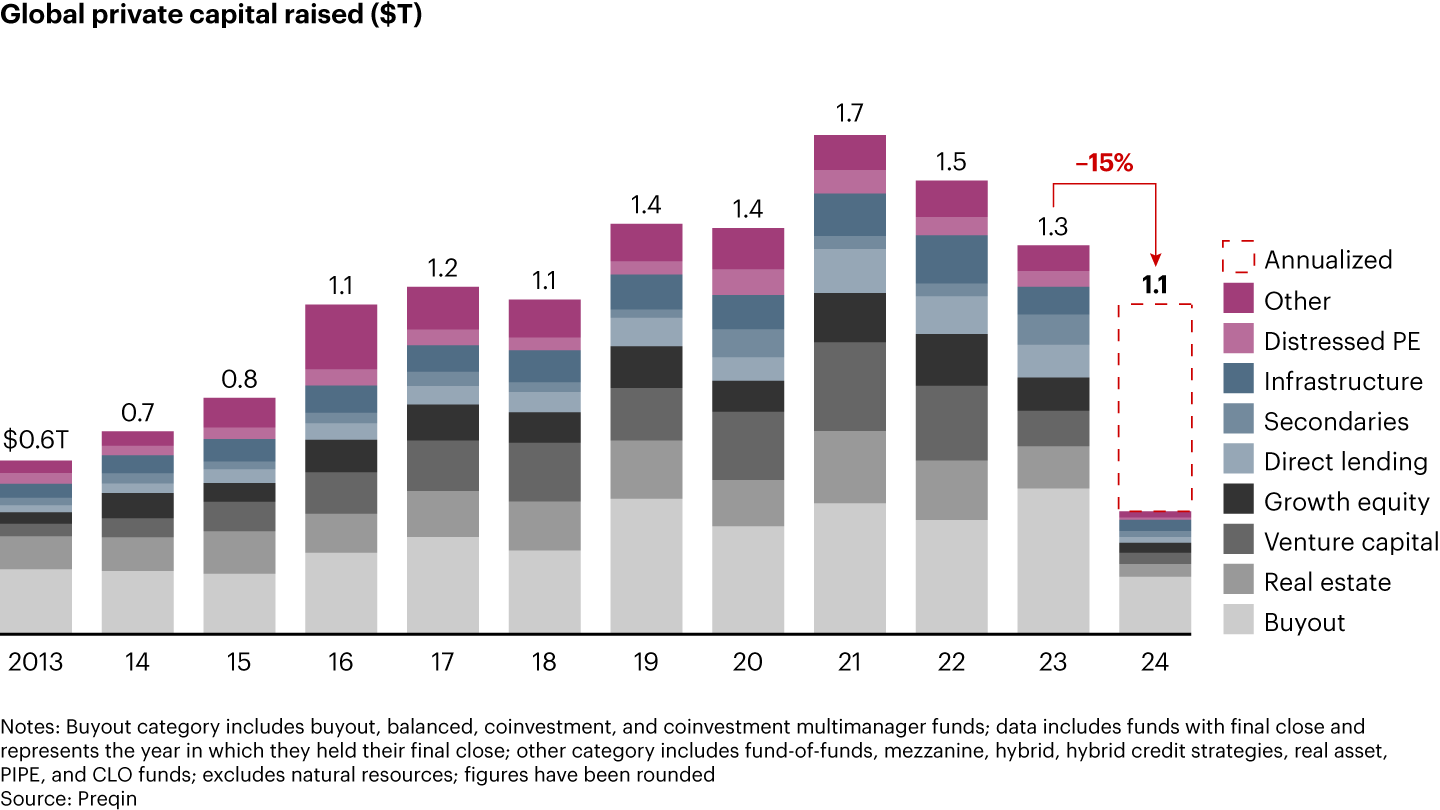

All that looks relatively robust until you dive a little deeper. For the industry broadly, and in the buyout category especially, the number of funds closed continues to drop precipitously as LPs focus new commitments on a narrowing swath of favored fund managers (see Figure 9). In buyouts, the 10 largest funds closed took in 64% of total capital raised, and the largest of those (the $24 billion EQT X fund) accounted for 12%.
Figure 9
As the great preponderance of buyout funds battles over the remaining 36% of capital available, the industry’s extended exit overhang is coming home to roost. Today, at least one in five buyout funds is closing under its target (a ratio that is likely to go up before it comes down), and it’s not uncommon for funds to miss those objectives by over 20%. Against this backdrop, GPs are getting creative with strategies like coinvestments and continuation funds to buy time and wait for a better environment to raise new capital. But if history is any guide, the wait may be a long one. Fund-raising doesn’t bounce back immediately when exits and distributions improve. It typically takes 12 months or more for a boost in exits to produce a turnaround in fund-raising totals. That means, even if dealmaking picks up this year, it could take until 2026 before the fund-raising environment really improves. Adjusting to a new normalAnd even then, it’s not likely to be any easier for a fund to stand out in a hotly competitive market for capital. For funds that have struggled to meet their objectives this time around, it’s safe to assume that going back out on the road with a similar narrative a year or two from now will likely produce the same result. The imperative, then, is to change the narrative—to use this time to understand how LPs really see your fund and then translate those insights into stronger performance and more competitive market positioning. This isn’t an exercise in simply stepping up investor relations or making a few small cosmetic adjustments. To borrow a phrase from Jeff Bezos, it’s a process undertaken “step by step, ferociously” to drive performance in the ways that matter most to key investors—and those key investors you’ve yet to win over. Let’s break it down into four broad areas of focus. Looking in the mirror. The critical first step is a clear-eyed assessment of how you come across in the market: not what your LPs say to you (polite is their default) but what they really think of you. To understand what needs fixing, firms need to know what landed well with LPs and what didn’t the last time around. They need sharp insights into what strategic investors really care about in choosing a fund and which proof points will catch and hold their attention. Putting the portfolio first. These insights lay the foundation for a comprehensive, portfolio-wide plan to deliver on those proof points, whether they include a specific objective for internal rate of return, a defined level of DPI within a given time frame, a more repeatable approach to value creation, or maybe all of the above. Leaders need to analyze where the value sits within their portfolio and where investing scarce resources (or cutting losses when necessary) will drive the best performance against LP expectations. While sponsors are generally adept at assessing assets from the bottom up, what’s best for an individual company may not be best for the portfolio. You need to take a detailed, top-down look at how these individual actions add up across the portfolio and whether the sum of the parts is delivering on the specific metrics LPs value. It’s also critical to put the right governance in place to make decisions across the portfolio regarding things like exit timing or allocation of resources. Sharpening value creation. Now is also the time to reevaluate the firm’s value-creation model. For better or worse, multiple expansion has been a key driver of portfolio company performance for years. But in a high-rate environment, the premium will be on producing margin and revenue growth. What is the firm’s secret sauce, and will it still work in a repeatable way? How effective are operating teams at working with management to drive performance? Do teams have the right resources and capabilities to succeed, and, if not, where will you get them? Effective portfolio monitoring and governance are also critical here to track performance holistically and make decisions that balance the best interests of the firm overall. Rebooting investor relations. As we’ve written before, fund-raising is no longer a handshake-over-lunch affair. The firms out-raising others are building commercial organizations to match their ambition. Like any first-class B2B company in the portfolio, firms need to develop the right commercial motions to sell their narrative. That involves segmenting the market by “customer,” determining potential commitment levels, and devising targeted strategies to win share of wallet. Do you know how much capital will come from your existing LPs for the next raise and how you’ll fill the gap? A good re-up rate is around 75%, so even for top funds, there is almost always a gap to fill and a need to win over new LPs. Is your team right-sized to succeed? Is there clarity on where senior firm leadership time is best spent? Have you pressure tested your revised narrative to see how it’s resonating with LPs? The priority in today’s market is to demonstrate to LPs that your firm is a responsible steward of capital with a disciplined, unemotional plan for generating returns and distributing capital on time. There’s no upside in expecting the fund-raising market to get any easier as private equity eventually emerges from its doldrums. Raising the next fund will depend on a plan to get more competitive and prove it to investors. |