
Skip to Content
  • Offices

    Offices

    North & Latin America
    • Atlanta
    • Austin
    • Bogota
    • Boston
    • Buenos Aires
    • Chicago
    • Dallas
    • Denver
    • Houston
    • Los Angeles
    • Mexico City
    • Minneapolis
    • Monterrey
    • Montreal
    • New York
    • Rio de Janeiro
    • San Francisco
    • Santiago
    • São Paulo
    • Seattle
    • Silicon Valley
    • Toronto
    • Washington, DC
    Europe & Africa
    • Amsterdam
    • Athens
    • Berlin
    • Brussels
    • Copenhagen
    • Dusseldorf
    • Frankfurt
    • Helsinki
    • Istanbul
    • Johannesburg
    • Kyiv
    • Lisbon
    • London
    • Madrid
    • Milan
    • Munich
    • Oslo
    • Paris
    • Rome
    • Stockholm
    • Vienna
    • Warsaw
    • Zurich
    Middle East
    • Doha
    • Dubai
    • Riyadh
    Asia & Australia
    • Bangkok
    • Beijing
    • Bengaluru
    • Brisbane
    • Ho Chi Minh City
    • Hong Kong
    • Jakarta
    • Kuala Lumpur
    • Manila
    • Melbourne
    • Mumbai
    • New Delhi
    • Perth
    • Seoul
    • Shanghai
    • Singapore
    • Sydney
    • Tokyo
    See all offices
  • Alumni
  • Media Center
  • Subscribe
  • Contact
  • Chile | Español

    Select your region and language

    Global
    • Global (English)
    North & Latin America
    • Brazil (Português)
    • Argentina (Español)
    • Canada (Français)
    • Chile (Español)
    • Colombia (Español)
    Europe, Middle East, & Africa
    • France (Français)
    • DACH Region (Deutsch)
    • Italy (Italiano)
    • Spain (Español)
    • Greece (Elliniká)
    Asia & Australia
    • China (中文版)
    • Korea (한국어)
    • Japan (日本語)
  • Saved items (0)
    Saved items (0)

    You have no saved items.

    Bookmark content that interests you and it will be saved here for you to read or share later.

    Explore Bain Insights
  • Industries
    Main menu

    Industries

    • Aeroespacial y Defensa
    • Agroindustria
    • Químicos
    • Construcción e Infraestructura
    • Productos de Consumo
    • Servicios Financieros
    • Salud y Ciencias de la Vida
    • Maquinaria y Equipo Industrial
    • Medios y Entretenimiento
      Industries
      Medios y Entretenimiento
      • Media Lab
    • Metales
    • Minería
    • Petróleo y Gas
    • Papel y Empaque
    • Private Equity
      Industries
      Private Equity
      • Due Diligence
      • Exit Planning
      • Firm Strategy & Operations
      • Portfolio Value Creation
    • Sector Público y Social
    • Retail
    • Tecnología
    • Telecomunicaciones
      Industries
      Telecomunicaciones
      • Capital Expenditure
      • Telco Digital Transformation
    • Transporte
    • Viajes y Turismo
    • Servicios Públicos y Energías Renovables
  • Consulting Services
    Main menu

    Consulting Services

    • Customer Experience
    • Sustainability
    • Innovation
    • M&A
    • Operations
    • People & Organization
    • Private Equity
    • Sales & Marketing
    • Strategy
    • AI, Insights, and Solutions
    • Technology
    • Transformation
  • Digital
  • Insights
    Main menu

    Insights

    • Industry Insights
    • Services Insights
    • Bain Books
    • Webinars
    • Bain Futures
    View all Insights
    Featured topics
    • Tariff Response
    • Artificial Intelligence
    • Thriving in Uncertainty
    • Executive Conversations
    • Macro Trends
    • M&A Report
    • Healthcare Private Equity Report
    • Paper & Packaging Report
    • Technology Report
    • CEO's Guide to Sustainability
    • CEO Insights
    • CFO Insights
    • COO Insights
    • CIO Insights
    • CMO Insights
    View all featured topics
  • About
    Main menu

    About

    • What We Do
    • What We Believe
    • Our People & Leadership
    • Client Results
    • Awards & Recognition
    • Global Affiliations
    Further: Our global responsibility
    • Sustainability
    • Social Impact
    • World Economic Forum
    Learn more about Further
  • Carreras
    Main menu

    Carreras

    • Trabaja con Nosotros
      Carreras
      Trabaja con Nosotros
      • Find Your Place
      • Nuestras Áreas de Trabajo
      • Equipos Integrados
      • Estudiantes
      • Internships & Programs
      • Eventos de Reclutamiento
    • La Vida en Bain
      Carreras
      La Vida en Bain
      • Historias Profesionales
      • Nuestra Gente
      • Dónde Trabajamos
      • Apoyando tu Crecimiento
      • Grupos de Afinidad
      • Beneficios
    • Impact Stories
    • Nuestro Proceso
      Carreras
      Nuestro Proceso
      • Qué Esperar
      • Entrevistas
    FIND JOBS
  • Offices
    Main menu

    Offices

    • North & Latin America
      Offices
      North & Latin America
      • Atlanta
      • Austin
      • Bogota
      • Boston
      • Buenos Aires
      • Chicago
      • Dallas
      • Denver
      • Houston
      • Los Angeles
      • Mexico City
      • Minneapolis
      • Monterrey
      • Montreal
      • New York
      • Rio de Janeiro
      • San Francisco
      • Santiago
      • São Paulo
      • Seattle
      • Silicon Valley
      • Toronto
      • Washington, DC
    • Europe & Africa
      Offices
      Europe & Africa
      • Amsterdam
      • Athens
      • Berlin
      • Brussels
      • Copenhagen
      • Dusseldorf
      • Frankfurt
      • Helsinki
      • Istanbul
      • Johannesburg
      • Kyiv
      • Lisbon
      • London
      • Madrid
      • Milan
      • Munich
      • Oslo
      • Paris
      • Rome
      • Stockholm
      • Vienna
      • Warsaw
      • Zurich
    • Middle East
      Offices
      Middle East
      • Doha
      • Dubai
      • Riyadh
    • Asia & Australia
      Offices
      Asia & Australia
      • Bangkok
      • Beijing
      • Bengaluru
      • Brisbane
      • Ho Chi Minh City
      • Hong Kong
      • Jakarta
      • Kuala Lumpur
      • Manila
      • Melbourne
      • Mumbai
      • New Delhi
      • Perth
      • Seoul
      • Shanghai
      • Singapore
      • Sydney
      • Tokyo
    See all offices
  • Alumni
  • Media Center
  • Subscribe
  • Contact
  • Chile | Español
    Main menu

    Select your region and language

    • Global
      Select your region and language
      Global
      • Global (English)
    • North & Latin America
      Select your region and language
      North & Latin America
      • Brazil (Português)
      • Argentina (Español)
      • Canada (Français)
      • Chile (Español)
      • Colombia (Español)
    • Europe, Middle East, & Africa
      Select your region and language
      Europe, Middle East, & Africa
      • France (Français)
      • DACH Region (Deutsch)
      • Italy (Italiano)
      • Spain (Español)
      • Greece (Elliniká)
    • Asia & Australia
      Select your region and language
      Asia & Australia
      • China (中文版)
      • Korea (한국어)
      • Japan (日本語)
  • Saved items  (0)
    Main menu
    Saved items (0)

    You have no saved items.

    Bookmark content that interests you and it will be saved here for you to read or share later.

    Explore Bain Insights
  • Industries
    • Industries

      • Aeroespacial y Defensa
      • Agroindustria
      • Químicos
      • Construcción e Infraestructura
      • Productos de Consumo
      • Servicios Financieros
      • Salud y Ciencias de la Vida
      • Maquinaria y Equipo Industrial
      • Medios y Entretenimiento
      • Metales
      • Minería
      • Petróleo y Gas
      • Papel y Empaque
      • Private Equity
      • Sector Público y Social
      • Retail
      • Tecnología
      • Telecomunicaciones
      • Transporte
      • Viajes y Turismo
      • Servicios Públicos y Energías Renovables
  • Consulting Services
    • Consulting Services

      • Customer Experience
      • Sustainability
      • Innovation
      • M&A
      • Operations
      • People & Organization
      • Private Equity
      • Sales & Marketing
      • Strategy
      • AI, Insights, and Solutions
      • Technology
      • Transformation
  • Digital
  • Insights
    • Insights

      • Industry Insights
      • Services Insights
      • Bain Books
      • Webinars
      • Bain Futures
      View all Insights
      Featured topics
      • Tariff Response
      • Artificial Intelligence
      • Thriving in Uncertainty
      • Executive Conversations
      • Macro Trends
      • M&A Report
      • Healthcare Private Equity Report
      • Paper & Packaging Report
      • Technology Report
      • CEO's Guide to Sustainability
      • CEO Insights
      • CFO Insights
      • COO Insights
      • CIO Insights
      • CMO Insights
      View all featured topics
  • About
    • About

      • What We Do
      • What We Believe
      • Our People & Leadership
      • Client Results
      • Awards & Recognition
      • Global Affiliations
      Further: Our global responsibility
      • Sustainability
      • Social Impact
      • World Economic Forum
      Learn more about Further
  • Carreras
    Popular Searches
    • Agile
    • Digital
    • Strategy
    Your Previous Searches
      Recently Visited Pages

      Content added to saved items

      Saved items (0)

      Removed from saved items

      Saved items (0)

      Brief

      Sustaining Capital: From Chaos to Discipline

      Sustaining Capital: From Chaos to Discipline

      Fragmented budgets, poor visibility, and missed forecasts are fixable with the right approach.

      By Liam Connolly, Stuart Love, Alistair Corbett, and Rosey Kaur

      • min read
      }

      Brief

      Sustaining Capital: From Chaos to Discipline
      en
      Executive Summary
      • Sustaining capital often accounts for 50% or more of industrial capex but gets far less attention than growth capital.
      • Disjointed ownership, poor visibility, and rigid budgets cause missed forecasts, delays, and inefficient spending.
      • Leading companies focus on the 20% to 30% of projects that drive 80% of sustaining capital spending.
      • A better model balances site ownership with central oversight and creates flexible budgets tied to the long-term strategy.

      Frustrated by perennially poor compliance and missed budget targets, many industrial executives are recognizing they need a new approach to managing sustaining capital investments—one that applies the same kind of disciplined, enterprise-wide strategy as their growth capital projects.

      While sometimes overlooked, spending on sustaining capital—the broad set of investments required to maintain current operations and output—can reach billions of dollars annually, on par with investments in expansion projects. In mining, for example, sustaining capital has accounted for 50% or more of annual capital expenditures in recent years (see Figure 1).

      Figure 1
      Sustaining capital has accounted for more than half of mining companies’ capital expenditures in recent years
      visualization

      Note: Includes capital expenditures across iron ore, gold, copper, nickel, lithium, and zinc; figures have been rounded

      Sources: S&P Capital IQ; Bain Commodity Outlooks; Morgan Stanley; Macquarie; Bain analysis

      Although the case studies explored in this article come from the mining industry, the trends and best practices apply across energy, natural resources, manufacturing, and other industrial sectors. They’re all facing the prospect of rising sustaining capital expenditures in the coming years due to a bow wave of demands: sustainability pressures, equipment replacement cycles, and increasing investments in new sites, necessitating more sustaining capital expenditures.

      Where value gets lost

      Despite the scale, sustaining capital rarely receives the same discipline, transparency, or strategic attention that industrial companies give their major capital expansion projects. The biggest impediment: Sustaining capital budgets typically encompass hundreds (if not thousands) of expenditures distributed across a company’s sites, from $100 million-plus waste management projects to replacing a single piece of equipment for less than $100,000. This fragmentation makes coordination and efficiency incredibly difficult. Responsibility is spread across sites that have uneven capabilities and resources, and budget cycles often fail to adapt to changing needs.

      As a result, industrial companies frequently misjudge what’s required and mishandle allocated resources. For example, over a five-year period, one global mining company’s annual sustaining capital spending swung between 20% below and 20% above the budgeted amount (see Figure 2). It achieved an 80% spending compliance rate for larger projects, but it struggled with the long tail of smaller projects—just 40% compliance. Furthermore, about 60% of its budgeted projects didn’t launch within the designated year, and 75% of the sustaining capital projects it did carry out were unplanned.

      Figure 2
      Mining companies often struggle to deliver sustaining capital projects on time and on budget, particularly smaller projects

      Notes: Based on five-year average of a leading mining company; small projects defined as less than $2 million each

      Source: Bain company interviews

      Leading companies are discovering a better way. They’re taking a more strategic approach that balances site ownership of sustaining capital projects with enterprise-wide discipline, resulting in better visibility, execution, and investment returns.

      Achieving sustaining capital excellence

      In our work with industrial companies across sectors and regions, the most effective sustaining capital managers follow a set of seven best practices:

      • Balance ownership of execution between sites and the center.
      • Link budgets to long-term asset plans.
      • Maintain a multiyear pipeline.
      • Focus on the highest-value projects and clearly defined value levers.
      • Reallocate budget in-year as priorities change.
      • Tailor execution to the project type.
      • Create spending transparency.

      But in practice, four areas consistently stand out as the most critical—and the most commonly mishandled.

      1. Balance ownership of execution between sites and the central office. Sustaining capital projects are often delivered by frontline site teams, but without the structure and support afforded to major capital investments. Inconsistent site-level capabilities, especially in geographically diverse portfolios, can lead to poor and inefficient results.

      Leading companies are striking a better balance. They define clear guardrails that preserve site ownership while reinforcing consistent enterprise-wide standards. That includes establishing roles by project archetype. Central teams oversee and provide support to the projects that carry the most value, risk, and complexity (e.g., complex plant replacements, green energy projects, and nonroutine projects), while regional and site teams manage routine equipment replacements and projects best suited to their expertise and knowledge of day-to-day operations (e.g., working with local contractors).

      The result is faster execution, better accountability, and smarter allocation of resources across the portfolio.

      2. Anchor budgets to long-term asset plans. Too often, sustaining capital budgets have limited connection to long-term operating strategies and capital planning. Many companies still rely on reactive, site-driven budget requests in-year, often with limited input from technical functions. That makes it hard to distinguish what’s truly essential from what’s just noise.

      In contrast, best-in-class organizations tightly link budgets to life-of-asset plans. In mining, for instance, roughly 50% to 70% of sustaining capital needs—such as mine development, equipment procurement, and waste disposal—follow predictable patterns. By proactively aligning with these cycles, companies can improve both the accuracy and efficiency of their planning processes, with more reliable forecasts and fewer last-minute surprises.

      Beyond annual budgets, long-term capital plans also need to be adjusted as life-of-asset plans evolve. The most effective organizations build this flexibility into their capital planning process so that it becomes routine.

      3. Focus on value, not volume. Many companies attempt to create detailed budgets for every sustaining capital line item, regardless of value or predictability. But with hundreds or thousands of line items to track, that effort rarely pays off. In our experience, roughly 80% of spending typically comes from just 20% to 30% of sustaining capital projects (see Figure 3). And yet, those high-value items often receive the same level of scrutiny as far smaller initiatives.

      Figure 3
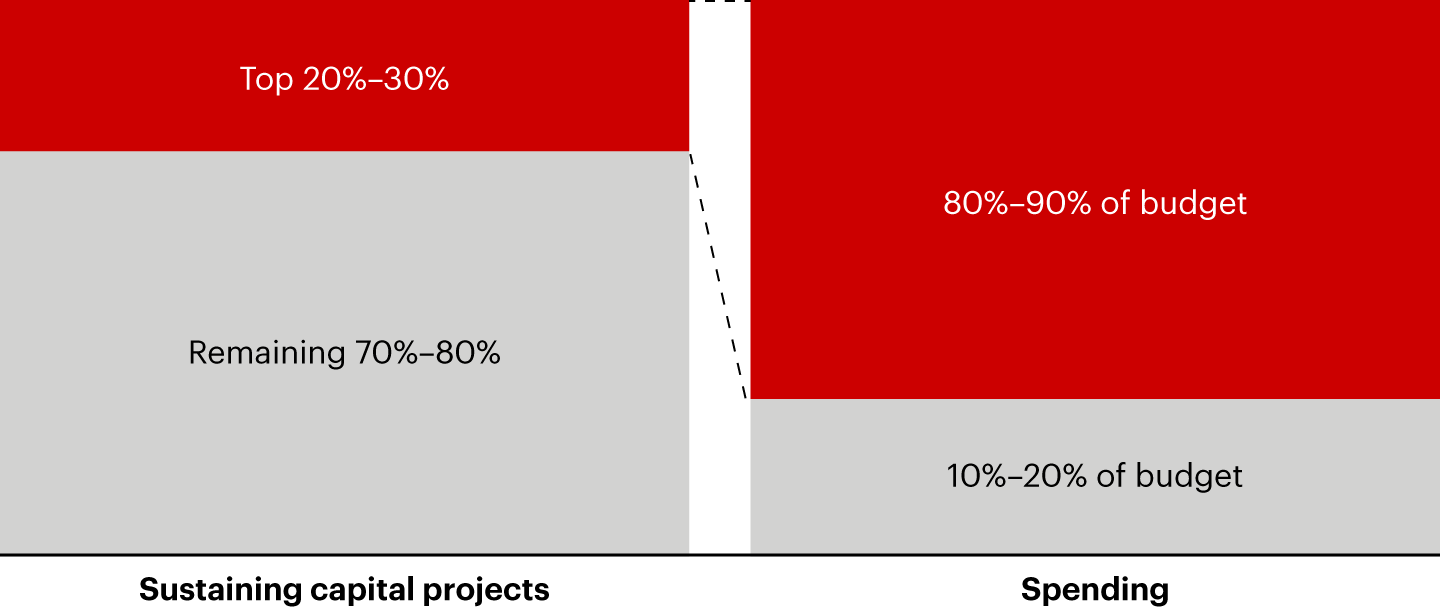
      The top 20% to 30% of projects typically account for more than 80% of sustaining capital expenditures
      Source: Bain analysis

      In contrast, high-performing organizations focus detailed budgeting and performance tracking on the top tier of projects that matter most. For the long tail of smaller, typically less complex, lower-priority investments, they allocate flexible site-level budgets based on historic needs. These site-owned budgets can adapt to scope changes or unpredictable requirements, such as equipment breakdowns. This approach builds trust between the center and the front line, reduces wasted effort, and increases agility, while ensuring that leadership stays focused on delivering the projects with the highest return.

      Key to all of this is tracking spending accurately and efficiently. At leading companies, sites deliver detailed line-item reporting of the highest-value initiatives and a more general, collective summary of smaller projects.

      4. Reallocate funds throughout the year as priorities change. Traditionally, sustaining capital budgets have been rigid—often set far in advance and difficult to adjust once locked. But that doesn’t reflect the real world: Priorities shift, project readiness is fluid, and estimates on cost, scope, and timing evolve. Without the ability to reallocate capital throughout the year, companies risk underspending and missing opportunities, delaying critical work, or burning funds on low-value projects just to avoid leaving budget on the table at year’s end.

      The most effective capital managers build flexibility into the system. They create a centralized fund for the largest 20% to 30% of projects, releasing capital based on strategic priority. Smaller projects remain under site-level control and draw from their allotted funding pools, enabling teams to move quickly without waiting for approvals. If sites don’t use all their allotted funding, it can be returned to the centralized fund and reallocated based on need, helping cover for large project delays, cancellations, or scope changes. This model avoids year-end fire drills and ensures that capital flows to where it will create the most value.

      The global mining company referenced earlier recognized that its sustaining capital projects lacked standardized tools, governance, and enterprise visibility, which resulted in inconsistent capital planning, limited prioritization, and, ultimately, poor project compliance.

      To address this, the company launched a transformation initiative focused on three areas. First, it introduced tools for standardization and prioritization, including a common project initiation form to capture information, which was stored in a new, centralized database. Second, cross-functional capital planning workshops were held to consolidate inputs from mine plans and site forecasts, enabling integrated planning across teams and the creation of a multiyear sustaining capital pipeline across all sites. Lastly, it rolled out a new governance and performance management system built on monthly performance tracking dashboards and a centralized contingency fund that reallocates capital based on project needs and execution risks.

      As a result, the company gained visibility into around 80% of its sustaining capital spending, significantly improved its financial and performance reporting for high-value projects, and aligned its capital allocation with long-term strategic priorities and business plans. In short, it built the internal muscle to manage sustaining capital with the same rigor and confidence as its growth investments, setting a new standard for capital excellence across the organization.

      Authors
      • Headshot of Liam Connolly
        Liam Connolly
        Partner, Perth
      • Headshot of Stuart Love
        Stuart Love
        Partner, Perth
      • Headshot of Alistair Corbett
        Alistair Corbett
        Partner, Toronto
      • Headshot of Rosey Kaur
        Rosey Kaur
        Practice Director, Melbourne
      Related Industries
      • Agribusiness
      • Chemicals
      • Energy & Natural Resources
      • Machinery & Equipment
      • Mining
      • Oil & Gas
      • Utilities & Renewables
      Related Consulting Services
      • Capital Projects Acceleration
      How We Can Help
      • Capex Impact
      Mining
      Mining Operational Excellence: From Basics to Breakthroughs

      Mining companies can unlock lasting value by getting the fundamentals right and knowing where innovation makes the greatest impact.

      Read more
      COO insights
      Improving Capital Project Delivery Systems

      Bain experts reveal how top energy companies are revolutionizing their capital project delivery to excel in cost, timing, and quality in the energy transition.

      Read more
      COO insights
      How AI Is Starting to Transform Circular Packaging

      There are 15 AI use cases companies across the value chain can use today to accelerate circularity.

      Read more
      Oil & Gas
      Business Breakthrough Barometer 2025

      The annual pulse check from leading businesses on the pace of the net-zero transition.

      Read more
      Mining
      Energy’s Capital Projects Reset: Faster, Smarter, Leaner

      As costs rise and delays abound, executives are rethinking their approaches to capital projects.

      Read more
      First published in octubre 2025
      Tags
      • Agribusiness
      • Capex Impact
      • Capital Projects Acceleration
      • Chemicals
      • COO insights
      • Energy & Natural Resources
      • Machinery & Equipment
      • Mining
      • Oil & Gas
      • Utilities & Renewables

      How We've Helped Clients

      New products propel profitability for metals manufacturer

      See more related case studies

      An OFS captures post-merger growth synergies

      See more related case studies

      Broader market plus tighter sales strategy equals big success for a portfolio company

      See more related case studies

      Want to continue the conversation

      We help global leaders with their organization's most critical issues and opportunities. Together, we create enduring change and results

      Bain Insights. Our perspectives on critical issues global businesses face in today's challenging environment, delivered monthly.

      *I have read and understand Bain’s Privacy Notice.

      Please read and agree to the Privacy Policy.
      Bain & Company
      Contact us Sustainability Accessibility Terms of use Privacy Modern Slavery Act Statement Cookie Policy Sitemap Log In

      © 1996-2026 Bain & Company, Inc.

      Contact Bain

      How can we help you?

      • Business inquiry
      • Career information
      • Press relations
      • Partnership request
      • Speaker request
      See all offices