

Brief

For more than a century, businesses have honed highly efficient, linear supply chains. Raw materials flowed in one direction, were transformed into a product, used, and ultimately discarded in a waste heap. That approach now puts a firm’s competitiveness at risk.
To ensure supply in an increasingly volatile business landscape, companies need more resilient networks. Fast-changing consumer preferences and customization require increased flexibility and speed. And investors, consumers, and governments expect more sustainable products and processes—with certifications to prove companies’ claims. Winning in the coming decade will require a transparent and circular value chain—one that reduces or reuses materials and remanufactures or recycles products—lowering cost and creating less waste.
It is a profound paradigm shift. And the technology is already available to trace each raw material that goes into a product and follow how a product is used and where it is discarded. In fact, digital traceability enables companies to meet and balance a broader set of business objectives, including efficiency, resilience, responsiveness, and sustainability. It allows companies to redefine the boundary of operational excellence and set aspirational new goals.
How does it work? Traceability gives companies the ability to follow products and goods as they move along the value chain and to glean exact information about the provenance of inputs, supplier sourcing practices, and conversion processes. With that data in hand, companies can make predictions, run scenarios, and dynamically optimize operations. Leadership teams can serve customers better, identify unnecessary resource consumption, respond faster to changes in demand, and fulfill orders more efficiently. They are also able to identify strategic value chain opportunities, innovate faster, minimize the impact of internal and external disruptions, and certify sustainable processes and products.
These combined benefits will translate into higher revenue growth, lower costs, increased market share, better returns on investment, and overall improved stakeholder returns. Traceability leaders will also help shape the standards and regulations in their sector. Firms that do not invest in traceability will be more vulnerable to supply chain disruptions and allegations about product safety or provenance. For example, the stranded 400-meter cargo ship that blocked the Suez Canal in March 2021 left hundreds of other cargo ships stuck behind it, wreaking havoc on global supply chains. The companies that knew which ships were carrying their cargo were able to quickly reroute shipments to minimize the supply disruption. Those that lacked visibility were hit hardest.
In fact, across most industries and sectors, we are already beginning to see companies with traceable supply chains start to outrun competitors with limited visibility. And traceability technologies are evolving rapidly. In the coming decade, we expect firms to cluster around two different performance curves: a higher-performance curve for companies that invest in traceability and a lower-performing curve for those that lack traceability.
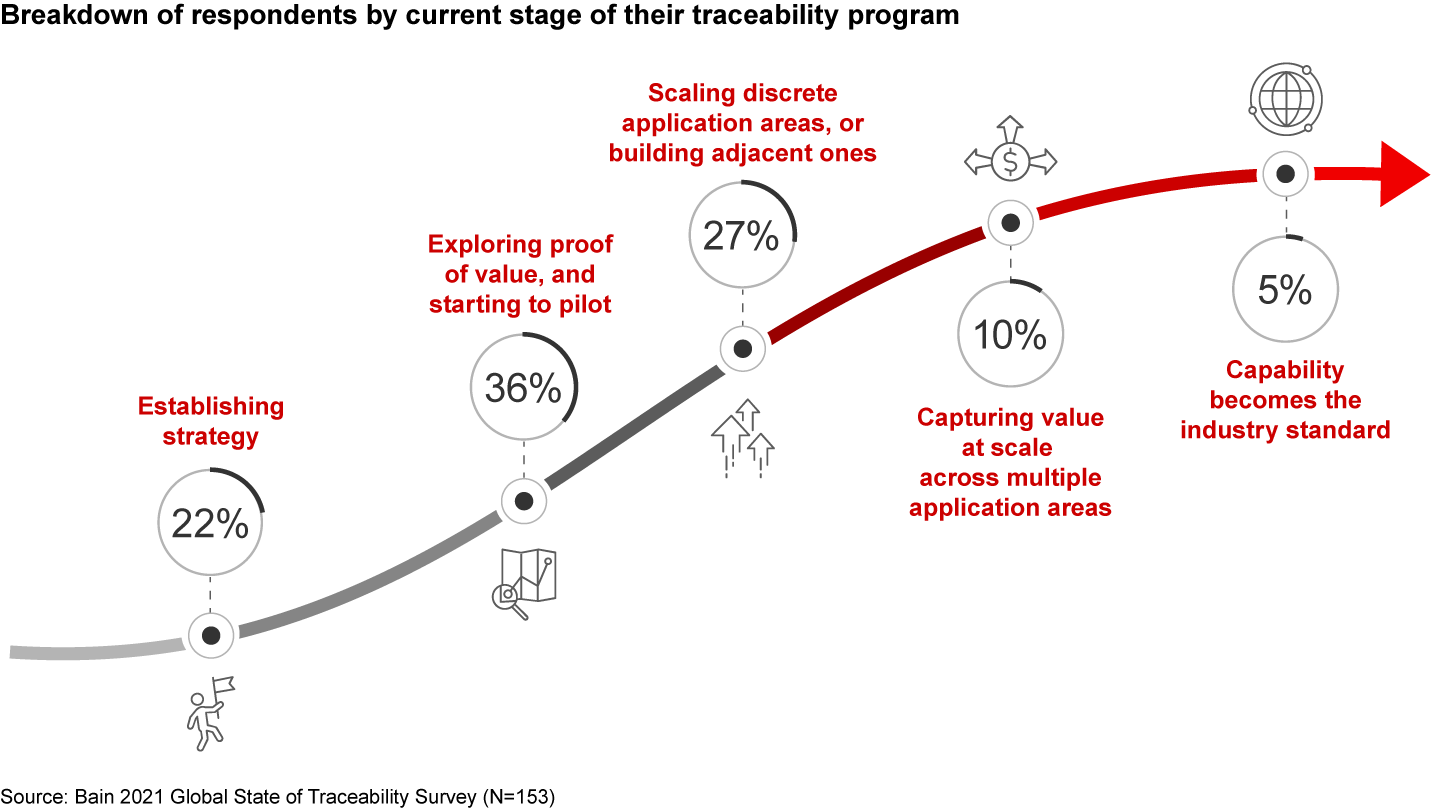
Bain’s recent Global State of Traceability survey, a consultation with 150 senior supply chain leaders, shows that 68% of executives view traceability as “very or extremely important.” But many leadership teams have found implementation painfully complex. In some ways, the traceability journey is analogous to a digital transformation. The multitude of technology options and application areas is overwhelming. It is relatively easy to set up a simple pilot. But scaling it and amplifying the benefits across different application areas is challenging. Traceability adds a new element of complexity: the need to collaborate closely with a vast ecosystem of value chain partners. While firms are investing to improve traceability, 58% have just begun the journey and only 15% are capturing value at scale (see Figure 1).
Figure 1

Bain’s traceability research, conducted in collaboration with the World Economic Forum’s working group on the future of advanced manufacturing and value chains, is documented in the white paper Digital Traceability: A Framework for More Sustainable and Resilient Value Chains.
Successful companies take a three-pronged approach. First, they explore how traceability technologies can lay the foundation for advanced supply chain performance. Second, often in parallel, they build a community of leaders, enablers, and potential partners to learn from. Sharing successes and failures improves performance across the value chain. At the same time, they partner with regulators and policymakers to help inform and shape government proposals that will support and accelerate sustainability.
Focus on value
We are sometimes asked about the connection between sustainability and traceability. This is a crucial point, and it’s often misunderstood. Traceability is the ability to follow materials from the beginning of the supply chain to the customer who purchases a product. With this data and information, traceability plays two roles that support sustainability. It provides visibility on inputs and processes across the value chain, and it provides the source information for provenance and sustainability certifications.
Traceability solutions can be deployed in many ways to bolster competitiveness. The first step, and a vitally important one in defining a traceability strategy, is determining where tracing will generate the greatest value for the company. Leadership teams that fail to focus their investment will risk overwhelming their value chains with complexity. They are also likely to overinvest. Answering a few key questions can help leadership teams choose traceability applications that will pay big dividends:
- What is the strategic context for your industry, and what near-term and long-term goals are you trying to achieve?
- Which processes or inputs to a product do customers or regulators care about most?
- What new capabilities would deliver a competitive advantage in terms of unit economics, resilience, or sustainability?
- Where could a circular value chain create new business opportunities or business models?
Leadership teams can determine how fast they need to move by assessing the company’s starting point and competitors’ commitment to traceability. That approach makes sense for companies striving to catch up from behind and for those jockeying to stay ahead of the pack. It will also help identify potential ecosystem partners.
Connect traceability to business objectives
The two primary business objectives for supply chain management over the past century have been reliability and efficiency. To compete effectively, companies now need to ensure their entire value chains are also resilient and sustainable. That means looking beyond the materials provided by a company’s Tier 1 suppliers and the first line of customers who purchase their goods. The broader value chain includes every supplier’s supplier and every customer’s customer. In addition, they also must meet rising consumer demands for speed and customization, as well as stringent new regulations and evolving certifications and standards. This proliferation of objectives is making value chain management enormously complex.
Managing that complexity well, however, can create a powerful competitive edge. The ability to trace products throughout a value chain will allow leadership teams to transform their operations and to create new business models. At the same time, traceability applications that span the value chain connect an ecosystem of partners that can spur additional value creation via increased visibility, collaboration, and system-wide innovation. Leading companies in digital traceability understand that it is both an offensive and a defensive strategy, anchored in the company’s core objectives. For these leaders, the role of the value chain goes far beyond fulfillment. It’s a new competitive ace.
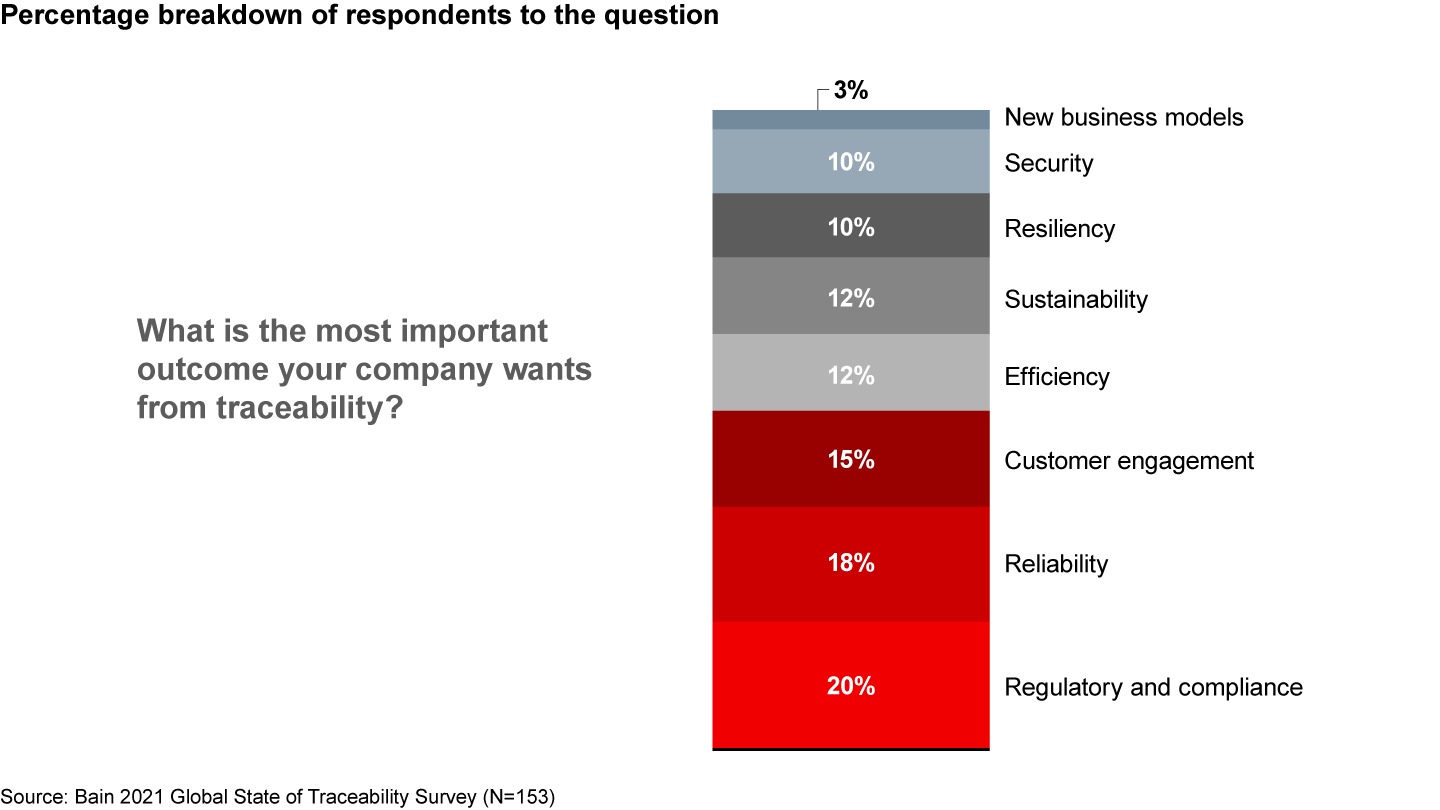
Our research shows that executives are relying on traceability to pursue multiple objectives related to value chain performance (see Figure 2). Today, their No. 1 goal is regulatory compliance. But they consider value chain reliability and digital engagement with the customer in real time nearly as important. Other top applications include efficiency and sustainability. As a result, the most powerful traceability application areas support multiple objectives.
Figure 2

A few leading companies are already using traceability tools to develop new business models through precompetitive collaboration. Ralph Lauren, for example, invested in traceability to support sustainability in its core business and to create new business opportunities. As the secondary market for luxury goods took off, the firm’s executive team decided to build a traceability platform that would help consumers verify the authenticity of Ralph Lauren products being resold on digital platforms. The application, built together with EVRYTHNG, Depop, and Vestiaire, gives Ralph Lauren a connection to secondary market consumers while also prolonging the life span of its garments. Importantly, the traceability application helps curb counterfeit clothing that typically is produced in unregulated and dangerous working conditions and may contain harmful inputs. The authenticity application will enable Ralph Lauren to pursue new business models in the secondary market together with other ecosystem partners and in new customer segments.
Ralph Lauren’s approach underscores how vital traceability will become as economies and business models become more circular. To reuse, remanufacture, or recycle products and materials, for instance, companies will need to know where products end up after they are sold and used. Some leadership teams may consider the gathering of such information as the cost of doing business, but others realize it also can provide the foundation for new growth.
Of course, companies achieve the full value of any application when they scale it across their own value chain or the sector’s value chain. In our experience, many traceability projects get stuck in pilot mode and lose momentum or fail to scale. Companies that roll out successful, large-scale traceability platforms plan the macro journey from strategy to implementation before they launch the first small-scale pilots. They identify their value chain objectives, potential trade-offs, and pilot initiatives that can produce value across the entire supply network. And before getting started, they determine the key enablers, how to scale their first applications, and how to communicate with stakeholders. Companies that delay this essential planning step risk launching a pilot only to discover it cannot be scaled.
Sparking collaboration
Successful traceability efforts require collaboration. No company, no matter how large, can collect all the relevant information needed for robust traceability. In fact, the value created by traceability technologies results from data sharing and collective standards among companies throughout the value chain. So partnering strengthens the competitive advantage of individual companies and the community ecosystem.
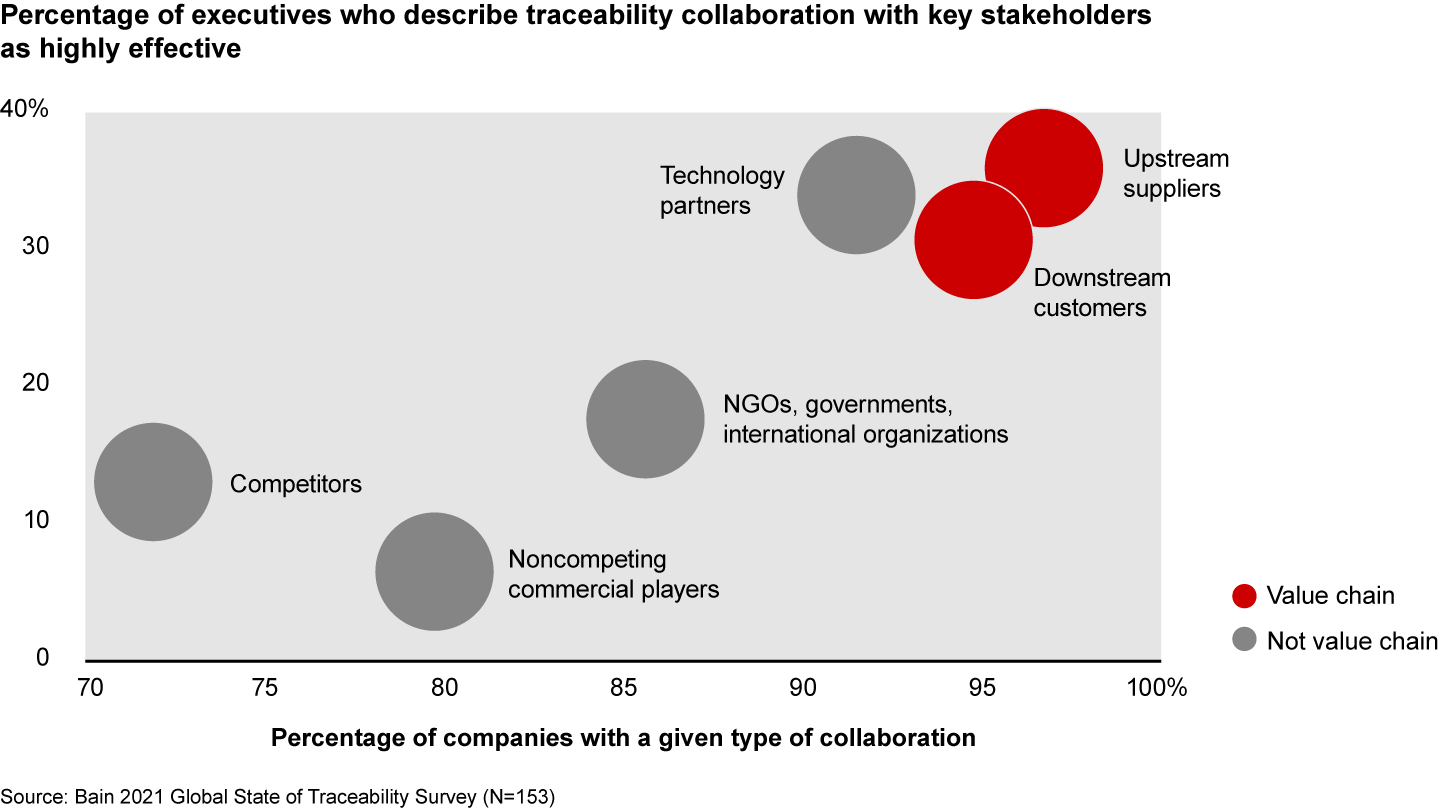
Most firms understand that collaboration is important, but they are reluctant to forge strong alliances (see Figure 3). One reason this occurs is because leadership teams are not accustomed to working with firms outside their business operations, such as competitors or Tier 2 suppliers. Emerging technologies and the right platform model can make cooperation easier.
Figure 3

How can a group of firms that compete within the same value chain collaborate on a traceability solution without losing their competitive advantages? We believe that, in most circumstances, the benefits of collaboration outweigh the downsides. Cocreating technology solutions and collaboration standards in a precompetitive space can reduce the cost for everyone. Pooling influence to convince powerful or less collaborative firms to share required information can also develop high-impact traceability ecosystems. Finally, incentives can play an important role convincing suppliers to collaborate. One example is Fishcoin, which is a means to reward the fishing community for information about their catch.
While collaborating with others can give companies access to vital information, it is up to each organization to translate this information into insights and build the required business processes that will transform insights into competitive advantage. The companies that build the best value creation model linked to traceability will outperform the competition. In the future, all companies are likely to have similar access to traceability data. The winners will be those that wield the data skillfully to improve business processes and outcomes.
Traceability collaboration strategies need to be built on trust. Though some partners will be more committed than others, successful partnerships ensure that each member benefits from traceability and helps steer decisions instead of being forced to participate. Each company should define its position in the ecosystem and its role in connecting the disparate parts. Are you the heavyweight force that convenes other members? Do you act as a key influencer or participant in traceability applications? Or are you a follower, but one that is enthusiastic to help bring others onboard?
Understand the enablers
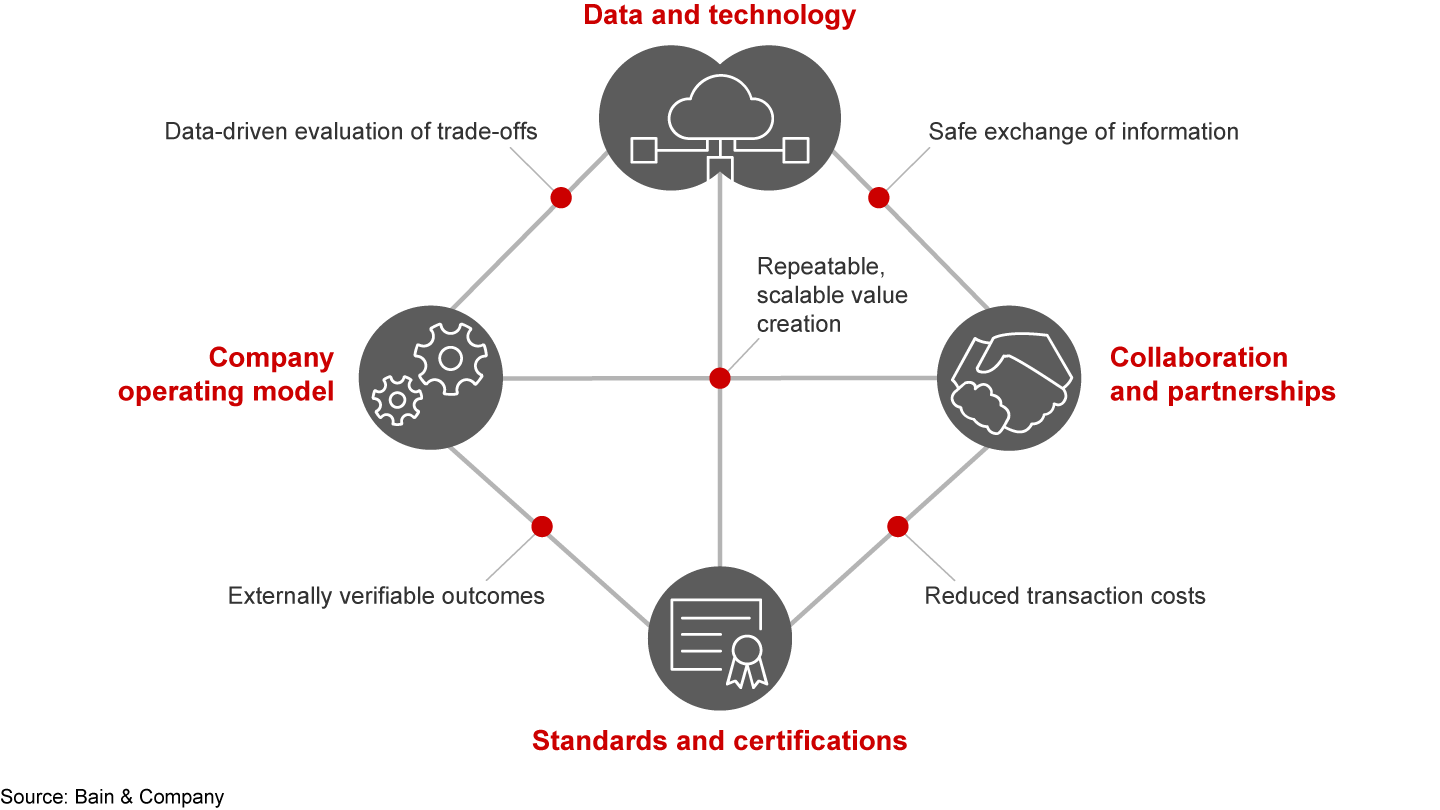
Leadership teams can give their traceability strategies the best chance of success by strengthening five key enablers. These include an internal operating model adapted to cross-functional strategies, a partner ecosystem, integrated data strategy, robust technology architecture, and alignment on standards and certifications.
Too often, companies focus on only one or two of these elements and overlook how interconnected they all are (see Figure 4). To achieve the full potential of a traceability transformation, executives need to understand how each enabler positively reinforces the others. Likewise, they need to make sure the enablers don’t impede one another, such as a technology that doesn’t support the collaboration strategy.
Figure 4

Getting started
Leaders find opportunities to benefit from traceability in every part of the value chain. They may seek to optimize product design by trimming costs, improving the carbon footprint, or increasing supply resilience (see Figure 5).
Choosing the first pilot can feel overwhelming given the wide array of objectives. But the bigger risk is overanalyzing the options. A few key guidelines can help companies quickly narrow the choices. Select applications based on clear business objectives and the ability to create immediate value. That will help to convince partners and stakeholders of the benefits of a shared ecosystem. And focus on application areas that allow you to influence how other members of the ecosystem behave.
The biggest mistake companies and partnerships make when investing in traceability is to delay planning how to scale their pilot until it is up and running. That approach creates challenges with the data, technology, operating model, and growth of the ecosystem.
Figure 5
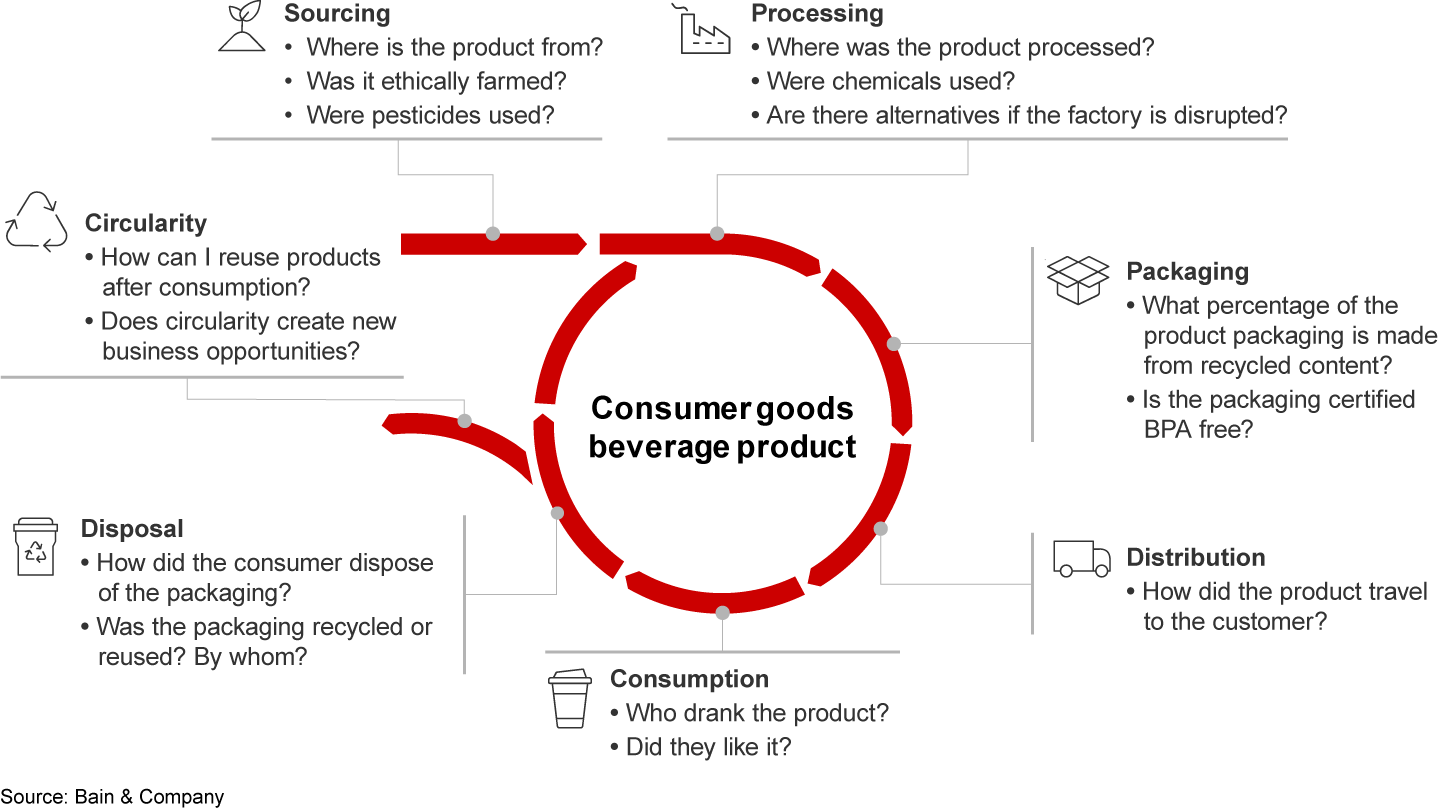

Companies leading in traceability tap several different scaling options when determining how to expand their pilots. For example, they may add new features or functionality. Another choice is to expand the collaboration to include new partners—a move that may establish the application as an industry standard. Surgere developed its AutoSphere application together with auto manufacturers and Tier 1 suppliers, creating an auto industry standard for traceability. Alternatively, companies may add a new application area with existing partners. Using a roadmap for each of these scaling options, executives can develop a plan to expand each pilot that will ensure a smooth rollout.
The pressure is growing on leadership teams in every industry to improve sustainability, performance, and resilience in an increasingly volatile global economy. Traceability can help companies achieve all three of those goals and develop a powerful competitive advantage.
The rewards of getting it right are substantial. Companies that build robust traceability capabilities will be able to deliver the right product to the right place at the right time with the right level of customization and speed—all at a competitive cost. They also will be in a position to meet stakeholders’ key sustainability demands and regulatory requirements. And they will have greater resilience to respond to supply and demand shocks. Those capabilities will deliver strong growth and profits and enable new business models.
First published in septiembre 2021