
Skip to Content
  • Offices

    Offices

    North & Latin America
    • Atlanta
    • Austin
    • Bogota
    • Boston
    • Buenos Aires
    • Chicago
    • Dallas
    • Denver
    • Houston
    • Los Angeles
    • Mexico City
    • Minneapolis
    • Monterrey
    • Montreal
    • New York
    • Rio de Janeiro
    • San Francisco
    • Santiago
    • São Paulo
    • Seattle
    • Silicon Valley
    • Toronto
    • Washington, DC
    Europe & Africa
    • Amsterdam
    • Athens
    • Berlin
    • Brussels
    • Copenhagen
    • Dusseldorf
    • Frankfurt
    • Helsinki
    • Istanbul
    • Johannesburg
    • Kyiv
    • Lisbon
    • London
    • Madrid
    • Milan
    • Munich
    • Oslo
    • Paris
    • Rome
    • Stockholm
    • Vienna
    • Warsaw
    • Zurich
    Middle East
    • Doha
    • Dubai
    • Riyadh
    Asia & Australia
    • Bangkok
    • Beijing
    • Bengaluru
    • Brisbane
    • Ho Chi Minh City
    • Hong Kong
    • Jakarta
    • Kuala Lumpur
    • Manila
    • Melbourne
    • Mumbai
    • New Delhi
    • Perth
    • Shanghai
    • Singapore
    • Sydney
    • Tokyo
    See all offices
  • Alumni
  • Media Center
  • Subscribe
  • Contact
  • Colombia | Español

    Select your region and language

    Global
    • Global (English)
    North & Latin America
    • Brazil (Português)
    • Argentina (Español)
    • Canada (Français)
    • Chile (Español)
    • Colombia (Español)
    Europe, Middle East, & Africa
    • France (Français)
    • DACH Region (Deutsch)
    • Italy (Italiano)
    • Spain (Español)
    • Greece (Elliniká)
    Asia & Australia
    • China (中文版)
    • Korea (한국어)
    • Japan (日本語)
  • Saved items (0)
    Saved items (0)

    You have no saved items.

    Bookmark content that interests you and it will be saved here for you to read or share later.

    Explore Bain Insights
  • Industries
    Main menu

    Industries

    • Aeroespacial y Defensa
    • Agroindustria
    • Químicos
    • Construcción e Infraestructura
    • Productos de Consumo
    • Servicios Financieros
    • Salud y Ciencias de la Vida
    • Maquinaria y Equipo Industrial
    • Medios y Entretenimiento
      Industries
      Medios y Entretenimiento
      • Media Lab
    • Metales
    • Minería
    • Petróleo y Gas
    • Papel y Empaque
    • Private Equity
      Industries
      Private Equity
      • Due Diligence
      • Exit Planning
      • Firm Strategy & Operations
      • Portfolio Value Creation
    • Sector Público y Social
    • Retail
    • Tecnología
    • Telecomunicaciones
      Industries
      Telecomunicaciones
      • Capital Expenditure
      • Telco Digital Transformation
    • Transporte
    • Viajes y Turismo
    • Servicios Públicos y Energías Renovables
  • Consulting Services
    Main menu

    Consulting Services

    • Customer Experience
    • Sustainability
    • Innovation
    • M&A
    • Operations
    • People & Organization
    • Private Equity
    • Sales & Marketing
    • Strategy
    • AI, Insights, and Solutions
    • Technology
    • Transformation
  • Digital
  • Insights
    Main menu

    Insights

    • Industry Insights
    • Services Insights
    • Bain Books
    • Webinars
    • Bain Futures
    View all Insights
    Featured topics
    • Tariff Response
    • Artificial Intelligence
    • Thriving in Uncertainty
    • Executive Conversations
    • Macro Trends
    • M&A Report
    • Healthcare Private Equity Report
    • Paper & Packaging Report
    • Technology Report
    • CEO's Guide to Sustainability
    • CEO Insights
    • CFO Insights
    • COO Insights
    • CIO Insights
    • CMO Insights
    View all featured topics
  • About
    Main menu

    About

    • What We Do
    • What We Believe
    • Our People & Leadership
    • Client Results
    • Awards & Recognition
    • Global Affiliations
    Further: Our global responsibility
    • Sustainability
    • Social Impact
    • World Economic Forum
    Learn more about Further
  • Carreras
    Main menu

    Carreras

    • Trabaja con Nosotros
      Carreras
      Trabaja con Nosotros
      • Find Your Place
      • Nuestras Áreas de Trabajo
      • Equipos Integrados
      • Estudiantes
      • Internships & Programs
      • Eventos de Reclutamiento
    • La Vida en Bain
      Carreras
      La Vida en Bain
      • Blog: Inside Bain
      • Historias Profesionales
      • Nuestra Gente
      • Dónde Trabajamos
      • Apoyando tu Crecimiento
      • Grupos de Afinidad
      • Beneficios
    • Impact Stories
    • Nuestro Proceso
      Carreras
      Nuestro Proceso
      • Qué Esperar
      • Entrevistas
    FIND JOBS
  • Offices
    Main menu

    Offices

    • North & Latin America
      Offices
      North & Latin America
      • Atlanta
      • Austin
      • Bogota
      • Boston
      • Buenos Aires
      • Chicago
      • Dallas
      • Denver
      • Houston
      • Los Angeles
      • Mexico City
      • Minneapolis
      • Monterrey
      • Montreal
      • New York
      • Rio de Janeiro
      • San Francisco
      • Santiago
      • São Paulo
      • Seattle
      • Silicon Valley
      • Toronto
      • Washington, DC
    • Europe & Africa
      Offices
      Europe & Africa
      • Amsterdam
      • Athens
      • Berlin
      • Brussels
      • Copenhagen
      • Dusseldorf
      • Frankfurt
      • Helsinki
      • Istanbul
      • Johannesburg
      • Kyiv
      • Lisbon
      • London
      • Madrid
      • Milan
      • Munich
      • Oslo
      • Paris
      • Rome
      • Stockholm
      • Vienna
      • Warsaw
      • Zurich
    • Middle East
      Offices
      Middle East
      • Doha
      • Dubai
      • Riyadh
    • Asia & Australia
      Offices
      Asia & Australia
      • Bangkok
      • Beijing
      • Bengaluru
      • Brisbane
      • Ho Chi Minh City
      • Hong Kong
      • Jakarta
      • Kuala Lumpur
      • Manila
      • Melbourne
      • Mumbai
      • New Delhi
      • Perth
      • Shanghai
      • Singapore
      • Sydney
      • Tokyo
    See all offices
  • Alumni
  • Media Center
  • Subscribe
  • Contact
  • Colombia | Español
    Main menu

    Select your region and language

    • Global
      Select your region and language
      Global
      • Global (English)
    • North & Latin America
      Select your region and language
      North & Latin America
      • Brazil (Português)
      • Argentina (Español)
      • Canada (Français)
      • Chile (Español)
      • Colombia (Español)
    • Europe, Middle East, & Africa
      Select your region and language
      Europe, Middle East, & Africa
      • France (Français)
      • DACH Region (Deutsch)
      • Italy (Italiano)
      • Spain (Español)
      • Greece (Elliniká)
    • Asia & Australia
      Select your region and language
      Asia & Australia
      • China (中文版)
      • Korea (한국어)
      • Japan (日本語)
  • Saved items  (0)
    Main menu
    Saved items (0)

    You have no saved items.

    Bookmark content that interests you and it will be saved here for you to read or share later.

    Explore Bain Insights
  • Industries
    • Industries

      • Aeroespacial y Defensa
      • Agroindustria
      • Químicos
      • Construcción e Infraestructura
      • Productos de Consumo
      • Servicios Financieros
      • Salud y Ciencias de la Vida
      • Maquinaria y Equipo Industrial
      • Medios y Entretenimiento
      • Metales
      • Minería
      • Petróleo y Gas
      • Papel y Empaque
      • Private Equity
      • Sector Público y Social
      • Retail
      • Tecnología
      • Telecomunicaciones
      • Transporte
      • Viajes y Turismo
      • Servicios Públicos y Energías Renovables
  • Consulting Services
    • Consulting Services

      • Customer Experience
      • Sustainability
      • Innovation
      • M&A
      • Operations
      • People & Organization
      • Private Equity
      • Sales & Marketing
      • Strategy
      • AI, Insights, and Solutions
      • Technology
      • Transformation
  • Digital
  • Insights
    • Insights

      • Industry Insights
      • Services Insights
      • Bain Books
      • Webinars
      • Bain Futures
      View all Insights
      Featured topics
      • Tariff Response
      • Artificial Intelligence
      • Thriving in Uncertainty
      • Executive Conversations
      • Macro Trends
      • M&A Report
      • Healthcare Private Equity Report
      • Paper & Packaging Report
      • Technology Report
      • CEO's Guide to Sustainability
      • CEO Insights
      • CFO Insights
      • COO Insights
      • CIO Insights
      • CMO Insights
      View all featured topics
  • About
    • About

      • What We Do
      • What We Believe
      • Our People & Leadership
      • Client Results
      • Awards & Recognition
      • Global Affiliations
      Further: Our global responsibility
      • Sustainability
      • Social Impact
      • World Economic Forum
      Learn more about Further
  • Carreras
    Popular Searches
    • Agile
    • Digital
    • Strategy
    Your Previous Searches
      Recently Visited Pages

      Content added to saved items

      Saved items (0)

      Removed from saved items

      Saved items (0)

      Report

      China Needs More Women in Executive Leadership

      China Needs More Women in Executive Leadership

      There’s a business case for women in executive roles, but achieving equity will require an action plan.

      By Weiwen Han, Philip Leung, Chen Shen, Helen Liu, and Christina Zhu

      • min read
      }

      Report

      China Needs More Women in Executive Leadership
      en
      Executive Summary
      • Despite high workforce participation, fewer women advance to the executive level in China than in other countries.
      • There is a strong business case for more women in executive leadership. Gender diversity is linked to improved business processes and outcomes.
      • Four barriers stop women from becoming executives: family responsibilities, hesitation, lack of sponsorship, and unconscious biases.
      • We propose a clear set of actions that both companies and women can take to increase gender equity and reach their full potential.


      The status of women in the workplace

      Gender equity at the executive level is a global issue, but it’s more pronounced—and more perplexing—in China. Chinese women are promoted to the executive level less often than Chinese men and less often than women in other countries.


      Written in collaboration with Spencer Stuart


      Based on education and workforce participation, Chinese men and women have similar starting lines. Yet they find themselves on divergent career paths. Compared to men, only a small percentage of women in China reach the executive ranks, and women who become executives often lead functional lines. Very few become CEOs (see Figure 1).

      Figure 1
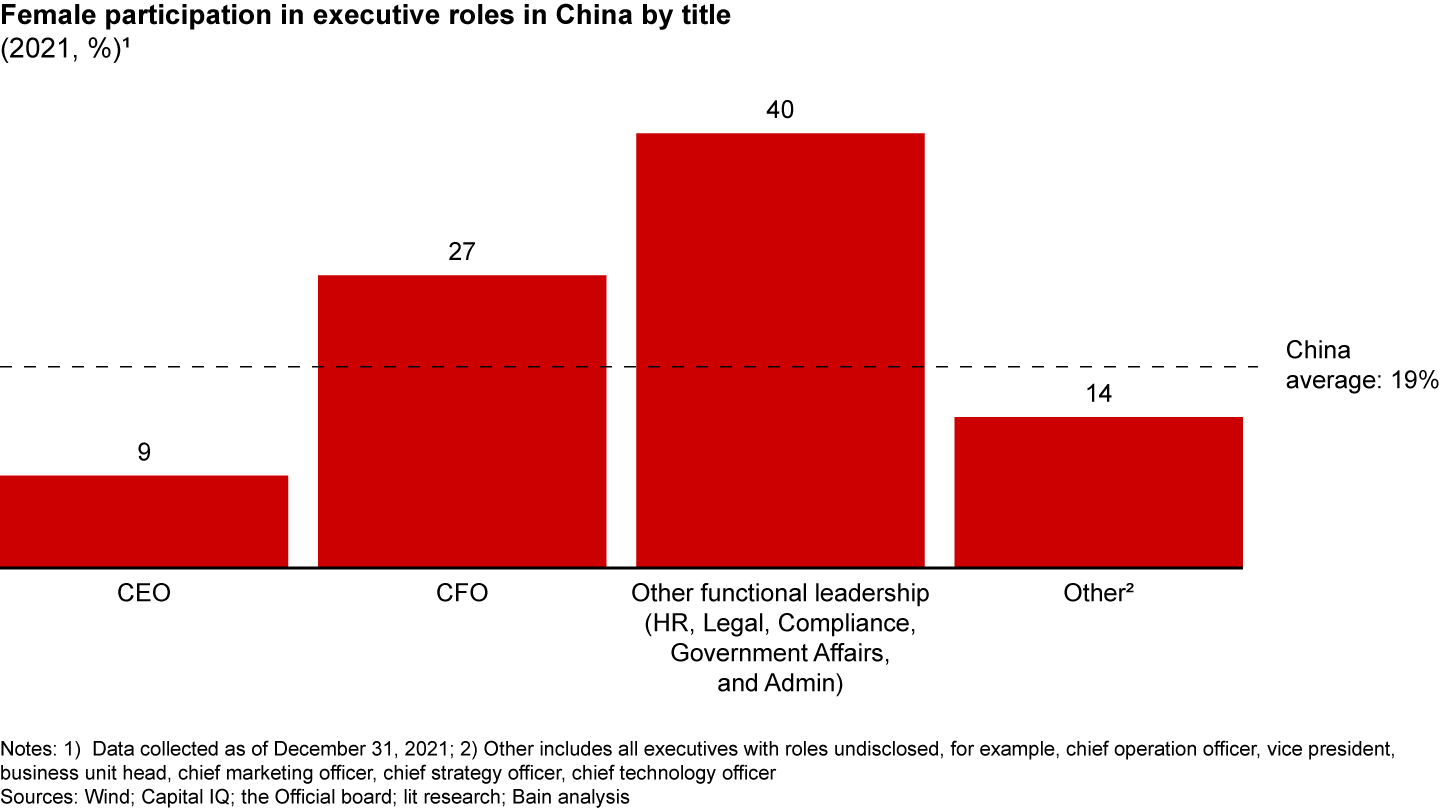
      Fewer Chinese women are promoted to executive ranks, and they often work in functional leadership roles
      Fewer Chinese women are promoted to executive ranks, and they often work in functional leadership roles
      Fewer Chinese women are promoted to executive ranks, and they often work in functional leadership roles

      Chinese women fall behind women in other countries too, despite starting their careers on equal or better footing. Their access to higher education has significantly expanded over the past two decades, outpacing other countries. Chinese women also have higher workforce participation than women in other countries (see Figure 2).

      Figure 2
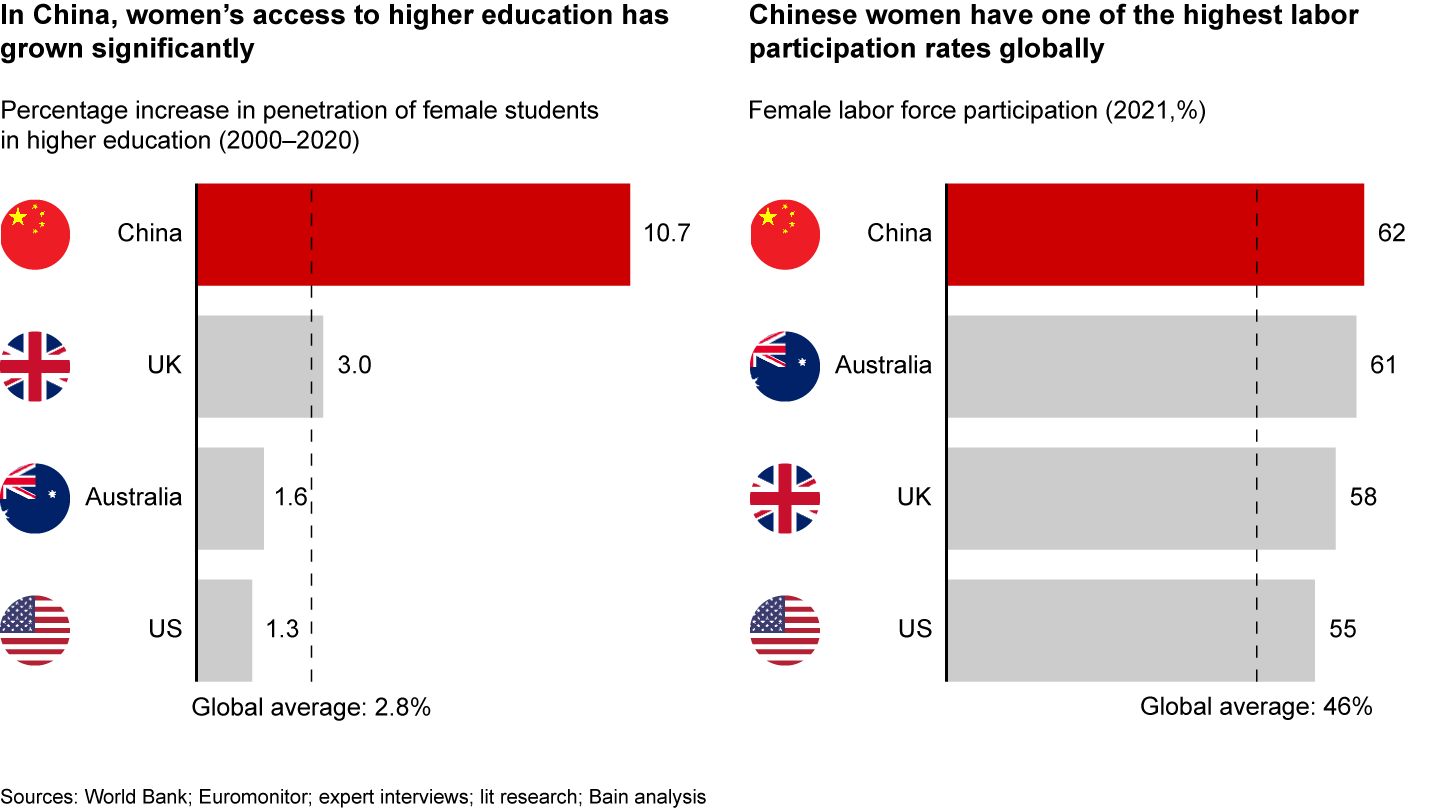
      Compared to the global average, Chinese women’s access to higher education has expanded significantly and they have higher workforce participation
      Compared to the global average, Chinese women’s access to higher education has expanded significantly and they have higher workforce participation
      Compared to the global average, Chinese women’s access to higher education has expanded significantly and they have higher workforce participation

      They reach mid-level management at similar rates as women in countries that lead in gender parity. Then, their careers fizzle out (see Figure 3). Only 19% of executives in China are women, compared with about 25% in other countries.

      Figure 3
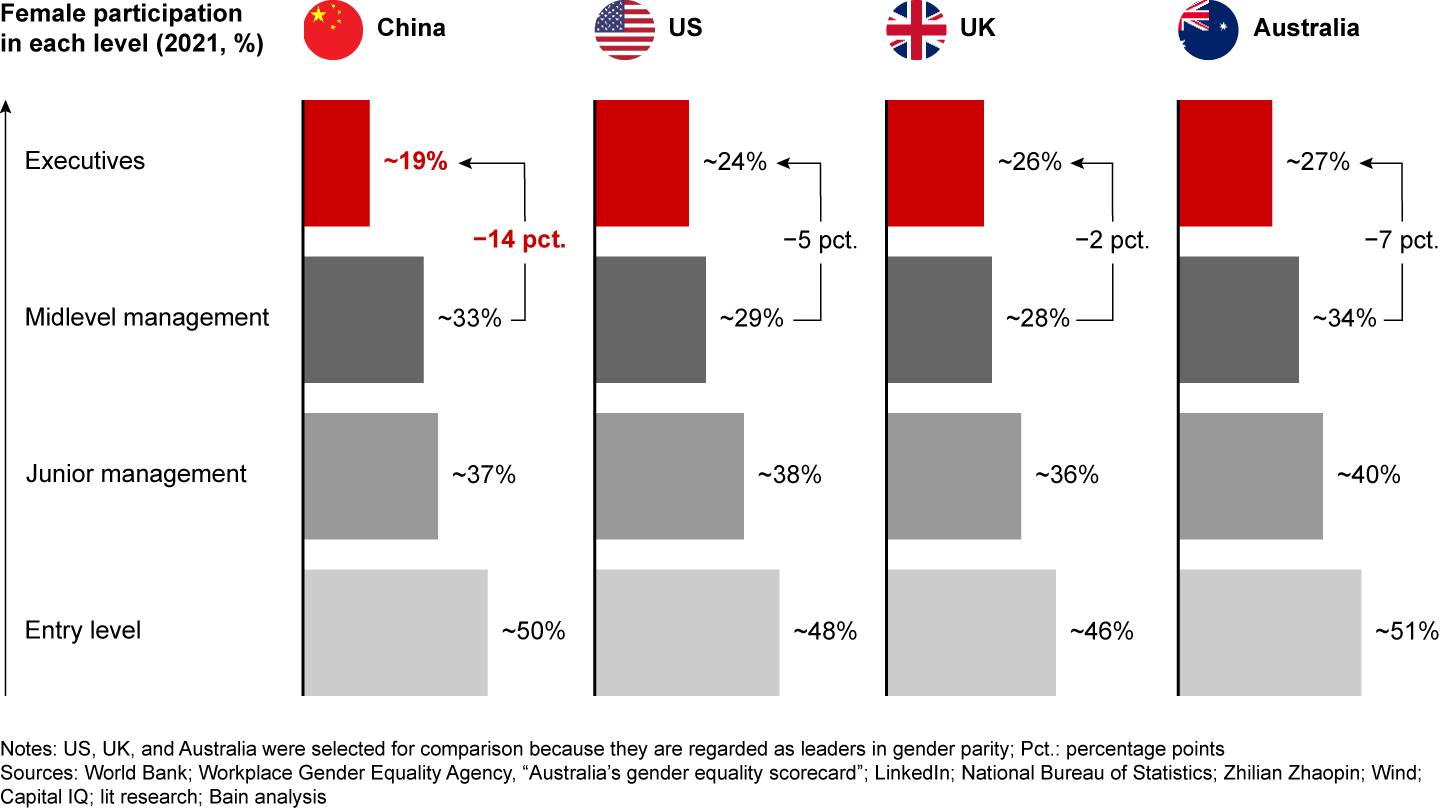
      Despite having similar workforce participation and midlevel promotion rates, Chinese women become executives less often than women in other countries
      Despite having similar workforce participation and midlevel promotion rates, Chinese women become executives less often than women in other countries
      Despite having similar workforce participation and midlevel promotion rates, Chinese women become executives less often than women in other countries

      Something is blocking Chinese women’s ascent.

      This research explores two questions: how Chinese women get knocked off the trajectory toward executive leadership, and what companies can do to keep them on track.

      Why does women’s representation matter?

      Women’s representation in executive teams is not a question of being “fair.” It is an important lever for value creation. When women do not rise to their full potential, neither do their companies.

      The business benefits of gender diversity in executive teams are well-documented. Having more women on executive teams improves profit and cash flow performance, shareholder returns, and credit ratings, to name only a few benefits (see Figure 4).

      Figure 4
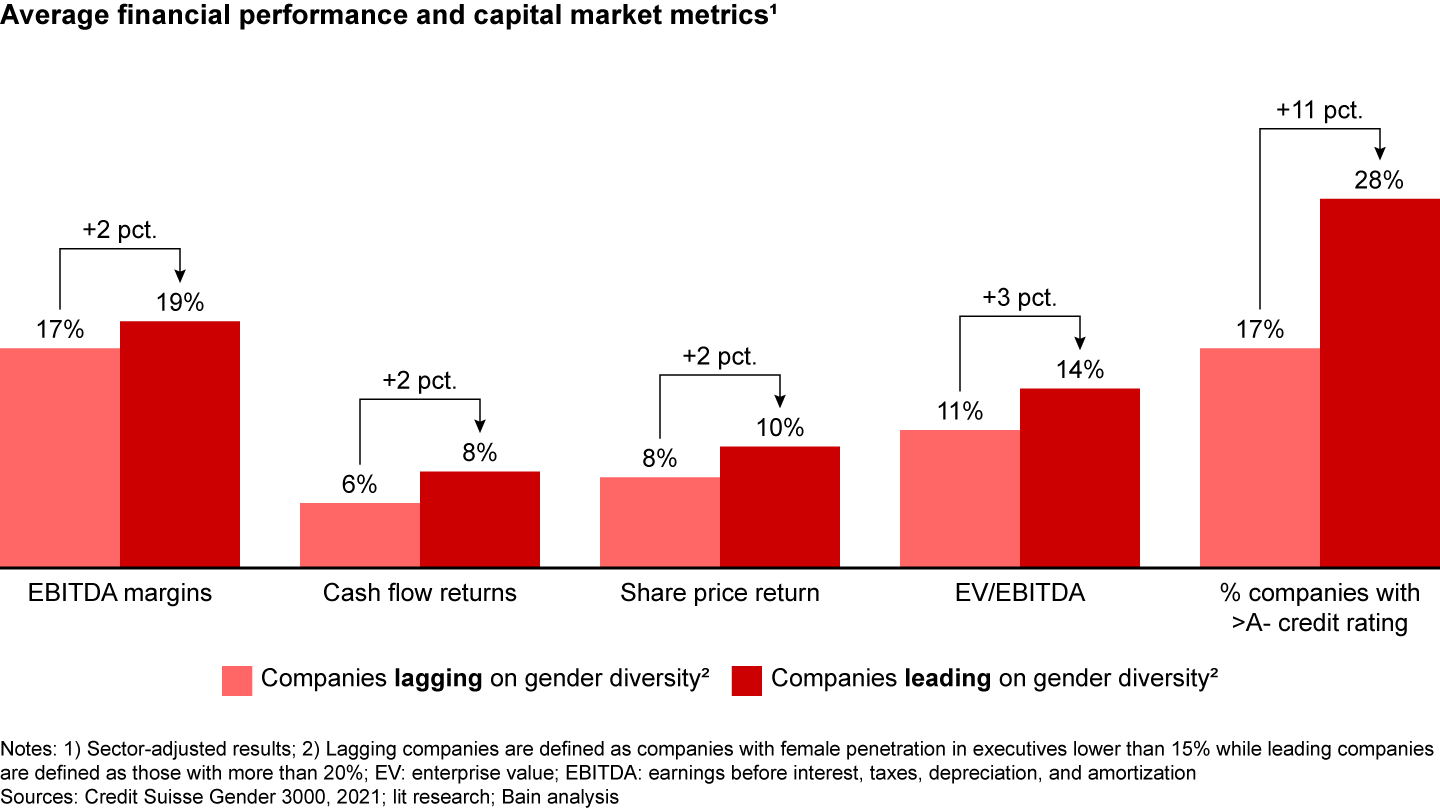
      Globally, gender diversity is positively correlated to financial and market performance
      Globally, gender diversity is positively correlated to financial and market performance
      Globally, gender diversity is positively correlated to financial and market performance

      Research proves a causal relationship between the number of women in leadership and improvements in company performance. In Australia, university and government researchers linked actions to improve gender diversity in executive teams directly to an increase in financial performance and market value (see Figure 5).

      Figure 5
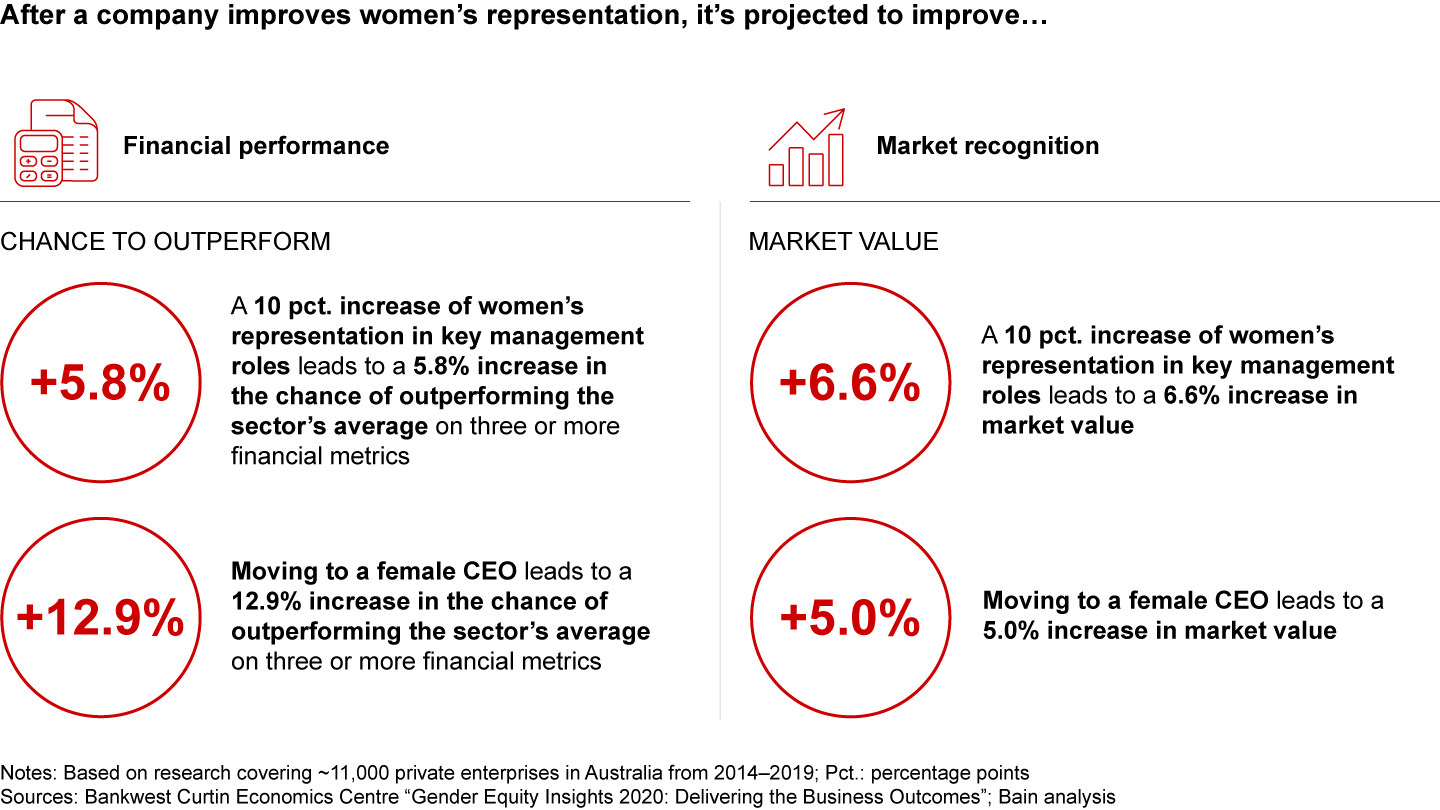
      There is a causal relationship between women’s representation in executive teams and company performance
      There is a causal relationship between women’s representation in executive teams and company performance
      There is a causal relationship between women’s representation in executive teams and company performance

      S&P 500 and FTSE 350 firms with female CEOs or gender-balanced leadership teams had a lower probability of default before the Covid-19 pandemic and fared better during the downturn, according to Credit Benchmark. Women leaders are also more likely to drive sustainability agendas and ESG targets, according to The Sustainability Board Report 2021.

      The presence of women in executive teams does not magically improve performance. It changes the dynamic of the group, which can mitigate “group think” and improve decision making. Men and women have different backgrounds and life experiences, which foster both inclusion and innovation.

      Women leaders may bring deeper empathy and personal experiences to the boardroom, especially when clients and end consumers are predominantly women. At Sephora, Greater China Managing Director Maggie Chan believes female executives can help address their consumers’ pain points and needs.

      Gender diversity can also help Chinese employers address a growing talent issue. Eighty-three percent of Chinese employers experienced a talent shortage in 2022, according to a Manpower Group study.

      By developing the potential of women, companies in China could alleviate this issue and reach their full potential.

      Yet China’s progress toward gender parity is slower than that of other leading countries (see Figure 6). Deliberate action is needed to catch up.

      Figure 6
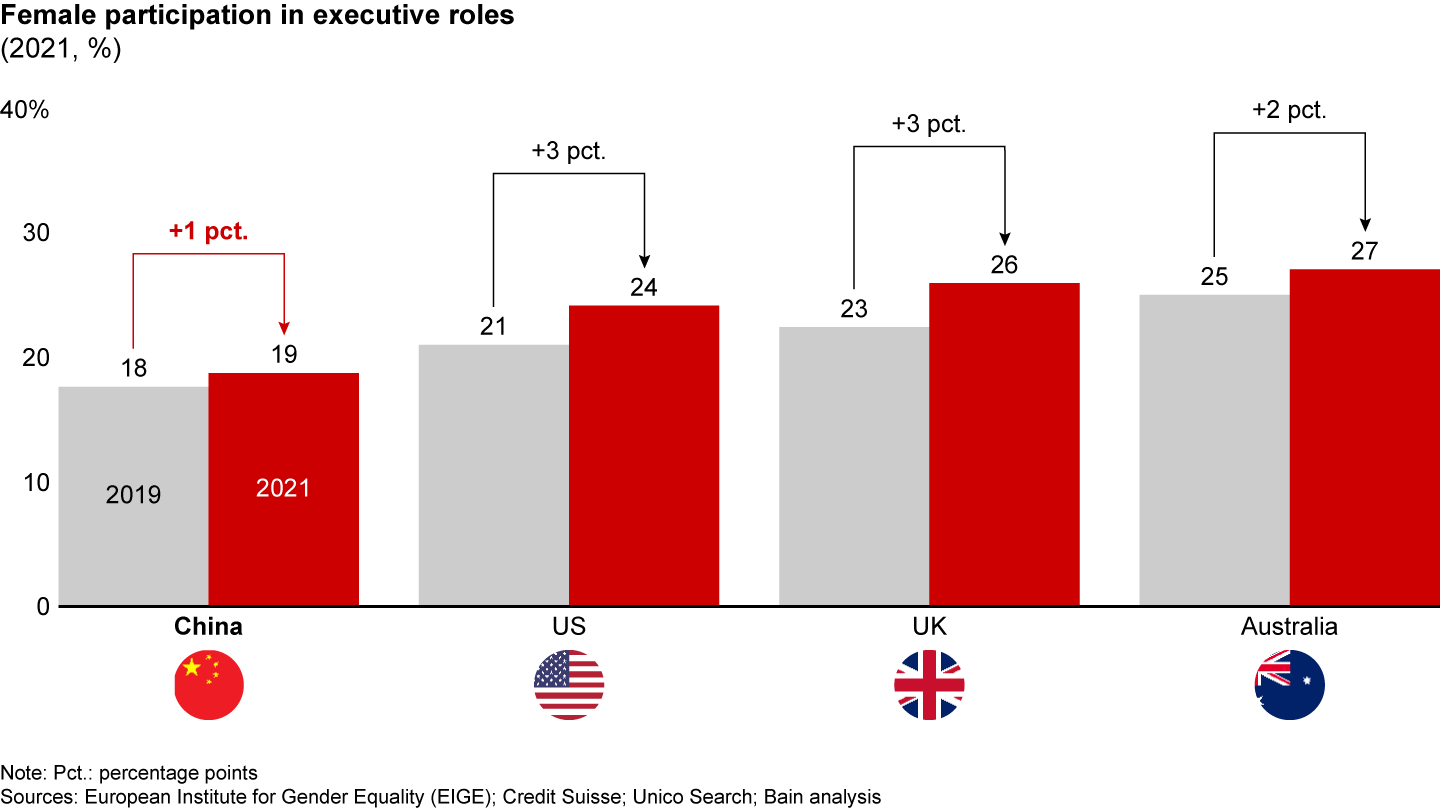
      China’s progress toward gender parity is slower than other countries
      China’s progress toward gender parity is slower than other countries
      China’s progress toward gender parity is slower than other countries

      Women can rise to the top

      We interviewed about a dozen female executives and surveyed more than 30 female executives, all in China. Our research identified five key drivers and two must-haves that contributed to their success (see Figure 7). These elements helped them demonstrate themselves, earn recognition and sponsorship, and be fully devoted to their careers.

      Figure 7
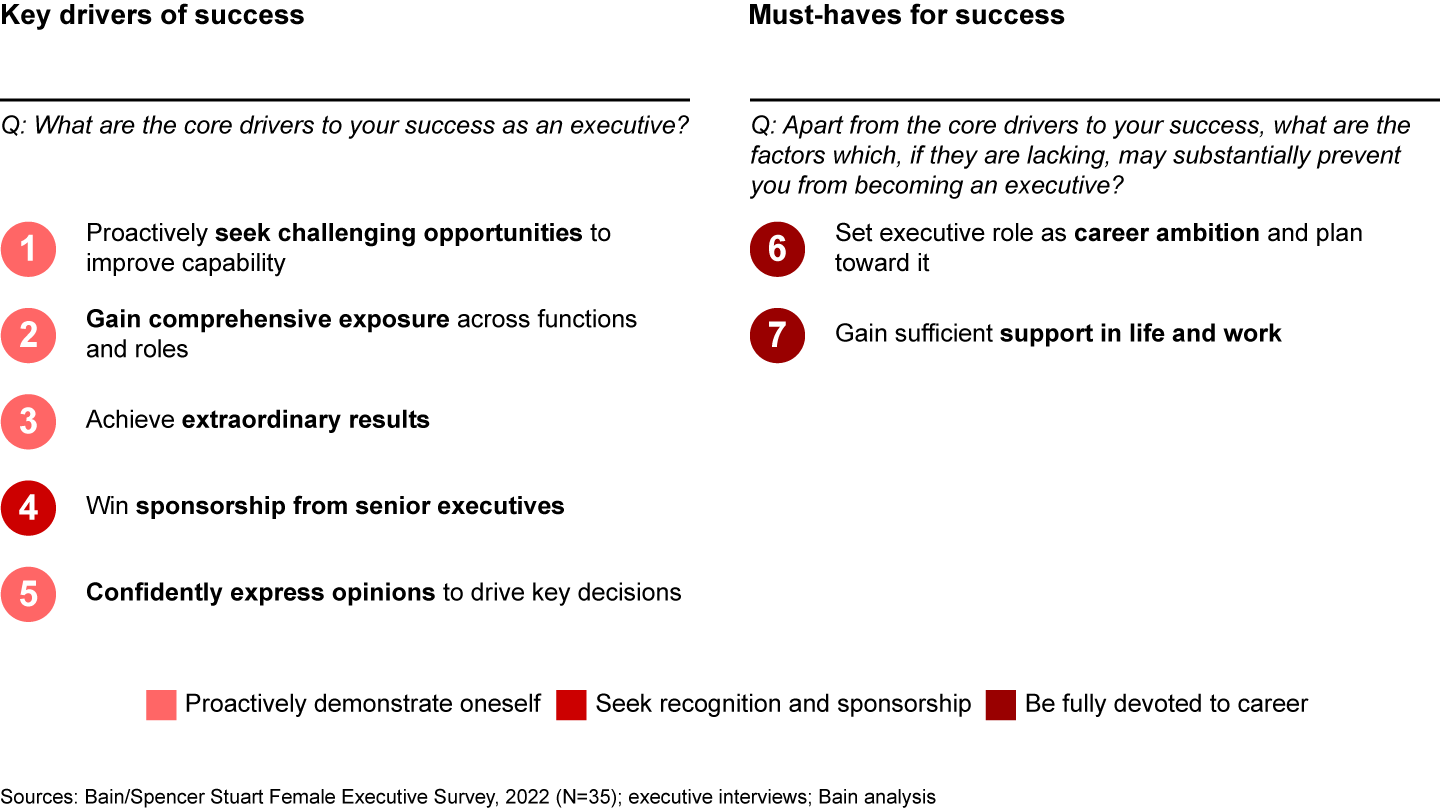
      Female executives in China attribute their success to five key drivers and two must-haves
      Female executives in China attribute their success to five key drivers and two must-haves
      Female executives in China attribute their success to five key drivers and two must-haves

      And that is what employers want. “As China is still a developing market, we often hear from employers that they are seeking executive candidates who are fully committed to career … who proactively seize opportunities to break into white space and are skilled at navigating complex stakeholder networks,” said Christina Zhu, co-head of Spencer Stuart’s greater China region. “Just like a hunter who actively searches for prey.

      “To some degree, this can present challenges for female candidates,” she said.

      Four workplace challenges women face

      As executives, the women we spoke to are outliers. But they do not have to be. Companies and women in China can take actions to increase women’s participation in executive teams.

      First, they need to recognize common barriers that women face. Based on our interviews and survey, we summarized four challenges that derail women’s career progression:

      • Family responsibilities
      • Hesitation
      • Exclusion from male networks
      • Unconscious bias

      Challenge 1: Family responsibilities weigh on women more than men  

      About 83% of the women we surveyed said family duties prevent them from being fully dedicated to work. Over two-thirds of women said their families do not understand their career ambitions.

      The idea that “men lead outside and women lead inside” is deeply rooted in Chinese culture, so spouses and children often don’t see that women need full support, sometimes even compromises, from family members to advance and excel at work, according to Zhiqiang Zhang, former managing director of ABB in China. In fact, men are also “looked down upon” in society if they sacrifice their career to support their families and their wives to thrive. This in turn will prevent men from providing full support to their wives in their career development.

      Women need more support from their employers, too. More than 70% of respondents said a lack of parental support at work prevents them from advancing their careers.

      “I have seen many high-potential women give up professional development opportunities to take care of their families,” said Rachel You, CFO at Jinxin Fertility. “I believe there is much more we can do for them.”

      Challenge 2: Women hesitate to speak up and take opportunities

      Female executives are more compassionate, empathetic, and cautious, according to a Pew Research Center survey. Those traits have many potential advantages. But they can also hold women back.

      Respondents said Chinese women spend more time on major decisions or wait to express their opinions, which can be perceived negatively. More than 80% of respondents said being risk averse or waiting to be well prepared before speaking is a barrier to their advancement.

      “Sometimes my female subordinates prefer to wait and not speak up when they have great ideas,” said David Wang, Asia president of Buhler Group, a multinational equipment manufacturer. “We should give them support, even slight pushes, so they will stop hesitating and speak up.”

      Women also find it harder to pursue challenging assignments that widen their skill sets. Nearly 60% of women said they hesitate to reach out to senior leaders for opportunities out of fear they’ll make a mistake.

      Challenge 3: Women feel excluded from male-dominated networks

      On average, women hold only about 19% of executive seats in China. The percentage is even lower in some industries and company types (see Figure 8). Since most leadership circles are composed of men, networking opportunities and social norms are male-dominated and harder for women to break into.

      Figure 8
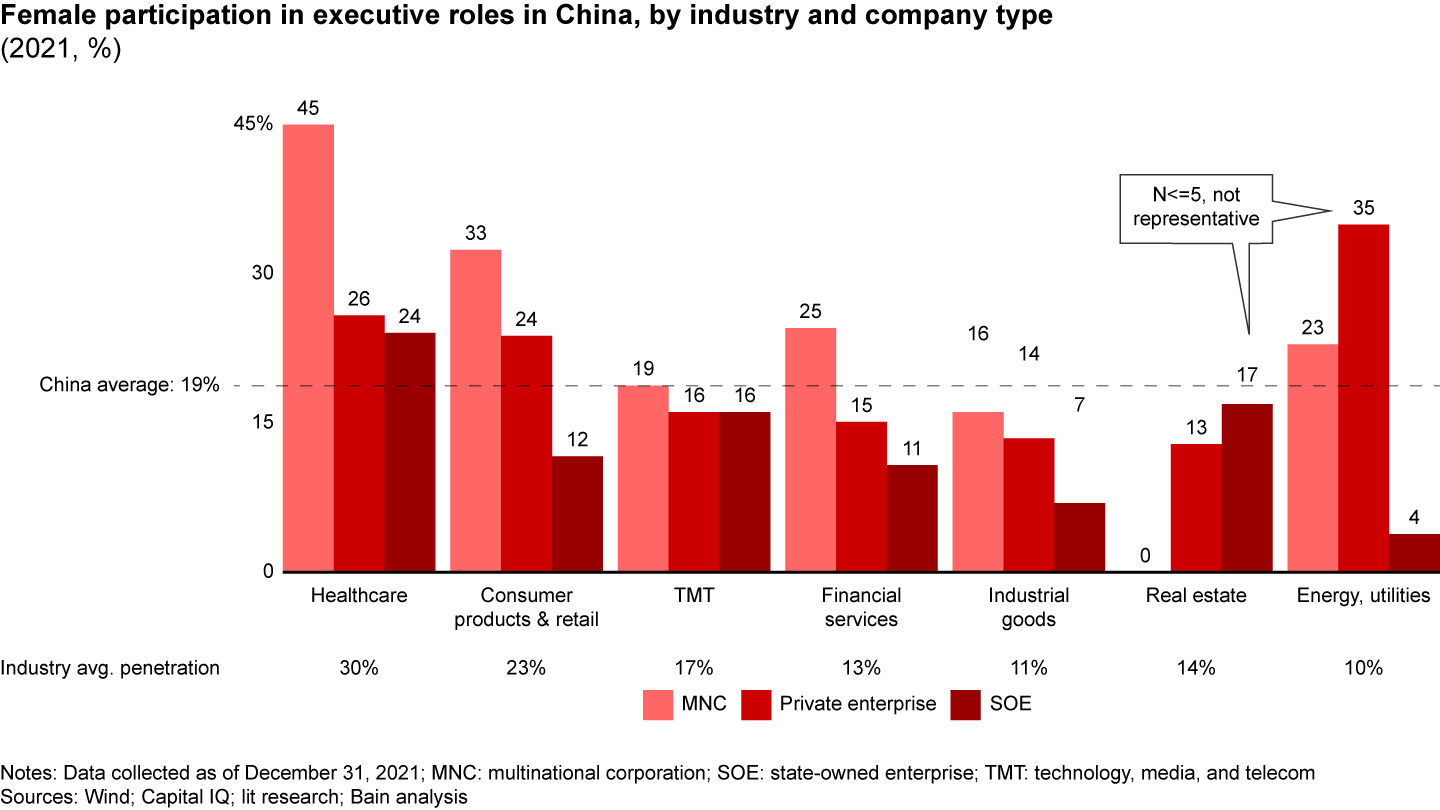
      Female representation varies by industry and company type
      Female representation varies by industry and company type
      Female representation varies by industry and company type

      “It was difficult for me to participate in men’s social activities, such as after-work beer or the smoking corner,” said Angela Zhu, former IKEA China CEO, who recalled her experience in Germany. “As a woman, I’m naturally excluded from these activities, or I don’t want to join them.”

      Being excluded from social events can shorten women’s careers because it prevents them from gaining sponsorship—which was one of the key drivers cited by female executives. In our survey, about 80% of women said lack of access to executive networks makes it harder to get senior sponsors. More than half said it was more difficult to build high-level connections across the business.

      “It is not that easy for women to enter male-dominant networks or social activities. That makes it harder for women to build connections in the workplace, and they need to build their own supporting networks intentionally,” said Xin Tong, PhD, a professor of sociology at Peking University.

      Challenge 4: Women are unconsciously biased by an “average” view

      Women also face unconscious biases—namely, that all women are “average” and perform the same. In contrast, men are usually recognized by their individual capabilities and characteristics.

      According to our research, women in the workplace are perceived as less committed, less confident, and less ambitious (see Figure 9).

      Figure 9
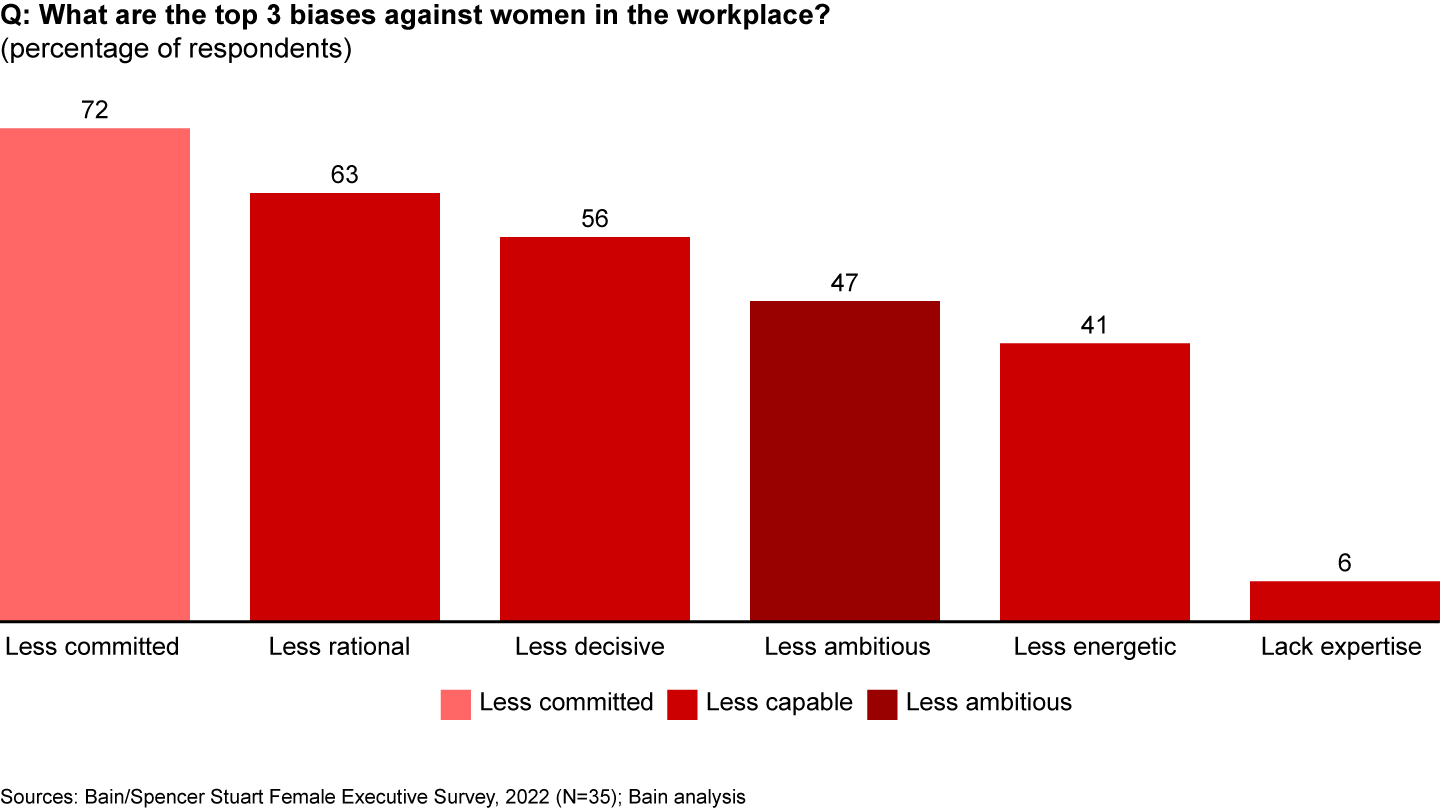
      Women face unconscious biases that they are less committed to their careers, less capable, and less ambitious than men
      Women face unconscious biases that they are less committed to their careers, less capable, and less ambitious than men
      Women face unconscious biases that they are less committed to their careers, less capable, and less ambitious than men

      A male COO from an industrial goods company summarized some of this biased thinking. He said, “By default, we think women aren’t capable enough to be the CEO of an industrial goods company. We assume that they’re less effective in building relationships and negotiating.”

      As a result of bias, nearly half of the respondents believe they receive fewer challenging tasks and opportunities to develop at their workplace.

      Envac China CEO Aiying Wang recalled witnessing bias. When the company hired a program facilitator, a male colleague assumed the supporting role would be filled by a woman. Wang said companies and men are not acting out of malice, but the results are the same. “Unconscious bias partially results in less challenging tasks and fewer opportunities for women,” she said.

      “Bias also leads to unfair evaluation of females,” according to Angela Zhu. She said, “When a company wants to promote someone, it’s possible they choose a male candidate rather than a female because of unconscious bias, even if they are equally capable and have demonstrated the same level of performance.”

      The women we surveyed agreed. If a man and a woman deliver the same results, women believe the company would favor the man. Forty-seven percent said bias about women “being average” makes it harder for them to receive due recognition.

      The “average” bias also limits women’s career potential. Women stop being promoted to CFO and CEO positions around age 50, and leadership is mostly turned over to men (see Figure 10).

      Figure 10
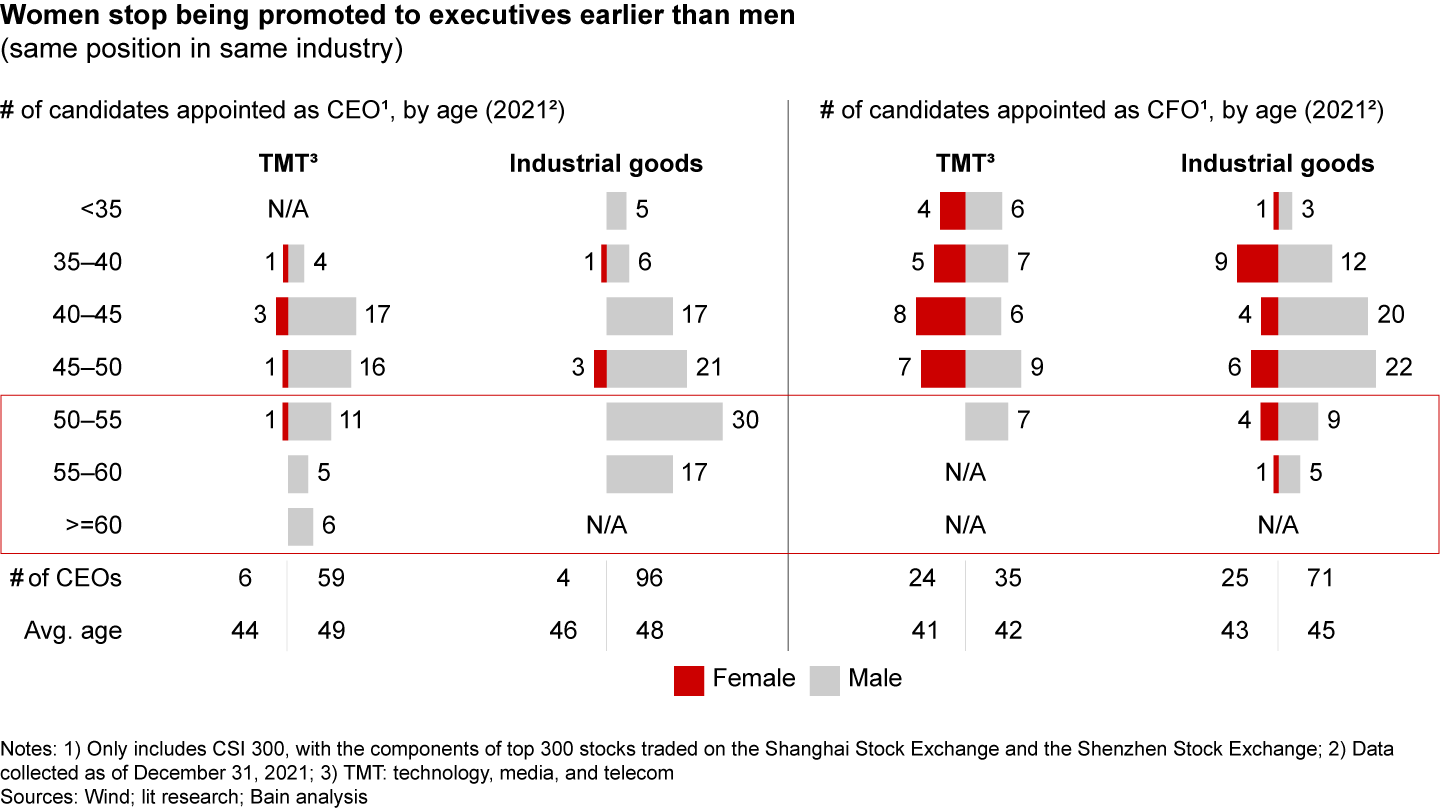
      Chinese women stop being appointed to CFO and CEO positions around age 50
      Chinese women stop being appointed to CFO and CEO positions around age 50
      Chinese women stop being appointed to CFO and CEO positions around age 50

      How to unlock women’s leadership potential

      With deliberate action, companies and women can overcome these barriers and unlock women’s leadership potential in the workplace (see Figure 11).

      Figure 11
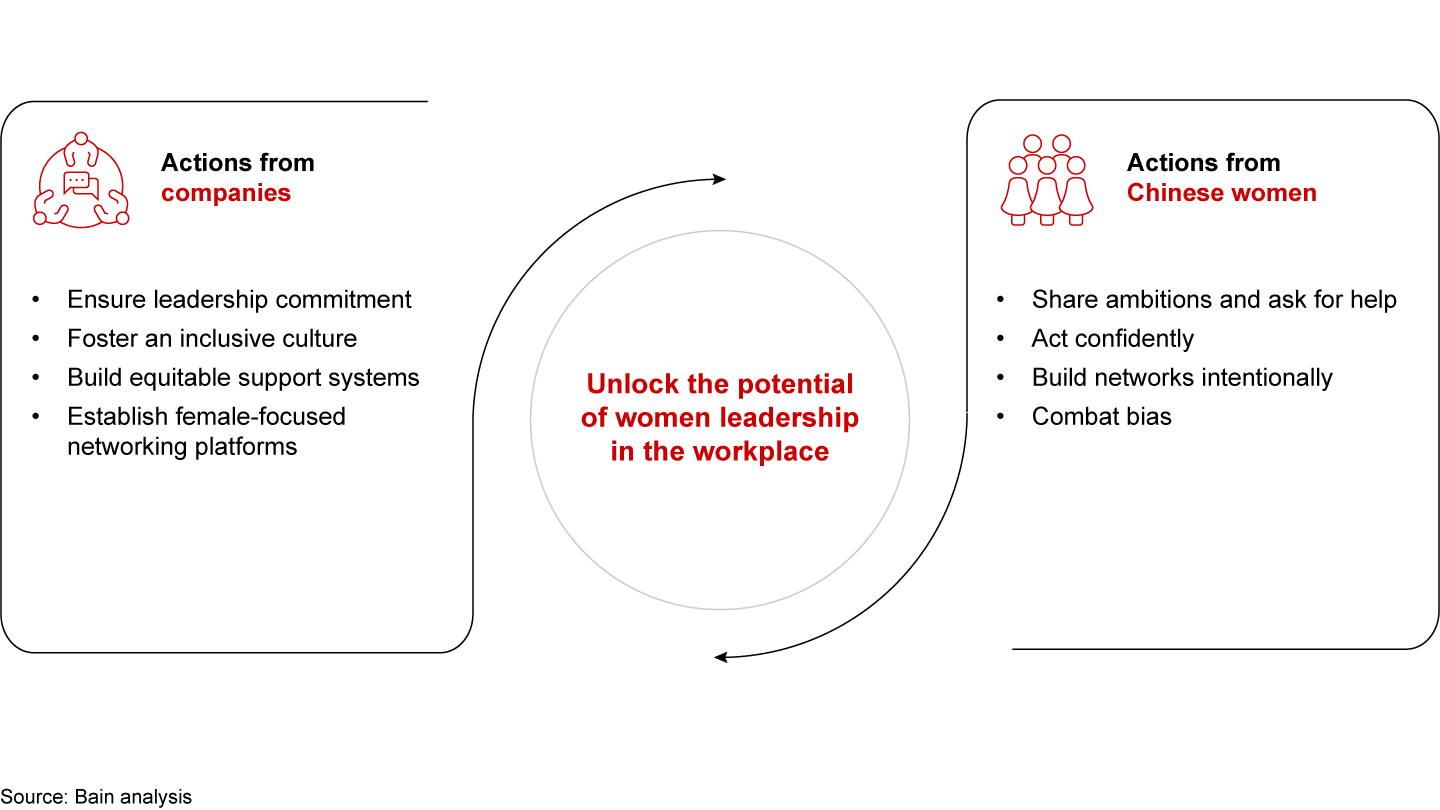
      With deliberate action, companies and women can unlock the potential of female leadership in the workplace
      With deliberate action, companies and women can unlock the potential of female leadership in the workplace
      With deliberate action, companies and women can unlock the potential of female leadership in the workplace

      Actions for companies

      To thrive, companies in China need to create an equitable environment for men and women. They should:

      Ensure leadership commitment. Board members and CEOs need to agree that gender parity is a business priority. Priorities turn into plans, timelines, and goals.

      With top-down support, companies can create gender targets for the organization. Targets force leaders to proactively identify high-potential women, develop succession plans for female candidates, and give women more chances to learn and grow.

      Companies should also track and share their progress toward gender balance. They can collect data about head counts, hiring decisions, promotions, and exits, and analyze the data by gender. Employee surveys and compensation studies can also illuminate barriers for women.

      Foster an inclusive culture. Companies should work to remove unconscious biases and ensure both genders are treated fairly at work, including during selections and performance reviews. Men and women should be compensated equitably for their contributions, too.

      Companies should establish clear expectations around inclusive behavior and help employees identify and overcome potential biases. They can also promote female role models and highlight their success to help men and women see past stereotypes.

      Build equitable support systems. Because household burdens traditionally fall more heavily on women’s shoulders, women need more help from employers.

      Employees at all levels of the organization should be offered and accept family support or flexible working options. When leaders practice family support at scale, it removes stigmas and invites more employees to participate. If men sign on to parental leave and flexible work benefits, they will become more widely accepted.

      Establish female-focused networking platforms. To catch up to men, women need more formal pathways to networking, sponsorship, and training.

      Roundtables and regular events should feature executive leaders (both male and female) so women gain exposure to higher-level leaders and make connections. Sponsorship and succession planning for women should be systematic and formalized to create pipelines of strong female candidates.

      Women will also benefit from training. Networking, relationship-building, and communicating are skill deficits that women believe are holding them back—and can be overcome.

      Actions for aspiring women

      Share ambitions and ask for help. Women should share their career ambitions with family members and ask for help from spouses and elders. Executive women also propose adopting a new mindset: Instead of sacrificing their careers for family, view women as role models for supporting their families (and communities and the greater economy) through work.

      Act confidently. Notice tendencies to avoid risk, back down, or stay quiet—and challenge yourself and other women to speak up. Ask for feedback and support to become more vocal and valuable in meetings. Confidence builds over time with practice and learning. Start speaking up and confidence will follow.

      Build networks intentionally. Relationship-building is a skill. With practice, women can learn to build professional relationships in a way that feels natural and comfortable to them. Be intentional when building connections so they lead toward skills development, mentorship, or sponsorship. When given the chance, sponsor and develop other high-potential women. And do not rule out participating in male networks.

      Combat bias. Celebrate women’s accomplishments and strengths. If women are treated unfairly at work, confront the behavior. When men and women recognize bias, they can challenge the underlying thinking and change it.

      Conclusion

      Chinese women have not risen to the top levels of leadership like men have, despite having similar odds at the start of their careers, and their absence is affecting everyone. To improve financial performance, fill critical talent gaps, and advance a host of other metrics, Chinese companies need more women at the helm.

      Gender equity will not happen overnight or by accident, especially in industries that are dominated by men today. Acknowledge the gap, then get to work.

      Companies can start by establishing a long-term vision with measurable targets. Then, assign leaders and hold them accountable. Ask women for feedback about their experiences. Listen. Analyze. Then act.

      On International Women’s Day, and always, we encourage you to recognize and celebrate women who make outstanding contributions and ask you to create opportunities for more women to follow.

      • Methodology (click to expand)

        The findings and recommendations in this report were informed by surveys, interviews, and secondary research that were conducted in the fourth quarter of 2022, as well as industry expertise from Bain & Company and Spencer Stuart.

        We examined publicly available data on 486 companies that operate in China. They included mainland-, Hong Kong-, and US-listed companies, as well as multinational organizations with business operations in mainland China. We also surveyed more than 30 female executives and held in-depth interviews with about a dozen female executives and scholars, all in China.

        In this report, “executive” refers to CEOs and positions that report directly to the CEO.

      • Acknowledgments (click to expand)

        This report is a joint effort between Bain & Company and Spencer Stuart. The authors would like to thank the following consultants from Spencer Stuart (listed in alphabetical order of surname):

        Name Company Email
        Alice Au Boards/CEO; Financial Services aau@spencerstuart.com
        Sherry Ding Consumer/Retail; CFO sding@spencerstuart.com
        Ernest Jiang Financial Services ejiang@spencerstuart.com
        Catherine Kwong Consumer/Retail; HR ckwong@spencerstuart.com
        Clare Song Financial Services csong@spencerstuart.com
        Silvia Suen Consumer/Retail ssuen@spencerstuart.com
        Victoria Xiang Healthcare vxiang@spencerstuart.com
        Jeremy Young Legal, Compliance & Government Affairs jyoung@spencerstuart.com
        Tom Yu Industrial tyu@spencerstuart.com
        Richard Zhu Industrial rzhu@spencerstuart.com
        Alex Zhu Industrial azhu@spencerstuart.com

        Bain & Company and Spencer Stuart appreciate all the women and men who contributed to our interviews, survey, and wider research. Their insights help us better understand the situation of female executives in China and what we can do to unlock the potential of women. They are (listed in alphabetical order of surname, non-exhaustive):

        Name Company Title
        Vivian Bian Roche Pharma China CEO
        Maggie Chan Sephora Greater China Managing Director
        Carrie Chen Denovo Biopharma CFO
        Christie Chen Armour China Commercial VP
        Katy Chen Kimberly-Clark Managing Director China
        Juan Du T.C.L Industries Holdings (H.K.) Limited CEO
        Kathy Kang Syngenta Chief Human Resources Officer
        Elaine Lin Baxter Healthcare Vice President, Human Resources, Asia Pacific
        Yuenan Liu Decathlon China Digital Commerce VP
        Bo Lu Lenovo Vice President, Corporate Strategy
        Summer Qu Wedo Venture Founder
        Sharon Sun Wuxi Lead Intelligent Equipment Chief Human Resources Officer
        Ting Ren Peking University PhD, associate professor, associate dean of Peking University HSBC Business School
        Xin Tong Peking University PhD, professor of sociology, the deputy director of the Center for Women's Studies
        Li Wan Audi China Vice President
        Aiying Wang Envac Greater China, SEA & India President & CEO
        David Wang Buhler Group Asia President
        Victoria Wang, PhD HAVI Freight Management Senior VP, Supply Chain Asia
        Bianca Wong Federal Express Corporation Vice President, Human Resources, MEISA
        Samantha Xie Boehringer Ingelheim Vice President, Human Resources, TCM
        Annie Xu Bekaert Group Executive Divisional CEO Rubber Reinforcement
        Nancy Yang Yidu Technology Former Executive Director, President & CFO
        Rachel You Jinxin Fertility CFO
        Angel Yu Starbucks China Senior Vice President, CPO
        Smilla Yuan Bytedance Former Chief of Staff
        Lily Zhang TTM Capital Founding Partner
        Rachel Zhang Moffett AI CMO
        Zhiqiang Zhang ABB China Former Managing Director
        Hongfei Zheng Cargill Ltd. President, Cargill Animal Nutrition and Health, North Asia
        Angela Zhu IKEA China Former CEO

        The authors also extend gratitude to Chifeng Shen, Graffi Xu, Jiayi Zhang, Yidan Fang, and Rex Yang from Bain and Jessie Ge from Spencer Stuart for their contribution to this report.

      At Spencer Stuart, we know how much leadership matters. We are trusted by organizations around the world to help them make the senior-level leadership decisions that have a lasting impact on their enterprises. Through our executive search, board and leadership advisory services, we help build and enhance high-performing teams for select clients ranging from major multinationals to emerging companies to nonprofit institutions. Privately held since 1956, we focus on delivering knowledge, insight and results through the collaborative efforts of a team of experts—now spanning more than 60 offices, over 30 countries and more than 50 practice specialties. Boards and leaders consistently turn to Spencer Stuart to help address their evolving leadership needs in areas such as senior-level executive search, board recruitment, board effectiveness, succession planning, in-depth senior management assessment, employee engagement and many other facets of culture and organizational effectiveness.

      Authors
      • Headshot of Weiwen Han
        Weiwen Han
        Partner, Hong Kong
      • Headshot of Philip Leung
        Philip Leung
        Advisory Partner, Hong Kong
      • Headshot of Chen Shen
        Chen Shen
        Alumni, Shanghai
      • Headshot of Helen Liu
        Helen Liu
        Partner, Shanghai
      • Christina Zhu
        Co-head, Spencer Stuart, Greater China
      Related Consulting Services
      • Diversity, Equity & Inclusion
      Women's Leadership
      Beyond Policies: Leadership Behaviors That Propel Women to the Top

      After a decade of progress, the next chapter of growth will rely on inclusive behaviors from every leader, every day.

      Read more
      Diversity, Equity & Inclusion
      POWERful Women's Annual State of the Nation 2025

      Bain & Company collaborated with POWERful Women on their annual report on female representation in the UK energy industry.

      Read more
      Women's Leadership
      Unlocking Korea's Growth Potential by Empowering Women in the Workplace

      Korea’s 13-year record at the bottom of the OECD Glass Ceiling Index calls for solutions to boost female leadership.

      Read more
      Diversity, Equity & Inclusion
      Unlocking China's Female Leadership Potential: An Actionable Path Forward

      Closing the workplace gender gap creates a more prosperous future for everyone.

      Read more
      Women's Leadership
      From Aspiration to Action: Building India’s 400 Million Women Workforce

      A roadmap to doubling the female labour force participation rate by 2047

      Read more
      First published in marzo 2023
      Tags
      • Diversity, Equity & Inclusion
      • Women's Leadership

      How We've Helped Clients

      Inspiring retail employees to think and act like owners

      See more related case studies

      Jump-starting innovation for a telecom solutions provider

      See more related case studies

      Lean Six Sigma solves a commercial bank's growth problem

      See more related case studies

      Want to continue the conversation

      We help global leaders with their organization's most critical issues and opportunities. Together, we create enduring change and results

      Bain Insights. Our perspectives on critical issues global businesses face in today's challenging environment, delivered monthly.

      *I have read and understand Bain’s Privacy Notice.

      Please read and agree to the Privacy Policy.
      Bain & Company
      Contact us Sustainability Accessibility Terms of use Privacy Modern Slavery Act Statement Cookie Policy Sitemap Log In

      © 1996-2026 Bain & Company, Inc.

      Contact Bain

      How can we help you?

      • Business inquiry
      • Career information
      • Press relations
      • Partnership request
      • Speaker request
      See all offices