
Skip to Content
  • Offices

    Offices

    North & Latin America
    • Atlanta
    • Austin
    • Bogota
    • Boston
    • Buenos Aires
    • Chicago
    • Dallas
    • Denver
    • Houston
    • Los Angeles
    • Mexico City
    • Minneapolis
    • Monterrey
    • Montreal
    • New York
    • Rio de Janeiro
    • San Francisco
    • Santiago
    • São Paulo
    • Seattle
    • Silicon Valley
    • Toronto
    • Washington, DC
    Europe & Africa
    • Amsterdam
    • Athens
    • Berlin
    • Brussels
    • Copenhagen
    • Dusseldorf
    • Frankfurt
    • Helsinki
    • Istanbul
    • Johannesburg
    • Kyiv
    • Lisbon
    • London
    • Madrid
    • Milan
    • Munich
    • Oslo
    • Paris
    • Rome
    • Stockholm
    • Vienna
    • Warsaw
    • Zurich
    Middle East
    • Doha
    • Dubai
    • Riyadh
    Asia & Australia
    • Bangkok
    • Beijing
    • Bengaluru
    • Brisbane
    • Ho Chi Minh City
    • Hong Kong
    • Jakarta
    • Kuala Lumpur
    • Manila
    • Melbourne
    • Mumbai
    • New Delhi
    • Perth
    • Shanghai
    • Singapore
    • Sydney
    • Tokyo
    See all offices
  • Alumni
  • Media Center
  • Subscribe
  • Contact
  • Spain | Español

    Select your region and language

    Global
    • Global (English)
    North & Latin America
    • Brazil (Português)
    • Argentina (Español)
    • Canada (Français)
    • Chile (Español)
    • Colombia (Español)
    Europe, Middle East, & Africa
    • France (Français)
    • DACH Region (Deutsch)
    • Italy (Italiano)
    • Spain (Español)
    • Greece (Elliniká)
    Asia & Australia
    • China (中文版)
    • Korea (한국어)
    • Japan (日本語)
  • Saved items (0)
    Saved items (0)

    You have no saved items.

    Bookmark content that interests you and it will be saved here for you to read or share later.

    Explore Bain Insights
  • Industries
    Main menu

    Industries

    • Aeroespacial y Defensa
    • Agroindustria
    • Químicos
    • Construcción e Infraestructura
    • Productos de Consumo
    • Servicios Financieros
    • Salud y Ciencias de la Vida
    • Maquinaria y Equipo Industrial
    • Medios y Entretenimiento
      Industries
      Medios y Entretenimiento
      • Media Lab
    • Metales
    • Minería
    • Petróleo y Gas
    • Papel y Empaque
    • Private Equity
      Industries
      Private Equity
      • Due Diligence
      • Exit Planning
      • Firm Strategy & Operations
      • Portfolio Value Creation
    • Sector Público y Social
    • Retail
    • Tecnología
    • Telecomunicaciones
      Industries
      Telecomunicaciones
      • Capital Expenditure
      • Telco Digital Transformation
    • Transporte
    • Viajes y Turismo
    • Servicios Públicos y Energías Renovables
  • Consulting Services
    Main menu

    Consulting Services

    • Customer Experience
    • Sustainability
    • Innovation
    • M&A
    • Operations
    • People & Organization
    • Private Equity
    • Sales & Marketing
    • Strategy
    • AI, Insights, and Solutions
    • Technology
    • Transformation
  • Digital
  • Insights
    Main menu

    Insights

    • Industry Insights
    • Services Insights
    • Bain Books
    • Webinars
    • Bain Futures
    View all Insights
    Featured topics
    • Tariff Response
    • Artificial Intelligence
    • Thriving in Uncertainty
    • Executive Conversations
    • Macro Trends
    • M&A Report
    • Healthcare Private Equity Report
    • Paper & Packaging Report
    • Technology Report
    • CEO's Guide to Sustainability
    • CEO Insights
    • CFO Insights
    • COO Insights
    • CIO Insights
    • CMO Insights
    View all featured topics
  • About
    Main menu

    About

    • What We Do
    • What We Believe
    • Our People & Leadership
    • Client Results
    • Awards & Recognition
    • Global Affiliations
    Further: Our global responsibility
    • Sustainability
    • Social Impact
    • World Economic Forum
    Learn more about Further
  • Carreras
    Main menu

    Carreras

    • Trabaja con Nosotros
      Carreras
      Trabaja con Nosotros
      • Find Your Place
      • Nuestras Áreas de Trabajo
      • Equipos Integrados
      • Estudiantes
      • Internships & Programs
      • Eventos de Reclutamiento
    • La Vida en Bain
      Carreras
      La Vida en Bain
      • Blog: Inside Bain
      • Historias Profesionales
      • Nuestra Gente
      • Dónde Trabajamos
      • Apoyando tu Crecimiento
      • Grupos de Afinidad
      • Beneficios
    • Impact Stories
    • Nuestro Proceso
      Carreras
      Nuestro Proceso
      • Qué Esperar
      • Entrevistas
    FIND JOBS
  • Offices
    Main menu

    Offices

    • North & Latin America
      Offices
      North & Latin America
      • Atlanta
      • Austin
      • Bogota
      • Boston
      • Buenos Aires
      • Chicago
      • Dallas
      • Denver
      • Houston
      • Los Angeles
      • Mexico City
      • Minneapolis
      • Monterrey
      • Montreal
      • New York
      • Rio de Janeiro
      • San Francisco
      • Santiago
      • São Paulo
      • Seattle
      • Silicon Valley
      • Toronto
      • Washington, DC
    • Europe & Africa
      Offices
      Europe & Africa
      • Amsterdam
      • Athens
      • Berlin
      • Brussels
      • Copenhagen
      • Dusseldorf
      • Frankfurt
      • Helsinki
      • Istanbul
      • Johannesburg
      • Kyiv
      • Lisbon
      • London
      • Madrid
      • Milan
      • Munich
      • Oslo
      • Paris
      • Rome
      • Stockholm
      • Vienna
      • Warsaw
      • Zurich
    • Middle East
      Offices
      Middle East
      • Doha
      • Dubai
      • Riyadh
    • Asia & Australia
      Offices
      Asia & Australia
      • Bangkok
      • Beijing
      • Bengaluru
      • Brisbane
      • Ho Chi Minh City
      • Hong Kong
      • Jakarta
      • Kuala Lumpur
      • Manila
      • Melbourne
      • Mumbai
      • New Delhi
      • Perth
      • Shanghai
      • Singapore
      • Sydney
      • Tokyo
    See all offices
  • Alumni
  • Media Center
  • Subscribe
  • Contact
  • Spain | Español
    Main menu

    Select your region and language

    • Global
      Select your region and language
      Global
      • Global (English)
    • North & Latin America
      Select your region and language
      North & Latin America
      • Brazil (Português)
      • Argentina (Español)
      • Canada (Français)
      • Chile (Español)
      • Colombia (Español)
    • Europe, Middle East, & Africa
      Select your region and language
      Europe, Middle East, & Africa
      • France (Français)
      • DACH Region (Deutsch)
      • Italy (Italiano)
      • Spain (Español)
      • Greece (Elliniká)
    • Asia & Australia
      Select your region and language
      Asia & Australia
      • China (中文版)
      • Korea (한국어)
      • Japan (日本語)
  • Saved items  (0)
    Main menu
    Saved items (0)

    You have no saved items.

    Bookmark content that interests you and it will be saved here for you to read or share later.

    Explore Bain Insights
  • Industries
    • Industries

      • Aeroespacial y Defensa
      • Agroindustria
      • Químicos
      • Construcción e Infraestructura
      • Productos de Consumo
      • Servicios Financieros
      • Salud y Ciencias de la Vida
      • Maquinaria y Equipo Industrial
      • Medios y Entretenimiento
      • Metales
      • Minería
      • Petróleo y Gas
      • Papel y Empaque
      • Private Equity
      • Sector Público y Social
      • Retail
      • Tecnología
      • Telecomunicaciones
      • Transporte
      • Viajes y Turismo
      • Servicios Públicos y Energías Renovables
  • Consulting Services
    • Consulting Services

      • Customer Experience
      • Sustainability
      • Innovation
      • M&A
      • Operations
      • People & Organization
      • Private Equity
      • Sales & Marketing
      • Strategy
      • AI, Insights, and Solutions
      • Technology
      • Transformation
  • Digital
  • Insights
    • Insights

      • Industry Insights
      • Services Insights
      • Bain Books
      • Webinars
      • Bain Futures
      View all Insights
      Featured topics
      • Tariff Response
      • Artificial Intelligence
      • Thriving in Uncertainty
      • Executive Conversations
      • Macro Trends
      • M&A Report
      • Healthcare Private Equity Report
      • Paper & Packaging Report
      • Technology Report
      • CEO's Guide to Sustainability
      • CEO Insights
      • CFO Insights
      • COO Insights
      • CIO Insights
      • CMO Insights
      View all featured topics
  • About
    • About

      • What We Do
      • What We Believe
      • Our People & Leadership
      • Client Results
      • Awards & Recognition
      • Global Affiliations
      Further: Our global responsibility
      • Sustainability
      • Social Impact
      • World Economic Forum
      Learn more about Further
  • Carreras
    Popular Searches
    • Agile
    • Digital
    • Strategy
    Your Previous Searches
      Recently Visited Pages

      Content added to saved items

      Saved items (0)

      Removed from saved items

      Saved items (0)

      Brief

      Helping Farmers Shift to Regenerative Agriculture

      Helping Farmers Shift to Regenerative Agriculture

      Sustainable farming techniques, such as cover crops, nutrient management, crop rotation, and low tillage, could reduce emissions by more than half.

      By Fernando Heil Lutiis, Tyson Atleo, Grace Mbazima, and Sam Israelit

      • min read
      }

      Brief

      Helping Farmers Shift to Regenerative Agriculture
      en

      Regenerative agriculture—namely, a set of practices that promote healthier soil and fewer negative effects on the ecosystem—is gaining attention as a way to help countries reduce emissions, sequester carbon, and improve the economics of farming. Globally, agriculture and waste represent about 15% of greenhouse gas emissions, so reducing that impact will be essential to meet the net zero goals of countries over the next few decades.

      Only a small percentage of farmers deploy some (or all) of the main components of regenerative agriculture today. To have a meaningful effect on reducing emissions, many more farmers will need to adopt regenerative principles. One thing working against widespread adoption is the perception that regenerative agriculture is something for small-scale, organic, or heirloom farms. But a recent, peer-reviewed natural climate solutions (NCS) study by Nature United and 16 research partners in Canada has shown outsized potential in regenerative agriculture. The study examined how protecting, managing, and restoring nature can help contain the climate crisis. Combined with business analysis by Bain & Company primarily on farms in Ontario, Canada, these studies suggest that regenerative agriculture could be deployed over millions of hectares of croplands on large farms with major crops such as corn, wheat, and soy. Once in place and running at scale, the effects would benefit not only the environment but also, in many cases, they should improve the yields and the economics of those farms (see Figure 1).

      Figure 1
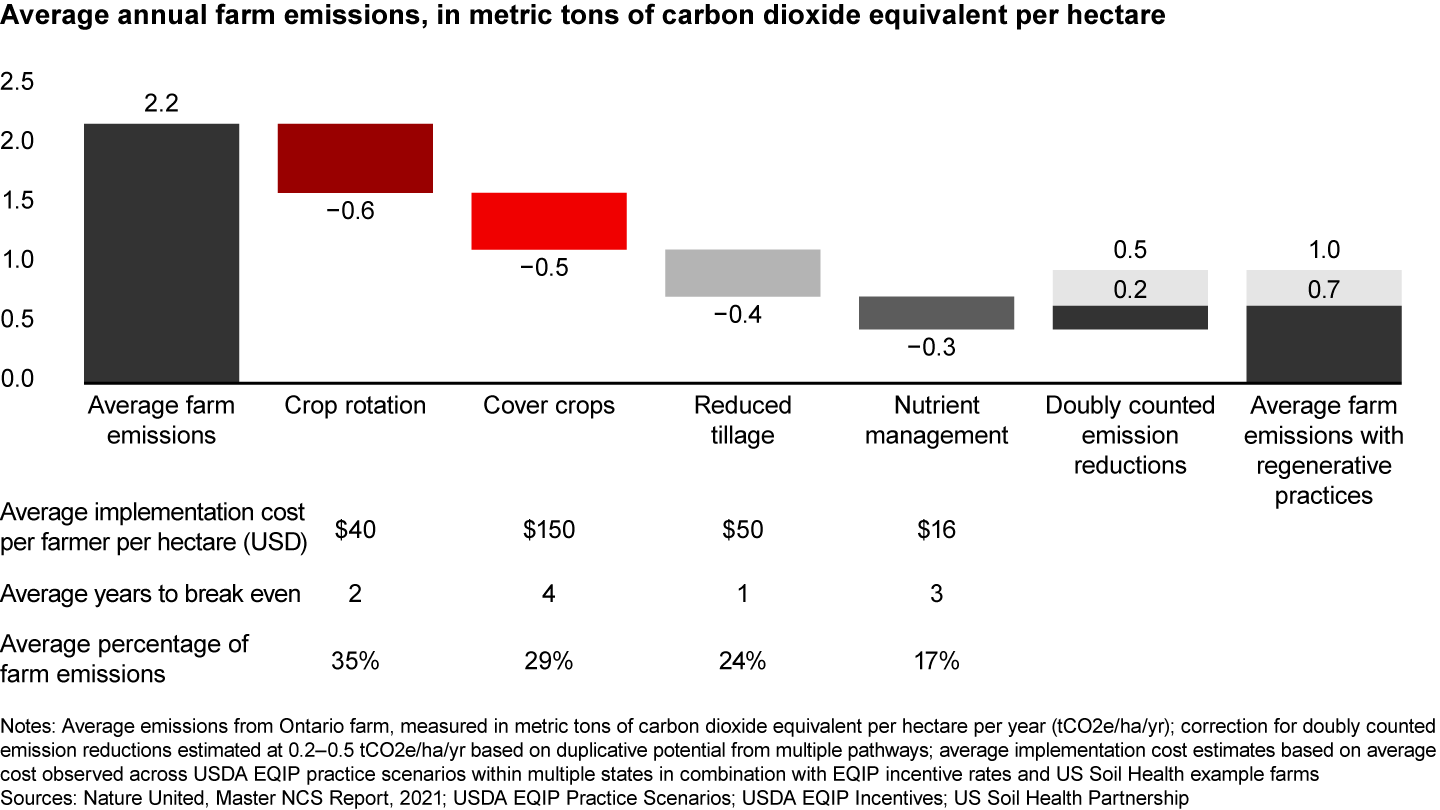
      Adopting all four practices could cut emissions per hectare by more than half
      Adopting all four practices could cut emissions per hectare by more than half
      Adopting all four practices could cut emissions per hectare by more than half

      Early studies on the economics of regenerative agriculture show that farmers using these techniques can increase their profit margins by as much as 30%—but not right away. Farmers typically experience some yield loss during the first two seasons as they learn new techniques and the soil is reconditioned. They may break even in the third and fourth seasons, and by the fifth or sixth season, they begin to see greater profitability (see Figure 2). Since few farmers have the resources to weather a two- to four-year dip in revenue, they will have to receive support during this transition. Farmers’ supply chain partners could invest in this type of support as part of their sustainability efforts and make progress toward their own goals for reducing scope 3 emissions.

      Figure 2
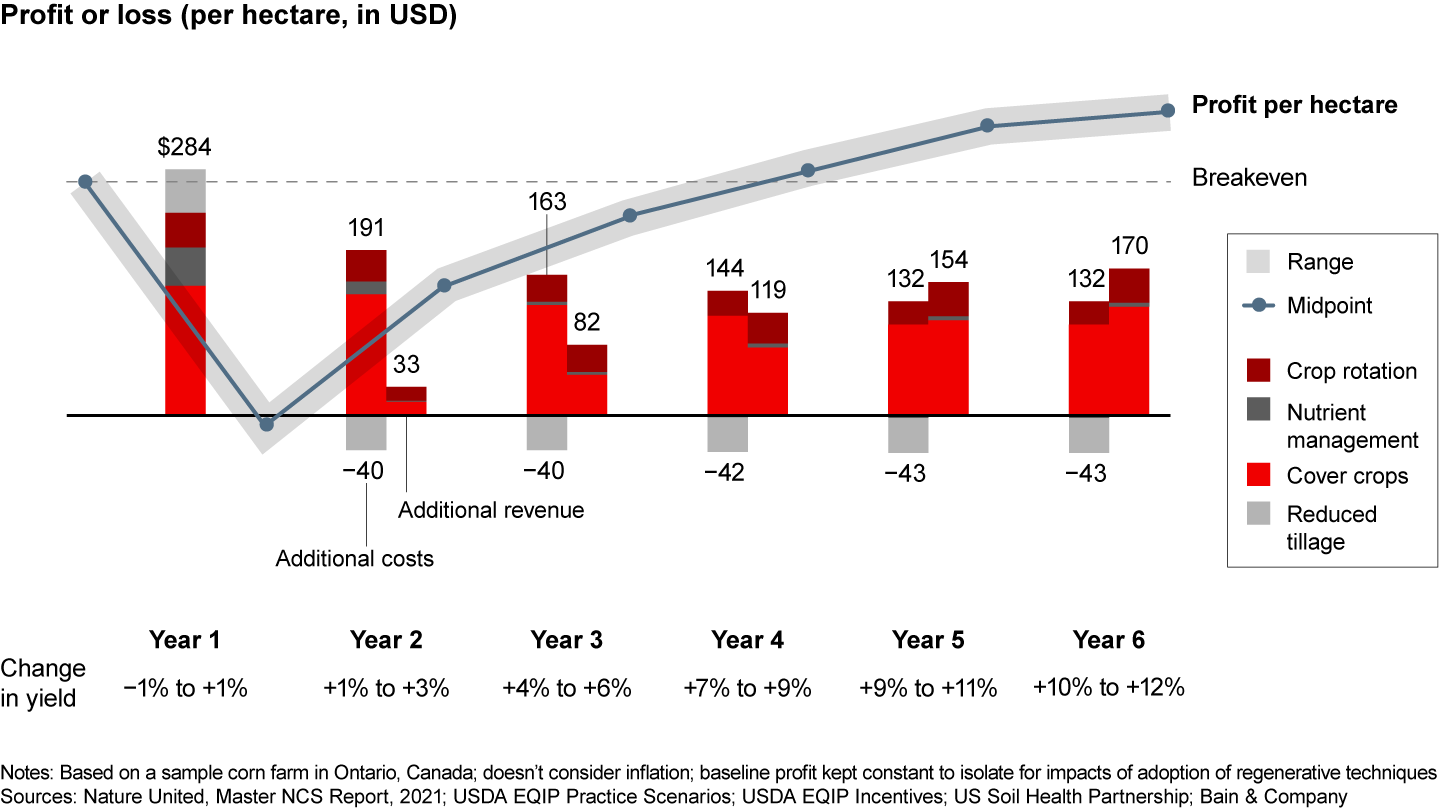
      With four years to break even, most farmers will need incentives and financial support to adopt regenerative practices
      With four years to break even, most farmers will need incentives and financial support to adopt regenerative practices
      With four years to break even, most farmers will need incentives and financial support to adopt regenerative practices

      Four elements of regenerative agriculture

      Regenerative agriculture means different things in different places and depends on a wide range of factors, including climatic and soil conditions. While there are many practices that could be considered as aspects of regenerative agriculture, this brief focuses on four that tend to be recognized as generally practical, useful, and not overly disruptive to ongoing farm operations.

      Cover cropping: One of the most widely known and accepted practices in regenerative agriculture is cover cropping—that is, planting crops in fields that would otherwise lay fallow between growing seasons or that can grow simultaneously with cash crops. For centuries, farmers in Europe and North America followed this practice, but it fell out of favor during the 20th century as agriculture industrialized and cover cropping wasn’t seen as economical. Encouraging farmers to bring it back by planting oat, mustard, buckwheat, alfalfa, clover, or other crops could reduce greenhouse gas emissions by between 0.5 and 1 metric ton per hectare of land each year. Cover crops put more carbon into the soil, which helps retain moisture, reduce irrigation, and strengthen crops to fight off diseases or withstand drought. Other benefits include weed control, less erosion, a reduced need for fertilizers, and up to a 10% boost in yields.

      Of course, many more farmers would need to take up the practice to have an effect. In Canada, somewhere between 2% and 10% of farmers plant cover crops each season. About 20 million hectares of croplands in Canada could adopt cover crops, but several barriers lie in the way, including constraints related to soil moisture and growing season length. In northern areas, growing seasons can be short, making it difficult to establish cover crops between seasons. The additional cycle also adds complexity and costs for farmers, about US$150 per hectare in Canada. In other countries, the potential for cover cropping may be greater.

      Nutrient management: More precise management of fertilizers and manure could also reduce emissions. The NCS study indicates that emissions reductions of as much as 9 megatons a year in Canada are possible by 2030. As with cover cropping, only a small percentage of farmers follow these practices today, but more could if they receive the proper training and support.

      Advocates of smarter fertilizer application talk of the four Rs: the right fertilizer source, applied at the right rate, at the right time, and in the right place. The benefits extend beyond soil health to include cleaner air and water, better biodiversity in the nearby area, plus a financial upside for the farmer. When applied correctly, farmers can avoid fertilizer runoff or volatilization, thereby reducing waste, unnecessary costs, and impacts on fresh water. Better management of manure usually occurs in places where crops and animals are grown in the same area. The storage and sustainable use of manure applied as fertilizer creates a more circular economic system, reducing the amount of methane released, cutting the costs of commercial fertilizer, and improving soil quality.

      Reduced tillage: Traditional tilling breaks up the soil, which can help keep weeds down but also leaves soil dried out and subject to crusting on its surface. A number of low- and no-till methods aim to make better use of the soil’s natural ability to build and retain organic material, including fungi, which may be beneficial to crops and biodiversity. The learning curve can be steep, and fields often take several years to adjust. But the resulting landscape can retain moisture and nutrients better than when fields are tilled.

      Crop rotation: Crop rotation improves the health of soil, reduces erosion, and allows farmers to use less fertilizer. Centuries ago, farmers rotated crops on a three- or four-year cycle, mixing in years for grazing or laying fallow. Today’s regenerative techniques can deliver better performance by alternating between, for example, corn or wheat (which extract nitrogen from soil) and soybeans or other legumes (which restore nitrogen to the soil), supplemented by seasonal cover crops and natural fertilizers such as manure.

      Supporting farmers to reduce scope 3 emissions

      Agribusiness companies that maintain large networks of supplier growers may be in a strong position to support farmers through their transitions to regenerative agriculture. These companies are setting ambitious targets for emissions reductions. They will have the most control over scope 1 emissions, those resulting directly from their own operations. Scope 2 emissions could be more challenging, but they can work with their energy providers to manage and reduce their emissions from energy use. Scope 3 emissions, those resulting from upstream suppliers and downstream customers, may be the most difficult to manage but nevertheless hold considerable promise.

      Supporting the farmers who supply commodities to these large companies may be one way in which the companies can make progress toward reducing these scope 3 emissions and reaching their net zero goals. Nestlé, for example, has pledged to invest US$1.3 billion over the next five years in training farmers, paying premium prices for products of regenerative agriculture, and direct investment and lending support to help suppliers through the transition period. Danone says it is supporting regenerative agriculture by providing financial and technical assistance to more than 100,000 farmers worldwide and by signing longer-term contracts that help guarantee stable revenue to farmers to help them navigate the transition.

      What’s more, unlike other sustainability efforts that represent an ongoing cost—for example, a pledge to invest in bioplastic packaging—helping farmers through their transitions to regenerative agriculture is a limited-period investment that becomes self-sustaining after a few years. In fact, the transition to regenerative agriculture becomes a virtuous cycle: Improved soil organic matter resulting from these practices can, in turn, improve soil biodiversity and water utilization, which can reduce the need for (and costs of) irrigation, fertilizer, and pest management (fungicides and herbicides).

      For large agriculture companies and the farmers who supply them, regenerative agriculture offers a pathway to a more sustainable food system. By investing in the transition to these techniques, companies can help lead the way to a food system that feeds the world while sustaining healthy farmlands and reducing emissions.

      The authors would like to thank Deborah Froeb, Hadley Archer, and Ronnie Drever, all with Nature United, for their contributions to this work.

      Authors
      • Headshot of Fernando Heil Lutiis
        Fernando Heil Lutiis
        Alumni, Toronto
      • Tyson Atleo
        Natural Climate Solutions Program Director, The Nature Conservancy, Victoria, British Columbia, Canada
      • Grace Mbazima
        Alumni, Toronto
      • Headshot of Sam Israelit
        Sam Israelit
        Chief Sustainability Officer, San Francisco
      Contact us
      Related Industries
      • Agribusiness
      • Energy & Natural Resources
      Related Consulting Services
      • Sustainability
      How We Can Help
      • Climate Change
      Energy & Natural Resources
      Business Breakthrough Barometer 2025

      The annual pulse check from leading businesses on the pace of the net-zero transition.

      Read more
      Energy & Natural Resources
      Fueling the Future: How Business, Finance, and Policy Can Accelerate the Clean Fuels Market

      Why global clean fuel ambitions are outpacing investment, and what leaders must do to unlock capital and scale viable projects.

      Read more
      Climate Change
      Financing Climate Solutions in Brazil

      A study conducted by Bain, in partnership with BNDES, highlights both the challenges and the opportunities to accelerate the climate transition.

      Read more
      Sustainability
      How AI Is Starting to Transform Circular Packaging

      There are 15 AI use cases companies across the value chain can use today to accelerate circularity.

      Read more
      Energy & Natural Resources
      Sustaining Capital: From Chaos to Discipline

      Fragmented budgets, poor visibility, and missed forecasts are fixable with the right approach.

      Read more
      First published in diciembre 2021
      Tags
      • Agribusiness
      • Climate Change
      • Energy & Natural Resources
      • Sustainability

      How We've Helped Clients

      An Environmental Services Company Captures Massive Savings from a Merger

      Read case study

      Centralization boosts performance for an energy giant

      Read case study

      Revitalizing a utility's market position with customer loyalty

      Read case study

      Ready to talk?

      We work with ambitious leaders who want to define the future, not hide from it. Together, we achieve extraordinary outcomes.

      Stay ahead in a rapidly changing world. Subscribe to Bain Insights, our monthly look at the critical issues facing global businesses.

      *I have read and understand Bain’s Privacy Notice.

      Please read and agree to the Privacy Policy.
      Bain & Company
      Contact us Sustainability Accessibility Terms of use Privacy Modern Slavery Act Statement Cookie Policy Sitemap Log In

      © 1996-2026 Bain & Company, Inc.

      Contact Bain

      How can we help you?

      • Business inquiry
      • Career information
      • Press relations
      • Partnership request
      • Speaker request
      See all offices