
Skip to Content
  • Offices

    Offices

    North & Latin America
    • Atlanta
    • Austin
    • Bogota
    • Boston
    • Buenos Aires
    • Chicago
    • Dallas
    • Denver
    • Houston
    • Los Angeles
    • Mexico City
    • Minneapolis
    • Monterrey
    • Montreal
    • New York
    • Rio de Janeiro
    • San Francisco
    • Santiago
    • São Paulo
    • Seattle
    • Silicon Valley
    • Toronto
    • Washington, DC
    Europe & Africa
    • Amsterdam
    • Athens
    • Berlin
    • Brussels
    • Copenhagen
    • Dusseldorf
    • Frankfurt
    • Helsinki
    • Istanbul
    • Johannesburg
    • Kyiv
    • Lisbon
    • London
    • Madrid
    • Milan
    • Munich
    • Oslo
    • Paris
    • Rome
    • Stockholm
    • Vienna
    • Warsaw
    • Zurich
    Middle East
    • Doha
    • Dubai
    • Riyadh
    Asia & Australia
    • Bangkok
    • Beijing
    • Bengaluru
    • Brisbane
    • Ho Chi Minh City
    • Hong Kong
    • Jakarta
    • Kuala Lumpur
    • Manila
    • Melbourne
    • Mumbai
    • New Delhi
    • Perth
    • Shanghai
    • Singapore
    • Sydney
    • Tokyo
    See all offices
  • Alumni
  • Media Center
  • Subscribe
  • Contact
  • Spain | Español

    Select your region and language

    Global
    • Global (English)
    North & Latin America
    • Brazil (Português)
    • Argentina (Español)
    • Canada (Français)
    • Chile (Español)
    • Colombia (Español)
    Europe, Middle East, & Africa
    • France (Français)
    • DACH Region (Deutsch)
    • Italy (Italiano)
    • Spain (Español)
    • Greece (Elliniká)
    Asia & Australia
    • China (中文版)
    • Korea (한국어)
    • Japan (日本語)
  • Saved items (0)
    Saved items (0)

    You have no saved items.

    Bookmark content that interests you and it will be saved here for you to read or share later.

    Explore Bain Insights
  • Industries
    Main menu

    Industries

    • Aeroespacial y Defensa
    • Agroindustria
    • Químicos
    • Construcción e Infraestructura
    • Productos de Consumo
    • Servicios Financieros
    • Salud y Ciencias de la Vida
    • Maquinaria y Equipo Industrial
    • Medios y Entretenimiento
      Industries
      Medios y Entretenimiento
      • Media Lab
    • Metales
    • Minería
    • Petróleo y Gas
    • Papel y Empaque
    • Private Equity
      Industries
      Private Equity
      • Due Diligence
      • Exit Planning
      • Firm Strategy & Operations
      • Portfolio Value Creation
    • Sector Público y Social
    • Retail
    • Tecnología
    • Telecomunicaciones
      Industries
      Telecomunicaciones
      • Capital Expenditure
      • Telco Digital Transformation
    • Transporte
    • Viajes y Turismo
    • Servicios Públicos y Energías Renovables
  • Consulting Services
    Main menu

    Consulting Services

    • Customer Experience
    • Sustainability
    • Innovation
    • M&A
    • Operations
    • People & Organization
    • Private Equity
    • Sales & Marketing
    • Strategy
    • AI, Insights, and Solutions
    • Technology
    • Transformation
  • Digital
  • Insights
    Main menu

    Insights

    • Industry Insights
    • Services Insights
    • Bain Books
    • Webinars
    • Bain Futures
    View all Insights
    Featured topics
    • Tariff Response
    • Artificial Intelligence
    • Thriving in Uncertainty
    • Executive Conversations
    • Macro Trends
    • M&A Report
    • Healthcare Private Equity Report
    • Paper & Packaging Report
    • Technology Report
    • CEO's Guide to Sustainability
    • CEO Insights
    • CFO Insights
    • COO Insights
    • CIO Insights
    • CMO Insights
    View all featured topics
  • About
    Main menu

    About

    • What We Do
    • What We Believe
    • Our People & Leadership
    • Client Results
    • Awards & Recognition
    • Global Affiliations
    Further: Our global responsibility
    • Sustainability
    • Social Impact
    • World Economic Forum
    Learn more about Further
  • Carreras
    Main menu

    Carreras

    • Trabaja con Nosotros
      Carreras
      Trabaja con Nosotros
      • Find Your Place
      • Nuestras Áreas de Trabajo
      • Equipos Integrados
      • Estudiantes
      • Internships & Programs
      • Eventos de Reclutamiento
    • La Vida en Bain
      Carreras
      La Vida en Bain
      • Historias Profesionales
      • Nuestra Gente
      • Dónde Trabajamos
      • Apoyando tu Crecimiento
      • Grupos de Afinidad
      • Beneficios
    • Impact Stories
    • Nuestro Proceso
      Carreras
      Nuestro Proceso
      • Qué Esperar
      • Entrevistas
    FIND JOBS
  • Offices
    Main menu

    Offices

    • North & Latin America
      Offices
      North & Latin America
      • Atlanta
      • Austin
      • Bogota
      • Boston
      • Buenos Aires
      • Chicago
      • Dallas
      • Denver
      • Houston
      • Los Angeles
      • Mexico City
      • Minneapolis
      • Monterrey
      • Montreal
      • New York
      • Rio de Janeiro
      • San Francisco
      • Santiago
      • São Paulo
      • Seattle
      • Silicon Valley
      • Toronto
      • Washington, DC
    • Europe & Africa
      Offices
      Europe & Africa
      • Amsterdam
      • Athens
      • Berlin
      • Brussels
      • Copenhagen
      • Dusseldorf
      • Frankfurt
      • Helsinki
      • Istanbul
      • Johannesburg
      • Kyiv
      • Lisbon
      • London
      • Madrid
      • Milan
      • Munich
      • Oslo
      • Paris
      • Rome
      • Stockholm
      • Vienna
      • Warsaw
      • Zurich
    • Middle East
      Offices
      Middle East
      • Doha
      • Dubai
      • Riyadh
    • Asia & Australia
      Offices
      Asia & Australia
      • Bangkok
      • Beijing
      • Bengaluru
      • Brisbane
      • Ho Chi Minh City
      • Hong Kong
      • Jakarta
      • Kuala Lumpur
      • Manila
      • Melbourne
      • Mumbai
      • New Delhi
      • Perth
      • Shanghai
      • Singapore
      • Sydney
      • Tokyo
    See all offices
  • Alumni
  • Media Center
  • Subscribe
  • Contact
  • Spain | Español
    Main menu

    Select your region and language

    • Global
      Select your region and language
      Global
      • Global (English)
    • North & Latin America
      Select your region and language
      North & Latin America
      • Brazil (Português)
      • Argentina (Español)
      • Canada (Français)
      • Chile (Español)
      • Colombia (Español)
    • Europe, Middle East, & Africa
      Select your region and language
      Europe, Middle East, & Africa
      • France (Français)
      • DACH Region (Deutsch)
      • Italy (Italiano)
      • Spain (Español)
      • Greece (Elliniká)
    • Asia & Australia
      Select your region and language
      Asia & Australia
      • China (中文版)
      • Korea (한국어)
      • Japan (日本語)
  • Saved items  (0)
    Main menu
    Saved items (0)

    You have no saved items.

    Bookmark content that interests you and it will be saved here for you to read or share later.

    Explore Bain Insights
  • Industries
    • Industries

      • Aeroespacial y Defensa
      • Agroindustria
      • Químicos
      • Construcción e Infraestructura
      • Productos de Consumo
      • Servicios Financieros
      • Salud y Ciencias de la Vida
      • Maquinaria y Equipo Industrial
      • Medios y Entretenimiento
      • Metales
      • Minería
      • Petróleo y Gas
      • Papel y Empaque
      • Private Equity
      • Sector Público y Social
      • Retail
      • Tecnología
      • Telecomunicaciones
      • Transporte
      • Viajes y Turismo
      • Servicios Públicos y Energías Renovables
  • Consulting Services
    • Consulting Services

      • Customer Experience
      • Sustainability
      • Innovation
      • M&A
      • Operations
      • People & Organization
      • Private Equity
      • Sales & Marketing
      • Strategy
      • AI, Insights, and Solutions
      • Technology
      • Transformation
  • Digital
  • Insights
    • Insights

      • Industry Insights
      • Services Insights
      • Bain Books
      • Webinars
      • Bain Futures
      View all Insights
      Featured topics
      • Tariff Response
      • Artificial Intelligence
      • Thriving in Uncertainty
      • Executive Conversations
      • Macro Trends
      • M&A Report
      • Healthcare Private Equity Report
      • Paper & Packaging Report
      • Technology Report
      • CEO's Guide to Sustainability
      • CEO Insights
      • CFO Insights
      • COO Insights
      • CIO Insights
      • CMO Insights
      View all featured topics
  • About
    • About

      • What We Do
      • What We Believe
      • Our People & Leadership
      • Client Results
      • Awards & Recognition
      • Global Affiliations
      Further: Our global responsibility
      • Sustainability
      • Social Impact
      • World Economic Forum
      Learn more about Further
  • Carreras
    Popular Searches
    • Agile
    • Digital
    • Strategy
    Your Previous Searches
      Recently Visited Pages

      Content added to saved items

      Saved items (0)

      Removed from saved items

      Saved items (0)

      Paper & Packaging Report

      Putting Sustainability to Work in Paper and Packaging

      Putting Sustainability to Work in Paper and Packaging

      Reduce energy costs and spur organic growth.

      By Mattia Bernardi, Jenny Davis-Peccoud, Torsten Lichtenau, and Oliver Straehle

      • min read
      }

      Report

      Putting Sustainability to Work in Paper and Packaging
      en
      Executive Summary
      • The World Bank predicts that, without drastic actions, global waste will increase by 70% through 2050.
      • A sound sustainability strategy can reduce material use and energy costs and spur organic growth.
      • Sustainability can contribute 4 to 6 percentage points to EBITDA through cost savings and revenue growth.

      This article is part of Bain’s 2023 Paper & Packaging Report

      EXPLORE THE REPORT

      The pressure on paper and packaging executives to become more environmentally friendly has never been higher. The industry generates a significant amount of carbon emissions because producing paper and packaging is energy intensive and requires high amounts of raw materials and water. At the same time, paper is a core input for a huge range of products, packaging protects goods during transport and sale, and it increases the shelf life of perishable products.

      While, historically, executives have viewed sustainability initiatives as an extra expense to shoulder, leading companies realize that a decarbonization and sustainability agenda can, in fact, create economic value. Specifically, a sound sustainability strategy can reduce energy costs and increase access to recycled or renewable raw materials at a competitive cost. It can also help spur organic growth and price realization, not to mention the fact that many leaders and employees think that it’s simply the right thing to do.

      In sum, leading companies realize that this pressure to address emissions, raw materials, biodiversity, and waste impacts also presents an opportunity. Sustainability has already become a license to operate and critical to create value along several dimensions. Successful companies follow a clear playbook that includes setting a sustainability ambition, creating value through cost savings and commercial growth, and embedding sustainability in the organization for continuous improvement.

      Under scrutiny for sustainability

      The paper and packaging industry is broadly exposed to sustainability issues for several reasons. Producing paper, glass, and metal uses a very large amount of energy. In addition, the production of many substrates, such as plastic and aluminum, generates large amounts of greenhouse gases and some toxic emissions. Finally, much of the plastic, metal, glass, and paper packaging that gets created and sold to retailers ultimately ends up as litter from consumers on land and in the sea.

      Packaging converters are typically less energy intensive but nonetheless produce waste that can ultimately be mismanaged. Plastic waste is continuously increasing and ending up in the environment. In fact, the Organisation for Economic Co-operation and Development estimates that around 80 million tons of plastic waste are mismanaged per year.

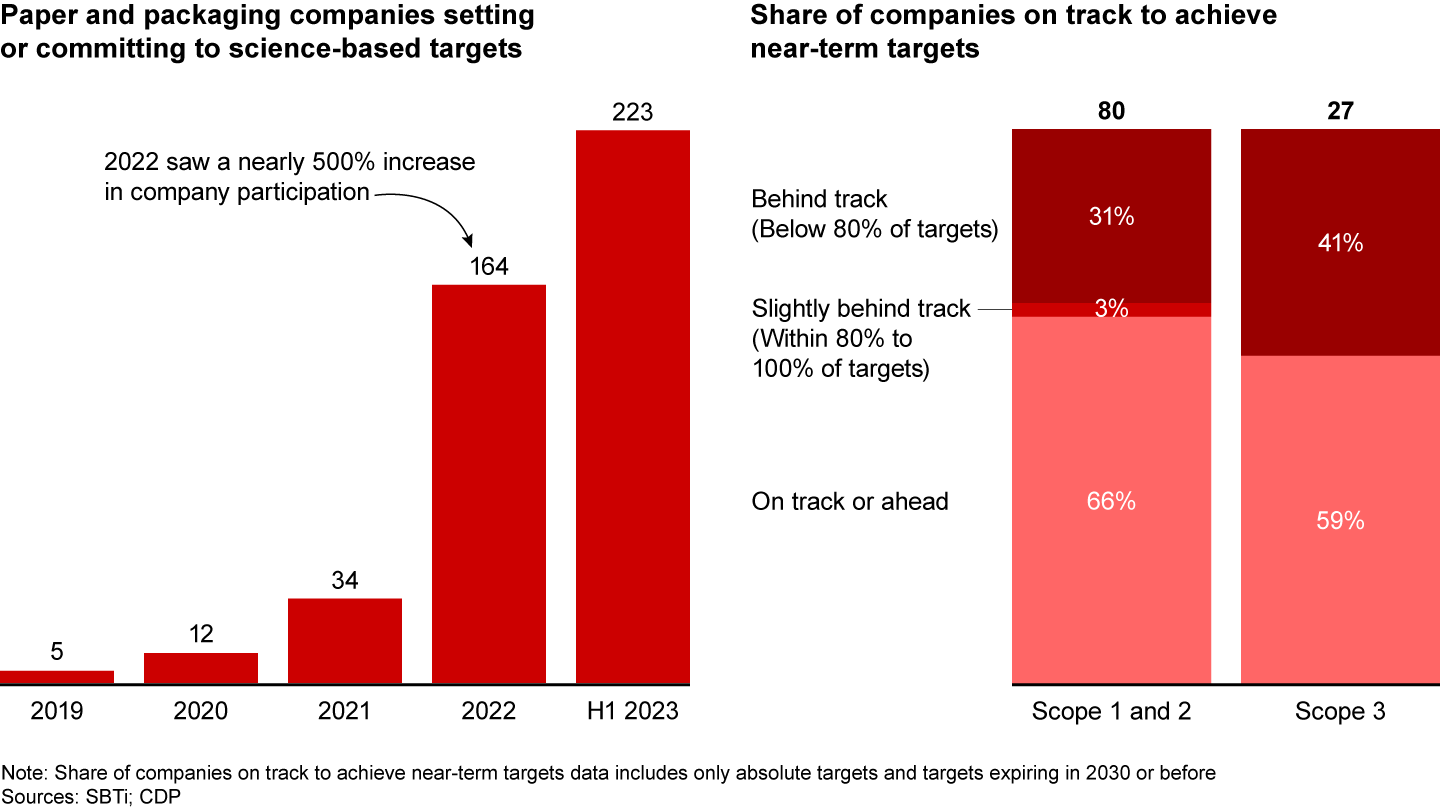
      Paper and packaging companies have started to address sustainability, but most can do much more. While the number of companies in the industry that have verified or committed to science-based targets has rapidly increased from 5 companies in 2019 to 164 in 2022, more than 30% of those companies have missed their near-term Scope 1 and Scope 2 targets—and even more are missing their Scope 3 targets (see Figure 1).

      Figure 1
      Paper and packaging companies’ sustainability targets and early results

      Pressure from all sides

      In light of overflowing landfills and oceans littered with plastic waste, companies are under growing scrutiny by consumers to develop more sustainable packaging solutions. Without taking drastic actions, the World Bank predicts that global waste will increase by 70% through 2050. In Europe, 71% of consumers claim they want to buy sustainable products. In the US, 71% of consumers claim they want to buy products with as little packaging as possible.

      Both consumer packaged goods companies (CPGs) and retailers are pushing the paper and packaging industry to innovate and create sustainable solutions and decarbonize. Upstream Scope 3 emissions typically account for a large share of CPGs’ carbon footprint, with packaging a significant contributor.

      Regulation to reduce total packaging volume and improve recycling is also increasing across the world, notably, with push in the EU. For example, the current proposal under review of the EU Packaging and Packaging Waste Regulation requires 20% of take-away beverage containers to be reusable packaging by 2030 and 80% by 2040. It also sets targets for recycled content and bans certain single-use plastics—and these are in addition to existing national regulations.

      In the US, certain state laws are setting the pace, such as California’s SB 54: Plastic Pollution Prevention and Packaging Producer Responsibility Act, which requires a 25% reduction in the use of single-use plastics and that all single-use plastic packaging be recyclable or compostable by 2032. The multitude of local, state, country, and regional laws can make it difficult for global companies to navigate the full set of rules. In addition, the number of regulations keeps increasing, and how regulation will ultimately play out across different substrates remains largely unknown.

      The Paris Agreement and corresponding laws and regulations regarding emissions also impact the industry. Large pulp and paper mills are obliged to participate in the EU’s Emissions Trading System, and rising carbon prices will incentivize producers to reduce their emissions. Further carbon taxes and more stringent regulations are expected globally.

      The sustainability playbook

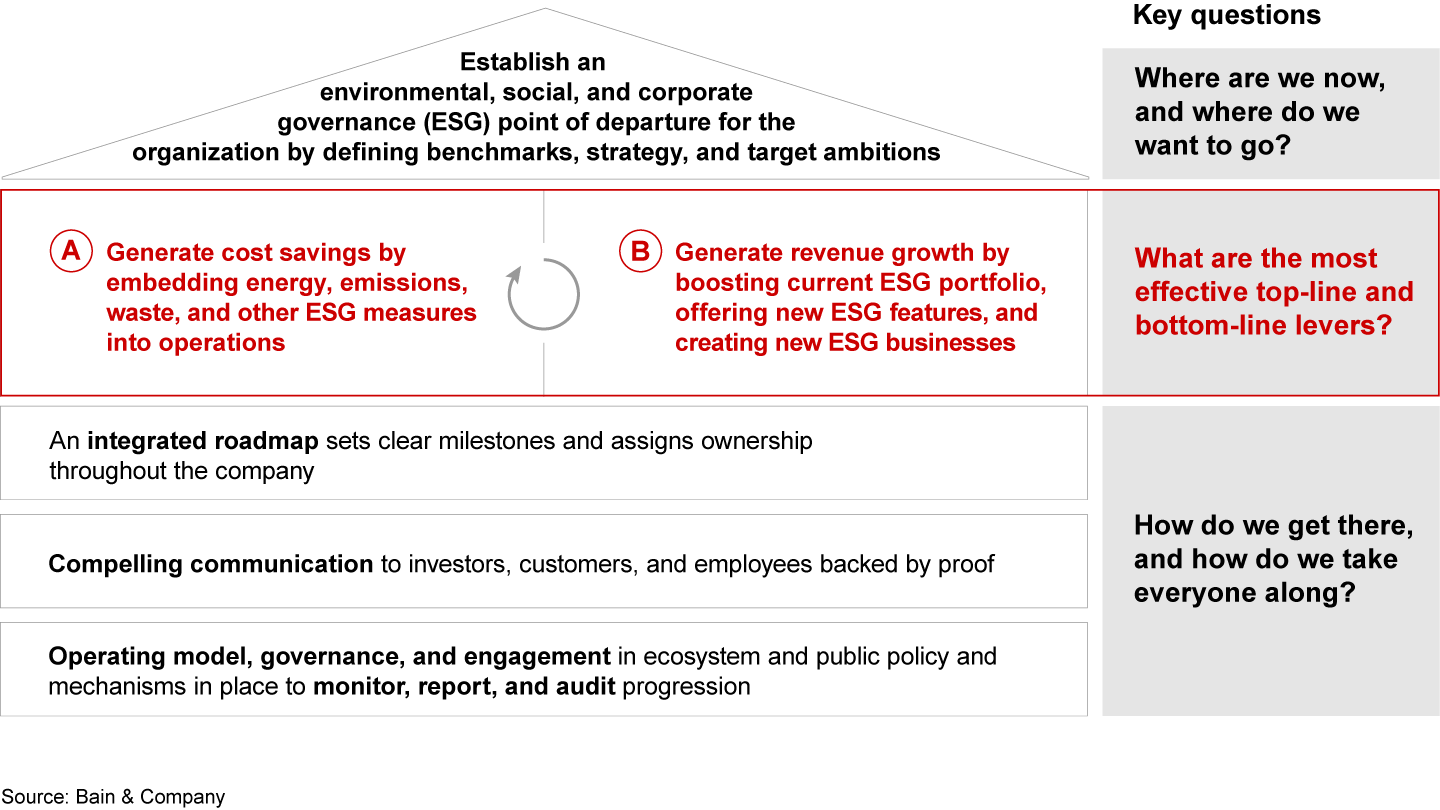
      After a thorough environmental evaluation, many companies realize that sustainability can be both a method for them to create value as well as a way for them to distinguish themselves from industry competitors (see Figure 2).

      Figure 2
      A holistic approach to sustainability can create cost savings and revenue growth

      Set the ambition. As a first step, leading companies set an ambition that requires a deep understanding of their company’s current sustainability performance vs. the competition based on benchmarking. They also consider current and expected regulations and infrastructure, such as the availability of environmentally friendly raw materials, clean energy, and recycling services.

      For example, one packaging company Bain worked with set the plan to reduce its Scope 1 and 2 emissions by more than 1 million tons by 2030, surpassing its own 1.5°C science-based targets by a significant margin. After articulating this ambition, the company identified a long list of potential decarbonization levers and quantified the carbon savings potential and cost for each lever.

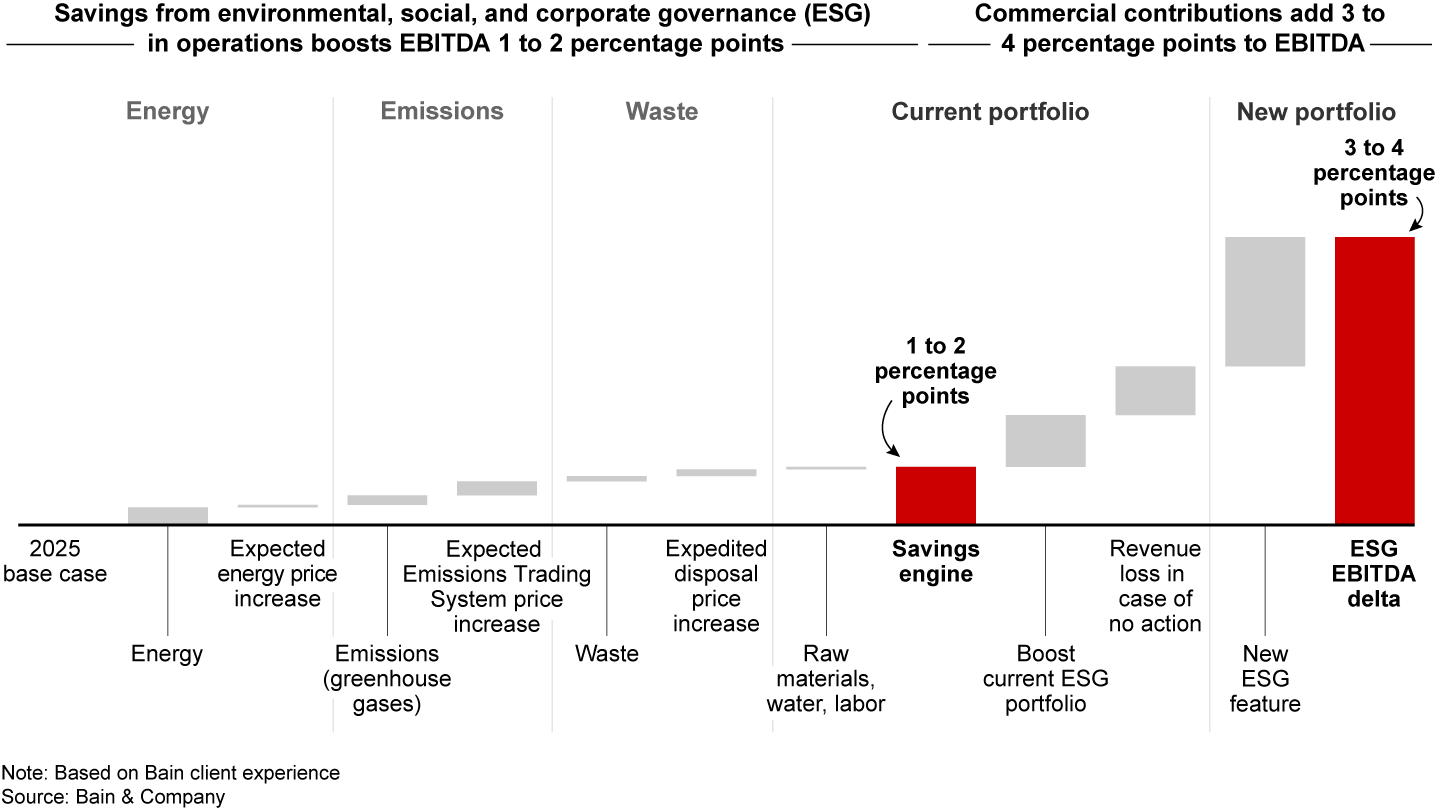
      Create value through cost savings and revenue growth. There are generally two ways to create value through sustainability. They include cost savings and commercial or top-line growth. Leading paper and packaging companies are able to achieve a 4- to 6-percentage-point EBITDA increase through their effective use of cost savings and commercial levers (see Figure 3).

      Figure 3
      Sustainability can contribute 4 to 6 percentage points to EBITDA
      • Cost savings: One paper company tackling cost savings started with short-term moves that included changing its heat source from coal to gas, optimizing steam consumption, and energy recovery. The company also adjusted its recipe and process, reducing the functional surface of its paper, and screened pulp more efficiently.

        Then, the company moved to mid-term projects that required longer lead times and larger investments. The company also investigated biomass investments and black liquor gasification to provide some of the electricity and steam needs of pulp plants.

        Finally, the company tackled long-term projects, which typically require either substantial organizational adjustments, high investments, or technological developments. These projects could include electrifying machines, switching from natural gas to hydrogen, or carbon capture and storage.

        Through a reduction of energy, emissions, waste, raw materials, and water usage, the client was able to achieve a 1- to 2-percentage-point EBITDA improvement. With higher energy prices and the rising cost of emissions certificates, savings are expected to increase even more.

        Many players will start long-term projects with pilots to test new technologies or strategies on a small scale. For example, Smurfit Kappa is the first paper and packaging company to test a hydrogen fuel–powered mill. The pilot mill is in France and is funded by European sustainability incentives. UPM, by contrast, is the first player to launch a conversion of its gas boiler to electricity in an effort to move toward zero emissions. Companies such as these put pilots on their sustainability roadmaps and scale once they have achieved success.

      • Commercial or top-line growth: Another way companies create value is by offering packaging solutions that help customers achieve their sustainability targets. There are countless options for providing more sustainable products to customers—such as developing low-carbon, fully recyclable, compostable, or biodegradable solutions; using recycled or upcycled inputs; or marketing environmentally friendly production, such as “chlorine-free” or “made with renewable energy.”

        To create top-line growth, one paper and packaging company started by scouting key environmental, social, and corporate governance (ESG) trends within its end markets. Plastic-to-paper substitution and low-carbon packaging were deemed as most relevant. The company then reviewed its existing product portfolio and identified which products could help customers in these areas. The company next collected products, such as plastic-free shopping bags for luxury brands and thermoformed cellulose packaging, into a new catalog, developed marketing tools and trainings to support the sales network, and approached their customers with tailored solutions.

        To develop long-term product options, the company set up a new innovation process to prioritize ESG initiatives, partnered with experts and universities, and developed prototypes of innovative low-carbon products such as paper-based single-serve portion packs for liquid products.

        These initiatives helped the company grow revenue by boosting its current portfolio and developing new products, and they helped it avoid revenue loss from inaction. In total, these initiatives led to a 3- to 4-percentage-point EBITDA increase.

        Sometimes companies will launch entirely new businesses to create value. Papermaker UPM has started to leverage the large amount of biomass in its value chain for different applications beyond using pulp for paper production. Specifically, it has invested in a biorefinery in Leuna, Germany, that transforms biomass such as solid wood into a range of biochemicals. Once operational by the end of 2023, the refinery will be able to produce 220,000 tons of sugars, lignin, and residue streams for bioenergy and biofuels that can be used instead of fossil fuels by UPM and others. Molecular bioproducts are one of UPM’s three strategic areas for growth going forward.

      Embed sustainability

      As a final step, leading companies embed sustainability value creation in the organization to make sure achieved improvements stick and the organization develops continuous improvement from within. To do so, they set up the right structure and governance to deliver on the ambition and link strategy to clear roles and responsibilities. They also integrate sustainability in business processes, decision mechanisms, and tools across functions and processes.

      Paper and packaging company Ahlstrom, for instance, has embedded sustainability in its mission statement so that now it seeks to innovate products that purify and protect the environment, which has required a full redesign of the company’s innovation pipeline.

      Focusing on building a sustainability-oriented culture and mindset to embed change throughout the organization is key. Practically, this can mean appointing a head of sustainability on the executive team and a sustainability leader in every division. This helps everyone in the organization link short- and long-term incentive systems to sustainability targets. Finally, it is important to ensure that sustainability is led by line executives, those responsible for delivering the business performance day-to-day, so that all employees will focus on what it takes to combine sustainability outcomes with profitability and growth.

      Read the Next Section

      The State of Private Equity and M&A in the Paper and Packaging Industry

      More from the report

      • Navigating Turbulence in Paper and Packaging

      • Full Potential Transformation in Paper and Packaging

      • The Paper and Packaging Industry Faces a Biodiversity Crisis

      • Which Packaging Substrates Are the Most Sustainable?

      • How Paper and Packaging Companies Can Catch Up in Commercial Excellence

      • Putting Sustainability to Work in Paper and Packaging

      • The State of Private Equity and M&A in the Paper and Packaging Industry

      • Sustainable Packaging: What Consumers Want Next from the Paper and Packaging Industry

      • The Mill of the Future

      Read our Paper & Packaging Report 2023

      EXPLORE THE REPORT Download the PDF
      Authors
      • Headshot of Mattia Bernardi
        Mattia Bernardi
        Partner, Milan
      • Headshot of Jenny Davis-Peccoud
        Jenny Davis-Peccoud
        Partner, Amsterdam
      • Headshot of Torsten Lichtenau
        Torsten Lichtenau
        Partner, London
      • Headshot of Oliver Straehle
        Oliver Straehle
        Partner, Zurich
      Contact us
      Related Industries
      • Advanced Manufacturing & Services
      • Paper & Packaging
      Related Consulting Services
      • Sustainability
      How We Can Help
      • Circular Economy
      • Climate Change
      Paper & Packaging Report
      The Paper and Packaging Industry Faces a Biodiversity Crisis

      Sustainable forestry practices and recycled and reused materials deliver a competitive edge.

      Read more
      Paper & Packaging Report
      Transforming Maintenance with Artificial Intelligence

      With little to no capex, companies can turn maintenance into an engine of cash flow.

      Read more
      Paper & Packaging Report
      Don’t Underestimate the Cost of Overcapacity

      Overcapacity is endemic to the paper and packaging industry, but these actions can help you maintain margins.

      Read more
      Climate Change
      COP30: What Businesses Need to Do Now

      At this year’s COP30 in Brazil, the message for businesses was clear: Climate strategy can’t just be commitments—it must be about execution.

      Read more
      Paper & Packaging
      How AI Is Starting to Transform Circular Packaging

      There are 15 AI use cases companies across the value chain can use today to accelerate circularity.

      Read more
      First published in agosto 2023
      Tags
      • Advanced Manufacturing & Services
      • Circular Economy
      • Climate Change
      • Paper & Packaging
      • Paper & Packaging Report
      • Sustainability

      How We've Helped Clients

      A Packaging Company Unboxes a New Go-to-Market Strategy

      Read case study

      A Paper Company Optimizes Its Industrial Footprint

      Read case study

      A Manufacturer Vows to “Push to Zero” Carbon Emissions

      Read case study

      Ready to talk?

      We work with ambitious leaders who want to define the future, not hide from it. Together, we achieve extraordinary outcomes.

      Stay ahead in a rapidly changing world. Subscribe to Bain Insights, our monthly look at the critical issues facing global businesses.

      *I have read and understand Bain’s Privacy Notice.

      Please read and agree to the Privacy Policy.
      Bain & Company
      Contact us Sustainability Accessibility Terms of use Privacy Modern Slavery Act Statement Cookie Policy Sitemap Log In

      © 1996-2026 Bain & Company, Inc.

      Contact Bain

      How can we help you?

      • Business inquiry
      • Career information
      • Press relations
      • Partnership request
      • Speaker request
      See all offices