
Skip to Content
  • Offices

    Offices

    North & Latin America
    • Atlanta
    • Austin
    • Bogota
    • Boston
    • Buenos Aires
    • Chicago
    • Dallas
    • Denver
    • Houston
    • Los Angeles
    • Mexico City
    • Minneapolis
    • Monterrey
    • Montreal
    • New York
    • Rio de Janeiro
    • San Francisco
    • Santiago
    • São Paulo
    • Seattle
    • Silicon Valley
    • Toronto
    • Washington, DC
    Europe & Africa
    • Amsterdam
    • Athens
    • Berlin
    • Brussels
    • Copenhagen
    • Dusseldorf
    • Frankfurt
    • Helsinki
    • Istanbul
    • Johannesburg
    • Kyiv
    • Lisbon
    • London
    • Madrid
    • Milan
    • Munich
    • Oslo
    • Paris
    • Rome
    • Stockholm
    • Vienna
    • Warsaw
    • Zurich
    Middle East
    • Doha
    • Dubai
    • Riyadh
    Asia & Australia
    • Bangkok
    • Beijing
    • Bengaluru
    • Brisbane
    • Ho Chi Minh City
    • Hong Kong
    • Jakarta
    • Kuala Lumpur
    • Manila
    • Melbourne
    • Mumbai
    • New Delhi
    • Perth
    • Shanghai
    • Singapore
    • Sydney
    • Tokyo
    See all offices
  • Alumni
  • Media Center
  • Subscribe
  • Contact
  • Spain | Español

    Select your region and language

    Global
    • Global (English)
    North & Latin America
    • Brazil (Português)
    • Argentina (Español)
    • Canada (Français)
    • Chile (Español)
    • Colombia (Español)
    Europe, Middle East, & Africa
    • France (Français)
    • DACH Region (Deutsch)
    • Italy (Italiano)
    • Spain (Español)
    • Greece (Elliniká)
    Asia & Australia
    • China (中文版)
    • Korea (한국어)
    • Japan (日本語)
  • Saved items (0)
    Saved items (0)

    You have no saved items.

    Bookmark content that interests you and it will be saved here for you to read or share later.

    Explore Bain Insights
  • Industries
    Main menu

    Industries

    • Aeroespacial y Defensa
    • Agroindustria
    • Químicos
    • Construcción e Infraestructura
    • Productos de Consumo
    • Servicios Financieros
    • Salud y Ciencias de la Vida
    • Maquinaria y Equipo Industrial
    • Medios y Entretenimiento
      Industries
      Medios y Entretenimiento
      • Media Lab
    • Metales
    • Minería
    • Petróleo y Gas
    • Papel y Empaque
    • Private Equity
      Industries
      Private Equity
      • Due Diligence
      • Exit Planning
      • Firm Strategy & Operations
      • Portfolio Value Creation
    • Sector Público y Social
    • Retail
    • Tecnología
    • Telecomunicaciones
      Industries
      Telecomunicaciones
      • Capital Expenditure
      • Telco Digital Transformation
    • Transporte
    • Viajes y Turismo
    • Servicios Públicos y Energías Renovables
  • Consulting Services
    Main menu

    Consulting Services

    • Customer Experience
    • Sustainability
    • Innovation
    • M&A
    • Operations
    • People & Organization
    • Private Equity
    • Sales & Marketing
    • Strategy
    • AI, Insights, and Solutions
    • Technology
    • Transformation
  • Digital
  • Insights
    Main menu

    Insights

    • Industry Insights
    • Services Insights
    • Bain Books
    • Webinars
    • Bain Futures
    View all Insights
    Featured topics
    • Tariff Response
    • Artificial Intelligence
    • Thriving in Uncertainty
    • Executive Conversations
    • Macro Trends
    • M&A Report
    • Healthcare Private Equity Report
    • Paper & Packaging Report
    • Technology Report
    • CEO's Guide to Sustainability
    • CEO Insights
    • CFO Insights
    • COO Insights
    • CIO Insights
    • CMO Insights
    View all featured topics
  • About
    Main menu

    About

    • What We Do
    • What We Believe
    • Our People & Leadership
    • Client Results
    • Awards & Recognition
    • Global Affiliations
    Further: Our global responsibility
    • Sustainability
    • Social Impact
    • World Economic Forum
    Learn more about Further
  • Carreras
    Main menu

    Carreras

    • Trabaja con Nosotros
      Carreras
      Trabaja con Nosotros
      • Find Your Place
      • Nuestras Áreas de Trabajo
      • Equipos Integrados
      • Estudiantes
      • Internships & Programs
      • Eventos de Reclutamiento
    • La Vida en Bain
      Carreras
      La Vida en Bain
      • Blog: Inside Bain
      • Historias Profesionales
      • Nuestra Gente
      • Dónde Trabajamos
      • Apoyando tu Crecimiento
      • Grupos de Afinidad
      • Beneficios
    • Impact Stories
    • Nuestro Proceso
      Carreras
      Nuestro Proceso
      • Qué Esperar
      • Entrevistas
    FIND JOBS
  • Offices
    Main menu

    Offices

    • North & Latin America
      Offices
      North & Latin America
      • Atlanta
      • Austin
      • Bogota
      • Boston
      • Buenos Aires
      • Chicago
      • Dallas
      • Denver
      • Houston
      • Los Angeles
      • Mexico City
      • Minneapolis
      • Monterrey
      • Montreal
      • New York
      • Rio de Janeiro
      • San Francisco
      • Santiago
      • São Paulo
      • Seattle
      • Silicon Valley
      • Toronto
      • Washington, DC
    • Europe & Africa
      Offices
      Europe & Africa
      • Amsterdam
      • Athens
      • Berlin
      • Brussels
      • Copenhagen
      • Dusseldorf
      • Frankfurt
      • Helsinki
      • Istanbul
      • Johannesburg
      • Kyiv
      • Lisbon
      • London
      • Madrid
      • Milan
      • Munich
      • Oslo
      • Paris
      • Rome
      • Stockholm
      • Vienna
      • Warsaw
      • Zurich
    • Middle East
      Offices
      Middle East
      • Doha
      • Dubai
      • Riyadh
    • Asia & Australia
      Offices
      Asia & Australia
      • Bangkok
      • Beijing
      • Bengaluru
      • Brisbane
      • Ho Chi Minh City
      • Hong Kong
      • Jakarta
      • Kuala Lumpur
      • Manila
      • Melbourne
      • Mumbai
      • New Delhi
      • Perth
      • Shanghai
      • Singapore
      • Sydney
      • Tokyo
    See all offices
  • Alumni
  • Media Center
  • Subscribe
  • Contact
  • Spain | Español
    Main menu

    Select your region and language

    • Global
      Select your region and language
      Global
      • Global (English)
    • North & Latin America
      Select your region and language
      North & Latin America
      • Brazil (Português)
      • Argentina (Español)
      • Canada (Français)
      • Chile (Español)
      • Colombia (Español)
    • Europe, Middle East, & Africa
      Select your region and language
      Europe, Middle East, & Africa
      • France (Français)
      • DACH Region (Deutsch)
      • Italy (Italiano)
      • Spain (Español)
      • Greece (Elliniká)
    • Asia & Australia
      Select your region and language
      Asia & Australia
      • China (中文版)
      • Korea (한국어)
      • Japan (日本語)
  • Saved items  (0)
    Main menu
    Saved items (0)

    You have no saved items.

    Bookmark content that interests you and it will be saved here for you to read or share later.

    Explore Bain Insights
  • Industries
    • Industries

      • Aeroespacial y Defensa
      • Agroindustria
      • Químicos
      • Construcción e Infraestructura
      • Productos de Consumo
      • Servicios Financieros
      • Salud y Ciencias de la Vida
      • Maquinaria y Equipo Industrial
      • Medios y Entretenimiento
      • Metales
      • Minería
      • Petróleo y Gas
      • Papel y Empaque
      • Private Equity
      • Sector Público y Social
      • Retail
      • Tecnología
      • Telecomunicaciones
      • Transporte
      • Viajes y Turismo
      • Servicios Públicos y Energías Renovables
  • Consulting Services
    • Consulting Services

      • Customer Experience
      • Sustainability
      • Innovation
      • M&A
      • Operations
      • People & Organization
      • Private Equity
      • Sales & Marketing
      • Strategy
      • AI, Insights, and Solutions
      • Technology
      • Transformation
  • Digital
  • Insights
    • Insights

      • Industry Insights
      • Services Insights
      • Bain Books
      • Webinars
      • Bain Futures
      View all Insights
      Featured topics
      • Tariff Response
      • Artificial Intelligence
      • Thriving in Uncertainty
      • Executive Conversations
      • Macro Trends
      • M&A Report
      • Healthcare Private Equity Report
      • Paper & Packaging Report
      • Technology Report
      • CEO's Guide to Sustainability
      • CEO Insights
      • CFO Insights
      • COO Insights
      • CIO Insights
      • CMO Insights
      View all featured topics
  • About
    • About

      • What We Do
      • What We Believe
      • Our People & Leadership
      • Client Results
      • Awards & Recognition
      • Global Affiliations
      Further: Our global responsibility
      • Sustainability
      • Social Impact
      • World Economic Forum
      Learn more about Further
  • Carreras
    Popular Searches
    • Agile
    • Digital
    • Strategy
    Your Previous Searches
      Recently Visited Pages

      Content added to saved items

      Saved items (0)

      Removed from saved items

      Saved items (0)

      Brief

      Responding to Oil Price Volatility in the Chemical Industry

      Responding to Oil Price Volatility in the Chemical Industry

      Oil price volatility has profound effects on chemical producers, who will have to plan their next moves in an environment of extreme uncertainty.

      By Piet de Paepe, Jason McLinn and Mark Porter

      • min read

      Brief

      Responding to Oil Price Volatility in the Chemical Industry
      en

      The decline in oil prices that began in summer 2014 has rapidly changed the basic economics of the global chemicals industry and generated widespread uncertainty. In the short term, additional supply from North American shale oil and continued high production levels from OPEC make a U-shaped recovery more likely than a sharp rebound. However, prices will need to recover over time to enable investment in exploration and production.

      Over the past decade, oil prices have gone through at least two complete cycles, and more big swings are likely in the future. Chemical producers will have to continue to make short- and mid-term plans during this time of volatile prices. (For more on how low prices are affecting the upstream oil and gas industry, see the Bain Brief “Steering through the oil storm.”)

      Movements in oil prices affect chemicals markets around the globe; however, this brief focuses on North America and Europe, where it is easier to isolate the impact from other input variables such as large GDP growth or political instability. Our analyses and conversations with chemical industry executives reveal a range of interesting effects of this price drop, depending on product mix and geography.

      Net effects differ by product category …

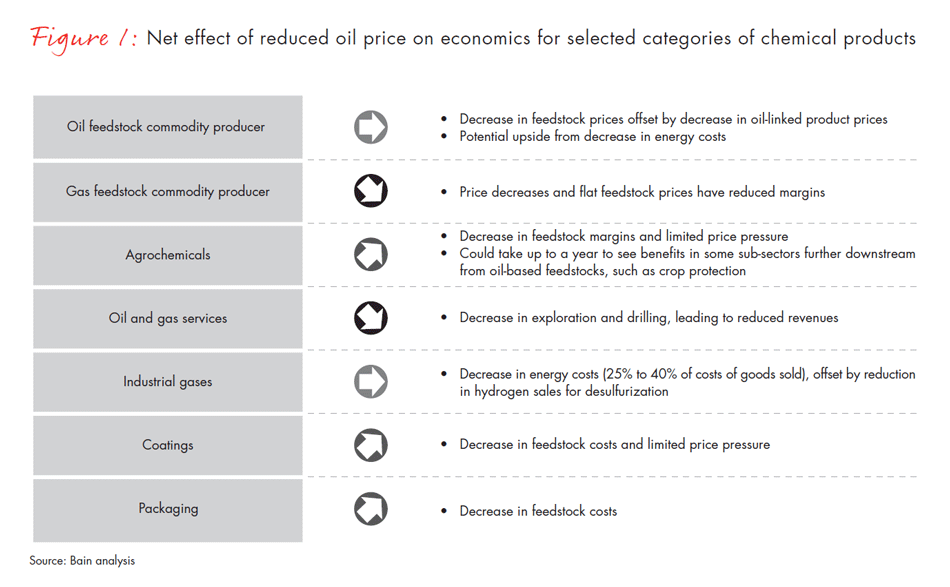
      Oil prices affect specific chemical products differently, depending on the combined effect of five variables.

      • Feedstock and energy prices. Some feedstock prices correlate directly to oil price, including ethylene and propylene. Other by-products of naphtha cracking (for example, C4 and C5) follow their own dynamics and show no direct correlation. Energy-intensive processes, such as chlor-alkali, also benefit in markets where energy prices are linked to oil. Alternative feedstocks—such as those drawn from agricultural products like corn and sugarcane—are now less attractive, as are methanol-to-olefin and coal-to-olefin projects.
      • Product prices. In an efficient market, marginal producers set the price for a given product. In the case of many ethane- and propane-based products, the marginal production is still based on naphtha cracking; as a result, prices are correlated to naphtha and therefore oil. Further down the value chain, prices for many specialty products are less affected, and producers could benefit from a lag in price adjustments, as in specialty coatings. 
      • Macro-level demand. Lower oil prices impact economic growth in general. The longer that prices remain low, the greater the effect. Yet the direct benefits of lower oil prices are partially offset by negative factors, including concerns about deflation. Economists estimate that the net effect of a $40 per barrel reduction in oil price in 2014 will be to increase global GDP growth by 0.5% to 0.6% in 2015 and 1.4% to 1.6% in 2016.
      • Demand for specific products. The effect on products can be more pronounced, depending on substitution potential. A Bain & Company study concluded that the demand for one bio-based polymer drops off sharply at a premium of more than 10% compared with petro-based alternatives. Batteries for electric vehicles are also affected: Lower oil prices make electric vehicles relatively more expensive to own, and reduced demand (and the second-order impact on the rate of technology development) may delay the adoption of electric vehicles by a few years. Between 2011 and 2014, the demand for chemicals used for oil production grew by more than 20% in North America. In the last 12 months, however, demand fell 20%.
      • Indirect costs. From 2011 to 2014, capital cost inflation in the chemicals industry ran at about 10%, and this was reflected in equipment prices, contractor support and other costs. Most oil companies have now deferred or canceled capital projects and are working to reduce operating costs. This has taken the heat out of the labor market and is likely to result in some costs falling back in the short term for chemical companies that share the same suppliers.

      For any given chemical, the net effect of lower oil prices depends on the combined effect of all of these variables (see Figure 1).

      responding-to-oil-price-volatility-fig01_embed

      … and by geography

      Although the direct effects of shale gas have been largely confined to the North American market to date, low oil prices affect markets globally. And the impact varies by region.

      In North America, the oil-to-gas price ratio averaged 17 to 1 during the first quarter of 2015. Many projects along the Gulf of Mexico base their business cases on the oil-to-gas spread, and this has changed fundamentally. Axiall recently decided to delay construction of an ethane cracker in Louisiana, a joint venture with Lotte Chemical, until after the first quarter of 2015 because of uncertainty in energy markets. In January, Sasol announced it would delay a final investment decision on its proposed large gas-to-liquids project in the US to conserve cash in response to lower international oil prices.

      North America remains a very attractive environment to produce chemicals, particularly those based on ethane and those that require lots of energy to produce. Ethane is currently in surplus, so its prices track those of natural gas. Sustained low oil prices will reduce profits for some US petrochemical producers below recent peaks, but in many cases, they will remain above their average historic rates. Even if oil prices recover over the next three to five years, this is likely to be partially offset by increased production capacity.

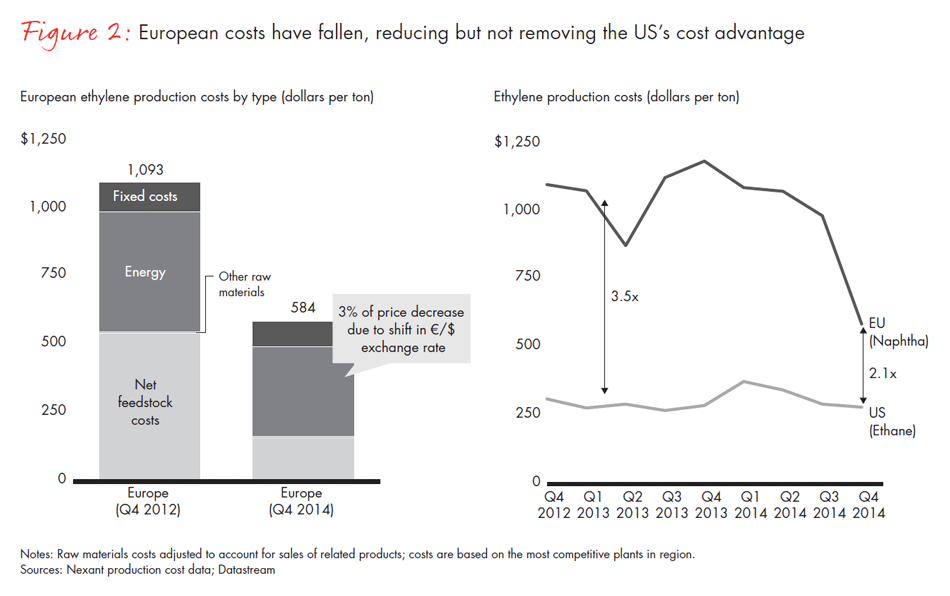
      European producers are still at a cost disadvantage compared with producers in North America, due primarily to the higher costs of natural gas and electricity. However, the gap has narrowed. Ethylene production costs in Europe were 3.5 times higher than costs in America in the fourth quarter of 2012; two years later, they had fallen to only 2.1 times greater (see Figure 2). European gas prices remain approximately 2.5 times higher than those in the US. Gas prices in Europe do not reflect the cost of gas supply—and the region is structurally short, requiring significant import volumes to meet demand. High prices for power raise the costs of all chemicals, but some see a particularly significant increase—for example, chlor-alkali and soda ash, which are energy intensive to produce.

      responding-to-oil-price-volatility-fig02_embed

      The effect of lower oil prices also varies at the national level: Countries that depend heavily on oil, like Russia, are likely to see a drop in GDP.

      Movement in foreign exchange rates is a compounding factor. The strength of the dollar creates new challenges for US crackers that export to Asia and Latin America. The drop in the value of the euro relative to the dollar is bad news if you buy in dollars and sell in euros.

      Strategy in uncertainty

      No one knows when or how oil prices will change in the future, and the industry’s leaders must form their short-and medium-term strategies amid great uncertainty. However, we offer some strategies for consideration as executives chart their course through the oil storm.

      “No regrets” actions deliver benefits in current and future price scenarios. The most important is removing costs. Now is the time to enlist the entire organization in reducing general and administrative costs to form a leaner organization. Tightening supply chains and increasing manufacturing efficiency will also help, as will renegotiating long-term feedstock contracts for both ethane (due to plentiful supply) and naphtha. With feedstock prices low, executives should also look for ways to actively manage the price spread, holding onto profit margins as long as possible. Innovation and differentiation also help increase price resilience.

      Structural reforms to improve growth and profitability include aggressive operational or commercial actions designed to improve a producer’s position or capture new market opportunities. Looking 20 years out, North America remains attractive for investment. Subject to affordability, this could be an ideal time to push projects forward. The slowdown in upstream Capex investment means that costs have come down and engineering and craft labor are now more readily available than they were 12 months ago. However, feedstock prices could be quite different by the time new assets come online.

      Conversely, European producers should focus on making the industry more resilient so they are better prepared when oil prices increase. One way to do this is by investing in facilities that enable them to import US feedstock. SABIC is converting its Wilton cracker in the UK from naphtha to US ethane, with completion planned for 2016. This follows similar investments by INEOS at Grangemouth in Scotland and Borealis at Stenungsund in Sweden. Such moves are complex and involve parallel investment in pipelines and NGL separation facilities in North America (either directly or through partnerships). Other actions include consolidating through mergers or acquisitions to reinforce existing positions, retiring uncompetitive assets, and reducing overcapacity while preserving scale and creating cost synergies. Examples include the 2005 sale of BASF’s polystyrene assets to INEOS and the 2014 merger of the chlorovinyls assets of INEOS and Solvay to form INOVYN.

      In Europe, executives should also work with regulators to advocate for more integrated energy policies and for tax structures that encourage R&D and other investments in the industry.

      Selective big bets radically reshape portfolios to refocus investment or shift the center of gravity to new opportunities. Dow Chemical, DuPont and Bayer are all spinning off non-core assets to focus their investments. Others in the industry are making significant investments in R&D or M&A as they seek out a new competitive advantage.

      Uncertainty in the oil market has fundamental implications for how companies think about investments. Traditional accounting appraisal tools, such as net present value and internal rate of return combined with analysis of the sensitivity to input assumptions, are of limited use when the investments themselves are inherently uncertain. Bain’s approach is to develop a range of credible but extreme scenarios—including “black swan” events—against which to test alternative strategies. (For more information, see the Bain Brief “Beyond forecasting: Find your future in an uncertain energy market.”)

      When a market’s future is unclear, and the upside from a successful investment outweighs the downside from an unsuccessful one, the best investment approach is to build a diversified portfolio. As in capital markets, some investments will fail, while others will pay back handsome returns. Uncertainty benefits larger, well-funded companies, for whom it is easier to diversify risk across a portfolio of investments rather than a single large bet. The effects of lower oil prices on chemicals producers are complex, benefiting some producers while hurting others. Over time, the industry will see more profound effects as companies shift production to lower-cost regions and seek to reinvent themselves and restructure the industry. As always, the winners will be those that take advantage of the opportunities created.

      Piet de Paepe is a partner with Bain & Company in Brussels. Jason McLinn is a partner in Bain’s Chicago office. Mark Porter is a Bain partner in London. All three work with the firm’s Global Chemicals practice, and Mark leads the practice in Europe, the Middle East and Africa.


      responding-to-oil-price-volatility-fig01_full

      responding-to-oil-price-volatility-fig02_full
      Authors
      • Headshot of Piet de Paepe
        Piet de Paepe
        Partner, Brussels
      • Headshot of Jason McLinn
        Jason McLinn
        Partner, Chicago
      • Headshot of Mark Porter
        Mark Porter
        Partner, London
      Contact us
      Related Industries
      • Chemicals
      • Energy & Natural Resources
      Oil & Gas
      Steering Through the Oil Storm

      Oil and gas industry executives cannot control prices, but they can take action to be in a better position when the upturn comes.

      Read more
      Oil & Gas
      Beyond forecasting: Find your future in an uncertain energy market

      By developing a set of future scenarios, executives can identify the indicators that tell which direction markets are headed.

      Read more
      Chemicals
      Sustaining Capital: From Chaos to Discipline

      Fragmented budgets, poor visibility, and missed forecasts are fixable with the right approach.

      Read more
      Chemicals
      How Sustainability Is Creating B2B Growth

      Our survey of B2B buyers and sellers finds growth leaders using sustainability to create commercial value while laggards focus on compliance.

      Read more
      Chemicals
      Business Breakthrough Barometer 2025

      The annual pulse check from leading businesses on the pace of the net-zero transition.

      Read more
      First published in mayo 2015
      Tags
      • Chemicals
      • Energy & Natural Resources

      How We've Helped Clients

      An Energy and Chemical Company Rebuilds Its Technology Foundation

      Read case study

      Revitalizing profits and performance by transforming a manufacturer's shop floor

      Read case study

      Transforming a leading polymers maker into a profit powerhouse

      Read case study

      Ready to talk?

      We work with ambitious leaders who want to define the future, not hide from it. Together, we achieve extraordinary outcomes.

      Stay ahead in a rapidly changing world. Subscribe to Bain Insights, our monthly look at the critical issues facing global businesses.

      *I have read and understand Bain’s Privacy Notice.

      Please read and agree to the Privacy Policy.
      Bain & Company
      Contact us Sustainability Accessibility Terms of use Privacy Modern Slavery Act Statement Cookie Policy Sitemap Log In

      © 1996-2026 Bain & Company, Inc.

      Contact Bain

      How can we help you?

      • Business inquiry
      • Career information
      • Press relations
      • Partnership request
      • Speaker request
      See all offices