
Skip to Content
  • Offices

    Offices

    North & Latin America
    • Atlanta
    • Austin
    • Bogota
    • Boston
    • Buenos Aires
    • Chicago
    • Dallas
    • Denver
    • Houston
    • Los Angeles
    • Mexico City
    • Minneapolis
    • Monterrey
    • Montreal
    • New York
    • Rio de Janeiro
    • San Francisco
    • Santiago
    • São Paulo
    • Seattle
    • Silicon Valley
    • Toronto
    • Washington, DC
    Europe & Africa
    • Amsterdam
    • Athens
    • Berlin
    • Brussels
    • Copenhagen
    • Dusseldorf
    • Frankfurt
    • Helsinki
    • Istanbul
    • Johannesburg
    • Kyiv
    • Lisbon
    • London
    • Madrid
    • Milan
    • Munich
    • Oslo
    • Paris
    • Rome
    • Stockholm
    • Vienna
    • Warsaw
    • Zurich
    Middle East
    • Doha
    • Dubai
    • Riyadh
    Asia & Australia
    • Bangkok
    • Beijing
    • Bengaluru
    • Brisbane
    • Ho Chi Minh City
    • Hong Kong
    • Jakarta
    • Kuala Lumpur
    • Manila
    • Melbourne
    • Mumbai
    • New Delhi
    • Perth
    • Shanghai
    • Singapore
    • Sydney
    • Tokyo
    See all offices
  • Alumni
  • Media Center
  • Subscribe
  • Contact
  • Spain | Español

    Select your region and language

    Global
    • Global (English)
    North & Latin America
    • Brazil (Português)
    • Argentina (Español)
    • Canada (Français)
    • Chile (Español)
    • Colombia (Español)
    Europe, Middle East, & Africa
    • France (Français)
    • DACH Region (Deutsch)
    • Italy (Italiano)
    • Spain (Español)
    • Greece (Elliniká)
    Asia & Australia
    • China (中文版)
    • Korea (한국어)
    • Japan (日本語)
  • Saved items (0)
    Saved items (0)

    You have no saved items.

    Bookmark content that interests you and it will be saved here for you to read or share later.

    Explore Bain Insights
  • Industries
    Main menu

    Industries

    • Aeroespacial y Defensa
    • Agroindustria
    • Químicos
    • Construcción e Infraestructura
    • Productos de Consumo
    • Servicios Financieros
    • Salud y Ciencias de la Vida
    • Maquinaria y Equipo Industrial
    • Medios y Entretenimiento
      Industries
      Medios y Entretenimiento
      • Media Lab
    • Metales
    • Minería
    • Petróleo y Gas
    • Papel y Empaque
    • Private Equity
      Industries
      Private Equity
      • Due Diligence
      • Exit Planning
      • Firm Strategy & Operations
      • Portfolio Value Creation
    • Sector Público y Social
    • Retail
    • Tecnología
    • Telecomunicaciones
      Industries
      Telecomunicaciones
      • Capital Expenditure
      • Telco Digital Transformation
    • Transporte
    • Viajes y Turismo
    • Servicios Públicos y Energías Renovables
  • Consulting Services
    Main menu

    Consulting Services

    • Customer Experience
    • Sustainability
    • Innovation
    • M&A
    • Operations
    • People & Organization
    • Private Equity
    • Sales & Marketing
    • Strategy
    • AI, Insights, and Solutions
    • Technology
    • Transformation
  • Digital
  • Insights
    Main menu

    Insights

    • Industry Insights
    • Services Insights
    • Bain Books
    • Webinars
    • Bain Futures
    View all Insights
    Featured topics
    • Tariff Response
    • Artificial Intelligence
    • Thriving in Uncertainty
    • Executive Conversations
    • Macro Trends
    • M&A Report
    • Healthcare Private Equity Report
    • Paper & Packaging Report
    • Technology Report
    • CEO's Guide to Sustainability
    • CEO Insights
    • CFO Insights
    • COO Insights
    • CIO Insights
    • CMO Insights
    View all featured topics
  • About
    Main menu

    About

    • What We Do
    • What We Believe
    • Our People & Leadership
    • Client Results
    • Awards & Recognition
    • Global Affiliations
    Further: Our global responsibility
    • Sustainability
    • Social Impact
    • World Economic Forum
    Learn more about Further
  • Carreras
    Main menu

    Carreras

    • Trabaja con Nosotros
      Carreras
      Trabaja con Nosotros
      • Find Your Place
      • Nuestras Áreas de Trabajo
      • Equipos Integrados
      • Estudiantes
      • Internships & Programs
      • Eventos de Reclutamiento
    • La Vida en Bain
      Carreras
      La Vida en Bain
      • Historias Profesionales
      • Nuestra Gente
      • Dónde Trabajamos
      • Apoyando tu Crecimiento
      • Grupos de Afinidad
      • Beneficios
    • Impact Stories
    • Nuestro Proceso
      Carreras
      Nuestro Proceso
      • Qué Esperar
      • Entrevistas
    FIND JOBS
  • Offices
    Main menu

    Offices

    • North & Latin America
      Offices
      North & Latin America
      • Atlanta
      • Austin
      • Bogota
      • Boston
      • Buenos Aires
      • Chicago
      • Dallas
      • Denver
      • Houston
      • Los Angeles
      • Mexico City
      • Minneapolis
      • Monterrey
      • Montreal
      • New York
      • Rio de Janeiro
      • San Francisco
      • Santiago
      • São Paulo
      • Seattle
      • Silicon Valley
      • Toronto
      • Washington, DC
    • Europe & Africa
      Offices
      Europe & Africa
      • Amsterdam
      • Athens
      • Berlin
      • Brussels
      • Copenhagen
      • Dusseldorf
      • Frankfurt
      • Helsinki
      • Istanbul
      • Johannesburg
      • Kyiv
      • Lisbon
      • London
      • Madrid
      • Milan
      • Munich
      • Oslo
      • Paris
      • Rome
      • Stockholm
      • Vienna
      • Warsaw
      • Zurich
    • Middle East
      Offices
      Middle East
      • Doha
      • Dubai
      • Riyadh
    • Asia & Australia
      Offices
      Asia & Australia
      • Bangkok
      • Beijing
      • Bengaluru
      • Brisbane
      • Ho Chi Minh City
      • Hong Kong
      • Jakarta
      • Kuala Lumpur
      • Manila
      • Melbourne
      • Mumbai
      • New Delhi
      • Perth
      • Shanghai
      • Singapore
      • Sydney
      • Tokyo
    See all offices
  • Alumni
  • Media Center
  • Subscribe
  • Contact
  • Spain | Español
    Main menu

    Select your region and language

    • Global
      Select your region and language
      Global
      • Global (English)
    • North & Latin America
      Select your region and language
      North & Latin America
      • Brazil (Português)
      • Argentina (Español)
      • Canada (Français)
      • Chile (Español)
      • Colombia (Español)
    • Europe, Middle East, & Africa
      Select your region and language
      Europe, Middle East, & Africa
      • France (Français)
      • DACH Region (Deutsch)
      • Italy (Italiano)
      • Spain (Español)
      • Greece (Elliniká)
    • Asia & Australia
      Select your region and language
      Asia & Australia
      • China (中文版)
      • Korea (한국어)
      • Japan (日本語)
  • Saved items  (0)
    Main menu
    Saved items (0)

    You have no saved items.

    Bookmark content that interests you and it will be saved here for you to read or share later.

    Explore Bain Insights
  • Industries
    • Industries

      • Aeroespacial y Defensa
      • Agroindustria
      • Químicos
      • Construcción e Infraestructura
      • Productos de Consumo
      • Servicios Financieros
      • Salud y Ciencias de la Vida
      • Maquinaria y Equipo Industrial
      • Medios y Entretenimiento
      • Metales
      • Minería
      • Petróleo y Gas
      • Papel y Empaque
      • Private Equity
      • Sector Público y Social
      • Retail
      • Tecnología
      • Telecomunicaciones
      • Transporte
      • Viajes y Turismo
      • Servicios Públicos y Energías Renovables
  • Consulting Services
    • Consulting Services

      • Customer Experience
      • Sustainability
      • Innovation
      • M&A
      • Operations
      • People & Organization
      • Private Equity
      • Sales & Marketing
      • Strategy
      • AI, Insights, and Solutions
      • Technology
      • Transformation
  • Digital
  • Insights
    • Insights

      • Industry Insights
      • Services Insights
      • Bain Books
      • Webinars
      • Bain Futures
      View all Insights
      Featured topics
      • Tariff Response
      • Artificial Intelligence
      • Thriving in Uncertainty
      • Executive Conversations
      • Macro Trends
      • M&A Report
      • Healthcare Private Equity Report
      • Paper & Packaging Report
      • Technology Report
      • CEO's Guide to Sustainability
      • CEO Insights
      • CFO Insights
      • COO Insights
      • CIO Insights
      • CMO Insights
      View all featured topics
  • About
    • About

      • What We Do
      • What We Believe
      • Our People & Leadership
      • Client Results
      • Awards & Recognition
      • Global Affiliations
      Further: Our global responsibility
      • Sustainability
      • Social Impact
      • World Economic Forum
      Learn more about Further
  • Carreras
    Popular Searches
    • Agile
    • Digital
    • Strategy
    Your Previous Searches
      Recently Visited Pages

      Content added to saved items

      Saved items (0)

      Removed from saved items

      Saved items (0)

      Brief

      The Last Straw for US Higher Education—and a Moment for Reinvention

      The Last Straw for US Higher Education—and a Moment for Reinvention

      Financial viability will depend on new models once considered out of bounds.

      By Pam Yee, Maureen Sullivan, Mark Krafft, Jeff Denneen, and Hernan Saenz

      • min read
      }

      Brief

      The Last Straw for US Higher Education—and a Moment for Reinvention
      en
      Executive Summary
      • Covid-19 is pushing many US colleges and universities to a financial precipice, with revenues falling as spending on virtual instruction and safety protocols rises.
      • But many schools have been on an unsustainable path for more than a decade. Bain’s modeling finds that heavily tuition-dependent private institutions face the greatest risk. Up to 60% of these schools have a weak financial outlook.
      • To survive and thrive over the longer term, all institutions must innovate in their economic and academic models.
      • Increasingly, students of all ages will seek stackable degrees and certificates to help them prosper. Alternative payment streams will flourish, with more employers funding coursework. Teaching will blend online, in-person and experiential learning, and adopt real-world, multidisciplinary approaches.

      Covid-19’s disruption is more abrupt, severe and universal than anything US colleges and universities have experienced. In a matter of weeks, the pandemic forced a shift to remote instruction and administration, shattering perceptions of what’s possible for learning and academic operations. Taking a longer view, the sweeping changes in student needs, funding and the role of the physical campus underscore trends that have been brewing for more than a decade.

      Consequently, the pandemic is pushing many institutions toward a financial precipice. They will need to take extreme steps to maintain economic viability in the near term, and they must innovate to survive over the longer term.

      Interactive

      How Financially Stable Is Your College?

      See how your school stacks up in our interactive database.

      In the wake of the 2008 financial crisis, many boards of trustees and senior campus leaders discussed taking actions to operate more efficiently and to grow revenue beyond tuition increases. Yet, once the economy recovered, those initial efforts largely petered out. An uptick in enrollment and endowment returns masked the fact that only a handful of schools made major changes to improve their business and financial sustainability. Instead, many US institutions bought into an escalating race for students, building high-cost, state-of-the-art facilities and expanding nonacademic services, which increased operating deficits (see Figure 1).

      Figure 1
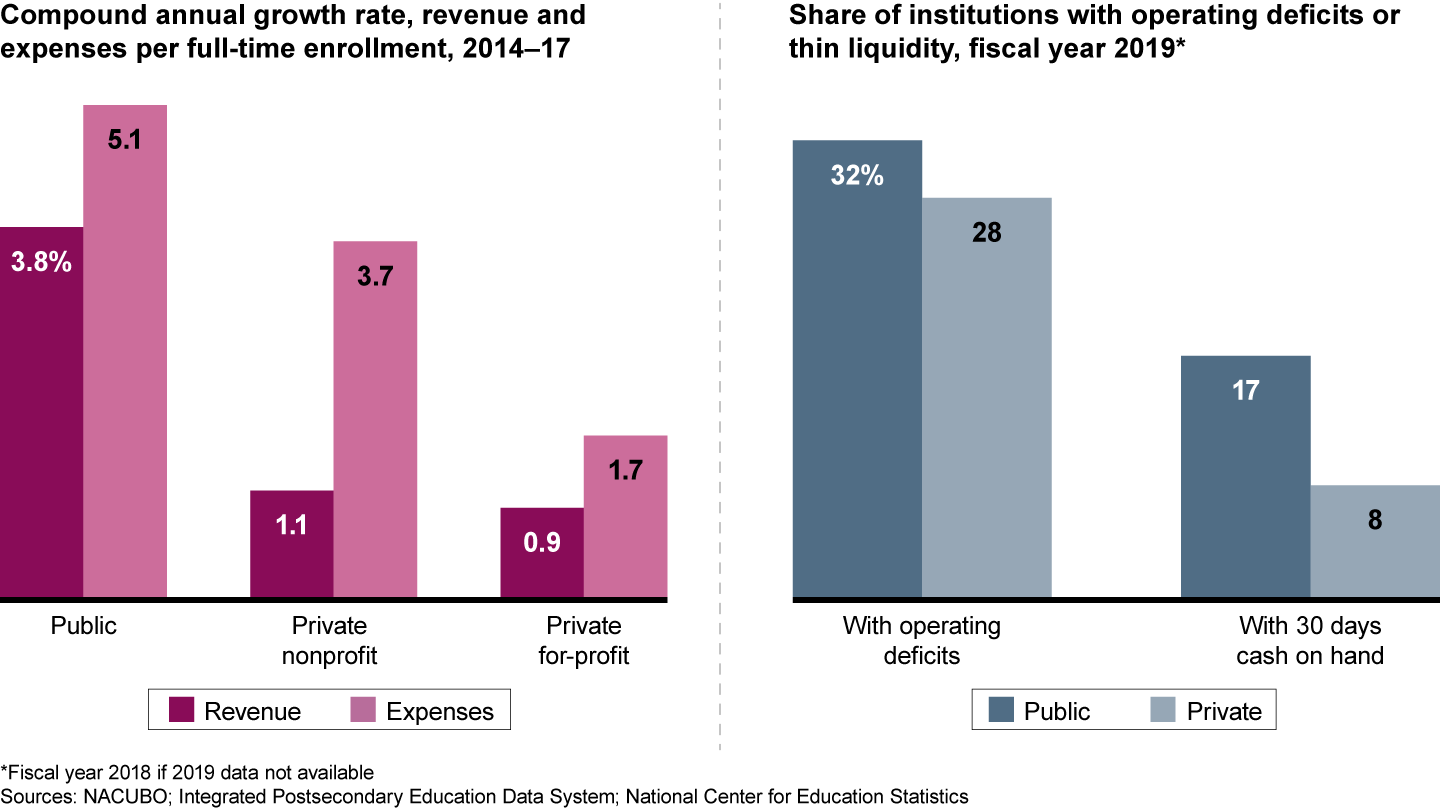
      The race to attract and retain students has increased operating deficits for US institutions
      The race to attract and retain students has increased operating deficits for US institutions
      The race to attract and retain students has increased operating deficits for US institutions

      We raised an alarm in 2012 about the large number of institutions spending beyond their means. Since then, costs have continued to rise faster than revenue. Now the pandemic may force a choice between reinvention and ruin.

      The Covid-19 squeeze

      Covid-19 is intensifying the growing imbalance between supply and demand. Remote learning technology vastly increases supply to a market in which demand will barely rise over the next decade. Growth in international demand for US education also is waning. In parallel, a decisive majority of the US population questions the value of a degree. Lately, revenues have fallen just as institutions face higher operational and capital spending on safety protocols and virtual classroom technology.

      The financial squeeze could force many institutions to shutter, on top of the 62 that have merged, closed or announced closure since 2016. Many others will endure prolonged financial hardship. By contrast, those that use this crisis to catalyze innovation may be able to develop more flexible operating, delivery and economic models.

      Specific predictions about how Covid-19 will affect a particular institution are neither credible nor useful. Still, the outlook for many institutions is bleak under any recovery scenario, with harsher consequences than in past recessions. Our modeling of 981 institutions’ finances assessed the fallout under three possible scenarios: a sharper, more rapid bounce-back from the pandemic; a deeper, slower recovery; and a prolonged recession with multiple waves of reinfection and containment efforts.

      Let’s examine how different types of institutions will fare, recognizing that, beneath the averages, each will contend with its own set of circumstances (see Figure 2).

      Figure 2
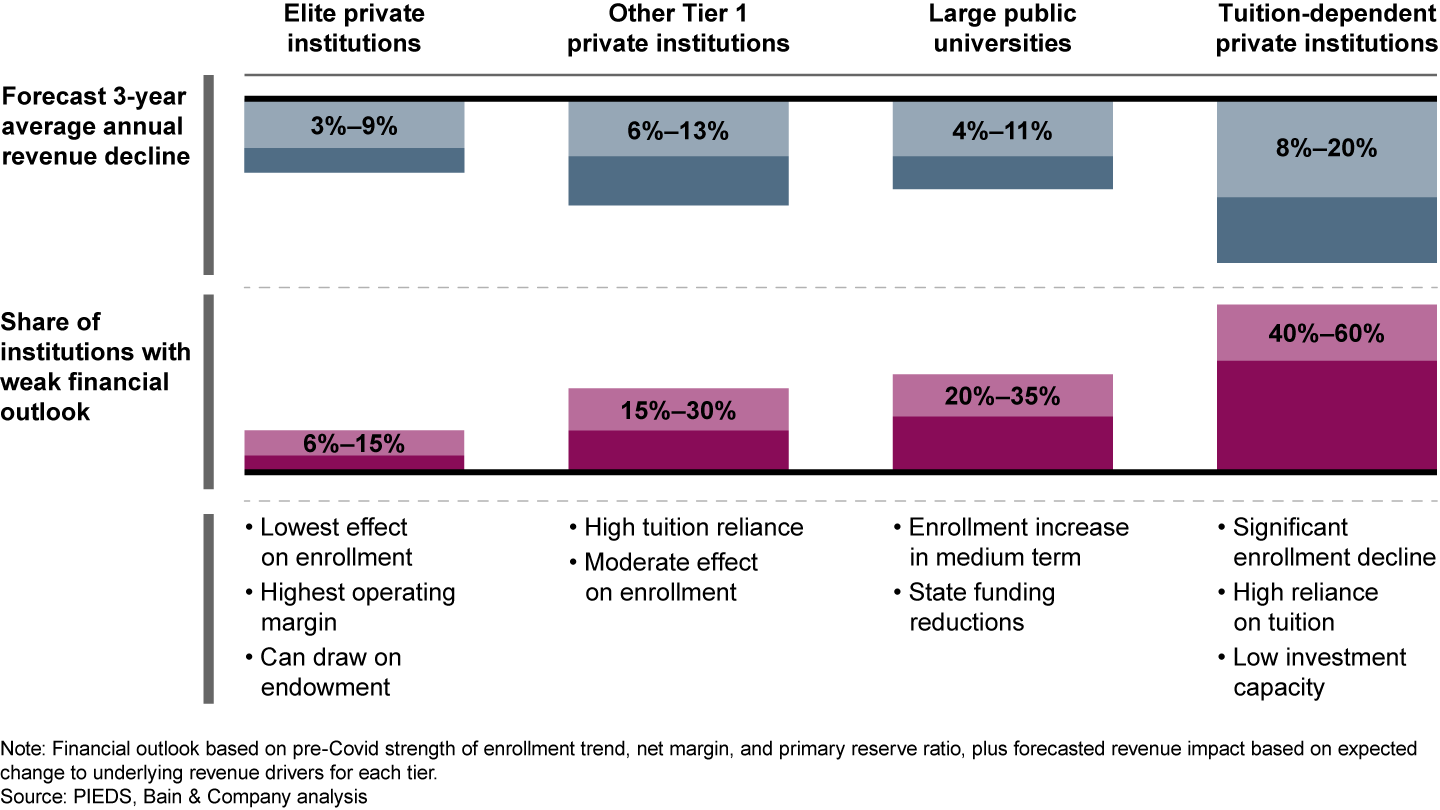
      Four tiers of institutions face different financial outlooks
      Four tiers of institutions face different financial outlooks
      Four tiers of institutions face different financial outlooks

      Tiers of financial risk

      Elite private institutions (included in the top 50 national universities or top 30 liberal arts colleges as ranked by U.S. News & World Report) will weather the storm in the best shape. They can count on their strong reputations, low acceptance rates and long wait lists, and larger endowments. We estimate their annual revenues will decline 3% to 9% on average through 2023, depending on the school and the shape of the economic recovery.

      Other Tier 1 private institutions (among those ranked 51–150 by U.S. News), which rely more on tuition and have higher acceptance rates, will likely see average annual revenues drop 6% to 13% through 2023. Those with very high acceptance rates and weaker finances will need to take more dramatic actions to offset enrollment declines and spending on remote classes.

      Large public universities (the 51 largest public systems in terms of enrollment and research) stand to face a 4% to 11% average annual decline in revenues. Although they benefit from the backstop of state funding, state budgets are tightening and many public campuses operate with slim margins, so there is less room to cut. Some will likely enjoy increased enrollment as more students look to reduce tuition expenses and stay closer to home.

      Heavily tuition-dependent private institutions (827 private universities with tuition generating at least half of their revenues) bear the greatest risk. They must contend with waning demand, weaker finances and less effective remedies than other institutions. As a result, we estimate they will see average annual revenue declines of between 8% and 20% over the medium term. Up to 60% of these schools have a weak financial outlook (20 points higher than our pre-Covid estimate), and they will need to make more dramatic changes in order to survive.

      With the halting and varied resumption of on-campus life, many institutions must now consider making financial and operational decisions that they have deferred for years, involving faculty productivity, academics, cost structure, cash reserves, enrollment strategy and revenue. Many are cutting costs through near-term or temporary tactics such as furloughs, salary reductions and suspension of retirement fund matching.

      Some are taking longer-term actions. For example, Stanford permanently reduced the number of sports it offers. The University of Akron is eliminating 6 of its 11 colleges and laying off about one-fifth of its unionized workforce. George Washington and many other schools have delayed capital projects, some of which may not return. The California State University system’s cancellation of the vast majority of in-person classes for the fall may presage the greater role of online instruction in the future.

      To stimulate demand and maintain revenue in the near term, schools have a number of options. They can invest in remote learning technology and partnerships, adopt flexible admissions criteria and determine which segments of prospective students to target. They can also look critically at their academic program structure and schedule, adjusting them to better match student demand.

      Many institutions will stop there, using a series of tactical cost and revenue levers to squeak through the crisis. This likely won’t be sufficient to thrive, or possibly to survive, over the next decade, given the trends described above. All institutions, even the elite, should make a clear-eyed assessment of their current position and outlook, then decide how deeply and broadly they must transform their academic offering, delivery model, operations and economic engine (see Figure 3).

      Figure 3
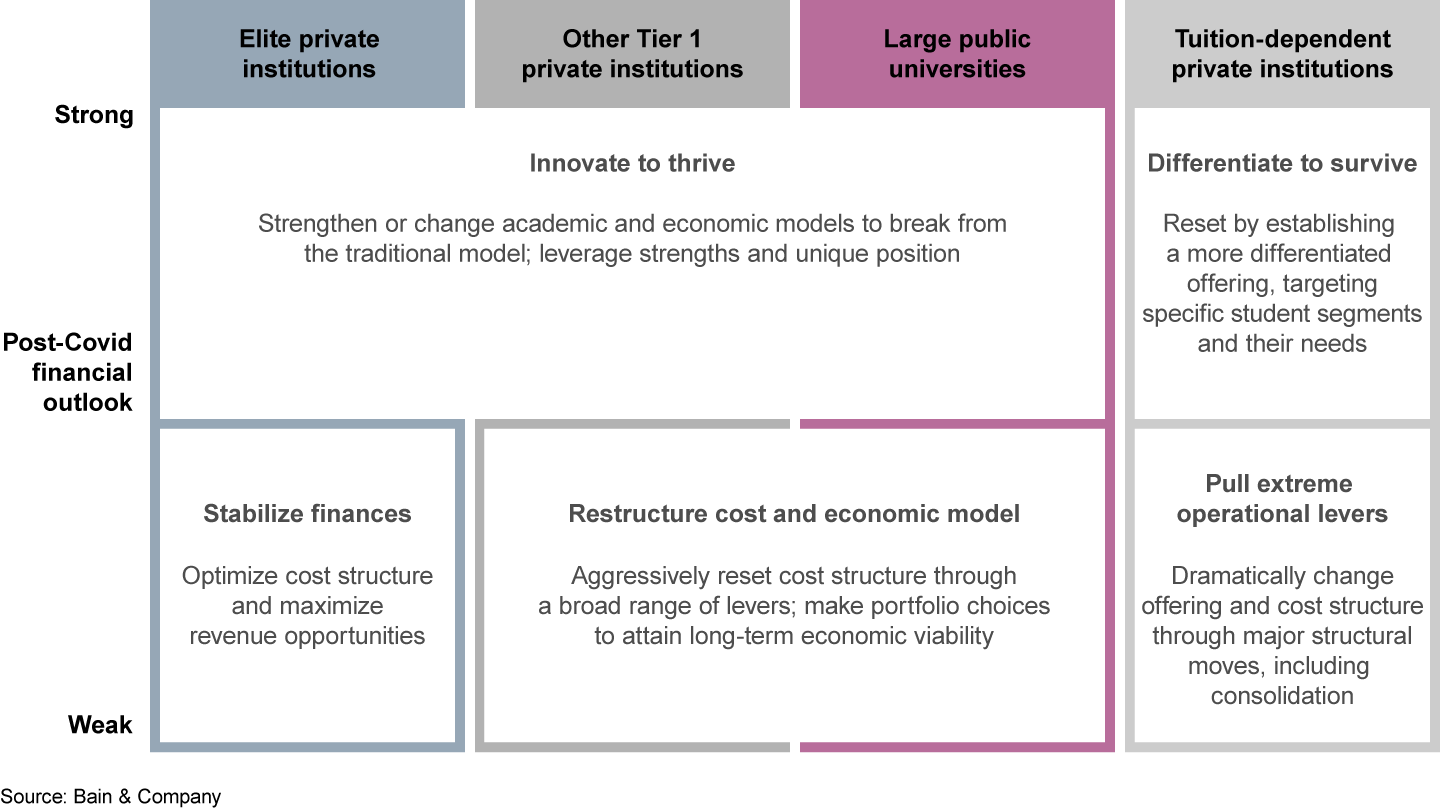
      An institution’s best path forward will depend on its starting position
      An institution’s best path forward will depend on its starting position
      An institution’s best path forward will depend on its starting position

      Alternative models take hold

      The standard higher education model has not changed much over the past half-century or so. Typically, an 18- to 22-year-old procures a two- or four-year degree paid for by parents or debt, with courses delivered on campus during two or three terms per year. Recently, though, demand has splintered into different segments of students. Many want programs of study and job placement that align closely with their career goals, with continuous learning throughout their lives. The digital revolution has both enabled lifelong education and stoked the need for it. New learning models, instructional opportunities and degree offerings have sprung up.

      As a result, we predict that the future market for higher education will look different than today’s. Students of all ages will seek flexible degrees and certificates that they can periodically add to the stack to help them prosper as their lives and careers evolve. Alternative payment streams will flourish, with more employers funding coursework for employees. Institutions’ ability to self-fund research will diminish, and they will need to find new funding models.

      Academic delivery models will change dramatically to serve this evolving demand, blending online, in-person and experiential learning, and adopting real-world, multidisciplinary approaches. Education will become more personalized. On the administrative front, we expect more institutions to apply private-sector principles to better control the cost of growth, innovation and operations (see Figure 4).

      Figure 4
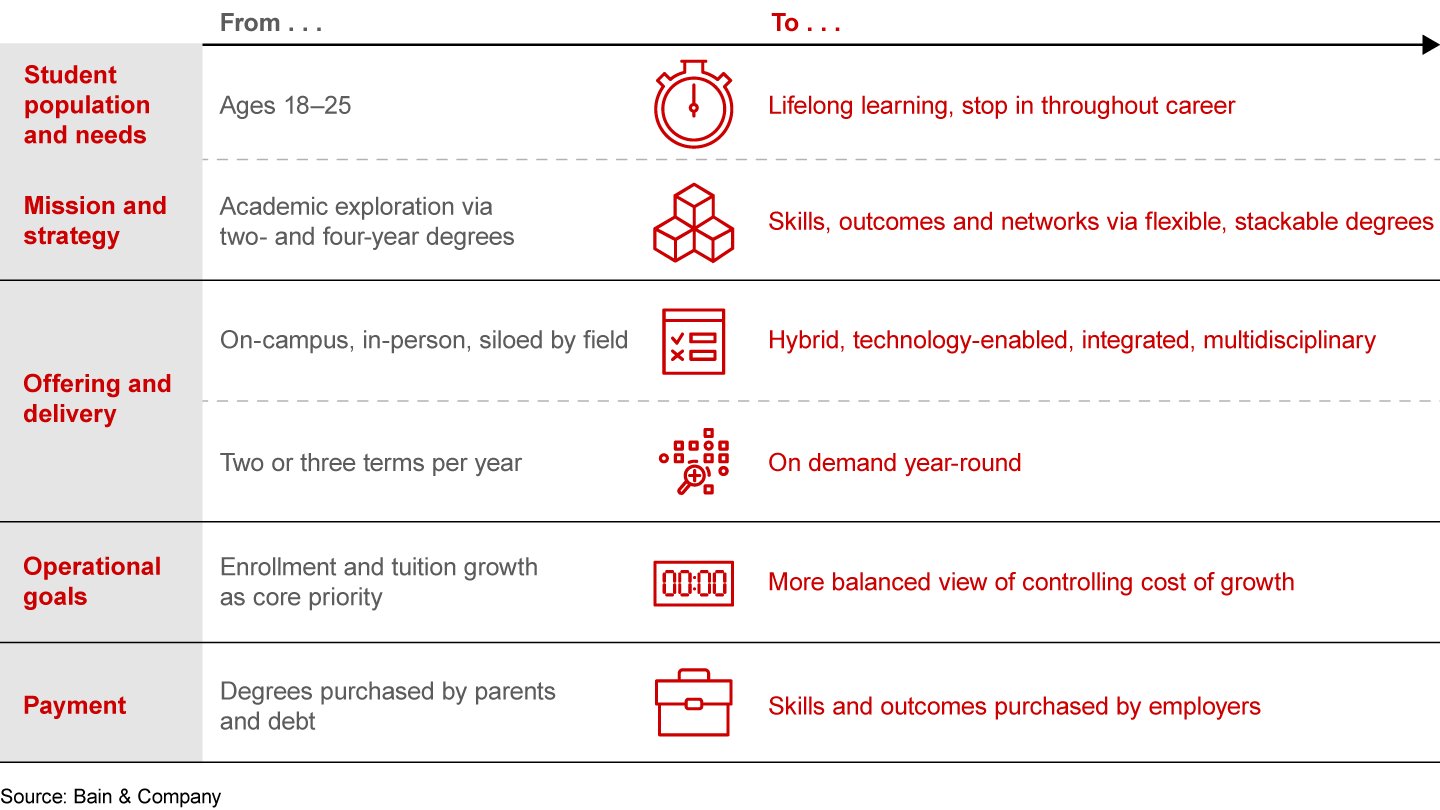
      The future market for higher education will look very different
      The future market for higher education will look very different
      The future market for higher education will look very different

      Indeed, promising alternatives already exist. Northeastern has introduced a broad range of certificate and degree programs that combine classroom study with experiential learning through companies and other employers. Western Governors gives students credit for prior work or school experiences. Virginia Tech and George Mason are investing in campuses in northern Virginia, anticipating that they will funnel more graduates into Amazon and other local technology companies.

      By viewing higher education from this “future-back” perspective, institutions can break from traditional constraints and carve out new models that will deliver a more attractive proposition to students, at a more sustainable cost. While these models will not completely supplant the traditional approach, they will become more prevalent. The transformation will happen in waves, starting with insurgents and at the edges of incumbent institutions, and eventually expanding as followers replicate successful innovations.

      Questions to frame the choices

      Boards of trustees and campus leadership teams that feel ready to transform their institutions can start by answering a set of basic questions that a university founder or business entrepreneur might ask.

      Who are our target customers, and what are their priorities? The classic student population of those under age 25 is shifting to lifetime learners who may stop in throughout their careers in order to elevate and expand their skills. In line with this trend, Purdue is targeting lifetime learners through the purchase of for-profit, online-only Kaplan University.

      What is our core proposition and product? Long-duration, fixed programs are being augmented by or replaced with flexible, stackable degrees tailored to specific student or business needs. Universities such as Rice have partnered with edX to offer MicroBachelors programs that allow students to earn college credits affordably online.

      How do customers pay? Students, their parents or other relatives overwhelmingly foot the bill today, often through debt. In the future, in return for hiring commitments, employers will increasingly pay for programs that develop specific skills, or reimburse employees for education based on their performance. Starbucks, for example, pays for its employees to enroll in an online bachelor’s program at Arizona State. The government will also continue to play a role, albeit a more limited one.

      How do we deliver the offering? Today’s familiar delivery model—on campus, siloed by academic field, over two or three terms per year—will give way to more flexible options that respond to students’ varied needs. One new model consists of hybrid online/in-person instruction, with face-to-face meetings reserved for discussion and debate rather than lectures. Flexibility also means year-round, on-demand learning, so that students can tailor the pace and intensity of study to fit their lives. Arizona State, for instance, offers multiple start dates.

      What do we outsource? Universities have long provided far more than academic instruction, including housing, dining, near-professional athletics, facilities management and even electric power. We expect that, much like the for-profit sector, educational institutions will increasingly create partnerships and operate as part of ecosystems, so that they can focus on their core capabilities. 

      The appropriate timing for transformation will, of course, depend on the institution’s point of departure and the path of the Covid-19 pandemic. For all colleges and universities, though, planning now is essential given the potential difficulties gaining acceptance and support from faculty, administrators and other stakeholders.

      Following a disciplined approach, an institution can then move to its desired future state step by step. Surviving and thriving in the post-Covid environment will hinge on the ability of campus leaders to build on the organic experiments that have already occurred, testing and learning, adapting swiftly, and eventually creating new and viable models for higher education.

      Authors
      • Headshot of Pam Yee
        Pam Yee
        Partner, Washington, DC
      • Headshot of Maureen Sullivan
        Maureen Sullivan
        Partner, Los Angeles
      • Headshot of Mark Krafft
        Mark Krafft
        Partner, Washington, DC
      • Headshot of Jeff Denneen
        Jeff Denneen
        Partner, Atlanta
      • Headshot of Hernan Saenz
        Hernan Saenz
        Partner, Dallas
      Contact us
      Related Industries
      • Higher Education
      • Social Impact
      Related Consulting Services
      • Performance Improvement
      Social Impact
      The Rise of the Canadian Venture Scientist

      This is Canada’s moment to turn AI pioneers into venture builders.

      Read more
      Coronavirus
      Cash Management Practices to Weather a Downturn

      Take an honest look at the business, and decide where to improve.

      Read more
      Performance Improvement
      Transforming Maintenance with Artificial Intelligence

      With little to no capex, companies can turn maintenance into an engine of cash flow.

      Read more
      Coronavirus
      Ramping Up Online Grocery without Breaking the Bank

      Bain’s Marc-André Kamel discusses the challenges that online grocery presents for retailers and CPGs and how they can pair up to find a winning solution.

      Read more
      Social Impact
      Beating the Odds: Improving Student Outcomes in Higher Education

      Advanced analytics can help colleges and universities learn from institutions that outperform.

      Read more
      First published in febrero 2021
      Tags
      • Coronavirus
      • Higher Education
      • Performance Improvement
      • Social Impact

      How We've Helped Clients

      Empowering a nonprofit to expand its mission: Reducing the high school dropout rate

      Read case study

      Turning around a pioneering service for working parents with sick children

      Read case study

      Execute global strategy for a nonprofit’s Mexico operations

      Read case study

      Ready to talk?

      We work with ambitious leaders who want to define the future, not hide from it. Together, we achieve extraordinary outcomes.

      Stay ahead in a rapidly changing world. Subscribe to Bain Insights, our monthly look at the critical issues facing global businesses.

      *I have read and understand Bain’s Privacy Notice.

      Please read and agree to the Privacy Policy.
      Bain & Company
      Contact us Sustainability Accessibility Terms of use Privacy Modern Slavery Act Statement Cookie Policy Sitemap Log In

      © 1996-2026 Bain & Company, Inc.

      Contact Bain

      How can we help you?

      • Business inquiry
      • Career information
      • Press relations
      • Partnership request
      • Speaker request
      See all offices