

Report

This article is Chapter 7 of Bain’s global Technology Report 2020. Explore the contents of the report here or download the PDF to read the full report.
Many skeptics of the Internet of Things (IoT) are overlooking the crucial point: Although the number of new connected devices over the past decade fell short of projections, the devices that did get connected are starting to deliver real value.
The reality is not everything needs to be connected to the Internet. The key to success in the IoT is to apply data analytics on top of high-value devices. For businesses, this can unlock insights that lead to better decision making and powerful gains in efficiency, productivity and return on investments (ROI).
Building on their strong data analytics capabilities, cloud service providers (CSPs) have made the most substantial investments in the IoT over the past couple of years. They are creating new IoT platforms and services, and addressing the challenges that have held the sector back.
The CSPs’ moves are changing the sector’s dynamics, as we’ve seen in the broader hybrid cloud sector. That creates new strategic decisions for enterprise IT companies and industrial original equipment manufacturers (OEMs) if they want to stay competitive and expand their share of the market.
Seeing the value
Looking across the IoT’s key battlegrounds, the sector is finally beginning to deliver on its promise in two critical areas: enterprise and industrial companies. And it’s the analytics and targeted use on critical machines that make it valuable.
While the hype swelled and subsided over the past decade, many of these companies kept working diligently in the background on their IoT efforts. Now, the IoT is integral to many businesses’ operations. They’re using it for factory floor automation, equipment inspection and maintenance (including of remote assets), real-time shipment tracking, retail theft prevention and crowd safety, among other applications.
Manufacturers are making it easier to deploy such IoT applications by building sensors and connectivity right into their devices and equipment. For example, German manufacturer Trumpf has started equipping its laser cutters and other machines with Device Gate, a system that collects sensor data and sends it to the cloud for analysis. These kinds of moves by Trumpf and other IoT vendors show the sector is maturing.
Let’s unpack three examples that illustrate how enterprise and industrial companies are taking advantage of the IoT.
Plant asset optimization
Woodside, the global oil and gas company headquartered in Australia, has made significant IoT investments over the past five years. The company equipped its liquefied natural gas facility in western Australia with 200,000 sensors and used Amazon’s cloud and edge IoT platforms to collect the data. Armed with historical data and the information now coming off the devices, data scientists teamed up with plant engineers to develop applications to strengthen production monitoring, equipment maintenance and worker safety in ways that simply weren’t possible before. Considering it’s a $10 billion facility in a remote location, even incremental improvements in costs, operations and worker protection can make a significant difference for the business.
For example, the facility’s acid gas-removal unit can’t be monitored by sight. Using connected sensors, Woodside can better predict and prevent this machine from foaming, which would require shutting down the plant.
Woodside has also improved maintenance scheduling and productivity by digitally monitoring lubricant levels on turbines, using that information to perform preemptive maintenance before there’s a breakdown. The company increasingly deploys robots to handle routine surveillance and provide insights that help staff improve maintenance and facility uptime.
These changes have reduced equipment downtime. Just as important, they’ve reduced the number of hours that workers need to be on site, decreasing their exposure to high temperatures and stressful situations.
Factory quality control
A large technology company developed a system that uses computer-vision technology to perform quality control on complex metal parts produced through a die-casting process. The product combines an HD camera, a trained artificial intelligence (AI) model, a robotic arm and back-end cloud computing powered by Alibaba Cloud.
The manual inspection process caught fewer than 20% of parts defects, which led to downstream delays in production and customers returning faulty parts. The automated system detects defects more than 99% of the time. It’s being implemented in hundreds of factories across Asia.
Population monitoring
The Covid-19 crisis is accelerating adoption of the IoT. For example, theme park operators have deployed Insight Enterprises’ monitoring system that uses cameras with infrared sensors at park entrances to identify, in real time, patrons with a fever, one of the most common symptoms of the coronavirus. Each camera can take up to 30 temperature measurements simultaneously and alert security personnel through a mobile app.
The system significantly improves efficiency and safety. Previously, nursing staff had to screen each guest with contactless thermometers, which is time consuming, disrupts guests’ experience and puts staff at greater risk.
Insight has used Microsoft’s cloud platform, Azure, to develop and deploy the application quickly. It uses technologies from Intel and other partners to process the video footage at the network’s edge, so frontline personnel and other park stakeholders can receive crucial information quickly. Security protocols ensure that this sensitive data is shared only with people who have appropriate permissions.
The system can also be configured for uses in other settings, such as environmental monitoring and observing industrial equipment.
Cloud companies advance the field
The common thread through these examples: CSPs play a central role by providing back-end and developer services that speed up the time to market. And the data indicates CSPs will continue to drive a lot of the growth and innovation during the next phase of the IoT (see Figure 1).
Figure 1
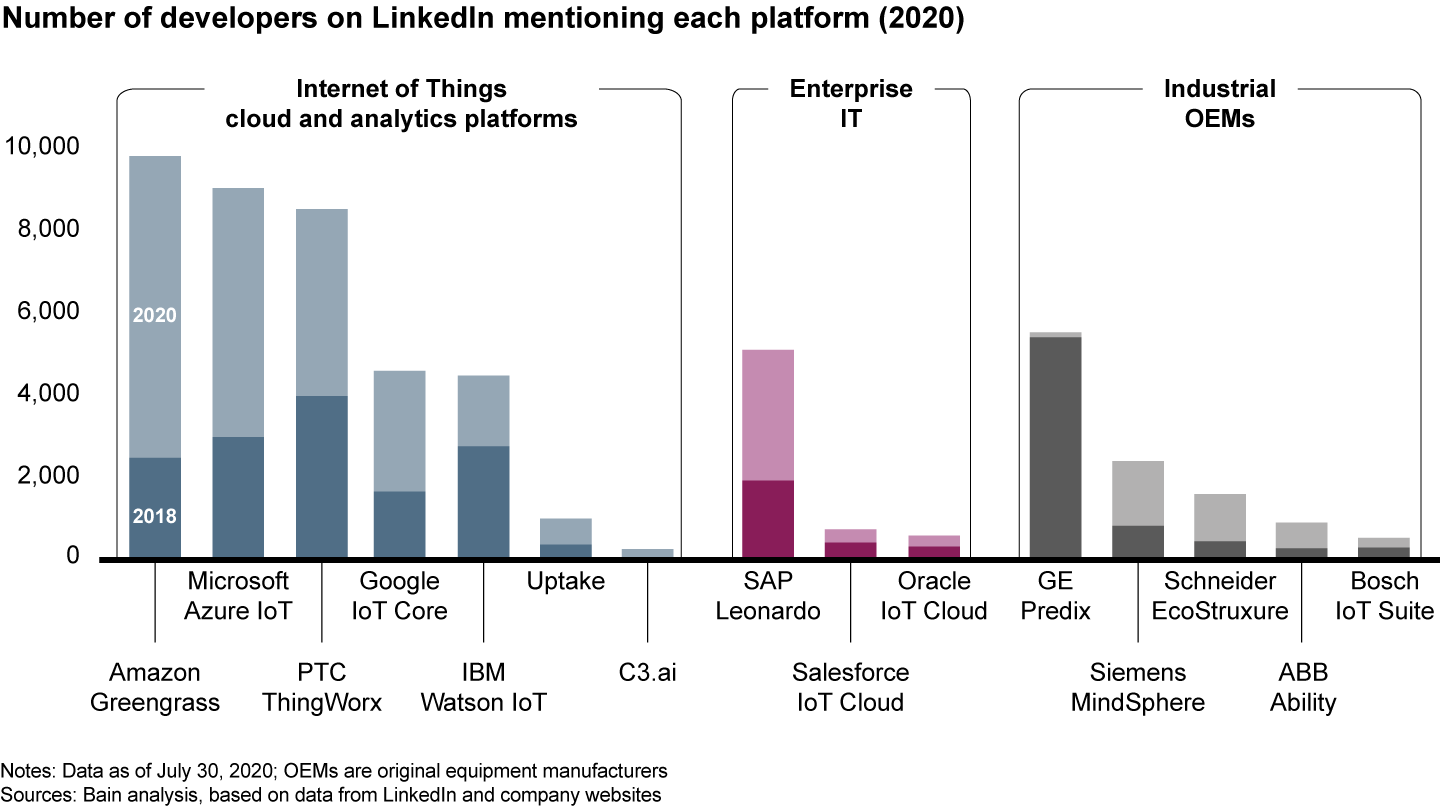

Since 2018, Amazon Web Services (AWS) and Microsoft Azure have each more than tripled their number of developers, based on Bain analysis of developers’ self-declared proficiency in IoT on their LinkedIn profiles. That makes AWS and Microsoft Azure the most active IoT platforms, with 9,800 and 9,000 developers, respectively.
PTC isn’t far behind, with 8,500 developers on its ThingWorx platform. No other competitor in cloud, enterprise IT or industrial manufacturing has surpassed 6,000 developers, according to Bain’s analysis.
Cloud companies’ growing influence in industrial and enterprise IoT might seem surprising at first blush. They don’t have the most expertise with connected devices in these settings. But they do have the strongest data analytics capabilities, which is the key to generating value in the IoT.
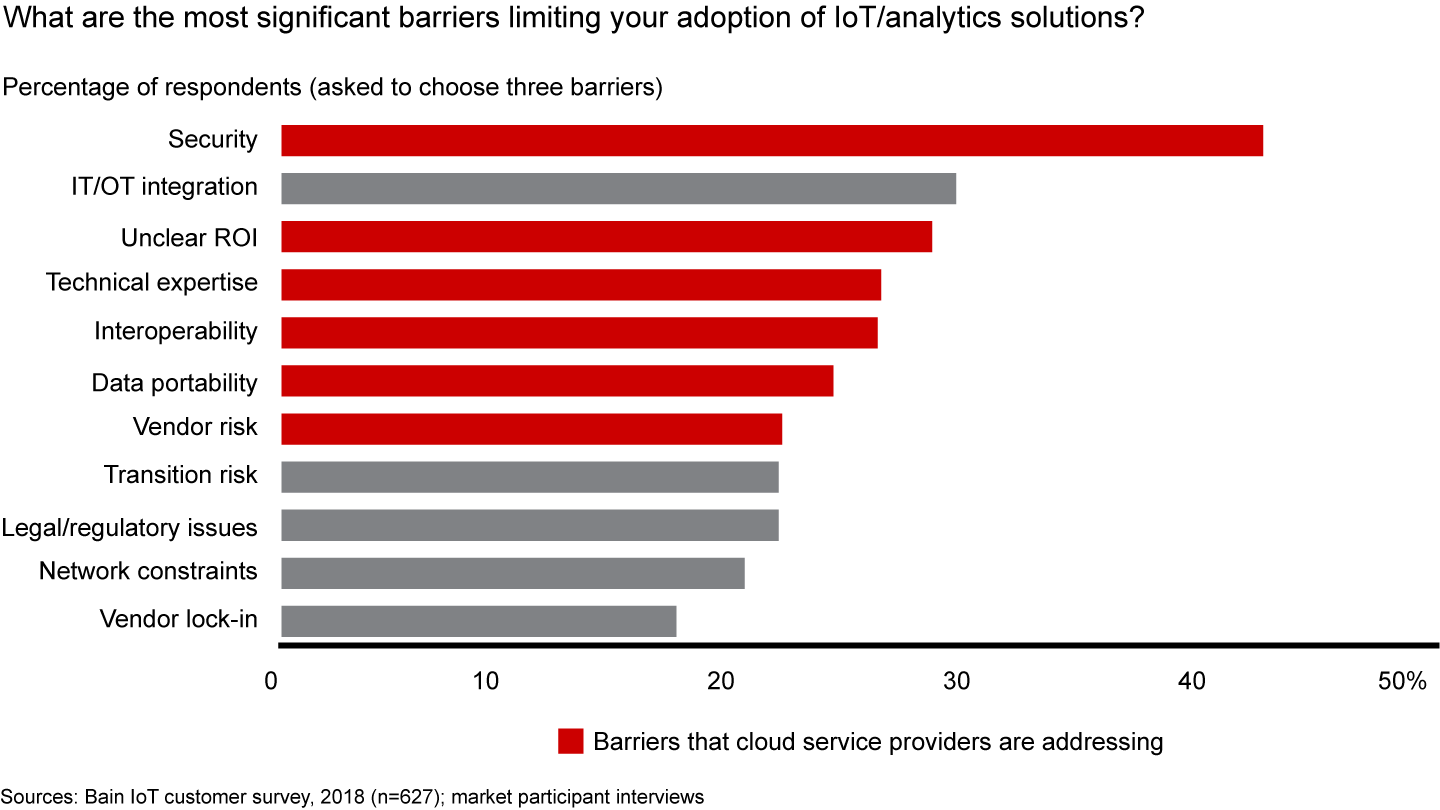
CSPs are doing a lot more than providing the cloud backbone for the IoT. The leaders—particularly Microsoft and Amazon—are investing heavily to address many of the biggest barriers to IoT adoption (see Figure 2). In particular, CSPs are increasingly making it easier for customers to bring third-party devices online, integrate them with their existing systems, glean useful insights from the data they produce, and do it all securely.
Figure 2

Microsoft, for example, in 2018 announced a $5 billion investment in IoT and edge technology over the next four years. A key part of its strategy is building IoT solutions that are essentially plug and play. The Azure IoT Central platform has software architecture templates and implementation examples for 10 use cases across four industries, such as improved logistics and inventory management for retail. The offerings include a library of third-party edge devices, such as network gateways, that are certified by Microsoft and can be connected with the click of a button. Microsoft is also investing in IoT security, both through development of new products (Azure Sphere) and acquisitions (CyberX).
And CSPs have bolder ambitions to ingrain themselves more deeply in customers’ IoT strategies. CSPs are introducing new products that expand their cloud platforms to the edge, either through software (Microsoft’s Azure Arc) or hardware that runs their cloud software out of the box (Amazon’s AWS Outposts, Microsoft’s Azure Edge Zones).
These products allow CSPs to capture and analyze data right at the point where it’s created. In addition, these products bring cloud services such as databases and AI technologies to the edge, allowing CSPs to take advantage of their well-established developer communities.
All of these moves by CSPs are about building another layer of value on top of businesses’ connected devices, which could enable CSPs to capture a significant piece of the future growth in the IoT.
Where does that leave everyone else?
Although CSPs have momentum, there’s room for many winners in the IoT. Incumbent enterprise IT companies and industrial OEMs have opportunities to grow their share of the market. CSPs have made it easier for them to plug into a more standard framework to build complete solutions more quickly. Enterprise IT companies and industrial OEMs also have assets that are hard for CSPs to replicate, based on decades of building successful businesses in these industries.
The incumbents have deep knowledge of customers’ businesses and potential IoT use cases, and they tend to offer higher-touch implementation services. Industrial OEMs have additional advantages: their proprietary data and equipment insights, as well as their access to sector-specific sales channels, such as industrial distributors. Enterprise IT vendors have more advantages as well. In many industries, they already provide the software that informs critical business decisions such as supply chain management or enterprise resource planning (ERP).
But these vendors are under pressure to move quickly, or risk ceding the highest-value territory to CSPs, as we said in this report’s previous article on the hybrid cloud. We’re covering some of these themes again in this piece in order to more deeply explore the implications specific to the IoT battleground.
Based on our observation of sector trends and experience helping companies develop IoT strategies, the following actions can help vendors grab a stronger foothold in the market.
Beat ’em or join ’em. Enterprise IT companies and industrial OEMs have a crucial decision to make: build their own IoT platform, or plug into CSPs’ platforms and deliver value to customers in other ways. Either option is a viable path to a meaningful IoT business, but companies that have a realistic shot at creating a thriving developer platform should consider pursuing it because they can capture a larger slice of the market.
Leading companies evaluate that decision by first considering their existing assets. Companies that already sell software that controls equipment and analyzes data from that equipment are in a good starting position to create a new IoT platform. Relationships with developers working for specialized software companies, systems integrators or customers will also be critical to the new platform’s success. Lastly, companies pursuing this path must be willing to make sustained investments in moving their software to a cloud-based delivery model, developing new capabilities in advanced technologies such as AI, and attracting and training a broad developer community.
Companies that lack the resources or expertise to compete directly with CSPs can partner with them and build valuable IoT offerings on top of CSPs’ platforms.
Focus on getting a few solutions right. Leading companies pick a smaller set of use cases, which makes it easier for them to deliver solutions better suited to customers’ needs. Once you prove the ROI with flagship customers in a select few areas, it becomes easier to entice new customers trying to solve similar problems. Focusing on too many targets makes it harder to build depth rapidly in any one of them.
Make it easy. The IoT isn’t known for quick and simple implementations. Making it easier to build and deploy these solutions is critical for both delivering value to customers and continuing the sector’s progress.
Making IoT solutions work on a broader scale will require a lot of integration middleware to knit edge devices together with back-end software and computing infrastructure. Think of all the machines on a factory floor; they have so many different ways of creating, naming, storing and managing data. It’s a huge task to make them talk to a central repository, let alone each other. This is both a product opportunity for middleware vendors and a service opportunity for specialized systems integrators.
In addition, leading vendors are finding ways to deliver products that work right out of the box.
For example, an enterprise IT company might collaborate with a sensor manufacturer to pipe sensor data directly into ERP software. This would enable customers to monitor critical operations processes in real time and automate decision making.
Or, a company could tap into a CSP’s application development platform to quickly create IoT solutions that are easy for customers to use. One construction tools company developed a simple asset-tracking system by adding Bluetooth tags to its products and using a CSP’s platform to write an app that a construction supervisor can access on a smartphone.
In the end, success in the IoT comes down to adding value for customers. That means not only collecting data from equipment, but analyzing that data to reveal powerful insights that guide businesses toward better decisions. Vendors that figure out how to deliver this value to customers in a fast, simple and reliable way will put themselves in the strongest position to excel in the IoT.
First published in octubre 2020