
Skip to Content
  • Offices

    Offices

    North & Latin America
    • Atlanta
    • Austin
    • Bogota
    • Boston
    • Buenos Aires
    • Chicago
    • Dallas
    • Denver
    • Houston
    • Los Angeles
    • Mexico City
    • Minneapolis
    • Monterrey
    • Montreal
    • New York
    • Rio de Janeiro
    • San Francisco
    • Santiago
    • São Paulo
    • Seattle
    • Silicon Valley
    • Toronto
    • Washington, DC
    Europe & Africa
    • Amsterdam
    • Athens
    • Berlin
    • Brussels
    • Copenhagen
    • Dusseldorf
    • Frankfurt
    • Helsinki
    • Istanbul
    • Johannesburg
    • Kyiv
    • Lisbon
    • London
    • Madrid
    • Milan
    • Munich
    • Oslo
    • Paris
    • Rome
    • Stockholm
    • Vienna
    • Warsaw
    • Zurich
    Middle East
    • Doha
    • Dubai
    • Riyadh
    Asia & Australia
    • Bangkok
    • Beijing
    • Bengaluru
    • Brisbane
    • Ho Chi Minh City
    • Hong Kong
    • Jakarta
    • Kuala Lumpur
    • Manila
    • Melbourne
    • Mumbai
    • New Delhi
    • Perth
    • Seoul
    • Shanghai
    • Singapore
    • Sydney
    • Tokyo
    See all offices
  • Alumni
  • Media Center
  • Subscribe
  • Contact
  • Chile | Español

    Select your region and language

    Global
    • Global (English)
    North & Latin America
    • Brazil (Português)
    • Argentina (Español)
    • Canada (Français)
    • Chile (Español)
    • Colombia (Español)
    Europe, Middle East, & Africa
    • France (Français)
    • DACH Region (Deutsch)
    • Italy (Italiano)
    • Spain (Español)
    • Greece (Elliniká)
    Asia & Australia
    • China (中文版)
    • Korea (한국어)
    • Japan (日本語)
  • Saved items (0)
    Saved items (0)

    You have no saved items.

    Bookmark content that interests you and it will be saved here for you to read or share later.

    Explore Bain Insights
  • Industries
    Main menu

    Industries

    • Aeroespacial y Defensa
    • Agroindustria
    • Químicos
    • Construcción e Infraestructura
    • Productos de Consumo
    • Servicios Financieros
    • Salud y Ciencias de la Vida
    • Maquinaria y Equipo Industrial
    • Medios y Entretenimiento
      Industries
      Medios y Entretenimiento
      • Media Lab
    • Metales
    • Minería
    • Petróleo y Gas
    • Papel y Empaque
    • Private Equity
      Industries
      Private Equity
      • Due Diligence
      • Exit Planning
      • Firm Strategy & Operations
      • Portfolio Value Creation
    • Sector Público y Social
    • Retail
    • Tecnología
    • Telecomunicaciones
      Industries
      Telecomunicaciones
      • Capital Expenditure
      • Telco Digital Transformation
    • Transporte
    • Viajes y Turismo
    • Servicios Públicos y Energías Renovables
  • Consulting Services
    Main menu

    Consulting Services

    • Customer Experience
    • Sustainability
    • Innovation
    • M&A
    • Operations
    • People & Organization
    • Private Equity
    • Sales & Marketing
    • Strategy
    • AI, Insights, and Solutions
    • Technology
    • Transformation
  • Digital
  • Insights
    Main menu

    Insights

    • Industry Insights
    • Services Insights
    • Bain Books
    • Webinars
    • Bain Futures
    View all Insights
    Featured topics
    • Tariff Response
    • Artificial Intelligence
    • Thriving in Uncertainty
    • Executive Conversations
    • Macro Trends
    • M&A Report
    • Healthcare Private Equity Report
    • Paper & Packaging Report
    • Technology Report
    • CEO's Guide to Sustainability
    • CEO Insights
    • CFO Insights
    • COO Insights
    • CIO Insights
    • CMO Insights
    View all featured topics
  • About
    Main menu

    About

    • What We Do
    • What We Believe
    • Our People & Leadership
    • Client Results
    • Awards & Recognition
    • Global Affiliations
    Further: Our global responsibility
    • Sustainability
    • Social Impact
    • World Economic Forum
    Learn more about Further
  • Carreras
    Main menu

    Carreras

    • Trabaja con Nosotros
      Carreras
      Trabaja con Nosotros
      • Find Your Place
      • Nuestras Áreas de Trabajo
      • Equipos Integrados
      • Estudiantes
      • Internships & Programs
      • Eventos de Reclutamiento
    • La Vida en Bain
      Carreras
      La Vida en Bain
      • Historias Profesionales
      • Nuestra Gente
      • Dónde Trabajamos
      • Apoyando tu Crecimiento
      • Grupos de Afinidad
      • Beneficios
    • Impact Stories
    • Nuestro Proceso
      Carreras
      Nuestro Proceso
      • Qué Esperar
      • Entrevistas
    FIND JOBS
  • Offices
    Main menu

    Offices

    • North & Latin America
      Offices
      North & Latin America
      • Atlanta
      • Austin
      • Bogota
      • Boston
      • Buenos Aires
      • Chicago
      • Dallas
      • Denver
      • Houston
      • Los Angeles
      • Mexico City
      • Minneapolis
      • Monterrey
      • Montreal
      • New York
      • Rio de Janeiro
      • San Francisco
      • Santiago
      • São Paulo
      • Seattle
      • Silicon Valley
      • Toronto
      • Washington, DC
    • Europe & Africa
      Offices
      Europe & Africa
      • Amsterdam
      • Athens
      • Berlin
      • Brussels
      • Copenhagen
      • Dusseldorf
      • Frankfurt
      • Helsinki
      • Istanbul
      • Johannesburg
      • Kyiv
      • Lisbon
      • London
      • Madrid
      • Milan
      • Munich
      • Oslo
      • Paris
      • Rome
      • Stockholm
      • Vienna
      • Warsaw
      • Zurich
    • Middle East
      Offices
      Middle East
      • Doha
      • Dubai
      • Riyadh
    • Asia & Australia
      Offices
      Asia & Australia
      • Bangkok
      • Beijing
      • Bengaluru
      • Brisbane
      • Ho Chi Minh City
      • Hong Kong
      • Jakarta
      • Kuala Lumpur
      • Manila
      • Melbourne
      • Mumbai
      • New Delhi
      • Perth
      • Seoul
      • Shanghai
      • Singapore
      • Sydney
      • Tokyo
    See all offices
  • Alumni
  • Media Center
  • Subscribe
  • Contact
  • Chile | Español
    Main menu

    Select your region and language

    • Global
      Select your region and language
      Global
      • Global (English)
    • North & Latin America
      Select your region and language
      North & Latin America
      • Brazil (Português)
      • Argentina (Español)
      • Canada (Français)
      • Chile (Español)
      • Colombia (Español)
    • Europe, Middle East, & Africa
      Select your region and language
      Europe, Middle East, & Africa
      • France (Français)
      • DACH Region (Deutsch)
      • Italy (Italiano)
      • Spain (Español)
      • Greece (Elliniká)
    • Asia & Australia
      Select your region and language
      Asia & Australia
      • China (中文版)
      • Korea (한국어)
      • Japan (日本語)
  • Saved items  (0)
    Main menu
    Saved items (0)

    You have no saved items.

    Bookmark content that interests you and it will be saved here for you to read or share later.

    Explore Bain Insights
  • Industries
    • Industries

      • Aeroespacial y Defensa
      • Agroindustria
      • Químicos
      • Construcción e Infraestructura
      • Productos de Consumo
      • Servicios Financieros
      • Salud y Ciencias de la Vida
      • Maquinaria y Equipo Industrial
      • Medios y Entretenimiento
      • Metales
      • Minería
      • Petróleo y Gas
      • Papel y Empaque
      • Private Equity
      • Sector Público y Social
      • Retail
      • Tecnología
      • Telecomunicaciones
      • Transporte
      • Viajes y Turismo
      • Servicios Públicos y Energías Renovables
  • Consulting Services
    • Consulting Services

      • Customer Experience
      • Sustainability
      • Innovation
      • M&A
      • Operations
      • People & Organization
      • Private Equity
      • Sales & Marketing
      • Strategy
      • AI, Insights, and Solutions
      • Technology
      • Transformation
  • Digital
  • Insights
    • Insights

      • Industry Insights
      • Services Insights
      • Bain Books
      • Webinars
      • Bain Futures
      View all Insights
      Featured topics
      • Tariff Response
      • Artificial Intelligence
      • Thriving in Uncertainty
      • Executive Conversations
      • Macro Trends
      • M&A Report
      • Healthcare Private Equity Report
      • Paper & Packaging Report
      • Technology Report
      • CEO's Guide to Sustainability
      • CEO Insights
      • CFO Insights
      • COO Insights
      • CIO Insights
      • CMO Insights
      View all featured topics
  • About
    • About

      • What We Do
      • What We Believe
      • Our People & Leadership
      • Client Results
      • Awards & Recognition
      • Global Affiliations
      Further: Our global responsibility
      • Sustainability
      • Social Impact
      • World Economic Forum
      Learn more about Further
  • Carreras
    Popular Searches
    • Agile
    • Digital
    • Strategy
    Your Previous Searches
      Recently Visited Pages

      Content added to saved items

      Saved items (0)

      Removed from saved items

      Saved items (0)

      Brief

      To Transform Performance, Transform Productivity

      To Transform Performance, Transform Productivity

      Sustained performance improvement requires more than just blunt cost cutting.

      By Simon Henderson, Marco D'Avino, Eric Thompson, and Danielle Stekelenburg

      • min read
      }

      Brief

      To Transform Performance, Transform Productivity
      en
      Executive Summary
      • The most successful transformations balance short- and long-term objectives by focusing on growth as well as efficiency.
      • Companies that excel at performance improvement build the capabilities to sustain results over time.
      • Agile organizations are best suited to manage ongoing change.

      A volatile macro environment and threats of a recession have prompted many companies to cut costs aggressively. Leadership teams are scrambling to adapt to high inflation, supply chain disruptions, ESG commitments, changing customer needs, and a higher cost of capital. All face uncertain economic growth.

      Continual cost and productivity improvements can address those challenges—and they remain fundamental to any firm’s success. A low-cost position wins in nearly every industry, as it allows a company to outearn and out-invest its peers for growth. Bain & Company analysis shows that top performers in total shareholder return focus on productivity, not just revenue growth, in all phases of the economic cycle (see Figure 1).

      Figure 1
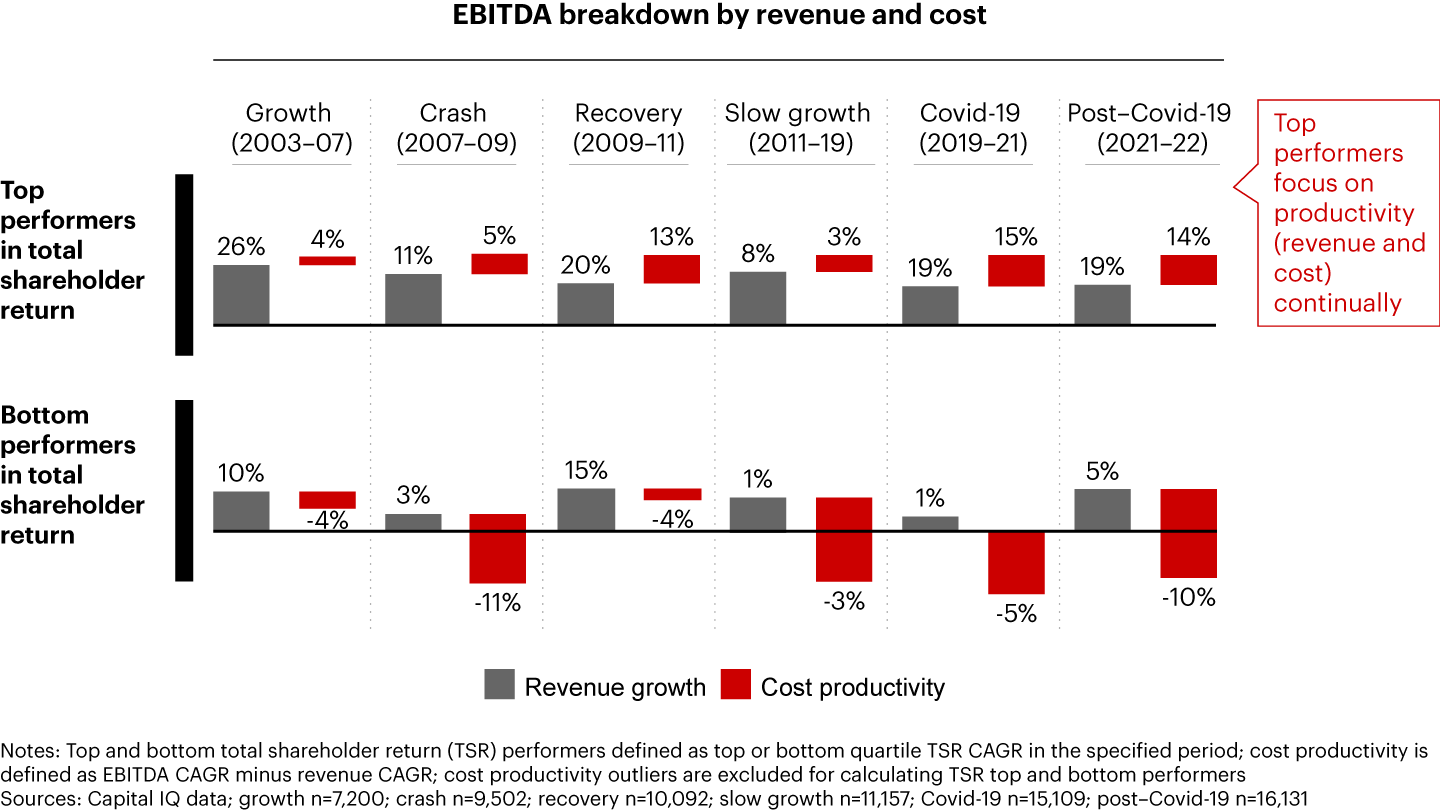
      Cost productivity is key to determining winners and losers
      Cost productivity is key to determining winners and losers
      Cost productivity is key to determining winners and losers

      Yet all too often, urgent cost-cutting programs are too blunt, limiting a company’s chance for recovery and future growth. Clumsy cost reductions treat all functions and activities as equal, even if some activities are more critical to the firm’s strategy. As a result, these programs inadvertently cut organizational muscle, not just fat. Companies that slash customer service, for example, risk increasing customer churn. Leadership teams focused on a cost target can overlook the chance for productivity gains, such as getting more out of existing equipment or processes by clearing bottlenecks.

      Companies beginning a transformation, whether prompted by distress or the desire for future growth, need more than a blunt cost program. An accelerated transformation requires careful planning and a cross-functional approach to balance short- and long-term objectives. The benefits are cost and cash savings, topline growth, and sustained value. Above all, top-performing companies make organizational agility a key goal to ensure managers have the skills to adapt to ongoing change long after the transformation ends.

      Behave like an owner

      Most companies seeking to improve their performance apply more rigor to quantifying efficiency than to increasing effectiveness. Anyone can cut 10% from a department’s budget, but to design intelligent and sustainable cost reduction measures, executives need to understand which activities are critical to the business and which add little or no value. Complicated trade-offs require deeper analysis.

      The most successful transformations are those in which leadership teams adopt an owner-activist mindset. They focus on productivity improvement and growth, as well as cost reduction. That means identifying the costs that contribute to the firm’s competitive advantage so those leading the change effort can prune in the right areas and reinvest for revenue growth in others. We are not advocating an investor-activist approach, which tends to exploit volatility for short-term gain. Owner activists usually want to build the best business possible for the short and long term, because they intend to retain ownership. That leads to more reasoned, sustainable decisions on resource allocation.

      An owner-activist mindset increases the odds of sustained results. It focuses on quickly lifting the business on all fronts: customer advocacy, core revenue growth, and efficiency. That unifying objective informs every part of the transformation.

      Using that strategic lens, owner activists manage operating expenses with the same level of rigor as capital expenditures. They view opex as the funding source to build human capital and analyze the return on these investments. They also see such expenditures as a multiyear investment in an asset that can help a firm execute its strategy better than competitors.

      Take the example of a European e-commerce platform that aimed to reduce its packaging costs and improve its environmental performance by shipping goods to customers in a single box instead of one box inside another. Since some customers value the additional box to provide a layer of privacy, the e-retailer invested in the capability to allow customers the option to select additional packaging, satisfying the needs of customers while meeting cost and environmental targets.

      Shape the organization from the future back

      Basing a transformation on a detailed assessment of the company’s current state is useful, but it’s far from sufficient. Focusing on today’s business tends to promote incremental adjustments, one cautious step at a time, and can overlook bold changes that are more effective.

      Successful leadership teams imagine the future state of the market and the company’s desired position in that market, anticipating customer needs and growth three to five years from now. That approach forces management to consider all the activities and conditions that must change for the company to thrive in the future. A future-back view combines external benchmarks with other determinations of cost, notably what activities should cost given their role in the company’s strategy.

      Of course, no one can predict what the market will look like in three to five years. The most agile companies focus on the vital few uncertainties that matter, lay out the possible scenarios that could develop, and identify the critical trigger points or signposts that indicate swings in direction. Planning becomes a cycle of “execute, monitor, and adapt” that dynamically redirects the company to the best opportunities over time.

      An Australian radiology company used a future-back approach to assess major market forces and trends over the next 10 years. The process helped the leadership team identify new opportunities, test them in future scenarios, and prioritize 20 major initiatives. It also helped the company develop a strategic roadmap for delivering those initiatives.

      Redesign how the work gets done

      Complexity is at the core of high costs and ineffective decision making. To permanently reduce costs, managers often need to change what and how work gets done (see Figure 2). Leaders look for opportunities to redesign or automate processes using digital or artificial intelligence (AI) tools. This could involve the use of advanced analytics to understand how to serve customers better and more efficiently. Another option is deploying generative AI to improve the frontline customer experience, reduce cost, and increase productivity. 

      Figure 2
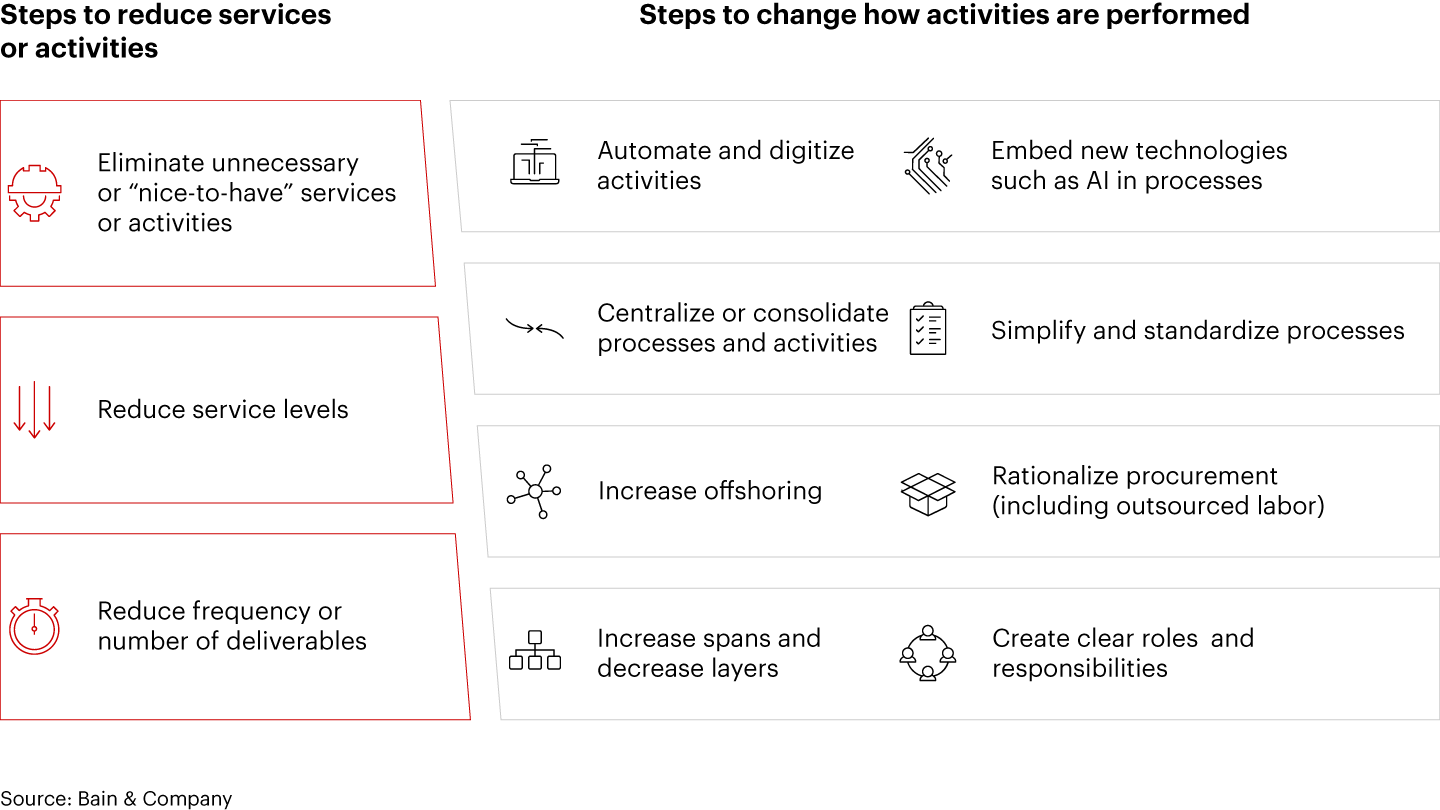
      Zero-based redesign leads to breakthrough changes in what work is done and how it gets done
      Zero-based redesign leads to breakthrough changes in what work is done and how it gets done
      Zero-based redesign leads to breakthrough changes in what work is done and how it gets done

      An Australian airline identified opportunities to improve its ground operation efficiency by automating certain tasks. Its flight dispatchers were reviewing automatically generated calculations and tweaking plans based on factors such as timing, weather, runway, and restricted airspace. The team responsible for creating flight plans configured a new system that could automate flight plan calculations to a greater degree. The change would increase capacity for more than half of the flight desks from 40 to 100 flight plans per day.

      Often the greatest opportunities are found in the seams between functions or departments. Why? Business units tend to optimize their own operations without considering the impact on other parts of the organization. One department’s effort to save costs may trigger higher costs in another, undermining efficiency. The most efficient companies find large sources of potential value by scanning the seams for duplicated work or inefficiencies and taking an end-to-end view of a process or product.

      At one specialty chemicals company, cross-functional initiatives generated about 30% of the overall value of its transformation program. To sustain the benefits, the company ensured a comprehensive view of operations across functions, including monthly reviews of costs. A transparent view of benefits helped protect the savings of one function from being offset by increase in costs from another (e.g., headcount savings being whittled away by the hiring of contractors).

      Simon Henderson, a partner with Bain's Performance Improvement practice, discusses how to increase efficiency and position your business for growth.

      Move fast even if you lack decimal-point accuracy

      Time is a precious currency. Companies that fail to manage transformations well risk spending months identifying and launching the right initiatives, especially those that require changes to IT systems. And competitors are not standing still. Owner activists know the virtues of moving quickly. They’re willing to test promising new ideas and scale them up or kill them quickly depending on the early results.

      For example, a global beverage bottling company launched a transformation by piloting process improvement initiatives on a single production line at one plant. When the pilot proved successful, the leadership team scaled it across other facilities. Despite uncertainty in how much value changes would create at scale, the company pushed ahead. One initiative focused on setting standards at the backend of the production line, so it ran with the same specifications. That meant operators could easily audit the line and adjust standards if required. The pilot delivered $1 million in annual EBITDA improvement and generated $8 million at full scale.    

      Change the culture to keep costs from creeping back

      An accelerated transformation should ultimately build the organizational muscles to manage ongoing change (see Figure 3). A one-time, blank sheet realignment of the operating model and core processes can reduce cost and simplify the organization. But cost leaders change their culture by adopting continuous cost-management improvement. That includes installing repeatable budgeting and performance management processes and instilling a zero-based mindset. Tools and incentives make it easier for employees to consistently do the right thing when weighing cost and value. Top-performing companies provide their people with cost visibility across the whole organization and hold individual owners accountable for results. Training plays an important part too.

      Figure 3
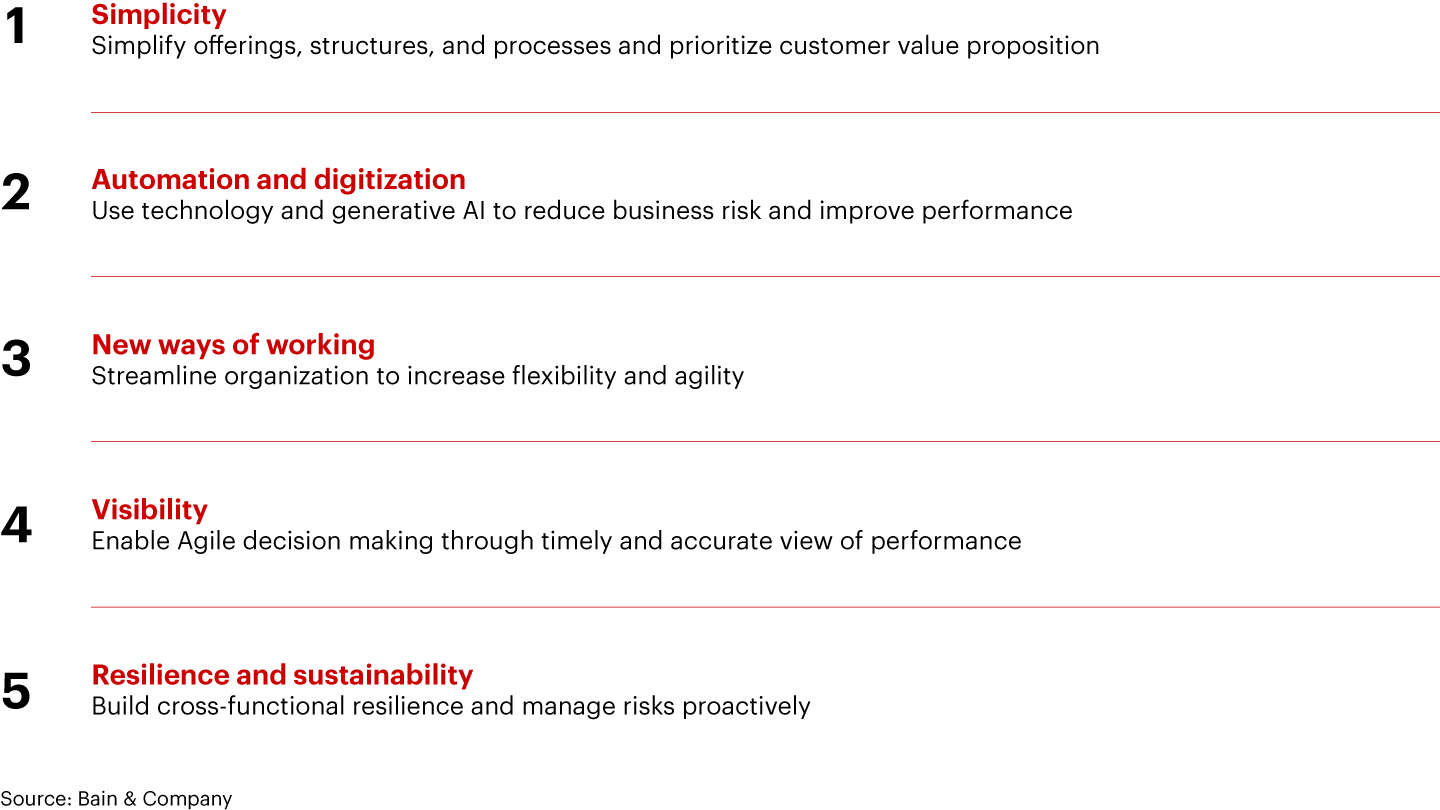
      Leaders focus on five themes to improve productivity and profitable growth
      Leaders focus on five themes to improve productivity and profitable growth
      Leaders focus on five themes to improve productivity and profitable growth

      Cost leaders make visibility a basic element in how the company does business, as it helps ensure continued change after a transformation program wraps up. At a Japanese automotive parts supplier, a multiyear transformation program recently ended, but the company plans to continue using digital project management tools for target setting and initiative approvals to make progress, approvals, and benefits tracking more transparent.

      Change programs with a beginning, middle, and end are poorly suited to an increasingly volatile business environment. Most companies are (or should be) in a state of constant transformation. Successful change efforts today deliver breakthrough improvements in performance while building the capability to remain highly competitive in a turbulent landscape.

      Authors
      • Headshot of Simon Henderson
        Simon Henderson
        Partner, London
      • Headshot of Marco D'Avino
        Marco D'Avino
        Partner, Rome
      • Headshot of Eric Thompson
        Eric Thompson
        Partner, San Francisco
      • Headshot of Danielle Stekelenburg
        Danielle Stekelenburg
        Partner, Amsterdam
      Related Consulting Services
      • Accelerated Performance Transformation
      • Transformation
      CFO Insights
      Improving Capital Project Delivery Systems

      Bain experts reveal how top energy companies are revolutionizing their capital project delivery to excel in cost, timing, and quality in the energy transition.

      Read more
      CFO Insights
      The 2026 Retail Executive Agenda

      Here are letters to the C-suite to help strengthen strategy, catalyze collaboration, and expand value creation in the AI age.

      Read more
      Transformation
      Automotive Profitability: How OEM and Supplier Margins Are Faring

      The post-pandemic profit surge has reversed, as OEM margins have fallen more than 50% since 2023.

      Read more
      CFO Insights
      Stablecoins Could Make Cross-Border Payments Faster, Cheaper, and More Transparent

      Most CFOs are not using stablecoins today, but evolving regulations could reduce risk and create competitive advantage.

      Read more
      Transformation
      Perform Today, Prove Tomorrow, Propel the Stock Valuation

      Leading banks build credibility with investors by aligning their strategy, execution, and equity story.

      Read more
      First published in junio 2024
      Tags
      • Accelerated Performance Transformation
      • CFO Insights
      • Transformation

      How We've Helped Clients

      Virgin Australia: From Turbulence to Triumph

      See more related case studies

      A Traditional Bank Pursues Digital in a Nontraditional Way

      See more related case studies

      A BPO Leader Embraces Automation to Transform Its Cost Structure

      See more related case studies

      Want to continue the conversation

      We help global leaders with their organization's most critical issues and opportunities. Together, we create enduring change and results

      Bain Insights. Our perspectives on critical issues global businesses face in today's challenging environment, delivered monthly.

      *I have read and understand Bain’s Privacy Notice.

      Please read and agree to the Privacy Policy.
      Bain & Company
      Contact us Sustainability Accessibility Terms of use Privacy Modern Slavery Act Statement Cookie Policy Sitemap Log In

      © 1996-2026 Bain & Company, Inc.

      Contact Bain

      How can we help you?

      • Business inquiry
      • Career information
      • Press relations
      • Partnership request
      • Speaker request
      See all offices