
Skip to Content
  • Offices

    Offices

    North & Latin America
    • Atlanta
    • Austin
    • Bogota
    • Boston
    • Buenos Aires
    • Chicago
    • Dallas
    • Denver
    • Houston
    • Los Angeles
    • Mexico City
    • Minneapolis
    • Monterrey
    • Montreal
    • New York
    • Rio de Janeiro
    • San Francisco
    • Santiago
    • São Paulo
    • Seattle
    • Silicon Valley
    • Toronto
    • Washington, DC
    Europe & Africa
    • Amsterdam
    • Athens
    • Berlin
    • Brussels
    • Copenhagen
    • Dusseldorf
    • Frankfurt
    • Helsinki
    • Istanbul
    • Johannesburg
    • Kyiv
    • Lisbon
    • London
    • Madrid
    • Milan
    • Munich
    • Oslo
    • Paris
    • Rome
    • Stockholm
    • Vienna
    • Warsaw
    • Zurich
    Middle East
    • Doha
    • Dubai
    • Riyadh
    Asia & Australia
    • Bangkok
    • Beijing
    • Bengaluru
    • Brisbane
    • Ho Chi Minh City
    • Hong Kong
    • Jakarta
    • Kuala Lumpur
    • Manila
    • Melbourne
    • Mumbai
    • New Delhi
    • Perth
    • Seoul
    • Shanghai
    • Singapore
    • Sydney
    • Tokyo
    See all offices
  • Alumni
  • Media Center
  • Subscribe
  • Contact
  • Global

    Select your region and language

    Global
    • Global (English)
    North & Latin America
    • Brazil (Português)
    • Argentina (Español)
    • Canada (Français)
    • Chile (Español)
    • Colombia (Español)
    Europe, Middle East, & Africa
    • France (Français)
    • DACH Region (Deutsch)
    • Italy (Italiano)
    • Spain (Español)
    • Greece (Elliniká)
    Asia & Australia
    • China (中文版)
    • Korea (한국어)
    • Japan (日本語)
  • Saved items (0)
    Saved items (0)

    You have no saved items.

    Bookmark content that interests you and it will be saved here for you to read or share later.

    Explore Bain Insights
  • Industries
    Main menu

    Industries

    • Aeroespacial y Defensa
    • Agroindustria
    • Químicos
    • Construcción e Infraestructura
    • Productos de Consumo
    • Servicios Financieros
    • Salud y Ciencias de la Vida
    • Maquinaria y Equipo Industrial
    • Medios y Entretenimiento
      Industries
      Medios y Entretenimiento
      • Media Lab
    • Metales
    • Minería
    • Petróleo y Gas
    • Papel y Empaque
    • Private Equity
      Industries
      Private Equity
      • Due Diligence
      • Exit Planning
      • Firm Strategy & Operations
      • Portfolio Value Creation
    • Sector Público y Social
    • Retail
    • Tecnología
    • Telecomunicaciones
      Industries
      Telecomunicaciones
      • Capital Expenditure
      • Telco Digital Transformation
    • Transporte
    • Viajes y Turismo
    • Servicios Públicos y Energías Renovables
  • Consulting Services
    Main menu

    Consulting Services

    • Customer Experience
    • Sustainability
    • Innovation
    • M&A
    • Operations
    • People & Organization
    • Private Equity
    • Sales & Marketing
    • Strategy
    • AI, Insights, and Solutions
    • Technology
    • Transformation
  • Digital
  • Insights
    Main menu

    Insights

    • Industry Insights
    • Services Insights
    • Bain Books
    • Webinars
    • Bain Futures
    View all Insights
    Featured topics
    • Tariff Response
    • Artificial Intelligence
    • Thriving in Uncertainty
    • Executive Conversations
    • Macro Trends
    • M&A Report
    • Healthcare Private Equity Report
    • Paper & Packaging Report
    • Technology Report
    • CEO's Guide to Sustainability
    • CEO Insights
    • CFO Insights
    • COO Insights
    • CIO Insights
    • CMO Insights
    View all featured topics
  • About
    Main menu

    About

    • What We Do
    • What We Believe
    • Our People & Leadership
    • Client Results
    • Awards & Recognition
    • Global Affiliations
    Further: Our global responsibility
    • Sustainability
    • Social Impact
    • World Economic Forum
    Learn more about Further
  • Carreras
    Main menu

    Carreras

    • Trabaja con Nosotros
      Carreras
      Trabaja con Nosotros
      • Find Your Place
      • Nuestras Áreas de Trabajo
      • Equipos Integrados
      • Estudiantes
      • Internships & Programs
      • Eventos de Reclutamiento
    • La Vida en Bain
      Carreras
      La Vida en Bain
      • Blog: Inside Bain
      • Historias Profesionales
      • Nuestra Gente
      • Dónde Trabajamos
      • Apoyando tu Crecimiento
      • Grupos de Afinidad
      • Beneficios
    • Impact Stories
    • Nuestro Proceso
      Carreras
      Nuestro Proceso
      • Qué Esperar
      • Entrevistas
    FIND JOBS
  • Offices
    Main menu

    Offices

    • North & Latin America
      Offices
      North & Latin America
      • Atlanta
      • Austin
      • Bogota
      • Boston
      • Buenos Aires
      • Chicago
      • Dallas
      • Denver
      • Houston
      • Los Angeles
      • Mexico City
      • Minneapolis
      • Monterrey
      • Montreal
      • New York
      • Rio de Janeiro
      • San Francisco
      • Santiago
      • São Paulo
      • Seattle
      • Silicon Valley
      • Toronto
      • Washington, DC
    • Europe & Africa
      Offices
      Europe & Africa
      • Amsterdam
      • Athens
      • Berlin
      • Brussels
      • Copenhagen
      • Dusseldorf
      • Frankfurt
      • Helsinki
      • Istanbul
      • Johannesburg
      • Kyiv
      • Lisbon
      • London
      • Madrid
      • Milan
      • Munich
      • Oslo
      • Paris
      • Rome
      • Stockholm
      • Vienna
      • Warsaw
      • Zurich
    • Middle East
      Offices
      Middle East
      • Doha
      • Dubai
      • Riyadh
    • Asia & Australia
      Offices
      Asia & Australia
      • Bangkok
      • Beijing
      • Bengaluru
      • Brisbane
      • Ho Chi Minh City
      • Hong Kong
      • Jakarta
      • Kuala Lumpur
      • Manila
      • Melbourne
      • Mumbai
      • New Delhi
      • Perth
      • Seoul
      • Shanghai
      • Singapore
      • Sydney
      • Tokyo
    See all offices
  • Alumni
  • Media Center
  • Subscribe
  • Contact
  • Global
    Main menu

    Select your region and language

    • Global
      Select your region and language
      Global
      • Global (English)
    • North & Latin America
      Select your region and language
      North & Latin America
      • Brazil (Português)
      • Argentina (Español)
      • Canada (Français)
      • Chile (Español)
      • Colombia (Español)
    • Europe, Middle East, & Africa
      Select your region and language
      Europe, Middle East, & Africa
      • France (Français)
      • DACH Region (Deutsch)
      • Italy (Italiano)
      • Spain (Español)
      • Greece (Elliniká)
    • Asia & Australia
      Select your region and language
      Asia & Australia
      • China (中文版)
      • Korea (한국어)
      • Japan (日本語)
  • Saved items  (0)
    Main menu
    Saved items (0)

    You have no saved items.

    Bookmark content that interests you and it will be saved here for you to read or share later.

    Explore Bain Insights
  • Industries
    • Industries

      • Aeroespacial y Defensa
      • Agroindustria
      • Químicos
      • Construcción e Infraestructura
      • Productos de Consumo
      • Servicios Financieros
      • Salud y Ciencias de la Vida
      • Maquinaria y Equipo Industrial
      • Medios y Entretenimiento
      • Metales
      • Minería
      • Petróleo y Gas
      • Papel y Empaque
      • Private Equity
      • Sector Público y Social
      • Retail
      • Tecnología
      • Telecomunicaciones
      • Transporte
      • Viajes y Turismo
      • Servicios Públicos y Energías Renovables
  • Consulting Services
    • Consulting Services

      • Customer Experience
      • Sustainability
      • Innovation
      • M&A
      • Operations
      • People & Organization
      • Private Equity
      • Sales & Marketing
      • Strategy
      • AI, Insights, and Solutions
      • Technology
      • Transformation
  • Digital
  • Insights
    • Insights

      • Industry Insights
      • Services Insights
      • Bain Books
      • Webinars
      • Bain Futures
      View all Insights
      Featured topics
      • Tariff Response
      • Artificial Intelligence
      • Thriving in Uncertainty
      • Executive Conversations
      • Macro Trends
      • M&A Report
      • Healthcare Private Equity Report
      • Paper & Packaging Report
      • Technology Report
      • CEO's Guide to Sustainability
      • CEO Insights
      • CFO Insights
      • COO Insights
      • CIO Insights
      • CMO Insights
      View all featured topics
  • About
    • About

      • What We Do
      • What We Believe
      • Our People & Leadership
      • Client Results
      • Awards & Recognition
      • Global Affiliations
      Further: Our global responsibility
      • Sustainability
      • Social Impact
      • World Economic Forum
      Learn more about Further
  • Carreras
    Popular Searches
    • Agile
    • Digital
    • Strategy
    Your Previous Searches
      Recently Visited Pages

      Content added to saved items

      Saved items (0)

      Removed from saved items

      Saved items (0)

      Report

      A New Paradigm of African Agricultural Development

      A New Paradigm of African Agricultural Development

      How agricultural intermediaries allied with smallholder farmers can transform food systems in Africa for the better.

      By Vikki Tam and Chris Mitchell

      • min read
      }

      Report

      A New Paradigm of African Agricultural Development
      en
      Executive Summary
      • Farmer-allied intermediaries strategically buy from commercially oriented smallholder farmers, helping them realize their production potential and increase their incomes.
      • They can transform Africa’s agriculture and food systems by reducing poverty, increasing employment and providing affordable, nutritious foods for a growing population.
      • Too few farmer-allied intermediaries have reached scale and profitability. Access to capital is often cited as the biggest barrier, but more fundamental systemic bottlenecks may be addressed. 
      • There is a trade-off between impact and returns. Early-stage intermediaries that purposefully bear the cost of helping smallholder farmers build capacity will need to compromise on financial returns, especially when working with farmers of low-margin staple crops.  
      • Exponentially greater amounts of philanthropic, patient and blended capital are required to support and grow these critical farmer-allied intermediaries.
      • Agricultural transformation requires a new approach that is value chain specific and farmer-allied intermediary anchored and that better aligns and coordinates key actors, targeted outcomes, and types of capital.

      This article is the introduction to Bain’s report on Africa’s critical agricultural intermediaries. Explore the contents of the report here or download the PDF to read the full report.

      For the past 10 years, a farmer, let’s call her Rosalynn, has operated a small dairy farm in the southern highlands of Tanzania. A one-hour drive on dirt roads from the nearest market town, her farm gate was for years a stopping point for local traders. Moving door to door, those traders wielded significant power, deciding at will not to take a farmer’s milk and often not paying on time or in full. At times when there was more milk than could be traded locally, Rosalynn still had to bear the cost of keeping up her five cows while meeting family expenses.

      Five years ago, Asas, a major dairy processor located three hours away in Iringa, began sourcing milk from Rosalynn’s village. Asas set up a network of milk collection stations along rural roads where farmers now take their milk twice a day for testing and collection by Asas employees who then transport the milk to a chilled collection center.

      Asas buys from farmers all year round, taking as much quality output as they can produce and paying them a fair price, on time, every two weeks, directly deposited into cooperative bank accounts. This provides steady demand and a predictable source of income for Rosalynn and her family.

      In addition, Asas extension agents provide farmers with training to improve cow productivity, educate them in climate-smart agricultural practices, and deliver veterinary support and inputs, such as minerals that can be purchased on credit to supplement cattle diets. Rosalynn now sells her milk to Asas at a station only one mile from her farm, and with their support, she has improved her cows’ health and nearly doubled their productivity from 6 liters per cow per day to 10 liters or more per cow per day.

      In the time that Rosalynn has exclusively sold her milk to Asas, she has saved enough money, thanks to the increased productivity of her herd, to purchase two additional high-yielding, crossbred heifers. Moreover, she now is able to provide her two sons and daughter with a nutritious glass of fresh milk every day without worrying about needing to sell as much milk as possible to maintain an income. Her income overall has increased, and that allows her to have more money for food and other expenses; it also allows her to save for her children’s college education.

      Rosalynn’s experience is representative of many commercially oriented smallholder farmers we have spoken to in this region of Tanzania in recent months. Asas offers them a way to reach the market that is more sustainable and profitable than traditional traders did.

      By sparking activity across the dairy value chain—in processing, packaging, logistics and retail—Asas helps to ensure a reliable supply of high-quality milk to Tanzanian consumers and at the same time contributes to an expanded tax revenue base for local governments. If properly scaled, this can provide hundreds of jobs for young men and women, including extension officers who train farmers on better practices, milk collection agents, quality control officers, testing lab technicians and processing plant workers directly employed by Asas. And there are nutritional benefits, too. Processed dairy products are safer to consume than raw milk, and they can dramatically improve the nourishment of at-risk segments of the population, such as children under five years old and expectant mothers.

      Asas is an example of a different kind of middleman that we call a farmer-allied intermediary, a group with the potential to transform food systems in Africa.

      Intermediaries are farmer allied when they invest in enhancing smallholder farmer livelihoods and disrupt traditional, transaction-oriented sales channels, such as traders (see Figure 1).

      Figure 1
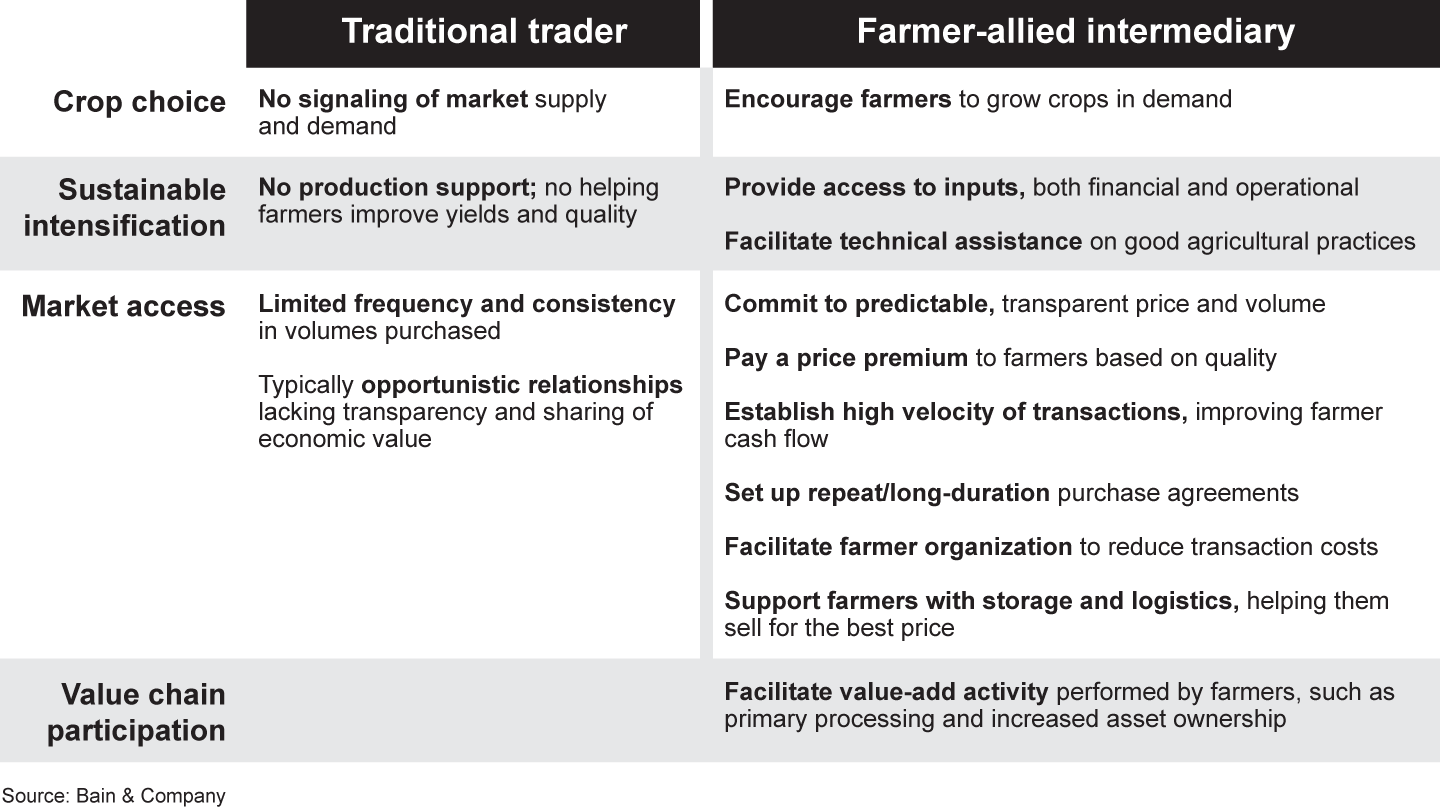
      What does a smallholder farmer-allied intermediary do differently?

      A new paradigm of agricultural development

      In order to feed and employ the fastest-growing population in the world, we need a new approach to agricultural development in Africa, one with farmer-allied intermediaries at its center (see Figure 2).

      Figure 2
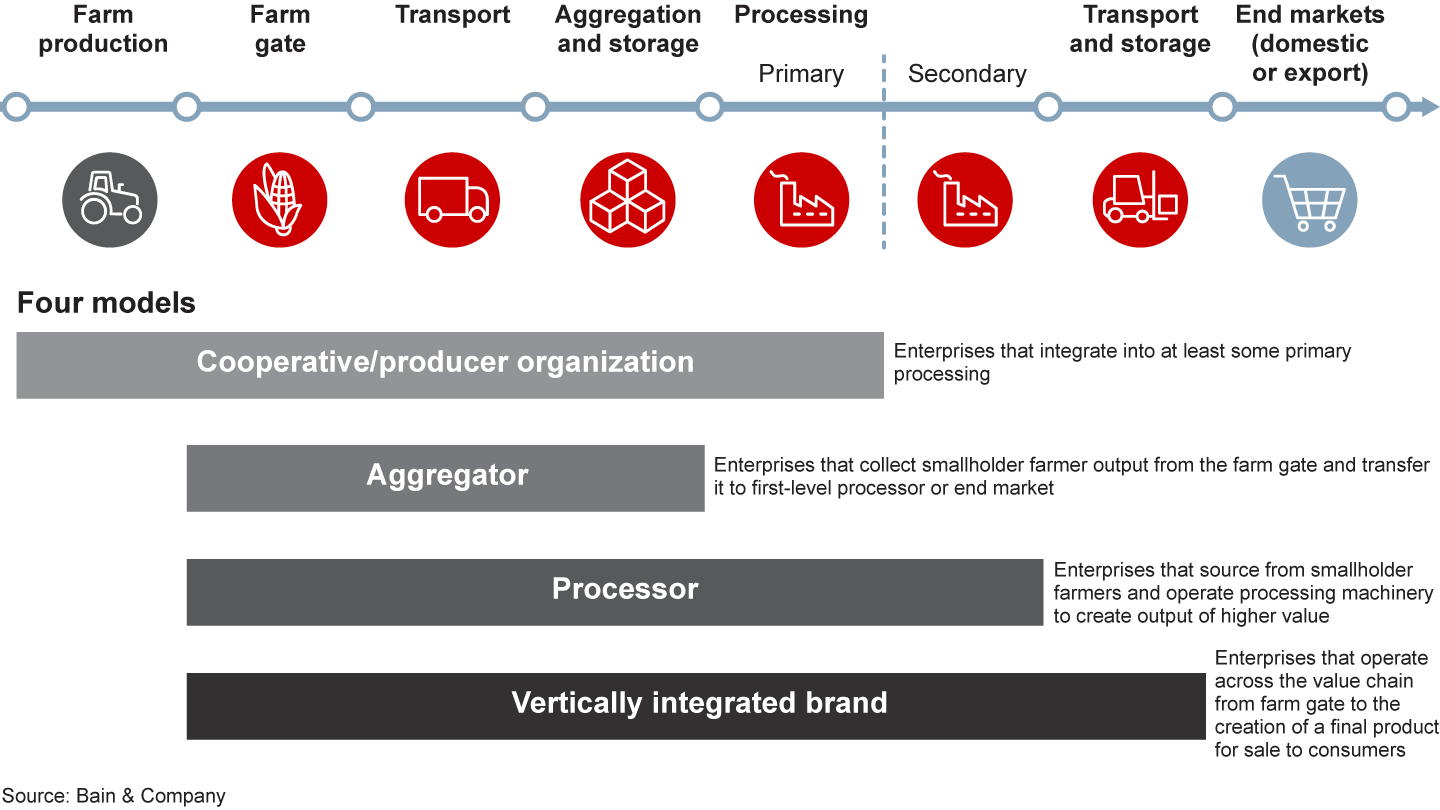
      There are four main models of farmer-allied intermediaries connecting farmers to market

      Working hand in hand with smallholder farmers, farmer-allied intermediaries, including producer organizations, aggregators, processors and vertically integrated food brands, can simultaneously achieve a number of critically important outcomes for a broad set of stakeholders. These include enhancing the livelihood of smallholder farmers and alleviating rural poverty, delivering quality agricultural output to buyers, creating a more efficient sales channel for input providers, making more nutritious food available to Africa’s growing populations, and creating jobs and contributing to broader economic development (see Figure 3).

      Figure 3
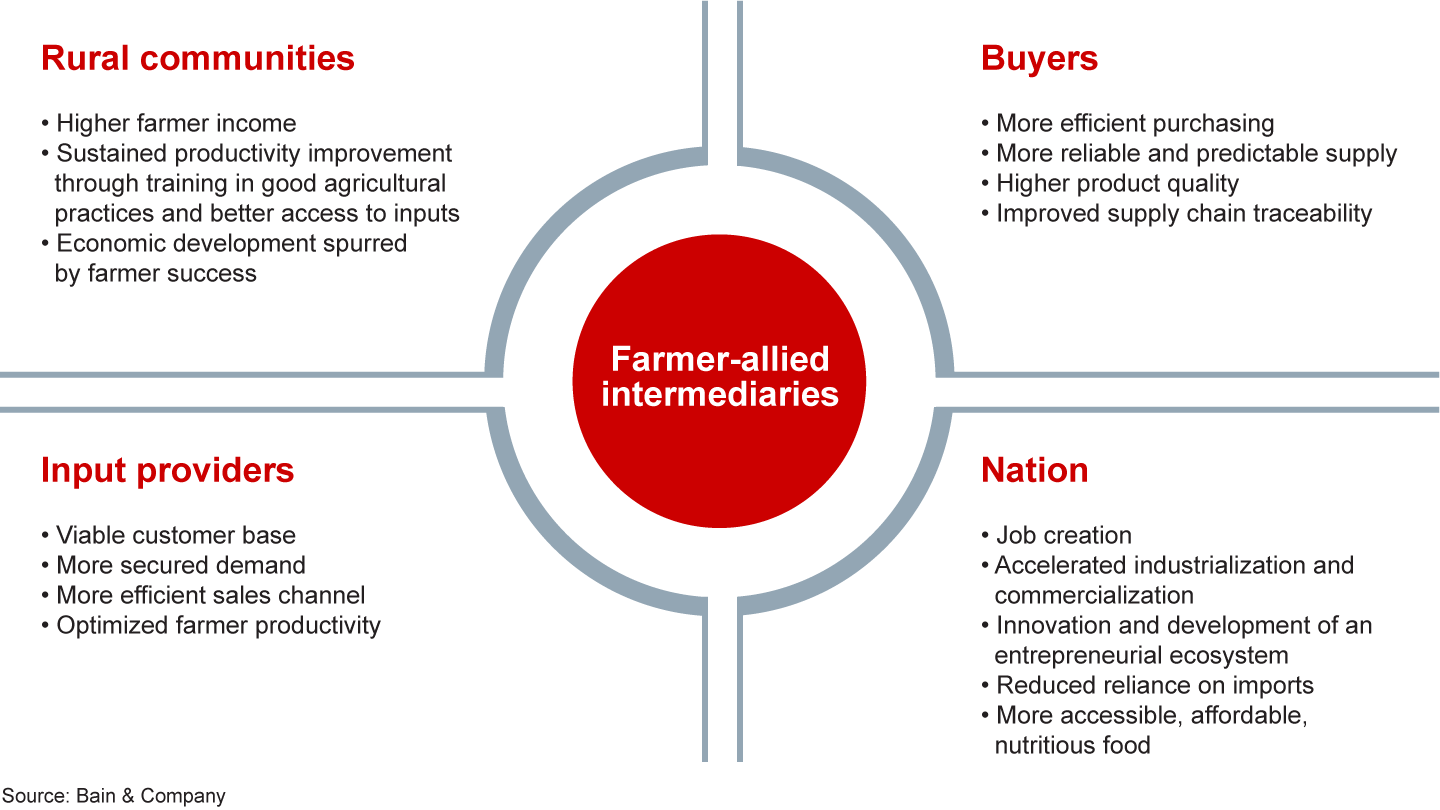
      Farmer-allied intermediaries benefit many stakeholders

      This approach to agricultural transformation is consistent with the United Nations’ goals for sustainable development (see Figure 4).

      Figure 4
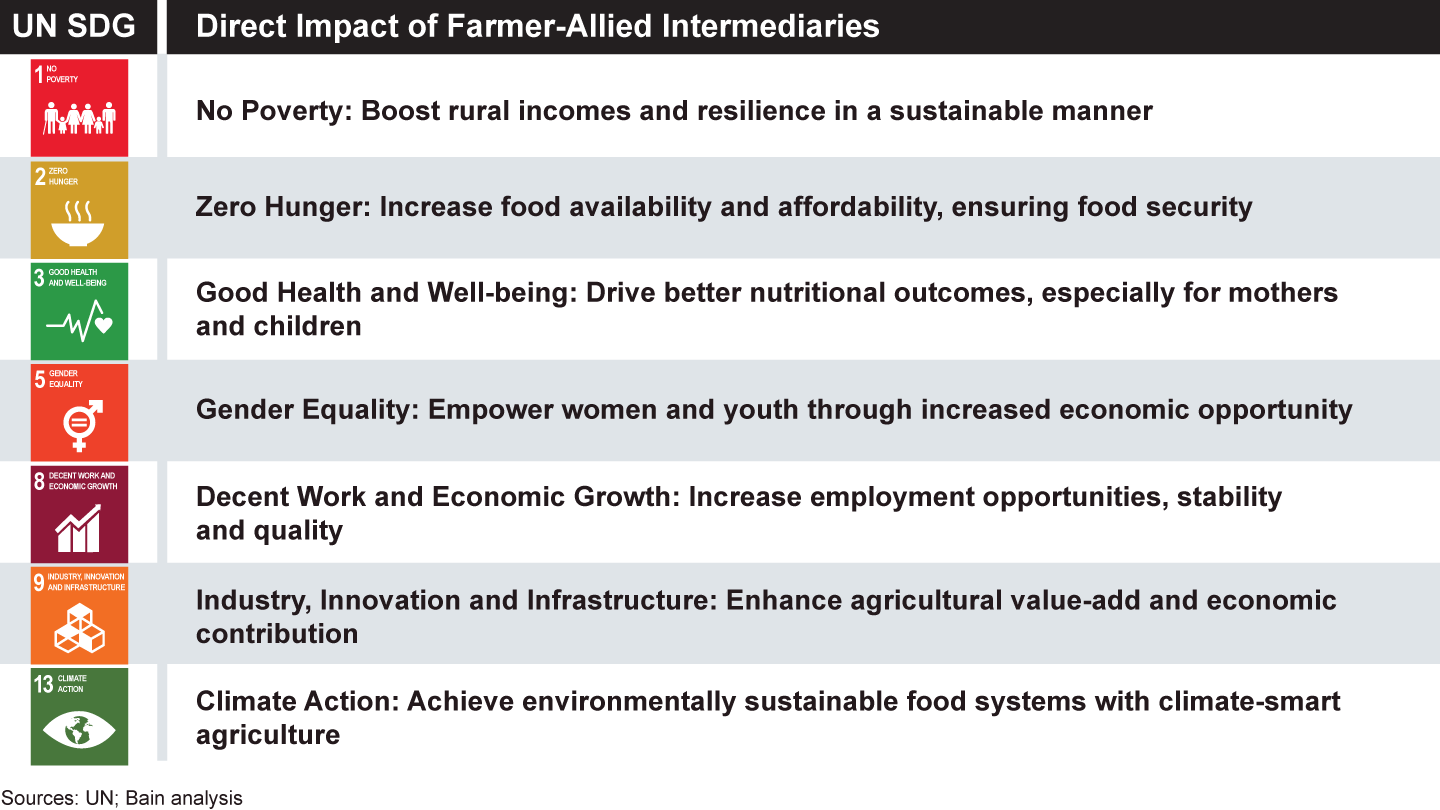
      Food systems centered on farmer-allied intermediaries can advance many of the UN’s 17 Sustainable Development Goals

      In many sub-Saharan African countries, smallholder farming will continue to dominate food production for the foreseeable future, and agricultural transformation will require a critical number of scaled, profitable and competitive intermediaries allied with those farmers. Those farmer-allied intermediaries will need a well-functioning system—optimal upstream and downstream conditions as well as in the broader operating environment—in order to grow and thrive.

      A new approach is needed. Business as usual simply cannot address the magnitude of the region’s current challenges. Over the past two decades, donor countries, multilaterals and foundations have directed almost $40 billion to African agriculture, according to our analysis of data from the UN’s Food and Agriculture Organization as well as the Organisation for Economic Co-operation and Development. Yet food security in the region remains about half that of developed markets. Net food imports have risen 400% since the early 2000s and, barring intervention, are projected to soar to more than $110 billion by 2025. While agriculture is the largest segment of the economy in many sub-Saharan African countries, frequently accounting for between 30% and 70% of employment and comprising approximately one-quarter of the region’s overall GDP, the portion of economic value captured beyond the farm gate is half the global average. And poverty levels, measured by the percentage of the population living on less than $5.50 per day, are almost 2 times higher in Africa than the global average (see Figure 5). Furthermore, due to their underdeveloped food systems and low purchasing power, many African consumers spend up to half their income on food.

      Figure 5
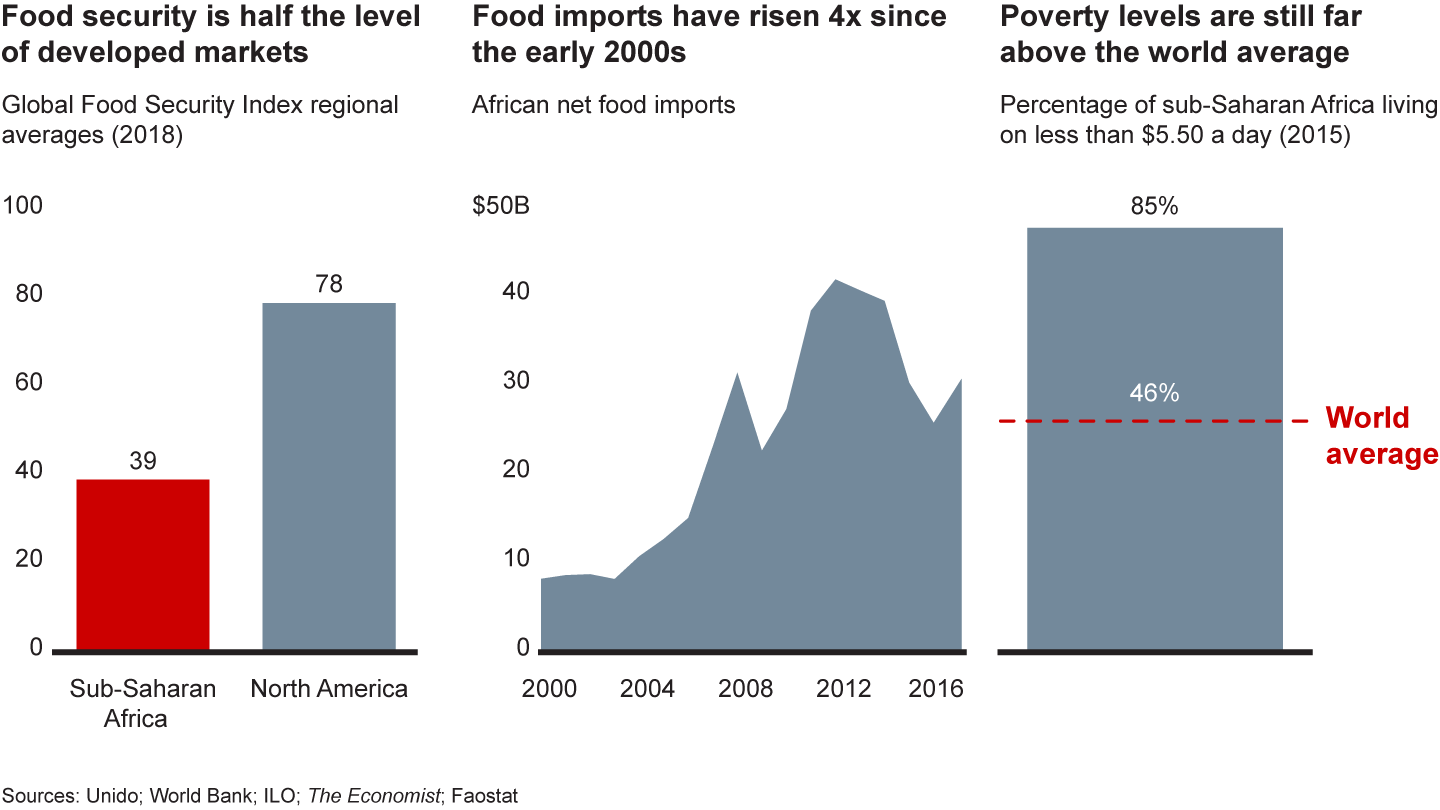
      Agricultural conditions in Africa are growing more challenging

      All of these issues will get worse as increasing urbanization puts further pressure on domestic food systems and climate change becomes a bigger threat to African agricultural production. We are facing a perfect storm, and we need a new approach to agricultural development in Africa to feed and employ the fastest-growing population in the world.

      To transform Africa’s food system successfully, we must put farmer-allied intermediaries at the center of our efforts.

      Too few, too small

      There are farmer-allied intermediaries pioneering successful models of impact and innovation, as well as broader ecosystems that are effectively supporting those intermediaries. Unfortunately, too few farmer-allied intermediaries exist in sub-Saharan Africa today, and many of those that do struggle to scale profitably.

      Even for Asas, one of the largest dairy processors in Tanzania, it’s a battle to achieve sustained profitability. At times, Asas operates at only 20% capacity, well below break-even utilization. Securing a consistent, high-quality supply from its base of more than 3,000 smallholder farmers can be challenging, especially during the dry season. Asas has borne the cost of collecting milk from this dispersed group and of developing a system for working with them. That system includes an in-house database with a linked app for farmer registration and tracking as well as a variety of farmer supports from training to providing inputs on credit to mineral distribution and veterinary services. At the same time, Asas is fighting deeply entrenched consumer preferences for raw milk as well as managing expenses that add to the cost of operation and ultimately to product prices, pushing them out of reach for many consumers. Despite these challenges, Asas has remained committed to its smallholder farmer base, intentionally choosing to rely predominantly on them for its supply rather than concentrating on scaling, as it might, a handful of large commercial farms near its processing plant, including its own.

      The development community knows well the broader challenges of scaling profitable farmer-allied intermediaries and agricultural small and medium-sized enterprises (SMEs). The biggest is access to financing.

      Historically, development programs have not prioritized intermediaries, instead largely focusing their grant funds on interventions to increase farmer productivity. The financing gap extends beyond grants to debt and equity as well. According to recent research, there is an $80 billion gap in debt available for agricultural SMEs with annual revenue less than $15 million. This stems mainly from the quantum of credit available, but even what credit does exist is not always affordable with interest rates of 15% to 30%. Such high interest is hard to pay off with the meager cash flows from agricultural or food production.

      One study of more than 100,000 SMEs predominantly located in developing countries found that access to financing was respondents’ No. 1 challenge. And in our own research over the past year, we have heard agricultural intermediaries talk about the difficulty of securing loans for working capital and capital expenditures. In addition to high interest rates, they are limited by a lack of collateral and payment terms that may require repayment even before new cash flows materialize.

      Agricultural SMEs have historically not received significant equity investment. Our research has found that agriculture as a sector has attracted less than 10% of all impact capital invested in sub-Saharan Africa in recent years. Between 2013 and 2018, roughly 20% of this capital went to agricultural SMEs, and of that, less than 20% went to agricultural intermediaries in the “missing middle,” a segment that includes most smallholder farmer-allied intermediaries. That amounts to less than 1% of the estimated $6 billion in impact capital, on average, deployed to sub-Saharan Africa per year during this period.

      To calculate the total impact capital directed to sub-Saharan Africa, Bain looked at global development finance institution (DFI) equity flows to the region as well as all non-DFI equity flows between 2012 and June 2018, using Pitchbook deal data, a comprehensive literature search and analysis of major investor company portfolios. Estimates for the proportion of impact capital directed toward agriculture, specifically, in sub-Saharan Africa, is based on our literature search. To calculate the proportion of capital that went to intermediaries in the “missing middle,” we looked at 275 companies from Pitchbook and conducted a portfolio analysis of 26 leading DFI and non-DFI equity investors and classified investees by company revenue (microenterprise, “missing middle” and larger SMEs) and by business model (ag tech, input providers, intermediaries and other agribusinesses).

      “Missing middle” is a term that has emerged over the past decade, along with “small and growing businesses” and “pioneer firms,” to characterize a specific type of SME. This group typically comprises early-stage firms underserved by commercial lenders and investors but nevertheless considered too big by microfinance institutions (see Figure 6). For this report, we have loosely defined the missing middle as enterprises with 5 to 250 employees and revenue between $100,000 and $5 million that are seeking debt or equity capital of $200,000 to $2 million. These firms typically fit into the “validate” and “prepare” phases defined in From Blueprint to Scale, a report by Monitor and Acumen.

      Figure 6
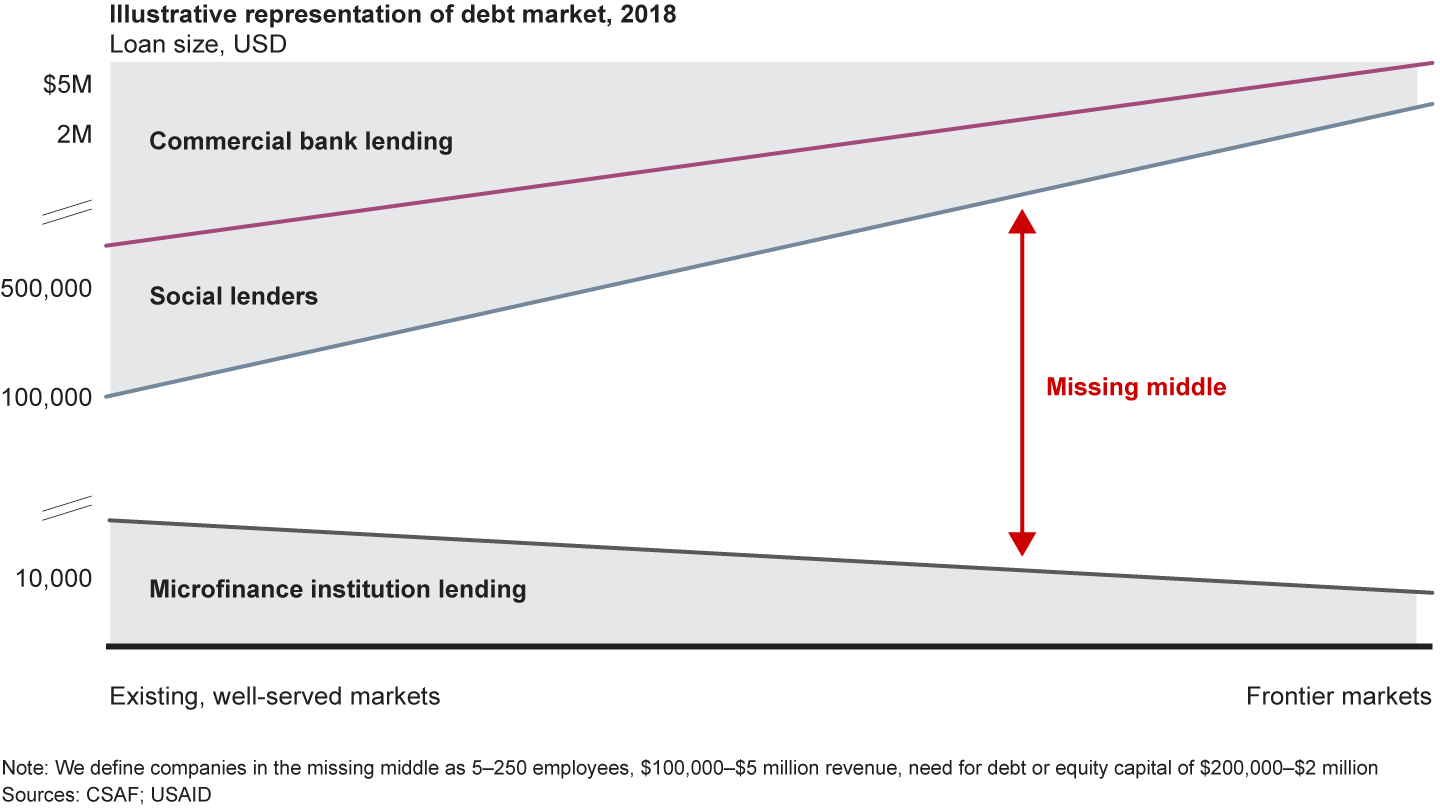
      Farmer-allied intermediaries often fall in the missing middle, where financing is not readily available

      In limiting their financing, bankers and investors are for the most part simply acting rationally. There is always a higher level of systemic risk in agriculture relative to other sectors. Factors such as weather and pestilence, both exacerbated by climate change, are hard to predict and can significantly hurt an enterprise’s performance.

      But the challenge of financing farmer-allied intermediaries has its specific complexities as well. The first challenge to becoming commercially viable and scalable and, in turn, able to secure credit and equity investment is acquiring sufficient, reliable quantities of quality raw materials from smallholder farmers, and doing so at a price that allows the intermediary to meet market demand and earn a profit. As Asas’s experience in Tanzania shows, working with small, dispersed farms involves complex and costly logistics and distribution. Investments in organizing and training farmers and providing access to a full range of necessary inputs, often on credit, can be necessary to build farmer loyalty and ensure the right quantity and quality of output.

      The intermediary’s intent ultimately determines how it engages with smallholder farmers and the degree to which it invests in them. While farmer engagement and investment typically strengthen loyalty and reliability, thereby serving the long-term financial interests of the business, in the near to medium term, they come at a cost and imply a real trade-off with financial performance and returns. This trade-off is especially acute for early-stage entrepreneurs that are still building their business models and operating in limited parts of lower-margin value chains. Emphasis on farmer investment for these entrepreneurs could mean a slower path to scale and positive financial returns.

      Indeed, it takes time and effort to build a repeatable business model that both delivers a value proposition to farmers strong enough to disrupt traditional trader relationships and maximizes operating efficiency enough to enable positive unit economics. It requires access to managerial, financial and technical expertise that is often in short supply. It can be difficult to secure predictable, growing demand. Sometimes, the challenge involves shaping consumer behavior, such as drinking processed milk; other times, it may be addressing the complexities of a multichannel retail landscape. Navigating the often opaque and unpredictable regulatory and policy environment, including import regulations and tariffs, value-added taxes, and company and product registrations, is yet another trial they face.

      In short, while the “access to financing” challenge often cited by these firms is real, it also can mask a host of underlying, interrelated challenges across a complex ecosystem. For farmer-allied intermediaries to scale profitably takes more than business acumen and entrepreneurial drive. It requires a well-functioning system: conditions within and surrounding the value chain that enable farmer-allied intermediaries to scale profitably. In many sub-Saharan countries, that system does not exist or function adequately. To build it requires a new approach to smallholder agricultural development and investing—one that prioritizes high-potential farmer-allied intermediaries and brings together different kinds of support in a far more aligned, coordinated way (see Figure 7). It requires capital from philanthropic, commercial and blended sources as well as supports beyond capital, including strategic and operational assistance that come from public, social and private sectors.

      Figure 7
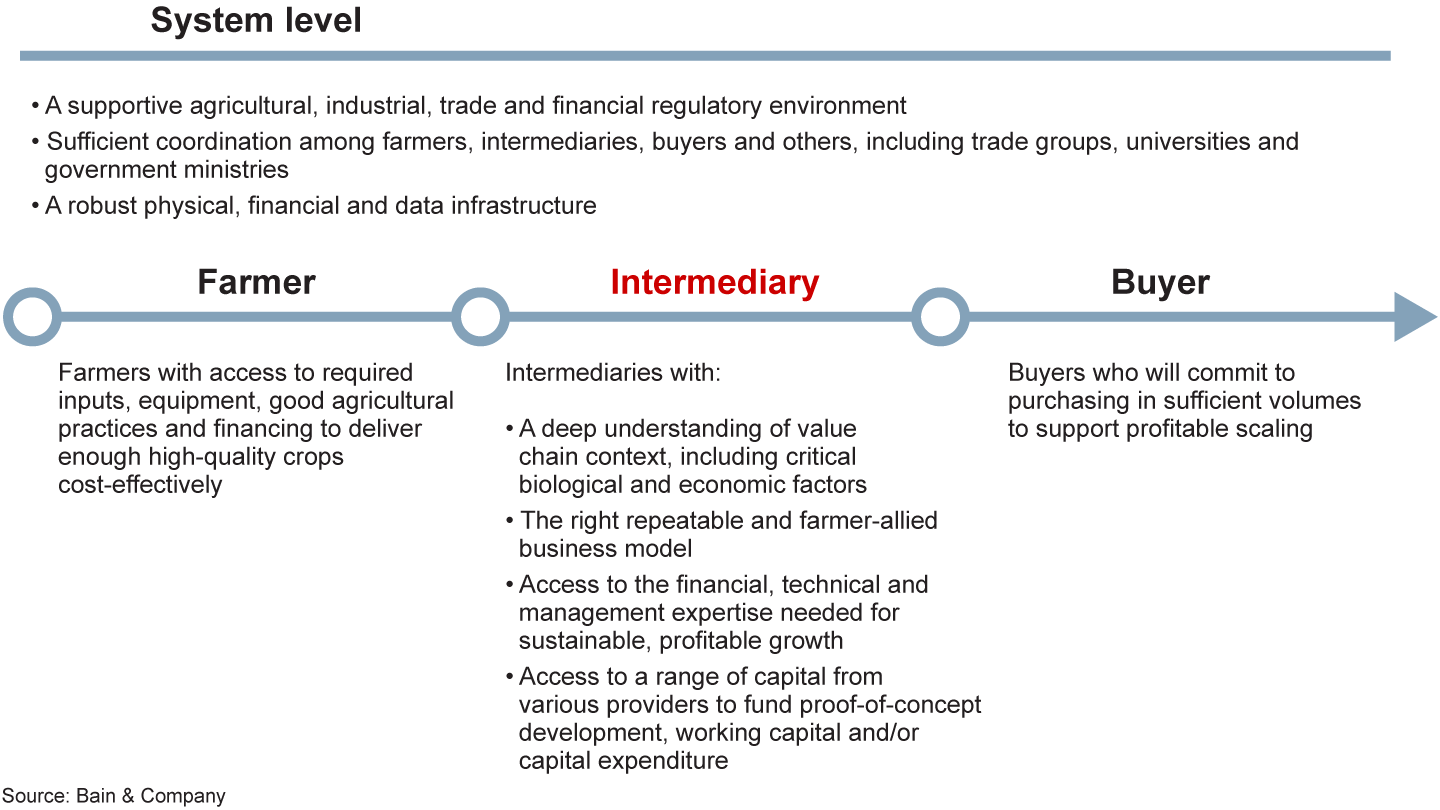
      Supporting farmer-allied intermediaries requires the right business model operating in the right system

      As we will see throughout this report, these complex challenges can be addressed. Digital technologies and emerging models of success are providing momentum and the opportunity to build a new, more effective approach to agricultural transformation.

      • Acknowledgments

        The authors would like to acknowledge the critical contributions of Acumen to this report. A pioneer in the use of patient capital to bridging the efficiency and scale of market-based approaches and the social impact of pure philanthropy, Acumen supports entrepreneurs who bring sustainable solutions to the big problems of poverty, improving the lives of 260 million people around the world. A strategic partner of Bain & Company since 2012, Acumen generously shared the knowledge and experience, built over their almost two decades in operations, and the authors would like to especially thank Alberto Gómez-Obregon and Esha Mufti for their patient and tireless collaboration, as well as Meghan Curran, Rebecca Mincy, Jacqueline Novogratz, Carlyle Singer, Yasmina Zaidman, William Charnock, Sachin Rudra (former) and Noor Ullah (former) for helping shape our ideas and for providing an honest critique of our report.

        In addition to our Acumen colleagues, the authors wish to especially acknowledge the support of several other Bain & Company strategic partners, including the Ethiopian Agribusiness Accelerator Platform, Land O'Lakes Venture37, Partners in Food Solutions (who also gave us access to their photo stock), Root Capital and TechnoServe, as well as the external experts who substantively engaged with us along our journey researching and writing this paper: Richard Rogers of Rogers MacJohn LLC, Daniel Hulls of AgDevCo, and Rita Weidinger of GIZ. Their generosity, honesty and thoughtful input was invaluable.

        The authors also wish to acknowledge and thank Bain & Company’s Adam Cox, Tiiram Sunderland (former), Zoe Karl-Waithaka, Celeste Le Roux, Banele Wasswa, Jonathan Nathan, Taahir Matthews, Tanner Clawson and Siphesihle Magudulela for their incredible commitment, diligence and curiosity; Dalton Maine, Sasha Duchnowski and Fernando Martins, leaders in Bain’s Agriculture practice, for their counsel, insight, and partnership; and Bain’s Marketing team for their work supporting this paper, including our editor Nanette Byrnes.

      • Interviews conducted

        Profiled company management interviews


        This paper is about the critical role of farmer-allied intermediaries, and we are indebted to a number of them that both facilitated our field research and generously shared the details of their own journeys, including the struggles, achievements and lessons they learned as they built and grew their companies.


        Asas Dairies Ltd.

        Fuad Jaffer, CEO


        Babban Gona

        Kola Masha, founder

        Adaeze Usoh, principal, corporate finance


        Dodla Diary

        Sunil Dodla, founder

        Venkat Krishna Reddy Busireddy, CEO

        Sebastian Joseph, quality head

        Prabhakar Reddy, production head


        Empresa de Comercialização Agrícola (ECA)

        Grant Taylor, CEO

        Alison Taylor, CFO


        Kumwe Solutions

        Cyril Khamsi, founder and CEO


        Tulaa

        Hillary Miller-Wise, founder and CEO

        Aadil Saxena, CFO


        Twiga Foods

        Grant Brooke, board member, cofounder

        Peter Njonjo, CEO, cofounder

        Mahia-John Mahiaini, CFO


        Additional individuals and organizations interviewed


        Anurag Agrawal, Aavishkaar

        Leila Ahlstrom, USAID (former)

        Jonathan Barnow, TechnoServe

        Gaëlle Bonnieux, responsibility

        Elicia Carmichael, Root Capital (former)

        Maya Chorengel, TPG, The Rise Fund

        David Dayhoff, Partners in Food Solutions

        Joris de Vries, Hooge Raedt Social Ventures

        David Dewez, Incofin Investment Management

        Chris Donohue, TechnoServe

        Emmanuel Egyam, Injaro

        Hanna Felleke, Ethiopian Agribusiness Accelerator Platform

        Jim Fitzpatrick, Ingredient Sourcing Solutions

        Willy Foote, Root Capital

        Afshin Ghassmi, CDC Group

        Jane Grob, TechnoServe

        Kindra Halvorson, TechnoServe

        Riëlla Hollander, Triodos Investment Management

        Daniel Hulls, AgDevCo

        Kate Hyder, Root Capital

        James Jenkin, Clinton Global Enterprise Partnership

        Robert Johnson, Clinton Global Enterprise Partnerships

        Chris Jurgens, Omidyar Network

        Katarina Kahlmann, TechnoServe

        Saliya Kanathigoda, GIZ

        Johnson Kiragu, Partners in Food Solutions

        Ben Knoll, Partners in Food Solutions

        Songbae Lee, Calvert Impact Capital

        Fiona Lukwago, Africa Enterprise Challenge Fund

        Agnes Mueni Manthi, Root Capital

        Mirafe Gebriel Marcos, Ethiopia Agricultural Transformation Agency

        Allert Mentink, SME Impact Fund

        Brad Merchant, Palladium

        Ernest Mintah, African Cashew Alliance

        Karel Nierop, Triodos Investment Management

        Nupur Parikh, TechnoServe

        Tim Rann, Mercy Corps’ Social Ventures Fund

        Richard Rogers, Rogers MacJohn

        Reihem Roy, Omnivore

        Frank Rubio, Oikocredit (former)

        Jinesh Shah, Omnivore

        Vikram Sharma, TechnoServe

        Seth Silverman, FACTOR[e] Ventures

        Samuel Ssenyimba, Bill & Melinda Gates Foundation

        Patrick Starr, USAID (former)

        Paul Stewart, TechnoServe

        Jonathan Thomas, TechnoServe

        Abigail Thomson, TechnoServe

        Yasser Toor, Solon Capital Partners

        Pavlos Troulis, Ethiopian Agribusiness Accelerator Platform (former)

        Joke van der Ven, Triodos Investment Management

        John Vercoe, 8 Miles

        Rita Weidinger, GIZ/ComCashew

        Brent Wibberley, TechnoServe

        Florian Winckler, GIZ/ComCashew

        Simon Winter, Syngenta Foundation

        Karina Wong, Small Foundation

        Rizwan Yusufali, TechnoServe

      • Bibliography

        African Development Bank Group (AfDB). Feed Africa: Strategy for Agricultural Transformation in Africa 2016–2025. Abidjan, Côte d'Ivoire: AfDB, 2016. https://www.afdb.org/fileadmin/uploads/afdb/Documents/Generic-Documents/Feed_Africa-_Strategy_for_Agricultural_Transformation_in_Africa_2016-2025.pdf.

        Alliance for a Green Revolution in Africa (AGRA). Africa Agriculture Status Report 2017: The Business of Smallholder Agriculture in Sub-Saharan Africa (Issue 5). Nairobi: AGRA, 2017. https://agra.org/wp-content/uploads/2017/09/Final-AASR-2017-Aug-28.pdf.

        Alliance for a Green Revolution in Africa (AGRA). Africa Agriculture Status Report 2019: The Hidden Middle: A Quiet Revolution in the Private Sector Driving Agricultural Transformation (Issue 7). Nairobi: AGRA, 2019. https://agra.org/wp-content/uploads/2019/09/AASR2019-The-Hidden-Middleweb.pdf.

        Anderson, Mark and Achilleas Galatsidas. "Urban population boom poses massive challenges for Africa and Asia." The Guardian, July 2014. https://www.theguardian.com/global-development/2014/jul/10/urban-population-growth-africa-asia-united-nations.

        Arslan, Aslihan. "How old is the average farmer in today's developing world?" International Fund for Agricultural Development (IFAD), July 2019. https://www.ifad.org/en/web/latest/blog/asset/41207683.

        Associated Free Press. "Cassava beer taps new market in Mozambique." Fin24, November 2015. https://www.fin24.com/Economy/Cassava-beer-taps-new-market-in-Mozambique-20151101.

        Ayieko, M.W., D.L. Tschirley, and M.W. Mathenge. Fresh Fruit and Vegetable Consumption Patterns and Supply Chain Systems in Urban Kenya: Implications for Policy and Investment Priorities. Nairobi: Egerton University, 2005. https://pdfs.semanticscholar.org/13f4/872e42d768c1a090b4f8830a72cab586bf37.pdf?_ga=2.162294908.1544275495.1583127267-1138531315.1583127267.

        Bera, Sayantan. "Small and marginal farmers own just 47.3% of crop area, shows farm census." Livemint, October 2018. https://www.livemint.com/Politics/k90ox8AsPMdyPDuykv1eWL/Small-and-marginal-farmers-own-just-473-of-crop-area-show.html.

        Bill & Melinda Gates Foundation. Multi Crop Value Chain Phase II: Nigeria Maize. Seattle: Bill & Melinda Gates Foundation, 2015. https://gatesopenresearch.org/documents/3-750.

        Byerlee, D., A.F. Garcia, A. Giertz, and V. Palmade. Growing Africa: Unlocking the Potential of Agribusiness. Washington, DC: The World Bank, 2013. http://documents.worldbank.org/curated/en/327811467990084951/pdf/756630v10REPLA0frica0pub03011013web.pdf.

        Central Intelligence Agency. The World Factbook. Accessed between January 2019 and February 2020. https://www.cia.gov/library/publications/the-world-factbook/.

        CGIAR Research Program on Climate Change, Agriculture and Food Security (CCAFS). "Big facts on climate change, agriculture and food security." Accessed between January 2019 and February 2020. https://ccafs.cgiar.org/bigfacts/#.

        Chatterjee, Siddharth, and H.E. John Dramani Mahama. "Promise or peril? Africa's 830 million young people by 2050." United Nations Development Programme (UNDP) Africa, August 2017. https://www.africa.undp.org/content/rba/en/home/blog/2017/8/12/Promise-Or-Peril-Africa-s-830-Million-Young-People-By-2050.html.

        Coca-Cola Africa. "Coca-Cola and partners receive P3 impact award for Project Nurture." Coca-Cola Africa, September 2016. https://www.coca-colaafrica.com/stories/coca-cola-and-partners-receive-p3-impact-award-for-project-nurture#.

        ComCashew. "Interactive map." Accessed February 2020. https://www.comcashew.org/welcome/interactive-map.

        Communications Authority of Kenya. "First-quarter sector statistics report for the financial year 2019/2020." Accessed February 2020. https://ca.go.ke/wp-content/uploads/2019/12/Sector-Statistics-Report-Q1-2019-2020.pdf.

        Convergence. The State of Blended Finance 2018. Toronto: Convergence, 2018. https://downloads.ctfassets.net/4cgqlwde6qy0/6KN2rOUXAsceawYYywic86/154577e7f96ed6511ef1048bc79ee978/State_of_Blended_Finance_2018_FINAL.pdf.

        Council on Smallholder Agricultural Finance (CSAF). State of the Sector. Cambridge, Massachusetts: CSAF, 2018. https://www.csaf.org/wp-content/uploads/2018/08/CSAF_State_of_the_Sector_2018_FINAL.pdf.

        Dalberg. The Economics of Agri-SME Lending in East Africa. Nairobi: Dalberg Research, 2018. https://www.agrilinks.org/sites/default/files/resources/the_economics_of_agri_sme_lending_in_east_africa_summary_report.pdf.

        d'Amour Mbonyinshuti, Jean. "New €16.2m project to boost Rwanda’s horticulture output." The New Times, March 2019. https://www.newtimes.co.rw/news/new-eu162m-project-boost-rwandas-horticulture-output.

        Dodla Dairy. "Annual reports." Accessed February 2020. https://www.dodladairy.com/annual_reports.

        Fitch Solutions. "BMI research." Accessed between January 2019 and February 2020. https://www.fitchsolutions.com/bmi-research.

        Food and Agriculture Organization of the United Nations (FAO). "Global information and early warning system (GIEWS) food price monitoring and analysis (FPMA) tool." Accessed between January 2019 and February 2020. http://www.fao.org/giews/food-prices/tool/public/#/home.

        Food and Agriculture Organization of the United Nations (FAO). Agricultural Commodities: Profiles and Relevant WTO Negotiating Issues. Rome: FAO, 2002. http://www.fao.org/3/Y4343E/y4343e00.htm.

        Food and Agriculture Organization of the United Nations database (FAOSTAT). Accessed between January 2019 and February 2020. http://www.fao.org/faostat/en/#data/.

        Ford, Liz. "Ugandan fruit farmers get boost from Bill Gates and Coca-Cola partnership." The Guardian, January 2010. https://www.theguardian.com/katine/2010/jan/22/bill-gates-coca-cola-fruit.

        Ganbold, Bataa. Improving Access to Finance for SME: International Good Experiences and Lessons for Mongolia (Volume 438). Chiba City, Japan: Institute of Developing Economies, 2008. https://www.ide.go.jp/library/English/Publish/Download/Vrf/pdf/438.pdf.

        Genga, Bella. "Kenya fresh-produce platform aims to disrupt Africa retail." Bloomberg, April 2019. https://www.bloomberg.com/news/articles/2019-04-11/kenya-fresh-produce-platform-aims-to-disrupt-african-retail.

        Global Delivery Initiative (GDI). How to Implement a Broad-Based Approach to Developing the Africa Cashew Market. Washington, DC: GDI, 2015. https://www.globaldeliveryinitiative.org/sites/default/files/case-studies/k8268_africa_cashew_market_cs_0.pdf.

        Global System for Mobile Communications Association (GSMA). The Mobile Economy: Sub-Saharan Africa. London: GSMA, 2019. https://www.gsmaintelligence.com/research/?file=36b5ca079193fa82332d09063d3595b5&download.

        Gray, Alex. "Which countries spend the most on food? This map will show you." World Economic Forum, 2016. https://www.weforum.org/agenda/2016/12/this-map-shows-how-much-each-country-spends-on-food/.

        Green Climate Fund. "Projects & programmes." Accessed February 2020. https://www.greenclimate.fund/project/fp078.

        IDH - The Sustainable Trade Initiative. "Developing Rwandan horticulture by linking local producers to global market." IDH, September 2018. https://www.idhsustainabletrade.com/news/developing-rwandan-horticulture-by-linking-local-producers-to-global-market/.

        Jaiswal, Payal, Hemkant Chandravanshi, and Ashulata Netam. "Contribution of dairy farming in employment and household nutrition in India." International Journal of Avian & Wildlife Biology 3, no. 1 (2018): 78–79. https://doi.org/10.15406/ijawb.2018.03.00059.

        Jamal, Rahman. "Saving milk from spoilage in rural India." The Guardian, June 2014. https://www.theguardian.com/sustainable-business/saving-milk-rural-india-business-sustainable.

        Kitinoja, Lisa, Munir, Dandago, Munir Abba and Abdullahi, Nura. "Postharvest loss assessment of maize (Zea mays) along its value chain in Nigeria." Journal of Stored Products and Postharvest Research 10, no. 1 (2019): 13–19. https://academicjournals.org/journal/JSPPR/article-full-text-pdf/9D1501459877

        Koeleman, Emmy. "Dairy farms in India become bigger." Dairy Global, December 2017. https://www.dairyglobal.net/Market-trends/Articles/2017/12/Dairy-farms-in-India-become-bigger-226874E/.

        Kumar, Anjani, Steven J. Staal, and Dhiraj K. Singh. "Smallholder dairy farmers' access to modern milk marketing chains in India." Agricultural Economics Research Review 24, no. 2 (December 2011): 243–253. https://ageconsearch.umn.edu/record/118232/files/7-Anjani.pdf.

        Landes, Maurice, Jerry Cessna, Lindsay Kuberka, and Keithly Jones. India's Dairy Sector: Structure, Performance, and Prospects. Washington, DC: United States Department of Agriculture (USDA), 2017. https://www.ers.usda.gov/webdocs/publications/82639/ldpm-272-01.pdf?v=0.

        Least Developed Countries Initiative for Effective Adaptation and Resilience (LIFE-AR). Delivering Our Climate-Resilient Future: Lessons from a Global Evidence Review. Bhutan: LDC Group, 2019. http://www.ldc-climate.org/wp-content/uploads/2019/09/web_LDCevidencereview.pdf.

        Mellor, John W. Agricultural Development and Economic Transformation: Promoting Growth with Poverty Reduction. Palgrave Macmillan, 2017. https://link.springer.com/book/10.1007/978-3-319-65259-7

        National Dairy Development Board (India). "Operation Flood." Accessed February 2020. https://www.nddb.coop/about/genesis/flood.

        National Dairy Development Board (India). "Statistics." Accessed between January 2019 and February 2020. https://www.nddb.coop/information/stats.

        Olayemi, F.F., J.A. Adegbola, E.I. Bamishaiye, and E.F. Awagu. "Assessment of Post harvest losses of some selected crops in eight local government areas of Rivers State, Nigeria." Asian Journal of Rural Development 2, no. 1 (2012): 13–23. http://dx.doi.org/10.3923/ajrd.2012.13.23.

        Regional Strategic Analysis and Knowledge Support System. "Tracking indicators." Accessed February 2020. https://www.resakss.org/node/11.

        Research ICT Africa (RIA). "RIA Africa mobile pricing (RAMP) indices portal." Accessed between January 2019 and February 2020. https://researchictafrica.net/ramp_indices_portal/.

        Reserve Bank of India. "Lending to priority sector." Accessed February 2020. https://www.rbi.org.in/Scripts/bs_viewcontent.aspx?Id=607.

        Reserve Bank of India. "Priority Sector Lending - Targets and Classification." Accessed February 2020. https://www.rbi.org.in/Scripts/NotificationUser.aspx?Id=11550&Mode=0.

        Sahara Reporters. "Africa's food, agricultural market to hit $1 trillion by 2030 - AFDB president." Sahara Reporters, March 2018. http://saharareporters.com/2018/03/29/africa%E2%80%99s-food-agricultural-market-hit-1-trillion-2030-afdb-president.

        Sattiraju, Nikitha. "When corporates benefit from money meant for India's farmers." Yourstory, December 2017. https://yourstory.com/2017/12/agricultural-credit.

        Smith, Karen, Carolin Schramm. Five Years of the AAF's Technical Assistance Facility: Enhancing the food security impact of agri-business investments in Africa. Johannesburg and London: TAF and Ashley Insight, 2017. https://www.technoserve.org/wp-content/uploads/2017/03/Technical-Assistance-Facility-report.pdf.

        SNV Netherlands Development Organisation. "HortInvest Rwanda." SNV, n/d. https://snv.org/project/hortinvest-rwanda.

        TechnoServe. "Nurturing new opportunities for fruit farmers in east Africa." TechnoServe, 2015. https://www.technoserve.org/our-work/stories/nurturing-new-opportunities-for-fruit-farmers-in-east-africa/.

        TechnoServe. Brewing Prosperity in East Africa: Coffee Initiative Final Report. Washington, DC: TechnoServe, 2016. https://www.technoserve.org/wp-content/uploads/2016/08/Coffee-Initiative-Final-Report.pdf.

        TechnoServe. TechnoServe Initiative for Inclusive Agricultural Business Models: Enhancing the Commercial and Social Value of Local Sourcing in Africa for SABMiller/AB InBev. Washington, DC: TechnoServe, 2017. https://www.technoserve.org/wp-content/uploads/2017/02/case_study_technoserve-initiative-for-inclusive-agricultural-business-models-abinbev.pdf.

        The Economist Intelligence Unit. "Global food security index." Accessed February 2020. https://foodsecurityindex.eiu.com/.

        The World Bank. "The global findex database 2017." Accessed between January 2019 and February 2020. https://globalfindex.worldbank.org/.

        The World Bank. "World Bank open data." Accessed between January 2019 and February 2020. https://data.worldbank.org/.

        Twiga Foods. "Press release: IFC and TLcom invest $10M in Twiga Foods, an m-commerce start-up supporting Kenyan farmers." Twiga Foods, November 2018. https://twiga.ke/2018/11/15/press-release-ifc-and-tlcom-invest-10m-in-twiga-foods-an-m-commerce-start-up-supporting-kenyan-farmers/.

        United Nations Industrial Development Organization (UNIDO). Agro-Value Chain Analysis and Development: The UNIDO Approach. Vienna: UNIDO, 2009. https://www.unido.org/sites/default/files/2010-02/Agro_value_chain_analysis_and_development_0.pdf.

        United Nations. "Comprehensive Africa Agriculture Development Programme (CAADP)." United Nations Office of the Special Adviser on Africa, n/d. https://www.un.org/en/africa/osaa/peace/caadp.shtml.

        United States Agency for International Development (USAID). CSAF Financial Benchmarking: Final Learning Report. Washington, DC: USAID, 2018. https://www.agrilinks.org/sites/default/files/usaid_-_csaf_financial_benchmarking_final_learning_report.pdf.

        United States Department of Agriculture (USDA) Foreign Agricultural Service (FAS). India: Dairy and Products Annual. Washington, DC: USDA's FAS Global Agricultural Information Network (GAIN), 2017. https://apps.fas.usda.gov/newgainapi/api/report/downloadreportbyfilename?filename=Dairy%20and%20Products%20Annual_New%20Delhi_India_10-13-2017.pdf.

        Verkaart, S., K. Mausch, L. Claessens, and K.E. Giller. "A recipe for success? Learning from the rapid adoption of improved chickpea varieties in Ethiopia." International Journal of Agricultural Sustainability 17, no. 9 (2018): 1–15. https://www.researchgate.net/publication/329821317_A_recipe_for_success_Learning_from_the_rapid_adoption_of_improved_chickpea_varieties_in_Ethiopia.

        Wang, Yao. "What are the biggest obstacles to growth of SMEs in developing countries? – An empirical evidence from an enterprise survey." Borsa Istanbul Review 16, no. 3 (2016): 167–176. https://www.sciencedirect.com/science/article/pii/S2214845016300539

        Wani, Suhas P., Johan Rockström, and Theib Oweis, eds. Rainfed Agriculture: Unlocking the Potential. London: CAB International (CABI), 2009. https://cgspace.cgiar.org/bitstream/handle/10568/36475/Rainfed_Agriculture_Unlocking_the_Potential.pdf?sequence=1&isAllowed=y.

        Whitehead, Richard. "Can India double dairy farmers' incomes in three years?" DairyReporter, February 2019. https://www.dairyreporter.com/Article/2019/02/13/Can-India-double-dairy-farmers-incomes-in-three-years.

        World Health Organization (WHO). Healthy Eating during Pregnancy and Breastfeeding: Booklet for Mothers. Copenhagen: WHO Regional Office for Europe, 2001. https://apps.who.int/iris/bitstream/handle/10665/108425/E73182.pdf?sequence=1&isAllowed=y.

        World Health Organization (WHO). Infant and Young Child Feeding: Model Chapter for Textbooks for Medical Students and Allied Health Professionals. Geneva: World Health Organization (WHO), 2009. https://apps.who.int/iris/bitstream/handle/10665/44117/9789241597494_eng.pdf.

      Read the Next Chapter

      What Is a Farmer-Allied Intermediary?

      Authors
      • Headshot of Vikki Tam
        Vikki Tam
        Partner, New York
      • Chris Mitchell
        Former Partner, Nairobi
      Related Industries
      • Agribusiness
      • Social Impact
      Africa’s Critical Agricultural Intermediaries
      How Farmer-Allied Intermediaries Can Transform Africa’s Food Systems

      Bain Partners Vikki Tam and Chris Mitchell discuss the need for collaborative action to support African food systems and meet the challenges of today.

      Read more
      Social Impact
      Can Food Companies Unwrap a New Strategy?

      Industry relevance is up for grabs as macro forces disrupt the old order. Bold moves will herald the sector’s future leaders.

      Read more
      Africa’s Critical Agricultural Intermediaries
      What Is a Farmer-Allied Intermediary?

      One group can help unlock agriculture's potential to transform the economy and food system of Africa.

      Read more
      Social Impact
      Cattle Traceability in Pará Is a $1 Billion Opportunity for Brazil’s Livestock Production

      A study by Bain & Company and The Nature Conservancy predicts that the initiative could boost exports, reduce the informal market, and increase productivity.

      Read more
      Africa’s Critical Agricultural Intermediaries
      Dodla Dairy, Twiga Foods and Babban Gona: Three Model Farmer-Allied Intermediaries

      How farmer-allied intermediaries succeed on the ground with Indian dairy, Kenyan bananas and Nigerian maize.

      Read more
      First published in septiembre 2020
      Tags
      • Africa’s Critical Agricultural Intermediaries
      • Agribusiness
      • Social Impact

      How We've Helped Clients

      Empowering a nonprofit to expand its mission: Reducing the high school dropout rate

      See more related case studies

      Turning around a pioneering service for working parents with sick children

      See more related case studies

      Execute global strategy for a nonprofit’s Mexico operations

      See more related case studies

      Want to continue the conversation

      We help global leaders with their organization's most critical issues and opportunities. Together, we create enduring change and results

      Bain Insights. Our perspectives on critical issues global businesses face in today's challenging environment, delivered monthly.

      *I have read and understand Bain’s Privacy Notice.

      Please read and agree to the Privacy Policy.
      Bain & Company
      Contact us Sustainability Accessibility Terms of use Privacy Modern Slavery Act Statement Cookie Policy Sitemap Log In

      © 1996-2026 Bain & Company, Inc.

      Contact Bain

      How can we help you?

      • Business inquiry
      • Career information
      • Press relations
      • Partnership request
      • Speaker request
      See all offices