

Global Machinery & Equipment Report

Executive Summary
- Growing competition and slowing device-centric innovation have made it more challenging for machinery and equipment companies to succeed based on machine performance alone.
- Companies that are further ahead in the transition from equipment businesses to integrated solutions businesses have delivered higher total shareholder returns over the past three years.
- The next decade’s winners will experiment aggressively in the ecosystem outside of their machinery.
This article is part of Bain's Global Machinery & Equipment Report 2022
Leadership teams at industrial machinery and equipment manufacturers are increasingly aware that winning over the next decade will depend largely on how well their companies adapt to one thing: the potential commoditization of their machines and equipment. It’s the most significant business threat keeping these executives awake at night, but it could also be one of their biggest growth opportunities.
Despite huge research and development investments in hardware and the technology embedded in it, the traditional emphasis on “smarter, faster, cheaper” industrial machines no longer guarantees success. Growing competition and slowing device-centric innovation have made it more challenging to maintain profitable growth and to differentiate the business based on machine performance alone. Now, their competitive advantage increasingly resides outside the machine, in three key areas:
- software and automation capabilities that allow a machine to interoperate with other equipment;
- the business solutions developed around the machine, based on the machinery provider’s application and process expertise, often tailored to customers’ needs; and
- the way the company monetizes it all.
As a result, the hardware’s share of the company’s value creation is shrinking. In the industrial automation sector, where this shift is well underway, we expect hardware to decrease from approximately 31% of the company’s profit today, on average, to 23% by the end of the decade. The rest of the profit will come from software, services, and solution offerings that bundle equipment with software and services. The majority of equipment will be sold as part of bundled solutions. The rest of the machinery industry is likely to follow the same pattern.
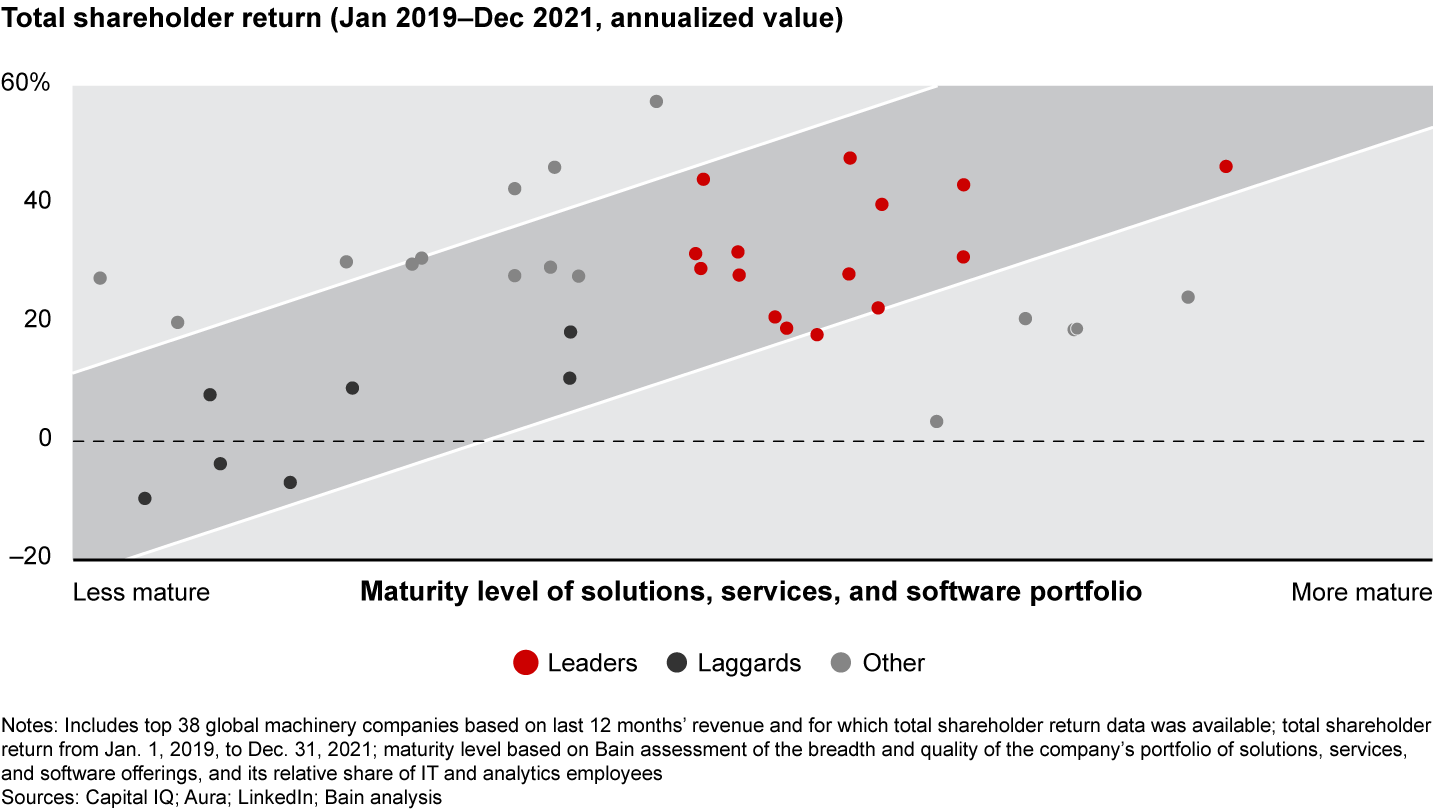
Companies that have already begun adapting their businesses have benefited. Among the top machinery companies worldwide, those with a more mature portfolio of solutions combining hardware, software, and services have significantly outperformed their competitors. The average annualized total shareholder return (TSR) among the leaders from 2019 through 2021 was 32%, compared with 4% among the laggards, according to Bain & Company analysis (see Figure 1). (Scroll to the bottom of the article for details about the methodology.)
Figure 1

These trends are accelerating. Machinery companies are under increasing pressure from their customers, investors, and other stakeholders to make strides in the sustainability, safety, and traceability of their supply chain operations, among other shifting dynamics. Investing in digital tools and solutions-focused business models can help across all these areas.
Nevertheless, moving from an equipment business to a solutions business can be tricky. It carries financial risk, brings execution challenges, and requires new capabilities. But many machinery executives recognize it also has huge upside, with the potential to tap into a faster-growing profit pool, capture higher margins, and increase sales.
The emerging winners of this transformation are already thinking beyond their machines. They’re developing a deeper understanding of how their products fit into customers’ processes, and they’re finding new and creative ways to deliver value as part of a larger ecosystem. To take full advantage of this opportunity, these machinery leaders are evolving their businesses on three fronts.
1. Software and automation
Industrial machines are growing more sophisticated, shifting their value center further up the technology stack.
Take industrial robots. Three decades ago, their value came from their mechanical elements and controls. The addition of sensors and more advanced software made features such as pattern recognition and trajectory corrections possible, increasing robots’ “intelligence.” A little over a decade ago, the industry achieved a step change in collaboration capabilities, introducing robots that could more safely work alongside humans on the factory floor and enable workers to more easily teach robots new skills without having to write software code. More recently, industrial robots have become more mobile. The acquisitions of ASTI’s Mobile Robotics Group by ABB in 2021 and Mobile Industrial Robots (MiR) by Teradyne in 2018 are emblematic of this trend.
Now, leading robotics companies are spending as much time focused on the software and systems that live outside of the robots as they are on the tech inside. For example, they’re investing in software to optimize the movements of an entire fleet of autonomous mobile robots working in harmony across a factory floor. Many are also ensuring their software can easily integrate with customers’ other software tools, from warehouse management platforms to enterprise resource planning systems.
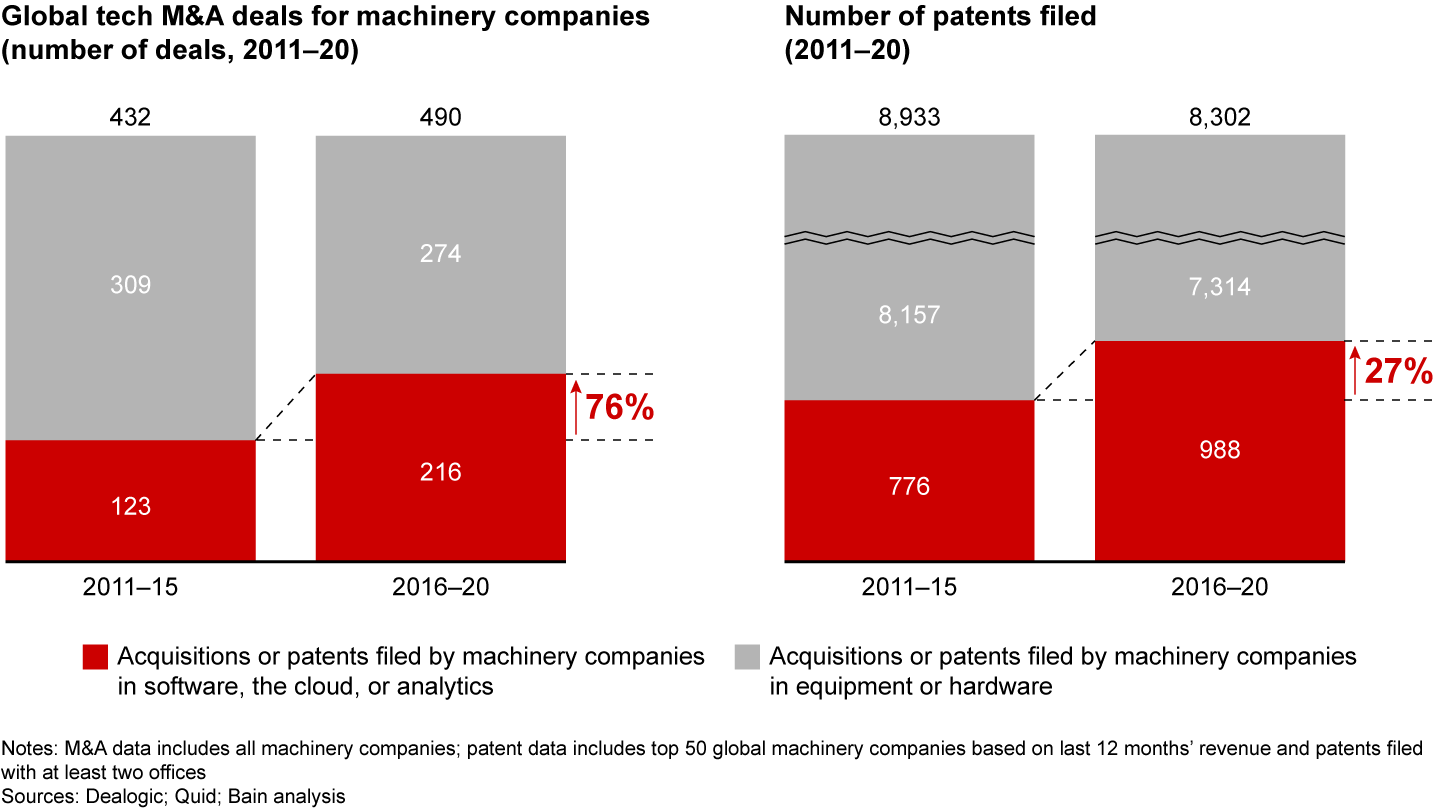
Machinery companies’ mergers and acquisitions and R&D investments underscore this growing emphasis on software and automation. M&A focused on software, cloud technologies, or data analytics made up 44% of all machinery deals from 2016 through 2020, up from about 28% during the previous five years. Machinery companies’ patent applications in these technology areas increased 27% during that same period (see Figure 2).
Figure 2

All the while, industrial robots’ mechanical parts have largely become commodities that most manufacturers now buy off the shelf from other vendors. Chinese manufacturers, for example, can more rapidly develop competing, lower-cost hardware.
Where is this all headed? Further advances will continue to spur more intelligent manufacturing execution systems capable of fully controlling and guiding networks of machines across entire factories. Then even the most advanced robot becomes just another piece of equipment, a simple endpoint in the “edge” automation language that governs computing close to the machines (as opposed to in the cloud).
The takeaway is that even the most technologically advanced machines aren’t safe from disruption. There’s always an automation layer above where direct competitors, automation players, or disruptive start-ups could swoop in with an innovative solution. The question all machinery executives are wrestling with isn’t whether their company should move up the technology stack, but rather how much of the stack they need to control in order to win. For now, the evolving hierarchy of factory automation remains up for grabs. Industrial software and other tech companies are well positioned, but there are plenty of opportunities for machinery manufacturers and even component makers.
The question all machinery executives are wrestling with isn’t whether their company should move up the technology stack, but rather how much of the stack they need to control in order to win.
To climb the automation ladder, the most effective machinery companies will expand each of their products’ range of capabilities so they not only can integrate with but actually lead the other pieces of equipment in their section of a factory. Conveyors could become material handling solutions, pumps become flow solutions, and air conditioners become indoor climate solutions, if the equipment makers manage to establish themselves at the system automation layer. For those solutions to become more than marketing buzzwords, leading machinery companies recognize they must not only transform their product offerings, but also their software capabilities and go-to-market strategies.
2. Verticalization
Advances in software and automation at the system and plant level are enabling machinery companies to meet growing customer demand for more specialized solutions that better serve increasingly diverse machinery operating conditions and requirements across various industries. This is pushing many manufacturers to develop solutions tailored to specific industries, or “verticals.” Historically, machinery makers have either sold direct or partnered with distributors and system integrators to bring their products to market, in many cases with minimal variation across customer segments. A chiller was a chiller; you made it, packed it, and shipped it. If a company shifts to providing cooling solutions, those will necessarily have to be different in supermarkets vs. semiconductor clean rooms, for example.
Companies traditionally might gravitate toward a product-led approach, looking for machines in their existing product catalog that satisfy the customer’s vertical-specific requirements. But that doesn’t go far enough. The leading companies recognize that the most effective approach to verticalization starts with better understanding customers’ needs and then creating custom solutions to serve them. This tends to strengthen relationships and customer loyalty, and it often helps the machinery company identify new selling opportunities. Those that don’t pursue verticalization put their products at greater risk of becoming commodities.
Siemens understood this early and has built a leading plant automation and equipment business geared toward the pharmaceutical industry. It systematically expanded beyond its SIMATIC controllers through acquisitions of pharma-focused software and technology companies, including Elan Software Systems in 2009 and Camstar Systems in 2014. To scale up its expertise in the target vertical, Siemens also hired pharmaceutical engineers and leaders from the pharma industry. Its pharma plant automation group has helped Siemens’ Digital Industries business unit grow to €16.5 billion ($19.1 billion) in annual revenue in 2021, with a profit margin of about 20%.
As machinery companies create more vertical-specific solutions, more local system integration capabilities will have to be added. But it’s not feasible to build local scale everywhere, not even through partnerships. The most successful industrial companies have retracted from entire industry verticals to home in on a narrower set of markets in which they can excel. For example, Honeywell spun off its smart home business Resideo to focus its building technology activities on commercial and industrial facilities. We expect more machinery companies to build repeatability and scale in a small number of strategic verticals, thereby avoiding the trap of becoming a conglomerate of local engineering firms themselves.
Making this verticalization work effectively implies a significant shift in machinery companies’ operating models to become more local, cross-functional, and agile. In order to strengthen their local system integration capabilities, machinery companies will have to find the talent in today’s heavily fragmented and underdeveloped pool of system integrators. Many machinery companies will also need to become more customer-centric, developing solutions by working backward from customers’ needs. This isn’t an easy thing to do. It takes a combination of the right talent and tools, and, for many machinery businesses, a meaningful cultural shift to become “customer obsessed.”
3. New business models
The more software and technology that industrial companies add to their machines, the more their business models will become like the software industry’s. The traditional approach of selling equipment or services, potentially as a bundled package, is giving way to “X-as-a-service” models (where X can be equipment, machinery, or a related offering) and other advanced service agreements. These can come in different forms, including ones that pay machinery companies based on customer usage or on outcomes, where payment is conditional upon the machinery or solution meeting certain performance metrics. Nevertheless, despite notable exceptions, few machinery manufacturers have established successful advanced service models. Connectivity, analytics, and integration of machinery and equipment at a higher automation level are making the opportunity more real and relevant for their customers.
Stretching this to its most extreme conclusion, a manufacturer of equipment that processes and packages drinks would no longer be paid for each piece of equipment sold, but rather would receive a share of each drink purchase at the supermarket. The reality is few outcome-based pricing and sales models will be that extreme in the short term, but these types of agreements will become more widespread over the next decade, deployed in gradual steps. Outcome-based and other advanced service models are expected to grow to 30% of machinery companies’ total services revenue by 2024, triple the share in 2019, according to Bain survey data.
Take the market for “sustainability as a service” as one example of the growth of such business models. These offerings help companies improve their energy efficiency and renewable energy sourcing, either through single solutions for a specific domain or integrated solutions that combine hardware, software, services, advising, and financing. For example, in the most advanced case, an owner of a commercial building or factory might pay an integrated solution provider a share of the energy and CO2 savings achieved across the whole facility; a single solution might focus on energy performance of one building element, such as the HVAC system. A roughly $80 billion global market in 2020, sustainability as a service will grow 17% per year through 2030, our analysis projects, with integrated solutions constituting a majority of the market.
The speed and adoption of advanced service models will vary by industry and type of machinery. A good starting point for machinery executives is to consider which of their customers’ suppliers are best positioned to help the machinery company increase customers’ productivity and would make ideal partners. This assessment will point toward the most attractive market segments and value creation levers for machinery executives to focus their business model transformation. Effective companies will identify the most promising solutions first and develop the technology next.
Going beyond the machine
Machinery and equipment executives understand that embracing the “beyond the machine” mindset means a commitment to revamping their companies’ technology, go-to-market capabilities, and business models. While pilot projects are common and can be relatively low risk, leading firms recognize that scaling them up requires transforming their organizations and forging deeper partnerships, including with firms previously viewed as competitors. Meanwhile, technology and engineering talent shortages, the rapid maturation of lower-cost competition, and other challenges are only growing more acute. The winners over the next decade will experiment aggressively in the ecosystem outside of their machinery, pushing their boundaries within that ecosystem in order to discover and develop defensible competitive advantages and new depths to their customer relationships. Others will struggle to maintain their differentiation and reduce costs rapidly enough to keep up.
Many machinery and equipment companies have already started on this journey. Most already feel behind. In this report, we outline the priorities and key actions that executives can take across their businesses in order to lead the next era.
More from the report
Read our Global Machinery & Equipment Report 2022
First published in mayo 2022