

Brief

Executive Summary
- Executive teams can gain traction by rigorously prioritizing their most important sustainability themes and identifying the hot spots in each.
- Retailers then need to bridge the gap between what people say and do on sustainability, by nudging shoppers to make better choices.
- Sustainability leaders will also deepen collaboration with suppliers and innovators, while giving frontline commercial and operational teams more ESG responsibility.
Sustainability has leaped to the top of the agenda for retailers. The expectations of consumers, investors, regulators, and other stakeholders are rising—and rightly so, given the scale of retail operations and the number of customers they touch. Covid-19 upped the ante further.
In a bid to scale up their response, retailers are laying the foundations for a systematic approach that can go beyond quick wins and small pilots. Three-quarters have made sustainability a formal pillar of their strategy, while adoption of Science Based Targets for carbon reduction quintupled from 2019 to 2021. Environmental, social, and governance (ESG) concerns are starting to propel sector M&A. In 2010, there were just 14 ESG-themed acquisitions and funding rounds in retail and consumer products. In 2021, there were 307.
However, the industry knows it’s still a long way from where it needs to be. A recent Bain & Company survey showed that 9 out of 10 retailers have made less, or far less, sustainability progress than they expected. In our latest ESG maturity analysis across the US, Asia-Pacific, and Europe, only 1 of the 27 grocers and apparel retailers assessed had a leading approach to ESG, with none emerging as truly distinctive (see Figure 1).
Figure 1


Moving from sustainability commitments to action is hard. First and foremost, the sector faces a funding gap: Sustainable supply chains and food systems can be more costly than existing ones, which don’t acknowledge the full cost of carbon emissions and other previously ignored externalities. The thin margins of retailers and many of their suppliers make this extra cost a genuine barrier to progress. In most markets, tax incentives or funding mechanisms to support these investments aren’t yet available.
Shoppers are a conundrum, too. They say they want progress, but most aren’t changing their shopping behavior; nor are they prepared to pay more for sustainable options, especially amid today’s cost-of-living squeeze. Retailers are also constrained by being at the end of their supply chains, which makes it harder to orchestrate change. And in too many retail businesses, sustainability targets aren’t sufficiently owned by the commercial and operational teams, without whom nothing can get done at scale.
It’s little wonder many C-suite retail leaders don’t feel fully in control of sustainability, particularly when macroeconomic turbulence is putting extra strain on stretched investment budgets. Yet our work with retailers globally suggests it is possible to accelerate progress on sustainability. Moving from “why” to “how” via the pragmatic approach described below won’t just satisfy the moral and social imperative to act; it will also unlock new sources of value in the long run.
Make choices and identify hot spots
To move fast, retailers need to be rigorous in choosing key sustainability themes in their business and prioritizing the actions most likely to deliver both rapid and lasting impact. The initial scoping exercise can be overwhelming, given the scale and complexity of the issues involved. Even though retailers have tended to focus on six overarching themes (see Figure 2), this set of priorities can still be too broad for many companies to make genuine progress against, due to the myriad of topics in each area.
Figure 2


When they have narrowed down their priority list as much as they can, executive teams have to define the right level of ambition for each theme: Is it to minimize risk and comply with evolving regulations, or is there opportunity to build a reputation for excellence in that area?
The next step is to take a careful look at the gap between where you are now, where the competition is, where consumer and regulatory expectations are heading, and where you want to be. Above all, that means finding the hot spots in each part of the business—areas that are disproportionately responsible for sustainability challenges and therefore demand priority action.
A leading grocer followed a similar playbook when it created an end-to-end sustainability strategy balancing ambition and “doability.” From its multiple ESG commitments, it selected four priorities: healthy diets, food waste, plastic reduction, and emission reduction. Baseline mapping was critical to establish the hot spots. For instance, it showed that milk bottles, water bottles, meat trays, and fruit and vegetable wrappings accounted for half of plastic use by weight, while 80% of food waste was in the bakery, fruit and vegetable, and dairy categories. Similarly, it clarified that 40% of Scope 3 indirect emissions were generated by products related to animal protein.
Armed with granular insight into hot spots, companies can then create a roadmap that sequences the right mix of actions that have sustainability impact, are doable and affordable, and will resonate with their customers.
Nudge consumers to make better choices
There’s now a critical mass of shoppers who talk of making a difference with their purchases. In Europe, 74% of consumers say they’re willing to pay more for products with a positive environmental impact or health benefits. In the US, that figure is 71%. In the Asia-Pacific region, it’s 90%. For younger people in particular, sustainable shopping is a mainstream preoccupation—half of EU spending on sustainable insurgent brands is by millennials, for instance.
Overall, however, there’s still a big gap between what consumers say and do on ESG. Looking at packaged food in Asia-Pacific, we quantified this discrepancy by comparing the percentage of shoppers who said sustainability was a top-three priority with the market share of sustainable products. In mature economies such as Australia, market share was 7 to 10 percentage points below what shopper intentions alone would have predicted. In fast-growing markets, the shortfall was even greater, reaching 43 percentage points in China.
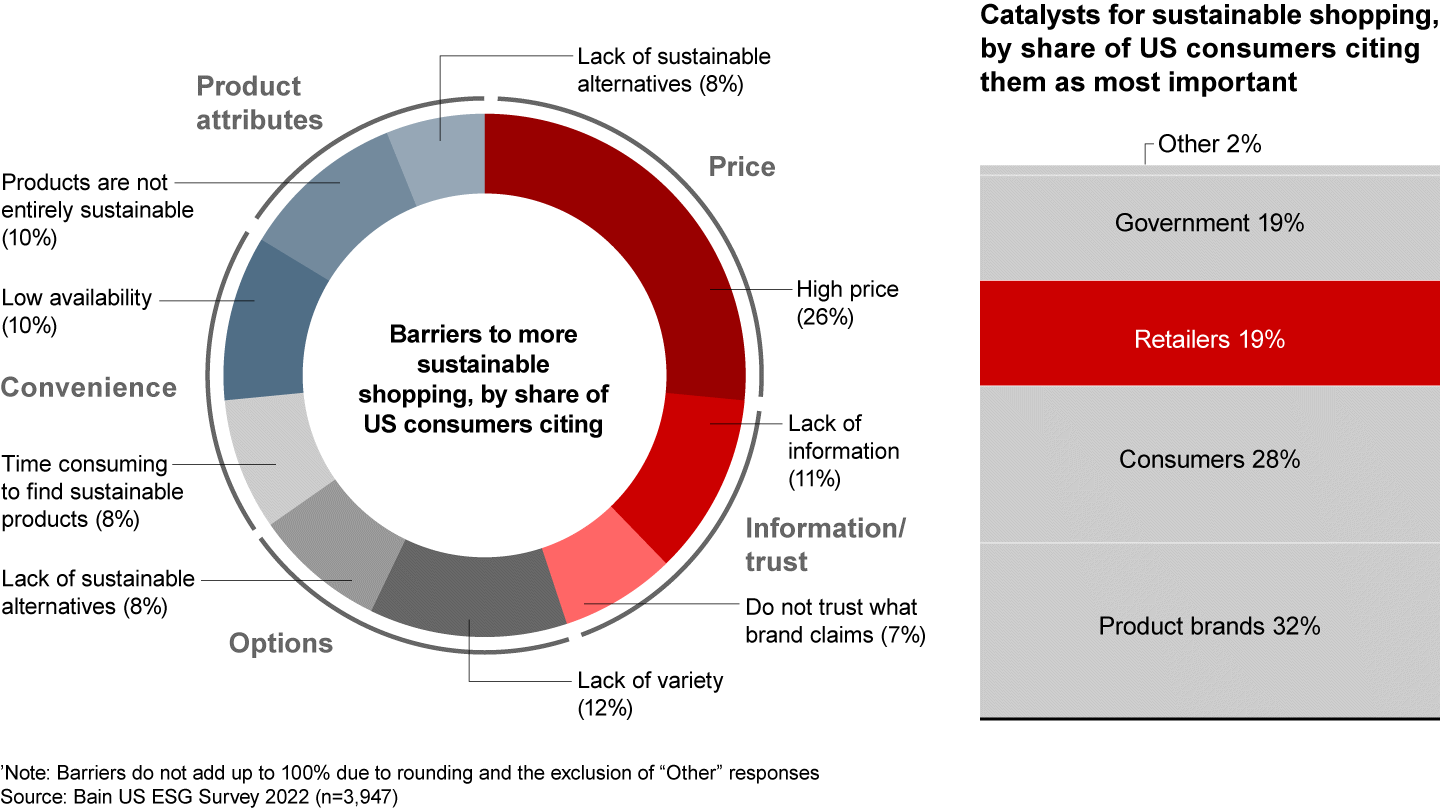
It would be easy to blame consumers’ reluctance to follow through on the higher cost of sustainable goods. Price is indeed a factor. Yet other barriers have a much bigger collective impact, accounting for three-quarters of the problem in the US (see Figure 3). These non-price-related issues include inadequate product information, lack of variety, poor quality, and low availability. Retailers can start reducing the “say-do gap” by removing some of these obstacles, through behavioral nudges and more direct means. In fact, one in five US consumers look to retailers above all to help them shop more sustainably, through measures such as increasing the availability of sustainable products in their local stores and awareness-building advertising.
Figure 3

Making ESG ranges hypervisible is another solution. Selfridges prominently showcases its Reselfridges preowned fashion venture both in-store and online, for instance. Crystal-clear labeling and communication can also tackle consumer mistrust (as long as that labeling serves the customer and doesn’t degenerate into greenwashing). Potent examples in this area include US grocer Kroger’s nutritional rating app and Allbirds’ carbon footprint calculator for its footwear.
In some cases, retailers will need to innovate to offer more sustainable options (as fashion house Stella McCartney did with mushroom-based leather clothing), or remove products and ingredients that no longer meet consumer expectations in areas such as animal welfare. Increasingly, retailers will also need to directly incentivize consumers to make sustainable choices that match the way they talk about ESG. Examples today include Zalando buying secondhand items from customers for resale on its platform in some European markets, in return for store credit or a charitable donation, and Costa Coffee’s loyalty program, which lets members earn free coffees twice as quickly if they use a reusable cup in-store.
A new era of collaboration
Being at the end of long and complex supply chains creates a huge challenge for retailers. They can’t act on sustainability in a meaningful way without suppliers acting, too. For instance, 95% of greenhouse gas emissions in retail are Scope 3 indirect emissions that retailers can’t tackle without the help of upstream and downstream supply chain partners.
The good news is that most large consumer products companies are also making strong sustainability commitments and will need retail collaboration to achieve them. Take plastic reduction, where widespread adoption of refills or reusable bottles will be required in categories such as cleaning and personal care. Without retailers giving shelf space to these alternatives or participating in the reuse cycle, consumer goods companies will not meet their targets.
Multiple examples of such win-win collaboration already exist. Walmart, for instance, has signed up more than 4,500 suppliers to its Project Gigaton, which aims to eliminate or avoid 1 billion metric tons of supply chain emissions by 2030 (and had already achieved more than 574 million metric tons as of 2021). One of the ways Walmart helps suppliers make progress is by providing calculators (created in collaboration with the World Wildlife Fund and the Environmental Defense Fund) that show the impact of supplier actions in terms of metric tons of carbon dioxide equivalent.
Meanwhile, Prada has formed a partnership with Aquafil, an innovative Italian textile yarn producer, to use the regenerated nylon Econyl for bags, clothing, and footwear. This environmentally friendly nylon, produced using recycled plastic and discarded fishing nets, has 90% less global warming impact than virgin nylon sourced conventionally from petroleum.
More collaboration ought to be in the cards outside the supply chain, too. With innovation becoming ever more central to sustainability, leading retailers are turning to trailblazers in areas such as traceability, carbon offsetting, and waste reduction to help them stay ahead.
For instance, Carrefour, Kroger, Metro, and Australia’s Woolworths are among the retailers that have been working with Loop, a specialist in reusable packaging programs for branded consumer products such as shampoo, dishwasher tablets, jam, pasta, rice, and beer.
In the case of the Aura Blockchain Consortium, LVMH, Prada, Richemont, and OTB became collective innovators (along with Mercedes-Benz), promoting a blockchain standard for authenticating luxury goods that will aid the burgeoning secondhand luxury market.
By the same token, there’s a growing opportunity for retailers to work through industry alliances to engage with policymakers and activist groups and ensure that their frontline expertise is used fully.
Sustainability inside
With sustainability, those who need to do it need to own it. In practice, that means shifting more responsibility from specialist ESG teams to the frontline commercial and operational teams that actually need to make change happen.
At many retailers, commercial and operational teams may view sustainability as something that’s done to them. They can feel overwhelmed by the sheer volume of calls for change. They can also feel isolated when making the tricky trade-offs that real progress entails.
To help them, retailers have to dial down the ESG noise. That can be done partly by prioritizing and sequencing the actions described earlier. Talking about sustainability in simple, concrete terms will help, too. Commercial and operational teams also need to be involved in planning and target setting, and therefore empowered to make trade-offs. Targets (with linked incentives) should be stretching but realistic.
However, clear accountability and targets are just the beginning—getting it done requires embedding the work into existing “business as usual” practices and the data used for decision making. Here the sustainability team can play an important role, continuously improving the quality of information available on sustainability metrics, while pushing teams to act with what they have in hand.
When the leading grocer mentioned earlier relaunched its sustainability strategy, it found multiple ways to reduce the noise for its commercial and operational teams, giving them focus and ownership.
In confectionery, for instance, it identified that food waste was a relatively low-level concern, allowing that team to focus more on healthy diets and plastics as the most pressing issues. With clear priorities, they could work on tangible initiatives, such as removing secondary packaging from private-label snacks or increasing the number of SKUs wrapped in paper.
Finally, progress tracking was fully embedded in the existing routines of the category management teams, such as range and promotions planning (supported by SKU-level data on products that posed the biggest issues in terms of health or plastic use) and supplier reviews (which incorporated supplier ESG performance metrics).
Long-term value lies ahead
Retailers face a long road ahead on sustainability, but opportunities will abound at every stage of that journey. There’s the prospect of stronger sales growth, for one thing. In the US, we recently found that 40% of consumers planned to spend more on sustainable brands over the coming three years. With demand rising, marketing a product via its sustainability credentials can have a multiplier effect on growth.
Sustainability improvements also have the potential to reduce costs and generate a positive return on investment. Then there’s the resilience dividend. For instance, sustainable sourcing can make it easier to weather short-term crises such as the Covid-19 supply disruption. Likewise, companies that are proactive on sustainability are less likely to be hit by regulatory tightening.
The differentiation offered by sustainability isn’t limited to products, either. It can give retailers an edge over their rivals when it comes to attracting investors, tapping rising demand for ESG-focused investment. Sustainability can help attract and retain the best talent, too. In inflationary times, a strong record on sustainability gives retailers a way to keep staff, beyond just ratcheting up their pay.
On an environmental, social, and economic level, the message is clear and consistent for retailers: Now is the time to move from commitments to action.
First published in octubre 2022