

Report

Резюме
- Southeast Asian conglomerates have delivered lower total shareholder returns than pure plays, ending a regional anomaly.
- Top-quartile conglomerates separated from the pack, offering lessons about performance and reinvention.
- To succeed in a lower-growth environment, Southeast Asian conglomerates must reshape their businesses over four dimensions.
Bain & Company has analyzed the financial performance of Southeast Asian conglomerates since 2003. The research spans global recessions, commodity cycles, the Covid-19 pandemic, and shifting political regimes. It covers the rise of China and Southeast Asian nations, technology-driven industry disruptions, and major generational shifts.
For two decades, Bain tracked how conglomerates have—and have not—adapted to shifting circumstances.
One conclusion is clear: It’s time for change.
The best vs. the rest
This research began as a serious study of the “Southeast Asia anomaly.” From 2003 to 2012, conglomerates in Southeast Asia outperformed pure plays in total shareholder return (TSR)—a phenomenon not replicated in other corners of the world. Over time, however, that premium eroded.
At the time of the last report studying the anomaly (which covered up to 2022), Southeast Asian conglomerates no longer enjoyed a performance advantage. On average, they delivered only a modest 4% TSR, lagging pure plays by 6 percentage points.
Data from 2016 to 2025 looks similar. Conglomerates earned 4% in average annual TSR, falling 5 percentage points behind pure plays. At first glance, it looks like an unremarkable, repeat performance. But there is more.
A significant shift is underway, hiding in the aggregate performance numbers. Top-performing conglomerates have pulled sharply ahead, achieving 20% TSR.
The analysis of these leaders (and Southeast Asian conglomerates more broadly) identified four pathways to help conglomerates stay relevant in the years ahead. This report explores the strategies and reinventions required for conglomerates to survive.
Performance recap, 2016 to 2025
Since 2010, Southeast Asian conglomerates have steadily lost ground to pure plays (see Figure 1). Average annualized TSR was 4% over the past decade for conglomerates, trailing pure-play companies by 5 percentage points. While conglomerates have reduced the performance gap from our 2022 report, TSR remains subdued relative to the heyday of the early 2000s.
Figure 1
Three main factors have compressed conglomerate performance:
- Erosion of traditional advantages: Long-standing conglomerate strengths—such as privileged access to decision makers, regulatory bodies, talent, and capital—have gradually diminished or even turned into disadvantages. In their place, the law of “strategic gravity” emerged, requiring conglomerates to narrow their span of activities in order to build or reinforce leadership in their core businesses.
This shift, combined with increased pressure from shareholders, has unraveled conglomerate structures in more mature markets. To remain relevant and competitive, some Southeast Asian conglomerates have fundamentally reimagined their portfolios. Keppel and ST Engineering, for example, have transformed so extensively they no longer fit the traditional conglomerate definition. - Recent economic slowdowns: Over the past decade, economic growth in Southeast Asia has significantly decreased, creating additional challenges. Many conglomerates have struggled to adapt, often failing to tighten costs and capital management or recalibrate toward faster-growing sectors.
- Leadership succession: Leadership transitions are underway in many family-controlled conglomerates, as first- and second-generation leaders hand the reins to younger executives, creating challenges to the previous generation's established governance, operating model, and culture.
The next generation wants and needs a different approach, one that favors an investor mindset over that of an owner-operator. Portfolio expansion compounds the succession challenge, requiring conglomerate staff to develop new skills to match their increasingly complex portfolios.
Standout performances still exist
Average performance figures tell a story of eroded advantages and dwindling returns. But another narrative sits beneath the surface.
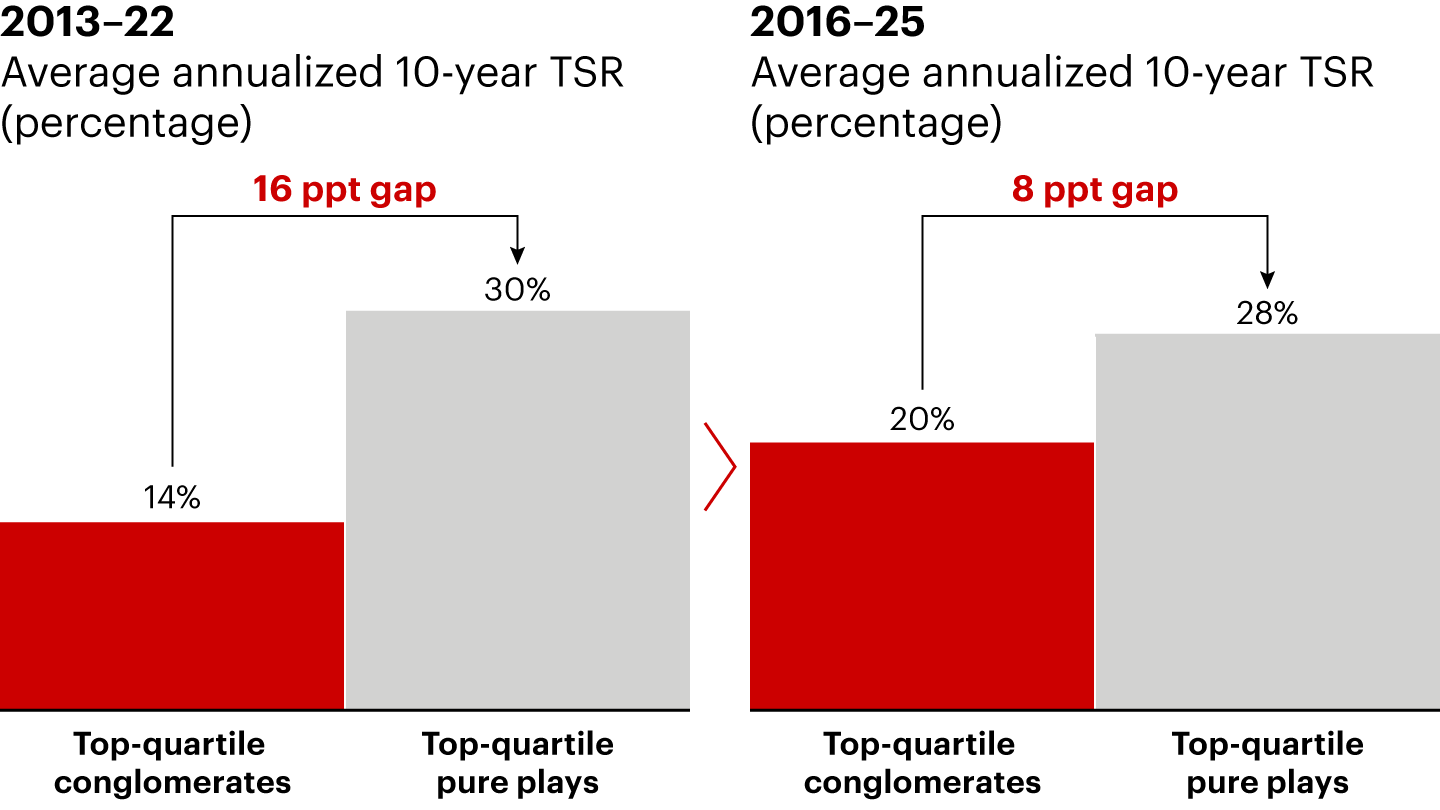
A select group of conglomerates pulled away from the pack. From 2016 to 2025, top-quartile conglomerates achieved 20% annualized TSR—a 6-percentage-point improvement over the prior period (2013 to 2022). Over the past three years, this group also cut the performance gap with pure plays in half, reducing it from 16 percentage points to 8 (see Figure 2).
Figure 2

Note: Top-down calculation was made by aggregating annual TSR per year for 10 years, into a 10-year TSR
Sources: Capital IQ; Bain analysisThe top quartile is anchored by two archetypes:
- All-weather stars: Conglomerates that have consistently delivered top-quartile performance over the past two decades, such as Sinar Mas and Sunway
- Emerging stars: Conglomerates that previously ranked in the third or bottom quartile but jumped to the top following significant transformation (such as Keppel)
Their results send a clear message: Conglomerate underperformance is not inevitable.
Four paths to conglomerate success
In the past three years, a subset of conglomerates successfully rebounded by transforming their businesses. Bain & Company’s analysis of long-term and emerging performance identified four pathways to successful transformation. Lower-quartile conglomerates must act urgently to:
- Maximize core business value;
- Manage the portfolio actively;
- Optimize capital structures; and
- Transform the operating model.
The first three priorities are the substance of transformation: what must change. The fourth addresses broader organizational implications: how the business must evolve to enable long-term success. Arguably, the former cannot happen without the latter.
1. Maximize core business value
Unlike pure plays, conglomerates operate across multiple distinct industries. That diversity can make it difficult for group management to pinpoint the specific strategies and tactics that drive success. Likewise, it can divert attention and resources away from core businesses, preventing them from reaching their full potential.
Conglomerates need strategic clarity and strong management discipline to overcome these challenges. These can be achieved by doing the following:
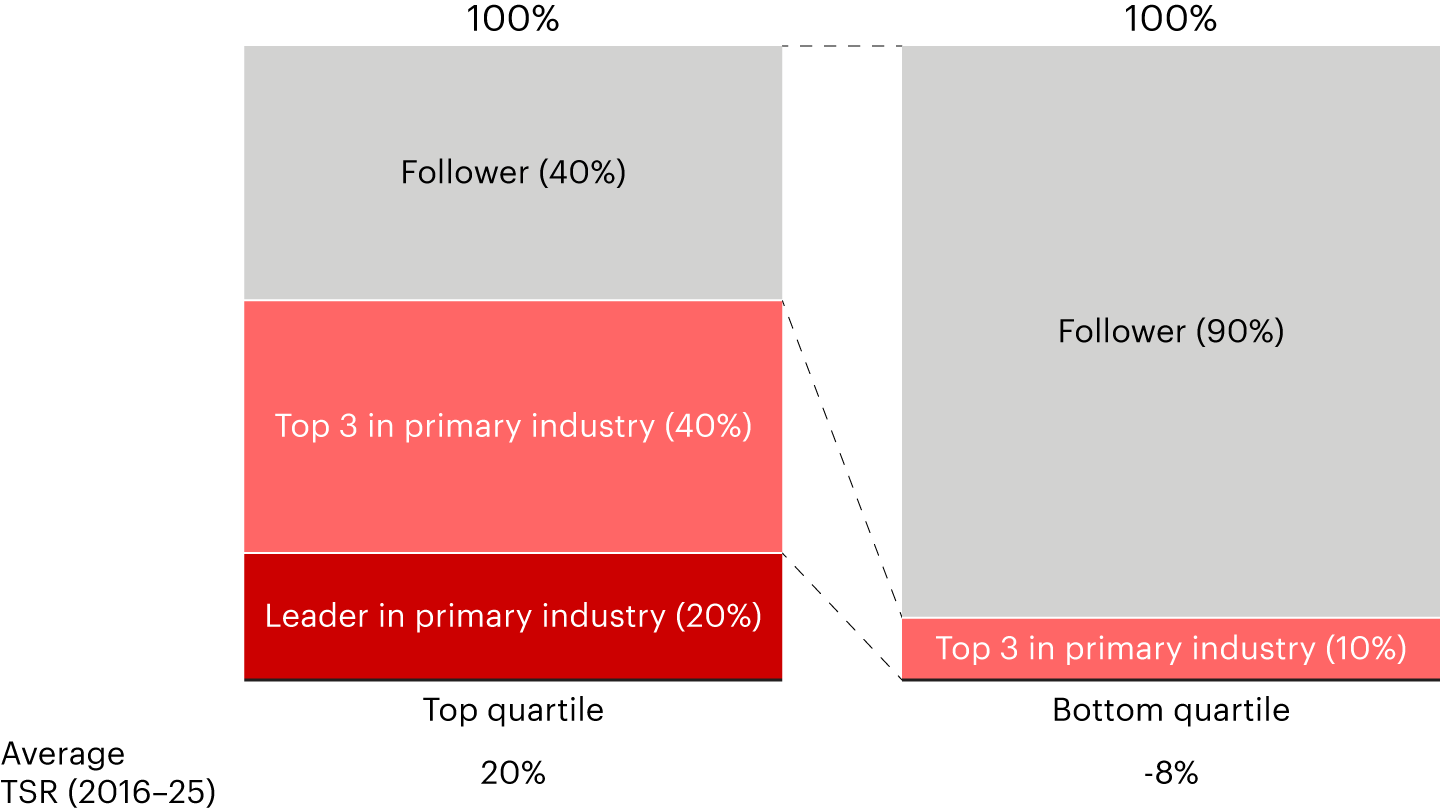
Building and maintaining industry leadership: Sixty percent of top-quartile conglomerates are industry leaders in their primary sector (see Figure 3). By comparison, only 10% of the bottom-quartile conglomerates claim industry leadership.
Industry choice is equally important and requires leaders to stay abreast of market and consumer shifts. Industries that were attractive a decade ago may not offer the same opportunities in the years ahead.
Figure 3

Note: TSR is total shareholder return
Source: Bain analysisManaging costs tightly: In Southeast Asia, conglomerates have underperformed on productivity measures and have been unable to capitalize on the rapid growth of the early 2000s. Recent economic turmoil and a lower-growth environment have intensified pressure to improve productivity. However, diversified groups are often slower to respond to market changes, particularly when strong performance in some divisions offsets weaknesses in others.
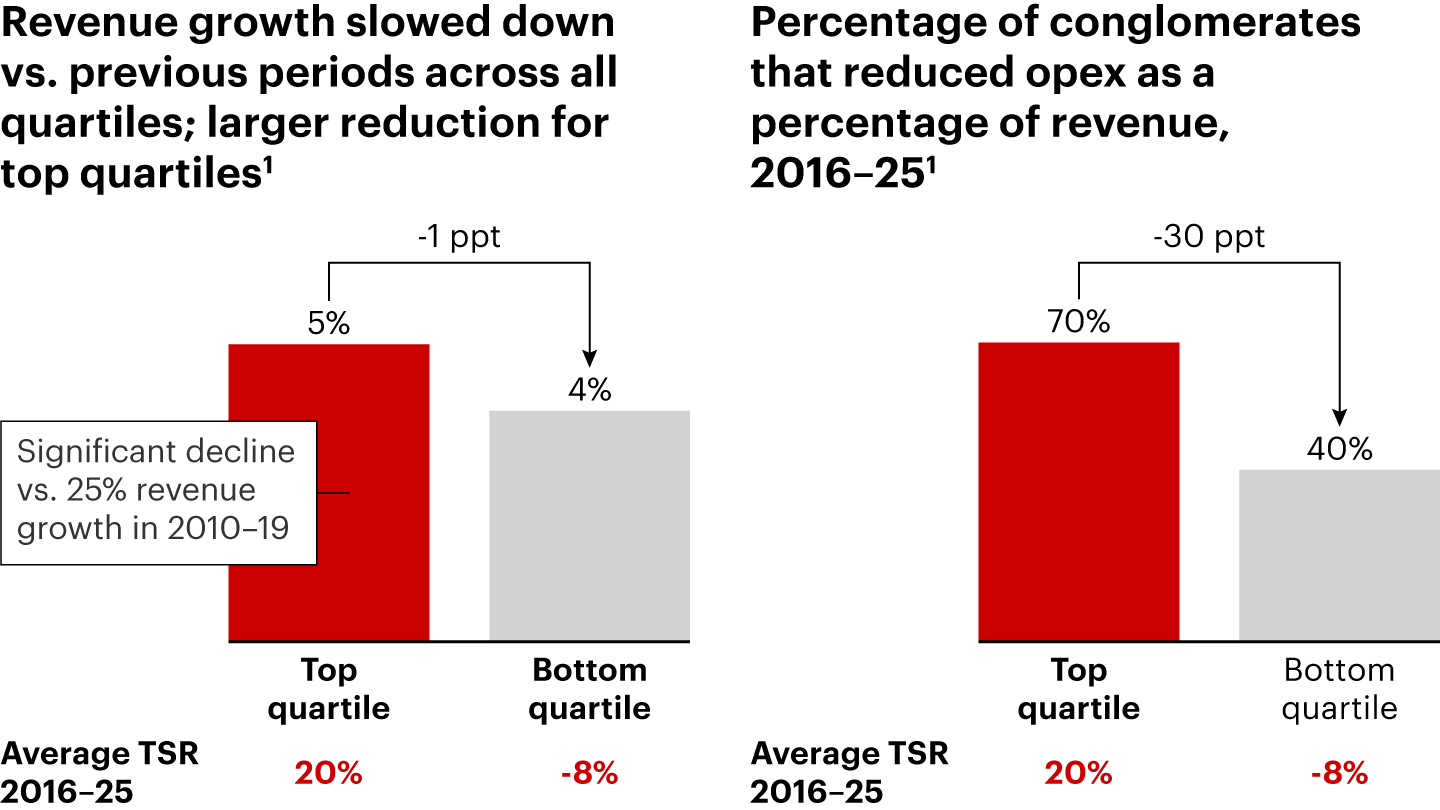
Conglomerate leaders must exercise strict cost discipline, carefully monitoring and adjusting for macroeconomic factors and consumer patterns that are beyond their control. Top-quartile conglomerates have proven it’s possible: Over the past decade, 70% of top-quartile conglomerates improved their operating expense productivity, compared with only 40% of bottom-quartile conglomerates (see Figure 4).
These companies achieved cost discipline through a combination of cost-optimization initiatives and targeted investments in efficiency and innovation. Digital technology and artificial intelligence are often a powerful enabler of business cost transformation.
Figure 4

Notes: 1) 2025 revenue and opex extrapolated from FY 2024 figures given lack of available 2025 financials at the time of the report; TSR is total shareholder return
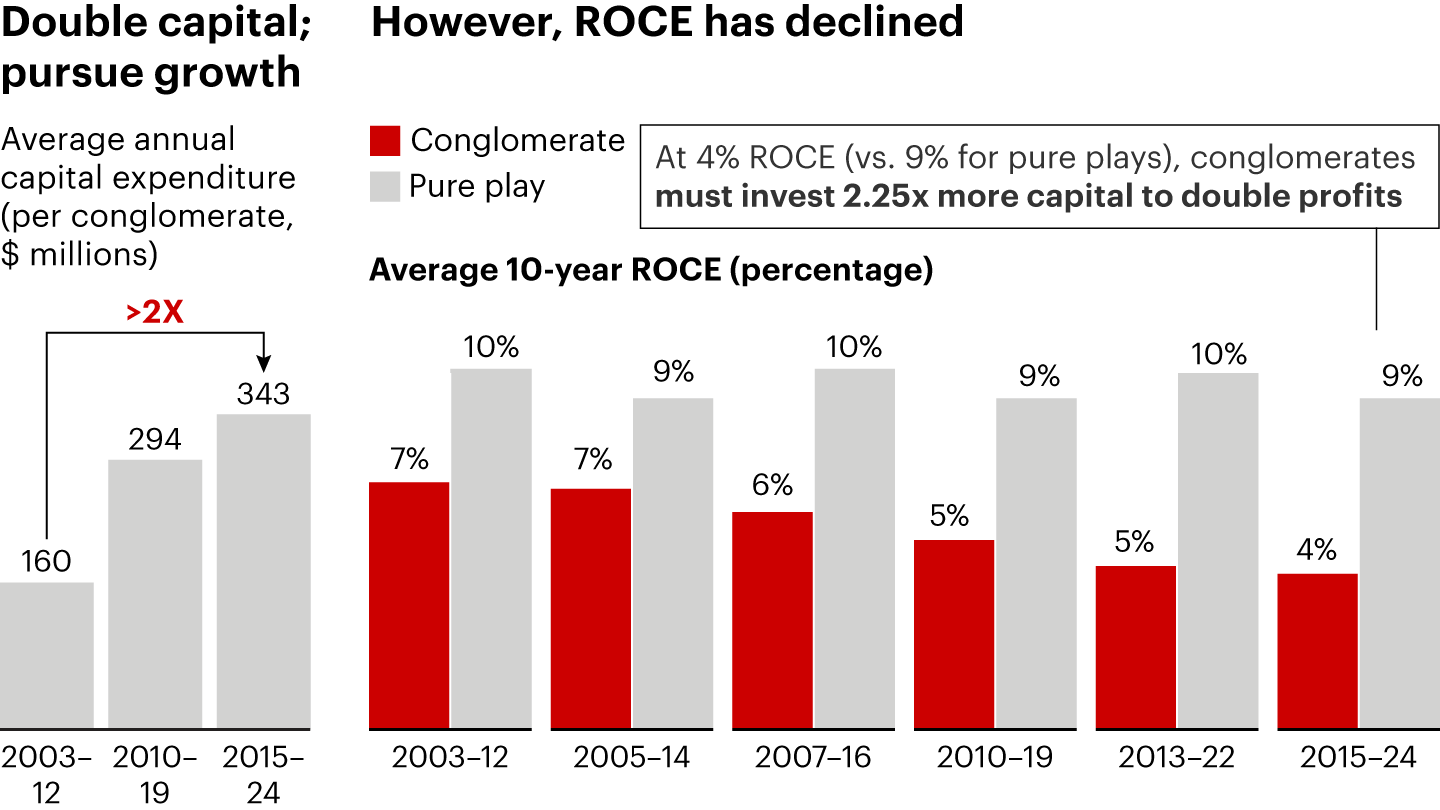
Source: Bain analysisBeing disciplined with the use of capital: During recent periods of slower growth and low interest rates, many conglomerates significantly increased capital expenditures—without achieving proportional returns. Since 2003, conglomerates have doubled capital spending, while returns on capital have declined by nearly half. By contrast, pure plays have maintained relatively stable returns over the past two decades (see Figure 5).
Several factors have contributed to this gap. Return on capital is not a priority performance metric for many conglomerates. Conglomerates often poorly scrutinize and track capital investments, and many operate without well-functioning investment committees. In addition, conglomerate portfolios frequently include capital-intensive sectors, such as real estate and telecommunications, and investment in these sectors structurally drags down capital productivity.
Top-performing conglomerates are more disciplined in capital allocation and improve their return on capital by adopting asset-light approaches in select sectors. For example, they use alternative models, such as joint ventures or development-as-a-service, and lessen capital intensity in sectors like real estate.
Figure 5

Notes: ROCE is return on capital employed
Source: Bain analysis2. Manage the portfolio actively
Both publicly held and family-controlled conglomerates need clear objectives to guide portfolio management. They also need strategic foresight to uncover higher-growth and higher-return opportunities—and the agility to shift toward more attractive profit pools. Furthermore, portfolio management must become a more dynamic process.
Clear objectives: To enable more rigorous portfolio management, conglomerate leaders must first establish clear financial and nonfinancial objectives. Financial objectives typically include a mix of market-value indicators, such as TSR for publicly listed companies, alongside objectives related to top- and bottom-line growth, cash flow, return on capital, and balance sheet strength. Nonfinancial objectives (including those related to strategic fit, level of diversification, and investment concentration) should also inform portfolio decisions.
Multi-year TSR has become an increasingly popular indicator among publicly listed conglomerates. It’s used as an absolute measure or measured relative to peers. TSR reflects performance across several dimensions, including historical growth, margins, returns, and expectations for future growth. It also incorporates the investor perspective, providing an external lens on corporate performance. It is worth noting, however, that when a company's share free-float is limited and private ownership is concentrated, TSR should be considered with caution and complemented with other indicators, such as cash-flow generation and growth.
Family-controlled groups should consider additional factors, as portfolio resilience is often essential for preserving generational wealth. For these entities, cash flow and dividend objectives must align with current and future family needs in addition to other priorities, such as philanthropic commitments.
Portfolio strength: Financial performance and portfolio strength are closely linked. As traditional conglomerate advantages have faded, leaders have prioritized building or defending leadership positions in profitable sectors (see Figure 6).
Finding those sectors requires forward-looking analysis and timely shifts to higher-growth sectors. Conglomerates must assess the attractiveness of profit pools they participate in today and how those markets are likely to evolve. For example, the real estate and telecommunications sectors have declined in overall TSR, while technology and healthcare sectors have become more attractive.
In one example, Mayapada started to rebalance its portfolio around 2018 to address gaps between healthcare supply and demand in Indonesia. By shifting the company’s core, Mayapada rapidly scaled segment revenue and increased its 10-year TSR by 76%. By comparison, the company’s prior 10-year TSR was 0.6% (2009 to 2018).
Figure 6
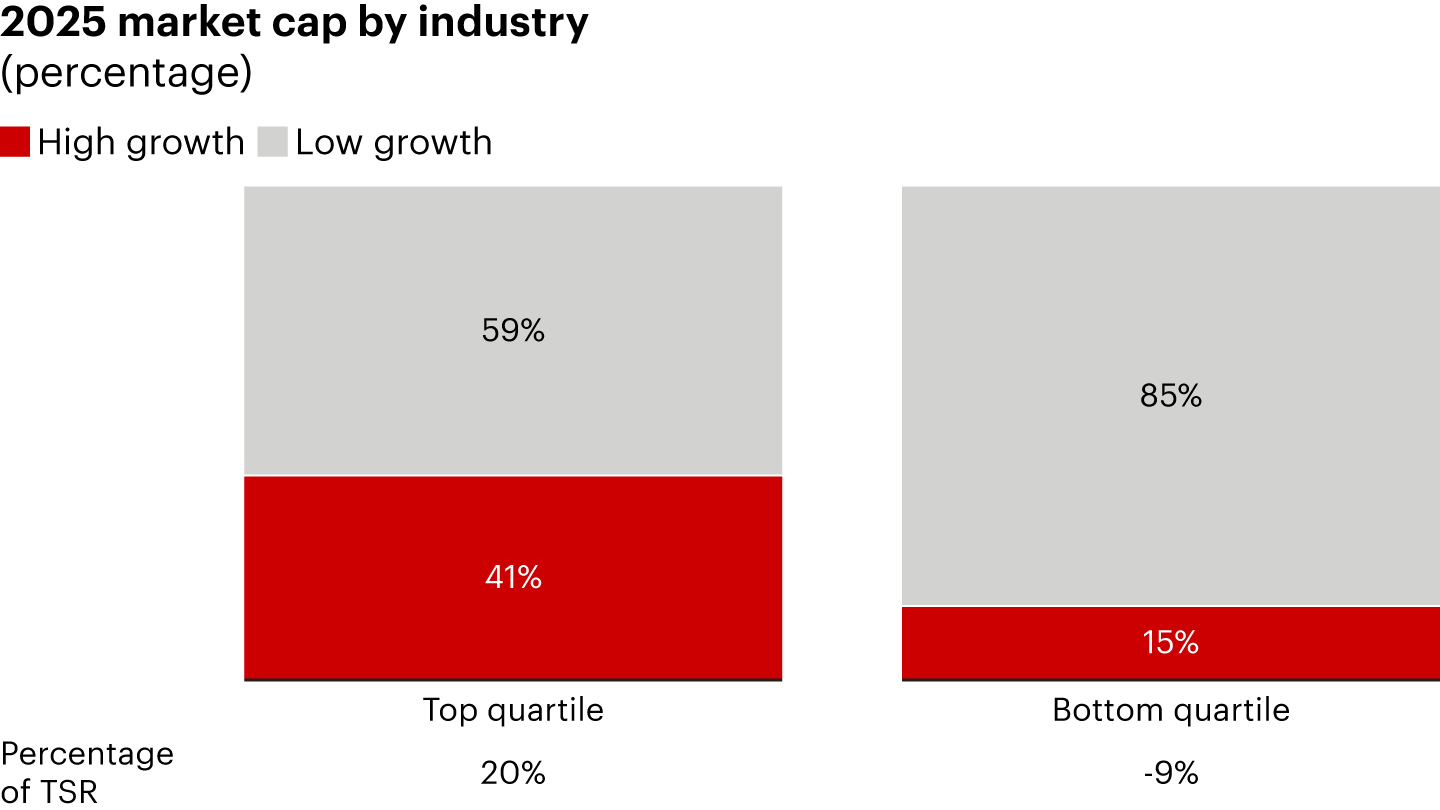

Notes: TSR is total shareholder return; high-growth industries include healthcare, financial services, technology, consumer goods
Source: Bain analysisDynamic portfolio management: Top-performing conglomerates actively manage their portfolios by reallocating capital away from sectors where leadership positions are unattainable or sector attractiveness is declining. They shift resources to new growth engines, often using M&A to reshape portfolios aggressively.
Sunway, for example, reshaped its portfolio from 13 business units to three core pillars in which it can establish leadership, enabling the company to double down on expansion and profitable growth.
When we believe in the longer-term fundamentals and growth of a new business (e.g., healthcare), which is also synergistic with our overall ecosystem, we will spend the time to build up the domain knowledge in that field and grow it towards industry leadership.
Similarly, Keppel divested its asset-heavy offshore and marine businesses—as well as a number of unproductive assets—to make funds available for its new core asset management business and return cash to its shareholders. "We committed to an asset management and operator model as our core after a process of divergence and convergence, understanding our own strengths, our right to play and the right to win, as well as our own heritage," says says Loh Chin Hua, CEO of Keppel. "We had an end point in mind, but the final shape of the new Keppel took time to emerge. We had a clear North Star to work towards and focused on our strengths to create a differentiated platform. Being at the heart of macro trends like the sustainability/energy transition, connectivity, and the emergence of alternative real assets as an asset class has also been helpful. But there were difficult decisions along the way, especially spinning off offshore and marine, Keppel’s original business."
Some portfolio decisions move conglomerates further from their historical core. When this occurs, key economic advantages and other determinants of success start to fade. Leaders can mitigate this risk by setting industry guardrails or by pursuing adjacencies through separate management teams, joint ventures, or acquisitions. YTL, for instance, shifted its legacy focus from slower-growth industries (such as utilities and property) to higher-growth adjacencies (including digital infrastructure for data centers). It now benefits from stronger margins and has more opportunities to scale and gain market share.
3. Optimize capital structures
Most conglomerates’ capital structures have been shaped by legacy decisions, resulting in a collection of suboptimal arrangements and a cascading roster of listed entities.
Investors often penalize conglomerates for overdiversification, particularly when synergies or strategic coherence across businesses is unclear. The traditional conglomerate model and interlocking shareholdings are often viewed as costly and complex, and investors assume the business is encumbered by layers of management and governance.
The result is a deep conglomerate discount. From 2022 to 2025, conglomerates traded at a 32% discount, on average, with valuation gaps ranging from 10% to 75% relative to sum-of-the-parts valuations (see Figure 7).
Figure 7
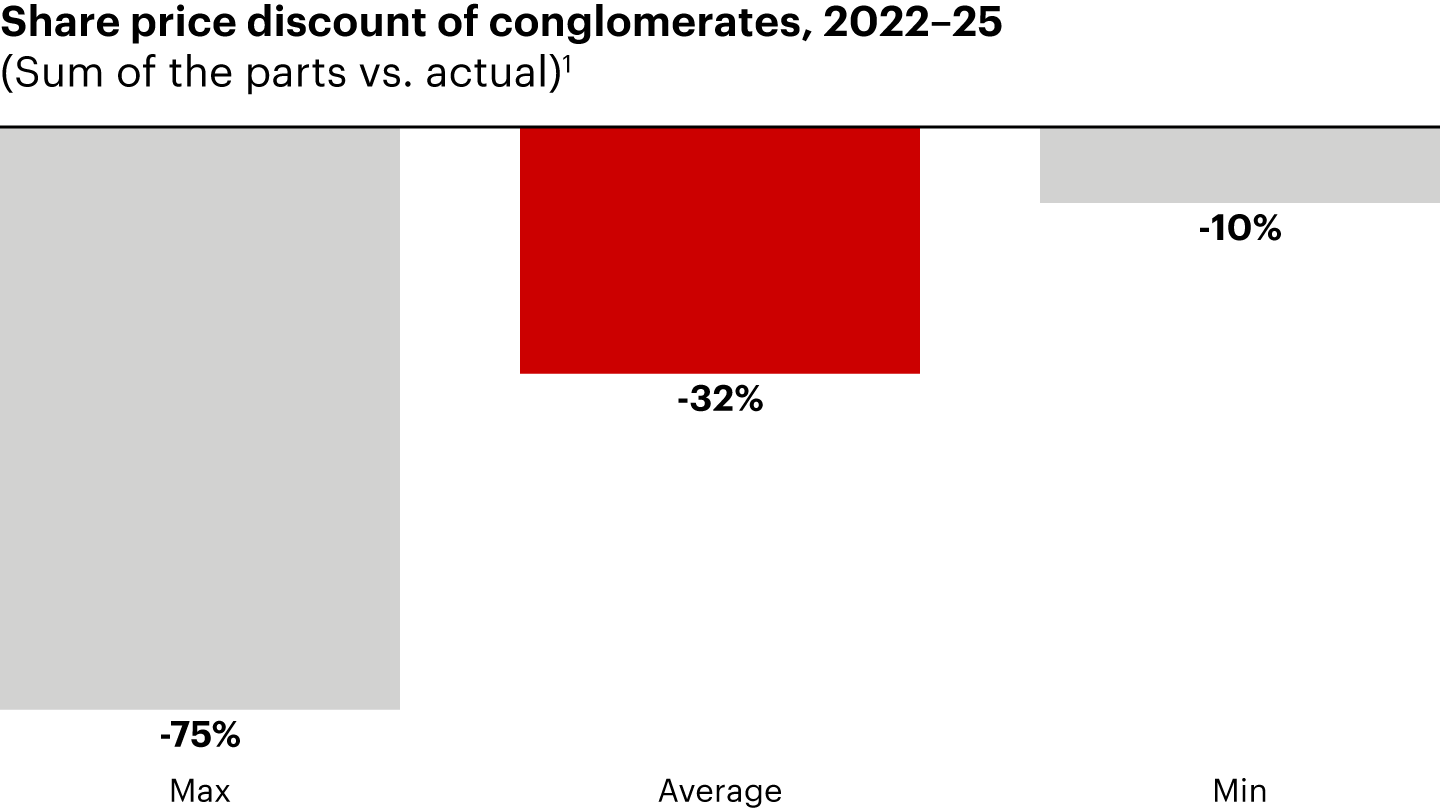

Notes: 1) Based on analyst-reported conglomerate discounts where available; otherwise, discounts to NAV/SOTP were used as proxy; across publicly listed conglomerates, 2022–25 (n = 20)
Sources: Company announcements; analyst reports; lit. searchIn Southeast Asia, many conglomerates are structured in ways that investors tend to undervalue:
- Approximately 43% of Southeast Asian conglomerates have a listed parent and a mix of listed and private subsidiaries. This group delivered the lowest TSR performance between 2016 and 2025, at 1.2%. These structures are often created to meet capital needs and derisk investments; however, they can muddle transparency and create potential conflicts of interest, which concern investors.
- More than one-third (36%) are structured as private holdings with public and private subsidiaries. This model is ideal for highly diversified portfolios, as it allows parent companies to incubate new businesses outside of public scrutiny. In Southeast Asia, this group achieved the highest TSR performance, at 8.1%. Well-known examples include Sinar Mas in Indonesia and the CP Group in Thailand.
- Less than one-quarter (21%) operate as public holdings with private subsidiaries. This structure is best suited for groups with tightly connected businesses, such as ST Engineering and Keppel. Average TSR for this set was 3.6%.
Top-performing conglomerates have begun rethinking their capital structures to alleviate valuation discounts, increase financial flexibility, and drive growth. For example, Metro Pacific privatized in 2023 to gain strategic and operational flexibility and reduce short-term shareholder pressures while retaining the option to list future businesses. Similarly, Keppel has privatized and spun off several of its listed entities over the past decade.
4. Transform the operating model
How can the corporate center, the locus of group-level leadership and decision-making, add value to a set of businesses operating across very different industries? This is the existential question conglomerate leaders must answer.
Most conglomerate structures exist along a continuum, with hands-on owner-operators at one end and passive portfolio managers, who primarily allocate capital, at the other.
In developing markets, many conglomerates begin as owner-operators, with the center driving strategy and execution across the portfolio. In many conglomerates, founders are still actively involved, bringing deep institutional knowledge to strategic and operational decisions. However, this model is challenging to sustain.
Some conglomerates have redefined around a common theme to simplify and transform away from the traditional conglomerate model, with Keppel being a case in point.
Back in 2013, we had substantial profits, but our earnings were lumpy. The market valued us using SOTP, price to book, and discount to NAV, minus a substantial conglomerate discount. We needed to de-conglomeratize ourselves—improve the quality of our earnings, improve how the market values us.
For others, as portfolios diversify and expand, it becomes harder for the center to stay hands-on across every business and compete with high-performing pure plays. When it’s time to execute the succession plan, new leaders cannot absorb all the historical context, nor do they have the capacity to manage every business.
“Over time, it became obvious that we weren’t adding value by approving large operational decisions centrally—we didn’t have the industry-specific expertise,” says Ben Keswick, executive chairman of Jardine Matheson. “We were slowing our businesses down instead of enabling them.”
Yet letting go is difficult. Many conglomerates struggle with the transition and are reluctant to relinquish influence or control. As a result, they become stuck in the middle—neither true owner-operators nor effective portfolio managers.
In mature markets, many successful multigenerational conglomerates have adopted an efficient compromise: the “active investor” model. In this approach, a lean center manages the overall portfolio and allocates capital, while business unit leaders with deep industry experience remain accountable for defining and executing strategy.
Under an active investor model, the center and business units have clearly defined spheres of accountability that are aligned around an agreed-upon value-creation plan:
- The center manages the portfolio and facilitates results-oriented discussions with each business unit.
- Value-creation planning is a joint effort. Individual business units develop and own the plans, but the center requires and challenges those plans. These plans define long-term objectives and critical initiatives, establish clear evaluation metrics, and inform incentives for senior managers, reinforcing accountability and alignment across the organization.
- Business units oversee day-to-day operational decisions and execution, drawing on the center’s specialized expertise when needed (e.g., public affairs, executive compensation, payroll).
This model results in a lean center with specific, well-honed competencies. The corporate office for large conglomerates typically consists of 50 to 100 people with specialized skills. A chief investment officer might lead an investment management team, sometimes with portfolio managers assigned to specific business units or investments areas. Senior leaders are often recruited for their deep investment management or consulting experience.
This structure and its associated processes support an open, results-focused dialogue with business units. Progress toward value-creation plans informs board agendas, executive and investment committee meetings, and ongoing discussions between business units and the center.
Boards are often staffed with sector and functional experts who can provide guidance, challenge assumptions, and mentor management teams. Such a configuration extends their influence beyond traditional governance or family ties.
This model has proven effective for US and European holdings, including Investor AB, which has clearly defined roles for its center and holding company and strong investment capabilities. The center focuses on critical decisions, such as portfolio company CEO selection and major M&A and capex; value creation is done through Investor AB’s board appointees.
In Asia, Jardines has announced plans to simplify its structure, shifting from an owner-operator model to a much leaner “engaged long-term investor.” While Jardines’ journey is still underway, early market response has been very positive. And Keswick notes that it’s had a unique effect on talent.
We would not have been able to attract the caliber of business unit CEOs we have today under the old model. New leaders want accountability, autonomy, and clarity. The old system cultivated CEOs who looked upward for direction; the new system attracts CEOs who want to run and grow businesses.
Another transformation option involves shifting from the conglomerate model to a more synergistic, integrated portfolio approach in which the center adds value as an operator. Keppel has taken this route, becoming an asset-light owner-manager. Its center contributes connectivity, real estate, and infrastructure assets.
Closing thoughts
Southeast Asia’s conglomerates face a defining choice: Reinvent or risk falling further behind.
While conglomerates continue to lag pure plays, evidence shows it’s not a foregone conclusion that will be their fate. Emerging stars have proven that reinvention pays dividends, as they have leaped from the bottom ranks to the top quartile in just three years. They defied the broader trend, and their trajectories are still unfolding.
Many first- and second-generation founders are preparing to pass the baton to the next generation. Conglomerate leaders have a unique opportunity to make that transition count.
Reinvention across four dimensions—core business value, portfolio management, capital structure, and operating model—can unlock a new path forward.
First published in март 2026