


Brief


|
Резюме
IntroductionAchieving success in international markets is crucial for any company striving to establish itself as a global leader. Nestlé, the world’s largest fast-moving consumer goods (FMCG) company, started international expansion within 15 years of its founding and now derives 99% of its total revenue from foreign markets. More recently, with declining birth rates and aging populations headlining East Asian demographic trends, it’s become more critical than ever for the region’s FMCG companies to drive growth internationally, particularly as many Asian countries’ GDP growth begins to slow. Fortunately, the global popularity of Asian culture has reached new highs. Movements such as Japanese anime, Chinese mobile games, and Indian cuisine, along with the soaring popularity of K-pop and drama, have boosted the influence of Asian brands in foreign markets. However, successfully breaking into a foreign market is much easier said than done. CEOs of Asia-Pacific-headquartered FMCG companies are wrestling with numerous strategic questions, including:
Bain & Company provides valuable insights to help CEOs tackle these challenging questions, drawing from extensive experience working with leading Asia-Pacific-headquartered FMCGs on international expansion, and complemented by data-driven analysis covering the top 150 public Asia-Pacific-headquartered consumer goods companies. The facts: Internationalization among Asia-Pacific-headquartered consumer product companiesThe Asia-Pacific region is home to numerous globally recognized consumer brands, especially in the consumer electronics and appliances sectors. To foster a data-driven discussion to understand the nuances of internationalization across various industries, we conducted an analysis of approximately 150 public Asia-Pacific-headquartered companies across four consumer-facing market sectors: FMCG, consumer electronics/appliances, apparel/footwear/jewelry, and consumer health. Our extensive study reveals that among Asia-Pacific-headquartered consumer product companies, only within the consumer electronics and appliances sector is there a significant degree of internationalization. All 45 top public Asia-Pacific-headquartered consumer electronics and appliances companies have established international businesses, and 26 companies, or 58%, earn more than half of their revenue from foreign markets. This percentage far exceeds that of the FMCG, consumer health, or apparel sectors, where companies are only at the start of their internationalization journeys (see Figure 1).
Figure 1
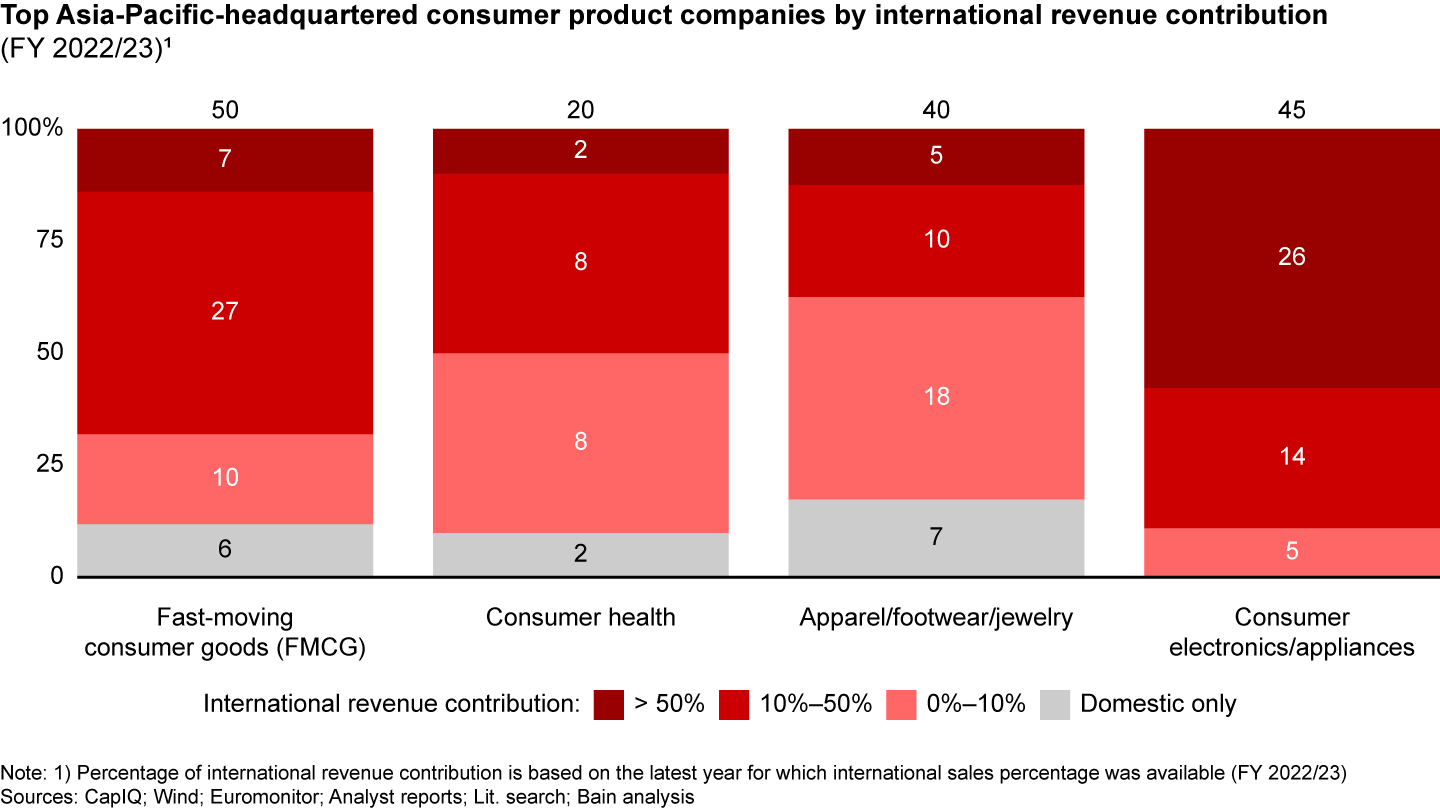

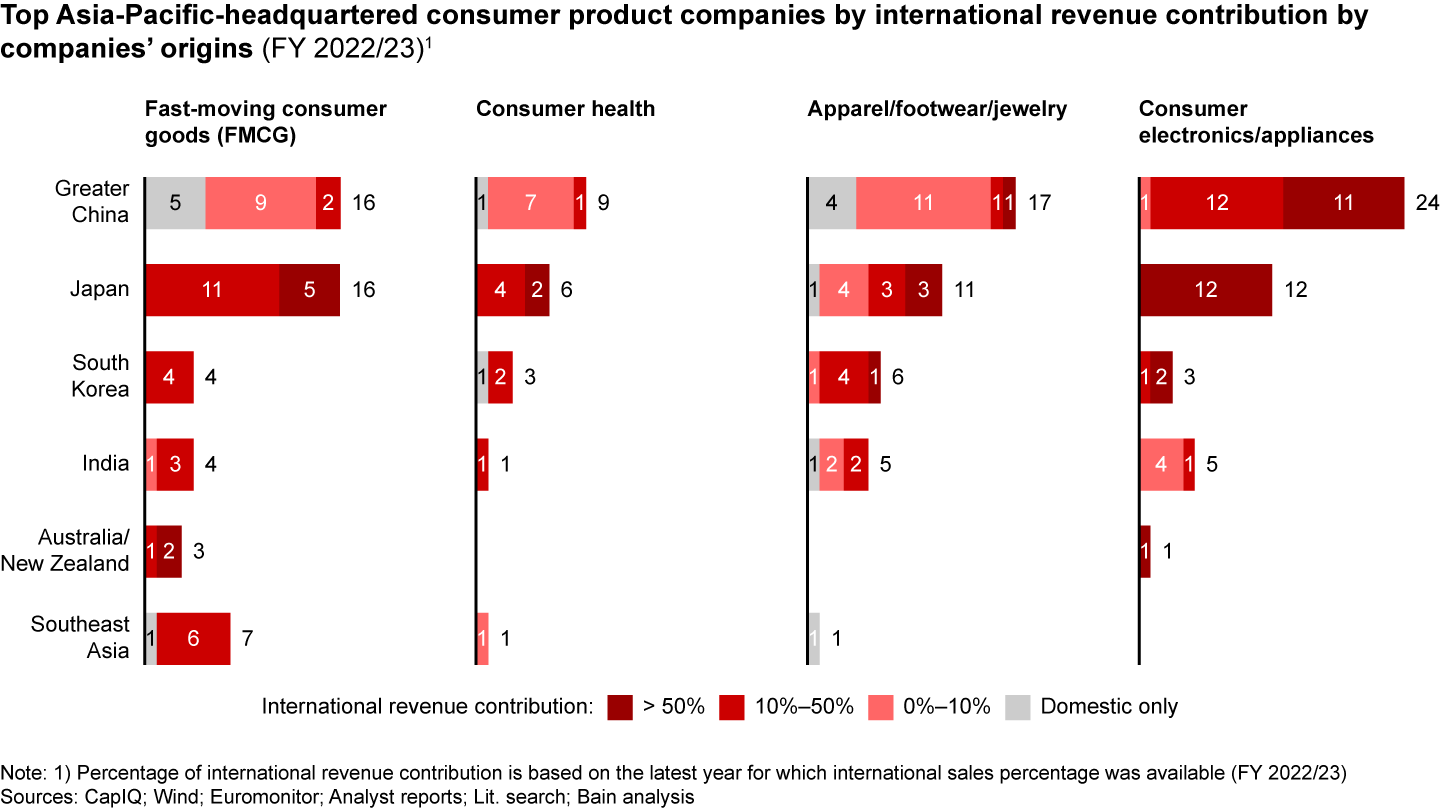
The Asia-Pacific-headquartered consumer electronics and appliances companies excel internationally for several reasons, including relatively similar consumer preferences across markets, supportive government policies, and less intense competition due to high manufacturing costs and barriers to entry. Therefore, although their successes are impressive, they may not serve as the best examples for companies in other industries. In terms of country of origin, Japanese companies lead in internationalization across the four market sectors, followed by South Korean players (see Figure 2). Within FMCG, all studied Japanese companies earned at least 10% of their revenue internationally, with 5 out of 16 companies making 50% or more from abroad. Similarly, nearly all South Korean companies in the study earned at least 10% of their revenue from international markets. Companies from other countries and regions, such as China, India, and Southeast Asia, are less internationalized by comparison. The differences are due to several factors including domestic market maturity, cultural influence on the global stage, expansion timing, government support, and diplomatic relationships.
Figure 2

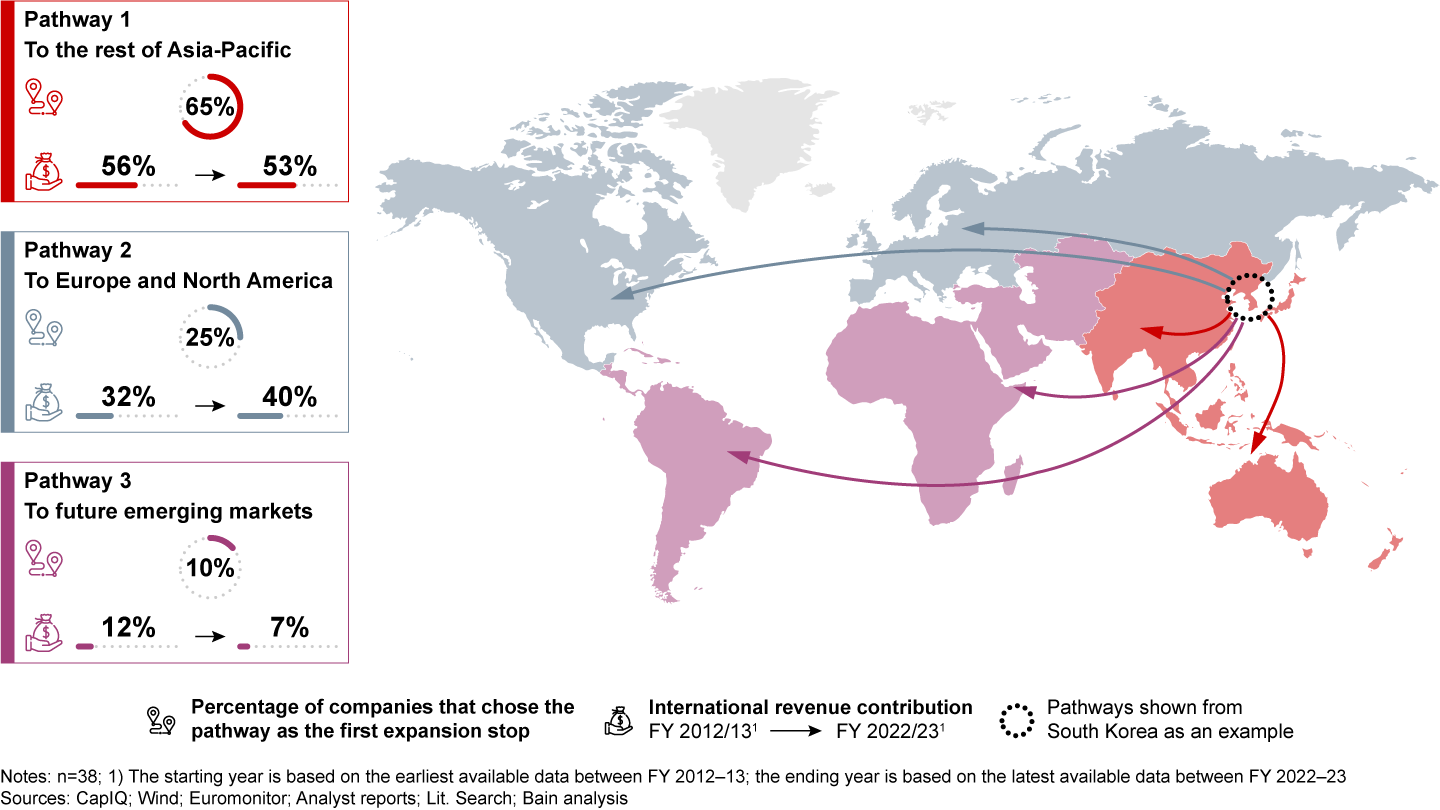
FMCG deep diveTaking a closer look at the FMCG sector, the vast majority of the FMCG companies we studied—44 out of 50—have expanded internationally. For the top 50 FMCGs, international revenue compound annual growth rate (CAGR) reached 11% over the last 10 years, surpassing domestic revenue CAGR of 7%. This has been largely driven by the international success of Japanese companies. When it comes to their international expansion journeys, these companies have followed three pathways. The first is expansion into neighboring Asia-Pacific countries; the second is entry into Europe and North America; and the third targets future emerging markets in the Middle East, Latin America, and Africa. Our study shows that international expansion within the Asia-Pacific region is often the first step for those companies, but European and North American markets have gained importance over the past decade (see Figure 3). Our study1 showed 65% of the top Asia-Pacific-headquartered FMCG companies chose other Asia-Pacific countries as their initial expansion targets, and sales from this region accounted for more than 50% of their international revenue over the past decade. Meanwhile, Europe and North America’s share has grown significantly, from 32% a decade ago to 40% now. Despite absolute revenue growth in future emerging markets, these markets’ relative revenue contribution has decreased, from 12% to 7%.
Figure 3

Making the strategic decision to internationalizeThrough extensive analysis of successful Asia-Pacific-headquartered FMCG players in international markets, we have identified three distinct strategic approaches (see Figure 4), including expanding the existing core business abroad (“Build from Core”), establishing a new core business (“Build New Core”), and, for those without a strong core, launching with an international focus (“Born for International Markets”).
Figure 4
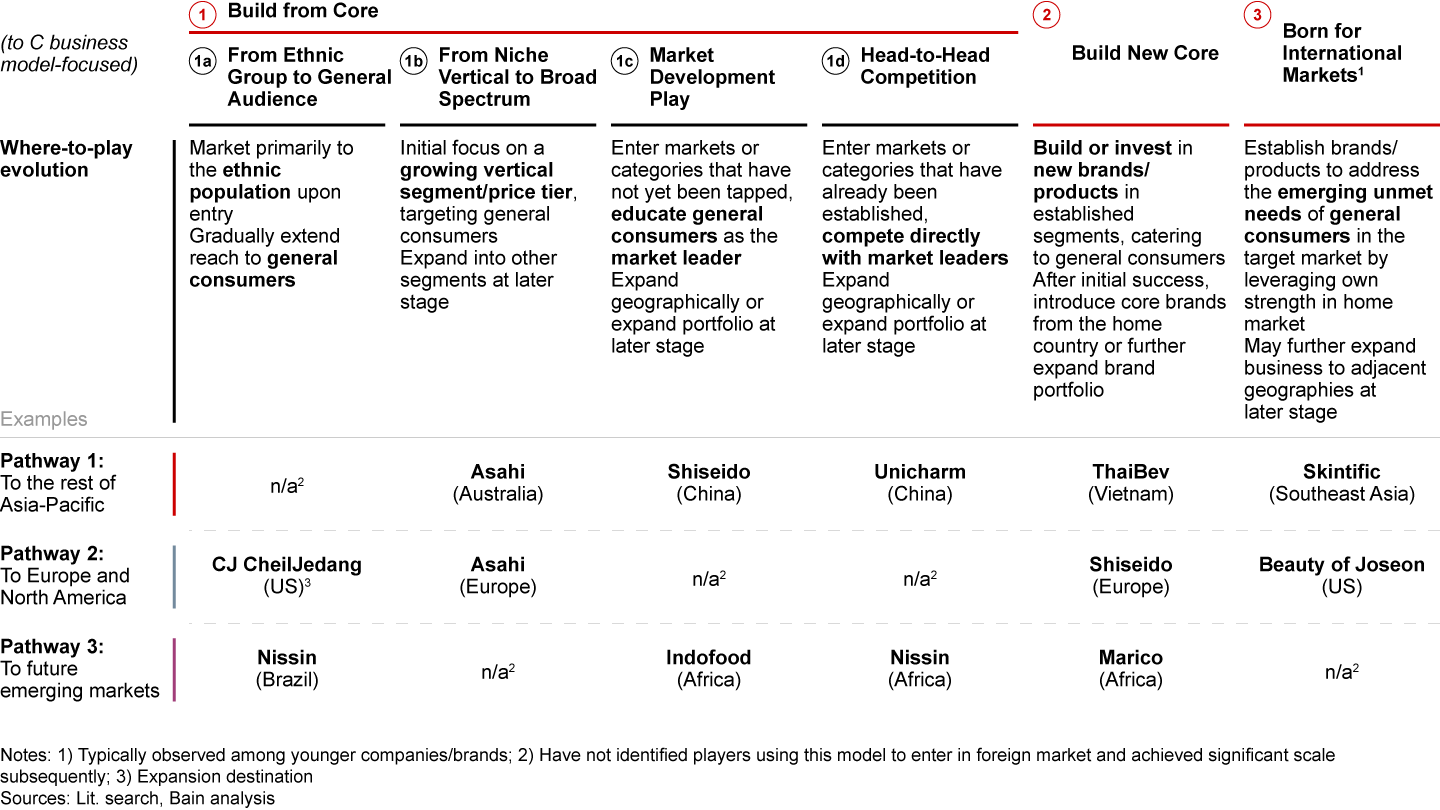

The first approach is “Build from Core,” which means these companies leverage the strong core established in their home market to expand internationally. This strategy has four variations, depending on the maturity of the targeted market and the company’s ability to win. The first variation is “From Ethnic Group to General Audience.” Upon entry, a company primarily markets to the ethnic population. Once reaching scale, the company shifts its focus to mainstream consumers through new brands, products, and marketing campaigns. An example of this approach is CJ CheilJedang’s food business expansion into the US. In the early 2000s, CJ CheilJedang marketed its products to the Asian population on the West Coast, leveraging its established brand awareness and products in the home market. In 2010, the company launched its Bibigo brand with tailored products to attract “culturally curious” mainstream American consumers. Over the last five years, CJ CheilJedang accelerated its mainstream market penetration via its acquisition of Schwan’s, a leading frozen pizza brand, in 2019. This allowed the company to capitalize on synergies to get Bibigo into mainstream consumer channels. These efforts boosted the revenue of CJ CheilJedang’s US food business to over $3 billion in 2022. The second variation is “From Niche Vertical to Broad Spectrum.” Under this approach, the company initially focuses its international product offerings on a growing niche vertical segment or price tier within the general consumer market, then later expands into other market segments. Asahi Group Holdings’ expansion into Europe illustrates this approach. When it entered the UK market in 1996, the company targeted “cognoscenti” consumers with its premium lager, Asahi Super Dry. Facing organic growth limitations, Asahi diversified into other beer categories and price tiers through strategic acquisitions post-2016 while continuing to promote Asahi Super Dry. Consequently, the volume of Asahi Super Dry in Europe grew by approximately 20% between 2018 and 2023. The third variation is “Market Development Play.” Here, a company enters markets that remain untapped when it comes to its core product categories. The company develops the market through consumer education and becomes the market leader. It then expands geographically or grows its brand portfolio in later stages. Indofood’s expansion into Africa exemplifies this strategy. Since 1988, the company has partnered with a local expert to develop Nigeria’s instant noodle market, and it later accelerated growth with vertical integration and expanded across Africa. Targeted marketing educated Nigerian consumers on the value of instant noodles, while local distribution investments ensured widespread availability. This approach made Indomie the leading brand in Nigeria, with over 60% market share. The fourth variation is “Head-to-Head Competition,” where a company enters an established market and competes directly with leading players to gain market share. After securing the leadership position in its core category, the company expands geographically or diversifies its portfolio for further growth. Companies that have succeeded through this approach are prepared to invest in staying ahead of their competitors in terms of brand memorability, brand proposition, and availability. The second strategic category is “Build New Core.” This strategy is popular among companies that find their core offerings less relevant or competitive in the target market. Instead of building from an established core, they invest in new brands or products catering to general consumers. Once successful, they may introduce core brands from their home country or further expand their product portfolios. Shiseido’s European market entry is an example. The company expanded into Italy but struggled initially due to limited brand awareness, lack of product localization, and limited expertise in fragrance, which is small in Japan but far more significant in western markets. Then Shiseido successfully established a new core in fragrance in France in the 1980s through several localization efforts, including setting up local production and research and development (R&D) operations and hiring a local management team with deep industry connections. This led to the successful launch of several market-hit brands. Shiseido acquired several European and American beauty brands post 2000. Today, Shiseido generates over $1 billion in revenue in Europe, which also serves as the company’s Center of Excellence for fragrance. The third strategic category is “Born for International Markets.” We often see this approach taken by young companies that have not yet established a strong core in their home markets but aspire to grow internationally. To achieve this goal, they create brands or products that address emerging unmet needs of general consumers in target markets, leveraging their strengths such as original equipment/design manufacturing (OEM/ODM) or digital capabilities in their home countries. However, unlike the e-commerce and consumer appliance sectors, we have not observed scaled FMCG players under this approach comparable to Shein or Anker. Although the “Build New Core” approach is viable in all three geographic expansion pathways, the other approaches don’t work for every pathway. For example, “From Niche Vertical to Broad Spectrum” is less applicable for a company expanding into future emerging markets, and it’s very difficult for an Asian company to enter a European market and “Compete Head-to-Head” with native market leaders. Whatever the approach, mergers and acquisitions (M&A) is a powerful means for companies to expand internationally. Under “Build from Core,” most companies entered international markets via an organic model and relied more on M&A to expand in later stages. Under “Build New Core,” they tended to launch their growth through an inorganic model, including M&A or partnerships, and later built on that success with organic growth. Finally, most of the companies that are “Born for International Markets” typically leveraged an organic growth model in the beginning, while the companies are still relatively young and may rely on M&A at a later stage. (For more information on successful cross-border M&A, read “Overseas Ambition: Asia-Pacific Consumer Products Companies Use M&A to Accelerate Growth.”) Common pitfalls and how to avoid themExpanding into international markets is a bold move under any strategy. Our study showed that companies that underestimated the risks and variables in international expansion often fell victim to several common pitfalls. However, some Asia-Pacific FMCGs have successfully managed these challenges. Pitfalls 1 and 2: Misguided ambition in international markets
Pitfalls 3 and 4: Insufficient localization in organic operations
Pitfalls 5, 6, and 7: Missteps in M&A and partnerships
Pitfall 8: Being unprepared for systematic risks
ConclusionAs the old proverb says, “The best time to plant a tree was 20 years ago. The second-best time is now.” For Asia-Pacific-headquartered companies, the time to “plant the tree” of international expansion is now. To do so effectively, they must address these four “seed questions”:
Just as a tree takes time to grow before it bears fruit, so does the journey of international expansion. The success of Nestlé and other global leading FMCG companies shows the rewards that can be earned from effort and patience invested in expanding overseas. For Asia-Pacific-headquartered FMCGs, the seeds of international growth planted today can, in time, yield the same fruitful results. Notes
|