

Brief

Executive Summary
- Research shows CEO transitions during a recession decline by up to 32%.
- CEO transitions consistently fall to their lowest level in the year after a recession hits bottom.
- In April and May, CEO successions fell worldwide compared with the same months last year, including by one-third in Europe and Asia.
Many boards put leadership succession on hold during turbulent times, even if it was high on the agenda before the crisis hit. That’s a common reflex. Facing ambiguity, people often select known options over unfamiliar ones. Our research suggests that directors confronted with uncertainty act the same way.
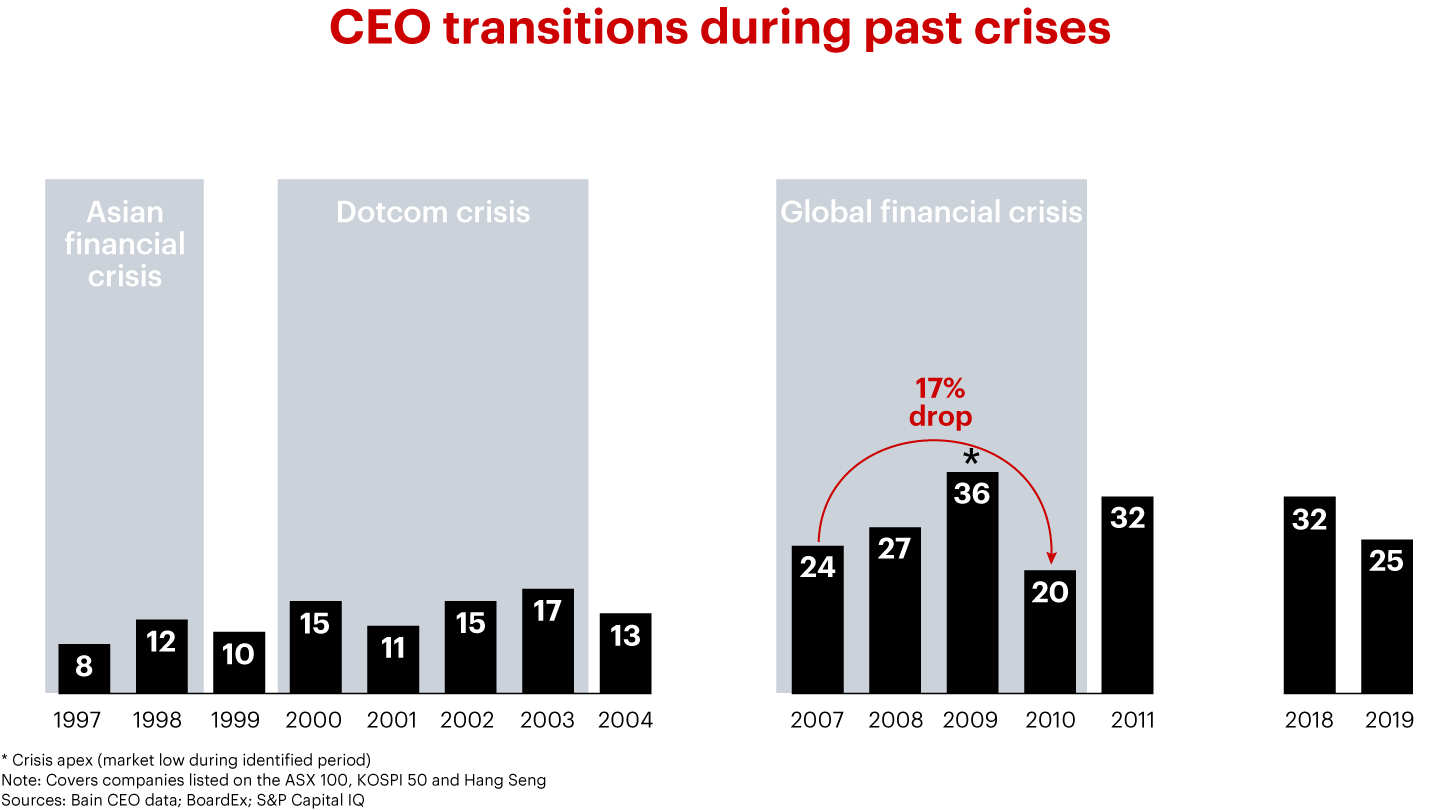
During the past three global recessions, CEO transitions fell from their precrisis highs by as much as one-third (see Figure 1). What’s more, decisions to oust CEOs for poor performance or scandal—arguably the most critical move boards make—declined dramatically.
Figure 1 (slideshow): 1
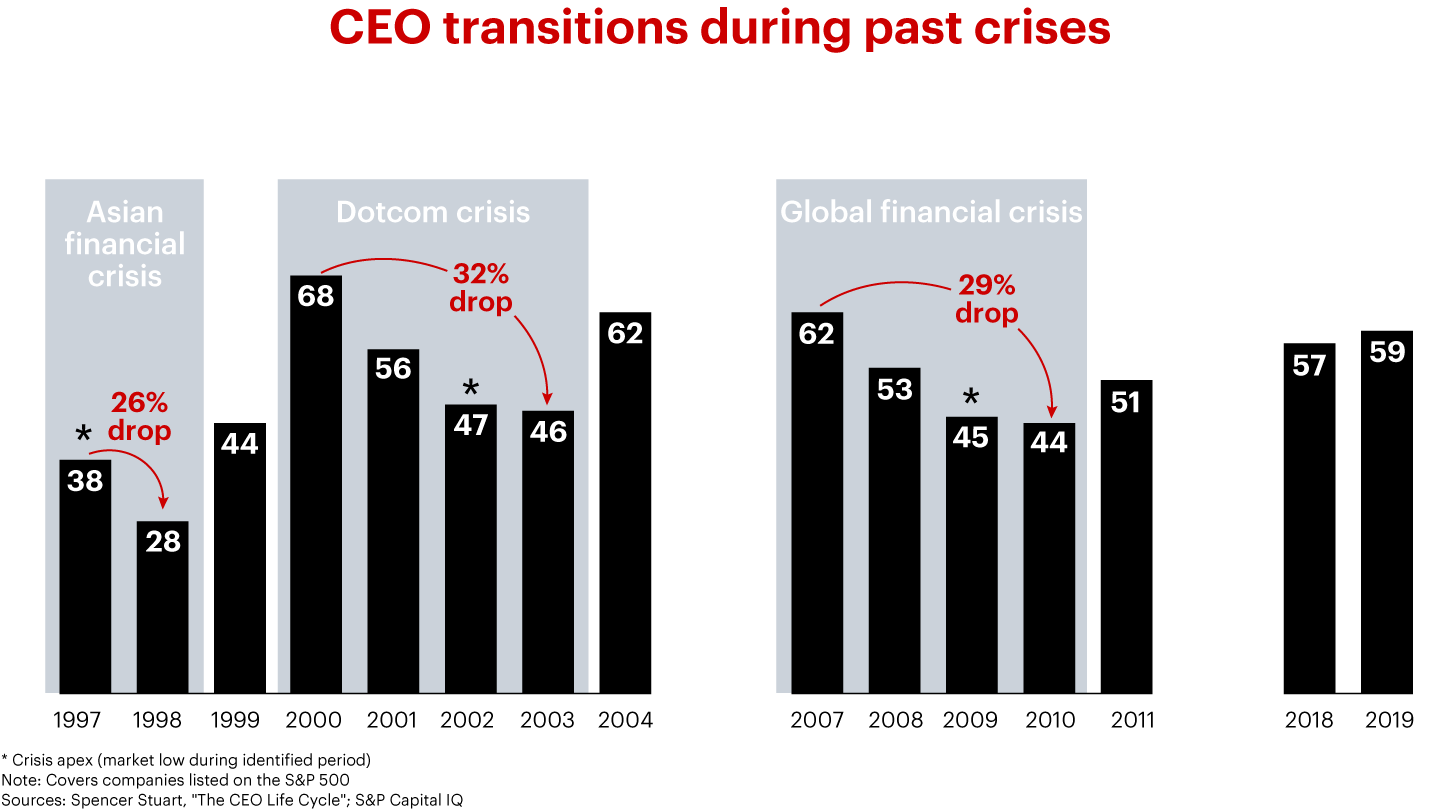

Figure 1 (slideshow): 2
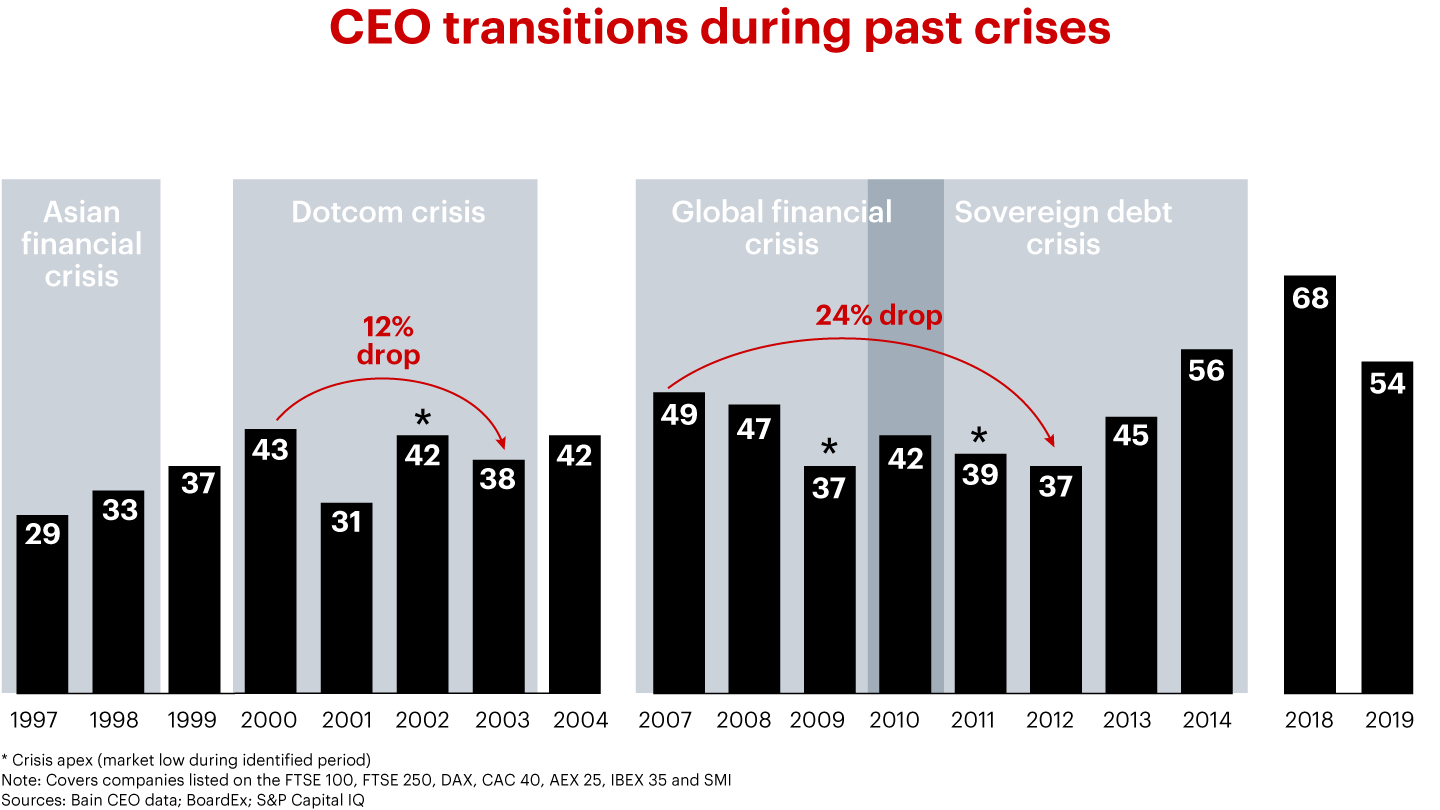

Figure 1 (slideshow): 3

Boards’ reluctance to make a leadership change in the middle of a recession is understandable. But for some companies, that lag time may come at a cost. It can delay an overdue transition or hamper the organization’s ability to tailor its strategy to a rapidly changing landscape. Effective boards and CEOs work together closely to take decisive actions during a crisis. They confront their own biases and are open to change. This approach helps ensure that their companies emerge from a downturn with the appropriate strategy and leadership.
In volatile times, boards seek stability
Research on CEO transitions over the past three decades highlights several consistent patterns. Faced with difficult economic times, many boards put business continuity first and shun a leadership change for fear of destabilizing the company. CEO transitions tend to fall to their lowest level in the year after a recession hits bottom. This trend is most pronounced in the US and Europe, but it also held true in Asia during the most recent global financial crisis.
Boards are even less likely to force out a CEO in the middle of a downturn. Our research shows the number of CEOs ousted amid the global financial crisis fell by 64% in the US and by 60% in Asia. Forced transitions among European companies declined more moderately.
Underscoring the trend, the industry sectors hit hardest by recession experience the sharpest declines in CEO transitions. For example, the number of CEO transitions at financial services companies in the US dropped more dramatically during the global financial crisis than during prior crises. And in the midst of the dotcom recession in 2000, CEO transitions at technology, media and telecom companies in the US were lower vs. the Asian financial crisis.
Other factors contribute to succession inertia. CEOs often are reluctant to leave for a variety of reasons, including a deep motivation to shepherd the business they helped build through the crisis. Individual board directors may have conflicting views about when to make a change and what skills the next CEO should possess. And boards may lack a successor candidate who is ready to take on the formidable challenge of leading the organization out of a downturn.
As uncertainty wanes, leadership transitions pick up, spiking two years after the depth of the crisis. With the worst behind the business, boards feel more comfortable handing over the reins to a new leader. And some CEOs, perhaps more confident that they have helped the company ride out the storm, may be more willing to pass the baton.
Our research also shows CEO transitions peak prior to a crisis, underscoring boards’ tendency to focus on succession planning during periods of perceived economic stability. CEO transitions were running at a particularly rapid clip in the months leading up to the Covid-19 pandemic, including an unprecedented number of forced exits resulting from activist shareholder campaigns, ethical lapses and poor performance.
Postponing a CEO transition in the midst of a downturn creates its own risks. The best boards prepare to initiate change at the right moment, even amid economic headwinds. To serve the business and its stakeholders well, they look ahead and anticipate several CEO succession scenarios.
Boards: Put CEO succession at the top of the agenda
The full effects of the recession caused by Covid-19 are yet to be seen. The collapse in economic activity, however, is different from historic cyclical downturns, and the pace of recovery will be hard to predict. Our research suggests that, as in previous crises, boards are riveted on business stability and deferring transitions. In April and May of 2020, CEO transitions fell worldwide compared with the same months last year, including by one-third in Europe and Asia. Transitions have started to pick up again in June, particularly in Europe.
Forward-looking boards have kept CEO succession planning high on their agenda. Despite the uncertainty ahead, these boards are starting now to lay the foundation for a smooth leadership transition—whenever the time is right, of course. An important part of that exercise is planning for three potential scenarios: emergency succession, postcrisis transition and long-term succession.
Plan for emergencies. At a minimum, boards need to review and update emergency succession plans. As they grapple with the current crisis, effective boards are making sure the company has a solid backup plan in case members of the leadership team (and board) fall ill. That includes defining the right criteria for an interim CEO and ensuring that those on the emergency succession list are prepared to face the company’s new challenges. Boards should build emergency succession plans for all senior officers, not just the CEO.
Evaluate near-term needs. As economies and businesses begin to emerge from the worst of the crisis, high-performance boards start to debate whether their companies need new leadership for a postcrisis world. Factors affecting the decision include the current CEO’s time horizon, his or her performance before and during the crisis, and board alignment on the characteristics they want in a future chief executive.
Some boards may need to act quickly, especially if the CEO postponed retirement to manage through the crisis or if directors have lost confidence in the CEO. A few questions can help directors assess the CEO’s crisis performance and forward planning. Above all, did the CEO show care and empathy for people, ensure workforce safety and protect the business while tackling operating challenges? How quickly did he or she mobilize people, reestablish customer relevance and adapt value propositions? What does the CEO's agility, judgment and decision making during the crisis indicate about his or her ability to lead in an uncertain future?
Boards contemplating a change over the next 12 to 18 months may encounter greater disparity among directors regarding the ideal profile of their next leader. Some may advocate the skills and capabilities required to solve near-term problems and steer the company through the recovery; others may promote the qualities needed to lead the organization successfully for the longer term. Leading boards align views by exploring ideal CEO characteristics under alternative scenarios.
Align for the future. The best boards update or refresh their long-term succession plans regularly, especially following a crisis. Even if boards don’t anticipate a CEO transition for several years, it typically takes a year or longer to build alignment around a succession plan, particularly if the future CEO profile differs from the previous one. Those that start now to establish the ideal characteristics for a successor will be best positioned to pivot promptly when it’s time for a change.
An important first step for boards anticipating a long-term transition is to review, pressure test and approve the CEO’s proposed multiyear strategy. This includes identifying with management the most significant opportunities and challenges the company is likely to face in the coming years and aligning on a strategy that will help the organization win in a vastly transformed landscape.
The postcrisis CEO profile. What leadership characteristics will CEOs need to win in a postcrisis world? Powerful forces, including geopolitics, digitalization, macroeconomic volatility and climate change, already were reshaping industries and economies before the Covid-19 pandemic. The global shutdown that followed and the recent wave of activism against systemic racial and social injustice are further accelerating change. That means boards cannot anticipate many of the specific challenges ahead. As a result, they will be less likely to rely on traditional characteristics such as industry experience when assessing future candidates.
To thrive in a turbulent world, CEOs will need core leadership traits such as curiosity, learning agility, judgment, flexibility, the ability to elicit the best ideas from diverse teams, ethical reasoning and appreciation of multiple stakeholder perspectives. Top-performing executives will display courage, empathy and humility. These attributes will enable CEOs to lead through long stretches of uncertainty and to steer businesses through rapid change.
CEOs: Discover opportunities
For CEOs, a crisis presents a defining moment, and Covid-19 is an extraordinary one. The disruption that companies now are facing is more abrupt, more severe and more global than that in any previous economic downturn. It’s the kind of challenge that occurs once in a generation. As CEOs navigate the crisis, they feel a natural tension arising from their mandate to chart a near-term and long-term course for the company along with the need to align with their board. All the while, their performance is in the spotlight as never before.
Successful CEOs understand how vital it is throughout a period of disruption to step back and envision the future. They weigh each decision in light of three goals: protecting the company, outpacing rivals during the recovery phase and building a winning long-term position. Just as important, they seek to strengthen their leadership bench and increase the level of engagement with their boards.
Reimagine the multiyear strategy. The coronavirus pandemic has exposed fragile supply chains, weak customer relationships, high-cost operating models and precarious balance sheets. Great CEOs know they need to develop strong hypotheses about the fundamental supply and demand changes within their industry. They also need strategic insight on what it will take to win in a post–Covid-19 world and the right strategy to accelerate out of the downturn.
Top CEOs pose acid test questions to guide a strategy refresh: How will the industry’s rules of the game change? What is our revised ambition? Do I need to embark on an end-to-end transformation or simply retool parts of the business? How can we strengthen our relevance to customers, employees, shareholders and communities? What new value propositions, capabilities and ways of working are required, in particular, to leverage digital acceleration and remote working? Successful CEOs set up a series of workshops with their executive teams and boards to align on strategy and ensure rapid implementation.
The Covid-19 crisis has also revealed the shortcomings of fixed-cycle planning and budgeting during periods of rapid change and uncertainty. Skillful CEOs are turning that management dilemma into an opportunity. They are abandoning episodic strategy reviews as well as linear execution and instead championing a continuously evolving, dynamic approach to strategy.
Refresh the executive succession plan. Just as effective boards keep CEO succession plans on the agenda in times of crisis, attentive CEOs continue to develop executive talent and work with their chief human resources officers and boards to update emergency and longer-term succession plans for the leadership team. They elevate executives into positions that stretch their abilities. That approach helps identify individuals who, when confronted with ambiguous and complex conditions, show exceptional leadership traits—namely, solid judgment, learning agility and the ability to solve problems rapidly. Crises can also shine a spotlight on significant gaps within the leadership team. Leading CEOs look inside and outside the organization for individuals with the necessary skills to fill those gaps, and they build a capable and diverse bench of executive talent. This work may feel less urgent amid the crisis, but it is vitally important for building a robust leadership pipeline for the future. And a downturn often presents better market conditions to test or acquire top talent.
Engage the board. As boards pressure test the CEO’s strategy and push the leadership team to think about positioning the business for an uncertain future, the best CEOs, in turn, rethink how they can make the most of directors’ expertise. A crisis presents an opportunity for CEOs to evolve how they interact with the board. Successful CEOs know that high degrees of engagement within the leadership team and between the board and leadership team are as important as getting the strategy right. They make sure that they are aligned with the board on what has changed, the implications and planned actions. In turbulent times, these CEOs work with directors, particularly those who have led through a crisis, outside of board meetings to benefit from their expertise. Finally, they help the board adapt its operating cadence and agendas to a fast-moving landscape.
Turn the mirror inward. The best CEOs understand that the Covid-19 crisis is a profound test of their leadership. Even as they scramble to cope with unexpected challenges, they take the time to reflect on their own performance, solicit feedback and accept different points of view with an open mind. They challenge their own assumptions and seek out new information to avoid falling back into comfortable patterns. On a personal level, the demands of leading during the crisis are draining and may affect family and retirement planning. Thoughtful CEOs take time to reflect on their own motivations and how they may influence the business decisions they are making.
Boards and CEOs that work together to prepare for leadership succession are more likely to agree on how to evolve the firm’s strategy in times of crisis. These boards and CEOs make the right decisions at the right time in the face of uncertainty. They create more resilient, adaptable organizations that are in the strongest position to win coming out of a crisis.
Written in collaboration with
Written in collaboration with

Spencer Stuart is a leading executive search and leadership advisory firm. Through its executive search, board, and leadership advisory services, Spencer Stuart helps build and enhance high-performing teams for select clients ranging from major multinationals to emerging companies to nonprofit institutions.

Coronavirus
The global Covid-19 pandemic has extracted a terrible human toll and spurred sweeping changes in the world economy. Across industries, executives have begun reassessing their strategies and repositioning their companies to thrive now and in the world beyond coronavirus.
First published in julio 2020