
Skip to Content
  • Offices

    Offices

    North & Latin America
    • Atlanta
    • Austin
    • Bogota
    • Boston
    • Buenos Aires
    • Chicago
    • Dallas
    • Denver
    • Houston
    • Los Angeles
    • Mexico City
    • Minneapolis
    • Monterrey
    • Montreal
    • New York
    • Rio de Janeiro
    • San Francisco
    • Santiago
    • São Paulo
    • Seattle
    • Silicon Valley
    • Toronto
    • Washington, DC
    Europe & Africa
    • Amsterdam
    • Athens
    • Berlin
    • Brussels
    • Copenhagen
    • Dusseldorf
    • Frankfurt
    • Helsinki
    • Istanbul
    • Johannesburg
    • Kyiv
    • Lisbon
    • London
    • Madrid
    • Milan
    • Munich
    • Oslo
    • Paris
    • Rome
    • Stockholm
    • Vienna
    • Warsaw
    • Zurich
    Middle East
    • Doha
    • Dubai
    • Riyadh
    Asia & Australia
    • Bangkok
    • Beijing
    • Bengaluru
    • Brisbane
    • Ho Chi Minh City
    • Hong Kong
    • Jakarta
    • Kuala Lumpur
    • Manila
    • Melbourne
    • Mumbai
    • New Delhi
    • Perth
    • Shanghai
    • Singapore
    • Sydney
    • Tokyo
    See all offices
  • Alumni
  • Media Center
  • Subscribe
  • Contact
  • Global

    Select your region and language

    Global
    • Global (English)
    North & Latin America
    • Brazil (Português)
    • Argentina (Español)
    • Canada (Français)
    • Chile (Español)
    • Colombia (Español)
    Europe, Middle East, & Africa
    • France (Français)
    • DACH Region (Deutsch)
    • Italy (Italiano)
    • Spain (Español)
    • Greece (Elliniká)
    Asia & Australia
    • China (中文版)
    • Korea (한국어)
    • Japan (日本語)
  • Saved items (0)
    Saved items (0)

    You have no saved items.

    Bookmark content that interests you and it will be saved here for you to read or share later.

    Explore Bain Insights
  • Industries
    Main menu

    Industries

    • Aerospace & Defense
    • Agribusiness
    • Chemicals
    • Construction & Infrastructure
    • Consumer Products
    • Financial Services
    • Healthcare & Life Sciences
    • Industrial Machinery & Equipment
    • Media & Entertainment
      Industries
      Media & Entertainment
      • Media Lab
    • Metals
    • Mining
    • Oil & Gas
    • Paper & Packaging
    • Private Equity
      Industries
      Private Equity
      • Due Diligence
      • Exit Planning
      • Firm Strategy & Operations
      • Portfolio Value Creation
    • Social Impact
    • Retail
    • Technology
    • Telecommunications
      Industries
      Telecommunications
      • Capital Expenditure
      • Telco Digital Transformation
    • Transportation
    • Travel & Leisure
    • Utilities & Renewables
  • Consulting Services
    Main menu

    Consulting Services

    • Customer Experience
    • Sustainability
    • Innovation
    • M&A
    • Operations
    • People & Organization
    • Private Equity
    • Sales & Marketing
    • Strategy
    • AI, Insights, and Solutions
    • Technology
    • Transformation
  • Digital
  • Insights
    Main menu

    Insights

    • Industry Insights
    • Services Insights
    • Bain Books
    • Webinars
    • Bain Futures
    View all Insights
    Featured topics
    • Tariff Response
    • Artificial Intelligence
    • Thriving in Uncertainty
    • Executive Conversations
    • Macro Trends
    • M&A Report
    • Healthcare Private Equity Report
    • Paper & Packaging Report
    • Technology Report
    • CEO's Guide to Sustainability
    • CEO Insights
    • CFO Insights
    • COO Insights
    • CIO Insights
    • CMO Insights
    View all featured topics
  • About
    Main menu

    About

    • What We Do
    • What We Believe
    • Our People & Leadership
    • Client Results
    • Awards & Recognition
    • Global Affiliations
    Further: Our global responsibility
    • Sustainability
    • Social Impact
    • World Economic Forum
    Learn more about Further
  • Careers
    Main menu

    Careers

    • Work with Us
      Careers
      Work with Us
      • Find Your Place
      • Our Work Areas
      • Integrated Teams
      • Students
      • Internships & Programs
      • Recruiting Events
    • Life at Bain
      Careers
      Life at Bain
      • Blog: Inside Bain
      • Career Stories
      • Our People
      • Where We Work
      • Supporting Your Growth
      • Affinity Groups
      • Benefits
    • Impact Stories
    • Hiring Process
      Careers
      Hiring Process
      • What to Expect
      • Interviewing
    FIND JOBS
  • Offices
    Main menu

    Offices

    • North & Latin America
      Offices
      North & Latin America
      • Atlanta
      • Austin
      • Bogota
      • Boston
      • Buenos Aires
      • Chicago
      • Dallas
      • Denver
      • Houston
      • Los Angeles
      • Mexico City
      • Minneapolis
      • Monterrey
      • Montreal
      • New York
      • Rio de Janeiro
      • San Francisco
      • Santiago
      • São Paulo
      • Seattle
      • Silicon Valley
      • Toronto
      • Washington, DC
    • Europe & Africa
      Offices
      Europe & Africa
      • Amsterdam
      • Athens
      • Berlin
      • Brussels
      • Copenhagen
      • Dusseldorf
      • Frankfurt
      • Helsinki
      • Istanbul
      • Johannesburg
      • Kyiv
      • Lisbon
      • London
      • Madrid
      • Milan
      • Munich
      • Oslo
      • Paris
      • Rome
      • Stockholm
      • Vienna
      • Warsaw
      • Zurich
    • Middle East
      Offices
      Middle East
      • Doha
      • Dubai
      • Riyadh
    • Asia & Australia
      Offices
      Asia & Australia
      • Bangkok
      • Beijing
      • Bengaluru
      • Brisbane
      • Ho Chi Minh City
      • Hong Kong
      • Jakarta
      • Kuala Lumpur
      • Manila
      • Melbourne
      • Mumbai
      • New Delhi
      • Perth
      • Shanghai
      • Singapore
      • Sydney
      • Tokyo
    See all offices
  • Alumni
  • Media Center
  • Subscribe
  • Contact
  • Global
    Main menu

    Select your region and language

    • Global
      Select your region and language
      Global
      • Global (English)
    • North & Latin America
      Select your region and language
      North & Latin America
      • Brazil (Português)
      • Argentina (Español)
      • Canada (Français)
      • Chile (Español)
      • Colombia (Español)
    • Europe, Middle East, & Africa
      Select your region and language
      Europe, Middle East, & Africa
      • France (Français)
      • DACH Region (Deutsch)
      • Italy (Italiano)
      • Spain (Español)
      • Greece (Elliniká)
    • Asia & Australia
      Select your region and language
      Asia & Australia
      • China (中文版)
      • Korea (한국어)
      • Japan (日本語)
  • Saved items  (0)
    Main menu
    Saved items (0)

    You have no saved items.

    Bookmark content that interests you and it will be saved here for you to read or share later.

    Explore Bain Insights
  • Industries
    • Industries

      • Aerospace & Defense
      • Agribusiness
      • Chemicals
      • Construction & Infrastructure
      • Consumer Products
      • Financial Services
      • Healthcare & Life Sciences
      • Industrial Machinery & Equipment
      • Media & Entertainment
      • Metals
      • Mining
      • Oil & Gas
      • Paper & Packaging
      • Private Equity
      • Social Impact
      • Retail
      • Technology
      • Telecommunications
      • Transportation
      • Travel & Leisure
      • Utilities & Renewables
  • Consulting Services
    • Consulting Services

      • Customer Experience
      • Sustainability
      • Innovation
      • M&A
      • Operations
      • People & Organization
      • Private Equity
      • Sales & Marketing
      • Strategy
      • AI, Insights, and Solutions
      • Technology
      • Transformation
  • Digital
  • Insights
    • Insights

      • Industry Insights
      • Services Insights
      • Bain Books
      • Webinars
      • Bain Futures
      View all Insights
      Featured topics
      • Tariff Response
      • Artificial Intelligence
      • Thriving in Uncertainty
      • Executive Conversations
      • Macro Trends
      • M&A Report
      • Healthcare Private Equity Report
      • Paper & Packaging Report
      • Technology Report
      • CEO's Guide to Sustainability
      • CEO Insights
      • CFO Insights
      • COO Insights
      • CIO Insights
      • CMO Insights
      View all featured topics
  • About
    • About

      • What We Do
      • What We Believe
      • Our People & Leadership
      • Client Results
      • Awards & Recognition
      • Global Affiliations
      Further: Our global responsibility
      • Sustainability
      • Social Impact
      • World Economic Forum
      Learn more about Further
  • Careers
    Popular Searches
    • Agile
    • Digital
    • Strategy
    Your Previous Searches
      Recently Visited Pages

      Content added to saved items

      Saved items (0)

      Removed from saved items

      Saved items (0)

      The Visionary CEO’s Guide to Sustainability

      How to Master the Art of Selling Sustainability

      How to Master the Art of Selling Sustainability

      Our survey of 500 B2B buyers and sellers shows a widening chasm on sustainability. A new industrial sales model is needed to close this buy-sell gap.

      Torsten Lichtenau, Jamie Cleghorn, Xavier Houot, Mattias C. Karlsson, Yelena Ageyeva-Furman, and Jan Budde

      • min read
      }

      Report

      How to Master the Art of Selling Sustainability
      en
      Резюме
      • Sustainability is a top criterion for B2B buyers; 36% would leave suppliers that don’t meet sustainability expectations.
      • Although 85% of suppliers embed sustainability in their offerings, just 53% of customers feel the options meet their needs.
      • By taking four steps—on customer, value, salesforce, and pricing—suppliers can start selling sustainability smarter.

      This article is part of Bain's 2024 CEO Sustainability Guide

      EXPLORE THE REPORT

      It’s not just consumers who are shopping for sustainability these days. Sustainability is now one of corporate buyers’ top three purchasing criteria as well. More than a third of companies say they are willing to leave suppliers that don’t meet their sustainability criteria, and nearly 60% say they’ll be willing to do so three years from now, according to Bain & Company’s 2024 survey of B2B buyers and sellers (see Figure 1). The implications are profound, threatening to put a large number of suppliers at risk of replacement and pointing to potentially significant shake-ups in market share.

      Unfortunately, this message seems to be getting lost on suppliers. While 85% of them report that they embed some degree of sustainability in their products and services, only 27% consider themselves very knowledgeable about their customers’ sustainability needs. Indeed, only 53% of customers say the sustainable options they are offered fully meet their expectations (see Figure 2).

      Figure 1
      B2B customers will increasingly consider sustainability when choosing suppliers
      Figure 2
      B2B suppliers are not consistently meeting their customers’ sustainability needs

      Closing this buy-sell communication gap is critical to ensuring that suppliers don’t lose sales to more agile competitors, but they can’t accomplish that by doing more of the same. Suppliers need to catch up to their customers, move fast, and be more systematic. With sustainability, many B2B suppliers must create entirely new markets, something that calls for a set of skills they may not have exercised for a very long time.

      To master selling sustainability, companies should focus on four things.

      1. Use data to prioritize the most sustainability-focused customers

      Suppliers need to systematically identify the individual customers and customer segments that are most likely to be interested in sustainable offerings. This involves creating a profile that reflects how much they spend, the importance they place on sustainability, whether the supplier’s product offers them a relatively low-cost way to lower their carbon footprint, the specific aspects of sustainability they care about most, and the goals they have set for those priorities. Goals might relate to emissions targets, circularity, biodiversity, transparency, or social dimensions. Only when a supplier has this kind of detailed understanding of customers’ sustainability expectations can it begin to influence buying decisions.

      When an aluminum manufacturer began planning to invest in low-carbon primary and recycled aluminum production, executives knew the company would have to reinvent how it goes to market. As a first step, the manufacturer identified its priority customer segments as those with ambitious public decarbonization targets, high internal or regulatory cost of carbon, and end customers who value green products. This led to a much more detailed understanding of customer needs than traditional sales had required and helped the company identify automotive manufacturers as a key customer segment to target early with its low-carbon aluminum.

      2. Construct a sustainable value proposition

      Armed with a more granular understanding of customers, suppliers can tailor value propositions that deliver the right mix of sustainability components and traditional key purchasing criteria like price and performance. For many buyers, quantified CO2 emissions reduction will be a critical part of the mix as that becomes a material aspect of their own sustainability and financial performance.  

      Infographic

      Seven Reasons There’s a B2B Buy-Sell Gap on Sustainability

      Why is the chasm growing between buyers and sellers? Our survey of 500 companies across industries and countries offers some clues.

      Selling such bespoke approaches requires translating sustainability features into benefits that sales teams can easily communicate, in a way suited to each customer’s specific attitude toward sustainability. Suppliers must make clear the value on offer. Importantly, no single product can bring any customer all the way to its sustainability target.

      Today two-thirds of customers report having a low or average understanding of what justifies the price of their suppliers’ sustainable offerings. Some 45% don’t believe their suppliers clearly state the financial return on that investment, limiting their willingness to pay a premium. There is clearly room for companies to better construct and communicate their sustainable value propositions.

      Customers are notorious for overestimating what they would be willing to pay, but in our survey nearly 50% said they would pay a sustainability premium of 5% or more today. Only 6% stated that they would not pay any premium (see Figure 3). Customers also expect their willingness to pay to increase in the future.

      Figure 3
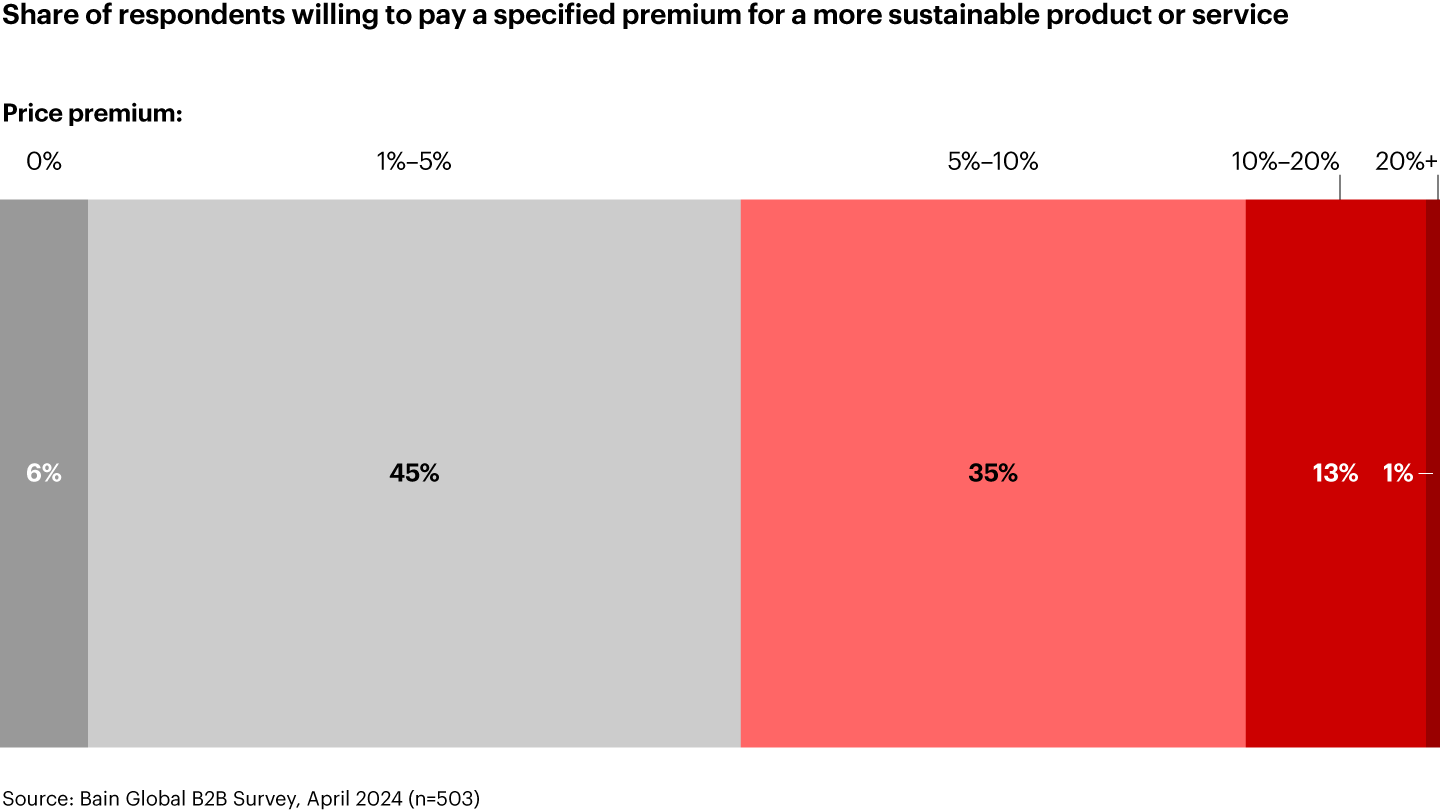
      Almost half of customers are willing to pay a price premium of 5% or more

      Partnering with customers is the best way to translate sustainable initiatives into enhanced customer value and address their unmet needs. H2 Green Steel successfully did this, partnering with key early-adopter customers to secure substantial offtake agreements for its initial years of production. Before even breaking ground on its production facility, the company had already announced offtake agreements at a price premium for 1.5 million metric tons of green steel per year, showing that there is a clear demand for its product, that customers understand the value proposition, and that they are willing to pay for it.

      3. Power up your salesforce

      Selling sustainability requires different skills and tools from traditional sales approaches, processes, and models. Sales teams that have been historically product focused have to learn to emphasize not just a product’s attributes and features but also the financial and sustainability value it offers the customer. They must truly understand how their offerings can support the sustainability agenda of the customer. That means companies need to equip their salesforces with the right knowledge and digital tools to target customers based on their sustainability commitments and pair these approaches with an incentive program that properly rewards the new selling motions.

      To date, suppliers have not been taking this tack. Only 35% specifically target sustainability-conscious customers, and fewer than one in three have an incentive system in place to promote sustainable selling (see Figure 4).

      Figure 4
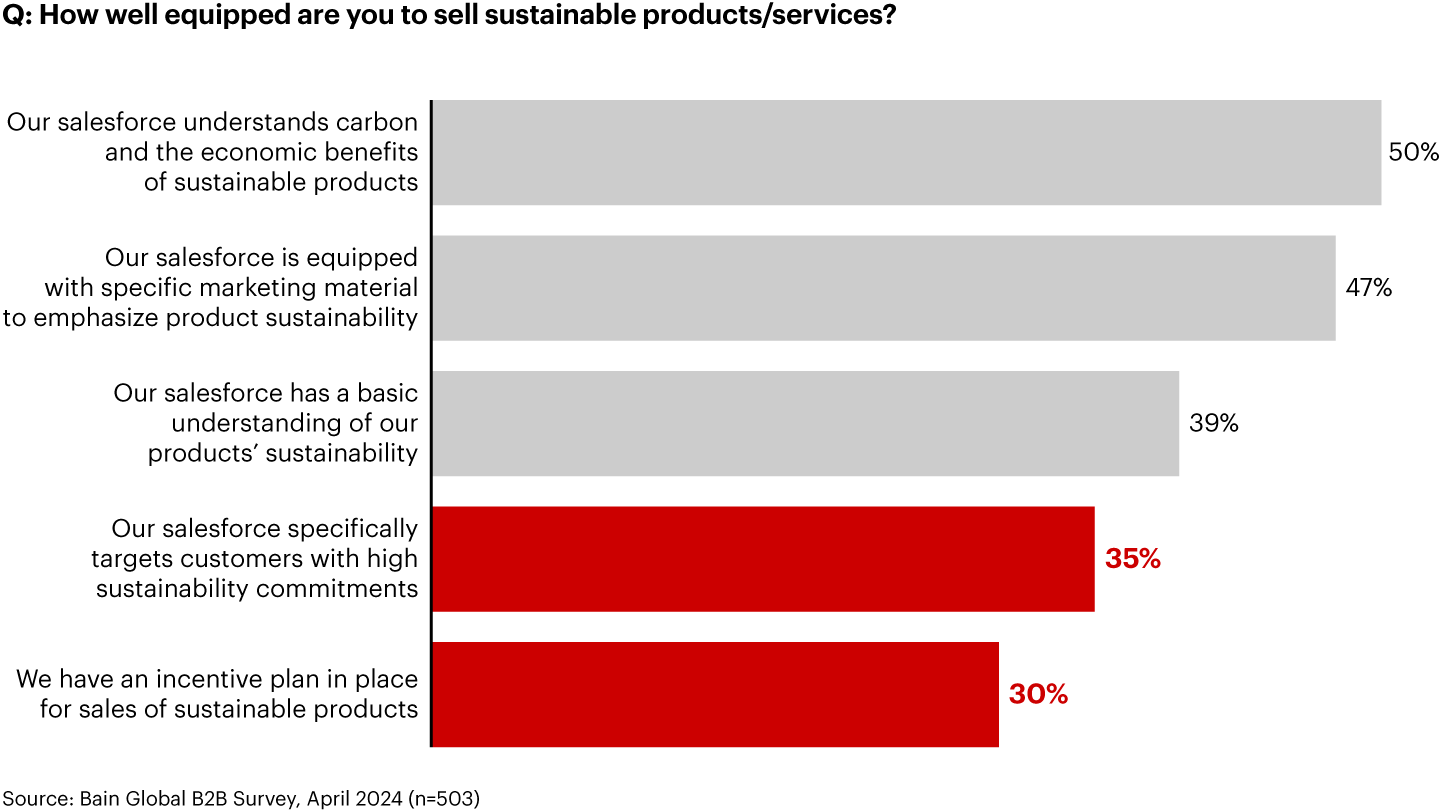
      Sustainable selling systems are still relatively immature

      When a paper and packaging company introduced new low-carbon packaging and products that substitute paper for plastic, it didn’t stop at creating a new catalog featuring plastic-free luxury shopping bags and thermoformed cellulose packaging. It also developed sales pitches, provided prototypes to the salesforce, held sessions with key customers describing the new products, and trained the entire sales network, enabling them to effectively sell the new products. The company also set up a dedicated tracking system to monitor its pipeline of sustainability-focused clients. Part of a long-term innovation transformation the company had underway, these efforts have contributed to increases in both revenue and margin.

      4. Capture all sources of value

      Sustainable products and services offer customers new sources of value, such as the opportunity to build market share in attractive segments and to realign their portfolio toward sustainable, value-added offerings.

      Suppliers must align their pricing strategy with the full array of value their products offer customers. This may include enhancing their customers’ sustainability. Or it may involve helping them gain market share, shift to more attractive customer segments, achieve higher profit margins, or charge a premium price. For many, sustainability alone won’t justify a higher price, but once a fuller understanding of a product’s value is established, sales teams can leverage that to negotiate prices with customers.

      A global chemicals company collaborates with automotive manufacturers to supply them with low-carbon and circular coatings, plastics, and additives. The resulting innovations notably reduce vehicles’ environmental impact by adhering to stringent sustainability criteria, including lower emissions and enhanced recyclability. By helping its customers make their cars more sustainable, the company has increased its products’ value to automakers and earned a premium position in the market. The company’s approach to partnership underscores its commitment to sustainability and has solidified its position as a preferred supplier of innovative solutions in the automotive sector.

      Extreme changes, extreme measures

      These four actions can help companies retrofit and turbocharge how they sell sustainable products and services. But when a supplier’s sustainability strategy leads to new products, new customers, or a new go-to-market strategy that falls too far from its core, its legacy structures may simply prove too slow and cumbersome. In this situation, companies may have to consider spinning off their sustainable business units or setting up new companies focusing on sustainable products and customers, allowing them to both develop new innovations at speed and build a sales organization that can do the same.  

      Industrial selling is changing. Learning how to convey the true value of sustainability to customers is critical. This evolution can help companies protect or gain market share while growing green businesses to a scale at which sustainability becomes affordable for more and more customers.

      Read the Next Section

      How CEOs Can Turn Decarbonization Setbacks into Progress

      Read our 2024 CEO Sustainability Guide

      EXPORE THE REPORT DOWNLOAD THE PDF

      More from the report

      • Four Questions for Every CEO

      • What Consumers Want

      • Selling Sustainability in B2B

      • Accelerating Decarbonization

      • AI and Sustainability

      • Voice of the CFO

      • Energy

      • Circularity

      • Food

      Authors
      • Headshot of Torsten Lichtenau
        Torsten Lichtenau
        Партнер, London
      • Headshot of Jamie Cleghorn
        Jamie Cleghorn
        Партнер, Chicago
      • Headshot of Xavier Houot
        Xavier Houot
        Партнер, Paris
      • Headshot of Mattias C. Karlsson
        Mattias C. Karlsson
        Партнер, Stockholm
      • Headshot of Yelena Ageyeva-Furman
        Yelena Ageyeva-Furman
        Партнер, London
      • Headshot of Jan Budde
        Jan Budde
        Practice Senior Manager, Frankfurt
      Contact us
      Related Industries
      • Практика передовых методов производства промышленных товаров и услуг
      • Химическая промышленность
      • Энергетика и природные ресурсы
      Related Consulting Services
      • Обеспечение устойчивости бизнеса
      • Customer Experience
      • Procurement
      • Supply Chain
      How We Can Help
      • Climate Change
      CEO's Guide to Sustainability
      Building Resilience in Your Business Strategy: Four Imperatives for Leaders

      Traditional approaches to resilience don’t rise to today’s challenges.

      Read more
      CEO's Guide to Sustainability
      How CEOs Can Turn Decarbonization Setbacks into Progress

      Successful companies are establishing a strong business case and then collaborating across the value chain.

      Read more
      Практика передовых методов производства промышленных товаров и услуг
      How Sustainability Is Creating B2B Growth

      Our survey of B2B buyers and sellers finds growth leaders using sustainability to create commercial value while laggards focus on compliance.

      Read more
      Climate Change
      Financing Climate Solutions in Brazil

      A study conducted by Bain, in partnership with BNDES, highlights both the challenges and the opportunities to accelerate the climate transition.

      Read more
      COO insights
      Accelerating the Transition to Circular Economies

      Bain Partner Hernan Saenz discusses the importance of circularity in reducing waste and carbon emissions.

      Read more
      First published in сентябрь 2024
      Tags
      • Обеспечение устойчивости бизнеса
      • Практика передовых методов производства промышленных товаров и услуг
      • Химическая промышленность
      • Энергетика и природные ресурсы
      • CEO's Guide to Sustainability
      • Climate Change
      • COO insights
      • Customer Experience
      • Procurement
      • Supply Chain

      How We've Helped Clients

      Повышение эффективности деятельности Constructing a best-in-class global procurement organization

      Read case study

      Повышение эффективности деятельности Revitalizing profits and performance by transforming a manufacturer's shop floor

      Read case study

      Слияния и поглощения Broader market plus tighter sales strategy equals big success for a portfolio company

      Read case study

      Хотите продолжить обсуждение?

      Мы помогаем мировым лидерам бизнеса решать самые сложные проблемы и находить наилучшие возможности. Работая вместе, мы добиваемся устойчивых положительных изменений и результатов.

      Bain Insights. Our perspectives on critical issues global businesses face in today's challenging environment, delivered monthly.

      *I have read the Privacy Policy and agree to its terms.

      Please read and agree to the Privacy Policy.
      Bain & Company
      Contact us Sustainability Accessibility Terms of use Privacy Modern Slavery Act Statement Cookie Policy Sitemap Log In

      © 1996-2026 Bain & Company, Inc.

      Contact Bain

      How can we help you?

      • Business inquiry
      • Career information
      • Press relations
      • Partnership request
      • Speaker request
      See all offices