
Skip to Content
  • Offices

    Offices

    North & Latin America
    • Atlanta
    • Austin
    • Bogota
    • Boston
    • Buenos Aires
    • Chicago
    • Dallas
    • Denver
    • Houston
    • Los Angeles
    • Mexico City
    • Minneapolis
    • Monterrey
    • Montreal
    • New York
    • Rio de Janeiro
    • San Francisco
    • Santiago
    • São Paulo
    • Seattle
    • Silicon Valley
    • Toronto
    • Washington, DC
    Europe & Africa
    • Amsterdam
    • Athens
    • Berlin
    • Brussels
    • Copenhagen
    • Dusseldorf
    • Frankfurt
    • Helsinki
    • Istanbul
    • Johannesburg
    • Kyiv
    • Lisbon
    • London
    • Madrid
    • Milan
    • Munich
    • Oslo
    • Paris
    • Rome
    • Stockholm
    • Vienna
    • Warsaw
    • Zurich
    Middle East
    • Doha
    • Dubai
    • Riyadh
    Asia & Australia
    • Bangkok
    • Beijing
    • Bengaluru
    • Brisbane
    • Ho Chi Minh City
    • Hong Kong
    • Jakarta
    • Kuala Lumpur
    • Manila
    • Melbourne
    • Mumbai
    • New Delhi
    • Perth
    • Seoul
    • Shanghai
    • Singapore
    • Sydney
    • Tokyo
    See all offices
  • Alumni
  • Media Center
  • Subscribe
  • Contact
  • Brazil | Português

    Select your region and language

    Global
    • Global (English)
    North & Latin America
    • Brazil (Português)
    • Argentina (Español)
    • Canada (Français)
    • Chile (Español)
    • Colombia (Español)
    Europe, Middle East, & Africa
    • France (Français)
    • DACH Region (Deutsch)
    • Italy (Italiano)
    • Spain (Español)
    • Greece (Elliniká)
    Asia & Australia
    • China (中文版)
    • Korea (한국어)
    • Japan (日本語)
  • Saved items (0)
    Saved items (0)

    You have no saved items.

    Bookmark content that interests you and it will be saved here for you to read or share later.

    Explore Bain Insights
  • Industries
    Main menu

    Industries

    • Aeroespacial e Defesa
    • Agronegócio
    • Química
    • Construção e Infraestrutura
    • Bens de Consumo
    • Serviços Financeiros
    • Healthcare & Life Sciences
    • Máquinas e Equipamentos Industriais
    • Mídia e Entretenimento
      Industries
      Mídia e Entretenimento
      • Media Lab
    • Metais
    • Mineração
    • Petróleo e Gás
    • Papel e Embalagens
    • Private Equity
      Industries
      Private Equity
      • Due Diligence
      • Exit Planning
      • Firm Strategy & Operations
      • Portfolio Value Creation
    • Setor Público e Social
    • Varejo
    • Tecnologia
    • Telecomunicações
      Industries
      Telecomunicações
      • Capital Expenditure
      • Telco Digital Transformation
    • Transporte
    • Turismo & Lazer
    • Energia & Renováveis
  • Consulting Services
    Main menu

    Consulting Services

    • Customer Experience
    • Sustainability
    • Innovation
    • M&A
    • Operations
    • People & Organization
    • Private Equity
    • Sales & Marketing
    • Strategy
    • AI, Insights, and Solutions
    • Technology
    • Transformation
  • Digital
  • Insights
    Main menu

    Insights

    • Industry Insights
    • Services Insights
    • Bain Books
    • Webinars
    • Bain Futures
    View all Insights
    Featured topics
    • Tariff Response
    • Artificial Intelligence
    • Thriving in Uncertainty
    • Executive Conversations
    • Macro Trends
    • M&A Report
    • Healthcare Private Equity Report
    • Paper & Packaging Report
    • Technology Report
    • CEO's Guide to Sustainability
    • CEO Insights
    • CFO Insights
    • COO Insights
    • CIO Insights
    • CMO Insights
    View all featured topics
  • About
    Main menu

    About

    • What We Do
    • What We Believe
    • Our People & Leadership
    • Client Results
    • Awards & Recognition
    • Global Affiliations
    Further: Our global responsibility
    • Sustainability
    • Social Impact
    • World Economic Forum
    Learn more about Further
  • Carreiras
    Main menu

    Carreiras

    • Trabalhe Conosco
      Carreiras
      Trabalhe Conosco
      • Find Your Place
      • Nossas áreas de trabalho
      • Equipes integradas
      • Estudantes
      • Programas e estágios
      • Eventos de Recrutamento
    • A Vida na Bain
      Carreiras
      A Vida na Bain
      • Histórias de carreira
      • Nossas pessoas
      • Onde trabalhamos
      • Apoioao seu crescimento
      • Grupos de afinidade
      • Benefícios
    • Impact Stories
    • Nosso Processo Seletivo
      Carreiras
      Nosso Processo Seletivo
      • O Que Esperar
      • Entrevistas
    FIND JOBS
  • Offices
    Main menu

    Offices

    • North & Latin America
      Offices
      North & Latin America
      • Atlanta
      • Austin
      • Bogota
      • Boston
      • Buenos Aires
      • Chicago
      • Dallas
      • Denver
      • Houston
      • Los Angeles
      • Mexico City
      • Minneapolis
      • Monterrey
      • Montreal
      • New York
      • Rio de Janeiro
      • San Francisco
      • Santiago
      • São Paulo
      • Seattle
      • Silicon Valley
      • Toronto
      • Washington, DC
    • Europe & Africa
      Offices
      Europe & Africa
      • Amsterdam
      • Athens
      • Berlin
      • Brussels
      • Copenhagen
      • Dusseldorf
      • Frankfurt
      • Helsinki
      • Istanbul
      • Johannesburg
      • Kyiv
      • Lisbon
      • London
      • Madrid
      • Milan
      • Munich
      • Oslo
      • Paris
      • Rome
      • Stockholm
      • Vienna
      • Warsaw
      • Zurich
    • Middle East
      Offices
      Middle East
      • Doha
      • Dubai
      • Riyadh
    • Asia & Australia
      Offices
      Asia & Australia
      • Bangkok
      • Beijing
      • Bengaluru
      • Brisbane
      • Ho Chi Minh City
      • Hong Kong
      • Jakarta
      • Kuala Lumpur
      • Manila
      • Melbourne
      • Mumbai
      • New Delhi
      • Perth
      • Seoul
      • Shanghai
      • Singapore
      • Sydney
      • Tokyo
    See all offices
  • Alumni
  • Media Center
  • Subscribe
  • Contact
  • Brazil | Português
    Main menu

    Select your region and language

    • Global
      Select your region and language
      Global
      • Global (English)
    • North & Latin America
      Select your region and language
      North & Latin America
      • Brazil (Português)
      • Argentina (Español)
      • Canada (Français)
      • Chile (Español)
      • Colombia (Español)
    • Europe, Middle East, & Africa
      Select your region and language
      Europe, Middle East, & Africa
      • France (Français)
      • DACH Region (Deutsch)
      • Italy (Italiano)
      • Spain (Español)
      • Greece (Elliniká)
    • Asia & Australia
      Select your region and language
      Asia & Australia
      • China (中文版)
      • Korea (한국어)
      • Japan (日本語)
  • Saved items  (0)
    Main menu
    Saved items (0)

    You have no saved items.

    Bookmark content that interests you and it will be saved here for you to read or share later.

    Explore Bain Insights
  • Industries
    • Industries

      • Aeroespacial e Defesa
      • Agronegócio
      • Química
      • Construção e Infraestrutura
      • Bens de Consumo
      • Serviços Financeiros
      • Healthcare & Life Sciences
      • Máquinas e Equipamentos Industriais
      • Mídia e Entretenimento
      • Metais
      • Mineração
      • Petróleo e Gás
      • Papel e Embalagens
      • Private Equity
      • Setor Público e Social
      • Varejo
      • Tecnologia
      • Telecomunicações
      • Transporte
      • Turismo & Lazer
      • Energia & Renováveis
  • Consulting Services
    • Consulting Services

      • Customer Experience
      • Sustainability
      • Innovation
      • M&A
      • Operations
      • People & Organization
      • Private Equity
      • Sales & Marketing
      • Strategy
      • AI, Insights, and Solutions
      • Technology
      • Transformation
  • Digital
  • Insights
    • Insights

      • Industry Insights
      • Services Insights
      • Bain Books
      • Webinars
      • Bain Futures
      View all Insights
      Featured topics
      • Tariff Response
      • Artificial Intelligence
      • Thriving in Uncertainty
      • Executive Conversations
      • Macro Trends
      • M&A Report
      • Healthcare Private Equity Report
      • Paper & Packaging Report
      • Technology Report
      • CEO's Guide to Sustainability
      • CEO Insights
      • CFO Insights
      • COO Insights
      • CIO Insights
      • CMO Insights
      View all featured topics
  • About
    • About

      • What We Do
      • What We Believe
      • Our People & Leadership
      • Client Results
      • Awards & Recognition
      • Global Affiliations
      Further: Our global responsibility
      • Sustainability
      • Social Impact
      • World Economic Forum
      Learn more about Further
  • Carreiras
    Popular Searches
    • Agile
    • Digital
    • Strategy
    Your Previous Searches
      Recently Visited Pages

      Content added to saved items

      Saved items (0)

      Removed from saved items

      Saved items (0)

      Article

      Sustainability vs. Strong Financials: Now You Don’t Have to Choose

      Sustainability vs. Strong Financials: Now You Don’t Have to Choose

      Instead of agonizing over sustainability investments, leaders should see them for what they are—a rare opportunity to reorder your industry’s leaderboard.

      By Piet de Paepe, Jelle Dhaen, and Jenny Lundqvist

      • min read

      Article

      Sustainability vs. Strong Financials: Now You Don’t Have to Choose

      In most industries, leadership positions have been stagnant for decades, with around 80% of profits typically captured by one or two players. Companies make incremental moves for incremental gains, but opportunities to leapfrog competitors or rewrite the future are few and far between.

      The new focus on sustainability shatters that status quo. No matter their competitive position today, the moves that industrial B2B companies make in the next two to three years will determine their market position for the next decade and beyond.

      Even so, green investments have become a source of strife in boardrooms around the world. Stakeholders are pushing to achieve sustainability commitments, but when organizations crunch the numbers, executives don’t feel there’s a solid business case. The investment in green solutions seems too large, too risky to pursue.

      The issue is that most executives take a static view, considering today’s cost structures and scale. They plan a cautious, follower approach that tracks market prices and expands volume as the market grows, making a fast, profitable transition nearly impossible.

      Winners, on the other hand, produce green solutions at the lowest cost possible to propel adoption and build a competitive advantage. They understand that a substantial early investment and quick scaling are critical to success. They burn cash, yes. But these market-making incumbents also create a new profit pool where they are the leader—consider Ørsted in renewable energy. It’s challenging, to be sure. But if they don’t take the risk first, a nimble insurgent will.

      The key is to understand where you are in terms of your experience in bringing down cost (the E-curve) and where your customers are in terms of adoption (the S-curve) (see Figure 1). Bridging those two curves would seem to pose a conundrum: You can’t reduce your costs until you have a lot of customers, but you can’t win a lot of customers until your costs come down. We can show you how to close that gap.

      Figure 1
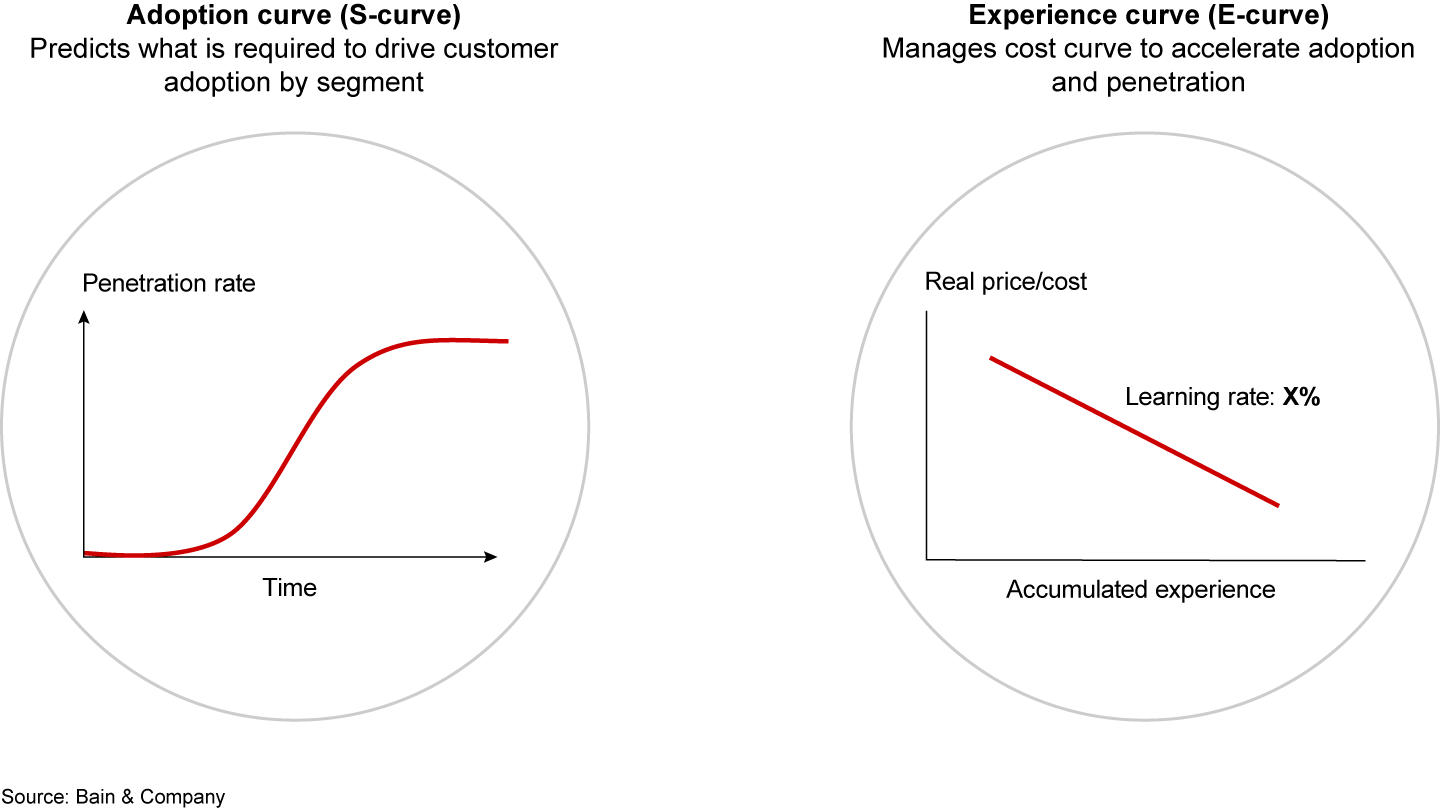
      Winners proactively manage the S- and E-curves to accelerate the green transition

      Here’s our guide on how first-movers can assess their specific locations on the E- and S-curves, close the gap, and back bold ideas with bold investments and execution, to guarantee the risk pays off.

      Two paths forward

      Companies scaling a green solution typically fit one of two archetypes (see Figure 2). While either can be a path to market leadership, each requires a slightly different pace and approach.

      Figure 2
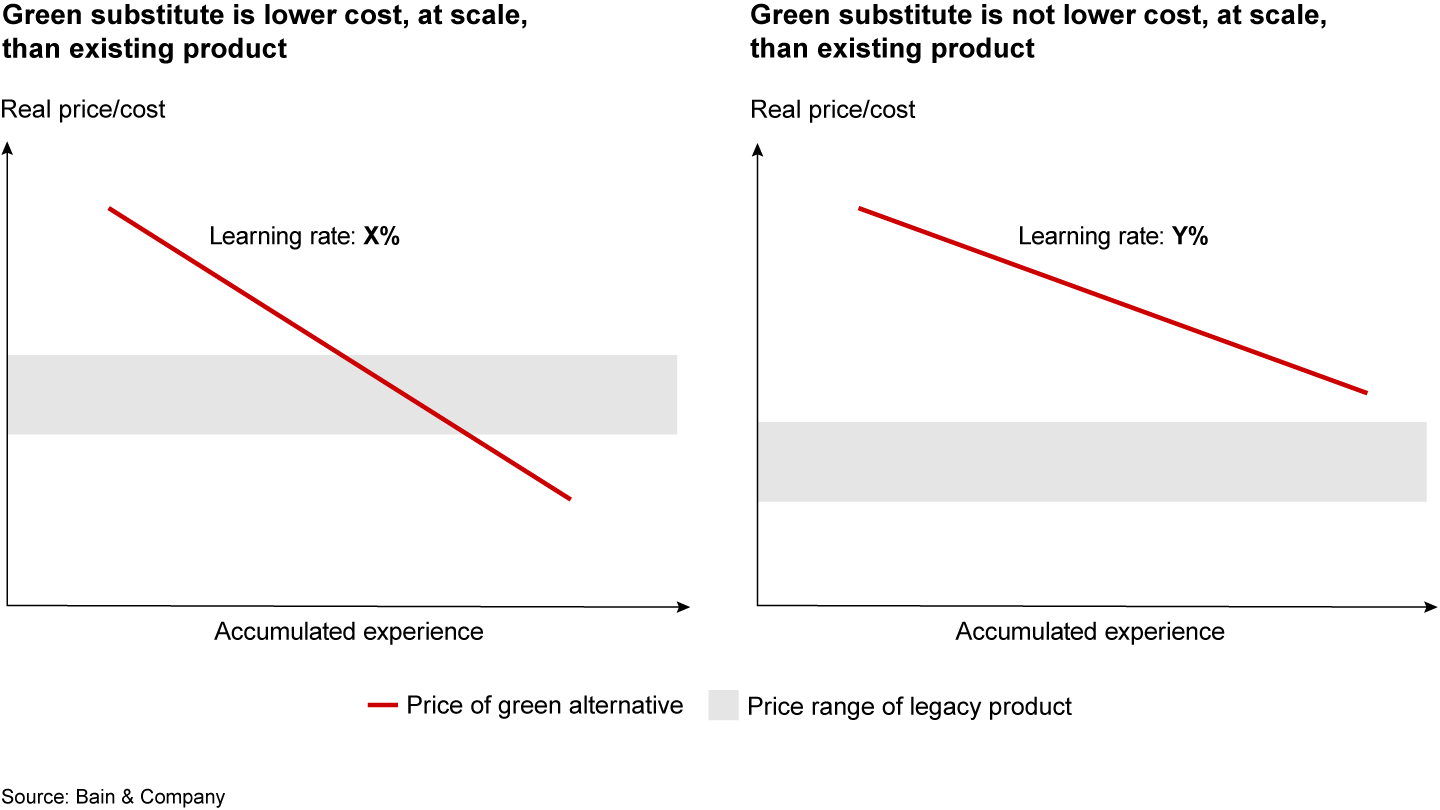
      There are two archetypal experience curves for green solutions
      There are two archetypal experience curves for green solutions
      There are two archetypal experience curves for green solutions

      Firms in the first archetype find that their green substitute is lower cost, at scale, than the incumbent product. There’s high potential for first-mover advantage—in fact, if you move too slowly or price too high, you could lose the business.

      In this scenario, pioneers adopt preemptive pricing to move down the E-curve as fast as possible, accelerating customer adoption. Their green alternatives often have almost identical characteristics and performance to existing products. As B2B buyers usually make rational purchase decisions, offering trials of green substitutes to showcase similarities can help boost adoption. These first movers are quickly rewarded with scale and cost advantage, as well as potential subsidies as regulations change.

      A green solution won’t always be the lower-cost solution—but it’s still worth pursuing, given the direction of most industries. Firms in the second archetype will have no choice but to turn to green substitutes as environmental, social, and governance (ESG) regulations, such as carbon taxation, increase their costs. In this case, leading companies focus on a more value-based pricing strategy, targeting those willing to pay more for green alternatives first. These companies understand that moving too fast could hurt their current business, so they take a slower approach to investing in and scaling the new business, often focusing on just one product or a select segment of the product portfolio. As a result, companies in the second archetype capture a more moderate first-mover advantage.

      The E- and S-curve interlock 

      To determine the right pace and level of investment, winning companies tear down the organizational silos that have historically separated commercial teams from operational and procurement teams. They connect the E- and S-curves in four steps.

      Step 1: Green solution innovation

      Companies can start by brainstorming potential green substitutes for their current product portfolio. Leaders can prioritize the options based on the greatest potential to scale, the biggest impact in achieving sustainability goals, and the level of disruption to current operations.

      Questions to get started:
      • What are the potential green substitutes—for today and for a decarbonized world?
      • Which have the greatest potential to scale? Which will best help us achieve our sustainability goals?
      • How much would each green substitute disrupt our current operations?
      • Which should we prioritize for our assessment?

      Step 2: E-curve analysis

      Future market leaders will develop E-curves for existing solutions, based on historical industry pricing, relevant costs, and expected future moves from scale and regulation. They do the same for potential green substitutes, considering their technology capabilities and anticipated future scale and experience. With these E-curves, companies can pinpoint if, and when, their green substitute will become cheaper than the incumbent solution.

      Questions to get started:
      • What does the E-curve look like for our selected green substitute? What is our level of technological readiness? How are decarbonization regulations and taxes affecting the E-curve?
      • Which industry players, if any, are already transitioning?
      • Which archetype does our green substitute most closely fit?
      • Can we bring down costs with operational performance improvements or product innovation?

      Step 3: S-curve analysis

      Following an assessment of current green substitute adoption by end-market, leading companies determine which customer segments are primed for green solution adoption based on:

      • the customer’s benefit from avoiding carbon cost;
      • the importance of sustainability commitments to investors and stakeholders;
      • the value to the end consumer;
      • forecasted supply-demand dynamics; and
      • potential changes to the regulatory environment and investor commitments.

      When determining the expected adoption curve, these companies first focus on customer segments that stand to benefit most—and are willing to pay. They also forecast and monitor adoption across different segments over time.

      Questions to get started:
      • Where are our customers on the S-curve? What is the level of penetration for green substitutes?
      • What are the relevant customer segments? Which customers benefit most from a green solution?
      • How does this differ by region or application? What are the effects of regulation, like taxation or subsidies?
      • What are the greatest barriers to adoption?

      Step 4: Value creation plan

      Armed with a clear understanding of where they stand on the E- and S-curves and what they need to do to bridge the gap, leading companies then develop a dynamic strategy that delineates short-, medium-, and long-term actions. They identify no-regret moves (such as partnerships), big bets (such as scale acquisitions), and signposts (such as regulatory changes); map resource allocation and investment over time; and dedicate a team to evaluating performance outside of the strategic planning cycle.

      Questions to get started:
      • What is the roadmap to becoming a market maker? Do we need preemptive pricing?
      • What no-regret moves can we take now? What big bets should we consider?
      • What are the signposts to monitor and adjust our strategy over time?
      • What are the financial implications for capex and resource allocation? What are the financial incentives?
      • How can we evaluate our performance and follow through on the transformation?

      How our clients have built next-generation green businesses


      A chemical company wins with a natural alternative

      One multinational chemical company needed to make the move from synthetic to natural products to protect the business’s long-term sustainability and profitability. The risk of competitors gaining a cost advantage first was growing, creating an urgent case for change.

      Through an E- and S-curve analysis, we demonstrated that the cost position of a natural flavoring agent would be lower than the synthetic flavoring agent at scale. Given that retailers and end-consumers are already moving away from synthetic ingredients in favor of clean-label products, lower prices could compel food and beverage customers to make the switch. In fact, we discovered that just a 5% uptick in adoption from large food customers would halve the production costs for the natural product, reaching a turning point. And every time the company doubled production volume, costs would fall by an additional 20%.

      We helped the chemical company develop a commercial and industrial roadmap for the natural flavoring agent, diligently tracking price, volume, and cost positions to determine next investments. The proactive company is on its way to becoming the market leader in the natural substitute, accumulating experience and encouraging customer conversion.

      A meat supplier scales a plant-based substitute

      Having demonstrated that plant-based alternatives could be lower cost than meat, we helped a European meat processing company establish a future engine of growth. Leadership understood that falling consumption, lower herd sizes, and its relative cost position would eventually put pressure on the core business, but an E- and S-curve analysis revealed this shift would occur earlier than they anticipated (see Figure 3). Using capital from its core, the incumbent was able to fund its plant-based meat alternative business, launching a wave of disruption.

      Figure 3
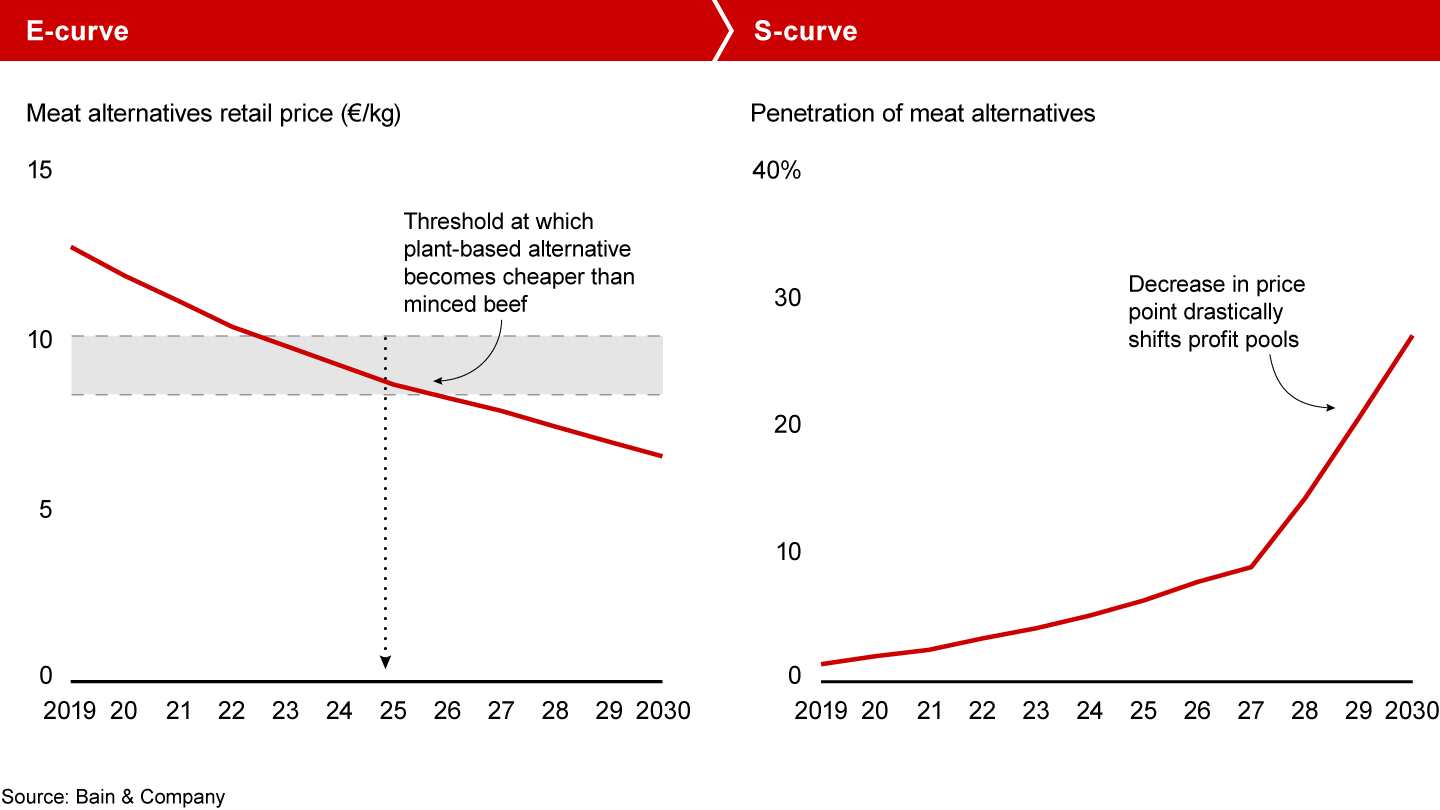
      Plant-based substitutes could be cheaper than animal meat by 2025, propelling adoption
      Plant-based substitutes could be cheaper than animal meat by 2025, propelling adoption
      Plant-based substitutes could be cheaper than animal meat by 2025, propelling adoption

      Today, the company continues to invest in both businesses. In the short term, it’s expanding and elevating its core product portfolio. But at the same time, we’ve helped lay the foundation for its green product portfolio and the capabilities needed to scale that business.

      A metals company brings its capabilities to a hot market

      We helped a global metals company apply its experience in rechargeable batteries for portable electronics to the challenging, yet attractive, electric vehicle (EV) battery market—one characterized by high competition, price pressure, immense uncertainties, and hefty investment and scale requirements.

      The company already had experience with battery materials and in sourcing and refining a few key metals. It expanded into Asia to strengthen its position, creatively reengineered its processes, and partnered to access new technologies. After determining that over time the price of EVs will fall below internal combustion engines, we developed a strategy focused on aligning leadership around the new pillar of growth, scaling key assets, and setting preemptive pricing to win early contracts. In shifting to EV batteries and simplifying its portfolio, the company is prepared for its next wave of growth.


      How we can help

      Linking the E- and S-curves is critical, but it’s not enough to guarantee success. A green transition requires full management attention and disproportionate resources—it should be seen as the firm’s most important initiative. That’s a challenge when leaders have become accustomed to thinking of sustainability and economics as trade-offs.

      We collaborate with companies on consolidating E- and S-curve hypotheses to determine the best opportunities. We analyze substitution effects in the market, review customer expectations and sentiment, and identify capability strengths to draw on and gaps to fill. With a comprehensive view of the landscape and potential outcomes, we can help you determine the right strategic plays to propel adoption.

      In crafting an approach that’s right for you we champion bold execution, including early announcements of assets, first-to-market innovation, acquisitions for scale, and long-term partnerships to access pioneering technology. We help develop the right preemptive pricing strategy to win early contracts, accumulate volume quickly, and lead on the experience curve. We also constantly monitor factors such as customer sentiment, regulatory developments, and technological breakthroughs—any one of which could quickly change the game.

      Sustaining momentum will need complete internal alignment. We help companies inspire leaders, generate debate, and mobilize around a new value creation plan. We also help executives communicate and reinforce their vision to critical stakeholders. We set the organization’s ambition for industry leadership—not mere participation.

      Authors
      • Headshot of Piet de Paepe
        Piet de Paepe
        Partner, Brussels
      • Headshot of Jelle Dhaen
        Jelle Dhaen
        Partner, Brussels
      • Headshot of Jenny Lundqvist
        Jenny Lundqvist
        Practice Executive Vice President, Copenhagen
      Contact us
      Related Industries
      • Advanced Manufacturing & Services
      • Automotive
      • Metals
      Related Consulting Services
      • Business Strategy
      • Strategy
      • Sustainability
      Advanced Manufacturing & Services
      A Steel Company Seeks to Regain Market Leadership

      A host of factors bumped SteelCo from its dominant position. We helped it chart a new path forward.

      Read more
      Strategy
      Hand inserting a card into an ATM machine.
      A Bold New Strategy Restores a Bank to a Leadership Position

      Its holistic approach to simplification, execution discipline, and digitalization has proved transformational.

      Read more
      Advanced Manufacturing & Services
      Robotic arms and conveyor belts sorting and moving boxes in an automated warehouse.
      A Conglomerate Charts a New Global Strategy

      An initial focus on operating model inspired a broader portfolio review that proved transformative.

      Read more
      Advanced Manufacturing & Services
      Transforming Service Into a Source of Competitive Advantage

      Working with Bain, ElectricCo pursued a new business unit strategy that resulted in a completely revamped service program capable of meeting the full spectrum of growth opportunities within services.

      Read more
      Advanced Manufacturing & Services
      A Metals Company Transforms Its Business to Set New Growth Trajectory

      We helped a metals company achieve up to $200 million in cost reductions, taking it from a difficult financial and operational situation to a growth-focused future.

      Read more
      First published in maio 2023
      Tags
      • Advanced Manufacturing & Services
      • Automotive
      • Business Strategy
      • Metals
      • Strategy
      • Sustainability

      How We've Helped Clients

      A Steel Company Seeks to Regain Market Leadership

      Read case study

      A Conglomerate Charts a New Global Strategy

      Read case study

      An Automaker Reinvents Customer Experience with a Focus on Key Episodes

      Read case study

      Quer saber mais?

      Ajudamos líderes do mundo todo a lidar com desafios e oportunidades cruciais para suas organizações. Juntos, criamos mudanças e resultados duradouros.

      Bain Insights. Our perspectives on critical issues global businesses face in today's challenging environment, delivered monthly.

      *I have read and understand Bain’s Privacy Notice.

      Please read and agree to the Privacy Policy.
      Bain & Company
      Contact us Sustainability Accessibility Terms of use Privacy Cookie Policy Sitemap Log In

      © 1996-2026 Bain & Company, Inc.

      Contact Bain

      How can we help you?

      • Business inquiry
      • Career information
      • Press relations
      • Partnership request
      • Speaker request
      See all offices