
Skip to Content
  • Offices

    Offices

    North & Latin America
    • Atlanta
    • Austin
    • Bogota
    • Boston
    • Buenos Aires
    • Chicago
    • Dallas
    • Denver
    • Houston
    • Los Angeles
    • Mexico City
    • Minneapolis
    • Monterrey
    • Montreal
    • New York
    • Rio de Janeiro
    • San Francisco
    • Santiago
    • São Paulo
    • Seattle
    • Silicon Valley
    • Toronto
    • Washington, DC
    Europe & Africa
    • Amsterdam
    • Athens
    • Berlin
    • Brussels
    • Copenhagen
    • Dusseldorf
    • Frankfurt
    • Helsinki
    • Istanbul
    • Johannesburg
    • Kyiv
    • Lisbon
    • London
    • Madrid
    • Milan
    • Munich
    • Oslo
    • Paris
    • Rome
    • Stockholm
    • Vienna
    • Warsaw
    • Zurich
    Middle East
    • Doha
    • Dubai
    • Riyadh
    Asia & Australia
    • Bangkok
    • Beijing
    • Bengaluru
    • Brisbane
    • Ho Chi Minh City
    • Hong Kong
    • Jakarta
    • Kuala Lumpur
    • Manila
    • Melbourne
    • Mumbai
    • New Delhi
    • Perth
    • Seoul
    • Shanghai
    • Singapore
    • Sydney
    • Tokyo
    See all offices
  • Alumni
  • Media Center
  • Subscribe
  • Contact
  • Brazil | Português

    Select your region and language

    Global
    • Global (English)
    North & Latin America
    • Brazil (Português)
    • Argentina (Español)
    • Canada (Français)
    • Chile (Español)
    • Colombia (Español)
    Europe, Middle East, & Africa
    • France (Français)
    • DACH Region (Deutsch)
    • Italy (Italiano)
    • Spain (Español)
    • Greece (Elliniká)
    Asia & Australia
    • China (中文版)
    • Korea (한국어)
    • Japan (日本語)
  • Saved items (0)
    Saved items (0)

    You have no saved items.

    Bookmark content that interests you and it will be saved here for you to read or share later.

    Explore Bain Insights
  • Industries
    Main menu

    Industries

    • Aeroespacial e Defesa
    • Agronegócio
    • Química
    • Construção e Infraestrutura
    • Bens de Consumo
    • Serviços Financeiros
    • Healthcare & Life Sciences
    • Máquinas e Equipamentos Industriais
    • Mídia e Entretenimento
      Industries
      Mídia e Entretenimento
      • Media Lab
    • Metais
    • Mineração
    • Petróleo e Gás
    • Papel e Embalagens
    • Private Equity
      Industries
      Private Equity
      • Due Diligence
      • Exit Planning
      • Firm Strategy & Operations
      • Portfolio Value Creation
    • Setor Público e Social
    • Varejo
    • Tecnologia
    • Telecomunicações
      Industries
      Telecomunicações
      • Capital Expenditure
      • Telco Digital Transformation
    • Transporte
    • Turismo & Lazer
    • Energia & Renováveis
  • Consulting Services
    Main menu

    Consulting Services

    • Customer Experience
    • Sustainability
    • Innovation
    • M&A
    • Operations
    • People & Organization
    • Private Equity
    • Sales & Marketing
    • Strategy
    • AI, Insights, and Solutions
    • Technology
    • Transformation
  • Digital
  • Insights
    Main menu

    Insights

    • Industry Insights
    • Services Insights
    • Bain Books
    • Webinars
    • Bain Futures
    View all Insights
    Featured topics
    • Tariff Response
    • Artificial Intelligence
    • Thriving in Uncertainty
    • Executive Conversations
    • Macro Trends
    • M&A Report
    • Healthcare Private Equity Report
    • Paper & Packaging Report
    • Technology Report
    • CEO's Guide to Sustainability
    • CEO Insights
    • CFO Insights
    • COO Insights
    • CIO Insights
    • CMO Insights
    View all featured topics
  • About
    Main menu

    About

    • What We Do
    • What We Believe
    • Our People & Leadership
    • Client Results
    • Awards & Recognition
    • Global Affiliations
    Further: Our global responsibility
    • Sustainability
    • Social Impact
    • World Economic Forum
    Learn more about Further
  • Carreiras
    Main menu

    Carreiras

    • Trabalhe Conosco
      Carreiras
      Trabalhe Conosco
      • Find Your Place
      • Nossas áreas de trabalho
      • Equipes integradas
      • Estudantes
      • Programas e estágios
      • Eventos de Recrutamento
    • A Vida na Bain
      Carreiras
      A Vida na Bain
      • Blog: Inside Bain
      • Histórias de carreira
      • Nossas pessoas
      • Onde trabalhamos
      • Apoioao seu crescimento
      • Grupos de afinidade
      • Benefícios
    • Impact Stories
    • Nosso Processo Seletivo
      Carreiras
      Nosso Processo Seletivo
      • O Que Esperar
      • Entrevistas
    FIND JOBS
  • Offices
    Main menu

    Offices

    • North & Latin America
      Offices
      North & Latin America
      • Atlanta
      • Austin
      • Bogota
      • Boston
      • Buenos Aires
      • Chicago
      • Dallas
      • Denver
      • Houston
      • Los Angeles
      • Mexico City
      • Minneapolis
      • Monterrey
      • Montreal
      • New York
      • Rio de Janeiro
      • San Francisco
      • Santiago
      • São Paulo
      • Seattle
      • Silicon Valley
      • Toronto
      • Washington, DC
    • Europe & Africa
      Offices
      Europe & Africa
      • Amsterdam
      • Athens
      • Berlin
      • Brussels
      • Copenhagen
      • Dusseldorf
      • Frankfurt
      • Helsinki
      • Istanbul
      • Johannesburg
      • Kyiv
      • Lisbon
      • London
      • Madrid
      • Milan
      • Munich
      • Oslo
      • Paris
      • Rome
      • Stockholm
      • Vienna
      • Warsaw
      • Zurich
    • Middle East
      Offices
      Middle East
      • Doha
      • Dubai
      • Riyadh
    • Asia & Australia
      Offices
      Asia & Australia
      • Bangkok
      • Beijing
      • Bengaluru
      • Brisbane
      • Ho Chi Minh City
      • Hong Kong
      • Jakarta
      • Kuala Lumpur
      • Manila
      • Melbourne
      • Mumbai
      • New Delhi
      • Perth
      • Seoul
      • Shanghai
      • Singapore
      • Sydney
      • Tokyo
    See all offices
  • Alumni
  • Media Center
  • Subscribe
  • Contact
  • Brazil | Português
    Main menu

    Select your region and language

    • Global
      Select your region and language
      Global
      • Global (English)
    • North & Latin America
      Select your region and language
      North & Latin America
      • Brazil (Português)
      • Argentina (Español)
      • Canada (Français)
      • Chile (Español)
      • Colombia (Español)
    • Europe, Middle East, & Africa
      Select your region and language
      Europe, Middle East, & Africa
      • France (Français)
      • DACH Region (Deutsch)
      • Italy (Italiano)
      • Spain (Español)
      • Greece (Elliniká)
    • Asia & Australia
      Select your region and language
      Asia & Australia
      • China (中文版)
      • Korea (한국어)
      • Japan (日本語)
  • Saved items  (0)
    Main menu
    Saved items (0)

    You have no saved items.

    Bookmark content that interests you and it will be saved here for you to read or share later.

    Explore Bain Insights
  • Industries
    • Industries

      • Aeroespacial e Defesa
      • Agronegócio
      • Química
      • Construção e Infraestrutura
      • Bens de Consumo
      • Serviços Financeiros
      • Healthcare & Life Sciences
      • Máquinas e Equipamentos Industriais
      • Mídia e Entretenimento
      • Metais
      • Mineração
      • Petróleo e Gás
      • Papel e Embalagens
      • Private Equity
      • Setor Público e Social
      • Varejo
      • Tecnologia
      • Telecomunicações
      • Transporte
      • Turismo & Lazer
      • Energia & Renováveis
  • Consulting Services
    • Consulting Services

      • Customer Experience
      • Sustainability
      • Innovation
      • M&A
      • Operations
      • People & Organization
      • Private Equity
      • Sales & Marketing
      • Strategy
      • AI, Insights, and Solutions
      • Technology
      • Transformation
  • Digital
  • Insights
    • Insights

      • Industry Insights
      • Services Insights
      • Bain Books
      • Webinars
      • Bain Futures
      View all Insights
      Featured topics
      • Tariff Response
      • Artificial Intelligence
      • Thriving in Uncertainty
      • Executive Conversations
      • Macro Trends
      • M&A Report
      • Healthcare Private Equity Report
      • Paper & Packaging Report
      • Technology Report
      • CEO's Guide to Sustainability
      • CEO Insights
      • CFO Insights
      • COO Insights
      • CIO Insights
      • CMO Insights
      View all featured topics
  • About
    • About

      • What We Do
      • What We Believe
      • Our People & Leadership
      • Client Results
      • Awards & Recognition
      • Global Affiliations
      Further: Our global responsibility
      • Sustainability
      • Social Impact
      • World Economic Forum
      Learn more about Further
  • Carreiras
    Popular Searches
    • Agile
    • Digital
    • Strategy
    Your Previous Searches
      Recently Visited Pages

      Content added to saved items

      Saved items (0)

      Removed from saved items

      Saved items (0)

      Report

      2024 China Luxury Goods Market: Navigating Turbulent Waters

      2024 China Luxury Goods Market: Navigating Turbulent Waters

      China's luxury market faced a significant slowdown in 2024, primarily driven by reduced domestic spending due to low consumer confidence and increased tourist spending abroad.

      By Bruno Lannes, Weiwei Xing, and Emma Gu

      • min read
      }

      Report

      2024 China Luxury Goods Market: Navigating Turbulent Waters
      en
      Executive Summary
      • In 2024, the Chinese mainland luxury market experienced a significant decline of 18%–20%, reverting to 2020 levels due to low consumer confidence and increased overseas spending. In many ways, this downturn marks the end of the Covid-19 artificial boost on the China luxury goods market as global tourism continues to recover.
      • In this context, all luxury categories have underperformed, with beauty doing better and watches and jewelry performing worse. As a result, only a very small number of brands enjoyed growth in China in 2024.
      • Hainan has seen an important decline in both traffic and sales while overseas spending has increased, with Japan being the big winner. In addition, Daigou sales have also increased (for the fashion and leather goods categories).
      • 2025 is expected to be flat in the mainland market, with a challenging first half and an improving second half, driven by the positive impact of economic stimulus measures in China.
      • In the longer term, the market is expected to recover at a moderate pace, driven by the solid fundamentals of China’s economy and the growth of its middle class.

      After the lifting of Covid-19 restrictions in December 2022, there was an initial recovery in the first half of 2023. However, this was not sustained due to sluggish consumer confidence, especially for discretionary items such as luxury. There was also a surge in overseas spending in nearby markets in 2023 and even more in 2024, driven by international tourism recovery and favorable exchange rates. Furthermore, today's Chinese consumers are becoming more rational about luxury spending, showing reluctance to purchase amid frequent price increases with limited product innovation and preferring experienced-based consumption, such as travel and outdoor.

      As a result, the Chinese mainland luxury market is under significant pressure, with an estimated year-on-year decline of 18%–20% (see Figure 1).

      Figure 1
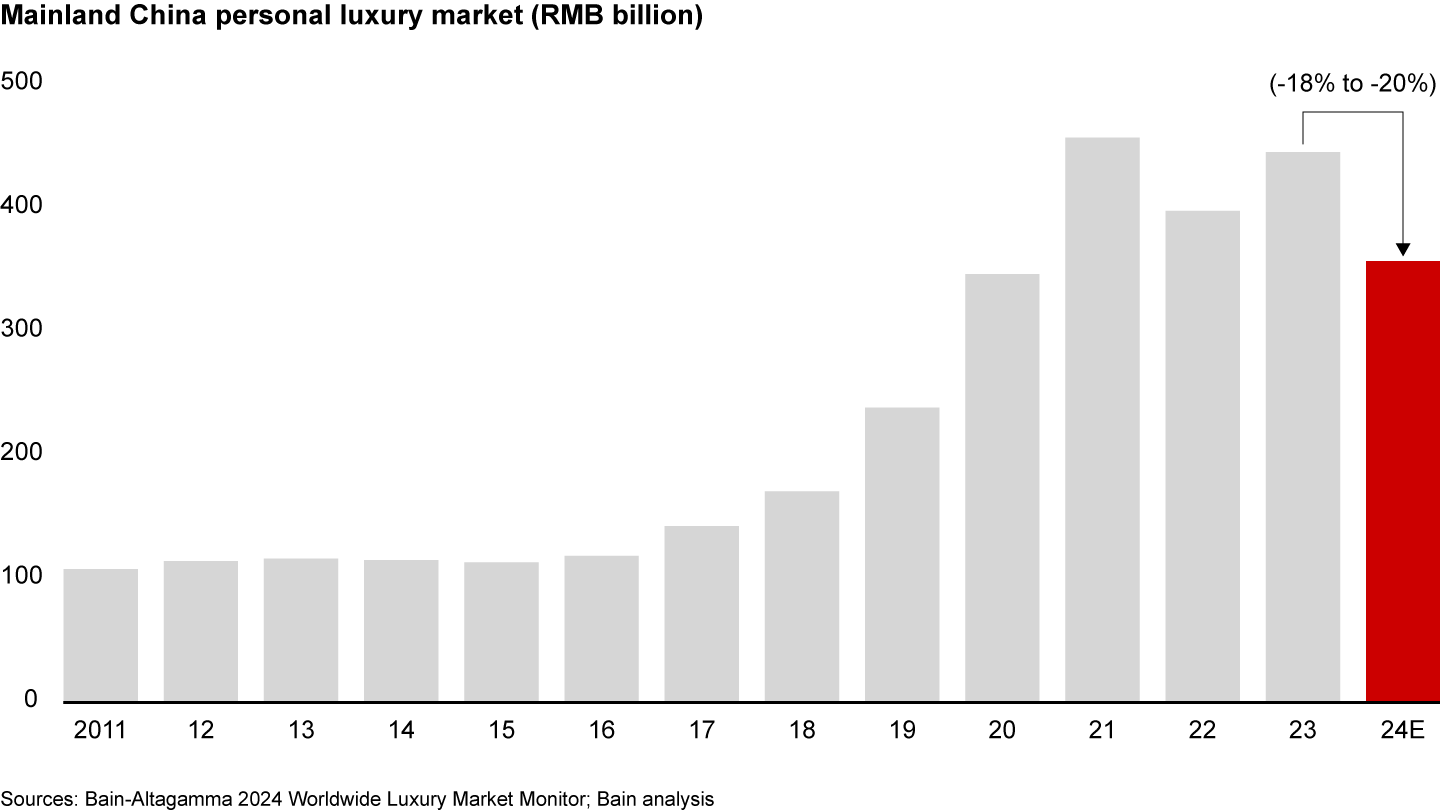
      Mainland China personal luxury market declined by 18%–20% in 2024, driven by low consumer confidence and increasing overseas shopping
      Mainland China personal luxury market declined by 18%–20% in 2024, driven by low consumer confidence and increasing overseas shopping
      Mainland China personal luxury market declined by 18%–20% in 2024, driven by low consumer confidence and increasing overseas shopping

      The slowdown intensified throughout the year, with the third quarter showing the worst performance and a slight improvement in the fourth quarter, mostly driven by announcements of the forthcoming stimulus measures and their expected impact on consumption.

      All luxury categories have faced challenges, though their impact varies by category. The beauty sector­—particularly perfumes, color cosmetics, and ultra-premium skincare—has demonstrated stronger resilience as consumers seek emotional and sensory experiences (see Figure 2).

      Figure 2
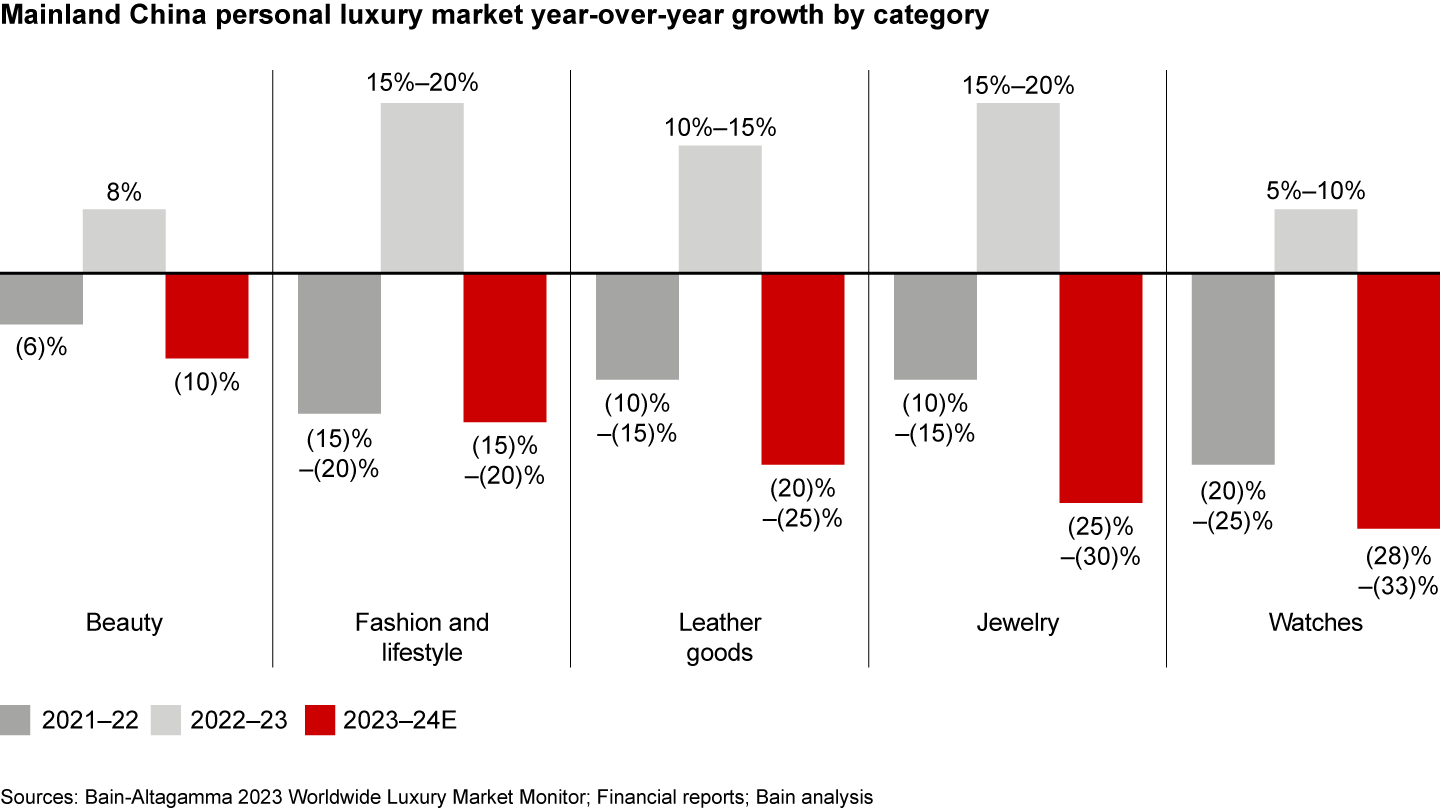
      All luxury categories are facing widespread challenges, with jewelry and watches experiencing the most significant negative impact
      All luxury categories are facing widespread challenges, with jewelry and watches experiencing the most significant negative impact
      All luxury categories are facing widespread challenges, with jewelry and watches experiencing the most significant negative impact

      The fashion segment has experienced a smaller decline compared to leather goods, largely due to its seasonal nature and the importance of its Very Important Customer (VIC) demographic. In contrast, leather goods have suffered from over-reliance on iconic pieces and carry-overs with limited investment into seasonal items and higher unit prices, leaving consumers with little incentive to make additional purchases.

      The jewelry and watches segment has faced the most significant challenges as consumers are shifting their preferences toward other value-preserving assets and experiences. Jewelry has performed slightly better than watches, primarily due to its wide range of products and price points from high jewelry to fine jewelry, which has higher exposure to aspirational consumers. Meanwhile, the watch market has seen more rational behaviors from Chinese consumers, compounded by an ongoing decline in secondary market prices for luxury Swiss watches, which negatively impacted the value retention of high-end timepieces.

      Hainan’s duty-free sales declined by approximately 29% in 2024, reflecting the broader consumption slowdown in China (see Figure 3). An approximately 15% year-on-year reduction in traffic and approximately 15% decrease in basket value influenced this drop. The recovery of global tourism, particularly to nearby destinations like Japan and Southeast Asia, which offer comparable travel times and costs but superior services and experiences, primarily drove the decline in traffic. Additionally, the consumer profile is shifting; affluent consumers who were significant spenders during the Covid-19 pandemic in Hainan are now traveling abroad. Intense competition from domestic e-commerce platforms, especially in the beauty category, has also made Hainan a less attractive duty-free destination.

      Looking ahead, uncertainties remain regarding Hainan's duty-free market. The implementation of key policies for achieving the Hainan Free Trade Port is expected to continue until 2025; at the same time, Hainan will compete with other new downtown duty-free shops in the mainland and nearby destinations and needs to improve the overall luxury experience for its travelers.

      Figure 3
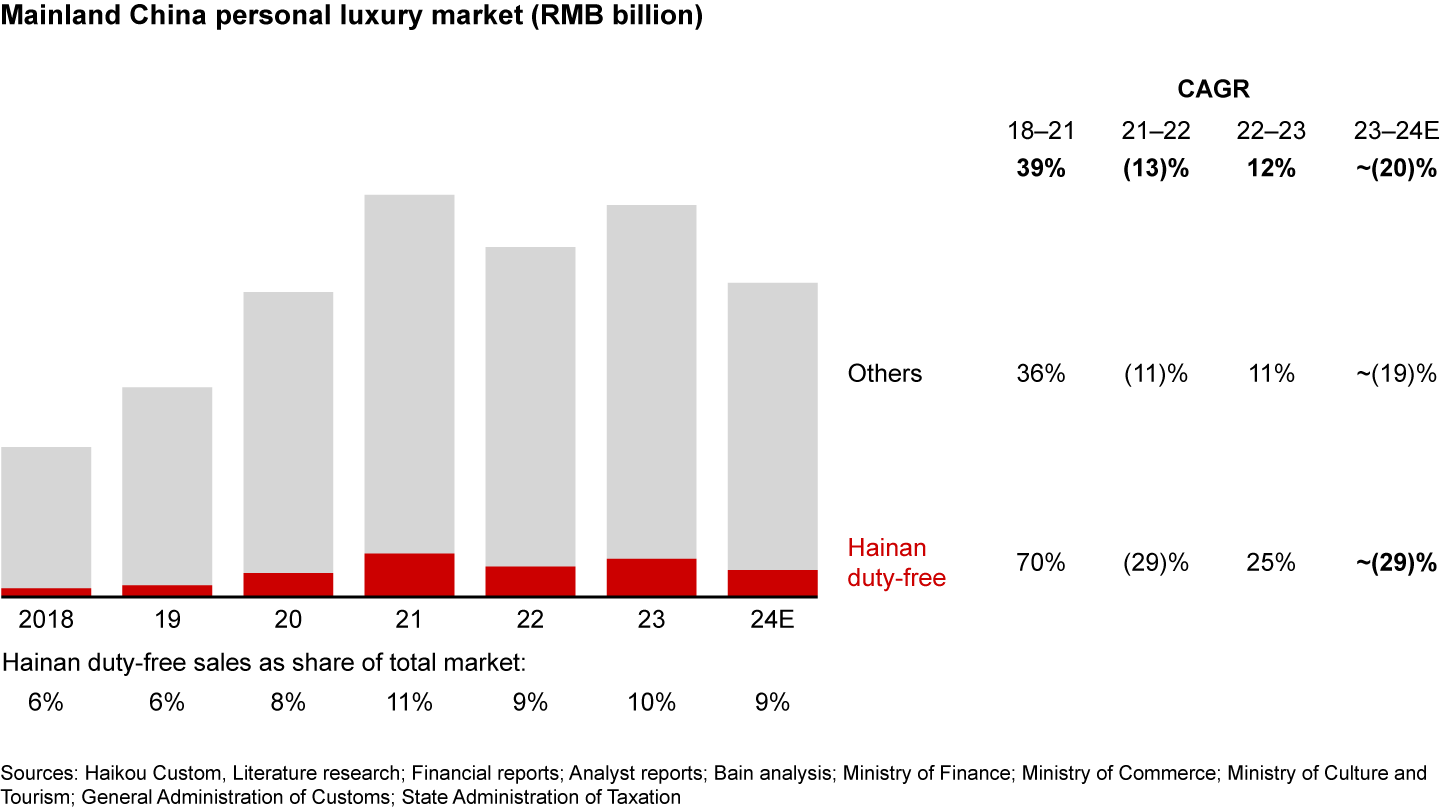
      Duty-free sales in Hainan experienced a roughly 29% decline in 2024, driven by reduced traffic and smaller basket value
      Duty-free sales in Hainan experienced a roughly 29% decline in 2024, driven by reduced traffic and smaller basket value
      Duty-free sales in Hainan experienced a roughly 29% decline in 2024, driven by reduced traffic and smaller basket value

      To summarize, China’s luxury market faced a significant decline in 2024, affecting the vast majority of brands. This downturn is primarily attributed to low consumer confidence, driven by consumers’ cautious attitude toward consumption given the economic uncertainties they face. Interestingly, while VICs have demonstrated greater resilience, they have also become more conservative in their luxury spending, opting to diversify their wealth across a broader range of assets during this economic downturn. Amid this widespread decline, only a few brands have emerged as winners; these brands are characterized by high desirability, strong connection with consumers, built over many years of investment and differentiated value propositions. Their success is not driven by scale, as we see small and large brands among the winners.

      As we look to the future, brands need to shift their mindsets from grabbing their share of incremental market growth through expansion to competing for market share in a more stable and normalized environment. To succeed in this new era, elevated differentiation in branding, product innovation, pricing strategies, and client experience will be crucial.

      In 2024, there was a notable rebound in overseas shopping, particularly in Japan, accompanied by significant growth in the grey market due to increasing price disparities.

      As Chinese overseas tourism gradually resumed, it is estimated that approximately 60% of Chinese mainland luxury spending occurred within the Chinese mainland in 2024. The recovery of luxury spending by Chinese tourists in Europe and Asia has been significant. Specifically, spending abroad in 2024 reached about 50% of 2019 levels in Europe and was around 120% of its 2019 level in Asia-Pacific.

      The exchange rate between the Chinese yuan and the Japanese yen has further stimulated luxury consumption in Japan. However, the increase in overseas shopping did not offset the decline in onshore sales, resulting in an overall decrease of about 7% in total Chinese luxury goods spending (see Figure 4).

      Figure 4
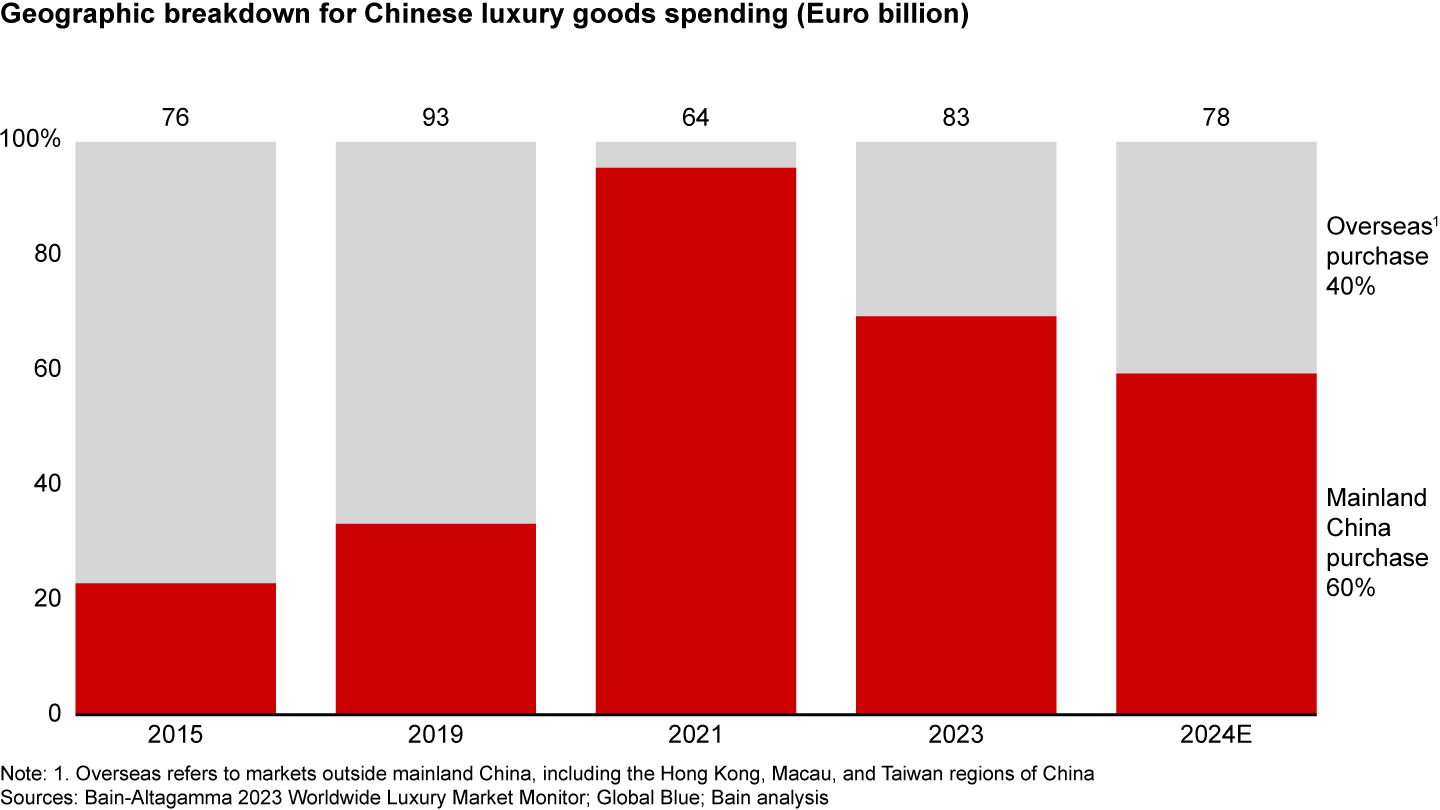
      The rise in overseas purchases was not enough to offset the decline in the mainland; overall 2024 Chinese luxury spending decreased by around 7%
      The rise in overseas purchases was not enough to offset the decline in the mainland; overall 2024 Chinese luxury spending decreased by around 7%
      The rise in overseas purchases was not enough to offset the decline in the mainland; overall 2024 Chinese luxury spending decreased by around 7%

      Looking ahead, overseas travel and consumption are expected to continue to grow. The trend of Chinese travelers shifting their preferences from shopping-focused tours to niche, flexible, and experience-based trips is also anticipated to increase in the future.

      The pricing disparities between luxury goods on the Chinese mainland and other markets, particularly Japan, disrupted the mainland market and played a crucial role in the resurgence of overseas luxury shopping in 2024. A sample analysis of key products across the Chinese mainland, France, and Japan revealed significant price differences across various categories, making luxury shopping abroad even more appealing, especially under favorable exchange rates (see Figure 5). At the yen's lowest point versus the RMB, the price gap compared to domestic prices reached as much as 30%. These wide price gaps have further encouraged overseas shopping, particularly among price-sensitive consumers, which has negatively impacted brand loyalty and recruitment on the Chinese mainland.

      Figure 5
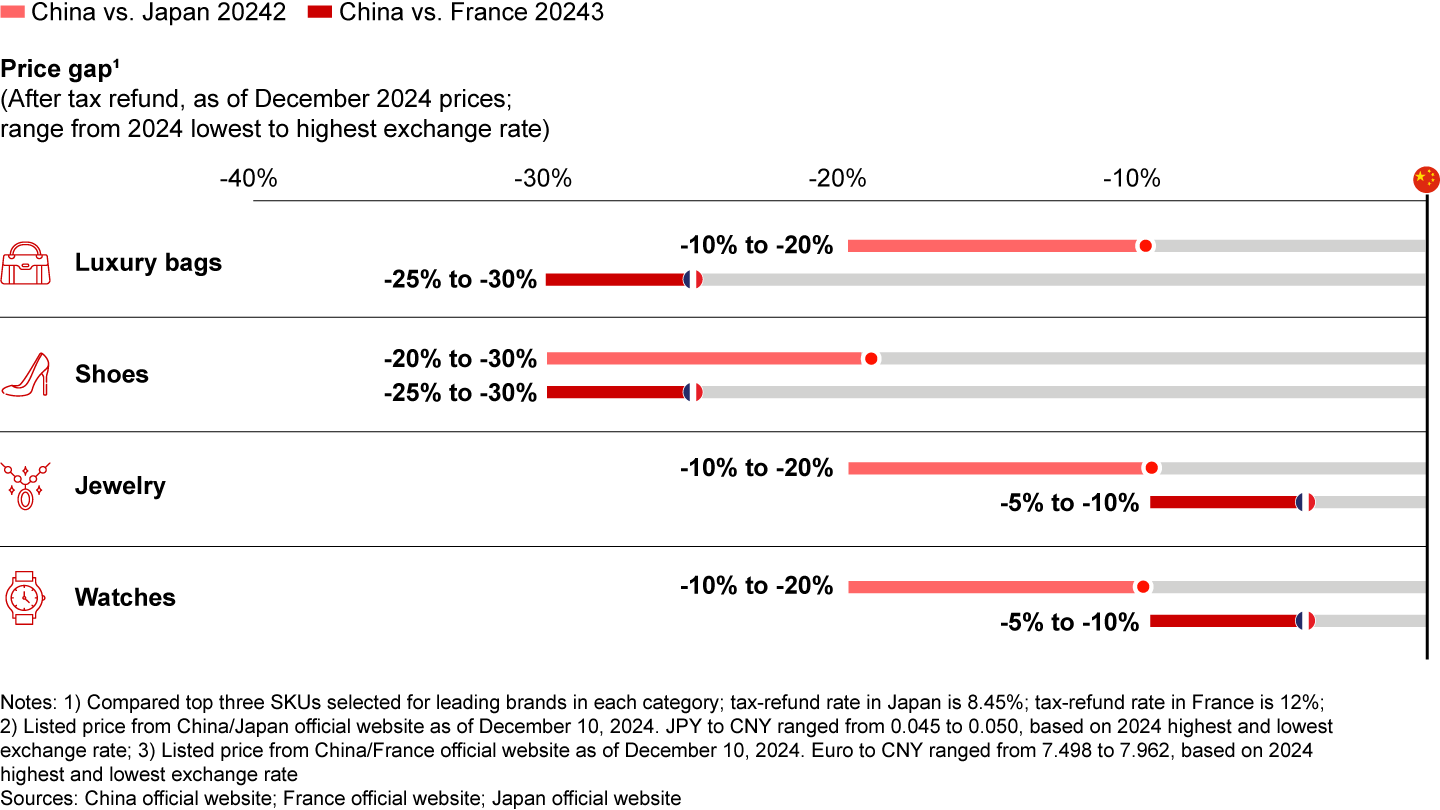
      Price gaps between China and Japan/Europe were a key driver of overseas shopping in 2024

      Historically, in response to this trend, some brands have implemented a global pricing strategy to offset most of the exchange rate fluctuations. This year, other brands addressed these price disparities by implementing purchase limits in stores and aligning new product prices globally (in the fourth quarter). Ensuring more controlled global price difference and swift reactivity should be a top priority for luxury leadership teams in this turbulent macro environment.

      For 2024, despite a significant recovery of 60% in international travelers, South Korean duty-free sales are projected to decline by 3% versus 2023, reaching approximately 60 billion yuan, with an average basket dropping by around 40% (see Figure 6). This decline can be attributed to ongoing government and brand actions against Daigou trading, as well as a shift in tourism flows toward Japan due to favorable exchange rates. The performance of South Korean duty-free sales is still approximately 50% of 2019, both in terms of spending and in terms of number of travelers.

      Figure 6
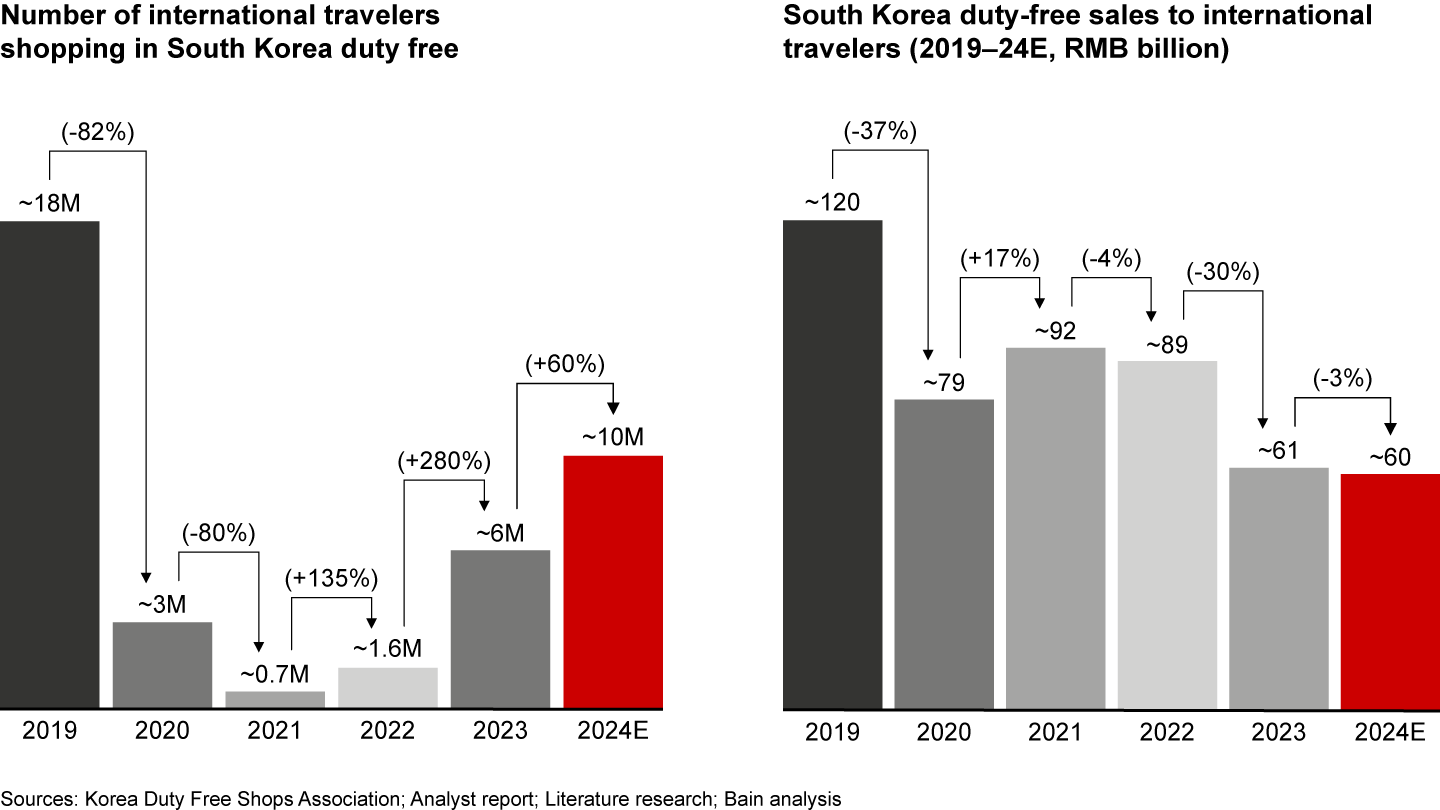
      Despite a recovery in international travelers, South Korean duty-free sales did not increase as government and brands took actions against Daigou
      Despite a recovery in international travelers, South Korean duty-free sales did not increase as government and brands took actions against Daigou
      Despite a recovery in international travelers, South Korean duty-free sales did not increase as government and brands took actions against Daigou

      The depreciation of the South Korean won may further encourage Chinese consumers to shop abroad, adding to the long-term uncertainty surrounding China’s offshore luxury consumption. High inventory pressure on duty-free retailers could lead to increased promotions and discounts in 2025.

      Daigou activities significantly contribute to Chinese consumer spending. According to brands tracked by Re-Hub, the overall grey market grew by approximately 5% in 2024. However, price indexes for Japan and France indicate that these markets are not likely to be the primary sources for top items sold in the grey market. Favorable exchange rates, pricing discounts, promotion mechanisms, and so on have reignited the potential for small-scale Daigou operations to blossom. However, the main source of supply is likely from large-scale or professional Daigou who benefit from substantial pricing advantages through wholesale distribution channels.

      For fashion and leather goods brands with limited or tightly controlled wholesale channels, sales on these platforms can account for 15%–25% of their official sales on the Chinese mainland. In contrast, for brands with larger and less regulated wholesale channels, platform sales can represent 60%–70% or even more of their total sales on the Chinese mainland (see Figure 7). Notably, discounts for the top products tracked by Re-Hub on Daigou platforms deepened by approximately eight percentage points in 2024. This trend raises concerns that the grey market will continue to undermine revenue potential and brand equity on the Chinese mainland.

      Figure 7
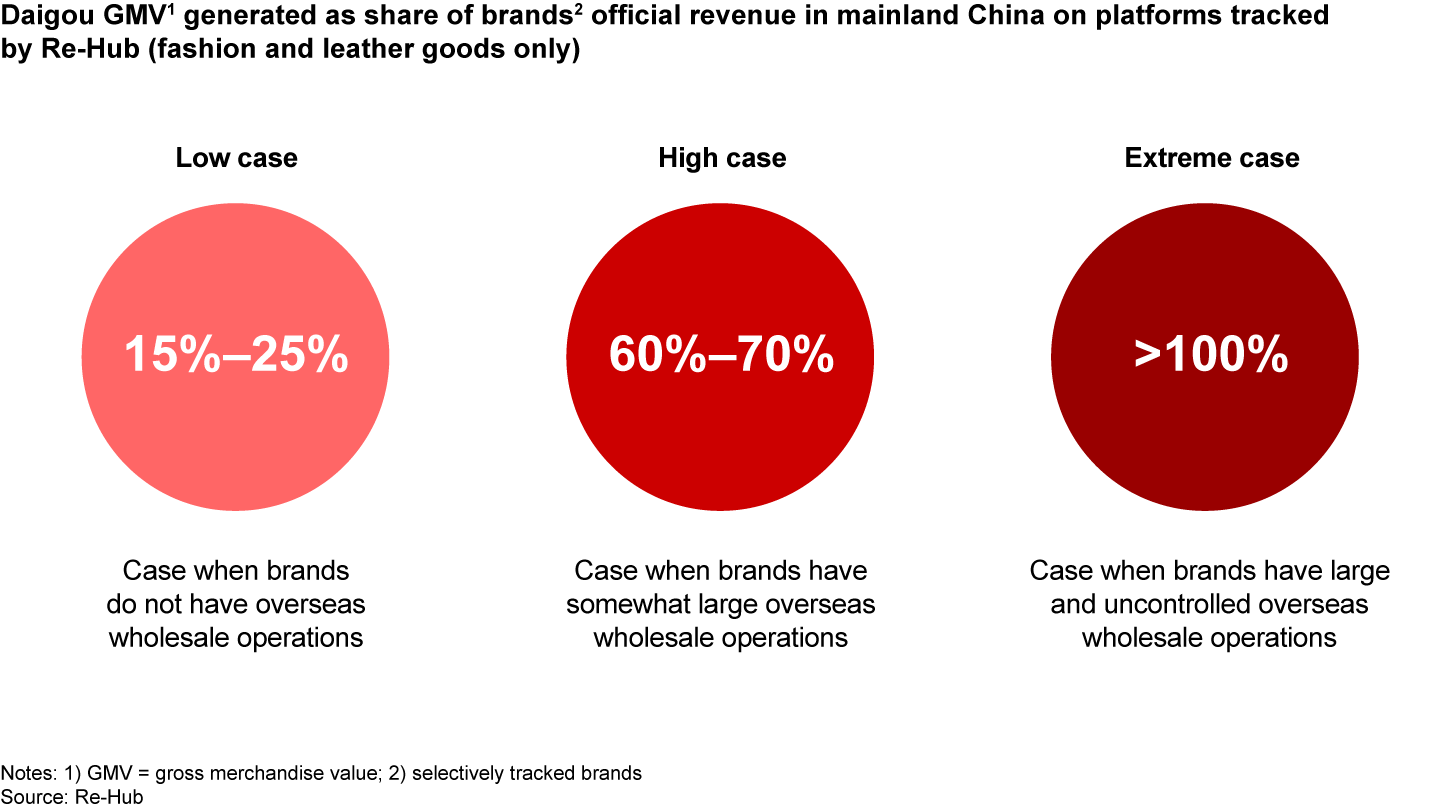
      In fashion and leather goods categories, Daigou sales as a share of mainland China sales have increased
      In fashion and leather goods categories, Daigou sales as a share of mainland China sales have increased
      In fashion and leather goods categories, Daigou sales as a share of mainland China sales have increased

      To counteract this trend, brands should prioritize addressing Daigou operations strategically in 2025 and beyond. The Chinese mainland business should not be viewed as an isolated operation; instead, it should collaborate closely with the global network to actively manage risks associated with Daigou. This can be achieved by optimizing wholesale operations worldwide; harmonizing price gaps; and focusing on enhancing customer relationship management, aftersales services, and overall client experience on the Chinese mainland.

      Looking ahead

      In 2024, China’s luxury market failed to maintain its previous growth trajectory, experiencing an unexpected and sharp deceleration that worsened throughout the year. The downturn was primarily driven by a lukewarm consumer confidence driven by economic uncertainty and a decline in real estate value, a shift in spending toward overseas markets, and continuous price increases by brands without well-justified value propositions.

      The market is expected to continue its downward trend through the first half of 2025, with a cautiously optimistic outlook emerging in the latter half of the year, resulting in an overall flattish performance for the whole year. Key factors influencing the outlook include stronger government stimulus policies, which could provide positive support, and the impact of the new US administration taking office in January, potentially affecting the Chinese economy and exports. Meanwhile, overseas travel and consumption are expected to grow in 2025. As a result, the market is going through an era of turbulence and uncertainty where widespread underperformance may become the norm, with only a few brands emerging as winners. Most brands will likely need to focus on consolidation and performance improvement measures instead of expansion and price increases.

      In this challenging environment, brands should prioritize enhancing brand desirability and delivering genuine value through initiatives such as brand-building events, creativity, product innovation, and improved client experiences to retain consumers domestically and capture market share from competitors. Additionally, China should not operate in isolation; it should seek global collaboration on pricing and Daigou sourcing, especially on global wholesale operations.

      Looking ahead, China's macroeconomic conditions and structural demographic shifts present both challenges and opportunities for brands operating in the country. The growth of future luxury buyers, particularly among Gen Z and younger generations, is decelerating compared to previous years due to reduced purchasing power exacerbated by high unemployment rates. Those with purchasing power are diversifying their brand preferences, increasing their repertoire of luxury brands. VICs, who contribute significantly to luxury spending, remain resilient; however, their preference is trending towards more subtle and understated products due to aging demographics and shifting their spending toward investments in their children's education, and experiential consumption such as travel. The wealth of the middle class is shrinking due to declining asset values, particularly in real estate. Conversely, lower-tier cities (Tier 2/3) are showing vitality due to population migration, which is boosting consumption power in both volume and average selling price. This presents a new battlefield for luxury brands seeking first-mover advantages.

      Ultimately, as China still possesses the largest addressable luxury population in the long term and given the strong signals from recent stimulus policies, the future of luxury in the country remains promising. Brands that seize this period as an opportunity to reflect, refocus, and reset are more likely to navigate through turbulence swiftly and regain growth momentum.

      The authors would like to express their gratitude to Sijie Huang, a consultant in Bain’s Shanghai office.

      Authors
      • Headshot of Bruno Lannes
        Bruno Lannes
        Advisory Partner, Shanghai
      • Headshot of Weiwei Xing
        Weiwei Xing
        Alumni, Hong Kong
      • Headshot of Emma Gu
        Emma Gu
        Alumni, Shanghai
      Related Industries
      • Consumer Products
      • Luxury
      • Retail
      Consumer Products
      The Global Odyssey: Asia-Pacific Consumer Product Companies’ Quest for International Expansion

      As growth in domestic markets slows, Asian companies must expand internationally to keep thriving. Here are several approaches to success.

      Read more
      Consumer Products
      2023 China Luxury Goods Market: A Year of Recovery and Transition

      China's luxury market experienced a strong rebound in 2023, tempered by the current economic climate and the restart of overseas shopping.

      Read more
      Consumer Products
      Empathy, Awareness, and Fluidity: How Generation Z Is Making its Mark on Fashion

      Brands need to listen to the non-binary thinking of consumers in their teens and early twenties, according to a report by Depop and Bain & Company.

      Read more
      Consumer Products
      The Future of Luxury: A Look into Tomorrow to Understand Today

      Our Fall–Winter 2018 Luxury Goods Worldwide Market Study highlights seven trends that will shape the industry through 2025.

      Read more
      Consumer Products
      Claudia D'Arpizio: The State of the Luxury Goods Market

      Bain Partner Claudia D'Arpizio discusses the positive outlook in the luxury market after a couple of years of stagnation.

      Read more
      First published in janeiro 2025
      Tags
      • Consumer Products
      • Luxury
      • Retail

      How We've Helped Clients

      A Manufacturer Vows to “Push to Zero” Carbon Emissions

      See more related case studies

      Omnichannel strategy boosts fashion company

      See more related case studies

      Focus on core delivers growth for retailer

      See more related case studies

      Quer saber mais?

      Ajudamos líderes do mundo todo a lidar com desafios e oportunidades cruciais para suas organizações. Juntos, criamos mudanças e resultados duradouros.

      Bain Insights. Our perspectives on critical issues global businesses face in today's challenging environment, delivered monthly.

      *I have read and understand Bain’s Privacy Notice.

      Please read and agree to the Privacy Policy.
      Bain & Company
      Contact us Sustainability Accessibility Terms of use Privacy Cookie Policy Sitemap Log In

      © 1996-2026 Bain & Company, Inc.

      Contact Bain

      How can we help you?

      • Business inquiry
      • Career information
      • Press relations
      • Partnership request
      • Speaker request
      See all offices