Skip to Content
  • Offices

    Offices

    North & Latin America
    • Atlanta
    • Austin
    • Bogota
    • Boston
    • Buenos Aires
    • Chicago
    • Dallas
    • Denver
    • Houston
    • Los Angeles
    • Mexico City
    • Minneapolis
    • Monterrey
    • Montreal
    • New York
    • Rio de Janeiro
    • San Francisco
    • Santiago
    • São Paulo
    • Seattle
    • Silicon Valley
    • Toronto
    • Washington, DC
    Europe & Africa
    • Amsterdam
    • Athens
    • Berlin
    • Brussels
    • Copenhagen
    • Dusseldorf
    • Frankfurt
    • Helsinki
    • Istanbul
    • Johannesburg
    • Kyiv
    • Lisbon
    • London
    • Madrid
    • Milan
    • Munich
    • Oslo
    • Paris
    • Rome
    • Stockholm
    • Vienna
    • Warsaw
    • Zurich
    Middle East
    • Doha
    • Dubai
    • Riyadh
    Asia & Australia
    • Bangkok
    • Beijing
    • Bengaluru
    • Brisbane
    • Ho Chi Minh City
    • Hong Kong
    • Jakarta
    • Kuala Lumpur
    • Manila
    • Melbourne
    • Mumbai
    • New Delhi
    • Perth
    • Seoul
    • Shanghai
    • Singapore
    • Sydney
    • Tokyo
    See all offices
  • Alumni
  • Media Center
  • Subscribe
  • Contact
  • Brazil | Português

    Select your region and language

    Global
    • Global (English)
    North & Latin America
    • Brazil (Português)
    • Argentina (Español)
    • Canada (Français)
    • Chile (Español)
    • Colombia (Español)
    Europe, Middle East, & Africa
    • France (Français)
    • DACH Region (Deutsch)
    • Italy (Italiano)
    • Spain (Español)
    • Greece (Elliniká)
    Asia & Australia
    • China (中文版)
    • Korea (한국어)
    • Japan (日本語)
  • Saved items (0)
    Saved items (0)

    You have no saved items.

    Bookmark content that interests you and it will be saved here for you to read or share later.

    Explore Bain Insights
  • Industries
    Main menu

    Industries

    • Aeroespacial e Defesa
    • Agronegócio
    • Química
    • Construção e Infraestrutura
    • Bens de Consumo
    • Serviços Financeiros
    • Healthcare & Life Sciences
    • Máquinas e Equipamentos Industriais
    • Mídia e Entretenimento
      Industries
      Mídia e Entretenimento
      • Media Lab
    • Metais
    • Mineração
    • Petróleo e Gás
    • Papel e Embalagens
    • Private Equity
      Industries
      Private Equity
      • Due Diligence
      • Exit Planning
      • Firm Strategy & Operations
      • Portfolio Value Creation
    • Setor Público e Social
    • Varejo
    • Tecnologia
    • Telecomunicações
      Industries
      Telecomunicações
      • Capital Expenditure
      • Telco Digital Transformation
    • Transporte
    • Turismo & Lazer
    • Energia & Renováveis
  • Consulting Services
    Main menu

    Consulting Services

    • Customer Experience
    • Sustainability
    • Innovation
    • M&A
    • Operations
    • People & Organization
    • Private Equity
    • Sales & Marketing
    • Strategy
    • AI, Insights, and Solutions
    • Technology
    • Transformation
  • Digital
  • Insights
    Main menu

    Insights

    • Industry Insights
    • Services Insights
    • Bain Books
    • Webinars
    • Bain Futures
    View all Insights
    Featured topics
    • Tariff Response
    • Artificial Intelligence
    • Thriving in Uncertainty
    • Executive Conversations
    • Macro Trends
    • M&A Report
    • Healthcare Private Equity Report
    • Paper & Packaging Report
    • Technology Report
    • CEO's Guide to Sustainability
    • CEO Insights
    • CFO Insights
    • COO Insights
    • CIO Insights
    • CMO Insights
    View all featured topics
  • About
    Main menu

    About

    • What We Do
    • What We Believe
    • Our People & Leadership
    • Client Results
    • Awards & Recognition
    • Global Affiliations
    Further: Our global responsibility
    • Sustainability
    • Social Impact
    • World Economic Forum
    Learn more about Further
  • Carreiras
    Main menu

    Carreiras

    • Trabalhe Conosco
      Carreiras
      Trabalhe Conosco
      • Find Your Place
      • Nossas áreas de trabalho
      • Equipes integradas
      • Estudantes
      • Programas e estágios
      • Eventos de Recrutamento
    • A Vida na Bain
      Carreiras
      A Vida na Bain
      • Histórias de carreira
      • Nossas pessoas
      • Onde trabalhamos
      • Apoioao seu crescimento
      • Grupos de afinidade
      • Benefícios
    • Impact Stories
    • Nosso Processo Seletivo
      Carreiras
      Nosso Processo Seletivo
      • O Que Esperar
      • Entrevistas
    FIND JOBS
  • Offices
    Main menu

    Offices

    • North & Latin America
      Offices
      North & Latin America
      • Atlanta
      • Austin
      • Bogota
      • Boston
      • Buenos Aires
      • Chicago
      • Dallas
      • Denver
      • Houston
      • Los Angeles
      • Mexico City
      • Minneapolis
      • Monterrey
      • Montreal
      • New York
      • Rio de Janeiro
      • San Francisco
      • Santiago
      • São Paulo
      • Seattle
      • Silicon Valley
      • Toronto
      • Washington, DC
    • Europe & Africa
      Offices
      Europe & Africa
      • Amsterdam
      • Athens
      • Berlin
      • Brussels
      • Copenhagen
      • Dusseldorf
      • Frankfurt
      • Helsinki
      • Istanbul
      • Johannesburg
      • Kyiv
      • Lisbon
      • London
      • Madrid
      • Milan
      • Munich
      • Oslo
      • Paris
      • Rome
      • Stockholm
      • Vienna
      • Warsaw
      • Zurich
    • Middle East
      Offices
      Middle East
      • Doha
      • Dubai
      • Riyadh
    • Asia & Australia
      Offices
      Asia & Australia
      • Bangkok
      • Beijing
      • Bengaluru
      • Brisbane
      • Ho Chi Minh City
      • Hong Kong
      • Jakarta
      • Kuala Lumpur
      • Manila
      • Melbourne
      • Mumbai
      • New Delhi
      • Perth
      • Seoul
      • Shanghai
      • Singapore
      • Sydney
      • Tokyo
    See all offices
  • Alumni
  • Media Center
  • Subscribe
  • Contact
  • Brazil | Português
    Main menu

    Select your region and language

    • Global
      Select your region and language
      Global
      • Global (English)
    • North & Latin America
      Select your region and language
      North & Latin America
      • Brazil (Português)
      • Argentina (Español)
      • Canada (Français)
      • Chile (Español)
      • Colombia (Español)
    • Europe, Middle East, & Africa
      Select your region and language
      Europe, Middle East, & Africa
      • France (Français)
      • DACH Region (Deutsch)
      • Italy (Italiano)
      • Spain (Español)
      • Greece (Elliniká)
    • Asia & Australia
      Select your region and language
      Asia & Australia
      • China (中文版)
      • Korea (한국어)
      • Japan (日本語)
  • Saved items  (0)
    Main menu
    Saved items (0)

    You have no saved items.

    Bookmark content that interests you and it will be saved here for you to read or share later.

    Explore Bain Insights
  • Industries
    • Industries

      • Aeroespacial e Defesa
      • Agronegócio
      • Química
      • Construção e Infraestrutura
      • Bens de Consumo
      • Serviços Financeiros
      • Healthcare & Life Sciences
      • Máquinas e Equipamentos Industriais
      • Mídia e Entretenimento
      • Metais
      • Mineração
      • Petróleo e Gás
      • Papel e Embalagens
      • Private Equity
      • Setor Público e Social
      • Varejo
      • Tecnologia
      • Telecomunicações
      • Transporte
      • Turismo & Lazer
      • Energia & Renováveis
  • Consulting Services
    • Consulting Services

      • Customer Experience
      • Sustainability
      • Innovation
      • M&A
      • Operations
      • People & Organization
      • Private Equity
      • Sales & Marketing
      • Strategy
      • AI, Insights, and Solutions
      • Technology
      • Transformation
  • Digital
  • Insights
    • Insights

      • Industry Insights
      • Services Insights
      • Bain Books
      • Webinars
      • Bain Futures
      View all Insights
      Featured topics
      • Tariff Response
      • Artificial Intelligence
      • Thriving in Uncertainty
      • Executive Conversations
      • Macro Trends
      • M&A Report
      • Healthcare Private Equity Report
      • Paper & Packaging Report
      • Technology Report
      • CEO's Guide to Sustainability
      • CEO Insights
      • CFO Insights
      • COO Insights
      • CIO Insights
      • CMO Insights
      View all featured topics
  • About
    • About

      • What We Do
      • What We Believe
      • Our People & Leadership
      • Client Results
      • Awards & Recognition
      • Global Affiliations
      Further: Our global responsibility
      • Sustainability
      • Social Impact
      • World Economic Forum
      Learn more about Further
  • Carreiras
    Popular Searches
    • Agile
    • Digital
    • Strategy
    Your Previous Searches
      Recently Visited Pages

      Content added to saved items

      Saved items (0)

      Removed from saved items

      Saved items (0)

      Brief

      Advanced Air Mobility: What Electric Air Taxis Need to Take Off

      Advanced Air Mobility: What Electric Air Taxis Need to Take Off

      Small electric aircraft that take off and land vertically create new investment opportunities.

      By Mattia Celli, Jan Schmidt, and Jim Harris

      • min read
      }

      Brief

      Advanced Air Mobility: What Electric Air Taxis Need to Take Off
      en
      Executive Summary
      • Commercial air taxi services may commence in the next two or three years but will not reach scale until the mid-2030s.
      • Electric air taxis will remain a premium-priced mode of transport aimed at mid- and upper-income travelers.
      • Market growth will depend in part on operators’ ability to fund initial losses and reduce costs over time.
      • Investors in the advanced air mobility market must cope with uncertain timing and potential market volatility.

      By 2035, small electric vertical take-off and landing (eVTOL) aircraft will likely transport passengers and cargo between city centers and local airports, across busy regions, and in remote areas. The benefits of this new travel mode—lower cost, reduced emissions, and improved safety—could propel the global market to a fleet of 12,000 eVOTL aircraft by 2035 and 45,000 by 2040 (see Figure 1).

      Figure 1
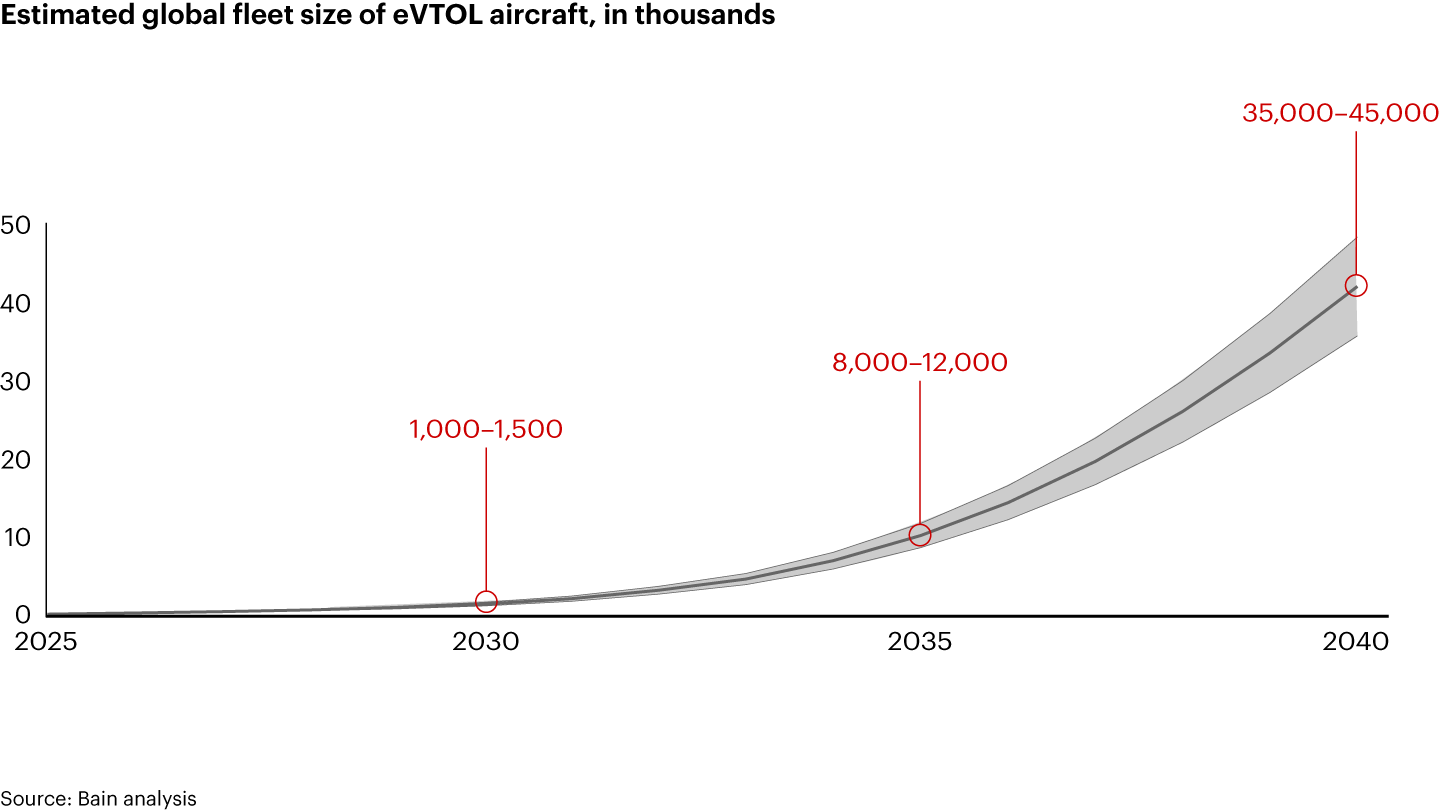
      The global fleet of eVTOL aircraft could grow to 12,000 by 2035

      The creation of a new civil aeronautics market segment—the first in decades—brings an array of alluring investment opportunities. The emerging advanced air mobility sector includes aircraft manufacturers, suppliers, infrastructure for landing and take-off areas, operators, and enabling services like air traffic management.

      However, companies will face multiple challenges growing these businesses and achieving profitability. For example, eVTOLs are not likely to become a mass-market mode of travel. The price premium for eVTOL flights compared with ground transportation will limit their use to business and mid- to high-income individuals as well as cargo for hard-to-reach locations or expedited delivery. As the market evolves, growth of the customer base will depend on operators offering an acceptable price for faster travel times.

      Operators also will need to ensure flights are integrated into efficient end-to-end transport solutions, including seamless travel from starting location to flight terminals or “vertiports” to ensure customers don’t spend more time getting to and from transport hubs than the time they save by flying. By the mid-2030s, eVTOL services will likely face increasing competition from autonomous driving vehicles.

      For all those reasons, investors keen to get a stake in advanced air mobility companies will need to incorporate significant uncertainty about market growth into their valuations. Bain analysis shows the number of eVTOL aircraft will not surpass 15,000 until the mid-2030s, later than many industry experts are forecasting.  

      Market evolution

      The development of a vibrant market for advanced air mobility depends on multiple factors including battery technology, new air traffic regulations, infrastructure, and aircraft certification and performance.

      Aircraft certification, for example, is a complex three-to-four-year process. The timeline for eVTOLs is likely to be even longer given new technology and evolving certification requirements. A few original equipment manufacturers (OEMs) recently achieved significant technological progress, including demonstrating successful transitions from vertical to horizontal flight, a key challenge. That development means certification and commercial operation are likely in the next two to three years.

      In 2023, the US Federal Aviation Administration (FAA) published a detailed plan to support eVTOL operations by 2028, defining the steps required for the integration of these vehicles into national airspace. In the initial phase, eVTOL aircraft will comply with most existing communication, navigation, and surveillance requirements. While the plan sets a clear path for initial operations, regulators and companies are collaborating to evolve the air traffic management model and develop the technologies needed to ensure safe eVTOL flights in congested airspace.

      Market growth also will depend on efficient eVTOL routes and a dense network of landing and take-off vertiports that are convenient to passengers. Several companies have developed vertiport concepts and have started building in specific locations, but scaling such infrastructure will require time and capital. Early movers that secure the best locations and build strong relationships with local authorities will have an edge on the competition.

      To encourage efficient point-to-point travel, eVTOL services will need to be embedded in the wider multimodal transportation system. This could include an end-to-end booking service with transfers. For example, the flight reservation could include a rapid Uber taxi pickup when passengers arrive at their destination vertiport.  Flights on eVTOLs will probably be more attractive for longer routes, given the time required to travel to vertiports, board, and deplane. In the medium term, short-range eVTOL travel will face significant competition from lower-cost autonomous driving services.

      Success factors

      In the 2000s, the Small Aircraft Transportation System (SATS) initiated direct on-demand flights with smaller aircraft to cities not served by large planes on scheduled flights. SATS, a joint project by the FAA, NASA, and local airports and aviation authorities, failed due to insufficient demand, inadequate infrastructure, air traffic congestion, and poor economics.

      Today, there are more than 25,000 civil turbine helicopters in service globally, but the market is limited. High operating costs, infrastructure and route limitations, including those due to noise and pollution, and perceived safety issues have deterred wider use. To forge an attractive new market, emerging eVTOL leaders will learn from the SATS failure and current constraints on civil helicopter business models. Above all, they will focus on safety, infrastructure, aircraft performance, and economics.

      Safety. Regulatory bodies and the industry have begun collaborating closely to ensure safety standards similar to those of commercial aviation throughout the entire value chain, from components and aircraft safety requirements to air traffic separation rules. But many challenges lie ahead as operators prepare for large-scale commercial flight. The industry’s success will also depend on the public perception of eVTOL aircraft safety.

      New infrastructure. Operators may use existing airports and heliports for proof-of-concept operations, but to scale new businesses they will need a network of well-designed vertiports with charging stations in populated areas. Emerging leaders will choose locations that minimize the commuting distance to vertiports to ensure a high number of potential users. Companies that move quickly to establish an extensive infrastructure network will have a first-mover advantage. To optimize travel time and convenience, operators will need to offer a seamless journey, including check-in and security procedures.

      Aircraft performance. OEMs are relying on new architectures and technical solutions to design aircraft that can take off vertically with electric propulsion—a key challenge—and meet payload and range mission requirements. They have improved flight efficiency (e.g., weight and drag reduction, wings) while minimizing energy-consuming hover time to address the constraint of battery energy density. To build a viable business, operators will need aircraft that have a range of 70 to 80 miles or more and can carry at least three to four passengers.

      Economic viability. Bringing down the total cost of ownership is another challenge. Ultimately, travelers will calculate the trade-off between time savings and cost per passenger per mile, determining the pace of adoption and market size. In most cases, ground transportation will continue to be cheaper, especially as autonomous taxis become a viable alternative (see Figure 2). While scaling their business, operators likely will need to fund initial losses (as Uber and Lyft did).

      Figure 2
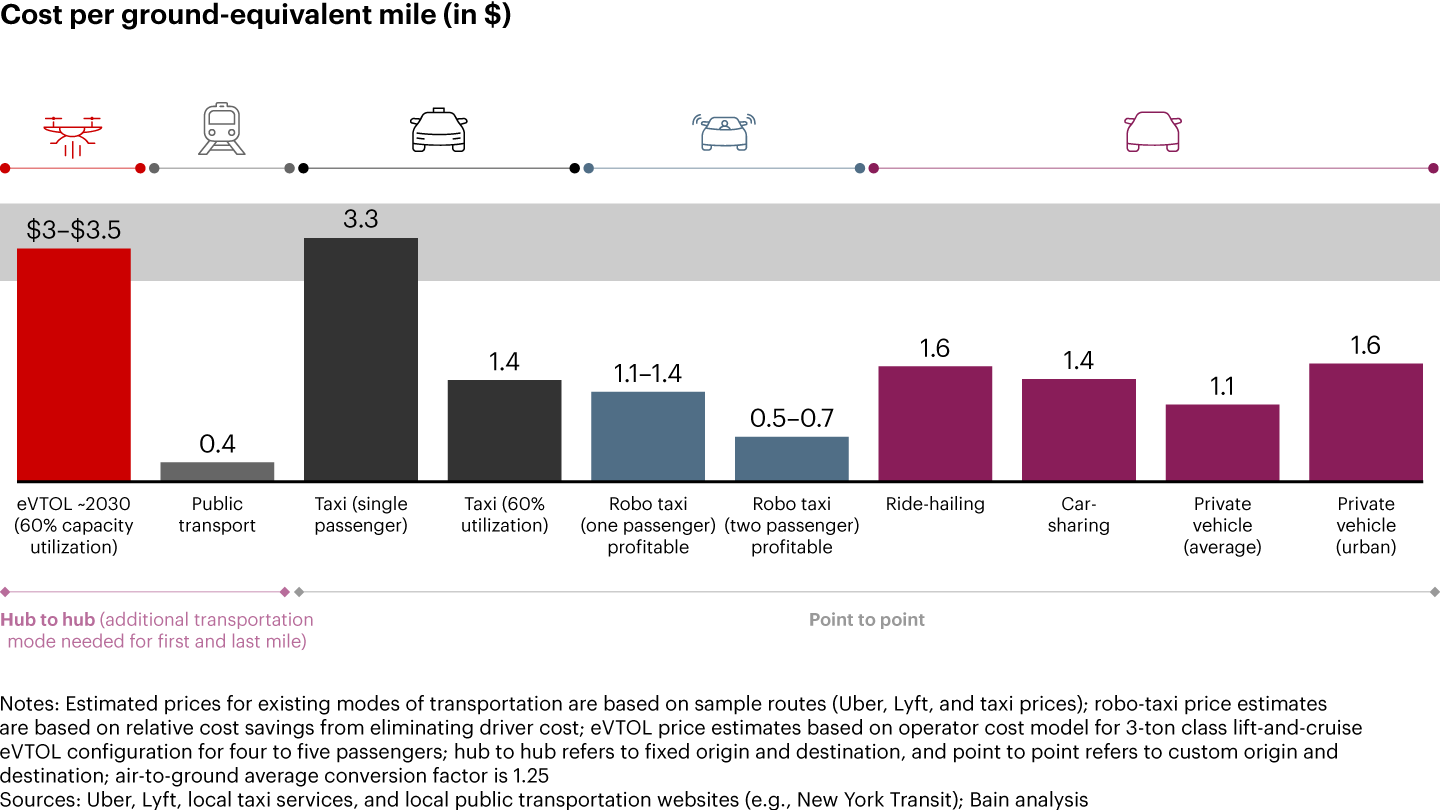
      Travel by eVTOL will cost less than taking a helicopter, but ground transportation will remain more cost-efficient

      Three vital components will determine the total cost of ownership: the aircraft acquisition price, maintenance expenses, and other operating costs. An eVTOL that seats four or five passengers (excluding multi-rotor aircraft) is expected to cost between $3 million and $6 million and have an economic life of about 10 years. To be economically viable, operators will need to use the aircraft for at least 1,000 flight hours a year. That benchmark would require fast charging, instrument flight rules (IFR) that allow aircraft to fly safely in poor weather and at night, and all-weather capabilities.

      Maintenance is the Achilles’ heel of today’s helicopter businesses and is often ignored in the prospectuses of OEMs investing in eVTOLs. The maintenance cost for eVTOLs will likely be much lower given the simpler mechanical architecture (e.g., no transmission and simpler mechanical flight controls). However, expensive batteries with a limited lifespan are a significant cost factor. Successful OEMs will maximize battery lifespan and improve performance continually. And battery replacements will be a key source of profit.

      Operators will also need to keep a tight control on operating costs, including pilot salaries, vertiport fees, insurance, and energy. As the market grows, eVTOL pilot cost will be roughly on a par with that for helicopter pilots. Increased automation will likely reduce pilot certification requirements, bringing down cost over time, but full autonomous passenger flight is not expected before the late 2030s. Maximizing passenger occupancy and avoiding return trips with empty aircraft will be crucial for operator profitability.

      The ecosystem

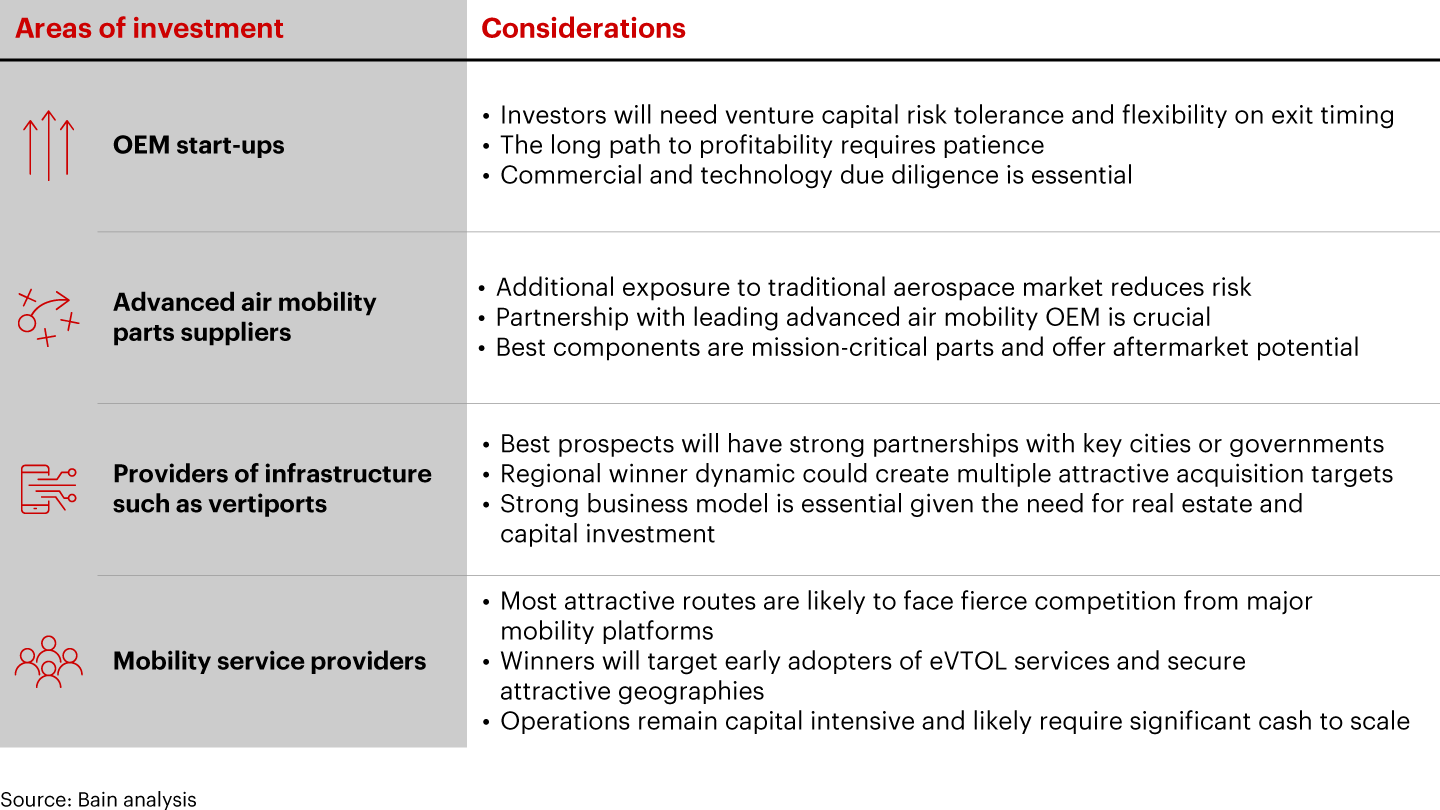
      Investors can participate in the advanced air mobility market through OEMs, suppliers, infrastructure, air traffic management providers, operators, or mobility services (see Figures 3 and 4). Taking a stake in OEMs may seem like the most attractive option, given the market’s potential, but uncertainty around the pace of development requires venture-capital risk tolerance and flexible exit timing. To minimize risk, investors will need to focus on simulating market scenarios and contingency plans in addition to evaluating business models and doing cost diligence. 

      Figure 3
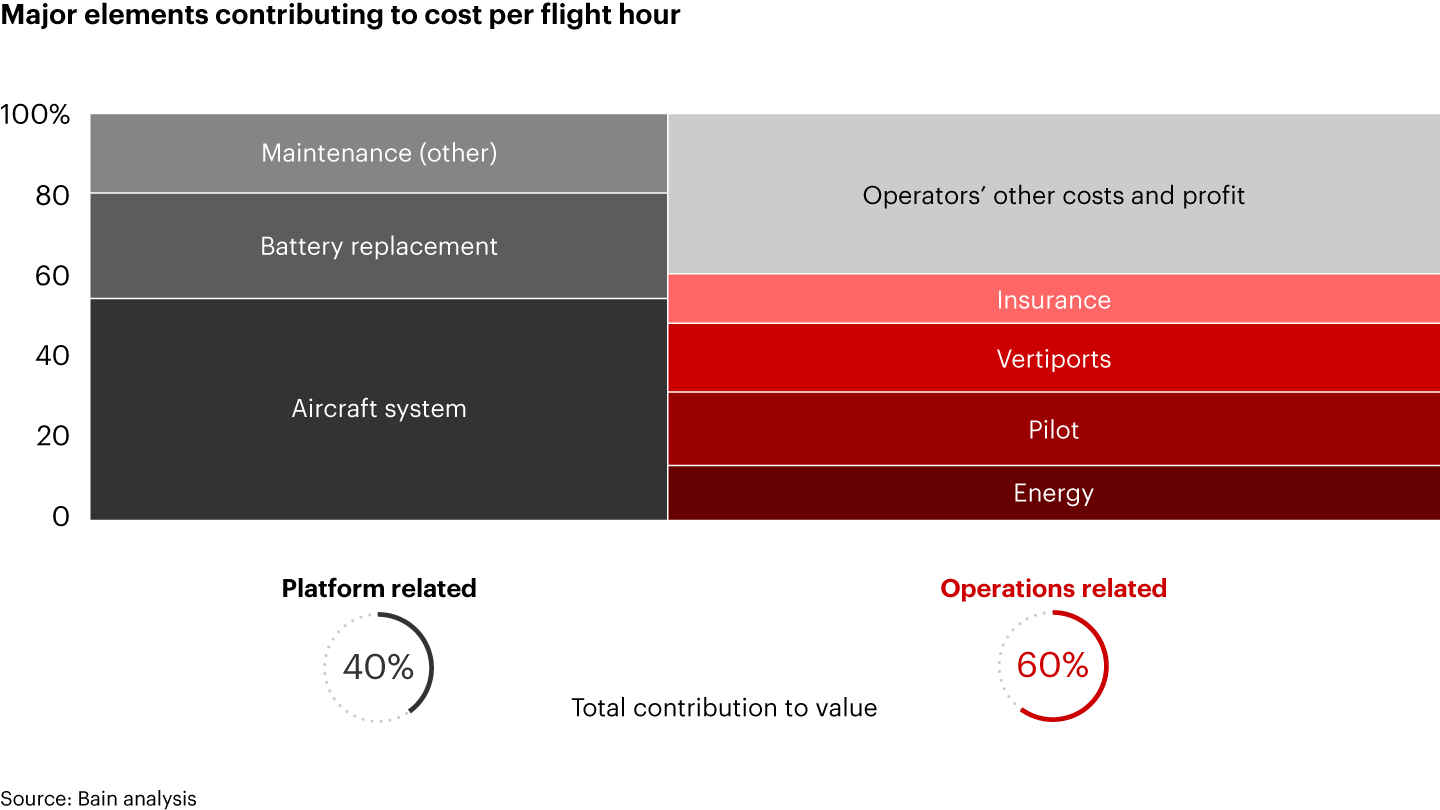
      Aircraft system depreciation represents the largest cost per eVTOL flight hour
      Figure 4
      Investors in the emerging eVTOL market can choose among four investment areas

      Start-ups are also developing eVTOLs. A handful of companies including Joby, Archer, Lilium, Volocopter, and Beta Technologies have attracted the bulk of funding, raising more than $6 billion. These firms have the best shot at certifying an aircraft in the near term.

      While each start-up aims to have a similar performance level, business models and strategy differ. Some, such as Joby, are highly vertically integrated, providing mobility services directly to the customer with their own fleet and control of the end-user mobility platform. This group aims to control stakeholder relationships and service quality and capture a larger share of the profit pool. However, their business model will require significantly higher investments, broader capabilities, and more complex execution, all of which could mean a longer path to profitability.

      Other start-ups including Volocopter and Archer are planning to operate as a traditional OEM, selling aircraft or, in a hybrid fashion, selling eVTOL aircraft and providing flight service. This is likely a lower-risk approach but also provides a more limited upside as the OEM will capture a smaller share of the value chain.

      The aerospace industry has begun laying the foundation for a new era of advanced air mobility. OEMs are putting eVTOL aircraft through their regulatory paces, and the first air taxi services are likely to start in the next two or three years, followed by a gradual ramp-up. Safety is the critical entry ticket for every competitor. Future winners will forge a business model well adapted to the constraints of the emerging market and will excel at making the new mode of travel convenient and cost-efficient.

      Authors
      • Headshot of Mattia Celli
        Mattia Celli
        Partner, Rome
      • Headshot of Jan Schmidt
        Jan Schmidt
        Alumni, Seattle
      • Headshot of Jim Harris
        Jim Harris
        Partner, Washington, DC
      Related Industries
      • Advanced Manufacturing & Services
      • Aerospace & Defense
      • Aviation
      • Transportation
      Advanced Manufacturing & Services
      Revenue Reigns Supreme for Industrial Shareholder Returns

      A deep dive shows where revenue growth and margin changes are boosting (or hurting) returns across industrial and services sectors.

      Read more
      Advanced Manufacturing & Services
      Corporate Climate Stocktake 2023

      A sophisticated picture of business progress toward net zero to date, underscoring critical areas of focus for COP28 discussions.

      Read more
      Advanced Manufacturing & Services
      Covid-19 Recovery in Aviation

      Bain's Torsten Lichtenau and SkyTeam CEO Kristin Colvile share the sustainability forecast for the airline industry in light of current events.

      Read more
      Advanced Manufacturing & Services
      The Sustainable Flight Challenge

      Bain's Torsten Lichtenau and SkyTeam CEO Kristin Colvile discuss the Sustainable Flight Challenge initiative.

      Read more
      Advanced Manufacturing & Services
      Sustainability in Aviation

      Bain’s Torsten Lichtenau and SkyTeam CEO Kristin Colvile discuss sustainable imperatives and actions for the airline industry.

      Read more
      First published in julho 2024
      Tags
      • Advanced Manufacturing & Services
      • Aerospace & Defense
      • Aviation
      • Transportation

      How We've Helped Clients

      An Airline’s Ancillary Revenue Soars Thanks to Test-and-Learn Experimentation

      See more related case studies

      How an Airline Used a Global Stall to Give Procurement a Lift

      See more related case studies

      Airline grounds planes to rise above financial cloud

      See more related case studies

      Quer saber mais?

      Ajudamos líderes do mundo todo a lidar com desafios e oportunidades cruciais para suas organizações. Juntos, criamos mudanças e resultados duradouros.

      Bain Insights. Our perspectives on critical issues global businesses face in today's challenging environment, delivered monthly.

      *I have read and understand Bain’s Privacy Notice.

      Please read and agree to the Privacy Policy.
      Bain & Company
      Contact us Sustainability Accessibility Terms of use Privacy Cookie Policy Sitemap Log In

      © 1996-2026 Bain & Company, Inc.

      Contact Bain

      How can we help you?

      • Business inquiry
      • Career information
      • Press relations
      • Partnership request
      • Speaker request
      See all offices