

Founder's Mentality Blog

|
|
We recently finished a meeting with founders in Dubai and had more than 20 attendees from Africa, East Europe, India and the Middle East. As we often do, we used the beginning of the meeting to work with founders on articulating their original insurgent mission. Our view is that most great companies start out as insurgents at war with their industry on behalf of new or underserved customers. Constantly reinforcing that mission is essential to retaining your Founder’s Mentality®. During the session, I had the great pleasure of spending time with Ajay Arora, managing director of D’Decor Home Fabrics, an India-based leader in curtain and upholstery textiles. His description of D’Decor’s insurgent mission and the capabilities required to support it was one of the most inspirational I’ve heard. It also included what immediately became one of my top five favorite founder phrases: “And then we watch the factory dance.” As Arora explained it, his company faced a fundamental strategic question from the very beginning: “Either we serve our customers’ needs and figure out how to manage the complexity this creates, or we keep things simple and under-serve our customers.” Those customers needed a wide variety of fabric designs to sell but were loathe to take on the extra cost variety creates. So D’Decor assumed the burden of managing that complexity for them and put this challenge at the center of its insurgent mission. Arora put it this way: “To meet the complex demands of home furnishing businesses by manufacturing fabrics to order, such that they can offer their [own] customers a complete range of the latest designs, while keeping their inventory costs to a minimum.” Delivering on this promise required D’Decor to do a few things incredibly well:
This is a fantastic story. D’Decor, with the tagline “Live Beautiful,” has grown 20% a year for the past five years and is now a world leader, commanding at least a 25% share of the Indian market. It is also a great example of a company making complexity work to its advantage. Much of our work on the Founder’s Mentality focuses on avoiding complexity altogether. But we need to be clear that not all complexity is bad. Creating complex customer offerings that serve diverse needs is a good thing if your customers are willing to pay for it. Devising world-class ways to manage complexity better than the competition creates barriers to entry. We talk often about the importance of great stories in shaping great cultures or reinforcing core ideas. Here’s one to add to your library. 
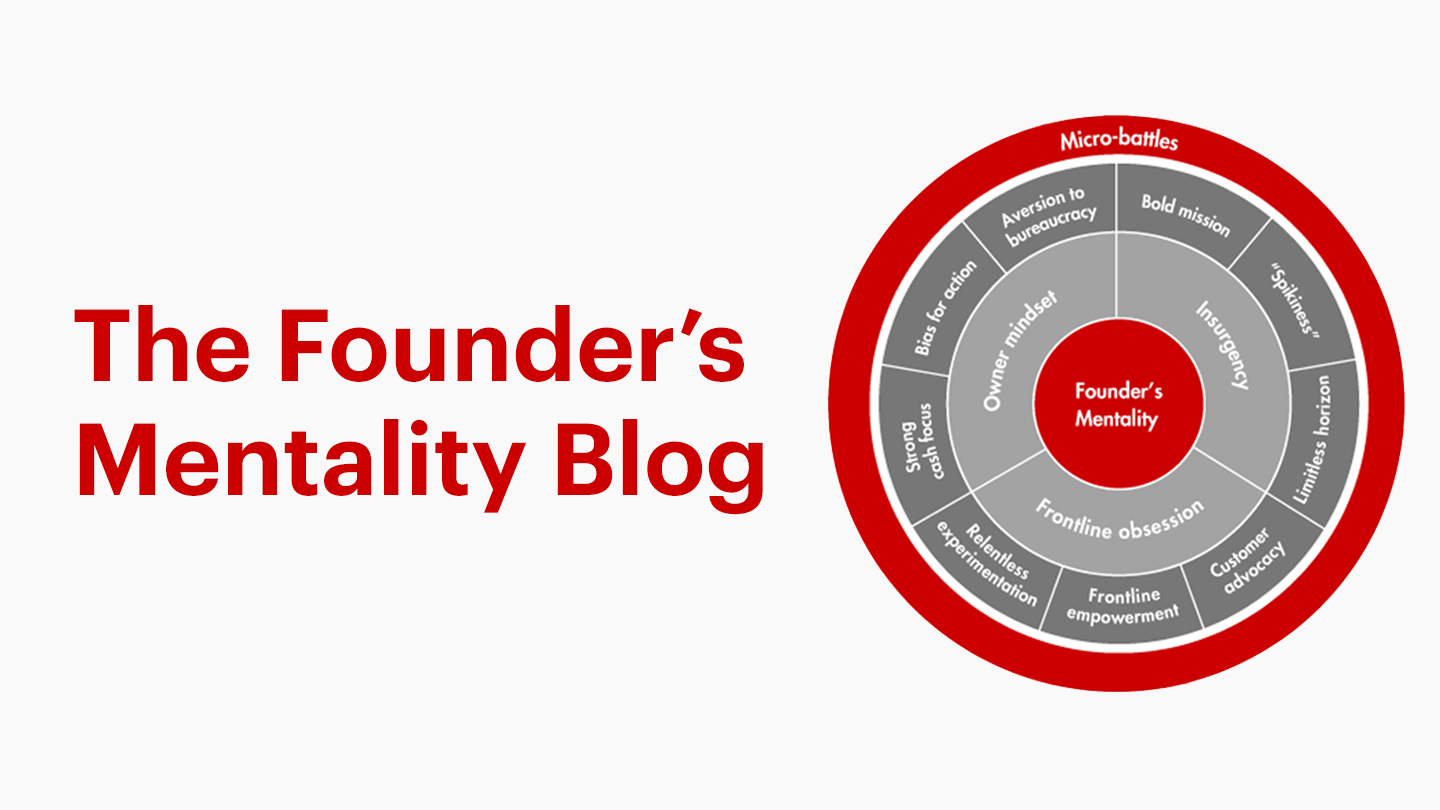
About the Founder's MentalityThe three elements of the Founder's Mentality help companies sustain performance while avoiding the inevitable crises of growth. |