

Brief

Technology providers in the US seem to have captured a great deal of mindshare around the promise and possibilities of the Internet of Things. European technology providers, however, are no less enthusiastic about the IoT’s potential, even if they have been less assertive in promoting their vision to a global audience. In fact, research by Bain & Company finds that in many cases, executives in Europe are more ambitious and optimistic about their plans to deploy and integrate IoT solutions than their American peers, particularly in industrial and commercial applications. Interestingly, we also identified significant differences in the ways that executives in the two regions view the opportunities. These differences could deliver significant competitive advantages to European firms—if they recognize them and act swiftly to make the most of them.
Christopher Schorling, a partner in Bain's Technology practice, shares why Europe's focus on quality and security in a complex regulatory environment may be an advantage in the future.
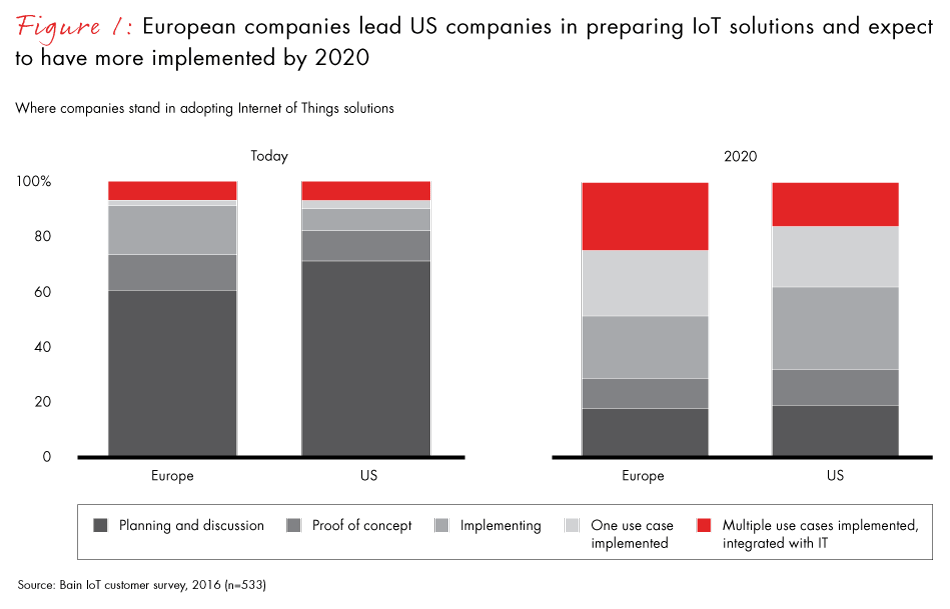
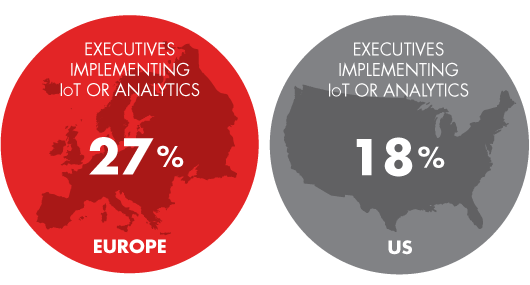
First, Bain’s research finds a greater percentage of European executives plan to deploy IoT solutions over the next few years than their colleagues in other regions. In a survey of 500 executives across industries in Europe and the US, 27% of European executives said they are implementing or have already implemented IoT and analytics use cases, compared with 18% of US executives (see Figure 1). Fully one-quarter of the Europeans plan to implement IoT solutions in multiple cases and integrate them with their IT systems by 2020, compared with 16% of the US executives. These numbers suggest European firms are further along in their journey from experimentation to a real commitment to integrate and scale, moving from pilots and trials to scale deployment.
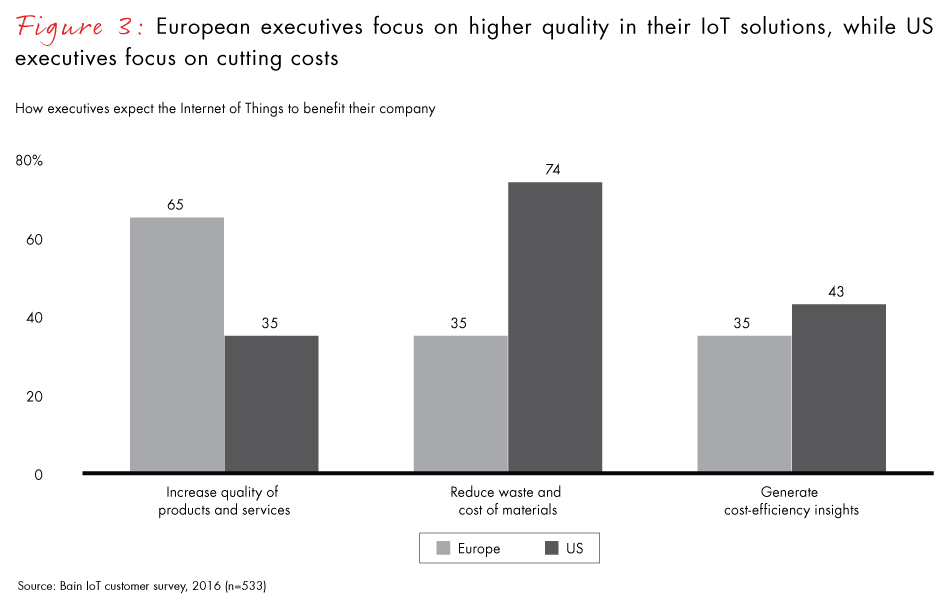
Second, Europeans and Americans appear to want different things out of the IoT. Among executives who emphasized cost reductions from IoT, about two-thirds of European executives are enthusiastic about the potential to improve the quality of existing products based on IoT technologies and advanced analytics, while only about one-third of the American executives rate such quality improvements as a priority. On the other hand, three out of four executives in the US said they expect IoT and related analytics to help them reduce waste and input costs, while only 35% of Europeans highlighted this advantage. These differences suggest that because European executives are ahead in implementing IoT technologies, they may have a clearer view of what they want to pursue. European companies value their international reputation for superior quality and distinctive innovation, and executives want to use the IoT to extend their lead.
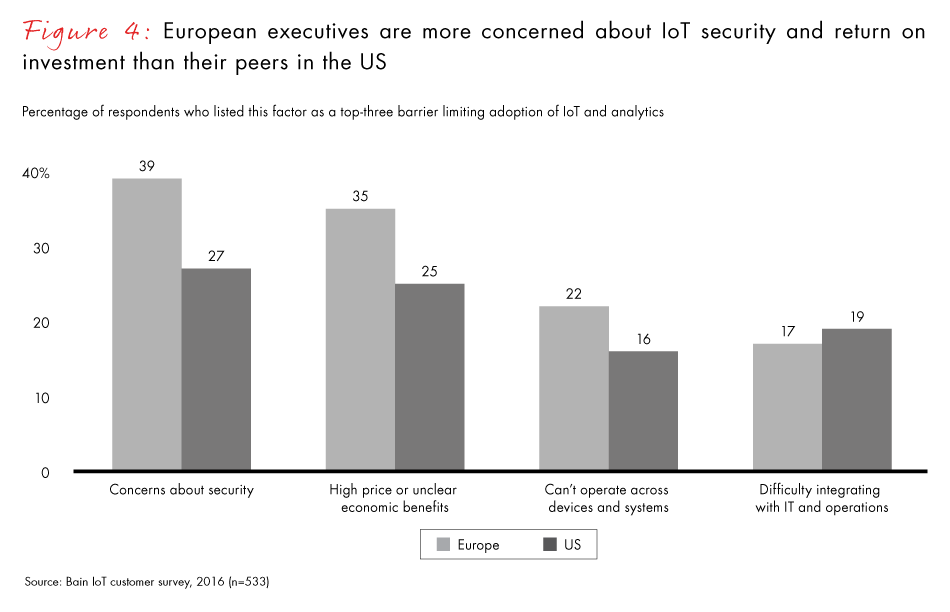
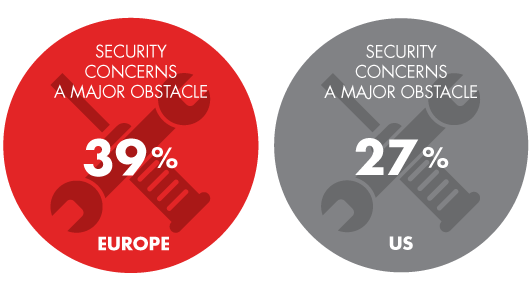
Bain research also finds European executives more focused on security as a primary concern than are executives in the US. When asked, 39% of IoT customers in Europe rated security concerns as a major obstacle to IoT adoption, compared with 27% of US customers. The groups differed on their concerns over compliance, too, with 22% of Europeans rating regulatory barriers as a top barrier, while only 8% of US executives did. This awareness could become a competitive advantage for European firms as they develop cost-effective solutions that comply with a wide range of regulatory regimes and a user base that takes a sophisticated stance on security and privacy issues.
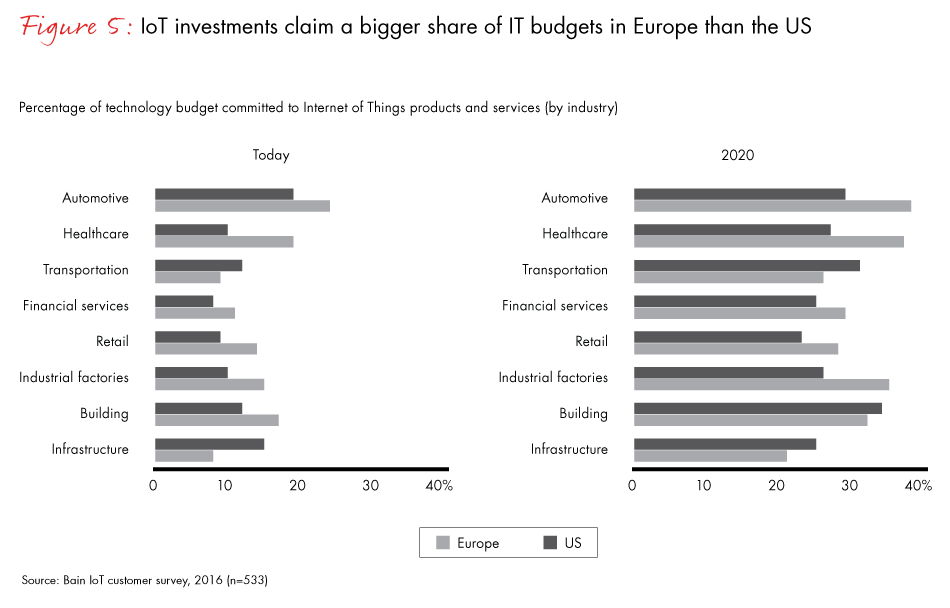
Finally, our survey found some industries devoting more of their IT budgets to IoT in Europe than their counterparts in the US. For example, automotive executives in Europe are allocating 24% of their IT budgets to IoT, compared with only 19% of IT budgets within the US automotive industry. In retail, industrial and buildings, the percentages are also higher in Europe. As vendors respond to meet this demand, vertical solutions are likely to develop more rapidly in Europe than in other regions, particularly in some of the region’s traditional stronghold industries.
European executives should move rapidly and decisively to capitalize on these competitive advantages. Providers of IoT technology will not only have to get up to speed with their ability to develop and deploy IoT solutions (whether on their own or through acquisitions), but they also need to improve their understanding of their customers and their businesses, in order to ensure they provide solutions that boost their customers’ bottom line.
Among industrial and commercial customers, the changes will be no less dramatic. In many cases, these companies will need to adapt their business or operating models in order to avoid being disrupted by competitors—from Europe or elsewhere—who devise new and more compelling ways to engage their customers.
Invest and deploy
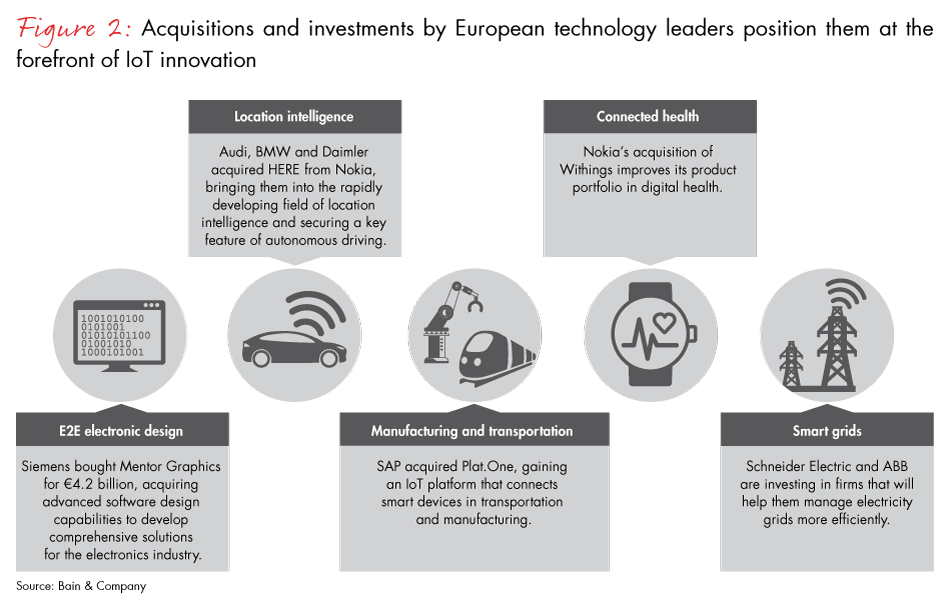
Globally, enthusiasm for the Internet of Things has fueled more than $80 billion in M&A investments by major vendors and more than $30 billion from venture capital firms, according to Bain. European companies are as committed to growth, inorganic or otherwise, as their peers in North America, and they are competing aggressively to acquire the necessary capabilities (see Figure 2). Siemens has spent more than €8 billion on IoT-related acquisitions, including €4.2 billion for electronic design software developer Mentor Graphics. The deal aims to provide Siemens with advanced software design capabilities that will help it develop and deliver more comprehensive solutions for the electronics industry, including end-to-end information flow from design through manufacturing.
Other European firms have also made multibillion-euro investments to build up their IoT solutions.
- Schneider has invested more than €8 billion creating its energy-efficiency platform, EcoStruxure, including about €1.4 billion to acquire Spain’s Telvent in 2011 for its capabilities in software development and managing smart grid-distribution networks. ABB is also investing in the smart grid space, spending more than €1 billion to acquire energy-management software maker Ventyx, along with several other acquisitions for undisclosed amounts, to build up its capabilities for managing electrical equipment at power plants and on utility grids.
- SAP’s acquisition of Plat.One, which has an IoT platform connecting smart devices across transportation and manufacturing environments, signaled the start of SAP’s plan to invest about €2B in IoT over the next few years.
- The €2.6 billion investment by German automakers Audi AG, BMW Group and Daimler AG to acquire digital mapping company HERE from Nokia is helping Europeans compete with Google and Apple in the rapidly evolving field of location intelligence, while also providing access to one of the key building blocks of autonomous driving.
This enthusiasm to implement IoT solutions is reflected not only in acquisitions by technology and telecommunications providers, but also by the anticipated deployment of commercial and industrial customers. Bain’s research found that in both Europe and the US, 7% of customers reported that they have already implemented multiple use cases and have integrated them into their systems. But European executives are planning more aggressive growth, with 25% of them expecting multiple use cases by 2020, compared with only 16% of their US counterparts.
Cost and quality
European executives’ sharper focus on increasing service and raising product quality reflects the region’s emphasis on high-quality industrial goods and services, particularly in such strongholds as automotive, machinery and buildings (see Figure 3). Recent research by Bain in the field of machinery and industrial equipment identified the IoT as one of the major digital trends affecting that industry’s evolution, along with robotics, data analytics, 3-D printing and others. The options for quality improvement are virtually unlimited. For example, combining less-expensive sensors with more data and better analytics can help manufacturers optimize production by monitoring processes and activity at every point in production. Ideally, this feedback can enable real-time adjustments to improve productivity and quality, almost immediately.
IoT technology will make it easier for manufacturers to collect data on product performance in the field, after sales—which can be used to improve ongoing product development. Products can now send back data on how they are used, where they succeed, and what features may be removed. Sensors can also send data on usage and wear, to allow buyers (or the companies managing service contracts) to improve predictive maintenance.
Security and data privacy
Europeans firms have more and longer experience meeting regulations regarding security and privacy. This suggests that companies there could be more attuned to developing solutions that meet the strictest global standards for data gathering and security (see Figure 4).
Pan-European efforts to protect individuals from the misuse of their data have existed for decades, and the revelation of spying on individuals by the US National Security Agency, as well as the increase of reports of intrusions by hackers working with Russia, China and other states, have only heightened awareness among European executives over security and data privacy. Now, as the number and variety of connected devices spirals, the European Union’s comprehensive efforts to manage data privacy and security are moving into the realm of IoT. In 2016, European Commission digital policy chiefs Günther Oettinger and Andrus Ansip announced an effort to develop rules ensuring that Internet-connected devices share many of the security protections put in place for computers and mobile devices. IoT solution providers may not yet know the precise contours of these rules, but their head start in thinking about them can help put them ahead of competitors as the regulatory regimes take form.
The US, on the other hand, has opted to regulate security and data privacy on a sector basis—for example, treating medical data differently from marketing data. US firms are, of course, concerned about security, but European firms receive more regulatory support in their efforts and have a greater depth of experience in cooperation on security and data issues.
Europe’s focus on industrial and commercial applications also implies a naturally higher threshold of security needs—standards that can benefit international companies. For example, Deutsche Telekom has partnered with Microsoft Azure to offer cloud services based in Germany. The partnership ensures that data is stored on servers within Germany, for customers who want their data to remain within that country’s borders, for legal or other reasons.
Industrial emphasis, vertical solutions
As noted above, several traditional strongholds of European industry, including automotive and industrial equipment, are already investing a greater share of their technology budgets in IoT, compared with firms in the US (see Figure 5).
One of the biggest questions around commercial and industrial IoT is how to integrate new technologies with an extensive, traditional installed base. Consider industrial machinery makers that must plan and decide how to upgrade and manage many thousands of pieces of machinery that have been deployed, but are now increasingly connected and able to deliver huge volumes of data needing to be analyzed and understood. Of course, these enhancements make possible an entirely new service model and associated revenue stream, as companies that once delivered mute machinery now provide round-the-clock software service that can help customers optimize their operations. But the transformation to provide such a new service is far from trivial. (For more on digital transformation for machinery makers, see the Bain Brief “How Industrial Machinery Makers Are Capturing the Digital Opportunity.”)
Another key question for technology providers is how to get the right level of vertical integration in their offers. Providers frequently make the mistake of trying to master too many industries at once, diluting their focus and failing to provide adequate resources to sufficiently understand the vertical markets they are targeting. Successful vertical plays typically target only three or four industries, allowing the provider to gain a foothold while developing vertical solution capabilities. Acquiring an established industry solution can help a provider advance more rapidly into that vertical. But even where such M&A is possible, wise executives avoid overreaching. (For more on striking the right balance, see the Bain Brief “How Providers Can Succeed in the Internet of Things.”)

Europe's Edge in the Internet of Things
European technology companies are farther along than their US counterparts in their journeys along the Internet of Things.
Next moves
European technology providers are well positioned to lead and succeed in the Internet of Things. Many are already moving beyond the experimentation stage into real-world uses and deploying scale solutions with customers, especially in some of their traditional stronghold industries, such as automotive and industrial machinery. Capitalizing on their history and reputation for quality, innovation and precision, European firms have clear expectations about how the IoT will change the way systems and businesses operate, and they are counting on these advantages to further raise the quality of their products and services.
Even so, the road ahead will be neither easy nor straightforward. Many times before, European innovators have nurtured and launched technologies, only to watch competitors from other regions win the long game with superior marketing or commercialization. Nokia developed the smartphone, but Apple’s iPhone conquered the market. German automakers have been experimenting with electric vehicles for years, but Tesla has captured the enthusiasts’ imagination. How can IoT vendors make the most of their structural advantages and not lose their early lead?
These experiences suggest that, after successful initial trials, European players need to double down and scale rapidly. This means different things for users and sellers of IoT solutions.
- Users of IoT. Just as the rise of digital provided opportunities for fast movers in nearly every industry to gain competitive advantage, so, too, should executives now be looking to the Internet of Things to make evolutionary and revolutionary leaps ahead of their peers.
- Screen your entire business for opportunities to deploy IoT solutions that enhance the customer experience, remove costs (for example, by improving management of field service teams), and develop new products and services (including business models based on consumption more than ownership). Firms that take a wait-and-see approach risk being disrupted by attackers that base their businesses on new models.
- Build internal talent, especially on the technology side, to take full advantage of opportunities while identifying the right partners to supply technology and deliver solutions. This is not a one-off event, but the beginning of a long journey.
- IoT technology and solution providers. Sellers see the potential of a multibillion-euro market, but will be better positioned for success if they explore a few select vertical markets or applications first, and then apply what they learned as they grow.
- Scale up quickly. Leaders stand to gain a strong first-mover advantage, so firms should move rapidly from custom and pilot implementations to product offers that can achieve global scale across markets.
- Develop an understanding of the critical control points and where to differentiate your offer. Seek out M&A opportunities in these areas, and rely on partnerships in less critical areas—scaling rapidly in both.
For users and providers alike, the time is at hand to mobilize and identify opportunities where IoT solutions can add value and shape strategic direction. Our research suggests that in some areas, Europeans already hold a competitive advantage. The actions and investments over the next few years will determine whether European firms can defend and extend that lead, or whether they risk losing hard-won gains.
Michael Schallehn, Michael Schertler and Christopher Schorling are partners with Bain & Company in Silicon Valley, Munich and Frankfurt, respectively. All three work with Bain’s Global Technology practice.
The authors wish to thank Michael Weber, a manager in Bain’s Munich office, for his contributions to this brief.
First published in março 2017