
Skip to Content
  • Offices

    Offices

    North & Latin America
    • Atlanta
    • Austin
    • Bogota
    • Boston
    • Buenos Aires
    • Chicago
    • Dallas
    • Denver
    • Houston
    • Los Angeles
    • Mexico City
    • Minneapolis
    • Monterrey
    • Montreal
    • New York
    • Rio de Janeiro
    • San Francisco
    • Santiago
    • São Paulo
    • Seattle
    • Silicon Valley
    • Toronto
    • Washington, DC
    Europe & Africa
    • Amsterdam
    • Athens
    • Berlin
    • Brussels
    • Copenhagen
    • Dusseldorf
    • Frankfurt
    • Helsinki
    • Istanbul
    • Johannesburg
    • Kyiv
    • Lisbon
    • London
    • Madrid
    • Milan
    • Munich
    • Oslo
    • Paris
    • Rome
    • Stockholm
    • Vienna
    • Warsaw
    • Zurich
    Middle East
    • Doha
    • Dubai
    • Riyadh
    Asia & Australia
    • Bangkok
    • Beijing
    • Bengaluru
    • Brisbane
    • Ho Chi Minh City
    • Hong Kong
    • Jakarta
    • Kuala Lumpur
    • Manila
    • Melbourne
    • Mumbai
    • New Delhi
    • Perth
    • Seoul
    • Shanghai
    • Singapore
    • Sydney
    • Tokyo
    See all offices
  • Alumni
  • Media Center
  • Subscribe
  • Contact
  • Brazil | Português

    Select your region and language

    Global
    • Global (English)
    North & Latin America
    • Brazil (Português)
    • Argentina (Español)
    • Canada (Français)
    • Chile (Español)
    • Colombia (Español)
    Europe, Middle East, & Africa
    • France (Français)
    • DACH Region (Deutsch)
    • Italy (Italiano)
    • Spain (Español)
    • Greece (Elliniká)
    Asia & Australia
    • China (中文版)
    • Korea (한국어)
    • Japan (日本語)
  • Saved items (0)
    Saved items (0)

    You have no saved items.

    Bookmark content that interests you and it will be saved here for you to read or share later.

    Explore Bain Insights
  • Industries
    Main menu

    Industries

    • Aeroespacial e Defesa
    • Agronegócio
    • Química
    • Construção e Infraestrutura
    • Bens de Consumo
    • Serviços Financeiros
    • Healthcare & Life Sciences
    • Máquinas e Equipamentos Industriais
    • Mídia e Entretenimento
      Industries
      Mídia e Entretenimento
      • Media Lab
    • Metais
    • Mineração
    • Petróleo e Gás
    • Papel e Embalagens
    • Private Equity
      Industries
      Private Equity
      • Due Diligence
      • Exit Planning
      • Firm Strategy & Operations
      • Portfolio Value Creation
    • Setor Público e Social
    • Varejo
    • Tecnologia
    • Telecomunicações
      Industries
      Telecomunicações
      • Capital Expenditure
      • Telco Digital Transformation
    • Transporte
    • Turismo & Lazer
    • Energia & Renováveis
  • Consulting Services
    Main menu

    Consulting Services

    • Customer Experience
    • Sustainability
    • Innovation
    • M&A
    • Operations
    • People & Organization
    • Private Equity
    • Sales & Marketing
    • Strategy
    • AI, Insights, and Solutions
    • Technology
    • Transformation
  • Digital
  • Insights
    Main menu

    Insights

    • Industry Insights
    • Services Insights
    • Bain Books
    • Webinars
    • Bain Futures
    View all Insights
    Featured topics
    • Tariff Response
    • Artificial Intelligence
    • Thriving in Uncertainty
    • Executive Conversations
    • Macro Trends
    • M&A Report
    • Healthcare Private Equity Report
    • Paper & Packaging Report
    • Technology Report
    • CEO's Guide to Sustainability
    • CEO Insights
    • CFO Insights
    • COO Insights
    • CIO Insights
    • CMO Insights
    View all featured topics
  • About
    Main menu

    About

    • What We Do
    • What We Believe
    • Our People & Leadership
    • Client Results
    • Awards & Recognition
    • Global Affiliations
    Further: Our global responsibility
    • Sustainability
    • Social Impact
    • World Economic Forum
    Learn more about Further
  • Carreiras
    Main menu

    Carreiras

    • Trabalhe Conosco
      Carreiras
      Trabalhe Conosco
      • Find Your Place
      • Nossas áreas de trabalho
      • Equipes integradas
      • Estudantes
      • Programas e estágios
      • Eventos de Recrutamento
    • A Vida na Bain
      Carreiras
      A Vida na Bain
      • Histórias de carreira
      • Nossas pessoas
      • Onde trabalhamos
      • Apoioao seu crescimento
      • Grupos de afinidade
      • Benefícios
    • Impact Stories
    • Nosso Processo Seletivo
      Carreiras
      Nosso Processo Seletivo
      • O Que Esperar
      • Entrevistas
    FIND JOBS
  • Offices
    Main menu

    Offices

    • North & Latin America
      Offices
      North & Latin America
      • Atlanta
      • Austin
      • Bogota
      • Boston
      • Buenos Aires
      • Chicago
      • Dallas
      • Denver
      • Houston
      • Los Angeles
      • Mexico City
      • Minneapolis
      • Monterrey
      • Montreal
      • New York
      • Rio de Janeiro
      • San Francisco
      • Santiago
      • São Paulo
      • Seattle
      • Silicon Valley
      • Toronto
      • Washington, DC
    • Europe & Africa
      Offices
      Europe & Africa
      • Amsterdam
      • Athens
      • Berlin
      • Brussels
      • Copenhagen
      • Dusseldorf
      • Frankfurt
      • Helsinki
      • Istanbul
      • Johannesburg
      • Kyiv
      • Lisbon
      • London
      • Madrid
      • Milan
      • Munich
      • Oslo
      • Paris
      • Rome
      • Stockholm
      • Vienna
      • Warsaw
      • Zurich
    • Middle East
      Offices
      Middle East
      • Doha
      • Dubai
      • Riyadh
    • Asia & Australia
      Offices
      Asia & Australia
      • Bangkok
      • Beijing
      • Bengaluru
      • Brisbane
      • Ho Chi Minh City
      • Hong Kong
      • Jakarta
      • Kuala Lumpur
      • Manila
      • Melbourne
      • Mumbai
      • New Delhi
      • Perth
      • Seoul
      • Shanghai
      • Singapore
      • Sydney
      • Tokyo
    See all offices
  • Alumni
  • Media Center
  • Subscribe
  • Contact
  • Brazil | Português
    Main menu

    Select your region and language

    • Global
      Select your region and language
      Global
      • Global (English)
    • North & Latin America
      Select your region and language
      North & Latin America
      • Brazil (Português)
      • Argentina (Español)
      • Canada (Français)
      • Chile (Español)
      • Colombia (Español)
    • Europe, Middle East, & Africa
      Select your region and language
      Europe, Middle East, & Africa
      • France (Français)
      • DACH Region (Deutsch)
      • Italy (Italiano)
      • Spain (Español)
      • Greece (Elliniká)
    • Asia & Australia
      Select your region and language
      Asia & Australia
      • China (中文版)
      • Korea (한국어)
      • Japan (日本語)
  • Saved items  (0)
    Main menu
    Saved items (0)

    You have no saved items.

    Bookmark content that interests you and it will be saved here for you to read or share later.

    Explore Bain Insights
  • Industries
    • Industries

      • Aeroespacial e Defesa
      • Agronegócio
      • Química
      • Construção e Infraestrutura
      • Bens de Consumo
      • Serviços Financeiros
      • Healthcare & Life Sciences
      • Máquinas e Equipamentos Industriais
      • Mídia e Entretenimento
      • Metais
      • Mineração
      • Petróleo e Gás
      • Papel e Embalagens
      • Private Equity
      • Setor Público e Social
      • Varejo
      • Tecnologia
      • Telecomunicações
      • Transporte
      • Turismo & Lazer
      • Energia & Renováveis
  • Consulting Services
    • Consulting Services

      • Customer Experience
      • Sustainability
      • Innovation
      • M&A
      • Operations
      • People & Organization
      • Private Equity
      • Sales & Marketing
      • Strategy
      • AI, Insights, and Solutions
      • Technology
      • Transformation
  • Digital
  • Insights
    • Insights

      • Industry Insights
      • Services Insights
      • Bain Books
      • Webinars
      • Bain Futures
      View all Insights
      Featured topics
      • Tariff Response
      • Artificial Intelligence
      • Thriving in Uncertainty
      • Executive Conversations
      • Macro Trends
      • M&A Report
      • Healthcare Private Equity Report
      • Paper & Packaging Report
      • Technology Report
      • CEO's Guide to Sustainability
      • CEO Insights
      • CFO Insights
      • COO Insights
      • CIO Insights
      • CMO Insights
      View all featured topics
  • About
    • About

      • What We Do
      • What We Believe
      • Our People & Leadership
      • Client Results
      • Awards & Recognition
      • Global Affiliations
      Further: Our global responsibility
      • Sustainability
      • Social Impact
      • World Economic Forum
      Learn more about Further
  • Carreiras
    Popular Searches
    • Agile
    • Digital
    • Strategy
    Your Previous Searches
      Recently Visited Pages

      Content added to saved items

      Saved items (0)

      Removed from saved items

      Saved items (0)

      Energy & Natural Resources Report

      Four Imperatives for Building Resilience in Energy and Natural Resources

      Four Imperatives for Building Resilience in Energy and Natural Resources

      The traditional focus on near-term risks leaves companies vulnerable to long-term challenges.

      By David Knipe, Eric Beranger-Fenouillet, Aadarsh Baijal, Ethan Phillips, and Martha Eggenberger

      • min read
      }

      Report

      Four Imperatives for Building Resilience in Energy and Natural Resources
      en
      At a Glance
      • Traditional approaches to resilience focus on near-term risks, exposing companies to the threats of long-term challenges.
      • These blind spots can leave executives overconfident about their companies’ resilience, when most have yet to be tested.
      • Leaders take a broad approach that includes strategic, operational, and supply chain resilience, in addition to managing the environmental risks to physical assets.

      This article is part of Bain’s Energy and Natural Resources Report 2023

      Explore the report

      We are living through one of the most volatile and uncertain periods the world has seen for some time. War continues into a second year in Ukraine while nations continue to recover from the Covid pandemic. At the same time, the effects of climate change are materializing stronger and more often than before, as the world inches toward net-zero carbon emissions.

      The need for resilience has never been more urgent for boards and executive teams, and resilience is likely to be one of the most critical strategic differentiators of a company’s success.

      But traditional corporate approaches to resilience don’t rise to today’s challenges. They focus too much on near-term risks, without fully recognizing the potential impacts up and down the value chain, well beyond individual company boundaries. They usually make very limited use of advanced predictive tools, which could help identify some of those risks. And they fail to connect risks to the organization’s long-term strategic goals and economic model.

      These narrow approaches can leave blind spots and create a false sense of security. Bain recently asked executives about their confidence in navigating five types of threats, spanning from the physical effects of climate change through to technological vulnerabilities, input shortages, and bottlenecks (see Figure 1). Confidence across the board appears surprisingly high, especially as many of these threats continue to escalate. 

      Figure 1
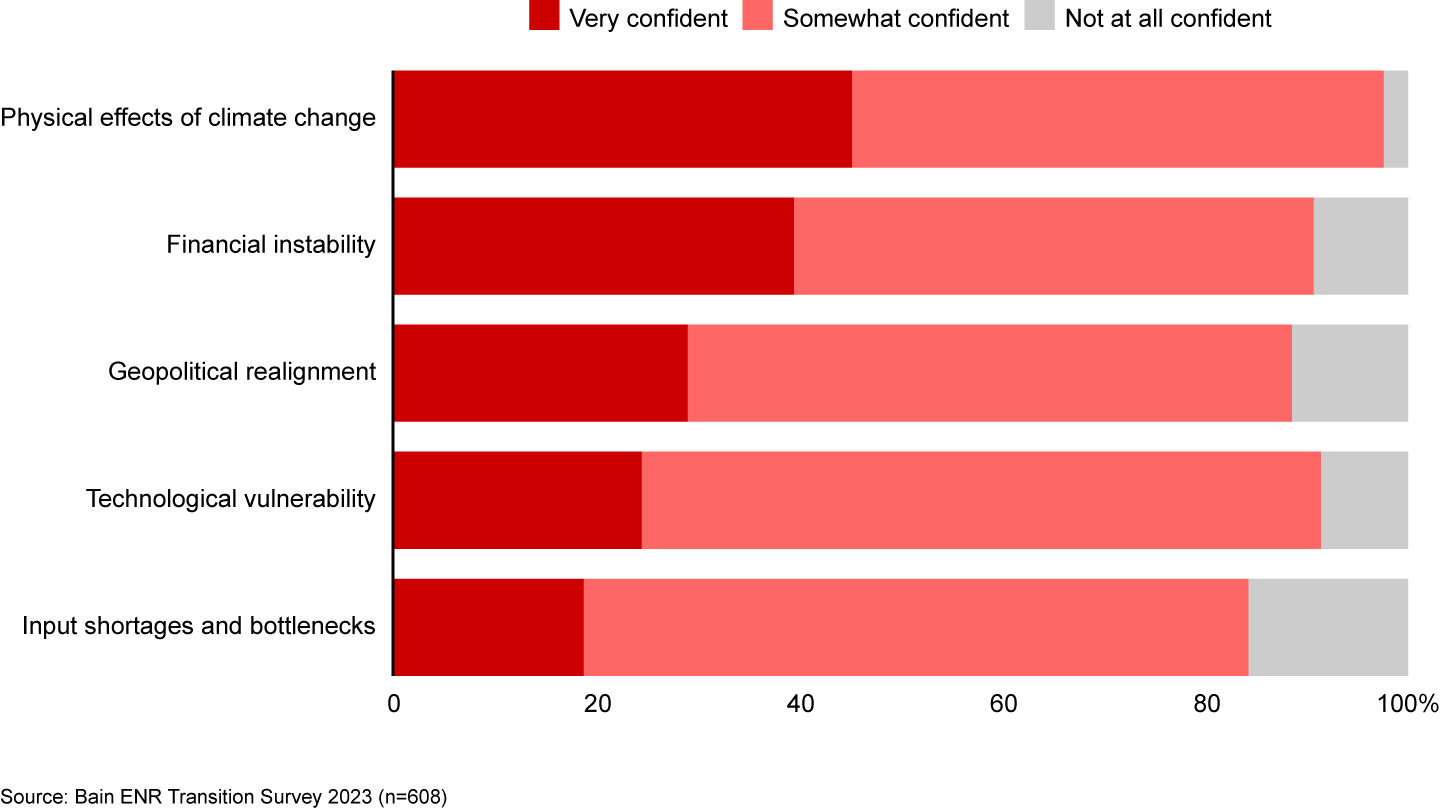
      Nearly all executives said they were very or somewhat confident in their ability to manage the physical effects of climate change

      These high numbers could reflect an overconfidence that’s not entirely justified by the limited investments most firms are making in resilience. People often fail to accurately assess the magnitude and likelihood of rare events, such as the physical effects of climate change, since most have not experienced them firsthand.

      Leading companies take a more comprehensive approach that includes strategic, operational, and supply chain resilience, in addition to managing the environmental risks to physical assets.

      Strategic resilience

      All strategy is formed amid some level of uncertainty, but the changes inherent in the energy transition multiply the difficulty. Uncertainty can handicap a firm in several ways. Overconfidence can lead to corporate myopia; under-confidence can leave firms in paralysis. Either scenario can stall action until it’s too late to prevent a bad outcome. 

      “Existing assets are vulnerable to the instabilities ultimately caused by climate change and shortage of resources.”

      Vice president, new energy company, Europe

      It’s rare that the losers in a transforming industry are really blindsided by change. More often, they fail to set a strategic direction that can adapt to shifting conditions. Leading firms start with a view of the future: What will customers need 30 years out? This approach can help companies set a long-term vision, free from the constraints of current practices and portfolios. Successful teams then plan for their long-term reference case, while continuously monitoring the environment and correcting course as necessary along the way.

      Even among companies that invest in long-term scenario planning, few consider the “corner scenarios”—events that are possible but much less likely, like unexpected policy shocks or losing access to capital markets. Planners often shelve these scenarios because they don’t want to invest time developing detailed plans for conditions that are unlikely to occur.

      But ignoring high-risk scenarios is, increasingly, a short-sighted strategy. The tumult of recent years makes it clear that the energy and natural resource transition is likely to become more disorderly, even chaotic. Stress testing a company’s capabilities has never been more essential, and it’s one of the ways that planners can locate the extreme corners, in order to understand the implications and potential opportunities of low-probability, high-risk scenarios.

      Operational resilience

      Reducing Scope 1 and 2 emissions helps ensure long-term commercial viability in several ways. First, it positions a company to be closer to compliance as regulations or carbon taxes increase. Closely related, it helps preserve an asset’s social license to operate, making it less susceptible to being targeted as a significant carbon emitter. It can also extend the working life span of the asset, given updates that renew operational capability. Reducing emissions signals all of these benefits to investors who are considering the long-term viability of businesses in a rapidly changing energy sector.

      In addition to ensuring resilience for operations, companies also have to ensure that their decarbonization programs are resilient and can adapt to changing conditions. In this context, resilience means the ability to persevere not only through extreme weather events but also economic downturns, changes in technology, and other unpredictable barriers. Some companies are moving quickly to gain front-runner status while others are taking a wait-and-see approach, aiming to take advantage of more efficient technologies and economies of scale.

      “The availability of a skilled workforce and overcoming key supply chain bottlenecks are critical to the transition.”

      Vice president, utilities company, Europe

      Supply chain resilience

      Once the purview of the COO and purchasing functions, supply chain resilience has risen to the highest levels of the corporate agenda over the past few years. The pandemic, a semiconductor shortage, and war in Ukraine are among the crises that have exposed vulnerable supply chains. Quality and price are still table stakes, but increasingly supply chain executives are investing to improve flexibility and resilience (see Figure 2).

      Figure 2
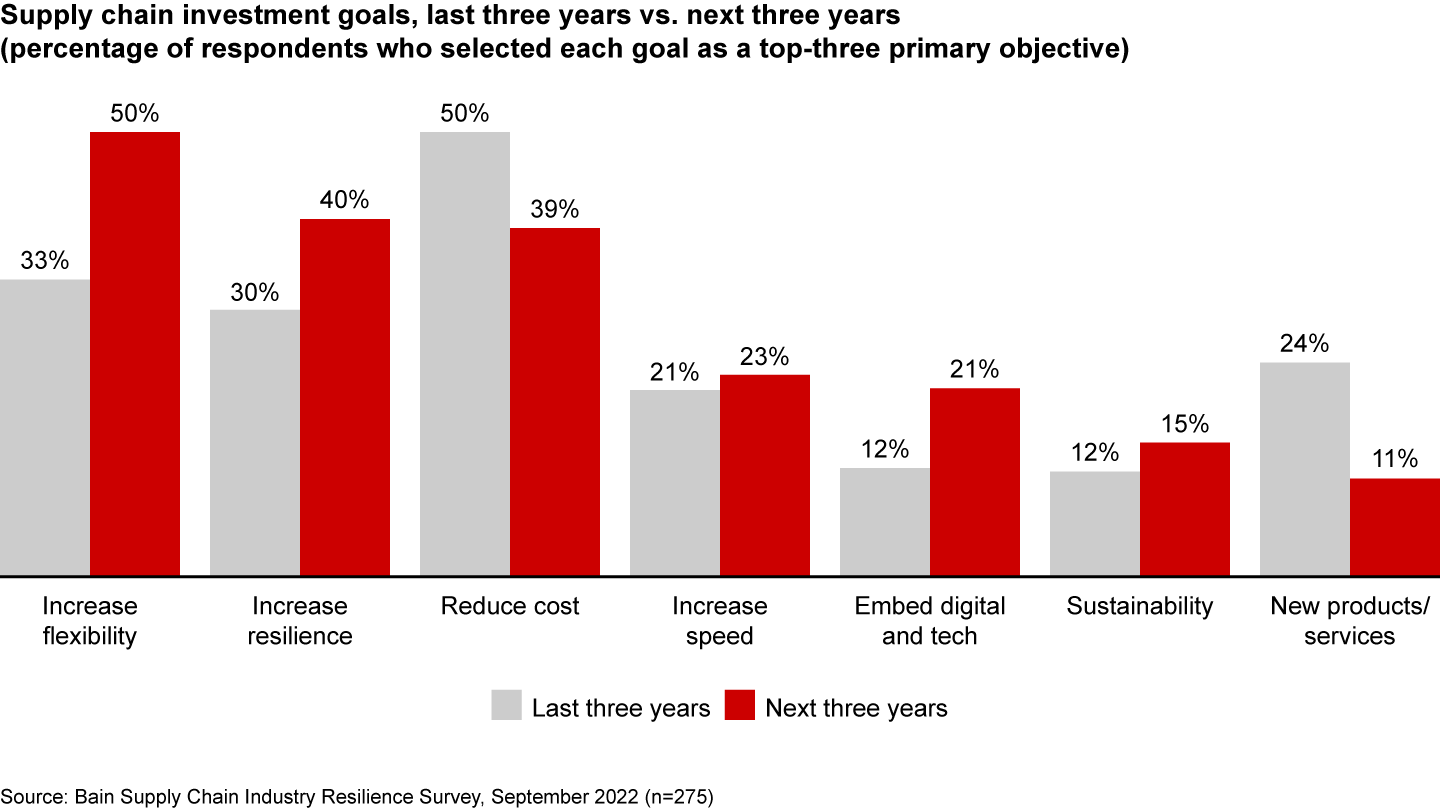
      Flexibility and resilience are becoming more important to supply chain executives

      “A critical issue to the transition is that supply chains are highly concentrated, increasing vulnerability to disruptions.”

      Vice president, power utility, North America

      Supply chain resilience means different things across the sector, but in general it’s the ability to proactively minimize risk, absorb inevitable shocks, and quickly recover from setbacks to lessen the impact on operations. Taking a holistic view of the entire chain can help companies identify the most important risks to the business and then assess the likelihood of each. Comparing strengths to competitors’ can help companies find opportunities to differentiate while mitigating their impacts on energy markets and the environment.

      Physical resilience

      Many companies are already experiencing the effects of climate change on their operations. For example, in 2022, Apple and Intel suffered a weeklong shutdown of some production facilities in Sichuan, China, where a drought stalled multiple hydropower plants. But many businesses underestimate the likelihood of physical climate risk events and their exposure to them, relying on a narrow set of risk-transfer tools (for example, insurance or financial hedges) rather than a broader set of strategic and operational levers for building resilience.

      “It is imperative that climate change adaptation efforts be put to the fore. Risk management and business continuity practices should be in place to ensure stability of services.”

      Senior manager, utilities company, Asia-Pacific

      Power utility Southern California Edison, for example, has been working for more than a decade to manage the effects of climate change on its power grid and generation assets, which include more frequent wildfires and droughts that jeopardize the viability of hydroelectric power. To address these risks, SCE embarked on a detailed assessment of climate risks to its assets, operations, and services across its 50,000-square-mile service area. The results helped SCE reprioritize capital investments for new infrastructure that can withstand more intense flooding and storms, extreme temperatures, and more severe wildfires. SCE says it invests about $5 billion each year to maintain and improve its grid, and that by the end of 2021 it had reduced wildfire risk by about 70% compared with pre-2018 expectations.

      A more proactive approach to resilience starts with a systemic look across the entire value chain, using analytical tools to estimate risks today and in the future. Companies can then focus on practical actions to adapt to these risks and make decisions about which assets or facilities to protect and what strategic changes may be necessary to survive and thrive. The changes may include revising capital planning processes, restructuring or nearshoring the supply chain, or advocating for new policy solutions.

      Read the Next Section

      The Energy Transition’s Other Big Puzzle: Making the Math Work

      More from the report

      • State of the Transition 2023: Global Energy and Natural Resource Executive Perspectives

      • The Dual Challenge of the Energy Transition Is Urgent and Unprecedented

      • The Energy Transition: Fragmented, Disorderly, and Ripe with Opportunity

      • Willing but Not Able? The Energy Transition Has a Scaling Problem

      • The Energy Transition’s Other Big Puzzle: Making the Math Work

      Read our Energy and Natural Resources Report 2023

      Explore the full report Download PDF
      Authors
      • Headshot of David Knipe
        David Knipe
        Alumni, London
      • Headshot of Eric Beranger-Fenouillet
        Eric Beranger-Fenouillet
        Partner, Middle East
      • Headshot of Aadarsh Baijal
        Aadarsh Baijal
        Partner, Singapore
      • Headshot of Ethan Phillips
        Ethan Phillips
        Partner, Houston
      • Headshot of Martha Eggenberger
        Martha Eggenberger
        Partner, Toronto
      Related Industries
      • Agribusiness
      • Chemicals
      • Energy & Natural Resources
      • Mining
      • Oil & Gas
      • Utilities & Renewables
      Related Consulting Services
      • Sustainability
      How We Can Help
      • Climate Change
      Energy and Natural Resources Report
      State of the Transition 2023: Global Energy and Natural Resource Executive Perspectives

      Bain’s third annual survey on the energy transition finds executives increasing investments in low-carbon businesses, but skeptical of consumers’ willingness to pay more.

      Read more
      Energy and Natural Resources Report
      The Energy Transition’s Other Big Puzzle: Making the Math Work

      Strong investment returns are within reach for companies that focus on the fundamentals and aren’t afraid to get creative.

      Read more
      Energy & Natural Resources
      Sustaining Capital: From Chaos to Discipline

      Fragmented budgets, poor visibility, and missed forecasts are fixable with the right approach.

      Read more
      Climate Change
      COP30: O que as empresas precisam fazer agora

      Na COP30 deste ano, realizada no Brasil, a mensagem para as empresas foi clara: estratégia climática não pode ficar só no discurso — é hora de agir.

      Read more
      Sustainability
      How AI Is Starting to Transform Circular Packaging

      There are 15 AI use cases companies across the value chain can use today to accelerate circularity.

      Read more
      First published in setembro 2023
      Tags
      • Agribusiness
      • Chemicals
      • Climate Change
      • Energy & Natural Resources
      • Energy and Natural Resources Report
      • Mining
      • Oil & Gas
      • Sustainability
      • Utilities & Renewables

      How We've Helped Clients

      New products propel profitability for metals manufacturer

      See more related case studies

      An OFS captures post-merger growth synergies

      See more related case studies

      Broader market plus tighter sales strategy equals big success for a portfolio company

      See more related case studies

      Quer saber mais?

      Ajudamos líderes do mundo todo a lidar com desafios e oportunidades cruciais para suas organizações. Juntos, criamos mudanças e resultados duradouros.

      Bain Insights. Our perspectives on critical issues global businesses face in today's challenging environment, delivered monthly.

      *I have read and understand Bain’s Privacy Notice.

      Please read and agree to the Privacy Policy.
      Bain & Company
      Contact us Sustainability Accessibility Terms of use Privacy Cookie Policy Sitemap Log In

      © 1996-2026 Bain & Company, Inc.

      Contact Bain

      How can we help you?

      • Business inquiry
      • Career information
      • Press relations
      • Partnership request
      • Speaker request
      See all offices