

Paper & Packaging Report

Executive Summary
- While deal size is up, the overall number of M&A deals in paper and packaging is down.
- As deal economics have become more difficult, M&A is an increasingly important way to find growth and cost synergies outside the core business.
- Many family-owned packaging businesses are looking for investors instead of passing the businesses to the next generation.
Este artigo faz parte do Relatório de Fusões e Aquisições de 2023 da Bain.
The paper and packaging industry continues to be a very active market for mergers and acquisitions. What is different now, compared with the past few years, is that while deal size is up, the overall number of deals is down. Deals typically combine complementary geographies or product portfolios or move along the value chain. Interestingly, the number of deals relative to the size of the industry remains high, despite recent market weakness.
Leading companies are leveraging M&A by consolidating market share in the industry as part of a “buy-and-build” strategy, especially in geographies and markets where consolidation is still low, such as plastic packaging and containerboard. They are also moving downstream to decommoditize and achieve growth in packaging and conversion markets. This is especially true for established pulp players. In markets facing oversupply or structural decline, players are consolidating their operations and aspiring to be the “last one standing” in certain categories such as graphic and fine paper. Finally, there could be future M&A activity that drives either strategic consolidation or financial interest in more distressed substrates, such as glass in the US.
Market context
M&A continues to drive value creation in the paper and packaging industry for a number of reasons. Overall organic volume growth is limited and partially muted by trends like “lightweighting”—that is, using lighter packaging materials to reduce waste. Changes in consumer demand, such as reduced alcohol consumption, also impact certain segments, like glass bottles and aluminum cans. At the same time, strong pockets for growth exist, and consequently, companies face pressure to find growth from M&A and to consolidate the industry to match secular demand declines.
Meanwhile, multiples are no longer expanding, though they remain high, and the cost of capital has significantly increased. As a result, M&A needs to be much more strategic, and it must drive more operating improvements or synergies to be successful.
Implications by investor type
For financial investors, investment appetite has been somewhat muted vs. prior years for a few key reasons. The era of non–performance-driven multiple expansion has come to an end (see Figure 1). Exit valuations have been increasingly fueled by growth and performance improvement. Yet, delivering performance improvement has proven more complex during the past five or so years due to various macroeconomic events (e.g., Covid-19, global inflation, tariffs, supply chain disruptions, and stocking/destocking effects), which have led to a less predictable market environment. As a result, deal flow has declined. Several players that are interested in the space are waiting for market normalization.
Figure 1
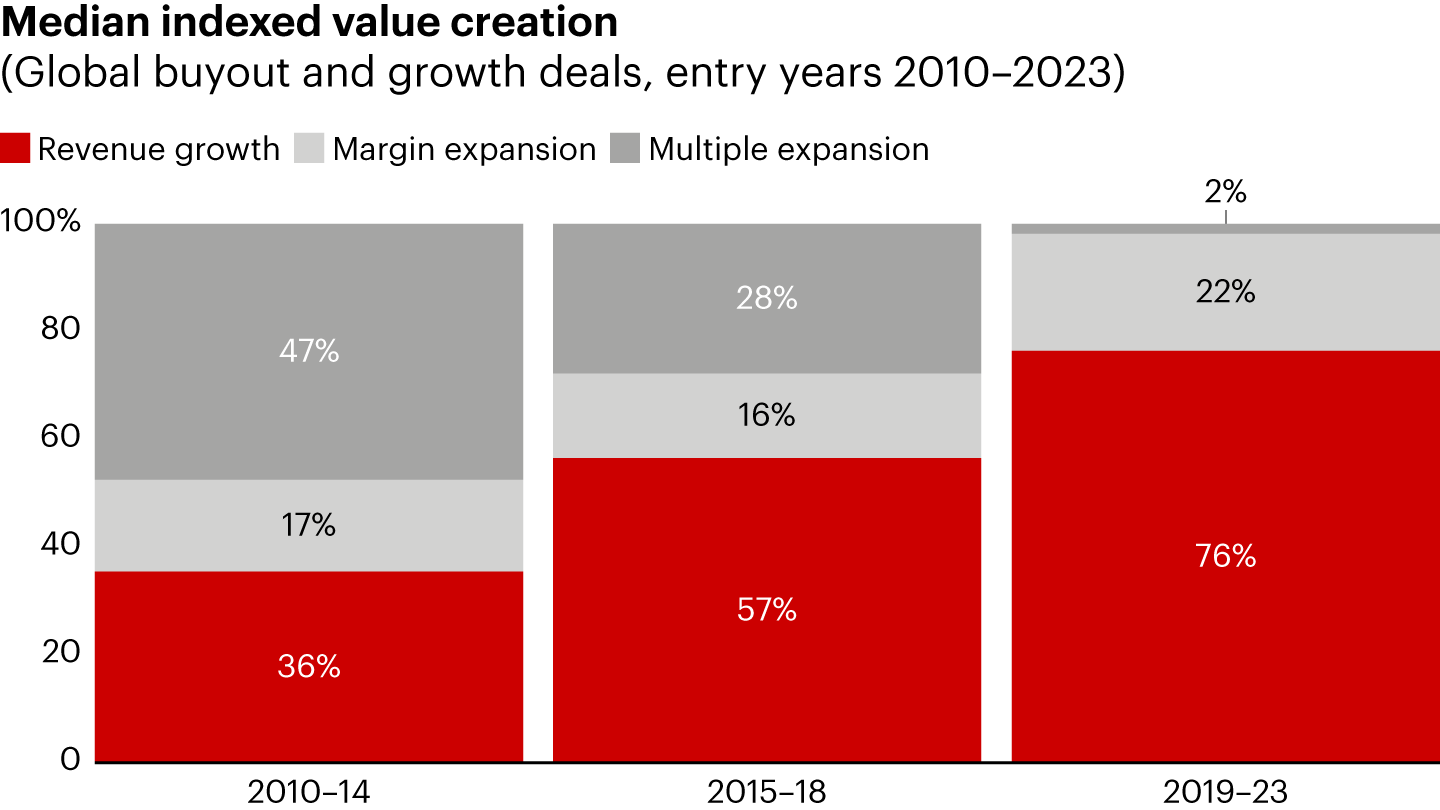

Notes: All calculations in US dollars; deal universe includes fully and partially realized packaging deals with initial investments in 2010–2023 globally; all equity check sizes; buyout and growth; sums may not add up due to rounding; margin expansion refers to an increase in profitability through improving a company’s efficiency and cost management; multiple expansion generally refers to the increase in a company’s valuation from the time it was acquired and then sold
Source: DealEdge.com (data as of July 2025); usage of DealEdge data outside this context requires permission of Bain & Company; contact DealEdge for the latest analysisFor strategic investors, however, some of the usual reasons for M&A persist, such as product portfolio expansion, geographical expansion, and access to new technologies, including sustainable solutions.
M&A is also becoming more important for several other reasons. Strategic investors are searching for growth outside of the traditional paper and packaging “core,” since they face a more muted outlook in traditional paper and packaging. They are also searching for synergies as cost position becomes more important. Finally, they are diversifying and moving downstream.
Here are some of the stated features and examples from three recent large M&A deals
International Paper acquired DS Smith because both companies had complementary businesses and geographies, creating a global leader across the two biggest profit pools (North America and Europe). By realizing synergies in these regions, it could grow its packaging business.
Amcor acquired Berry Global because it had a complementary global portfolio across flexibles, rigid packaging, and closures. There were also synergies in North America in rigid plastics packaging.
Suzano acquired a majority stake in Kimberly-Clark’s tissue business so it could move further down the value chain, combining its pulp production with finished tissue products. This gave it the ability to expand geographically beyond its Brazilian home market.
These three deals are looking to outperform many historical scale strategic mergers that struggled to deliver major benefits because packaging companies still operate on a largely local and sub-regional business model. For these more recent deals to succeed, they must effectively integrate, actively improve productivity, take out synergies where possible, find geographic/product complementariness, and invest capital more effectively to realize value.
Lastly, investors must navigate the dynamic across North America and Europe, the Middle East, and Africa in which many family-owned packaging businesses are looking for investors instead of passing the businesses to the next generation. They must also manage for geographic plays and manage similar businesses that operate within highly varied industry structures and regional dynamics.
Consolidation trends around the world
North America has had more consolidation than other regions (see Figure 2). Beyond that, the more commoditized segments are also further along in consolidation. For example, in fiber substrates, consolidation is more advanced upstream (e.g., pulp mills) vs. downstream (conversion). In plastics, rigid plastics is more consolidated than flexible plastics.
Figure 2
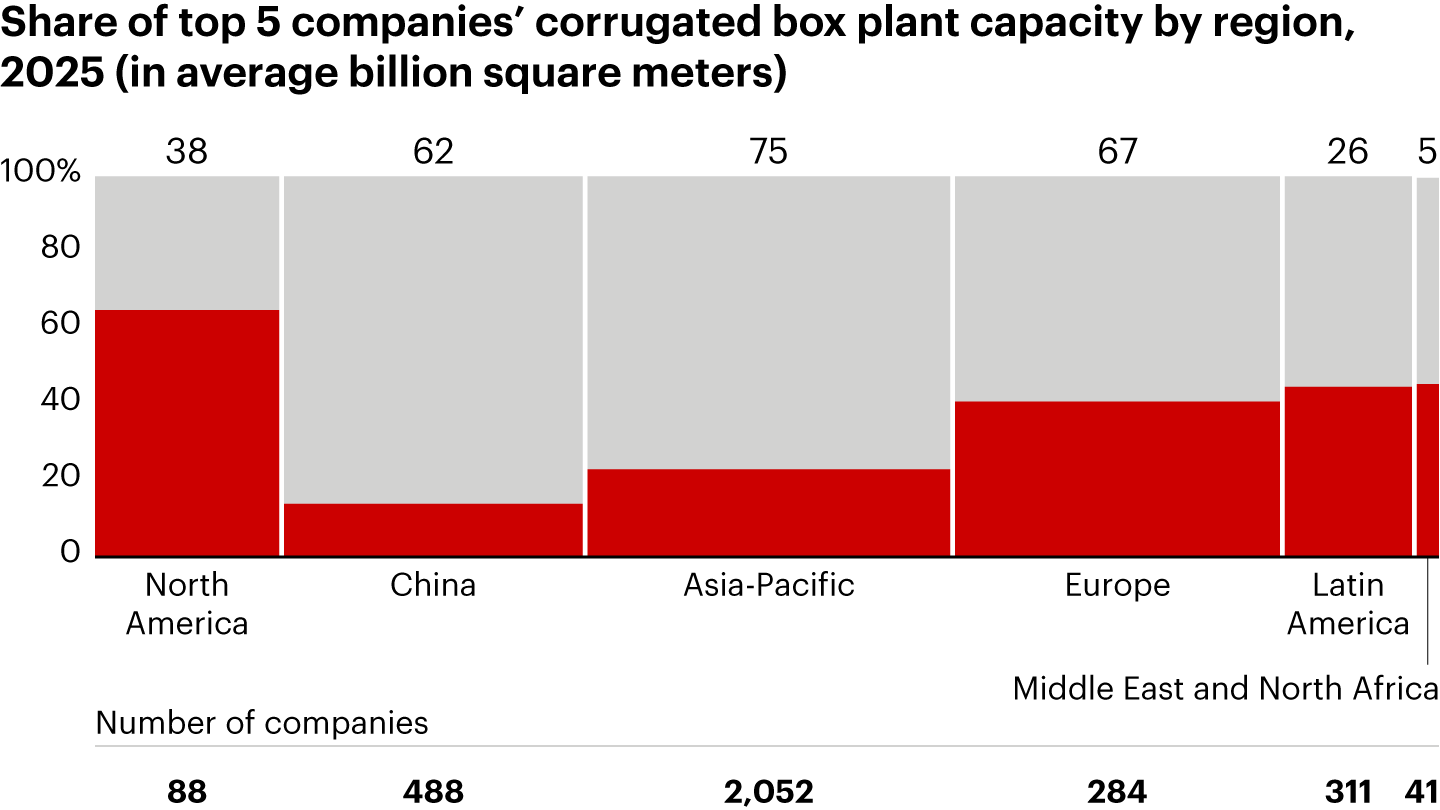

Why, then, has there not been more scale activity by the largest US players in other markets, such as EMEA, given the consolidation in the US market? This is more of a reflection of the challenged EMEA market. In fact, we have seen more of the large EMEA players like Smurfit Kappa and Amcor expand their US presence.
Going forward, Europe still has room for further consolidation, yet two factors make this process more complex: shareholder structures (e.g., family-owned businesses and foundations) and the nature of packaging conglomerates. In contrast, North America has less headroom for consolidation (but still some) within similar segments of the value chain. As such, there is a greater expectation for more consolidation to happen downstream in packaging, and converting will likely continue, especially in areas such as containerboard and flexible packaging.
How should M&A be conducted against this backdrop?
Given ongoing complex macro environments, winning players will enter pre-acquisition with a tight deal thesis on how to create value. They will also conduct a more thorough due diligence that considers different macro, supply, and demand scenarios. Additionally, they will develop a detailed view on operational and commercial synergies, taking a sober lens to the true scale of opportunity given the limitations driven by the highly regional nature of these businesses. Despite this, many can still do even better diligence to understand their target’s business performance, prospects, and ability to execute operational improvements to make these megadeals work out. This is a “muscle” that most players can develop further, given all of the dynamics outlined earlier and the size of the industry overall. Leading companies that figure this out on the front end will better position themselves to stave off trouble later on.
Post-acquisition, a rigorous focus on value creation and synergy realization is more important than ever. This is critical to start pre-closing, ideally by leveraging a clean team setup to hit the ground running from Day 1. A higher emphasis on rigorously driving cost leadership vs. a primarily growth-focused deal thesis is key. Finally, leaders need to make hard decisions about operating model integration, salesforce rationalization, and so on to realize the synergies that they have underwritten and buck the historical trend of failing to deliver sustainable value creation from these megadeals.
Este artigo faz parte do Relatório de Fusões e Aquisições de 2023 da Bain.