
Skip to Content
  • Offices

    Offices

    North & Latin America
    • Atlanta
    • Austin
    • Bogota
    • Boston
    • Buenos Aires
    • Chicago
    • Dallas
    • Denver
    • Houston
    • Los Angeles
    • Mexico City
    • Minneapolis
    • Monterrey
    • Montreal
    • New York
    • Rio de Janeiro
    • San Francisco
    • Santiago
    • São Paulo
    • Seattle
    • Silicon Valley
    • Toronto
    • Washington, DC
    Europe & Africa
    • Amsterdam
    • Athens
    • Berlin
    • Brussels
    • Copenhagen
    • Dusseldorf
    • Frankfurt
    • Helsinki
    • Istanbul
    • Johannesburg
    • Kyiv
    • Lisbon
    • London
    • Madrid
    • Milan
    • Munich
    • Oslo
    • Paris
    • Rome
    • Stockholm
    • Vienna
    • Warsaw
    • Zurich
    Middle East
    • Doha
    • Dubai
    • Riyadh
    Asia & Australia
    • Bangkok
    • Beijing
    • Bengaluru
    • Brisbane
    • Ho Chi Minh City
    • Hong Kong
    • Jakarta
    • Kuala Lumpur
    • Manila
    • Melbourne
    • Mumbai
    • New Delhi
    • Perth
    • Seoul
    • Shanghai
    • Singapore
    • Sydney
    • Tokyo
    See all offices
  • Alumni
  • Media Center
  • Subscribe
  • Contact
  • Brazil | Português

    Select your region and language

    Global
    • Global (English)
    North & Latin America
    • Brazil (Português)
    • Argentina (Español)
    • Canada (Français)
    • Chile (Español)
    • Colombia (Español)
    Europe, Middle East, & Africa
    • France (Français)
    • DACH Region (Deutsch)
    • Italy (Italiano)
    • Spain (Español)
    • Greece (Elliniká)
    Asia & Australia
    • China (中文版)
    • Korea (한국어)
    • Japan (日本語)
  • Saved items (0)
    Saved items (0)

    You have no saved items.

    Bookmark content that interests you and it will be saved here for you to read or share later.

    Explore Bain Insights
  • Industries
    Main menu

    Industries

    • Aeroespacial e Defesa
    • Agronegócio
    • Química
    • Construção e Infraestrutura
    • Bens de Consumo
    • Serviços Financeiros
    • Healthcare & Life Sciences
    • Máquinas e Equipamentos Industriais
    • Mídia e Entretenimento
      Industries
      Mídia e Entretenimento
      • Media Lab
    • Metais
    • Mineração
    • Petróleo e Gás
    • Papel e Embalagens
    • Private Equity
      Industries
      Private Equity
      • Due Diligence
      • Exit Planning
      • Firm Strategy & Operations
      • Portfolio Value Creation
    • Setor Público e Social
    • Varejo
    • Tecnologia
    • Telecomunicações
      Industries
      Telecomunicações
      • Capital Expenditure
      • Telco Digital Transformation
    • Transporte
    • Turismo & Lazer
    • Energia & Renováveis
  • Consulting Services
    Main menu

    Consulting Services

    • Customer Experience
    • Sustainability
    • Innovation
    • M&A
    • Operations
    • People & Organization
    • Private Equity
    • Sales & Marketing
    • Strategy
    • AI, Insights, and Solutions
    • Technology
    • Transformation
  • Digital
  • Insights
    Main menu

    Insights

    • Industry Insights
    • Services Insights
    • Bain Books
    • Webinars
    • Bain Futures
    View all Insights
    Featured topics
    • Tariff Response
    • Artificial Intelligence
    • Thriving in Uncertainty
    • Executive Conversations
    • Macro Trends
    • M&A Report
    • Healthcare Private Equity Report
    • Paper & Packaging Report
    • Technology Report
    • CEO's Guide to Sustainability
    • CEO Insights
    • CFO Insights
    • COO Insights
    • CIO Insights
    • CMO Insights
    View all featured topics
  • About
    Main menu

    About

    • What We Do
    • What We Believe
    • Our People & Leadership
    • Client Results
    • Awards & Recognition
    • Global Affiliations
    Further: Our global responsibility
    • Sustainability
    • Social Impact
    • World Economic Forum
    Learn more about Further
  • Carreiras
    Main menu

    Carreiras

    • Trabalhe Conosco
      Carreiras
      Trabalhe Conosco
      • Find Your Place
      • Nossas áreas de trabalho
      • Equipes integradas
      • Estudantes
      • Programas e estágios
      • Eventos de Recrutamento
    • A Vida na Bain
      Carreiras
      A Vida na Bain
      • Blog: Inside Bain
      • Histórias de carreira
      • Nossas pessoas
      • Onde trabalhamos
      • Apoioao seu crescimento
      • Grupos de afinidade
      • Benefícios
    • Impact Stories
    • Nosso Processo Seletivo
      Carreiras
      Nosso Processo Seletivo
      • O Que Esperar
      • Entrevistas
    FIND JOBS
  • Offices
    Main menu

    Offices

    • North & Latin America
      Offices
      North & Latin America
      • Atlanta
      • Austin
      • Bogota
      • Boston
      • Buenos Aires
      • Chicago
      • Dallas
      • Denver
      • Houston
      • Los Angeles
      • Mexico City
      • Minneapolis
      • Monterrey
      • Montreal
      • New York
      • Rio de Janeiro
      • San Francisco
      • Santiago
      • São Paulo
      • Seattle
      • Silicon Valley
      • Toronto
      • Washington, DC
    • Europe & Africa
      Offices
      Europe & Africa
      • Amsterdam
      • Athens
      • Berlin
      • Brussels
      • Copenhagen
      • Dusseldorf
      • Frankfurt
      • Helsinki
      • Istanbul
      • Johannesburg
      • Kyiv
      • Lisbon
      • London
      • Madrid
      • Milan
      • Munich
      • Oslo
      • Paris
      • Rome
      • Stockholm
      • Vienna
      • Warsaw
      • Zurich
    • Middle East
      Offices
      Middle East
      • Doha
      • Dubai
      • Riyadh
    • Asia & Australia
      Offices
      Asia & Australia
      • Bangkok
      • Beijing
      • Bengaluru
      • Brisbane
      • Ho Chi Minh City
      • Hong Kong
      • Jakarta
      • Kuala Lumpur
      • Manila
      • Melbourne
      • Mumbai
      • New Delhi
      • Perth
      • Seoul
      • Shanghai
      • Singapore
      • Sydney
      • Tokyo
    See all offices
  • Alumni
  • Media Center
  • Subscribe
  • Contact
  • Brazil | Português
    Main menu

    Select your region and language

    • Global
      Select your region and language
      Global
      • Global (English)
    • North & Latin America
      Select your region and language
      North & Latin America
      • Brazil (Português)
      • Argentina (Español)
      • Canada (Français)
      • Chile (Español)
      • Colombia (Español)
    • Europe, Middle East, & Africa
      Select your region and language
      Europe, Middle East, & Africa
      • France (Français)
      • DACH Region (Deutsch)
      • Italy (Italiano)
      • Spain (Español)
      • Greece (Elliniká)
    • Asia & Australia
      Select your region and language
      Asia & Australia
      • China (中文版)
      • Korea (한국어)
      • Japan (日本語)
  • Saved items  (0)
    Main menu
    Saved items (0)

    You have no saved items.

    Bookmark content that interests you and it will be saved here for you to read or share later.

    Explore Bain Insights
  • Industries
    • Industries

      • Aeroespacial e Defesa
      • Agronegócio
      • Química
      • Construção e Infraestrutura
      • Bens de Consumo
      • Serviços Financeiros
      • Healthcare & Life Sciences
      • Máquinas e Equipamentos Industriais
      • Mídia e Entretenimento
      • Metais
      • Mineração
      • Petróleo e Gás
      • Papel e Embalagens
      • Private Equity
      • Setor Público e Social
      • Varejo
      • Tecnologia
      • Telecomunicações
      • Transporte
      • Turismo & Lazer
      • Energia & Renováveis
  • Consulting Services
    • Consulting Services

      • Customer Experience
      • Sustainability
      • Innovation
      • M&A
      • Operations
      • People & Organization
      • Private Equity
      • Sales & Marketing
      • Strategy
      • AI, Insights, and Solutions
      • Technology
      • Transformation
  • Digital
  • Insights
    • Insights

      • Industry Insights
      • Services Insights
      • Bain Books
      • Webinars
      • Bain Futures
      View all Insights
      Featured topics
      • Tariff Response
      • Artificial Intelligence
      • Thriving in Uncertainty
      • Executive Conversations
      • Macro Trends
      • M&A Report
      • Healthcare Private Equity Report
      • Paper & Packaging Report
      • Technology Report
      • CEO's Guide to Sustainability
      • CEO Insights
      • CFO Insights
      • COO Insights
      • CIO Insights
      • CMO Insights
      View all featured topics
  • About
    • About

      • What We Do
      • What We Believe
      • Our People & Leadership
      • Client Results
      • Awards & Recognition
      • Global Affiliations
      Further: Our global responsibility
      • Sustainability
      • Social Impact
      • World Economic Forum
      Learn more about Further
  • Carreiras
    Popular Searches
    • Agile
    • Digital
    • Strategy
    Your Previous Searches
      Recently Visited Pages

      Content added to saved items

      Saved items (0)

      Removed from saved items

      Saved items (0)

      Brief

      The Future of European Grocery Retailing: Strategy after the Lockdown Surge

      The Future of European Grocery Retailing: Strategy after the Lockdown Surge

      Incumbents gained a four-year reprieve in the pandemic. Here’s how to use it.

      By Marc-André Kamel, Miltiadis Athanassiou, Joëlle de Montgolfier, and Ruth Lewis

      • min read
      }

      Brief

      The Future of European Grocery Retailing: Strategy after the Lockdown Surge
      en
      Executive Summary
      • Grocery sales in Western Europe have risen to a level we only expected in 2025 after Covid-19 obliged many consumers to eat three meals a day at home.
      • Grocers now have breathing space to reposition themselves strategically and retain their recent momentum, averting what could otherwise be a decade of profit erosion.
      • Hypermarket operators in particular have an opportunity to fix the struggling format. But all executive teams need to act soon before the squeeze from foodservice resumes.

      At the start of 2020, many European grocers were braced for a difficult decade. Grocery shoppers were demanding more value, quality, convenience, and personalization, with discounters such as Aldi and Lidl ratcheting up the pricing pressure. Online grocery’s steady adoption was gradually diluting profits. Sales per square meter were often declining because of general grocery market oversaturation. Restaurants and other foodservice operators were also winning sales from grocers by offering consumers an easy alternative to cooking at home.

      Just over a year later, the future of European grocery retailing looks very different now that Covid-19 has forced a recalibration of the way we eat, work, and socialize. Momentum in the battle between grocers and foodservice has reversed, for the time being, with restaurants hit by operating restrictions, worries about the safety of dining out, consumer belt-tightening, and a drop in tourism, while a new normal of three meals a day at home has aided grocers in lockdown and beyond.

      For Our Clients

      Macro Surveillance Platform

      For more detail on the business implications of coronavirus from Bain’s Macro Trends Group, log on to the Macro Surveillance Platform. Learn more about the platform >

      We can visualize that shift at a “share of stomach” level by pooling food sales through grocery checkouts with the revenues of restaurants and other foodservice operators. Pre–Covid-19, foodservice had been set to gobble up 32% of these pooled revenues in Western Europe in 2020, with grocery’s share of stomach dipping to 68%. After the pandemic’s second wave, grocers may well have ended up with more than three-quarters of the 2020 combined sales.

      Looking further out, we can see that foodservice’s struggles have given Europe’s incumbent grocers a four-year reprieve from much of the revenue pressure they’d faced: in 2020, grocery sales likely settled at a level that, pre–Covid-19, we’d only expected to see in 2025 (see Figure 1). For grocers, this amounts to a temporary opportunity to retool for the strategic challenges ahead, before out-of-home consumption regains its full potency. Grocery is currently more central to customers’ lives—and this deeper bond could sustain the sector’s new momentum with the right moves in the coming months.

      Figure 1
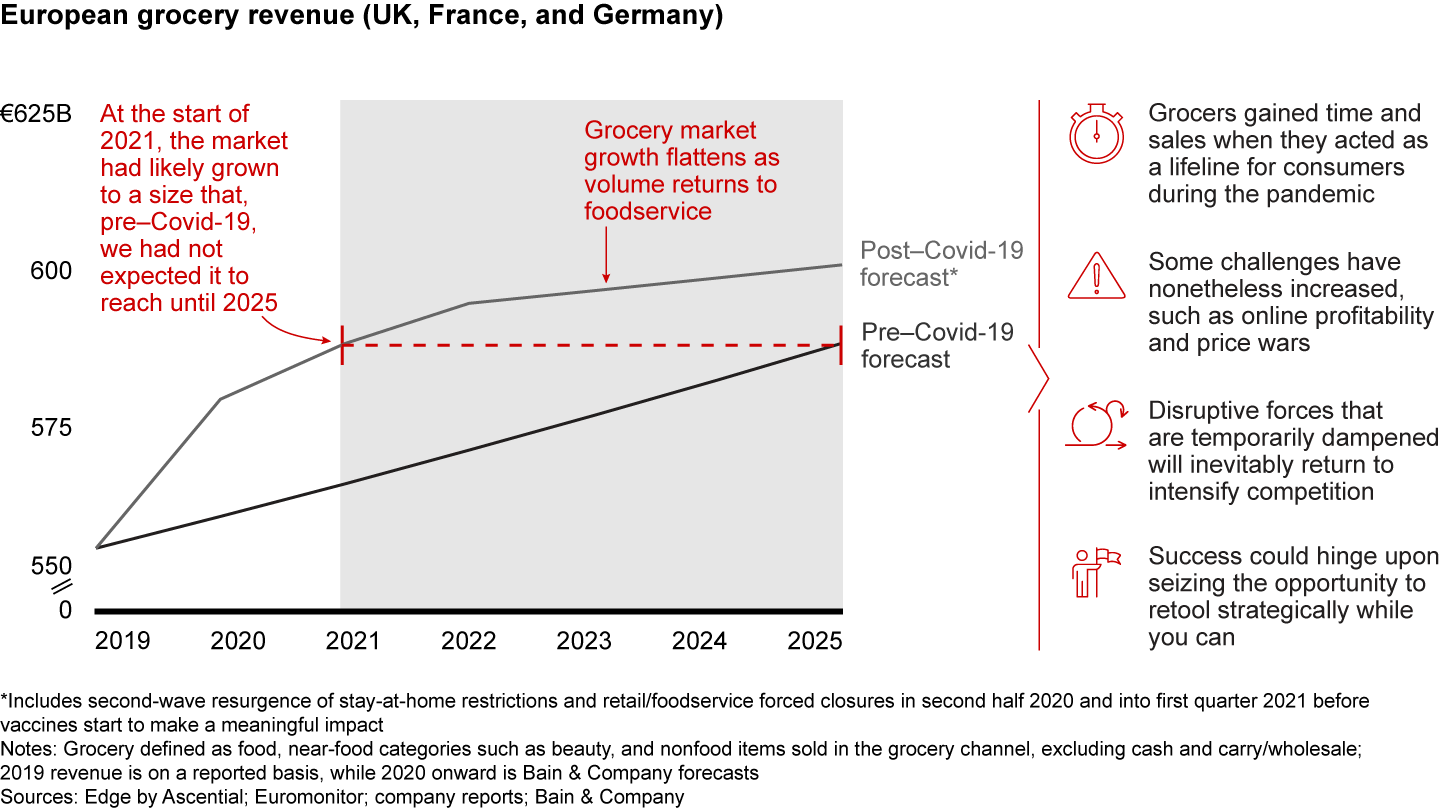
      Incumbent grocers have gained a four-year reprieve compared with our pre–Covid-19 forecast, and they can use that to retool
      Incumbent grocers have gained a four-year reprieve compared with our pre–Covid-19 forecast, and they can use that to retool
      Incumbent grocers have gained a four-year reprieve compared with our pre–Covid-19 forecast, and they can use that to retool

      However, the pandemic is also amplifying existing trends in a way that will increase pressure on profit margins beyond our pre–Covid-19 expectations for the next decade. Rising unemployment is set to increase demand for discount groceries. Western European online grocery penetration is now likely to hit 9.8% by the end of 2025, far above our pre–Covid-19 forecast of 6.6%; this means the drip-drip of profit dilution is becoming a gush. Deeper disruption is on the horizon too, from abundantly funded start-ups, say, or meal delivery players continuing to blur profit pool boundaries by further expanding into groceries and wholesaling to restaurants.

      Despite the short-term revenue reprieve, our modeling suggests that, in the absence of determined strategic action, sector profits in Germany, France, and the UK will reduce by 8% between 2020 and 2030 (see Figure 2). European grocers have gained some breathing space, but the squeeze will resume before too long. They can’t afford to waste the opportunity they have today.

      Figure 2
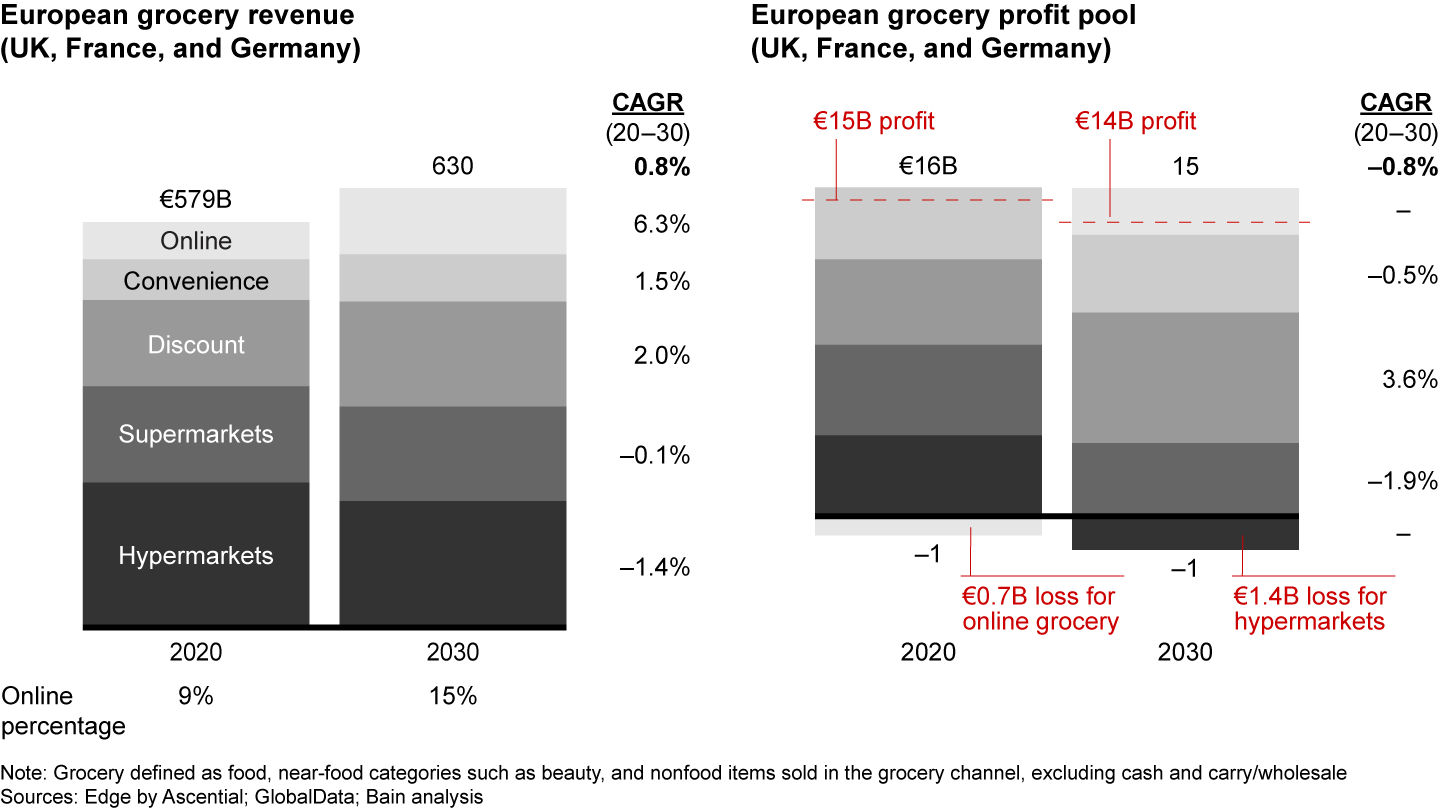
      Despite projected long-term revenue growth, the grocery profit pool is expected to contract
      Despite projected long-term revenue growth, the grocery profit pool is expected to contract
      Despite projected long-term revenue growth, the grocery profit pool is expected to contract

      Transatlantic differences in strategy

      So how to respond? In Europe, the imperatives are similar to those we recently laid out for US grocers (see the Bain Brief “The Future of US Grocery: Maintaining the Momentum”). Like their US counterparts, European grocers can thrive by:

      • Sharpening their customer value proposition, so it wins in at least one area, such as assortment, convenience, or price, while remaining competitive across the board.
      • Delighting customers on high-impact journeys, focusing customer experience redesign on the most frequent and valuable journeys, especially online.
      • Winning profitably in e-commerce, ending dilution by optimizing their omnichannel network, diversifying revenues, and removing unsustainable channel subsidies.
      • Reimagining the role of the store and network, pragmatically deploying digital technology to streamline operations and serve customers better, while reallocating excess space and using pinpoint local data to identify whether some stores should close or become online nodes.
      • Gaining a supply chain edge, improving convenience, efficiency, resilience, and sustainability in close collaboration with vendors and the rest of the value chain.
      • Preparing for more consolidation, identifying the mergers and acquisitions role that fits them best, refining their options through gameboarding and other strategic scenario analysis.
      • Exploring new profit pools, through vertical integration or horizontal diversification (for instance, via the alluring adjacencies of digital advertising and data analytics).

      However, Europe has challenges that will at times require a different approach to the US. Take scale as an example. Most European grocers are small compared with US peers, and this has constrained their ability to invest enough in value proposition, price, and technology. Top publicly traded US grocers are able to invest far more on an absolute basis (see Figure 3). Worse, the ratio of capital expenditure to sales has actually fallen of late for most European grocers, while US players are spending even more of their revenues on capex in a bid to keep up with vast digital outlays by Amazon and other disruptors.

      Figure 3
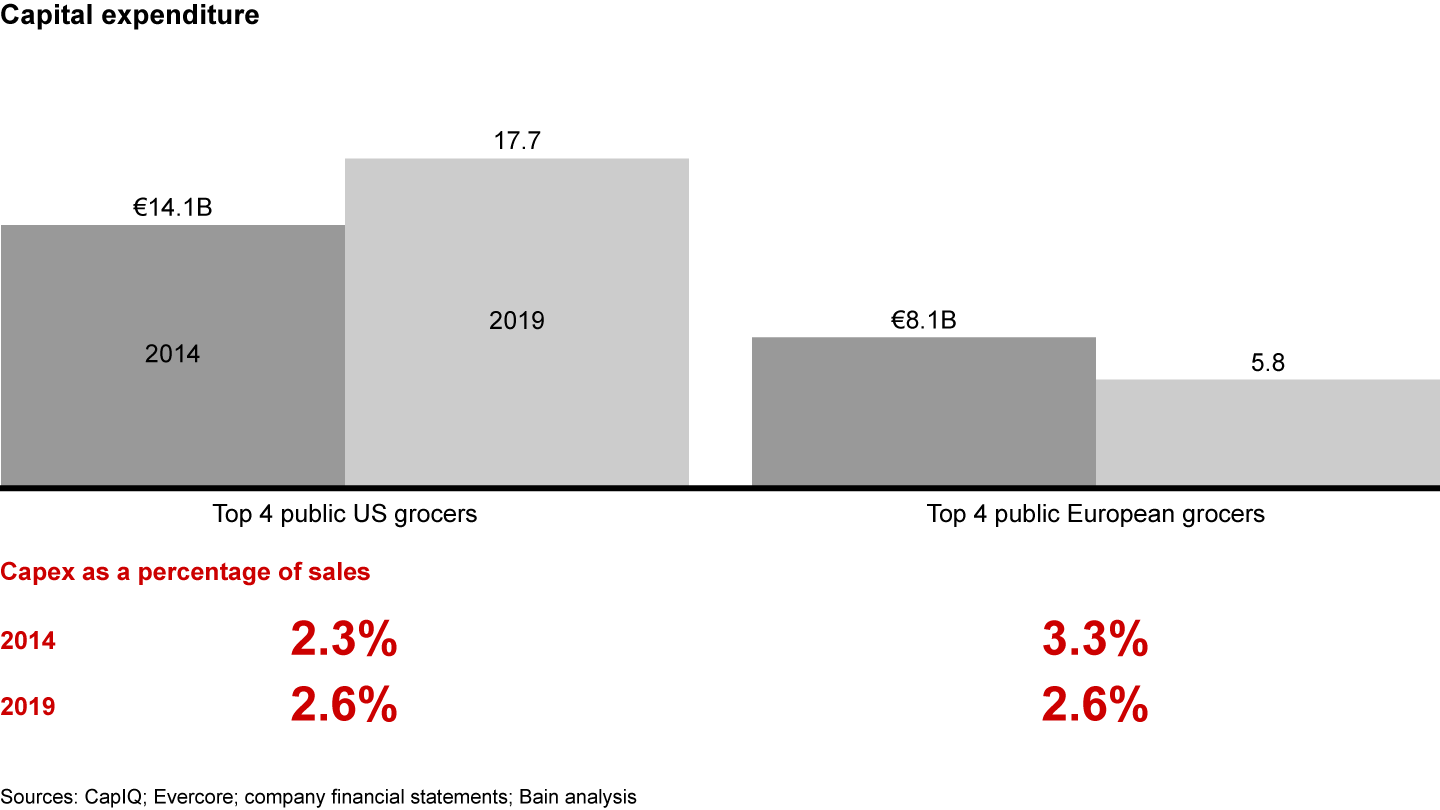
      The top European grocers invest less than US peers because of their smaller scale and have decreased the ratio of capex to sales over the past five years
      The top European grocers invest less than US peers because of their smaller scale and have decreased the ratio of capex to sales over the past five years
      The top European grocers invest less than US peers because of their smaller scale and have decreased the ratio of capex to sales over the past five years

      In theory, the transatlantic scale deficit should lead to more consolidation in Europe. However, national and European politicians and competition regulators can be hostile to takeovers and mergers, particularly when they concern prominent brands in culturally sensitive areas such as food. This could make the deepening of “virtual scale” partnerships such as buying alliances a more pragmatic option in some cases.

      Furthermore, the threat posed in Europe by food delivery aggregators such as Deliveroo could be more pronounced than in the US. This difference is not down to US aggregators being weaker; the risk is more in how European grocery has engaged with this new force. As they raced to scale up online fulfillment capacity in 2020, various European grocers struck (or extended) delivery partnerships with aggregators as part of their response to surging demand, potentially increasing the risk of aggregators hijacking their customer relationships. US grocers have tended to rely more on increasing curbside and in-store pickup to boost online fulfillment in the pandemic. That could make them less vulnerable to disintermediation in the longer term.

      The hypermarket turnaround opportunity

      Hypermarkets are another distinct challenge for European grocery, perhaps the biggest. Pre–Covid-19, the format had bled market share as consumers opted for the convenience of smaller, closer stores, and some grocers closed weaker hypermarkets. In the UK, hypermarkets held 48% of the market in 2013, but this had dipped to 37% by 2019; over the same period, hypermarket share fell from 32% to 29% in France, and the format stayed niche in Germany (with share flat at 14%). While US big-box stores fared well in the pandemic, European hypermarkets continued to limp as shoppers transferred yet more business to supermarket and convenience formats located nearer to home.

      Without effective action, we forecast that grocery sales in European hypermarkets will decline by 13% between 2020 and 2030, while the average earnings before interest and tax margin is set to drop from 1.8% to -0.8% (both forecasts include food, near-food categories such as beauty, and nonfood items sold in grocery channels). But we believe that hypermarkets can be reinvented over the coming decade, rather than slipping into a doom loop of declining sales, dwindling resourcing, and alienated shoppers.

      That reinvention requires a rethink of store network strategy that will include closing or turning around underperforming stores, pursuing asset swaps, and repurposing space. Hypermarket operators that own their own stores might feel less pressure to prune and optimize in this fashion; that could be a mistake if asset-light competitors react more nimbly.

      For some consumers, the vastness of hypermarkets can be a turnoff. Resurgent hypermarket operators will convert or reengage these shoppers through deft differentiation, clearly communicating why it’s worth traveling to shop with them by reviving the customer-centric mission of one-stop shop convenience. Store layout will need to change accordingly, with more dedicated space for fresh produce, private label goods (including value lines), to-go food, and ready meals, but also consumer services or entertainment options. In addition, specific characteristics such as population density and shopper preferences should inform the customization of the assortment to catchment areas.

      Innovative in-store concepts can also be a hook. Promising areas might involve products and services that are organic, wellness-oriented, sustainable, or secondhand. Various French hypermarkets already buy and resell secondhand items from customers (paying with store credit). That’s a potential magnet for the cash-strapped and the ecologically minded.

      Another powerful option is to diversify hypermarkets’ economic model away from retail, by leasing space to either foodservice players or specialist nonfood retailers. That could help revive hypermarkets’ one-stop shop advantage in nonfood and capture market share from the local high street. Hypermarkets can also play a big part in scaling up online grocery profitably, through the conversion of select sites to dark stores in which orders are picked by employees, or to micro-fulfilment centers with robotic picking.

      Throughout the hypermarket turnaround, executive teams will need to be watchful for ways in which they can use their real estate to bring in cash, through renting out their car parks, say, or leasing space for the last-mile logistics functions of other retailers.

      Reshaping the future of grocery retailing amid the Covid-19 maelstrom

      Even as they scrambled to solve the vast operational challenges posed by the pandemic, European grocers succeeded in making changes that should have lasting strategic impact. Consider our long-term imperative of winning profitably in e-commerce, analyzed in detail in the recent Bain Brief “How to Ramp Up Online Grocery—without Breaking the Bank.”

      Fixing the broken economics of the online channel will require, among other things, a reset of delivery and pickup fees that fail to cover the cost of a service that consumers value hugely. During Covid-19, that was easier said than done, given the risk of public backlash. However, some grocers found a way to overhaul charges without scarring their reputation. For instance, Tesco in 2020 jettisoned its old system of charging for UK deliveries on a peak and off-peak basis, under which fees had ranged from £2 to £7. Tesco replaced the old system with pricing that better reflected fulfillment costs: a £4.50 standard fee or £5.50 for orders delivered from one of its customer fulfillment centers.

      In 2021 and beyond, there will be no shortage of operational challenges, but incumbent grocers should be fired up by the responsiveness, resilience, and ingenuity they showed in 2020, when they found a way to keep reshaping their businesses in the most testing circumstances. With the renewed traction they have gained with customers, now is the time for grocers to accelerate their strategic transformation—and make the most of that revenue reprieve.

      Related Insights

      Coronavirus

      The global Covid-19 pandemic has extracted a terrible human toll and spurred sweeping changes in the world economy. Across industries, executives have begun reassessing their strategies and repositioning their companies to thrive now and in the world beyond coronavirus.

      Authors
      • Headshot of Marc-André Kamel
        Marc-André Kamel
        Partner, Paris
      • Headshot of Miltiadis Athanassiou
        Miltiadis Athanassiou
        Partner, Zurich
      • Headshot of Joelle De Montgolfier
        Joëlle de Montgolfier
        Practice Executive Vice President, Paris
      • Headshot of Ruth Lewis
        Ruth Lewis
        Practice Senior Manager, Paris
      Related Industries
      • Grocery
      • Retail
      Retail
      The Future of US Grocery: Maintaining the Momentum

      The dine-at-home trend has given grocers an opportunity to regain lost ground over the next decade.

      Read more
      Coronavirus
      Ramping Up Online Grocery without Breaking the Bank

      Bain’s Marc-André Kamel discusses the challenges that online grocery presents for retailers and CPGs and how they can pair up to find a winning solution.

      Read more
      Retail
      The Most Loved Private-Label Brands in Fresh and Perishable Food

      Texas grocer H-E-B tops our second ranking of US own-label brands.

      Read more
      Coronavirus
      Online Grocery: A Joint Challenge for Retailers and CPG Suppliers

      While online grocery has continued to surge, grocers and consumer packaged-goods groups must work together to fix the dilutive economics of the channel.

      Read more
      Retail
      The Most Loved Private-Label Brands in Shelf-Stable and Frozen Food

      Trader Joe’s tops our first ranking of loyalty-boosting own-label brands in US grocery.

      Read more
      First published in fevereiro 2021
      Tags
      • Coronavirus
      • Future of Retail
      • Grocery
      • Retail

      How We've Helped Clients

      A Grocery Giant Enjoys the Fruits of a Successful Merger Integration

      See more related case studies

      A Global Retailer Transforms Technology and Data to Conquer the Digital Future

      See more related case studies

      Global expansion boosts supermarket earnings and growth

      See more related case studies

      Quer saber mais?

      Ajudamos líderes do mundo todo a lidar com desafios e oportunidades cruciais para suas organizações. Juntos, criamos mudanças e resultados duradouros.

      Bain Insights. Our perspectives on critical issues global businesses face in today's challenging environment, delivered monthly.

      *I have read and understand Bain’s Privacy Notice.

      Please read and agree to the Privacy Policy.
      Bain & Company
      Contact us Sustainability Accessibility Terms of use Privacy Cookie Policy Sitemap Log In

      © 1996-2026 Bain & Company, Inc.

      Contact Bain

      How can we help you?

      • Business inquiry
      • Career information
      • Press relations
      • Partnership request
      • Speaker request
      See all offices