
Skip to Content
  • Offices

    Offices

    North & Latin America
    • Atlanta
    • Austin
    • Bogota
    • Boston
    • Buenos Aires
    • Chicago
    • Dallas
    • Denver
    • Houston
    • Los Angeles
    • Mexico City
    • Minneapolis
    • Monterrey
    • Montreal
    • New York
    • Rio de Janeiro
    • San Francisco
    • Santiago
    • São Paulo
    • Seattle
    • Silicon Valley
    • Toronto
    • Washington, DC
    Europe & Africa
    • Amsterdam
    • Athens
    • Berlin
    • Brussels
    • Copenhagen
    • Dusseldorf
    • Frankfurt
    • Helsinki
    • Istanbul
    • Johannesburg
    • Kyiv
    • Lisbon
    • London
    • Madrid
    • Milan
    • Munich
    • Oslo
    • Paris
    • Rome
    • Stockholm
    • Vienna
    • Warsaw
    • Zurich
    Middle East
    • Doha
    • Dubai
    • Riyadh
    Asia & Australia
    • Bangkok
    • Beijing
    • Bengaluru
    • Brisbane
    • Ho Chi Minh City
    • Hong Kong
    • Jakarta
    • Kuala Lumpur
    • Manila
    • Melbourne
    • Mumbai
    • New Delhi
    • Perth
    • Seoul
    • Shanghai
    • Singapore
    • Sydney
    • Tokyo
    See all offices
  • Alumni
  • Media Center
  • Subscribe
  • Contact
  • Brazil | Português

    Select your region and language

    Global
    • Global (English)
    North & Latin America
    • Brazil (Português)
    • Argentina (Español)
    • Canada (Français)
    • Chile (Español)
    • Colombia (Español)
    Europe, Middle East, & Africa
    • France (Français)
    • DACH Region (Deutsch)
    • Italy (Italiano)
    • Spain (Español)
    • Greece (Elliniká)
    Asia & Australia
    • China (中文版)
    • Korea (한국어)
    • Japan (日本語)
  • Saved items (0)
    Saved items (0)

    You have no saved items.

    Bookmark content that interests you and it will be saved here for you to read or share later.

    Explore Bain Insights
  • Industries
    Main menu

    Industries

    • Aeroespacial e Defesa
    • Agronegócio
    • Química
    • Construção e Infraestrutura
    • Bens de Consumo
    • Serviços Financeiros
    • Healthcare & Life Sciences
    • Máquinas e Equipamentos Industriais
    • Mídia e Entretenimento
      Industries
      Mídia e Entretenimento
      • Media Lab
    • Metais
    • Mineração
    • Petróleo e Gás
    • Papel e Embalagens
    • Private Equity
      Industries
      Private Equity
      • Due Diligence
      • Exit Planning
      • Firm Strategy & Operations
      • Portfolio Value Creation
    • Setor Público e Social
    • Varejo
    • Tecnologia
    • Telecomunicações
      Industries
      Telecomunicações
      • Capital Expenditure
      • Telco Digital Transformation
    • Transporte
    • Turismo & Lazer
    • Energia & Renováveis
  • Consulting Services
    Main menu

    Consulting Services

    • Customer Experience
    • Sustainability
    • Innovation
    • M&A
    • Operations
    • People & Organization
    • Private Equity
    • Sales & Marketing
    • Strategy
    • AI, Insights, and Solutions
    • Technology
    • Transformation
  • Digital
  • Insights
    Main menu

    Insights

    • Industry Insights
    • Services Insights
    • Bain Books
    • Webinars
    • Bain Futures
    View all Insights
    Featured topics
    • Tariff Response
    • Artificial Intelligence
    • Thriving in Uncertainty
    • Executive Conversations
    • Macro Trends
    • M&A Report
    • Healthcare Private Equity Report
    • Paper & Packaging Report
    • Technology Report
    • CEO's Guide to Sustainability
    • CEO Insights
    • CFO Insights
    • COO Insights
    • CIO Insights
    • CMO Insights
    View all featured topics
  • About
    Main menu

    About

    • What We Do
    • What We Believe
    • Our People & Leadership
    • Client Results
    • Awards & Recognition
    • Global Affiliations
    Further: Our global responsibility
    • Sustainability
    • Social Impact
    • World Economic Forum
    Learn more about Further
  • Carreiras
    Main menu

    Carreiras

    • Trabalhe Conosco
      Carreiras
      Trabalhe Conosco
      • Find Your Place
      • Nossas áreas de trabalho
      • Equipes integradas
      • Estudantes
      • Programas e estágios
      • Eventos de Recrutamento
    • A Vida na Bain
      Carreiras
      A Vida na Bain
      • Blog: Inside Bain
      • Histórias de carreira
      • Nossas pessoas
      • Onde trabalhamos
      • Apoioao seu crescimento
      • Grupos de afinidade
      • Benefícios
    • Impact Stories
    • Nosso Processo Seletivo
      Carreiras
      Nosso Processo Seletivo
      • O Que Esperar
      • Entrevistas
    FIND JOBS
  • Offices
    Main menu

    Offices

    • North & Latin America
      Offices
      North & Latin America
      • Atlanta
      • Austin
      • Bogota
      • Boston
      • Buenos Aires
      • Chicago
      • Dallas
      • Denver
      • Houston
      • Los Angeles
      • Mexico City
      • Minneapolis
      • Monterrey
      • Montreal
      • New York
      • Rio de Janeiro
      • San Francisco
      • Santiago
      • São Paulo
      • Seattle
      • Silicon Valley
      • Toronto
      • Washington, DC
    • Europe & Africa
      Offices
      Europe & Africa
      • Amsterdam
      • Athens
      • Berlin
      • Brussels
      • Copenhagen
      • Dusseldorf
      • Frankfurt
      • Helsinki
      • Istanbul
      • Johannesburg
      • Kyiv
      • Lisbon
      • London
      • Madrid
      • Milan
      • Munich
      • Oslo
      • Paris
      • Rome
      • Stockholm
      • Vienna
      • Warsaw
      • Zurich
    • Middle East
      Offices
      Middle East
      • Doha
      • Dubai
      • Riyadh
    • Asia & Australia
      Offices
      Asia & Australia
      • Bangkok
      • Beijing
      • Bengaluru
      • Brisbane
      • Ho Chi Minh City
      • Hong Kong
      • Jakarta
      • Kuala Lumpur
      • Manila
      • Melbourne
      • Mumbai
      • New Delhi
      • Perth
      • Seoul
      • Shanghai
      • Singapore
      • Sydney
      • Tokyo
    See all offices
  • Alumni
  • Media Center
  • Subscribe
  • Contact
  • Brazil | Português
    Main menu

    Select your region and language

    • Global
      Select your region and language
      Global
      • Global (English)
    • North & Latin America
      Select your region and language
      North & Latin America
      • Brazil (Português)
      • Argentina (Español)
      • Canada (Français)
      • Chile (Español)
      • Colombia (Español)
    • Europe, Middle East, & Africa
      Select your region and language
      Europe, Middle East, & Africa
      • France (Français)
      • DACH Region (Deutsch)
      • Italy (Italiano)
      • Spain (Español)
      • Greece (Elliniká)
    • Asia & Australia
      Select your region and language
      Asia & Australia
      • China (中文版)
      • Korea (한국어)
      • Japan (日本語)
  • Saved items  (0)
    Main menu
    Saved items (0)

    You have no saved items.

    Bookmark content that interests you and it will be saved here for you to read or share later.

    Explore Bain Insights
  • Industries
    • Industries

      • Aeroespacial e Defesa
      • Agronegócio
      • Química
      • Construção e Infraestrutura
      • Bens de Consumo
      • Serviços Financeiros
      • Healthcare & Life Sciences
      • Máquinas e Equipamentos Industriais
      • Mídia e Entretenimento
      • Metais
      • Mineração
      • Petróleo e Gás
      • Papel e Embalagens
      • Private Equity
      • Setor Público e Social
      • Varejo
      • Tecnologia
      • Telecomunicações
      • Transporte
      • Turismo & Lazer
      • Energia & Renováveis
  • Consulting Services
    • Consulting Services

      • Customer Experience
      • Sustainability
      • Innovation
      • M&A
      • Operations
      • People & Organization
      • Private Equity
      • Sales & Marketing
      • Strategy
      • AI, Insights, and Solutions
      • Technology
      • Transformation
  • Digital
  • Insights
    • Insights

      • Industry Insights
      • Services Insights
      • Bain Books
      • Webinars
      • Bain Futures
      View all Insights
      Featured topics
      • Tariff Response
      • Artificial Intelligence
      • Thriving in Uncertainty
      • Executive Conversations
      • Macro Trends
      • M&A Report
      • Healthcare Private Equity Report
      • Paper & Packaging Report
      • Technology Report
      • CEO's Guide to Sustainability
      • CEO Insights
      • CFO Insights
      • COO Insights
      • CIO Insights
      • CMO Insights
      View all featured topics
  • About
    • About

      • What We Do
      • What We Believe
      • Our People & Leadership
      • Client Results
      • Awards & Recognition
      • Global Affiliations
      Further: Our global responsibility
      • Sustainability
      • Social Impact
      • World Economic Forum
      Learn more about Further
  • Carreiras
    Popular Searches
    • Agile
    • Digital
    • Strategy
    Your Previous Searches
      Recently Visited Pages

      Content added to saved items

      Saved items (0)

      Removed from saved items

      Saved items (0)

      Brief

      What Will It Take to Triple Nuclear Energy by 2050?

      What Will It Take to Triple Nuclear Energy by 2050?

      Funding isn’t the only hurdle. Leading companies are rethinking business models, supply chains, and how they scale up technologies.

      By Arnaud Leroi, Henrik Madsen, Ed Stone, Aaron Denman, Luigi Corleto, and Denis Janin

      • min read
      }

      Brief

      What Will It Take to Triple Nuclear Energy by 2050?
      en
      At a Glance
      • Nuclear energy accounts for about 10% of global electricity and a quarter of the world's low-carbon electricity.
      • Tripling global nuclear capacity will require trillions of investment dollars, energy cost competitiveness, public support, and safety.
      • Furthermore, many existing plants are due for decommissioning, and the industry has struggled to deliver new projects on time and on budget.
      • Effective leaders will embrace innovative business and operating models, while more proactively collaborating with public and private sector partners.

      Global interest in nuclear energy is rising. In the most high-profile recent signal, 22 countries at COP28 pledged to triple the world’s nuclear energy production capacity by 2050.

      But what would it actually take for the industry to deliver on such an ambitious goal?

      Unprecedented investment levels, for starters. Trillions of dollars in funding would be required to achieve about 1,200 gigawatts of global nuclear capacity. That would approximately triple the current installed capacity of the world’s 400-plus nuclear power plants and would account for replacement of existing reactors to be decommissioned.

      Beyond massive investments, it's a bold challenge with a few pre-requisites: nuclear energy cost competitiveness, public support, and, of course, safety.

      Advocates see nuclear energy as a crucial part of solving the global energy crisis, achieving net-zero emissions worldwide, and enabling the replacement of aging fleets of baseload and dispatchable power sources such as coal, gas, and older generations of nuclear technology. The world’s nuclear power plants generate about 10% of global electricity and a quarter of the world's low-carbon electricity. But many facilities are aging, particularly the fleets in advanced economies, where nuclear plants are on average about 39 years old (see Figure 1).

      Figure 1
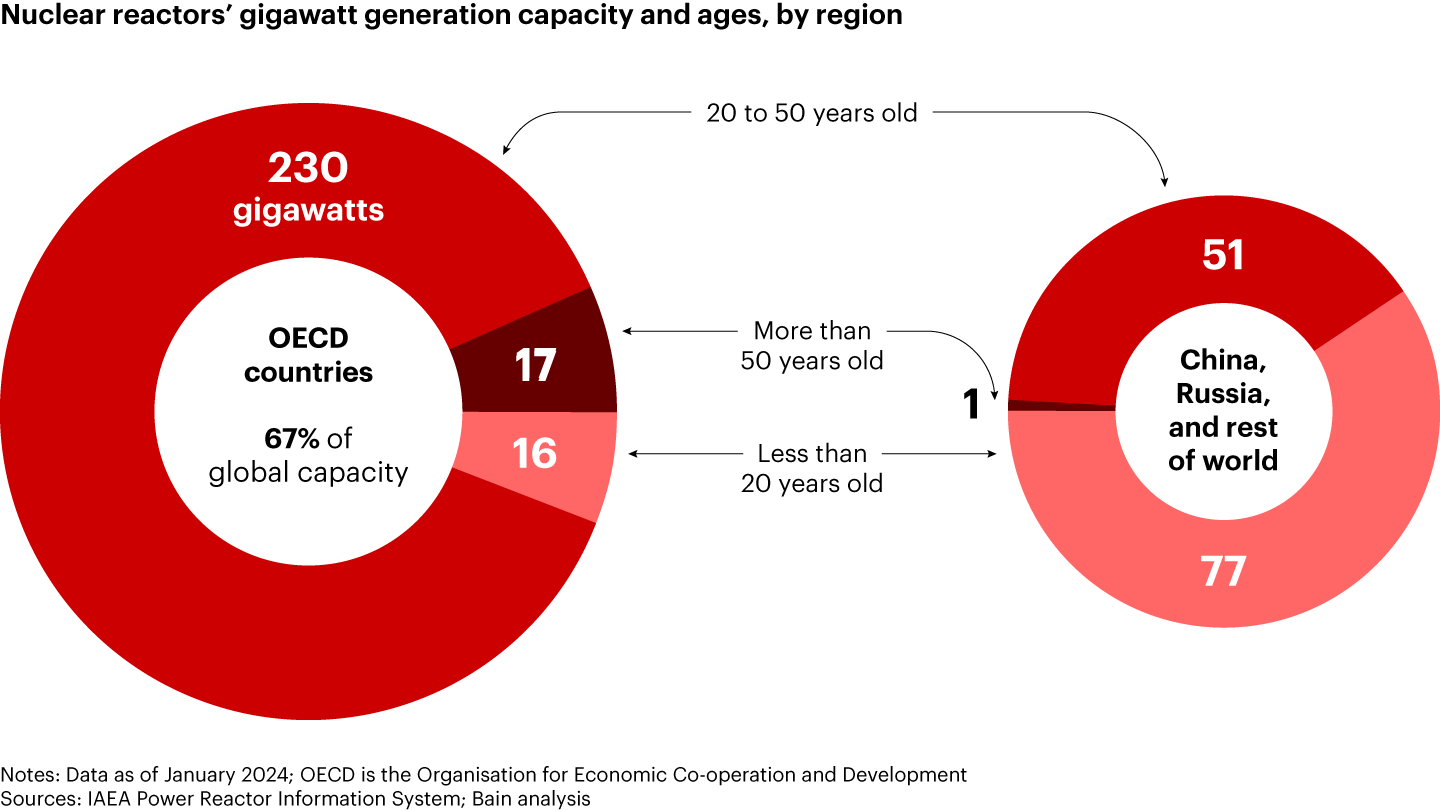
      Europe, North America, and other OECD countries account for almost 70% of nuclear energy capacity, and they have the oldest fleets

      The problem is that the nuclear industry has a poor track record of delivering new capital projects on time and on budget, particularly in advanced economies (see Figure 2).

      Figure 2
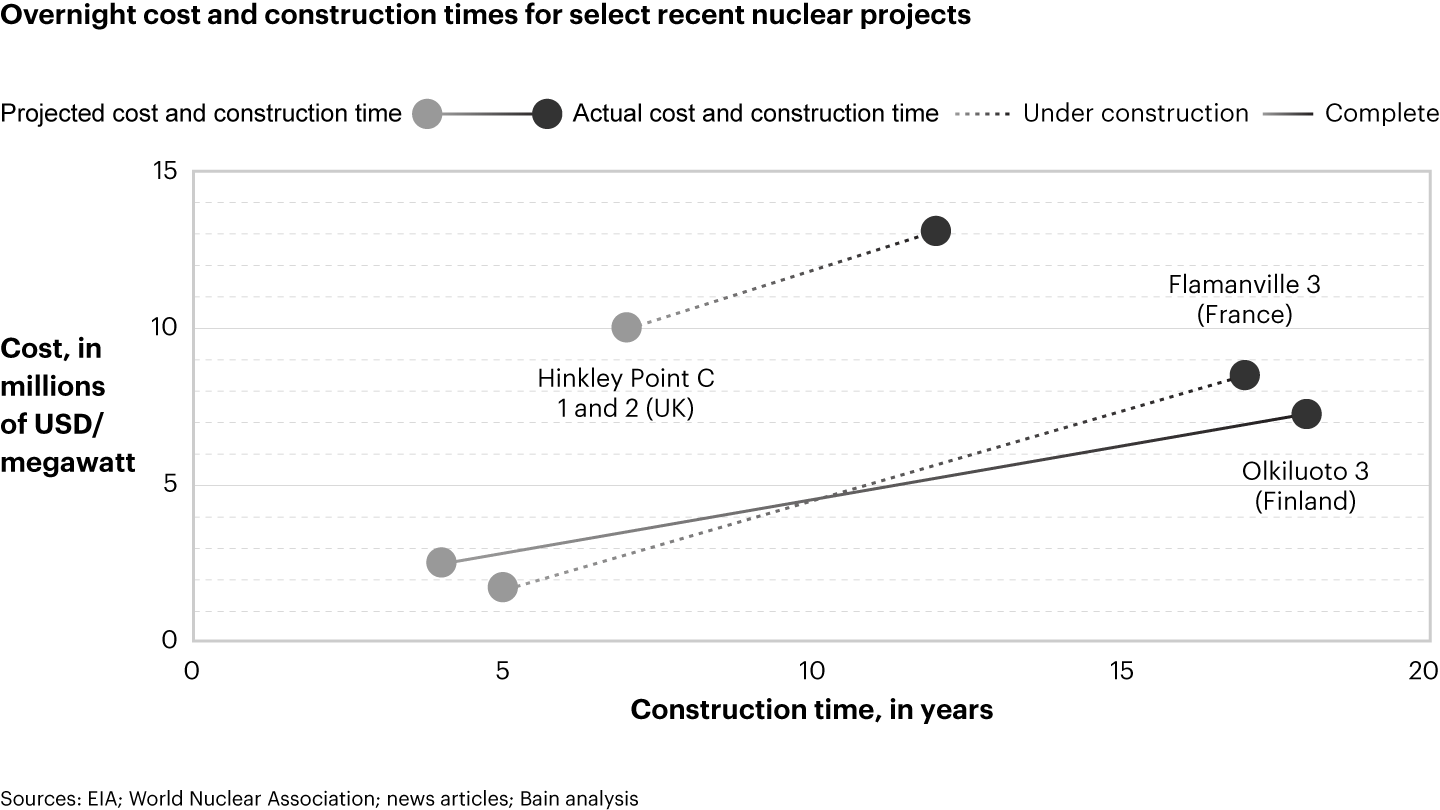
      Construction costs and lead times for new nuclear power plants have risen in advanced economies

      We see three priorities to enable rapid expansion in nuclear energy: crafting forward-thinking business models and regulations, developing robust supply chains with a stronger workforce, and taking a short- and long-term approach to scaling up technologies.

      Forward-thinking business models and updated regulations

      The scale, complexity, risks, and regulations involved in constructing nuclear power plants are unparalleled among infrastructure investments. Requiring billions of dollars over decades and more than one million engineering hours, these projects resemble massive public infrastructure endeavors.

      Accelerating nuclear energy production will likely require tighter collaboration between governments; industrial end-users; private investors; utilities; engineering, procurement, and construction companies (EPCs); and original equipment manufacturers (OEMs). Each will play a specific role in mitigating risk and financing new projects.

      Governments, for instance, are best equipped to handle projects’ tail risks—unlikely events that would have significant impact if they did occur. We’ve seen governments assume some risk in the UK's proposed Regulated Asset Base model, for example. We expect government support will be imperative to develop partnership models that create competitive financing for new nuclear projects, especially for first-of-a-kind reactors that use novel or next-generation technology.

      Regulators also have an important role to play in ensuring efficient market design, particularly in helping nuclear remain competitive with growing energy sources that have negligible marginal cost, such as renewables. The most effective governments will develop new, long-term monetization models, such as markets that pay producers based on a guaranteed energy output.

      As for private investors, there are already examples of industrial off-takers that have successfully financed new nuclear, such as the Mankala model in Finland. We’re seeing more companies interested in similar schemes to secure stable, predictable, and competitive energy over the long term.

      Meanwhile, pension and infrastructure funds, as well as other institutional investors, are increasingly considering funding new nuclear projects, due to better risk mitigation and stakeholder pressure to back environmental, social, and governance issues. Fund managers have an opportunity to further educate themselves on new nuclear technologies and to foster innovative partnerships, provided they craft effective strategies (such as power purchase agreements) with regulators to mitigate investors’ risks over the lifetime of nuclear plants.

      Developers, EPCs, and technology vendors (e.g., utilities and OEMs) bear the primary responsibility for efficient project delivery. But their financial contributions are also key to ensure incentives are aligned. Such investments, likely backed by sustainability-focused loans and balance sheets, should be tailored to insulate the company’s overall credit rating. Leading companies will collaborate early with governments, including development banks, and engage with stakeholders across the value chain to establish innovative business models. These might include subscription-based, “nuclear-as-a-service” approaches that limit technology and operational risks to receiving countries while securing local employment.

      Industry leaders are well aware that even once funding is secured, obtaining required permits and licenses from various governmental authorities can be a complex and lengthy process. Most nuclear energy regulations were designed decades ago and have received minimal updates. The most effective governments will simplify regulatory frameworks, look for process innovations (e.g., a “start small, scale fast” approach to new nuclear plants), and work with other governments to harmonize regulations across borders.

      In the US, for example, regulated utilities are well positioned to lead a new wave of 60-plus new nuclear reactor projects. These utilities’ ability to help shape the regulatory environment and long-term planning strategies, manage risks, and finance new projects could limit costs and mobilize partners across the value chain.

      Stronger supply chains and workforces

      After completing fewer than 20 new reactor projects during the last 20 years, OECD countries have their work cut out to make their nuclear supply chains more robust and dependable. Recent projects have suffered delays, high rework rates, and high prices due in part to the limited number of qualified suppliers. Investments in suppliers and their capabilities will be essential and may require proactive private-public funding initiatives.

      Leading project developers form integrated partnerships and delivery modes with suppliers that go beyond traditional transactional relationships. For example, more developers are including key suppliers in the project design process so they have an opportunity to influence components requirements, engineering, and construction. Once locked in, a design should be replicated without changes in order to reduce costs and nurture supply chain capabilities.

      With tight support from governments, the most successful developers also oversee the qualification of suppliers. This requires providing a clear, stable long-term outlook of project plans and encouraging all supply chain stakeholders to leverage public incentive opportunities. The “Fit For Nuclear” (F4N) program in the UK sets a good benchmark.

      Industry leaders recognize the nuclear supply chain must also demonstrate the ability to license, secure, and manage fuel components at scale. Ongoing investments are addressing conversion and enrichment capabilities, and we expect the industry to mitigate the risk of long-term uranium shortages through investments in natural uranium mining.

      In parallel, workforce development must accelerate to meet the goal of tripling installed nuclear energy capacity by 2050, which could create more than 5 million new jobs. A diverse range of jobs will be needed, many not specific to nuclear energy, including construction and project management professionals. Skilled workers such as welders will be in high demand. Even more challenging, the industry must compete with other sectors for this talent amid worldwide shortages.

      Understanding changing employee demands, especially among younger generations, is fundamental to attracting, developing, and retaining talent. People management will require dedicated investments, including taking advantage of new technologies and processes such as artificial intelligence.

      Proactive workload planning that anticipates potential supply-demand tensions will be critical, given the nuclear industry’s often long lead times for developing talent and industrial capabilities.

      A two-step approach to scaling technologies

      In the short term, nuclear energy developers will likely focus on stabilizing mature technologies as quickly as possible so they can systematically apply lessons learned and reap operational benefits. Leading developers are considering new approaches such as standardizing components and processes to lower costs. This is vital for small modular reactors (SMRs), which rely on “economies of volume” rather than “economies of scale,” and it’s also relevant for larger nuclear reactor projects. In addition, developers can enhance their project delivery skills by taking cues from established engineering, procurement, and construction methods used in large, non-nuclear infrastructure projects, as well as heeding lessons from successful nuclear projects in Asia.

      The most successful utilities and developers will consider new nuclear as a program that will launch several reactor units, rather than treat it as a single project or a series of single projects. This is essential for capturing learning curve benefits and avoiding the high costs and delays of new nuclear reactors built by OECD countries over the past two decades.

      In our experience working with clients worldwide, a program approach requires suitable governance. The chosen operating model will need to enable rapid and agile scaling as the number of projects grows, while ensuring high performance of existing assets. Efficient knowledge transfer between individual projects remains crucial.

      In the longer term, the world won’t triple nuclear capacity without scaling up innovative reactor technologies. These will primarily enhance fuel utilization and unlock new market opportunities, such as heat or hydrogen generation, desalination, and vessel-based nuclear energy. Fusion appears on track to play a role as well, as efforts to bring that technology to market have gained momentum.

      According to the International Atomic Energy Agency, more than 80 new designs are in development across large reactors, SMRs, advanced modular reactors (AMRs) such as microreactors, and fusion. The jury is still out on which technologies will see the most growth. We anticipate first movers to gain a considerable advantage, whereas national champions may emerge in countries where governments choose to support their domestic ecosystems. There’s also an opportunity now for incumbents and those with robust balance sheets to start building relationships with promising nuclear start-ups in anticipation of eventual market consolidation.

      Of course, ensuring the continued safe operation of nuclear plants is paramount, especially in the face of escalating challenges such as climate change and unforeseeable events, including cyber and physical warfare. Safe operations and industry resilience will also be crucial to garnering public support and maintaining the confidence of government and private investors. Without that public buy-in, any potential “nuclear renaissance” likely will be over before it starts.

      Ultimately, tripling nuclear capacity by 2050 may be a stretch goal. But if nothing else, it could galvanize private and public stakeholders to significantly accelerate the industry’s growth. For executives and governments, the time to act is now.

      Authors
      • Headshot of Arnaud Leroi
        Arnaud Leroi
        Partner, Paris
      • Headshot of Henrik Madsen
        Henrik Madsen
        Partner, Copenhagen
      • Headshot of Edward Stone
        Edward Stone
        Partner, London
      • Headshot of Aaron Denman
        Aaron Denman
        Partner, Chicago
      • Headshot of Luigi Corleto
        Luigi Corleto
        Partner, Milan
      • Denis Janin
        Senior Manager, Copenhagen
      Related Industries
      • Energy & Natural Resources
      • Utilities & Renewables
      Related Consulting Services
      • Strategy
      • Sustainability
      How We Can Help
      • Climate Change
      Energy & Natural Resources
      AI and Power: A Marriage of Necessity

      Tech and utilities are an unlikely pair, but how well they balance data center electricity demand and finite energy resources will have huge implications.

      Read more
      Energy & Natural Resources
      Utilities Can Power Growth Through a Better Customer Experience

      Top performers turn everyday interactions into loyalty, lower costs, greater revenue streams, and stronger reputations.

      Read more
      Climate Change
      COP30: O que as empresas precisam fazer agora

      Na COP30 deste ano, realizada no Brasil, a mensagem para as empresas foi clara: estratégia climática não pode ficar só no discurso — é hora de agir.

      Read more
      Energy & Natural Resources
      The CEO Playbook for Climate Resilience

      Build to bend, not break, when managing climate adaptation.

      Read more
      Energy & Natural Resources
      Can the US Energy Grid Keep Up with AI Data Centers?

      Our latest forecast projects data centers will consume 9% of US electricity by 2030, straining the grid without new solutions.

      Read more
      First published in abril 2024
      Tags
      • Climate Change
      • Energy & Natural Resources
      • Strategy
      • Sustainability
      • Utilities & Renewables

      How We've Helped Clients

      An Environmental Services Company Captures Massive Savings from a Merger

      See more related case studies

      Boosting a utility's workforce productivity

      See more related case studies

      Revitalizing a utility's market position with customer loyalty

      See more related case studies

      Quer saber mais?

      Ajudamos líderes do mundo todo a lidar com desafios e oportunidades cruciais para suas organizações. Juntos, criamos mudanças e resultados duradouros.

      Bain Insights. Our perspectives on critical issues global businesses face in today's challenging environment, delivered monthly.

      *I have read and understand Bain’s Privacy Notice.

      Please read and agree to the Privacy Policy.
      Bain & Company
      Contact us Sustainability Accessibility Terms of use Privacy Cookie Policy Sitemap Log In

      © 1996-2026 Bain & Company, Inc.

      Contact Bain

      How can we help you?

      • Business inquiry
      • Career information
      • Press relations
      • Partnership request
      • Speaker request
      See all offices