
Skip to Content
  • Offices

    Offices

    North & Latin America
    • Atlanta
    • Austin
    • Bogota
    • Boston
    • Buenos Aires
    • Chicago
    • Dallas
    • Denver
    • Houston
    • Los Angeles
    • Mexico City
    • Minneapolis
    • Monterrey
    • Montreal
    • New York
    • Rio de Janeiro
    • San Francisco
    • Santiago
    • São Paulo
    • Seattle
    • Silicon Valley
    • Toronto
    • Washington, DC
    Europe & Africa
    • Amsterdam
    • Athens
    • Berlin
    • Brussels
    • Copenhagen
    • Dusseldorf
    • Frankfurt
    • Helsinki
    • Istanbul
    • Johannesburg
    • Kyiv
    • Lisbon
    • London
    • Madrid
    • Milan
    • Munich
    • Oslo
    • Paris
    • Rome
    • Stockholm
    • Vienna
    • Warsaw
    • Zurich
    Middle East
    • Doha
    • Dubai
    • Riyadh
    Asia & Australia
    • Bangkok
    • Beijing
    • Bengaluru
    • Brisbane
    • Ho Chi Minh City
    • Hong Kong
    • Jakarta
    • Kuala Lumpur
    • Manila
    • Melbourne
    • Mumbai
    • New Delhi
    • Perth
    • Seoul
    • Shanghai
    • Singapore
    • Sydney
    • Tokyo
    See all offices
  • Alumni
  • Media Center
  • Subscribe
  • Contact
  • Brazil | Português

    Select your region and language

    Global
    • Global (English)
    North & Latin America
    • Brazil (Português)
    • Argentina (Español)
    • Canada (Français)
    • Chile (Español)
    • Colombia (Español)
    Europe, Middle East, & Africa
    • France (Français)
    • DACH Region (Deutsch)
    • Italy (Italiano)
    • Spain (Español)
    • Greece (Elliniká)
    Asia & Australia
    • China (中文版)
    • Korea (한국어)
    • Japan (日本語)
  • Saved items (0)
    Saved items (0)

    You have no saved items.

    Bookmark content that interests you and it will be saved here for you to read or share later.

    Explore Bain Insights
  • Industries
    Main menu

    Industries

    • Aeroespacial e Defesa
    • Agronegócio
    • Química
    • Construção e Infraestrutura
    • Bens de Consumo
    • Serviços Financeiros
    • Healthcare & Life Sciences
    • Máquinas e Equipamentos Industriais
    • Mídia e Entretenimento
      Industries
      Mídia e Entretenimento
      • Media Lab
    • Metais
    • Mineração
    • Petróleo e Gás
    • Papel e Embalagens
    • Private Equity
      Industries
      Private Equity
      • Due Diligence
      • Exit Planning
      • Firm Strategy & Operations
      • Portfolio Value Creation
    • Setor Público e Social
    • Varejo
    • Tecnologia
    • Telecomunicações
      Industries
      Telecomunicações
      • Capital Expenditure
      • Telco Digital Transformation
    • Transporte
    • Turismo & Lazer
    • Energia & Renováveis
  • Consulting Services
    Main menu

    Consulting Services

    • Customer Experience
    • Sustainability
    • Innovation
    • M&A
    • Operations
    • People & Organization
    • Private Equity
    • Sales & Marketing
    • Strategy
    • AI, Insights, and Solutions
    • Technology
    • Transformation
  • Digital
  • Insights
    Main menu

    Insights

    • Industry Insights
    • Services Insights
    • Bain Books
    • Webinars
    • Bain Futures
    View all Insights
    Featured topics
    • Tariff Response
    • Artificial Intelligence
    • Thriving in Uncertainty
    • Executive Conversations
    • Macro Trends
    • M&A Report
    • Healthcare Private Equity Report
    • Paper & Packaging Report
    • Technology Report
    • CEO's Guide to Sustainability
    • CEO Insights
    • CFO Insights
    • COO Insights
    • CIO Insights
    • CMO Insights
    View all featured topics
  • About
    Main menu

    About

    • What We Do
    • What We Believe
    • Our People & Leadership
    • Client Results
    • Awards & Recognition
    • Global Affiliations
    Further: Our global responsibility
    • Sustainability
    • Social Impact
    • World Economic Forum
    Learn more about Further
  • Carreiras
    Main menu

    Carreiras

    • Trabalhe Conosco
      Carreiras
      Trabalhe Conosco
      • Find Your Place
      • Nossas áreas de trabalho
      • Equipes integradas
      • Estudantes
      • Programas e estágios
      • Eventos de Recrutamento
    • A Vida na Bain
      Carreiras
      A Vida na Bain
      • Histórias de carreira
      • Nossas pessoas
      • Onde trabalhamos
      • Apoioao seu crescimento
      • Grupos de afinidade
      • Benefícios
    • Impact Stories
    • Nosso Processo Seletivo
      Carreiras
      Nosso Processo Seletivo
      • O Que Esperar
      • Entrevistas
    FIND JOBS
  • Offices
    Main menu

    Offices

    • North & Latin America
      Offices
      North & Latin America
      • Atlanta
      • Austin
      • Bogota
      • Boston
      • Buenos Aires
      • Chicago
      • Dallas
      • Denver
      • Houston
      • Los Angeles
      • Mexico City
      • Minneapolis
      • Monterrey
      • Montreal
      • New York
      • Rio de Janeiro
      • San Francisco
      • Santiago
      • São Paulo
      • Seattle
      • Silicon Valley
      • Toronto
      • Washington, DC
    • Europe & Africa
      Offices
      Europe & Africa
      • Amsterdam
      • Athens
      • Berlin
      • Brussels
      • Copenhagen
      • Dusseldorf
      • Frankfurt
      • Helsinki
      • Istanbul
      • Johannesburg
      • Kyiv
      • Lisbon
      • London
      • Madrid
      • Milan
      • Munich
      • Oslo
      • Paris
      • Rome
      • Stockholm
      • Vienna
      • Warsaw
      • Zurich
    • Middle East
      Offices
      Middle East
      • Doha
      • Dubai
      • Riyadh
    • Asia & Australia
      Offices
      Asia & Australia
      • Bangkok
      • Beijing
      • Bengaluru
      • Brisbane
      • Ho Chi Minh City
      • Hong Kong
      • Jakarta
      • Kuala Lumpur
      • Manila
      • Melbourne
      • Mumbai
      • New Delhi
      • Perth
      • Seoul
      • Shanghai
      • Singapore
      • Sydney
      • Tokyo
    See all offices
  • Alumni
  • Media Center
  • Subscribe
  • Contact
  • Brazil | Português
    Main menu

    Select your region and language

    • Global
      Select your region and language
      Global
      • Global (English)
    • North & Latin America
      Select your region and language
      North & Latin America
      • Brazil (Português)
      • Argentina (Español)
      • Canada (Français)
      • Chile (Español)
      • Colombia (Español)
    • Europe, Middle East, & Africa
      Select your region and language
      Europe, Middle East, & Africa
      • France (Français)
      • DACH Region (Deutsch)
      • Italy (Italiano)
      • Spain (Español)
      • Greece (Elliniká)
    • Asia & Australia
      Select your region and language
      Asia & Australia
      • China (中文版)
      • Korea (한국어)
      • Japan (日本語)
  • Saved items  (0)
    Main menu
    Saved items (0)

    You have no saved items.

    Bookmark content that interests you and it will be saved here for you to read or share later.

    Explore Bain Insights
  • Industries
    • Industries

      • Aeroespacial e Defesa
      • Agronegócio
      • Química
      • Construção e Infraestrutura
      • Bens de Consumo
      • Serviços Financeiros
      • Healthcare & Life Sciences
      • Máquinas e Equipamentos Industriais
      • Mídia e Entretenimento
      • Metais
      • Mineração
      • Petróleo e Gás
      • Papel e Embalagens
      • Private Equity
      • Setor Público e Social
      • Varejo
      • Tecnologia
      • Telecomunicações
      • Transporte
      • Turismo & Lazer
      • Energia & Renováveis
  • Consulting Services
    • Consulting Services

      • Customer Experience
      • Sustainability
      • Innovation
      • M&A
      • Operations
      • People & Organization
      • Private Equity
      • Sales & Marketing
      • Strategy
      • AI, Insights, and Solutions
      • Technology
      • Transformation
  • Digital
  • Insights
    • Insights

      • Industry Insights
      • Services Insights
      • Bain Books
      • Webinars
      • Bain Futures
      View all Insights
      Featured topics
      • Tariff Response
      • Artificial Intelligence
      • Thriving in Uncertainty
      • Executive Conversations
      • Macro Trends
      • M&A Report
      • Healthcare Private Equity Report
      • Paper & Packaging Report
      • Technology Report
      • CEO's Guide to Sustainability
      • CEO Insights
      • CFO Insights
      • COO Insights
      • CIO Insights
      • CMO Insights
      View all featured topics
  • About
    • About

      • What We Do
      • What We Believe
      • Our People & Leadership
      • Client Results
      • Awards & Recognition
      • Global Affiliations
      Further: Our global responsibility
      • Sustainability
      • Social Impact
      • World Economic Forum
      Learn more about Further
  • Carreiras
    Popular Searches
    • Agile
    • Digital
    • Strategy
    Your Previous Searches
      Recently Visited Pages

      Content added to saved items

      Saved items (0)

      Removed from saved items

      Saved items (0)

      Brief

      A CFO’s Best Defense Against Activist Investors? Think Like Them

      A CFO’s Best Defense Against Activist Investors? Think Like Them

      Activists are hunting for missing value. Being prepared for them makes sense, but the best move is to beat them at their own game.

      By Peter Shively, Matthew Crupi, Hubert Shen, and Greg Wool

      • min read
      }

      Brief

      A CFO’s Best Defense Against Activist Investors? Think Like Them
      en
      At a Glance
      • Activist investor campaigns are growing and increasingly targeting large-cap companies.
      • Bain's survey of CFOs found that half of them had already been a target or expected to face activist action within two years.
      • Understanding and thinking like investors can help CFOs preemptively address their concerns.
      • Companies with a strong strategy focused on industry leadership, coupled with appropriate capital allocation plans, strong execution, and clear communications, are less likely to be targeted.

      More than one in four CFOs expect their company to be the target of an activist investor campaign in the next two years.

      They may be right. Nearly one-quarter of their fellow CFOs have faced activist action, more than half of those in the past three years, according to Bain’s survey of 146 CFOs at companies with more than $1 billion in revenues. There are now nearly 1,000 activist campaigns every year, up from fewer than 20 just two decades ago. In the US, which claims the lion’s share, campaigns rose 8% in just the first half of 2024.

      23%

      of CFOs have been the target of activist campaigns already

      27%

      expect activists to target their company in the next 2 years

      Being big is no defense. Large- and mega-cap companies represented 63% of targeted firms in 2023 (up from 44% in 2020), and half of surveyed companies targeted last year had a market cap exceeding $10 billion.

      activist campaigns per year

      x

      more activist campaigns today than 20 years ago

      Preparing for Activism

      Acknowledging activist risk, however, is not the same as being ready for it. Two-thirds of CFOs in our survey say they feel “very” or “somewhat” prepared for an activist campaign, but only about half report having an action plan. Even fewer—one-third—report having a dedicated response team (see Figure 1).

      Figure 1
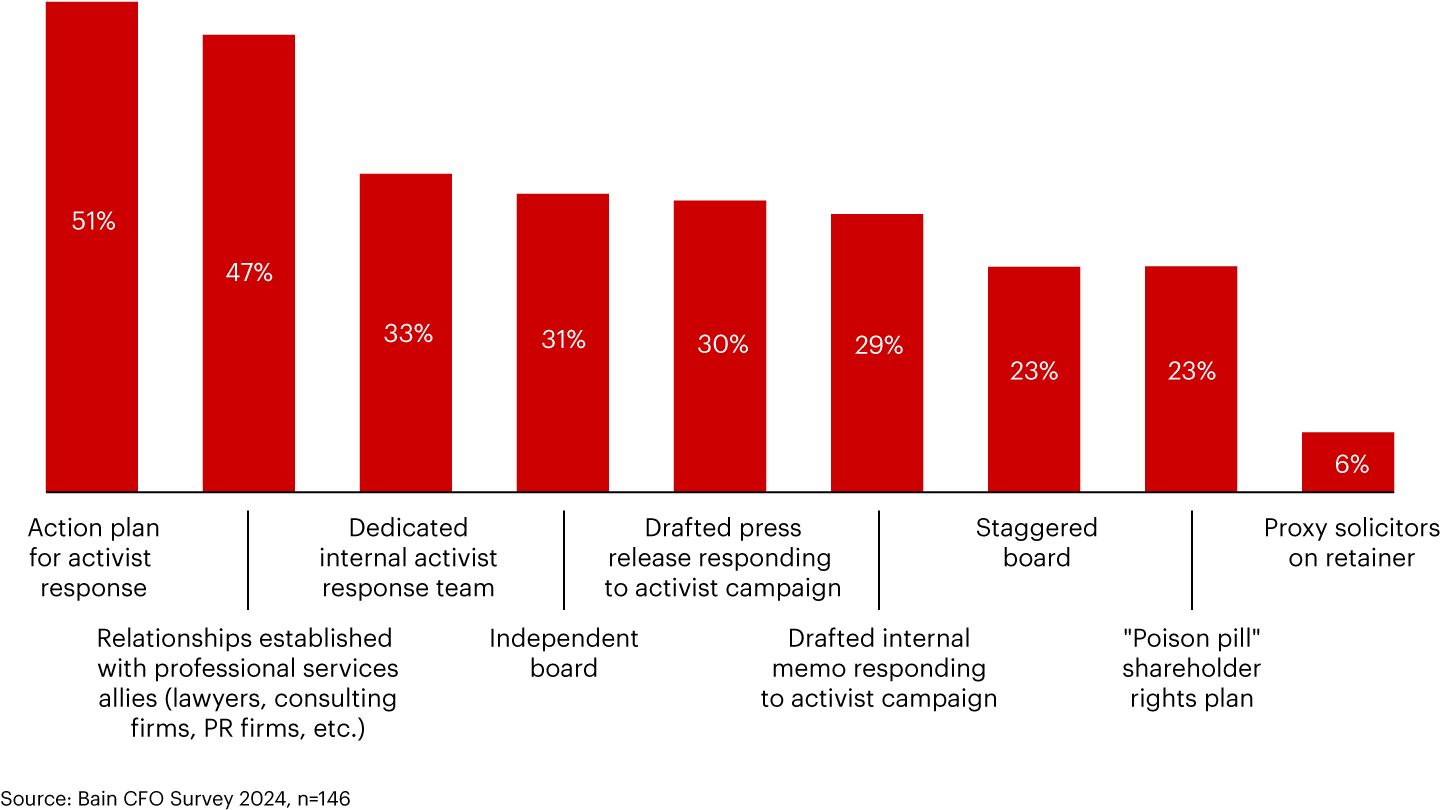
      Fewer than half of CFOs report having activist defense tactics in place

      Most CFOs who already have experienced activist campaigns say they wish in retrospect that they had prepared more, and 89% of targeted companies strengthened their defense strategies after the campaign ended. Among the handful of CFOs who say they were prepared when activists came knocking, all said that preparation had proved to be a good investment of time and resources.

      And it’s no wonder. Nearly 40% of CFOs who faced activist pressure report that the experience was a distraction for management—presumably a costly one for those who said the campaign didn’t improve the company’s value or actually hurt it (see Figure 2).

      Figure 2
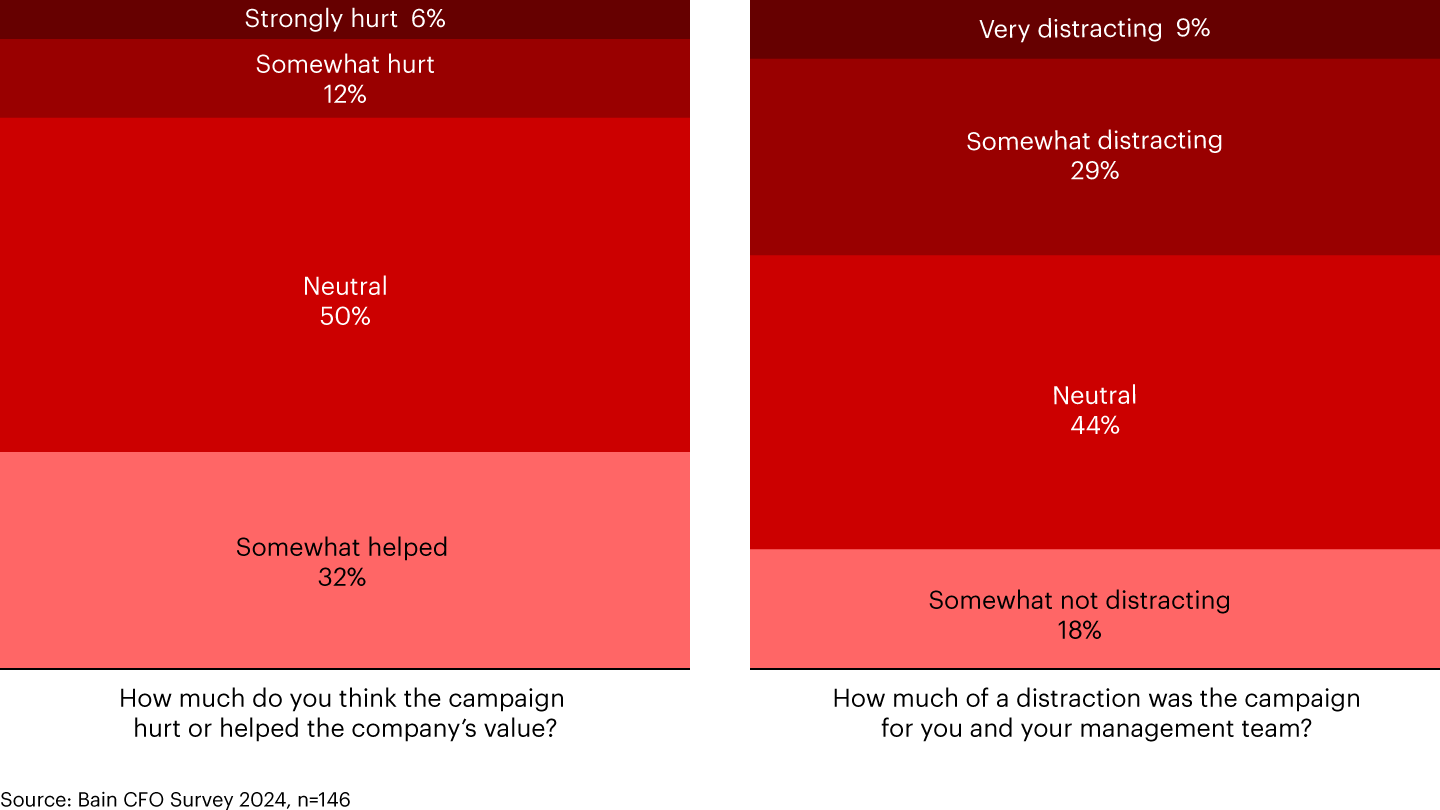
      Only 32% of CFOs say an activist campaign improved their company’s value. Nearly 40% say it distracted management

      What Is Good for Activists Is Good for Other Investors

      Let’s not lose sight of the flip side of that survey result: 32% of those CFOs admit an activist campaign helped their company’s value. Among all CFOs we surveyed, 57% concede that activists play a valuable role in the market and ultimately improve shareholder value.

      That makes sense, as the priorities of activist investors and long-only investors are similar. All look to find or create value through optimal competitive strategy, capital allocation, and operational execution.

      This parallel reveals a valuable truth: The best way to defend against an activist is to think like an investor. Roughly one-third of the activist demands CFOs reported in our survey focused on strategic reform and revised portfolio strategy. CFOs who proactively adopt the perspective of an active or long-term investor are less likely to attract unwanted attention and more likely to be ready to respond if activists come knocking. Taking steps to prepare for activists can help you deliver the same value they seek to produce through their demands (see Figure 3). Doing so begins with an honest, clear-eyed assessment of who your investors are and what they want you to deliver, paired with an evaluation of your historical performance and future strategy.

      Figure 3
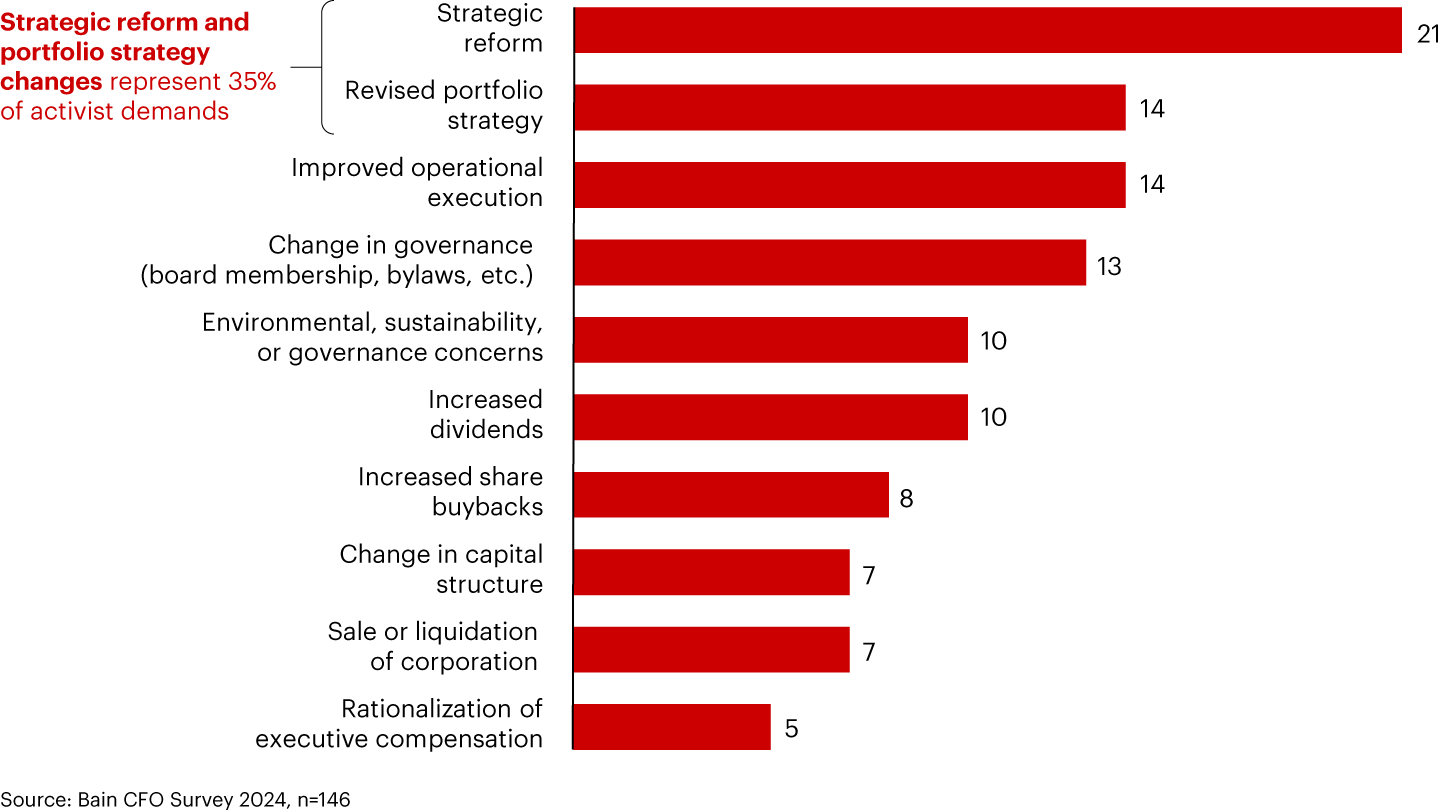
      Activist demands offer a roadmap for avoiding or defending against them

      A Matter of (Investor) Perspective

      The first step to getting inside your investors’ heads is understanding who they are: Are they growth, value, or income investors? What is their thesis for investing in your business? Are they drawn to your market positioning or leadership in your industries, confident you can outperform competitors, or making a macro bet on your end market?

      What are they looking for in terms of capital returns? Will they reward incremental investment in the business via capital expenditures (capex) and mergers and acquisitions (M&A), or would they prefer that free cash flow be returned to them as dividends and buybacks? How are these preferences evolving in today’s higher-cost-of-capital environment? How should the company adjust its approach to align with these preferences?

      Looking at your competitors through your investors’ eyes also will help you understand why they chose to invest in your company and what will—or will not—please them. If you have more growth investors and your competitor attracts more value investors, imitating your competitors’ strategic and capital allocation approach won’t be a winning move.

      Knowing what motivates your investors offers you a guide for developing your long-term business positioning, capital allocation strategy, and execution playbook. If your strategy and plan align with investor expectations, then effectively communicating your story to the market becomes critical. But if there is mismatch, it may signal a need to evolve your investor base—a long, challenging, but potentially fruitful process. 

      Long-term business positioning. In an ideal world, your company should operate in large, growing markets where it has a leadership position—or a plan to build one. If that’s not the case, then it’s time to consider whether there are opportunities for the company to evolve its portfolio into other attractive segments where it has a better path to winning. Take, for example, the case of Jacobs Solutions, formerly Jacobs Engineering Group, whose low-growth, low-margin energy, chemicals, and resources segment was dragging down its overall valuation. In 2018, Jacobs sold the segment for $3.3 billion so it could focus on its high-growth, high-margin businesses in aerospace and buildings and infrastructure and make additional acquisitions in those segments. This move, coupled with strong performance in the six months following the announcement (beating and raising EPS estimates in the first quarter of 2019), propelled Jacobs’ enterprise value to next 12 months EBITDA (EV/NTM EBITDA) multiple from 9.5x to 13x.

      Capital allocation strategy. Strategy, by definition, is the allocation of scarce resources. And during changing economic times—such as the rise in interest rates and cost of capital in the early 2020s—effective and efficient capital allocation differentiates successful companies from their peers. That means thoughtfully allocating cash flow between business investments (organic research and development, acquisitions, etc.) and returns to shareholders (dividends and buybacks). Managing this balance in line with investor expectations can build confidence among investors and drive meaningful share appreciation.

      In 2021, for example, General Motors (GM) announced a plan to increase its investment in electric and autonomous vehicles (EVs and AVs) to $35 billion over five years. By 2023, however, investor skepticism about the near-term return on investment in EVs and the diversion of capital from traditional vehicles and shareholder payouts reached a peak. In response, GM announced in October 2023 that it was moderating its EV investment plans to more prudently align with consumer demand. A month later, the company announced a $10 billion stock buyback plan and boosted its dividend by 33%. This shift in focus led to a 12% surge in GM’s shares, the company’s biggest intraday gain since April 2020. Since then, GM’s share price has increased by 70% (as of June 2024)—during a period when the Nasdaq OMX Global Automobile Index remained flat—and has significantly outperformed the S&P 500.

      Execution playbook. Of course, the ultimate way CEOs and CFOs maintain investor confidence is by delivering on their strategy, which includes some high table stakes: outperforming on margin or cost and successfully managing major integrations and investments. But the best companies do more: They turn their strategy and competitive advantage into a repeatable model, a “flywheel” that creates increasing value in the business. This often increases investor confidence in future gains, which leads to appreciation in valuation multiples and stock performance.

      Take Danaher, which since 2015 has pivoted from an industrials-focused firm into a healthcare-focused company by acquiring nearly 50 life sciences companies. Danaher didn’t just buy revenue growth; it created substantial value by selecting attractive targets and being an effective steward post-acquisition, expanding margins and harvesting synergies. The result: Danaher grew its top line from approximately $14 billion in 2015 to around $24 billion in 2023, achieving a compound annual growth rate (CAGR) of about 7%. During the same period, Danaher improved its gross margins from 54% to 59% and its EBITDA margins from 22% to 31%. Investors were pleased: Since fall 2015, Danaher’s EV/NTM EBITDA multiple has increased from 12x to approximately 25x, and its share price has outpaced the S&P 500 by over 20 points as of August 2024. This execution flywheel is reflected in J.P. Morgan’s investment thesis and “overweight” recommendation: “Management’s investing competency is [an] important aspect of the story as [Danaher’s] M&A track record is among the best in the sector, a key to driving above-average earnings growth.”

      Telling the story. It’s no coincidence the analyst used the word “story.” Even if management has a solid strategy and is executing it well, they can run into difficulty if investors don’t understand what the company is doing. But a compelling equity story comes naturally to CEOs and CFOs who are executing their strategy with their investors’ perspectives in mind. That produces a coherent, believable, and aspirational story. And it provides investors with a clear and exciting ambition tied to targets that allow them to track progress and hold the company accountable. Jacobs’s portfolio reconstruction, GM’s pivot in investment strategy, and Danaher’s M&A flywheel have been rewarded by investors not only because they created value on paper but also because they were supported by clear and compelling equity stories.  

      Of course, the ultimate measure of performance is long-term value creation. Companies that have a strategy to create sustainable competitive advantage, execute well on that strategy, and communicate that strategy to the market will find their efforts reflected in their share price. Taking an investor perspective doesn’t just protect you against a potential activist campaign, it’s also simply the right thing to do.

      Authors
      • Headshot of Peter Shively
        Peter Shively
        Partner, Boston
      • Headshot of Matthew Crupi
        Matthew Crupi
        Partner, Dallas
      • Headshot of Hubert Shen
        Hubert Shen
        Partner, Los Angeles
      • Headshot of Greg Wool
        Greg Wool
        Senior Manager, Boston
      Related Consulting Services
      • Accelerated Performance Transformation
      • Corporate Strategy
      • Support Functions
      How We Can Help
      • Corporate Finance
      • Finance Function Advantage
      • Investor Relations Strategy
      CFO Insights
      To Avoid Activist Investors, Think Like Them

      CFOs can prepare for—and reduce—activism risk with a strong strategy that is well executed and well communicated.

      Read more
      CFO Insights
      The 2026 Retail Executive Agenda

      Here are letters to the C-suite to help strengthen strategy, catalyze collaboration, and expand value creation in the AI age.

      Read more
      CFO Insights
      Dynamic Financial Planning for Real Events, Not the Calendar

      Companies could benefit by replacing a fixed annual exercise with a flexible approach that responds to changing conditions.

      Read more
      CFO Insights
      Stablecoins Could Make Cross-Border Payments Faster, Cheaper, and More Transparent

      Most CFOs are not using stablecoins today, but evolving regulations could reduce risk and create competitive advantage.

      Read more
      CFO Insights
      CNBC’s 2025 CFO Council Summit: Rebuilding Finance in the Age of AI

      Leaders are using AI to transform finance into an insight engine.

      Read more
      First published in outubro 2024
      Tags
      • Accelerated Performance Transformation
      • CFO Insights
      • Corporate Finance
      • Corporate Strategy
      • Finance Function Advantage
      • Investor Relations Strategy
      • Support Functions

      How We've Helped Clients

      A Pharma Company’s Finance Function Gets a Shot in the Arm

      See more related case studies

      Strategic G&A approach cooks up savings

      See more related case studies

      Finance transformation: For one company, second time’s the charm

      See more related case studies

      Quer saber mais?

      Ajudamos líderes do mundo todo a lidar com desafios e oportunidades cruciais para suas organizações. Juntos, criamos mudanças e resultados duradouros.

      Bain Insights. Our perspectives on critical issues global businesses face in today's challenging environment, delivered monthly.

      *I have read and understand Bain’s Privacy Notice.

      Please read and agree to the Privacy Policy.
      Bain & Company
      Contact us Sustainability Accessibility Terms of use Privacy Cookie Policy Sitemap Log In

      © 1996-2026 Bain & Company, Inc.

      Contact Bain

      How can we help you?

      • Business inquiry
      • Career information
      • Press relations
      • Partnership request
      • Speaker request
      See all offices