
Skip to Content
  • Offices

    Offices

    North & Latin America
    • Atlanta
    • Austin
    • Bogota
    • Boston
    • Buenos Aires
    • Chicago
    • Dallas
    • Denver
    • Houston
    • Los Angeles
    • Mexico City
    • Minneapolis
    • Monterrey
    • Montreal
    • New York
    • Rio de Janeiro
    • San Francisco
    • Santiago
    • São Paulo
    • Seattle
    • Silicon Valley
    • Toronto
    • Washington, DC
    Europe & Africa
    • Amsterdam
    • Athens
    • Berlin
    • Brussels
    • Copenhagen
    • Dusseldorf
    • Frankfurt
    • Helsinki
    • Istanbul
    • Johannesburg
    • Kyiv
    • Lisbon
    • London
    • Madrid
    • Milan
    • Munich
    • Oslo
    • Paris
    • Rome
    • Stockholm
    • Vienna
    • Warsaw
    • Zurich
    Middle East
    • Doha
    • Dubai
    • Riyadh
    Asia & Australia
    • Bangkok
    • Beijing
    • Bengaluru
    • Brisbane
    • Ho Chi Minh City
    • Hong Kong
    • Jakarta
    • Kuala Lumpur
    • Manila
    • Melbourne
    • Mumbai
    • New Delhi
    • Perth
    • Seoul
    • Shanghai
    • Singapore
    • Sydney
    • Tokyo
    See all offices
  • Alumni
  • Media Center
  • Subscribe
  • Contact
  • Brazil | Português

    Select your region and language

    Global
    • Global (English)
    North & Latin America
    • Brazil (Português)
    • Argentina (Español)
    • Canada (Français)
    • Chile (Español)
    • Colombia (Español)
    Europe, Middle East, & Africa
    • France (Français)
    • DACH Region (Deutsch)
    • Italy (Italiano)
    • Spain (Español)
    • Greece (Elliniká)
    Asia & Australia
    • China (中文版)
    • Korea (한국어)
    • Japan (日本語)
  • Saved items (0)
    Saved items (0)

    You have no saved items.

    Bookmark content that interests you and it will be saved here for you to read or share later.

    Explore Bain Insights
  • Industries
    Main menu

    Industries

    • Aeroespacial e Defesa
    • Agronegócio
    • Química
    • Construção e Infraestrutura
    • Bens de Consumo
    • Serviços Financeiros
    • Healthcare & Life Sciences
    • Máquinas e Equipamentos Industriais
    • Mídia e Entretenimento
      Industries
      Mídia e Entretenimento
      • Media Lab
    • Metais
    • Mineração
    • Petróleo e Gás
    • Papel e Embalagens
    • Private Equity
      Industries
      Private Equity
      • Due Diligence
      • Exit Planning
      • Firm Strategy & Operations
      • Portfolio Value Creation
    • Setor Público e Social
    • Varejo
    • Tecnologia
    • Telecomunicações
      Industries
      Telecomunicações
      • Capital Expenditure
      • Telco Digital Transformation
    • Transporte
    • Turismo & Lazer
    • Energia & Renováveis
  • Consulting Services
    Main menu

    Consulting Services

    • Customer Experience
    • Sustainability
    • Innovation
    • M&A
    • Operations
    • People & Organization
    • Private Equity
    • Sales & Marketing
    • Strategy
    • AI, Insights, and Solutions
    • Technology
    • Transformation
  • Digital
  • Insights
    Main menu

    Insights

    • Industry Insights
    • Services Insights
    • Bain Books
    • Webinars
    • Bain Futures
    View all Insights
    Featured topics
    • Tariff Response
    • Artificial Intelligence
    • Thriving in Uncertainty
    • Executive Conversations
    • Macro Trends
    • M&A Report
    • Healthcare Private Equity Report
    • Paper & Packaging Report
    • Technology Report
    • CEO's Guide to Sustainability
    • CEO Insights
    • CFO Insights
    • COO Insights
    • CIO Insights
    • CMO Insights
    View all featured topics
  • About
    Main menu

    About

    • What We Do
    • What We Believe
    • Our People & Leadership
    • Client Results
    • Awards & Recognition
    • Global Affiliations
    Further: Our global responsibility
    • Sustainability
    • Social Impact
    • World Economic Forum
    Learn more about Further
  • Carreiras
    Main menu

    Carreiras

    • Trabalhe Conosco
      Carreiras
      Trabalhe Conosco
      • Find Your Place
      • Nossas áreas de trabalho
      • Equipes integradas
      • Estudantes
      • Programas e estágios
      • Eventos de Recrutamento
    • A Vida na Bain
      Carreiras
      A Vida na Bain
      • Histórias de carreira
      • Nossas pessoas
      • Onde trabalhamos
      • Apoioao seu crescimento
      • Grupos de afinidade
      • Benefícios
    • Impact Stories
    • Nosso Processo Seletivo
      Carreiras
      Nosso Processo Seletivo
      • O Que Esperar
      • Entrevistas
    FIND JOBS
  • Offices
    Main menu

    Offices

    • North & Latin America
      Offices
      North & Latin America
      • Atlanta
      • Austin
      • Bogota
      • Boston
      • Buenos Aires
      • Chicago
      • Dallas
      • Denver
      • Houston
      • Los Angeles
      • Mexico City
      • Minneapolis
      • Monterrey
      • Montreal
      • New York
      • Rio de Janeiro
      • San Francisco
      • Santiago
      • São Paulo
      • Seattle
      • Silicon Valley
      • Toronto
      • Washington, DC
    • Europe & Africa
      Offices
      Europe & Africa
      • Amsterdam
      • Athens
      • Berlin
      • Brussels
      • Copenhagen
      • Dusseldorf
      • Frankfurt
      • Helsinki
      • Istanbul
      • Johannesburg
      • Kyiv
      • Lisbon
      • London
      • Madrid
      • Milan
      • Munich
      • Oslo
      • Paris
      • Rome
      • Stockholm
      • Vienna
      • Warsaw
      • Zurich
    • Middle East
      Offices
      Middle East
      • Doha
      • Dubai
      • Riyadh
    • Asia & Australia
      Offices
      Asia & Australia
      • Bangkok
      • Beijing
      • Bengaluru
      • Brisbane
      • Ho Chi Minh City
      • Hong Kong
      • Jakarta
      • Kuala Lumpur
      • Manila
      • Melbourne
      • Mumbai
      • New Delhi
      • Perth
      • Seoul
      • Shanghai
      • Singapore
      • Sydney
      • Tokyo
    See all offices
  • Alumni
  • Media Center
  • Subscribe
  • Contact
  • Brazil | Português
    Main menu

    Select your region and language

    • Global
      Select your region and language
      Global
      • Global (English)
    • North & Latin America
      Select your region and language
      North & Latin America
      • Brazil (Português)
      • Argentina (Español)
      • Canada (Français)
      • Chile (Español)
      • Colombia (Español)
    • Europe, Middle East, & Africa
      Select your region and language
      Europe, Middle East, & Africa
      • France (Français)
      • DACH Region (Deutsch)
      • Italy (Italiano)
      • Spain (Español)
      • Greece (Elliniká)
    • Asia & Australia
      Select your region and language
      Asia & Australia
      • China (中文版)
      • Korea (한국어)
      • Japan (日本語)
  • Saved items  (0)
    Main menu
    Saved items (0)

    You have no saved items.

    Bookmark content that interests you and it will be saved here for you to read or share later.

    Explore Bain Insights
  • Industries
    • Industries

      • Aeroespacial e Defesa
      • Agronegócio
      • Química
      • Construção e Infraestrutura
      • Bens de Consumo
      • Serviços Financeiros
      • Healthcare & Life Sciences
      • Máquinas e Equipamentos Industriais
      • Mídia e Entretenimento
      • Metais
      • Mineração
      • Petróleo e Gás
      • Papel e Embalagens
      • Private Equity
      • Setor Público e Social
      • Varejo
      • Tecnologia
      • Telecomunicações
      • Transporte
      • Turismo & Lazer
      • Energia & Renováveis
  • Consulting Services
    • Consulting Services

      • Customer Experience
      • Sustainability
      • Innovation
      • M&A
      • Operations
      • People & Organization
      • Private Equity
      • Sales & Marketing
      • Strategy
      • AI, Insights, and Solutions
      • Technology
      • Transformation
  • Digital
  • Insights
    • Insights

      • Industry Insights
      • Services Insights
      • Bain Books
      • Webinars
      • Bain Futures
      View all Insights
      Featured topics
      • Tariff Response
      • Artificial Intelligence
      • Thriving in Uncertainty
      • Executive Conversations
      • Macro Trends
      • M&A Report
      • Healthcare Private Equity Report
      • Paper & Packaging Report
      • Technology Report
      • CEO's Guide to Sustainability
      • CEO Insights
      • CFO Insights
      • COO Insights
      • CIO Insights
      • CMO Insights
      View all featured topics
  • About
    • About

      • What We Do
      • What We Believe
      • Our People & Leadership
      • Client Results
      • Awards & Recognition
      • Global Affiliations
      Further: Our global responsibility
      • Sustainability
      • Social Impact
      • World Economic Forum
      Learn more about Further
  • Carreiras
    Popular Searches
    • Agile
    • Digital
    • Strategy
    Your Previous Searches
      Recently Visited Pages

      Content added to saved items

      Saved items (0)

      Removed from saved items

      Saved items (0)

      Brief

      A Field Guide to Modern Marketing

      A Field Guide to Modern Marketing

      As marketing groups contend with new channels and tech-intensive consumer behaviors, here’s how they can navigate the shifting landscape.

      By Shweta Bhardwaj, Beth Myers, and Eileen Shy

      • min read
      }

      Brief

      A Field Guide to Modern Marketing
      en
      At a Glance
      • Rising consumer expectations and proliferating channels have complicated the marketing mission and made traditional playbooks obsolete.
      • Our analysis of leading consumer products firms shows that nine areas make the biggest difference in evolving to a successful modern marketing organization.
      • These nine areas encompass a rich blend of specialized abilities, integrated activities, and dynamic approaches to decision making and governance.

      Brand and marketing executives at consumer products companies have confronted big shifts in the playing field in recent years. More consumers expect more personalized content, convenience, and fair-trade sourcing. People shop, research, and check out content at any hour, through multiple channels. Determining which e-commerce platform merits the next advertising dollar has become more complicated. As a result, traditional marketing playbooks that depend on what has worked historically become less applicable to these emerging consumer trends.

      Amid the turmoil, marketing organizations must adapt and modernize, and so must the role of marketers and brand stewards. The big challenge in moving to a modern marketing organization that generates demand is how to do it—what specific steps to take, where to invest, and in what sequence?

      No single solution or approach will allow a marketing organization to navigate the new terrain effectively. Instead, modern marketing requires developing a blend of characteristics: more specialized expertise for certain capabilities, more integrated activities among functions, and more dynamic approaches to decision making and governance.

      Our research and work with consumer products companies highlights nine areas that are critical to get right (see Figure 1). Mastering them is not easy, and no company could reasonably tackle all nine at once. Instead, marketing executives should choose the areas that are most relevant to the business’s particular needs, in the appropriate sequence.

      Figure 1
      Evolving to a modern marketing organization depends on mastering nine areas

      Honing specialized capabilities

      To keep pace with fast-moving technologies and consumer preferences, marketing organizations must equip themselves with the right talent (which may be new to the company or the industry). They need deep expertise to deliver a digitally enabled customer experience. Specialized capabilities appear in three areas.

      1. A brand manager at the center. The brand manager’s responsibility has grown as marketing has become more complex and sophisticated. In many organizations, this person is now a general manager responsible for owning the P&L, managing delivery, and serving as brand marketing leader for a given business.

      However, brand managers must have depth as well as breadth, including being conversant with advanced analytical tools and data from third-party panels, media platforms, retailers, and alternative sources—all applied to both in-store and online brand presence. They oversee near real-time feedback cycles, daily optimization, monthly planning, audience segmentation, measurement of the entire funnel, and brand experiences. The role relies on a group of specialists in areas such as media, e-commerce, and consumer insights, pulling them together to execute the brand plan (see Figure 2).

      Figure 2
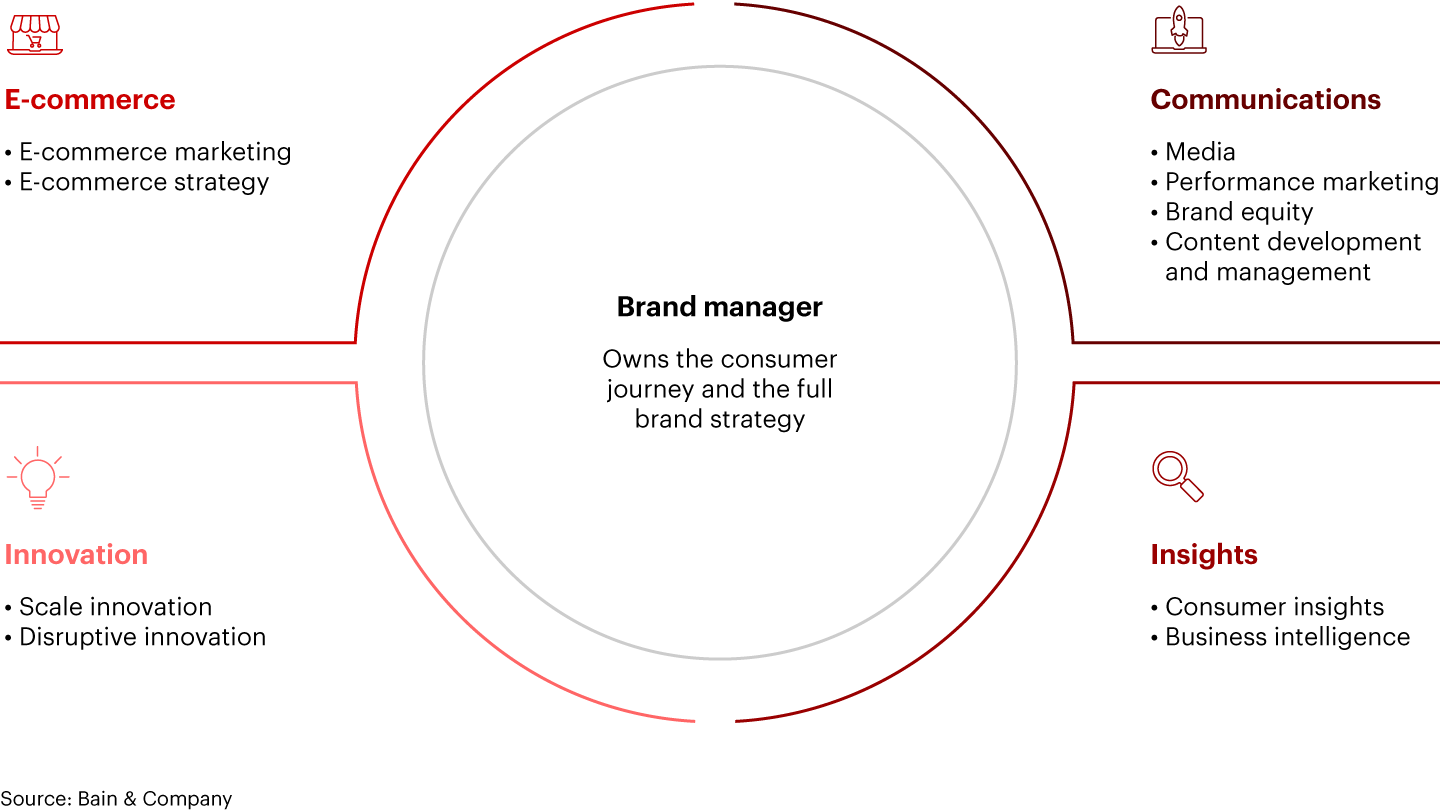
      The brand manager at the center draws on a group of specialists

      Today’s brand manager risks functioning narrowly as a process manager, so companies must find ways to expand managers’ capabilities. Food giant Hershey, for instance, developed “career passports” to allow its brand managers to assume different management roles and build out their expertise through rotations in media, digital, and other areas.

      2. Digital acceleration hubs. As the brand manager role expands, that person will rely on a small, integrated hub of digital specialists for marketing execution, across functions such as e-commerce and media. A small hub of expertise allows the business to quickly design and launch effective marketing campaigns, with a focus on the highest-value brand priorities.

      3. Differentiated insights. When insights don’t connect with the operating units, the work has little practical value. Insights linked to the units and organized by clear jobs to be done serve as a source of advantage when they generate a complete view of the consumer and answer the questions “So what? Now what?” 

      Attaining useful insights hinges on the support of specialist capabilities in fields such as ethnography and audience targeting. Ultimately, insights aim to create compelling stories that connect the dots across different data sources and parts of the business.

      Integration where it matters

      Along with these specialist imperatives, marketing organizations should integrate people and activities in other aspects, to promote cross-functional approaches. Three areas stand out here.

      4. Retail media integration. Retailer-owned digital media platforms such as Target’s Roundel are fast emerging as destinations for advertising investment across the marketing funnel. Forrester estimates that US retail media spending will double from 2022 to 2025 to reach $80 billion.

      However, retail media lives in a gray area between sales and marketing, two functions that were formerly more separate. Responding to this organizational challenge, most consumer products companies are building capabilities specific to retail media or to individual platforms. While effective approaches may vary by company, what they share is an operating model that allows increasing integration across the goals of account teams and brand teams.

      Formal collaboration can start between the customer and brand marketing units to align on priorities, followed by incorporating the retail media group into business and retailer annual plans, and then consolidating agency ownership of national and retail media.

      5. Owned, earned, shared, and paid (OESP) activities integration. Changing consumer behaviors, rising costs, and weakening connections to the target audience have eroded the effectiveness of paid media. That has prompted some brands to rethink their suite of OESP activities.

      Almost 40% of US consumers report they trust social media influencers over brands, according to a 2022 survey by Oracle. And for more than half of consumers globally, environmental, social, and corporate governance concerns have become a top-three purchasing criterion, a Bain & Company survey found. In turn, marketers should engage consumers through authentic stories that build a community.

      For example, one leisure products company tailored paid media ads to promote sharing among customers, using locally created and relevant content, while also amplifying campaigns on free, owned channels such as e-mail and its website. This shift led to a 25% lift in sales with no added spending.

      6. A new agency ecosystem. After a period of in-housing, many marketers have returned to the conviction that agencies remain essential. Leading firms define the best way to balance work with multiple agency partners and craft governance models that yield better performance.

      Some specialized capabilities still need to exist in-house, where proximity to the brand delivers the most impact. Others can be hybrid, with brand specialists directing agency staff to strategize or execute using company technology.

      Once a company has decided which things to outsource, it can choose a consolidated model with a single agency team for all work; a mixed model that bundles work for one main function (such as creative or media) and uses a series of point solutions for the other functions; or a model that divides work across many agencies, each handling one point solution (see Figure 3). Each model comes with trade-offs along dimensions such as cost efficiency and operational friction.

      Figure 3
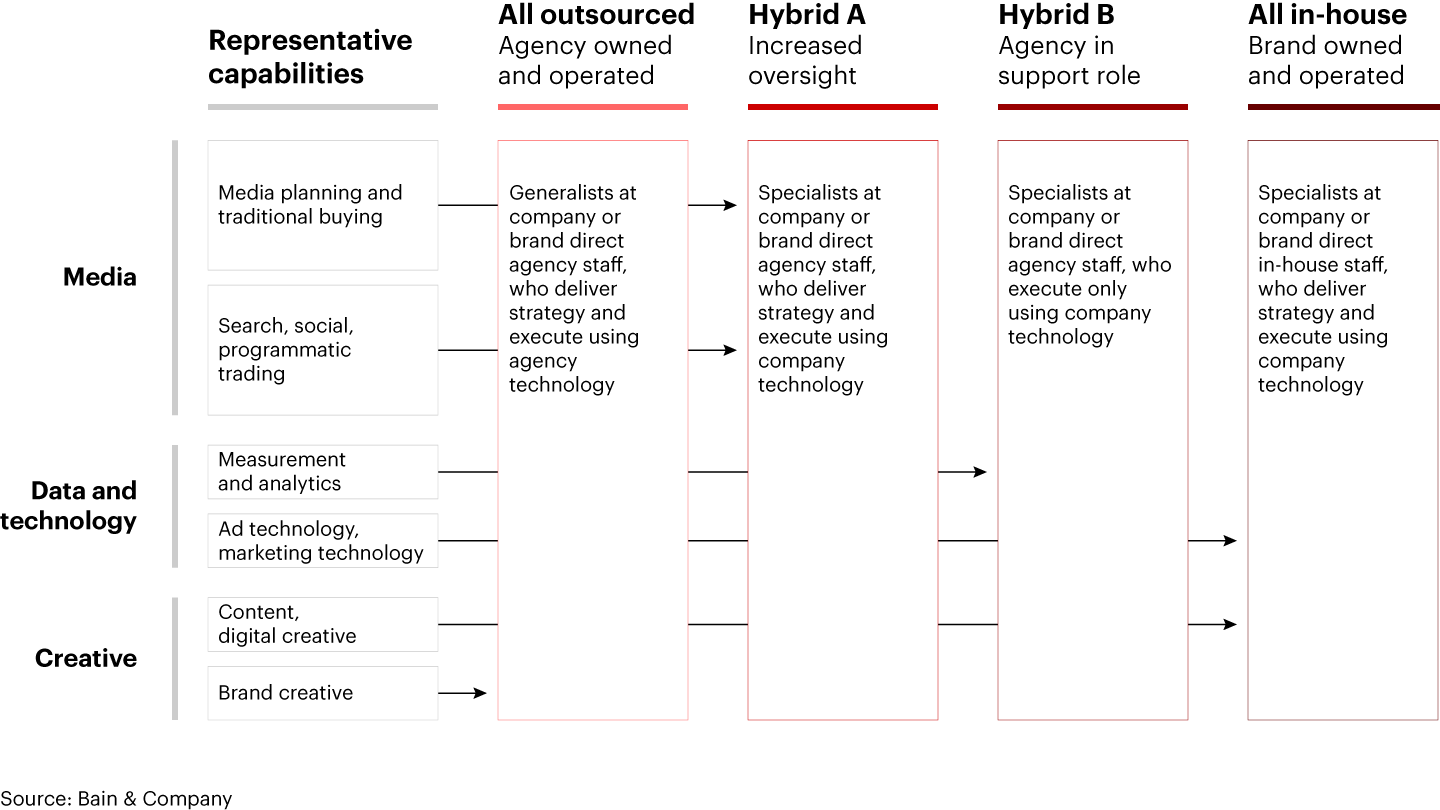
      Companies can manage agencies on a continuum of operating models

      As for pricing, many marketers are moving away from the traditional model of labor rate plus expenses to a contract based on perceived value of the work, or on performance along specific metrics such as sales volume.

      Strong agency management obviously becomes critical here. It usually is characterized by frequent monitoring of activity and outcomes, along with clear goals and incentives for all parties involved.

      Dynamism for decisions

      Consumer markets today put a premium on making faster decisions for many activities. Moving faster entails more dynamic processes and governance, along three themes.

      7. Total consumer investment. As the line between consumer and trade spending blurs, how to best evaluate and allocate spending across all levers? Marketers will need to make fluid budget trade-offs across investment pools, yet many firms suffer from limited data or dispersed responsibility for insights and tracking, because consumer spending is owned by the brand team while trade is owned by sales.

      For a more comprehensive approach, we have seen operating models that use a total consumer investment team, with each member sitting in different functions but coming together for this activity. The team serves as a bridge between brand and sales, conducting analysis and testing to optimize spending. Integrating data is essential here, so that companies have a single view of marketing performance across channels and can make informed trade-offs.

      8. Experimentation at scale. It’s no longer adequate to measure aggregate ROI across campaigns. Building local experimentation at scale now requires deaveraging the performance of each campaign. Local experimentation should yield insights even where companies lack historical data. And companies can reduce the time to produce insights by fielding small experiments and executing quickly.

      Most companies have a backlog of opportunities to evaluate, with the most test-worthy rooted in a business priority (see Figure 4). If a company wants to, say, raise marketing effectiveness by 20%, it could run multiple experiments, testing several hypotheses for each component:

      • how to move from one message and audience to tailored messages going to multiple segments;
      • how to shift from a one-way, television-focused campaign to a two-way digital campaign; and
      • how to incorporate processes and products that reflect sustainability in the marketing message.  
      Figure 4
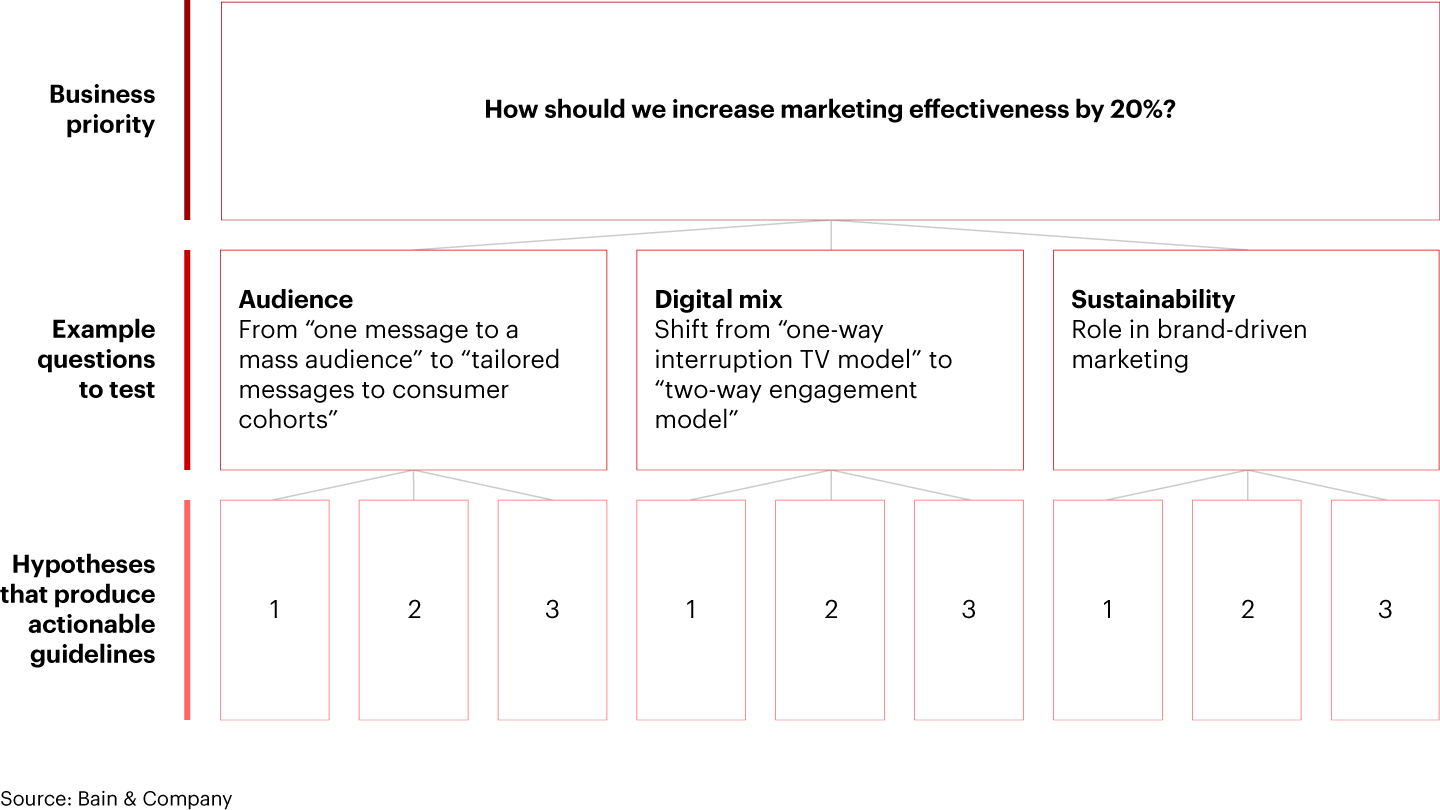
      Experimentation should answer questions rooted in a business priority

      Testing teams can be set up by country, product category, or another slice that makes sense, while a central orchestrating group can review the highlights, codify learnings into principles, and decide what merits scaling up. This approach depends on senior leaders removing the fear of failure and instilling value in both proved and disproved hypotheses. But done right, it can realize a 10% to 25% increase in campaign ROI.

      9. A content factory. Consumers increasingly expect relevant, fresh, local content. Many brands struggle to develop such content cost effectively and on a global scale, or to deliver formats tailored to high-priority platforms. In response, leading consumer products companies have adopted a hybrid model for content creation. They produce global campaigns with months-long cycle times along with always-on local content that is more reactive, cycling every few hours or weeks. The latter requires a locally relevant organizational structure and the right tools and governance to automate and scale up across markets.

      Introducing technology such as generative artificial intelligence has also helped local marketers speed up content generation. Global campaigns can be customized and localized, though most organizations still keep a human in the loop.

      Time for big aspirations

      Consumer products companies will address the nine areas discussed here differently, depending on their situation. Some may want to tackle a few as part of a broader transformation; others will focus on one in order to fix a liability or create a competitive advantage. The choices can be informed by big aspirations and imagining possible outcomes. For instance, what if brand managers could:

      • know exactly where to invest to inflect their business;
      • accelerate performance within a campaign—and use those lessons to set up the next campaign;
      • use testing to push out the boundaries of performance;
      • dramatically shorten creative production cycles; or
      • deepen the bench of expertise internally, so they could rely less on external partners?

      Across all nine areas, companies that have made the greatest progress share a few common traits. They field the right talent and deep expertise. Their processes and governance models promote data sharing and agile decision making. Gradually, these traits serve to elevate marketing operations and improve business outcomes—on the way to shaping modern marketing powerhouses.

      Authors
      • Headshot of Shweta Bhardwaj
        Shweta Bhardwaj
        Partner, Boston
      • Headshot of Beth Myers
        Beth Myers
        Partner, Seattle
      • Headshot of Eileen Shy
        Eileen Shy
        Partner, New York
      Related Industries
      • Consumer Products
      Related Consulting Services
      • Modern Marketing
      • Sales and Marketing
      CMO Insights
      Does a Purpose Help Brands Grow?

      There’s a distinct path to differentiating a brand by delivering higher-order Elements of Value®.

      Read more
      CMO Insights
      The 2026 Retail Executive Agenda

      Here are letters to the C-suite to help strengthen strategy, catalyze collaboration, and expand value creation in the AI age.

      Read more
      Consumer Products
      Shift to Vertical: David Haines, Group CEO, Flora Food Group

      What does it take to stay connected to your customers when scale and complexity threaten to pull you away? 

      Read more
      Sales and Marketing
      Too Much Marketing Technology, Too Little Impact

      Marketing leaders build tightly integrated systems that fuel growth, personalization, and real ROI.

      Read more
      CMO Insights
      The New Growth Equation for Tech Services

      As AI and geopolitical change upend the status quo, service providers face a stark choice—transform or fall behind.

      Read more
      First published in abril 2024
      Tags
      • CMO Insights
      • Consumer Products
      • Modern Marketing
      • Sales and Marketing

      How We've Helped Clients

      A Personal Care and Cosmetics Brand Charts a Course for Sustainability

      See more related case studies

      Results360® Propels an Appliance Maker Into a New Era of Growth

      See more related case studies

      A sweet new branding strategy

      See more related case studies

      Quer saber mais?

      Ajudamos líderes do mundo todo a lidar com desafios e oportunidades cruciais para suas organizações. Juntos, criamos mudanças e resultados duradouros.

      Bain Insights. Our perspectives on critical issues global businesses face in today's challenging environment, delivered monthly.

      *I have read and understand Bain’s Privacy Notice.

      Please read and agree to the Privacy Policy.
      Bain & Company
      Contact us Sustainability Accessibility Terms of use Privacy Cookie Policy Sitemap Log In

      © 1996-2026 Bain & Company, Inc.

      Contact Bain

      How can we help you?

      • Business inquiry
      • Career information
      • Press relations
      • Partnership request
      • Speaker request
      See all offices