
Skip to Content
  • Offices

    Offices

    North & Latin America
    • Atlanta
    • Austin
    • Bogota
    • Boston
    • Buenos Aires
    • Chicago
    • Dallas
    • Denver
    • Houston
    • Los Angeles
    • Mexico City
    • Minneapolis
    • Monterrey
    • Montreal
    • New York
    • Rio de Janeiro
    • San Francisco
    • Santiago
    • São Paulo
    • Seattle
    • Silicon Valley
    • Toronto
    • Washington, DC
    Europe & Africa
    • Amsterdam
    • Athens
    • Berlin
    • Brussels
    • Copenhagen
    • Dusseldorf
    • Frankfurt
    • Helsinki
    • Istanbul
    • Johannesburg
    • Kyiv
    • Lisbon
    • London
    • Madrid
    • Milan
    • Munich
    • Oslo
    • Paris
    • Rome
    • Stockholm
    • Vienna
    • Warsaw
    • Zurich
    Middle East
    • Doha
    • Dubai
    • Riyadh
    Asia & Australia
    • Bangkok
    • Beijing
    • Bengaluru
    • Brisbane
    • Ho Chi Minh City
    • Hong Kong
    • Jakarta
    • Kuala Lumpur
    • Manila
    • Melbourne
    • Mumbai
    • New Delhi
    • Perth
    • Seoul
    • Shanghai
    • Singapore
    • Sydney
    • Tokyo
    See all offices
  • Alumni
  • Media Center
  • Subscribe
  • Contact
  • Brazil | Português

    Select your region and language

    Global
    • Global (English)
    North & Latin America
    • Brazil (Português)
    • Argentina (Español)
    • Canada (Français)
    • Chile (Español)
    • Colombia (Español)
    Europe, Middle East, & Africa
    • France (Français)
    • DACH Region (Deutsch)
    • Italy (Italiano)
    • Spain (Español)
    • Greece (Elliniká)
    Asia & Australia
    • China (中文版)
    • Korea (한국어)
    • Japan (日本語)
  • Saved items (0)
    Saved items (0)

    You have no saved items.

    Bookmark content that interests you and it will be saved here for you to read or share later.

    Explore Bain Insights
  • Industries
    Main menu

    Industries

    • Aeroespacial e Defesa
    • Agronegócio
    • Química
    • Construção e Infraestrutura
    • Bens de Consumo
    • Serviços Financeiros
    • Healthcare & Life Sciences
    • Máquinas e Equipamentos Industriais
    • Mídia e Entretenimento
      Industries
      Mídia e Entretenimento
      • Media Lab
    • Metais
    • Mineração
    • Petróleo e Gás
    • Papel e Embalagens
    • Private Equity
      Industries
      Private Equity
      • Due Diligence
      • Exit Planning
      • Firm Strategy & Operations
      • Portfolio Value Creation
    • Setor Público e Social
    • Varejo
    • Tecnologia
    • Telecomunicações
      Industries
      Telecomunicações
      • Capital Expenditure
      • Telco Digital Transformation
    • Transporte
    • Turismo & Lazer
    • Energia & Renováveis
  • Consulting Services
    Main menu

    Consulting Services

    • Customer Experience
    • Sustainability
    • Innovation
    • M&A
    • Operations
    • People & Organization
    • Private Equity
    • Sales & Marketing
    • Strategy
    • AI, Insights, and Solutions
    • Technology
    • Transformation
  • Digital
  • Insights
    Main menu

    Insights

    • Industry Insights
    • Services Insights
    • Bain Books
    • Webinars
    • Bain Futures
    View all Insights
    Featured topics
    • Tariff Response
    • Artificial Intelligence
    • Thriving in Uncertainty
    • Executive Conversations
    • Macro Trends
    • M&A Report
    • Healthcare Private Equity Report
    • Paper & Packaging Report
    • Technology Report
    • CEO's Guide to Sustainability
    • CEO Insights
    • CFO Insights
    • COO Insights
    • CIO Insights
    • CMO Insights
    View all featured topics
  • About
    Main menu

    About

    • What We Do
    • What We Believe
    • Our People & Leadership
    • Client Results
    • Awards & Recognition
    • Global Affiliations
    Further: Our global responsibility
    • Sustainability
    • Social Impact
    • World Economic Forum
    Learn more about Further
  • Carreiras
    Main menu

    Carreiras

    • Trabalhe Conosco
      Carreiras
      Trabalhe Conosco
      • Find Your Place
      • Nossas áreas de trabalho
      • Equipes integradas
      • Estudantes
      • Programas e estágios
      • Eventos de Recrutamento
    • A Vida na Bain
      Carreiras
      A Vida na Bain
      • Blog: Inside Bain
      • Histórias de carreira
      • Nossas pessoas
      • Onde trabalhamos
      • Apoioao seu crescimento
      • Grupos de afinidade
      • Benefícios
    • Impact Stories
    • Nosso Processo Seletivo
      Carreiras
      Nosso Processo Seletivo
      • O Que Esperar
      • Entrevistas
    FIND JOBS
  • Offices
    Main menu

    Offices

    • North & Latin America
      Offices
      North & Latin America
      • Atlanta
      • Austin
      • Bogota
      • Boston
      • Buenos Aires
      • Chicago
      • Dallas
      • Denver
      • Houston
      • Los Angeles
      • Mexico City
      • Minneapolis
      • Monterrey
      • Montreal
      • New York
      • Rio de Janeiro
      • San Francisco
      • Santiago
      • São Paulo
      • Seattle
      • Silicon Valley
      • Toronto
      • Washington, DC
    • Europe & Africa
      Offices
      Europe & Africa
      • Amsterdam
      • Athens
      • Berlin
      • Brussels
      • Copenhagen
      • Dusseldorf
      • Frankfurt
      • Helsinki
      • Istanbul
      • Johannesburg
      • Kyiv
      • Lisbon
      • London
      • Madrid
      • Milan
      • Munich
      • Oslo
      • Paris
      • Rome
      • Stockholm
      • Vienna
      • Warsaw
      • Zurich
    • Middle East
      Offices
      Middle East
      • Doha
      • Dubai
      • Riyadh
    • Asia & Australia
      Offices
      Asia & Australia
      • Bangkok
      • Beijing
      • Bengaluru
      • Brisbane
      • Ho Chi Minh City
      • Hong Kong
      • Jakarta
      • Kuala Lumpur
      • Manila
      • Melbourne
      • Mumbai
      • New Delhi
      • Perth
      • Seoul
      • Shanghai
      • Singapore
      • Sydney
      • Tokyo
    See all offices
  • Alumni
  • Media Center
  • Subscribe
  • Contact
  • Brazil | Português
    Main menu

    Select your region and language

    • Global
      Select your region and language
      Global
      • Global (English)
    • North & Latin America
      Select your region and language
      North & Latin America
      • Brazil (Português)
      • Argentina (Español)
      • Canada (Français)
      • Chile (Español)
      • Colombia (Español)
    • Europe, Middle East, & Africa
      Select your region and language
      Europe, Middle East, & Africa
      • France (Français)
      • DACH Region (Deutsch)
      • Italy (Italiano)
      • Spain (Español)
      • Greece (Elliniká)
    • Asia & Australia
      Select your region and language
      Asia & Australia
      • China (中文版)
      • Korea (한국어)
      • Japan (日本語)
  • Saved items  (0)
    Main menu
    Saved items (0)

    You have no saved items.

    Bookmark content that interests you and it will be saved here for you to read or share later.

    Explore Bain Insights
  • Industries
    • Industries

      • Aeroespacial e Defesa
      • Agronegócio
      • Química
      • Construção e Infraestrutura
      • Bens de Consumo
      • Serviços Financeiros
      • Healthcare & Life Sciences
      • Máquinas e Equipamentos Industriais
      • Mídia e Entretenimento
      • Metais
      • Mineração
      • Petróleo e Gás
      • Papel e Embalagens
      • Private Equity
      • Setor Público e Social
      • Varejo
      • Tecnologia
      • Telecomunicações
      • Transporte
      • Turismo & Lazer
      • Energia & Renováveis
  • Consulting Services
    • Consulting Services

      • Customer Experience
      • Sustainability
      • Innovation
      • M&A
      • Operations
      • People & Organization
      • Private Equity
      • Sales & Marketing
      • Strategy
      • AI, Insights, and Solutions
      • Technology
      • Transformation
  • Digital
  • Insights
    • Insights

      • Industry Insights
      • Services Insights
      • Bain Books
      • Webinars
      • Bain Futures
      View all Insights
      Featured topics
      • Tariff Response
      • Artificial Intelligence
      • Thriving in Uncertainty
      • Executive Conversations
      • Macro Trends
      • M&A Report
      • Healthcare Private Equity Report
      • Paper & Packaging Report
      • Technology Report
      • CEO's Guide to Sustainability
      • CEO Insights
      • CFO Insights
      • COO Insights
      • CIO Insights
      • CMO Insights
      View all featured topics
  • About
    • About

      • What We Do
      • What We Believe
      • Our People & Leadership
      • Client Results
      • Awards & Recognition
      • Global Affiliations
      Further: Our global responsibility
      • Sustainability
      • Social Impact
      • World Economic Forum
      Learn more about Further
  • Carreiras
    Popular Searches
    • Agile
    • Digital
    • Strategy
    Your Previous Searches
      Recently Visited Pages

      Content added to saved items

      Saved items (0)

      Removed from saved items

      Saved items (0)

      Brief

      Adopting a More Strategic Approach to Procurement in Oil and Gas

      Adopting a More Strategic Approach to Procurement in Oil and Gas

      Short-term cuts can sometimes be penny wise and pound foolish. Long-term improvements require more balanced strategic capabilities.

      By Francesco Cigala, Lodewijk de Graauw, John McCreery and Hasan Shafi

      • min read
      }

      Brief

      Adopting a More Strategic Approach to Procurement in Oil and Gas
      en

      A year after the steep drop in crude prices in 2014, oil and gas companies have made all the easy cuts—the low-hanging fruit is off the tree. Procurement teams across the industry have pushed for price reductions from suppliers, clamped down on discretionary spending and deferred capital expenditures. As oil prices slumped again this year, the industry shelved $200 billion worth of projects to protect dividends.

      All of these represent valuable ways to reduce short-term spending but probably are still not enough to make lasting changes. What’s more, in some cases short-term thinking can do long-term damage. For example, maintenance is an easy target for cost reductions, but these cuts are inherently shortsighted. Production losses resulting from equipment failures can hurt cash flow far beyond any savings that may result from maintenance cost cuts.

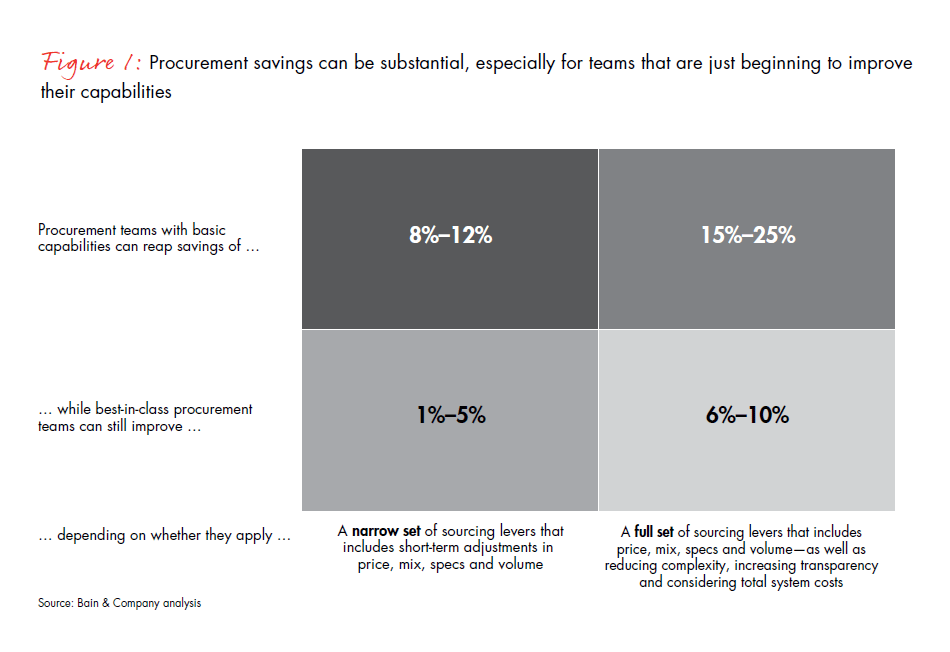
      Now, as the industry faces the likelihood of a long-term low-price environment, procurement teams need to look beyond short-term tactics and take a more proactive and strategic stance within their organizations—for example, working further upstream in project design and collaborating with the engineering and design teams to reduce complexity before it is locked into long-term procurement costs (see Figure 1). Long-term shareholder returns depend on growth and capital efficiency more than paring discretionary costs.

      adopting-a-more-strategic-approach-fig-01_embed

      Three areas where procurement teams must strike the right balance

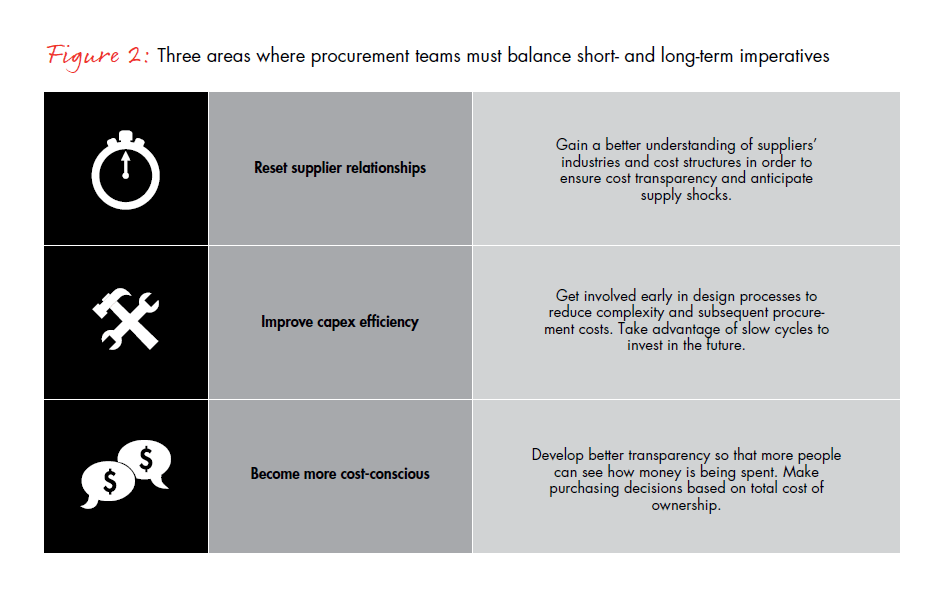
      Bain’s work with clients identifies three areas where leading procurement teams strike the right balance between short-term cost reduction and long-term optimization (see Figure 2).

      adopting-a-more-strategic-approach-fig-02_embed

      Reset supplier relationships. As prices dropped, oil and gas suppliers’ inboxes filled with letters from customers asking for price reductions of as much as a third. These initiatives helped to reclaim some of the margins that had shifted to service providers in the boom times.

      But the best buyers also understand their suppliers’ cost structures and strategic importance to their business. They avoid squeezing so hard they put suppliers out of business, which benefits no one, especially where strategic relationships have been carefully cultivated over many years.

      Buyers should also try to get a better understanding of suppliers’ costs and the value of the products and services procured. Among the strategies to reduce costs:

      • Aggregate demand. Combine purchases across the entire portfolio, rather than individual projects, to get bigger volume discounts.
      • Embrace standardization and modularization. Remind engineers and the front line of the cost advantages of working with existing equipment, especially in lean times. Reuse designs and avoid introducing new complexity.
      • Avoid onerous terms. When buyers squeeze suppliers on price or other purchasing terms, suppliers have to find ways to mitigate these risks by purchasing insurance or raising prices down the line.
      • Adopt low-cost solutions for shared activities. Identify areas where buyers and sellers can cooperate to realize joint savings. For example, a helicopter contractor and its oil company client could cooperate to jointly plan their schedules to ensure better utilization of their transport service, reducing costs for both.

      Armed with these insights, procurement teams can develop a prioritized action plan that includes negotiations with their largest suppliers, running a sourcing program for the largest and most expensive categories and renegotiating important contracts. Buyers should also be open to bids from competing vendors, as suppliers jockey to gain or maintain share. (See below “A moment of opportunity for oilfield services.”)

      Increase capex efficiency. Most if not all oil and gas companies have already reviewed their capital spending, deferring or canceling new projects. Long-term capital efficiency will require more extensive changes, including reducing complexity throughout the organization. Strategically minded procurement teams get involved in the early stages of design, when decisions determine long-term costs.

      With sector inflation waning, some companies with strong balance sheets may find this the ideal time to accelerate projects, given reduced competition around opportunities and better rates for services and equipment.

      Develop a culture of cost-consciousness. As cost pressures increase, procurement teams attack discretionary spending with a fine-tooth comb, cutting small luxuries such as coffee machines or canceling training. But these moves usually have little effect on spending, and they can damage morale and weaken capabilities.

      A more important role for procurement involves fostering a culture of cost-consciousness so that staff across the organization can make the right decisions for themselves. This begins with systematic cost transparency. The employees who specify a product or service, those who purchase it and those who use it may be different people. This makes purchasing difficult. Better to make sure that all three categories—those who specify, buy and use—stay involved in purchasing decisions and can see and understand the cost and value.

      Most procurement teams say that they consider total cost of ownership but often overlook it for short-term savings, especially in lean times. Applying total cost of ownership correctly can be difficult because it requires a holistic view on spending across functions and time. For big projects, getting involved early in front-end engineering design allows procurement to participate in decisions that lock in 80% to 90% of costs.

      Lodewijk de Graauw, partner in the Oil and Gas practice in Asia Pacific, explains how the best procurement teams maintain strategic perspective when looking at savings initiatives.

      Toward a more strategic approach

      Procurement teams can make a more sustainable contribution to their companies’ success by taking a more proactive and strategic approach, which requires building up three critical capabilities.

      Plan for uncertainty. Given the broad range of outlooks for the sector, a scenario-based approach is the best strategy for dealing with evolving market conditions. Leading procurement teams develop a set of scenarios based on various market conditions. Under each scenario, they determine changes in demand and their appropriate response. They then continuously monitor signposts that indicate the likelihood of the various scenarios materializing and adjust their actions accordingly. For example, in boom times when demand for pipeline materials runs high, it’s important to lock in capacity at mills to ensure a steady supply. When demand slackens, it’s less important to lock in capacity and probably more important to collect bids from prequalified suppliers to increase the speed to market. The procurement team should advise the business on these kinds of challenges. (For more on scenario planning, see “What the recent oil price shock teaches about managing uncertainty.”)

      Strengthen category management. Procurement teams become more effective as they gain expertise about the industries from which they source. As experts, they should be able to offer deep insights about their suppliers’ businesses, including market size, growth patterns and the market share of competitors. By developing a good understanding of the value drivers in a category, teams learn what products and services should cost and how events will affect their suppliers and costs. Best-in-class category managers should be able to answer questions such as:

      • Which suppliers generate superior returns and why?
      • Where will consolidation occur, and what role will their suppliers play?
      • How will disruptive technologies and changing customer preferences shape the market?

      Procurement category managers can improve their capabilities by building bridges with the commercial and engineering groups such as setting up cross-functional teams, sharing information on an online platform or holding focused idea-generating sessions. Investing this way in development benefits the whole company, and the low-cost environment provides a strong motivation for bolstering the procurement team with analytics, commercial and strategic performers.

      Improve ability to detect risk. Procurement teams can take steps to get better at assessing the risks faced by their suppliers.

      • Audit supplier performance. An audit can help identify potential performance, financial or capability risks. Frank discussions with suppliers can help procurement understand their position and assess their ability to continue to deliver.
      • Assess midterm market risks. Looking ahead can help identify potential supply risks from consolidation, regulatory constraints, geopolitical risks or other wild cards.
      • Look after emerging suppliers. In many countries, contractors select suppliers in line with local content goals. Sometimes contract requirements with national oil companies or other resource owners may entail supporting these suppliers through difficult economic periods.

      Near-term projections for the global oil and gas industry continue to forecast increases in supply against weak demand growth. With no sign of a quick return to higher crude prices, it will become increasingly important for procurement teams to step up their game. By becoming more proactive in their counsel on better purchasing behavior, by becoming experts in the industries that supply them and the contracts that manage the value chain, and by advocating reductions in complexity, procurement teams can become one of the most important agents in the industry’s transformation for leaner times.

      A moment of opportunity for oilfield services

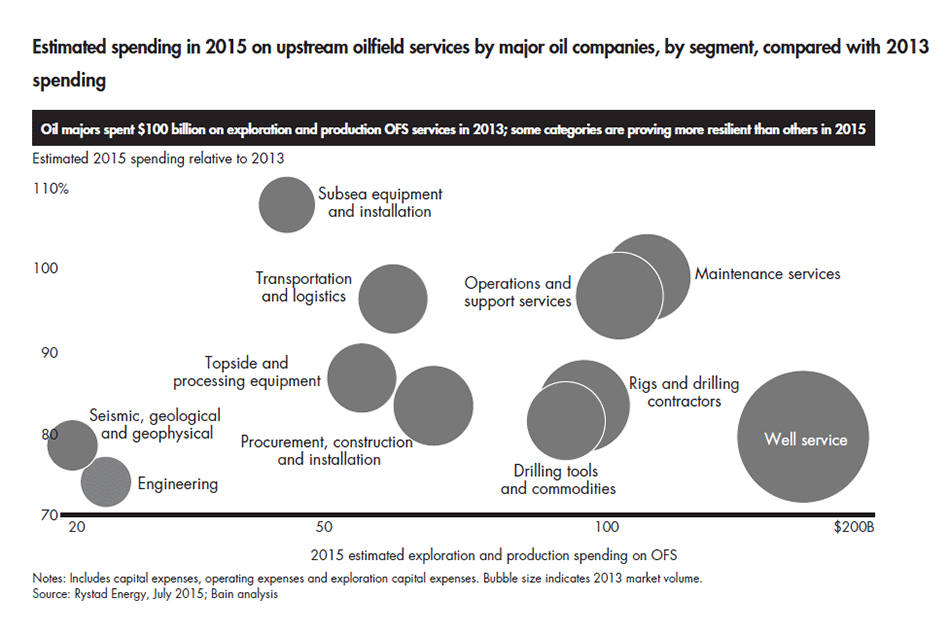
      Oilfield service (OFS) contractors were among the first to feel the pinch of falling oil prices, as producers immediately began asking them to reduce their rates and other costs. Between July 2014 and February 2015, the OFS sector market cap took a hit of more than $100 billion, with some categories proving more resilient than others (see Figure).

      At the same time, capable OFS providers see this as a moment of opportunity, as oil and gas producers shop for new suppliers who can meet their needs in a cost-constrained environment. Now is the time to crack open entrenched relationships between existing suppliers and oil companies.

      Among the ways to take advantage of the moment:

      • Come up with innovative proposals for service providers and suppliers to work together to reduce total cost of ownership. These could include point solutions in which the supplier agrees to seamlessly and comprehensively take on a task that would free up resources for the provider—for example, asset integrity testing.
      • Use the price drop as an opportunity to create new services. Insights gleaned from big data and advanced analytics may be even more valuable in this environment than they were a year earlier if they can help producers operate more efficiently or effectively.
      • Create a platform for fundamental change within the company. Revenue under pressure can help generate momentum for greater transformation.

      On a broader level, OFS providers may also identify opportunities to pick up assets or businesses that oil producers or midstream companies might divest as they rationalize their portfolios.

      adopting-a-more-strategic-approach-fig-03_embed

      Francesco Cigala is a partner with Bain & Company in Kuala Lumpur. Lodewijk de Graauw is a Bain partner in Perth, and John McCreery is a partner in Bain’s Houston office. Hasan Shafi is a Bain principal in Sydney.


      adopting-a-more-strategic-approach-fig-01_full

      adopting-a-more-strategic-approach-fig-02_full

      adopting-a-more-strategic-approach-fig-03_full
      Authors
      • Headshot of Francesco Cigala
        Francesco Cigala
        Partner, Kuala Lumpur
      • John McCreery
        Alumni, Houston
      Related Industries
      • Energy & Natural Resources
      • Oil & Gas
      Related Consulting Services
      • Procurement
      Oil & Gas
      Steering Through the Oil Storm

      Oil and gas industry executives cannot control prices, but they can take action to be in a better position when the upturn comes.

      Read more
      Oil & Gas
      John McCreery: Adopting a More Strategic Approach to Procurement in Oil and Gas

      Three ways procurement departments can succeed amid low prices.

      Read more
      Oil & Gas
      Peter Parry: Strategic Priorities for Oil and Gas Companies in 2017

      How oil and gas companies can potentially cut costs 25%-30% by taking a pragmatic approach that focuses on value and innovation.

      Read more
      Oil & Gas
      Energy Transition: Delivering Capital Projects On Time and On Budget

      Leading project owners are exploring more collaborative, win-win relationships with contractors.

      Read more
      Oil & Gas
      Oil & Gas M&A

      Why some companies are winning by a wider margin.

      Read more
      First published in setembro 2015
      Tags
      • Energy & Natural Resources
      • Oil & Gas
      • Procurement

      How We've Helped Clients

      Moving Beyond an Operating Model Redesign to Live the Model

      See more related case studies

      An Oil and Gas Leader Creates a New Clean Energy Business

      See more related case studies

      An OFS captures post-merger growth synergies

      See more related case studies

      Quer saber mais?

      Ajudamos líderes do mundo todo a lidar com desafios e oportunidades cruciais para suas organizações. Juntos, criamos mudanças e resultados duradouros.

      Bain Insights. Our perspectives on critical issues global businesses face in today's challenging environment, delivered monthly.

      *I have read and understand Bain’s Privacy Notice.

      Please read and agree to the Privacy Policy.
      Bain & Company
      Contact us Sustainability Accessibility Terms of use Privacy Cookie Policy Sitemap Log In

      © 1996-2026 Bain & Company, Inc.

      Contact Bain

      How can we help you?

      • Business inquiry
      • Career information
      • Press relations
      • Partnership request
      • Speaker request
      See all offices