Skip to Content
  • Offices

    Offices

    North & Latin America
    • Atlanta
    • Austin
    • Bogota
    • Boston
    • Buenos Aires
    • Chicago
    • Dallas
    • Denver
    • Houston
    • Los Angeles
    • Mexico City
    • Minneapolis
    • Monterrey
    • Montreal
    • New York
    • Rio de Janeiro
    • San Francisco
    • Santiago
    • São Paulo
    • Seattle
    • Silicon Valley
    • Toronto
    • Washington, DC
    Europe & Africa
    • Amsterdam
    • Athens
    • Berlin
    • Brussels
    • Copenhagen
    • Dusseldorf
    • Frankfurt
    • Helsinki
    • Istanbul
    • Johannesburg
    • Kyiv
    • Lisbon
    • London
    • Madrid
    • Milan
    • Munich
    • Oslo
    • Paris
    • Rome
    • Stockholm
    • Vienna
    • Warsaw
    • Zurich
    Middle East
    • Doha
    • Dubai
    • Riyadh
    Asia & Australia
    • Bangkok
    • Beijing
    • Bengaluru
    • Brisbane
    • Ho Chi Minh City
    • Hong Kong
    • Jakarta
    • Kuala Lumpur
    • Manila
    • Melbourne
    • Mumbai
    • New Delhi
    • Perth
    • Seoul
    • Shanghai
    • Singapore
    • Sydney
    • Tokyo
    See all offices
  • Alumni
  • Media Center
  • Subscribe
  • Contact
  • Brazil | Português

    Select your region and language

    Global
    • Global (English)
    North & Latin America
    • Brazil (Português)
    • Argentina (Español)
    • Canada (Français)
    • Chile (Español)
    • Colombia (Español)
    Europe, Middle East, & Africa
    • France (Français)
    • DACH Region (Deutsch)
    • Italy (Italiano)
    • Spain (Español)
    • Greece (Elliniká)
    Asia & Australia
    • China (中文版)
    • Korea (한국어)
    • Japan (日本語)
  • Saved items (0)
    Saved items (0)

    You have no saved items.

    Bookmark content that interests you and it will be saved here for you to read or share later.

    Explore Bain Insights
  • Industries
    Main menu

    Industries

    • Aeroespacial e Defesa
    • Agronegócio
    • Química
    • Construção e Infraestrutura
    • Bens de Consumo
    • Serviços Financeiros
    • Healthcare & Life Sciences
    • Máquinas e Equipamentos Industriais
    • Mídia e Entretenimento
      Industries
      Mídia e Entretenimento
      • Media Lab
    • Metais
    • Mineração
    • Petróleo e Gás
    • Papel e Embalagens
    • Private Equity
      Industries
      Private Equity
      • Due Diligence
      • Exit Planning
      • Firm Strategy & Operations
      • Portfolio Value Creation
    • Setor Público e Social
    • Varejo
    • Tecnologia
    • Telecomunicações
      Industries
      Telecomunicações
      • Capital Expenditure
      • Telco Digital Transformation
    • Transporte
    • Turismo & Lazer
    • Energia & Renováveis
  • Consulting Services
    Main menu

    Consulting Services

    • Customer Experience
    • Sustainability
    • Innovation
    • M&A
    • Operations
    • People & Organization
    • Private Equity
    • Sales & Marketing
    • Strategy
    • AI, Insights, and Solutions
    • Technology
    • Transformation
  • Digital
  • Insights
    Main menu

    Insights

    • Industry Insights
    • Services Insights
    • Bain Books
    • Webinars
    • Bain Futures
    View all Insights
    Featured topics
    • Tariff Response
    • Artificial Intelligence
    • Thriving in Uncertainty
    • Executive Conversations
    • Macro Trends
    • M&A Report
    • Healthcare Private Equity Report
    • Paper & Packaging Report
    • Technology Report
    • CEO's Guide to Sustainability
    • CEO Insights
    • CFO Insights
    • COO Insights
    • CIO Insights
    • CMO Insights
    View all featured topics
  • About
    Main menu

    About

    • What We Do
    • What We Believe
    • Our People & Leadership
    • Client Results
    • Awards & Recognition
    • Global Affiliations
    Further: Our global responsibility
    • Sustainability
    • Social Impact
    • World Economic Forum
    Learn more about Further
  • Carreiras
    Main menu

    Carreiras

    • Trabalhe Conosco
      Carreiras
      Trabalhe Conosco
      • Find Your Place
      • Nossas áreas de trabalho
      • Equipes integradas
      • Estudantes
      • Programas e estágios
      • Eventos de Recrutamento
    • A Vida na Bain
      Carreiras
      A Vida na Bain
      • Histórias de carreira
      • Nossas pessoas
      • Onde trabalhamos
      • Apoioao seu crescimento
      • Grupos de afinidade
      • Benefícios
    • Impact Stories
    • Nosso Processo Seletivo
      Carreiras
      Nosso Processo Seletivo
      • O Que Esperar
      • Entrevistas
    FIND JOBS
  • Offices
    Main menu

    Offices

    • North & Latin America
      Offices
      North & Latin America
      • Atlanta
      • Austin
      • Bogota
      • Boston
      • Buenos Aires
      • Chicago
      • Dallas
      • Denver
      • Houston
      • Los Angeles
      • Mexico City
      • Minneapolis
      • Monterrey
      • Montreal
      • New York
      • Rio de Janeiro
      • San Francisco
      • Santiago
      • São Paulo
      • Seattle
      • Silicon Valley
      • Toronto
      • Washington, DC
    • Europe & Africa
      Offices
      Europe & Africa
      • Amsterdam
      • Athens
      • Berlin
      • Brussels
      • Copenhagen
      • Dusseldorf
      • Frankfurt
      • Helsinki
      • Istanbul
      • Johannesburg
      • Kyiv
      • Lisbon
      • London
      • Madrid
      • Milan
      • Munich
      • Oslo
      • Paris
      • Rome
      • Stockholm
      • Vienna
      • Warsaw
      • Zurich
    • Middle East
      Offices
      Middle East
      • Doha
      • Dubai
      • Riyadh
    • Asia & Australia
      Offices
      Asia & Australia
      • Bangkok
      • Beijing
      • Bengaluru
      • Brisbane
      • Ho Chi Minh City
      • Hong Kong
      • Jakarta
      • Kuala Lumpur
      • Manila
      • Melbourne
      • Mumbai
      • New Delhi
      • Perth
      • Seoul
      • Shanghai
      • Singapore
      • Sydney
      • Tokyo
    See all offices
  • Alumni
  • Media Center
  • Subscribe
  • Contact
  • Brazil | Português
    Main menu

    Select your region and language

    • Global
      Select your region and language
      Global
      • Global (English)
    • North & Latin America
      Select your region and language
      North & Latin America
      • Brazil (Português)
      • Argentina (Español)
      • Canada (Français)
      • Chile (Español)
      • Colombia (Español)
    • Europe, Middle East, & Africa
      Select your region and language
      Europe, Middle East, & Africa
      • France (Français)
      • DACH Region (Deutsch)
      • Italy (Italiano)
      • Spain (Español)
      • Greece (Elliniká)
    • Asia & Australia
      Select your region and language
      Asia & Australia
      • China (中文版)
      • Korea (한국어)
      • Japan (日本語)
  • Saved items  (0)
    Main menu
    Saved items (0)

    You have no saved items.

    Bookmark content that interests you and it will be saved here for you to read or share later.

    Explore Bain Insights
  • Industries
    • Industries

      • Aeroespacial e Defesa
      • Agronegócio
      • Química
      • Construção e Infraestrutura
      • Bens de Consumo
      • Serviços Financeiros
      • Healthcare & Life Sciences
      • Máquinas e Equipamentos Industriais
      • Mídia e Entretenimento
      • Metais
      • Mineração
      • Petróleo e Gás
      • Papel e Embalagens
      • Private Equity
      • Setor Público e Social
      • Varejo
      • Tecnologia
      • Telecomunicações
      • Transporte
      • Turismo & Lazer
      • Energia & Renováveis
  • Consulting Services
    • Consulting Services

      • Customer Experience
      • Sustainability
      • Innovation
      • M&A
      • Operations
      • People & Organization
      • Private Equity
      • Sales & Marketing
      • Strategy
      • AI, Insights, and Solutions
      • Technology
      • Transformation
  • Digital
  • Insights
    • Insights

      • Industry Insights
      • Services Insights
      • Bain Books
      • Webinars
      • Bain Futures
      View all Insights
      Featured topics
      • Tariff Response
      • Artificial Intelligence
      • Thriving in Uncertainty
      • Executive Conversations
      • Macro Trends
      • M&A Report
      • Healthcare Private Equity Report
      • Paper & Packaging Report
      • Technology Report
      • CEO's Guide to Sustainability
      • CEO Insights
      • CFO Insights
      • COO Insights
      • CIO Insights
      • CMO Insights
      View all featured topics
  • About
    • About

      • What We Do
      • What We Believe
      • Our People & Leadership
      • Client Results
      • Awards & Recognition
      • Global Affiliations
      Further: Our global responsibility
      • Sustainability
      • Social Impact
      • World Economic Forum
      Learn more about Further
  • Carreiras
    Popular Searches
    • Agile
    • Digital
    • Strategy
    Your Previous Searches
      Recently Visited Pages

      Content added to saved items

      Saved items (0)

      Removed from saved items

      Saved items (0)

      Brief

      Automation Scorecard 2024: Lessons Learned Can Inform Deployment of Generative AI

      Automation Scorecard 2024: Lessons Learned Can Inform Deployment of Generative AI

      The most experienced firms are widening their lead in cost savings and productivity.

      By Michael Heric, Purna Doddapaneni, and Don Sweeney

      • min read
      }

      Brief

      Automation Scorecard 2024: Lessons Learned Can Inform Deployment of Generative AI
      en
      At a Glance
      • Companies investing most heavily in automation outperform others in savings and adoption of new disruptive technologies.
      • The gap between leaders and laggards has widened and will expand as leaders increase investment as a share of IT budget.
      • Leaders are planning to invest, on average, almost four times more in generative AI than laggards.
      • Successful automation programs include enterprise-wide rollout, combined technologies, value creation, and engaged staff.

      Given UPS’ long history of successfully scaling up automation and artificial intelligence (AI), it came as no surprise that the company recently announced successful results from using generative AI in contact centers. UPS developed its Message Response Automation (MeRA), which uses publicly available large language models (LLMs) to automate responses to some of the more than 50,000 customer emails per day, reducing the time spent on emails by 50%. UPS plans to expand MeRA to other functions, such as sales, human resources (HR), and finance.

      Written in collaboration with

      Written in collaboration with

      Ashlogo_200x55.png


      Like UPS, companies with a long track record of developing and scaling up programs in traditional forms of automation, such as robotic process automation (RPA) and analytical AI, are now applying the lessons learned to gain an early advantage in generative AI. Many companies have quickly launched pilot projects with generative AI, but as with traditional automation and AI, true success comes only when pilots convert into large-scale programs that deliver compelling returns on investment across the enterprise.

      Bain’s latest survey of 893 automation executives worldwide finds that companies that invested most heavily in automation outperform laggards in savings achieved and adoption of new, more disruptive technologies, including generative AI. Broader investment enables them to transform their businesses quickly. (We define leaders as companies investing at least 20% of their IT budget in automation in the past two years, and this elite group achieved an average 22% in cost savings. Laggards are companies investing less than 5% of the IT budget in automation, and these firms achieved just under 8% in savings on average.)  

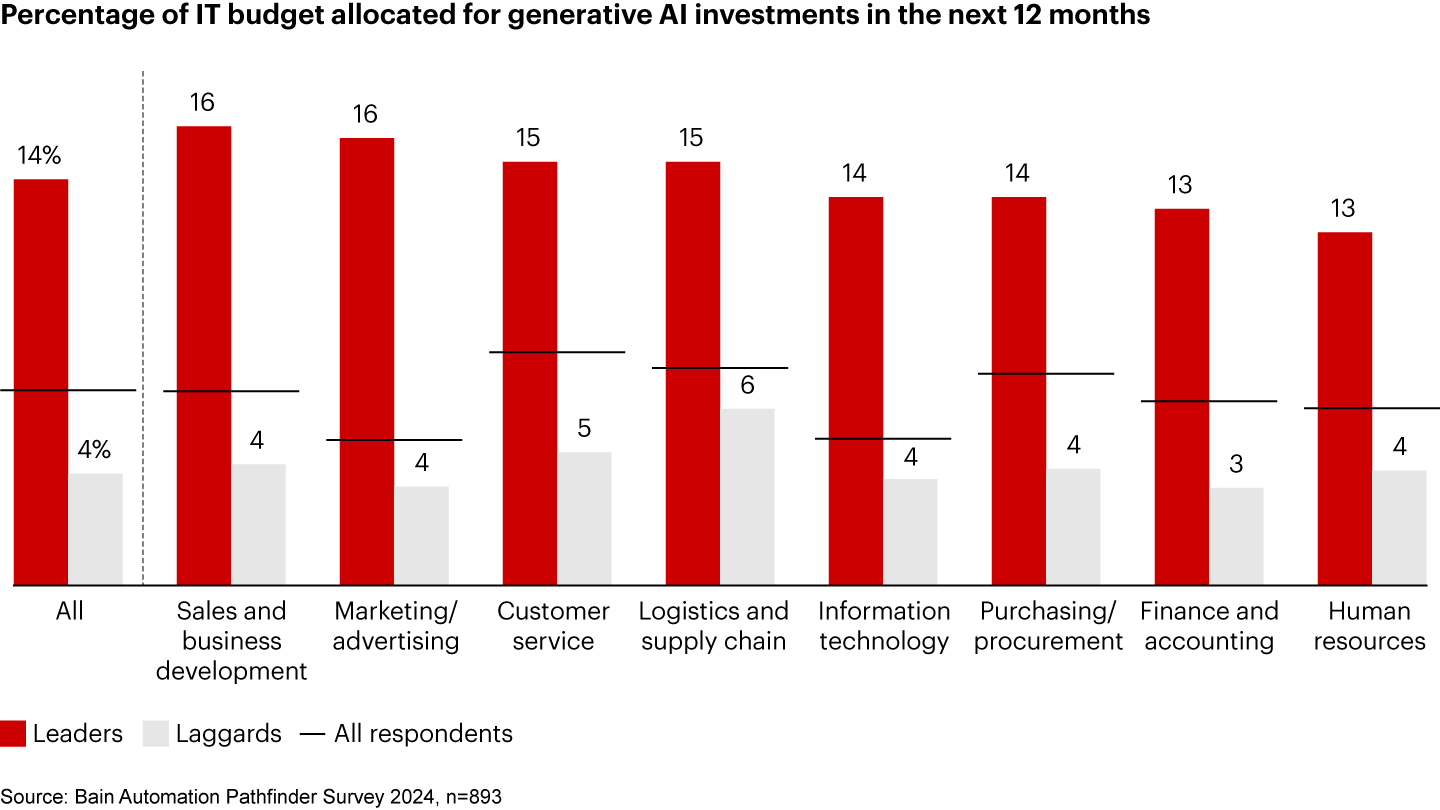
      Automation leaders are planning to invest, on average, almost four times more in generative AI than laggards and are already moving quickly into implementing generative AI (see Figure 1). This aggressive investment applies across most key functions, whether the functions were the earliest to adopt the technology, including customer service, IT, and marketing, or later adopters, such as finance and HR (see Figure 2).

      Figure 1
      Automation leaders are out-investing others in generative AI and moving faster to implement the technology
      Figure 2
      Automation leaders plan to invest more in generative AI across all functions than others

      JPMorgan Chase has invested in automation and AI for some time. By 2017, for example, the bank was using RPA to handle 1.7 million access requests in the IT function, equivalent to the work of 140 people. The bank’s legal department launched an AI program to automate the review of commercial loan agreements, saving over 360,000 hours of work annually by lawyers and loan officers. Given its leadership in traditional forms of automation and AI, JPMorgan Chase has been able to take a more measured approach to newer automation technologies, using generative AI where it can yield better results than traditional automation. For example, in May 2024, the bank announced IndexGPT, a generative AI-powered investment advisory product to support thematic investing.

      More than cost reductions

      The continued wave of automation is generating significant value across industries. Pharma giant Pfizer, for instance, has automated hundreds of processes and tasks across the company, such as sales representatives scanning barcodes to add a sample during a sales call and monitor inventory quantities.

      And automation leaders have a history of adopting disruptive technologies. Those companies that have successfully scaled up traditional forms of automation—workflow automation, RPA, scripting, and optical character recognition (OCR)—have already embedded AI outside of LLMs, such as machine learning (ML) in document processing or natural language processing in job descriptions, to improve the effectiveness of their automation programs (see Figure 3). Generative AI is the next frontier of technology advancement that will take automation to new levels of effectiveness and value.

      Figure 3
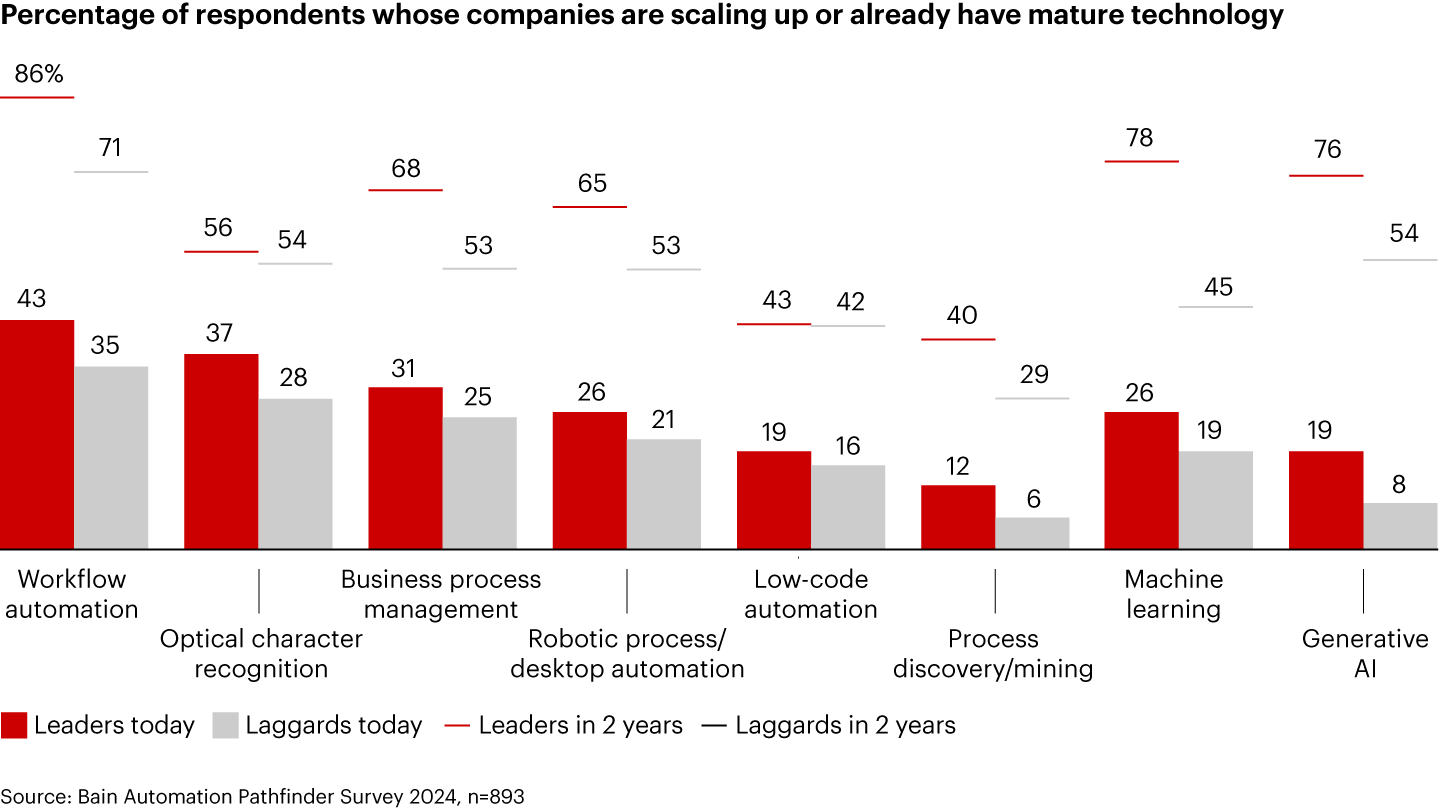
      Leaders vs. laggards: technology type

      What gives these companies the confidence that they can expand outside of traditional forms of automation and AI and invest so heavily into generative AI? The answer lies in the tangible cost savings and nonfinancial benefits they have already achieved through automation.

      The majority of survey respondents are and will be using generative AI for three waves of use cases (see Figure 4). In the first wave, they are applying the technologies to use cases that were not possible in the past, such as creating new marketing content. For the second wave, they plan to replace technologies for current use cases, including order processing. And a third wave will consist of enhancing current use cases, such as accounts payable and receivable. The logic here consists of not wanting to start fresh with use cases where companies have already invested resources, built integrations, and trained employees, but rather to apply generative AI to new areas.

      Figure 4
      Companies are prioritizing processes for deploying generative AI

      Automation leaders were able to reduce the cost of processes by 22% in 2023, whereas lagging companies managed only 8%. The top quartile of leaders lowered costs by an average 37% (see Figure 5). Respondents also cited the benefits of trimming the number of low-value tasks, speeding up process completion time, and improving service quality and accuracy.

      Figure 5
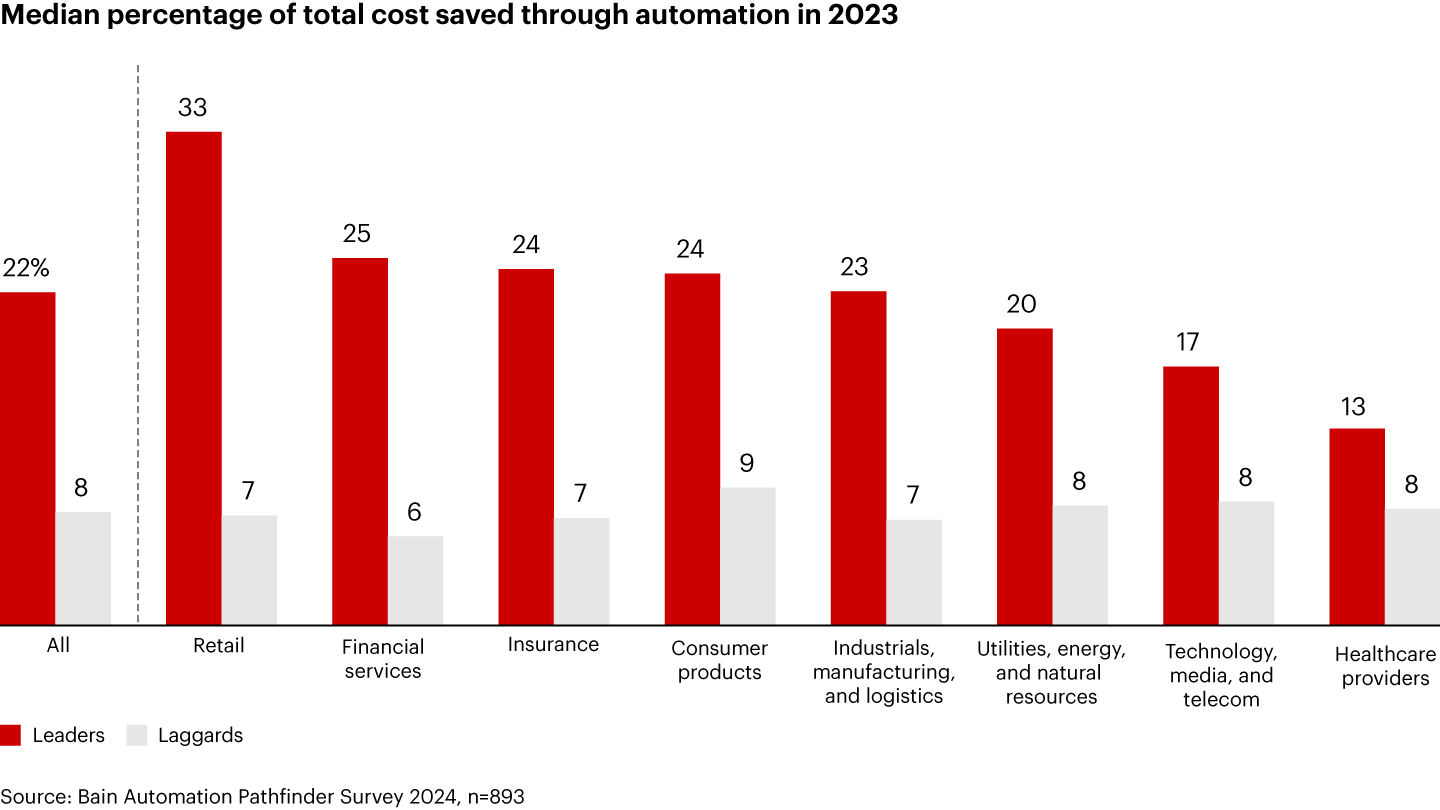
      Automation leaders post consistently higher cost savings than other firms

      What’s more, the gap between leaders and laggards has widened. Automation leaders speed down the learning curve, which can create a lasting advantage. We expect the gap will continue to widen, as leaders plan to raise their investment as a share of IT budget while lagging companies plan to be more conservative. According to our survey, 45% of leaders plan to invest significantly more in 2024, up from 29% in 2022, compared to only 17% of laggards, up slightly from 14% in 2022 (see Figure 6).

      Figure 6
      Leaders plan to invest more in automation over the next year than other firms

      Automation principles that apply to generative AI

      Mastering automation requires not only scaling up the number of processes and tasks automated but also delivering on the value promised in the business case. Companies that master these principles for effective automation are in a strong position to rapidly apply them to their AI programs.

      Elevate automation from narrow pilots to cross-company strategic initiatives. One common trap is crowdsourcing a long list of small automation projects, often within individual functions or departments and frequently focused on subscale tasks, then trying to execute them one by one. This approach makes it difficult to achieve major savings or other benefits because the projects tend to change only fractional parts of business processes and people’s workloads; they do not affect the company as a whole or gain the attention of senior executives for resources and investment.

      Automation leaders have overcome this challenge. They set bold goals, framing the potential from automation in the millions, even billions of dollars. They gain the sponsorship of senior executives and embed automation as a pillar of the overall strategic agenda.

      Combine automation technologies. Many companies buy a technology, such as an RPA software license, then find places to deploy it. As the number of automation technologies grows, with the emergence of no-code and low-code development platforms, repeating the RPA experience becomes more perilous. This approach leads to many small tasks automated with different technologies and results in little value. Worse, it can add more complexity to business processes than the automation delivers in cost savings.

      Automation leaders avoid this trap. They deploy multiple technologies ranging from RPA to analytical AI to generative AI, often combining the technologies to deliver the best results. They’re able to do this by starting with the business needs and process, working backward to determine the right combination of technologies.

      Learn more

      Artificial Intelligence Consulting

      It’s time to build your business for an AI world. We help you discover AI’s potential at the intersection of strategy and technology, and embed AI in all you do. Let’s turn AI’s promise into performance.

      Insist on realizing value from automation. Before investing in the software and implementation resources to build an automation, senior executives increasingly want a commitment from the people asking for the investment to achieve savings and other benefits. Frequently, they demand a plan to realize that value in the financial budget before a team builds the automation. Once automations are deployed, the leading firms in automation expect business processes to be redesigned by changing how people work. And they insist on seeing proof of how teams achieved the value claimed.

      Coax and convince to reach full adoption. Managing how employees change their behaviors can make or break an automation program. For example, finance departments are increasingly automating accounting processes, yet the metrics, such as the percentage of total account reconciliations automated vs. done manually, may underperform.

      Automation leaders recognize the importance of maximizing adoption of automation tools. This entails documenting and educating people on the new way to work, investing in training, tracking adoption rates, and taking steps to keep improving how people use the technologies.

      Automation is ensconced in most large companies by now, but the level of sophistication and maturity varies widely. Companies that lag can catch up, if they’re willing to boost their investments and commit to a sustained effort that changes how people do their work.

      The good news is that lessons learned from traditional automation technologies can inform fruitful deployment of new technologies including generative AI. The techniques, governance issues, and process changes are all quite similar. Using generative AI offers a fresh approach to effectively manage costs and improve the customer experience.

      About Ashling Partners

      Ashling Partners is a global intelligent process automation consultancy, offering full-lifecycle services including business process discovery, design, automation, and change management. For more information visit www.ashlingpartners.com.

      Authors
      • Headshot of Michael Heric
        Michael Heric
        Partner, New York
      • Headshot of Purna Doddapaneni
        Purna Doddapaneni
        Partner, Dallas
      • Don Sweeney
        Co-Founder & Co-CEO at Ashling Partners, Illinois
      Related Consulting Services
      • Accelerated Performance Transformation
      • AI, Insights, and Solutions
      • Automation
      • Digital
      • Enterprise Technology
      • Support Functions
      How We Can Help
      • Artificial Intelligence
      • Finance Function Advantage
      • HR Function Advantage
      CFO Insights
      Breaking the G&A Cost Cycle

      How leading companies are unlocking sustainable efficiency.

      Read more
      CFO Insights
      The 2026 Retail Executive Agenda

      Here are letters to the C-suite to help strengthen strategy, catalyze collaboration, and expand value creation in the AI age.

      Read more
      CFO Insights
      Autonomous Finance and the CFO's Next Frontier

      At the CNBC CFO Council Summit, Bain Partners Michael Heric and Steve Beam discussed how innovative CFOs are using AI to transform finance.

      Read more
      CFO Insights
      Four Moves That Separate AI Leaders from Laggards

      Most companies feel stuck in generative AI experimentation. Real change comes from business redesign, not tool deployment.

      Read more
      CFO Insights
      AI Won’t Just Cut Costs, It Will Reinvent the Customer Experience

      Beyond efficiency, AI helps create a more personalized experience that delivers a triple play of customer loyalty, employee engagement, and revenue growth.

      Read more
      First published in junho 2024
      Tags
      • Accelerated Performance Transformation
      • AI, Insights, and Solutions
      • Artificial Intelligence
      • Automation
      • CFO Insights
      • CIO Insights
      • Digital
      • Enterprise Technology
      • Finance Function Advantage
      • HR Function Advantage
      • Support Functions

      How We've Helped Clients

      A Pharma Company’s Finance Function Gets a Shot in the Arm

      See more related case studies

      A Chemical Company’s Transformation Reduces Support Function Costs by 25%

      See more related case studies

      Strategic G&A approach cooks up savings

      See more related case studies

      Quer saber mais?

      Ajudamos líderes do mundo todo a lidar com desafios e oportunidades cruciais para suas organizações. Juntos, criamos mudanças e resultados duradouros.

      Bain Insights. Our perspectives on critical issues global businesses face in today's challenging environment, delivered monthly.

      *I have read and understand Bain’s Privacy Notice.

      Please read and agree to the Privacy Policy.
      Bain & Company
      Contact us Sustainability Accessibility Terms of use Privacy Cookie Policy Sitemap Log In

      © 1996-2026 Bain & Company, Inc.

      Contact Bain

      How can we help you?

      • Business inquiry
      • Career information
      • Press relations
      • Partnership request
      • Speaker request
      See all offices