

Brief

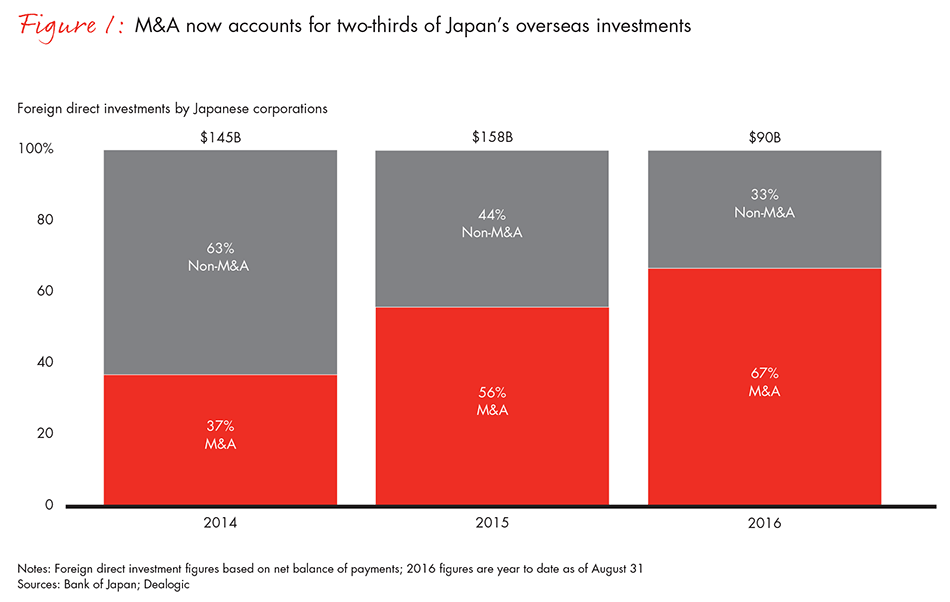
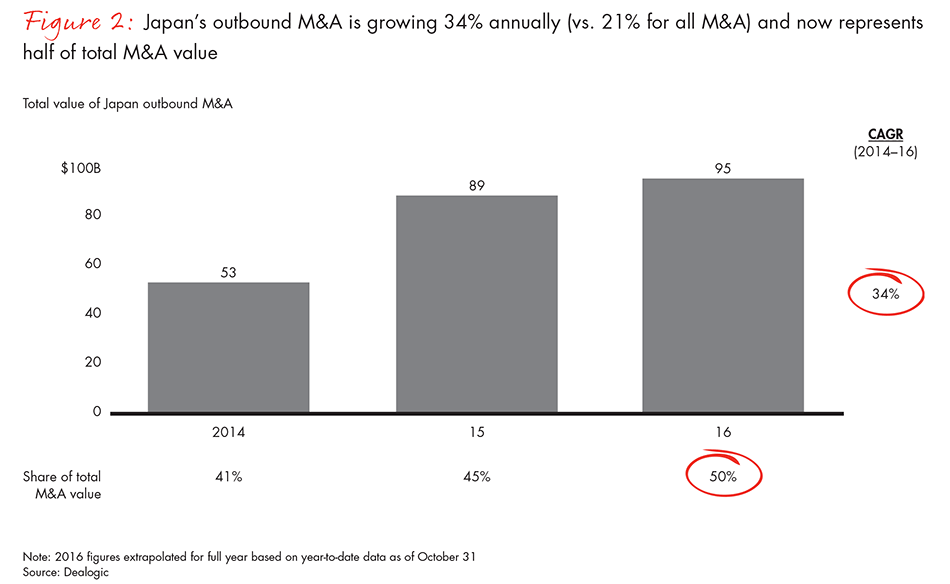
With Japan’s economy advancing at a sluggish pace, companies are turning to M&A for growth—fully two-thirds of the value of Japanese corporations’ overseas foreign direct investments now are in the form of M&A. It’s to the point where Japan’s outbound M&A deal value has jumped 34% annually over the past three years and now accounts for 50% of Japan’s total M&A activity. In fact, when Bain & Company recently interviewed 100 top Japanese executives, 70 of them said they are considering overseas expansion (see Figures 1 and 2).
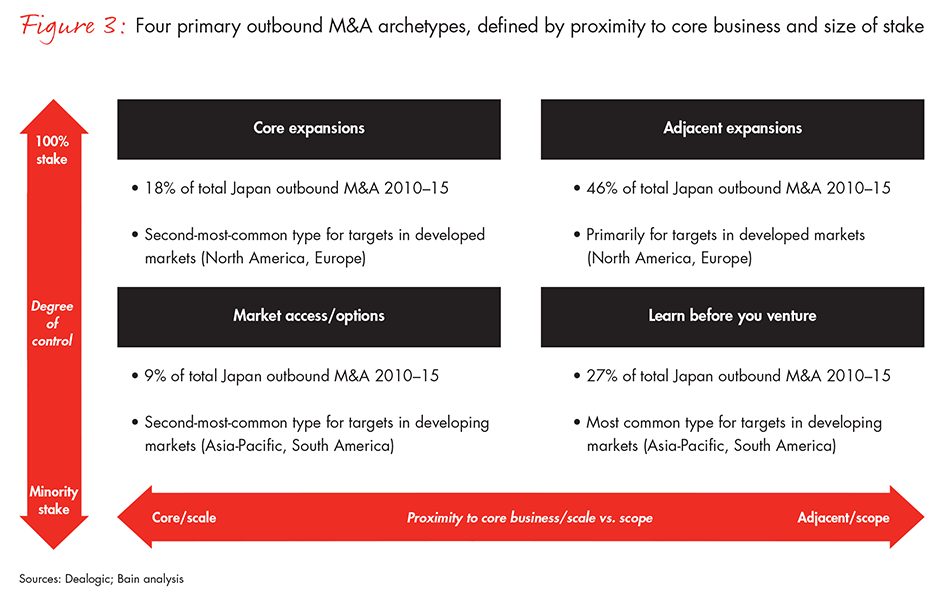
Often sitting on excess cash, these companies venture overseas for opportunities to boost earnings, enter a new market by acquiring an existing player, or buy capabilities that are costly or time-consuming to build. It also is a way for Japanese companies to respond to the pressures imposed by the new corporate governance code. There are four common types of outbound deals: those that expand an acquirer into adjacent businesses; those that expand a core business; those that help a company learn about a market or adjacency before diving in; and deals that are necessary for gaining access to a market that requires foreign companies to partner with local enterprises (see Figure 3).
But our experience working with Japanese companies across a range of industries on their outbound deals tells us that they could be gaining much more from M&A.
Japanese overseas acquirers are no different than their counterparts in other countries—they tend to generate the most value from outbound M&A when they both apply general best practices and tailor their approach for different types of deals. Here’s a simple example. When a Japanese company buys a minority stake in a Malaysian company, it typically assumes limited ability to exert influence on that company. A single seat on the board can feel inconsequential. Moreover, language and cultural barriers come into play. However, the best acquirers invest to build a relationship with the board and management team and develop a methodology for staying connected and influential, often with “soft” tools. They may send in a team of functional managers to share knowledge, for example.
Getting the basics of M&A right
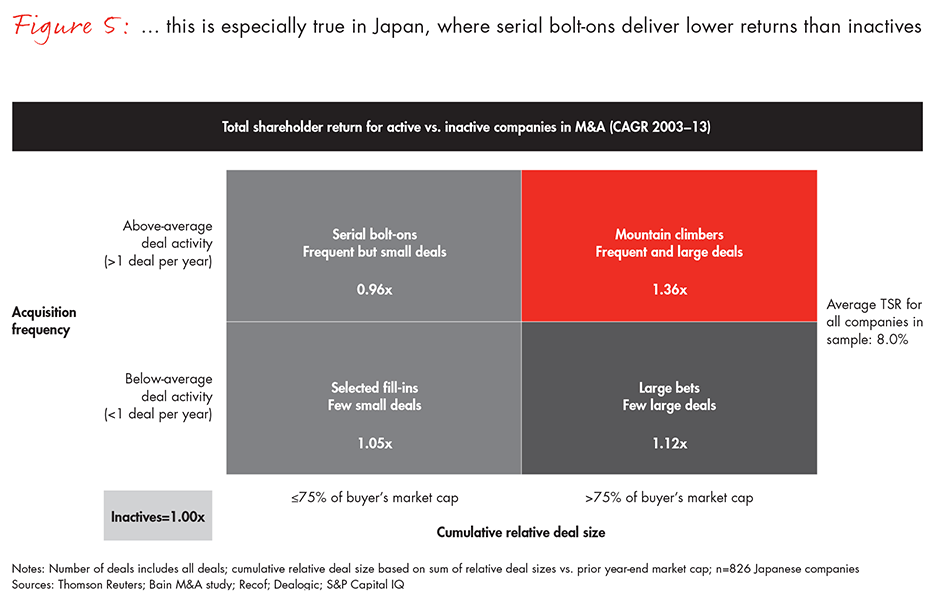
There are some basics that are critical for all deals to succeed (see Figures 4 and 5). As a start, all deals need a well-defined strategic rationale, whether it’s to give the acquirer access to new markets, create new opportunities for existing capabilities or generate significant cost savings. According to Bain’s survey of 250 global executives, in 90% of successful deals, an acquirer’s management team had developed a clear investment thesis early on. It sounds basic, but in most markets, a surprising number of companies fail to have such a clear and detailed strategic rationale before entering a deal. Seasoned acquirers articulate that rationale in the form of a deal thesis, which spells out the reasons for a specific deal—generally no more than five or six key arguments for why a transaction makes compelling business sense.
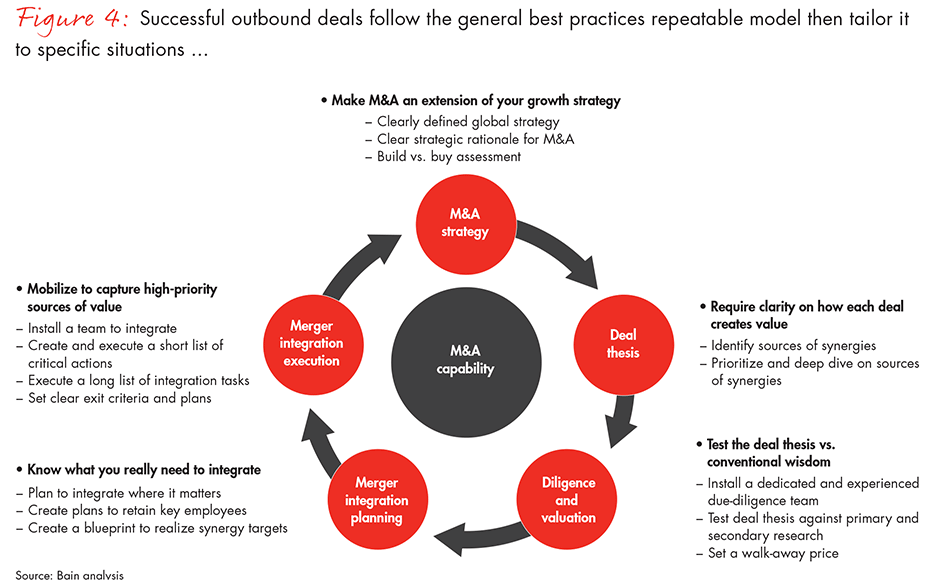
Also, when buying a target, all acquirers need to perform sufficient due diligence and valuation to ensure that they’re not only positioned to create value and run a business post-close, but are paying the right price for a target. There are many reasons why companies overpay, particularly in overseas deals. They may instinctively apply the same approach to diligence and valuation rules of thumb to overseas deals that they apply to domestic acquisitions, for example. While it may be sufficient to rely on publicly available materials and reports to understand the drivers of growth for a domestic company, acquiring in unfamiliar markets often requires a deeper level of research on a target’s management, finances and market in which it operates. However, we’ve found that Japanese acquirers tend to over-rely on public information. It’s a model that’s fairly successful within Japan, but it’s not the best way to uncover problems or opportunities in foreign companies. This is especially true in emerging markets. A greater amount of proprietary diligence will likely be required for both the core diligence phases as well as the integration elements such as cultural fit and governance models.
Diligence requirements differ for scope deals vs. scale deals vs. option buys. (Scope deals expand a company’s scope by adding new customers, products, markets or channels, and are highly prevalent in cross-border deals where growth is the objective. Scale deals grow a company’s scale by adding similar products or customers. Option buys are minority acquisitions to gain understanding of new and adjacent markets or to enter markets with regulatory or investment constraints.) The most important questions you ask are different, based on the situation. Buying a big US company means rigorously researching synergy value and growth prospects. Buying a minority share of a developing-market company may require a focus on legal issues, partner trustworthiness, and future growth value. For example, buying a minority stake of a small bank in Indonesia is more likely to be a strategy for obtaining access to a license that enables you to serve your clients’ subsidiaries in that country. So there’s less interest in generating synergies than in using the acquisition as a piece of a broader strategy. It’s important to clearly see how the acquisition serves to further that strategy.
Finally, it’s always essential to be strategic about integrating an acquisition. Too many deals—both domestic and foreign—run into trouble when an acquirer underestimates the value and urgency of post-acquisition planning and integration. That’s particularly the case in many overseas acquisitions, given the distance and sometimes thorny cultural issues that surface. Ideally, the acquiring company should begin planning the integration process even before the deal is announced. Once it is announced, the acquirer needs to address several priorities immediately. That means identifying everything that must be done prior to close, making as many of the major decisions early so that the company can move quickly once the deal has closed, and laying the groundwork for integrating where it matters most.
For major deals, it’s important to tackle people issues early to reduce the general anxiety among management that’s created by a merger’s uncertainty. It’s also critical to make decisions involving the front line and the distribution and sales model as soon as possible, including using clean teams to address these issues immediately after announcement and prior to closing and integration. These issues are less relevant for minority deals.
Four ways to win
While Japanese acquirers need to excel in each of these capabilities, the difference between success and failure may lie in their ability to devote extra emphasis to specific activities based on the intent of the deal and whether it is for a controlling or minority stake (see Figure 6). Acquirers that learn this fundamental lesson boost their odds of success. For example, to make adjacency deals work, acquirers should strive to understand the key capabilities needed to succeed in the adjacent business, and perform a self-assessment to determine how good those capacities currently are. They also should understand the degree of business sharing between the acquirer and the adjacent business to plan for overlaps and new investment.
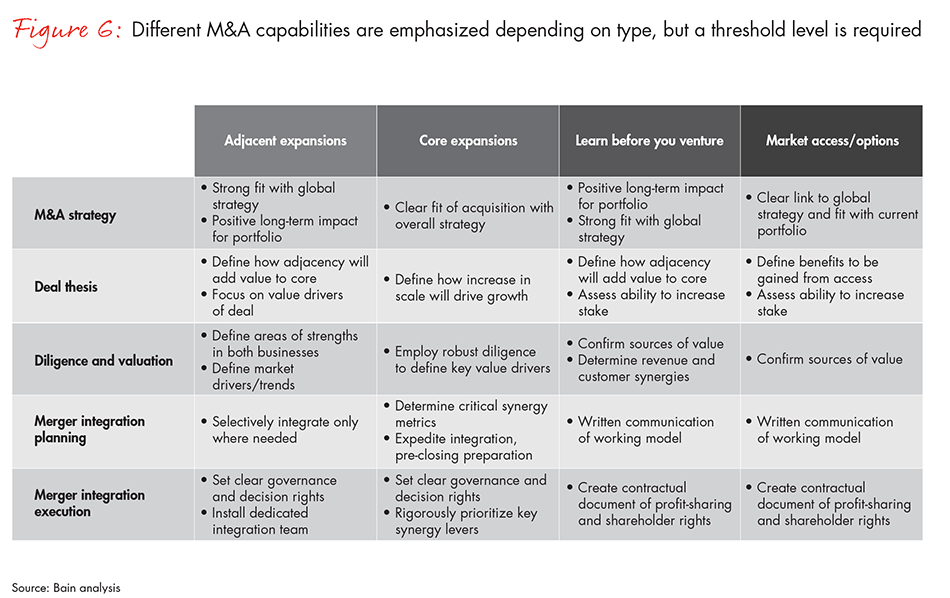
Let’s look at the unique requirements for each type of deal.
Adjacent expansion deals. Fully 46% of outbound deals completed from 2010 to 2015 were aimed at helping Japanese companies gain capabilities beyond their core that would eventually strengthen that core—it’s a common objective of deals in developed markets.
Our research has found that companies that successfully expand an adjacent business overseas through M&A pay special attention to ensuring that the target will be a strong fit with its global strategy. So in these situations, a significant part of the deal thesis is typically devoted to defining precisely how the adjacency will add value to the core business and the value-drivers of the particular deal. When Astellas Pharma bought US biotech company OSI Pharmaceuticals in 2010, the deal thesis detailed how OSI, producer of the cancer drug Tarceva, could help Astellas establish a world-class oncology platform in addition to augmenting its existing franchises in urology and immunology.
Specifically, Astellas would gain access to the critical capabilities that underpinned OSI’s success, such as its advanced R&D infrastructure, discovery platform and talent base. Another value-driver: Astellas could improve Tarceva’s drug performance by expanding its approved usages and R&D pipeline, and extending its drug patent. The extra effort to identify the adjacency’s value-drivers paid off. Tarceva sales grew 19% annually in the four years following the acquisition.
Learn-before-you-venture deals. When Japanese companies expand overseas, particularly in developing markets, it’s often to learn about those markets or about potential new customer segments. That’s been the goal for 27% of Japan’s outbound M&A deals in the 2010-15 period. Among the priorities that contribute to success in these typically minority deals: devoting extra time to determine the positive long-term contribution the target will have on the overall portfolio and clearly identifying how the adjacency will add value to the core.
Dai-ichi Life stressed those activities when it bought a 29% stake in Tower Australia Group in 2008. The insurer made a strong strategic case for the acquisition: Dai-ichi wanted to increase its earnings diversification in a stable, growing market like Australia and also boost its profitability elsewhere by applying Tower’s experience to other overseas businesses. Prior to the acquisition, it created a solid deal thesis, spelling out how it could transfer Tower’s high-value management expertise to its own overseas businesses and generate transborder synergies. Also, the minority ownership phase would serve as an opportunity to learn about the market. Ultimately, Dai-ichi Life saw the value in fully acquiring Tower. The Tower deal jump-started further acquisitions, helping Dai-ichi hone a successful repeatable model for overseas M&A and 14% annual revenue growth from 2011 to 2014.
As domestic growth slows, companies in Japan are increasingly looking to outbound M&A as a solution. Yet outbound deals frequently disappoint. Thomas Olsen, a partner with Bain’s Mergers & Acquisitions practice, maintains that companies can succeed by tailoring their approach, based on the deal type, with the goal of developing repeatable, winning models.
Core expansion deals. The third-most-common reason that Japanese companies seek targets in developed markets: to enhance their global market position by expanding their core to new geographies. From 2010 to 2015, core expansions accounted for 18% of Japan’s outbound M&A activity. Typically, companies pursuing such deals should overemphasize the diligence and valuation process as well as merger integration. In fact, success can depend on an acquirer’s ability to use diligence and valuation to define the key sources of value. Will the merger reduce operational costs? Are there cross-selling opportunities for related products? Will it increase distribution and supplier power? Also critical: expediting integration with rigorous preclosing preparation—everything from communications plans to systems for measuring, monitoring and rewarding performance in the new regime.
Finally, core expansion deals require an acquirer to pay particular attention to establishing clear governance and decision rights. Undoubtedly, the structural changes are critical. But so, too, are the “soft” methods—ear-marking and cultivating executives at companies that could become targets in the years ahead, for example. Investing in such relationships—and the influence it creates—can greatly smooth the processes before and after closing.
The best acquirers conduct comprehensive due diligence involving multiyear conversations aimed at helping them identify the specific areas where they could create value in the deal, the synergies they could generate, and the areas of overlap for brands and customers. They also conduct rigorous integration planning that uncovers integration risks, and devise a plan for mitigation. Integration planning includes processes for aligning leadership prior to integration and joint decisions on the target’s growth strategy.
We find that creating the most value from an M&A also requires the acquirer to pay equal attention to integration execution, establishing a program for putting the acquirer’s employees in all departments of the acquired company, for example, and deploying a proven system for tracking synergies, embedding transparency in communications, and applying learnings from other portfolio companies.
Meanwhile, winners work to master the thorny talent management issue—something that’s especially tricky when they gain a controlling stake. Some make early announcements of a new governance structure, including the revised management lineup, organization chart and reporting lines. They quickly hold one-on-one meetings with key employees aimed and easing their fears, and work to create a common company language to smooth communications.
Market access deals. Japanese companies also acquire overseas to meet regulatory requirements to enter a market, such as restrictions on foreign direct investment, or to gain distribution that otherwise would be unobtainable. Such deals have accounted for 9% of Japan’s outbound M&A activity from 2010 to 2015. Here, before moving on an overseas target, an acquirer needs to establish an ironclad link to its global strategy, identifying how the acquired company would fit with its current portfolio. One company determined that overseas deals could make a positive long-term contribution to its portfolio and made them an essential part of its global strategy. Specifically, the company saw acquisitions as the most promising way of gaining a foothold in the growing Asian market. It was able to articulate precisely how a minority stake in this particular target would deliver value: It would allow the acquirer to enter Southeast Asia and position it to buy any other assets in the region that the target put on the market. The acquirer laid out a highly detailed blueprint for how both parties would contribute value through exchanges of technology, marketing, manufacturing and finance, and by strengthening each company’s product portfolio. Since the deal, the target has become an essential part of the acquirer’s Asia strategy.
Japanese companies are looking overseas to grow. Many risk insufficient preparation and tailoring of the approach to the deal thesis, due diligence and integration. However, the best prepared among them will hone a repeatable model for outbound M&A, making deals a key component of their growth strategy and focusing on the capabilities that suit the type of deal they’re pursuing. These are the Japanese companies that will watch their total shareholder return grow, even if faced with sluggish domestic growth.
A checklist to begin
The best way to join the ranks of successful outbound deals is to look inward—perform a critical self-evaluation to identify M&A strengths and potential capability gaps for each of these deal types and create a repeatable model for success. Start by asking and answering a series of fundamental questions:
- How does our M&A strategy need to be tailored for outbound opportunities?
- What people will we need to deliver on our M&A strategy over the next few years?
- How well does our M&A playbook apply to different types of outbound and domestic deals? What do we need to refine?
- What types of deals are in our pipeline?
- What are the table stakes and differential capabilities required for each deal?
- What do we need to build sufficient and dedicated M&A and integration teams to effectively execute the deals we expect to complete?
How Operational and Financial Metrics Vary by Deal Type
Operational and financial ambitions and metrics will vary according to the archetype. It is important to identify these goals at the early stages of the acquisition and to consistently align internal and external stakeholders.
Core expansion deals generate value from added scale and product. As a result, operational and financial measures need to be tightly and transparently linked to scale economics of revenue or cost benefits. These deals lend themselves to hard cost-synergy targets detailed by function and accompanied by operational KPIs related to cost reduction, efficiency and/or new product sales. Similarly, these deals can effectively be evaluated with payback period hurdles.
By comparison, market access deals gain value from expanded presence and the enhanced ability to make additional future investments in the overseas market. Acquirers can extend products and distribution to previously unavailable customers and have the important option for greater participation in growing markets. Cost-synergy targets and near-term payback calculations are not particularly helpful for these deals. What’s more relevant: specific targets for local distribution of products or qualitative measures of the services provided to in-market clients and the option value of the market access for future growth.
Thomas Olsen is a Bain & Company partner based in Singapore. Junya Ishikawa is a Bain partner in Tokyo. Philip Leung is a partner in Shanghai who leads Bain’s Mergers & Acquisitions practice for Asia-Pacific. Matt Sweeny is a principal in Tokyo.
First published in dezembro 2016