
Skip to Content
  • Offices

    Offices

    North & Latin America
    • Atlanta
    • Austin
    • Bogota
    • Boston
    • Buenos Aires
    • Chicago
    • Dallas
    • Denver
    • Houston
    • Los Angeles
    • Mexico City
    • Minneapolis
    • Monterrey
    • Montreal
    • New York
    • Rio de Janeiro
    • San Francisco
    • Santiago
    • São Paulo
    • Seattle
    • Silicon Valley
    • Toronto
    • Washington, DC
    Europe & Africa
    • Amsterdam
    • Athens
    • Berlin
    • Brussels
    • Copenhagen
    • Dusseldorf
    • Frankfurt
    • Helsinki
    • Istanbul
    • Johannesburg
    • Kyiv
    • Lisbon
    • London
    • Madrid
    • Milan
    • Munich
    • Oslo
    • Paris
    • Rome
    • Stockholm
    • Vienna
    • Warsaw
    • Zurich
    Middle East
    • Doha
    • Dubai
    • Riyadh
    Asia & Australia
    • Bangkok
    • Beijing
    • Bengaluru
    • Brisbane
    • Ho Chi Minh City
    • Hong Kong
    • Jakarta
    • Kuala Lumpur
    • Manila
    • Melbourne
    • Mumbai
    • New Delhi
    • Perth
    • Seoul
    • Shanghai
    • Singapore
    • Sydney
    • Tokyo
    See all offices
  • Alumni
  • Media Center
  • Subscribe
  • Contact
  • Brazil | Português

    Select your region and language

    Global
    • Global (English)
    North & Latin America
    • Brazil (Português)
    • Argentina (Español)
    • Canada (Français)
    • Chile (Español)
    • Colombia (Español)
    Europe, Middle East, & Africa
    • France (Français)
    • DACH Region (Deutsch)
    • Italy (Italiano)
    • Spain (Español)
    • Greece (Elliniká)
    Asia & Australia
    • China (中文版)
    • Korea (한국어)
    • Japan (日本語)
  • Saved items (0)
    Saved items (0)

    You have no saved items.

    Bookmark content that interests you and it will be saved here for you to read or share later.

    Explore Bain Insights
  • Industries
    Main menu

    Industries

    • Aeroespacial e Defesa
    • Agronegócio
    • Química
    • Construção e Infraestrutura
    • Bens de Consumo
    • Serviços Financeiros
    • Healthcare & Life Sciences
    • Máquinas e Equipamentos Industriais
    • Mídia e Entretenimento
      Industries
      Mídia e Entretenimento
      • Media Lab
    • Metais
    • Mineração
    • Petróleo e Gás
    • Papel e Embalagens
    • Private Equity
      Industries
      Private Equity
      • Due Diligence
      • Exit Planning
      • Firm Strategy & Operations
      • Portfolio Value Creation
    • Setor Público e Social
    • Varejo
    • Tecnologia
    • Telecomunicações
      Industries
      Telecomunicações
      • Capital Expenditure
      • Telco Digital Transformation
    • Transporte
    • Turismo & Lazer
    • Energia & Renováveis
  • Consulting Services
    Main menu

    Consulting Services

    • Customer Experience
    • Sustainability
    • Innovation
    • M&A
    • Operations
    • People & Organization
    • Private Equity
    • Sales & Marketing
    • Strategy
    • AI, Insights, and Solutions
    • Technology
    • Transformation
  • Digital
  • Insights
    Main menu

    Insights

    • Industry Insights
    • Services Insights
    • Bain Books
    • Webinars
    • Bain Futures
    View all Insights
    Featured topics
    • Tariff Response
    • Artificial Intelligence
    • Thriving in Uncertainty
    • Executive Conversations
    • Macro Trends
    • M&A Report
    • Healthcare Private Equity Report
    • Paper & Packaging Report
    • Technology Report
    • CEO's Guide to Sustainability
    • CEO Insights
    • CFO Insights
    • COO Insights
    • CIO Insights
    • CMO Insights
    View all featured topics
  • About
    Main menu

    About

    • What We Do
    • What We Believe
    • Our People & Leadership
    • Client Results
    • Awards & Recognition
    • Global Affiliations
    Further: Our global responsibility
    • Sustainability
    • Social Impact
    • World Economic Forum
    Learn more about Further
  • Carreiras
    Main menu

    Carreiras

    • Trabalhe Conosco
      Carreiras
      Trabalhe Conosco
      • Find Your Place
      • Nossas áreas de trabalho
      • Equipes integradas
      • Estudantes
      • Programas e estágios
      • Eventos de Recrutamento
    • A Vida na Bain
      Carreiras
      A Vida na Bain
      • Blog: Inside Bain
      • Histórias de carreira
      • Nossas pessoas
      • Onde trabalhamos
      • Apoioao seu crescimento
      • Grupos de afinidade
      • Benefícios
    • Impact Stories
    • Nosso Processo Seletivo
      Carreiras
      Nosso Processo Seletivo
      • O Que Esperar
      • Entrevistas
    FIND JOBS
  • Offices
    Main menu

    Offices

    • North & Latin America
      Offices
      North & Latin America
      • Atlanta
      • Austin
      • Bogota
      • Boston
      • Buenos Aires
      • Chicago
      • Dallas
      • Denver
      • Houston
      • Los Angeles
      • Mexico City
      • Minneapolis
      • Monterrey
      • Montreal
      • New York
      • Rio de Janeiro
      • San Francisco
      • Santiago
      • São Paulo
      • Seattle
      • Silicon Valley
      • Toronto
      • Washington, DC
    • Europe & Africa
      Offices
      Europe & Africa
      • Amsterdam
      • Athens
      • Berlin
      • Brussels
      • Copenhagen
      • Dusseldorf
      • Frankfurt
      • Helsinki
      • Istanbul
      • Johannesburg
      • Kyiv
      • Lisbon
      • London
      • Madrid
      • Milan
      • Munich
      • Oslo
      • Paris
      • Rome
      • Stockholm
      • Vienna
      • Warsaw
      • Zurich
    • Middle East
      Offices
      Middle East
      • Doha
      • Dubai
      • Riyadh
    • Asia & Australia
      Offices
      Asia & Australia
      • Bangkok
      • Beijing
      • Bengaluru
      • Brisbane
      • Ho Chi Minh City
      • Hong Kong
      • Jakarta
      • Kuala Lumpur
      • Manila
      • Melbourne
      • Mumbai
      • New Delhi
      • Perth
      • Seoul
      • Shanghai
      • Singapore
      • Sydney
      • Tokyo
    See all offices
  • Alumni
  • Media Center
  • Subscribe
  • Contact
  • Brazil | Português
    Main menu

    Select your region and language

    • Global
      Select your region and language
      Global
      • Global (English)
    • North & Latin America
      Select your region and language
      North & Latin America
      • Brazil (Português)
      • Argentina (Español)
      • Canada (Français)
      • Chile (Español)
      • Colombia (Español)
    • Europe, Middle East, & Africa
      Select your region and language
      Europe, Middle East, & Africa
      • France (Français)
      • DACH Region (Deutsch)
      • Italy (Italiano)
      • Spain (Español)
      • Greece (Elliniká)
    • Asia & Australia
      Select your region and language
      Asia & Australia
      • China (中文版)
      • Korea (한국어)
      • Japan (日本語)
  • Saved items  (0)
    Main menu
    Saved items (0)

    You have no saved items.

    Bookmark content that interests you and it will be saved here for you to read or share later.

    Explore Bain Insights
  • Industries
    • Industries

      • Aeroespacial e Defesa
      • Agronegócio
      • Química
      • Construção e Infraestrutura
      • Bens de Consumo
      • Serviços Financeiros
      • Healthcare & Life Sciences
      • Máquinas e Equipamentos Industriais
      • Mídia e Entretenimento
      • Metais
      • Mineração
      • Petróleo e Gás
      • Papel e Embalagens
      • Private Equity
      • Setor Público e Social
      • Varejo
      • Tecnologia
      • Telecomunicações
      • Transporte
      • Turismo & Lazer
      • Energia & Renováveis
  • Consulting Services
    • Consulting Services

      • Customer Experience
      • Sustainability
      • Innovation
      • M&A
      • Operations
      • People & Organization
      • Private Equity
      • Sales & Marketing
      • Strategy
      • AI, Insights, and Solutions
      • Technology
      • Transformation
  • Digital
  • Insights
    • Insights

      • Industry Insights
      • Services Insights
      • Bain Books
      • Webinars
      • Bain Futures
      View all Insights
      Featured topics
      • Tariff Response
      • Artificial Intelligence
      • Thriving in Uncertainty
      • Executive Conversations
      • Macro Trends
      • M&A Report
      • Healthcare Private Equity Report
      • Paper & Packaging Report
      • Technology Report
      • CEO's Guide to Sustainability
      • CEO Insights
      • CFO Insights
      • COO Insights
      • CIO Insights
      • CMO Insights
      View all featured topics
  • About
    • About

      • What We Do
      • What We Believe
      • Our People & Leadership
      • Client Results
      • Awards & Recognition
      • Global Affiliations
      Further: Our global responsibility
      • Sustainability
      • Social Impact
      • World Economic Forum
      Learn more about Further
  • Carreiras
    Popular Searches
    • Agile
    • Digital
    • Strategy
    Your Previous Searches
      Recently Visited Pages

      Content added to saved items

      Saved items (0)

      Removed from saved items

      Saved items (0)

      The Visionary CEO’s Guide to Sustainability

      Can Food and Agriculture Companies Raise Their Game?

      Can Food and Agriculture Companies Raise Their Game?

      As they address health consequences and environmental issues, winning companies will find opportunities.

      By John Blasberg, Andrew Keech, Vikki Tam, and Sasha Duchnowski

      • min read
      }

      Brief

      Can Food and Agriculture Companies Raise Their Game?
      en
      Executive Summary
      • Agribusiness, food companies, and retailers across the global food system have an urgent need to raise their ambitions on sustainability and health.
      • In addressing the mounting challenges, companies can build more future-proof and competitive businesses.
      • Success requires companies to elevate their ambitions, reinvent portfolios, accelerate the agricultural transformation, and change their organizations to deliver on the new imperative.

      This article is part of Bain’s 2023 CEO Sustainability Guide

      Explore the report

      The global food system is an impressive human accomplishment. Over the past five decades, its vast productivity gains have greatly improved food security and substantially reduced the share of income that people need to spend for food. The food system has become so productive that it is now also helping to address other global issues, such as energy supply, through the growing use of biofuels.

      But, like virtually all other industries, food and agribusiness companies face mounting demands, from tackling the long-term health consequences of food products to fixing an outsized contribution to global climate and nature challenges. Today, agriculture consumes 70% of the world’s fresh water, and the food system more broadly contributes over one-third of all greenhouse gas emissions and is at the heart of the 20% of annual deaths attributed to poor diet. As a result, agriculture producers, consumer products companies, retailers, and others that make up the global food system are on the verge of coming under the same high-level scrutiny experienced by oil and gas companies.

      Elevating the ambition

      With this backdrop, food and agriculture companies have an urgent need to raise their ambitions on sustainability and health to build more future-proof and competitive businesses. There’s a lot at stake for companies that fail to take the aggressive steps required. Latecomers will face rising costs to address carbon requirements for their value chains, for example. Incumbent consumer goods companies will continue to cede growth to insurgents that are doing a better job of serving consumers’ rising demands for healthier food. Companies across the food chain will find themselves losing out amid the scarce supply of limited raw materials that meet environmental standards. They’re already lagging in the war for top talent. A telling fact: No agribusiness or food producer was named in the Fortune 100 Best Companies to Work For list in 2023.

      Acting now allows companies to turn risks into opportunities—new products, categories, and markets, or increased share of growth. By our analysis, food companies that seize the initiative can benefit from a potential 15% five-year revenue uplift compared with a 43% revenue decline for companies that fall behind based on a scenario of increasingly aggressive regulation. By changing product and ingredient portfolios, as well as where and how foods are produced, large food and agriculture companies can shift the food system toward healthier and more nutritious food—and healthier populations—while tipping the environmental impact from negative to a net positive.

      An integrated food systems ambition, once defined, will have strategic implications for agriculture and food businesses in three particularly critical areas: product portfolio, agricultural sustainability, and ways of working. Here are examples of winning approaches in each of those areas. 

      Reinventing the portfolio

      Product portfolio reinvention will be a critical element of food system transformation for upstream and downstream companies alike. As an example of the scale of the issues at hand, one study determined that among 50,000 food products in the US, 73% is made up of ultraprocessed foods.1 Such foods are linked to a wide range of health issues, and reduced consumption is recommended in national dietary guidelines in places as diverse as Canada and Brazil. The need to transform portfolios is not limited to downstream players. For example, agricultural input portfolios may need to add seeds that support more diverse crops, or equipment and inputs to support more sustainable farming practices—in addition to supporting reduced fertilizer and chemical volumes through more precise application.

      Facing mounting pressure to offer healthier and more sustainable goods, companies can reevaluate their portfolio strategy to determine the product mix that will best help them meet those new demands without dismantling a core that has delivered decades of profitable growth. That means identifying and exiting the unfixable parts of the portfolio and spending more time and energy on the brands and products that have the fundamentals that will allow them to satisfy consumers' needs for delicious, healthy, and sustainable foods.

      When it comes to shifting food product portfolios toward better health, a common refrain from food company executives is that the indulgent segments of consumer goods categories are growing faster than the “better for you” segments. Indeed, in the US, consumption of ultraprocessed foods increased from 53.5% in 2001 to 57% in 2018, and the consumption of whole foods declined over the same period.

      However, many leaders are not accepting that such a shift is an either/or decision, and the winners of the future will likely have more balanced portfolios than most food companies today. They will offer products that reduce trade-offs for consumers, introducing ones that can be delicious, healthy, and affordable. PepsiCo took a step in this direction when it started gradually lowering the amounts of sodium, saturated fat, and sugar in its snacks and beverages, with plans to bring them even lower—and to do it without consumers noticing. The company already has reached its 2025 target of producing 75% of its food portfolio volume with 1.1 grams or less of saturated fat per 100 calories. It also is advancing on its targets for reducing sodium and added sugars.

      This shift toward healthier portfolios will get a big push from sugar and salt taxes introduced, as well as from newly required health labeling on packages. Consider that around 85 jurisdictions around the world have implemented a form of sugar tax. Also at play: a flood of venture financing—roughly $13 billion—was invested into sustainable food systems technology and innovation globally in 2021. (By comparison, the total R&D budget for the top 10 global food companies was roughly $4 billion.) This magnitude of venture funding to solve the problems of health and sustainability shows these issues are already a major focus among private investors. Now, the question is whether food companies will get ahead of this imperative or be disrupted by it.

      In addition to aggressively reducing salt and sugar content in its products, Nestlé has turned to M&A to transform its portfolio. In the years 2017–22 the world’s largest food company made more than 20 acquisitions and sold 10 business units. During that period, total shareholder return rose by an annual 9.5%. Nestlé also has committed substantially more funds to sustainability efforts, more than $1 billion annually, twice as much as the next competitor.

      Accelerating agricultural transformation

      Almost all food and agriculture companies are way behind in their Scope 3 emissions reduction. Agricultural production contributes two-thirds of those emissions, which could be substantially reduced through more sustainable farming practices, such as regenerative agriculture for crops (see Figure 1). But adoption of these practices is low, and until companies can solve the scaling problem, they will fail to achieve their Scope 3 commitments. Most important, they will fail to realize the opportunity that exists for agriculture to reduce its own climate impact and be a positive contributor on the path to net zero and in other areas such as water and biodiversity.

      Figure 1
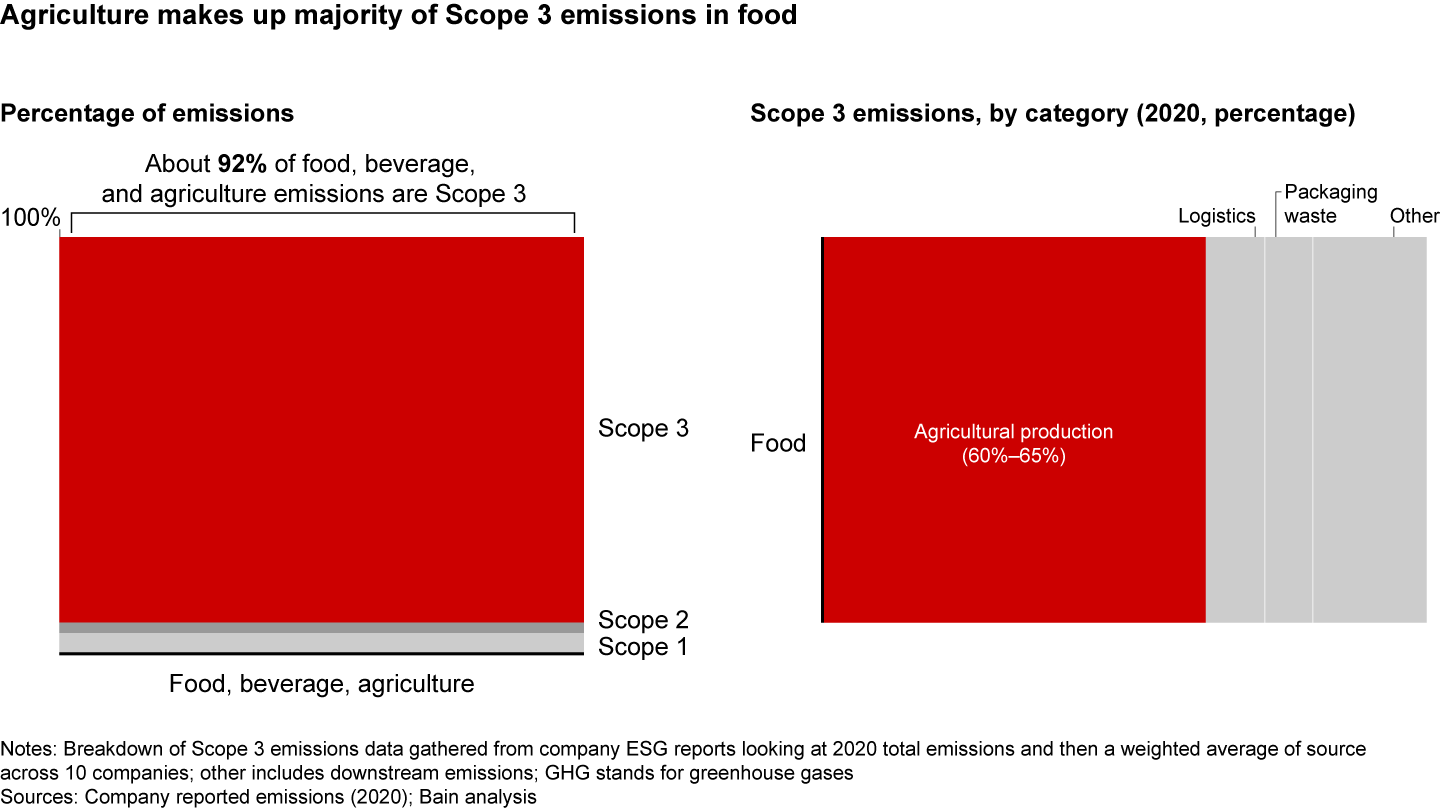
      Addressing Scope 3 emissions through regenerative agriculture is a powerful opportunity to deliver on GHG commitments

      Reducing the food supply carbon footprint requires engagement across the food value chain—everyone from input and equipment providers, to farmers, to commodity traders and processors, to ingredient and food companies—and with a broader ecosystem of stakeholders such as governments, financial services providers, investors, and grower organizations. As far back as the 1980s, soil health was a growing concern for many stakeholders in the Canadian food system who wanted to generate acceptance for conservation tillage, a regenerative agriculture practice. After local farm associations spread awareness and provided technical expertise, equipment companies marketed new equipment, prototyped by entrepreneurial local farmers, that made conservation tillage compatible with mechanical seeding. Meanwhile, the federal government offered grants to reduce upfront costs of new equipment. As a result of coordinated ecosystem action, adoption of conservation tillage practices in Canada are now at almost 80%, substantially further ahead than other developed markets.

      Success calls for a paradigm shift for upstream and downstream companies: putting growers at the center, surrounded by the right conditions for making changes. We refer to these as the 4As of adoption.

      Awareness: Farmers must know about climate-smart and nature-positive practices and technologies—and have access to the technical expertise and support needed to implement them.

      Advantage: Farmers must have confidence that adopting new practices and technologies will deliver an attractive rate of return, both now and into the future.

      Access: The right inputs, tools, equipment, and methods must be available to farmers, when and where needed.

      Affordability: Upfront costs for farmers must be reasonable, with affordable financing available to support initial investments.

      Collaboration between players across the ecosystem is essential to establishing these 4A conditions for farmers, particularly for creating the economic case for change to growers (Advantage and Affordability), which our analysis shows is the biggest barrier to change. This requires involvement of players inside the value chain as well as those outside it, such as financial services providers.

      The Soil and Water Outcomes Fund is one such innovative, precompetitive partnership model, which brings together actors across the value chain (including Nutrien, Cargill, PepsiCo, Target, and ReHarvest Partners, a financial services provider) and the Iowa Soybean Association. SWOF aids farmers’ transition to regenerative agriculture through payments for carbon and water outcomes. While partnership models like SWOF are encouraging, still more investment is needed. Most regenerative practices are not widely adopted, and many have yet to be adopted on even 10% of the roughly 230 million acres of soy, corn, and wheat planted annually in the US. 

      Changing the organization

      Just as important as what needs to be done is how companies mobilize their enterprises to progress on these priorities. For example, it requires cross-functional collaboration in newly established forums to factor the impact on sustainability or health in funding decisions.

      The food systems imperative will give rise to a new set of heroes. In food retailers, it will be the merchandisers. In consumer goods companies, it will be supply chain and procurement teams. They will be the ones driving Scope 3 decarbonization. But they won’t be able to do it alone. They will need to partner with brands and R&D functions to collaborate on how to address sustainability challenges in ways that deliver delicious and affordable products for consumers.

      As with any successful change to ways of working, this one starts with management alignment and commitment. As an example, General Mills’ Global Impact Governance Committee, which includes the company’s CEO, CFO, and group president, North America Retail, among others, has adopted and signed a formal charter that articulates its ownership over this enterprise mission. It is not a steering committee sitting in judgment of others’ efforts. Instead, it has taken on the responsibility of seeing General Mills’ mission through.

      In a global food system facing huge changes, winning companies will be those with unwavering support from the top—and with leaders willing to make the tough trade-off decisions that inevitably will be required.

      Getting started

      Companies can begin this journey into the future by asking and answering a series of fundamental questions.

      • How are we contributing—both positively and negatively—to the health and environmental footprint of the food system?
      • How might environmental, health, consumer, technology, and regulatory dynamics/developments affect the food industry over the next 10 years?
      • What will the agri-food company of the future—and our company—need to look like in 10 years?
      • How do we scale our regenerative agriculture and portfolio reinvention priorities?
      • How can we better mobilize our entire organization?

      Read the Next Chapter

      Fires, Floods, and Loans: How Banks Can Deal with Increasing Climate Risks

      Read our 2023 CEO Sustainability Guide

      Explore the full report Download PDF

      Notes

      1. Data is based on the NOVA classification of foods, which defines ultraprocessed foods as ready-to-eat, industrially formulated products that are made mostly or entirely from substances derived from foods and additives, with few, if any, edible parts of plants or animals that have been taken straight from nature or that have been minimally modified/preserved.
      Authors
      • Headshot of John Blasberg
        John Blasberg
        Partner, Boston
      • Headshot of Andrew Keech
        Andrew Keech
        Partner, Chicago
      • Headshot of Vikki Tam
        Vikki Tam
        Partner, New York
      • Headshot of Sasha Duchnowski
        Sasha Duchnowski
        Partner, Chicago
      Related Industries
      • Consumer Products
      Related Consulting Services
      • Sustainability
      How We Can Help
      • Sustainable Food Systems
      CEO's Guide to Sustainability
      Olam Food Ingredients: Pioneering a New Financial Model for Sustainability

      CFO Rishi Kalra has finance and sustainability speaking a common language, valuing comprehensive impact, and reporting results investors can count on.

      Read more
      CEO's Guide to Sustainability
      From Sustainability Commitments to Impact: Four Pragmatic Questions for Visionary CEOs

      Amid competing priorities, CEOs and consumers still say sustainability matters. By acting now, companies can set the stage for profitable growth.

      Read more
      Consumer Products
      Insurgent Q&A: Chomps Cofounder Rashid Ali

      “Our retail expansion story isn’t about taking share—it’s about growing the category.”

      Read more
      Sustainable Food Systems
      First Movers Coalition for Food: CEO Lessons for the Future of Food Procurement

      How companies can move beyond pilot initiatives to embed resilient, sustainable sourcing at scale.

      Read more
      Sustainability
      How AI Is Starting to Transform Circular Packaging

      There are 15 AI use cases companies across the value chain can use today to accelerate circularity.

      Read more

      Introduction

      • The Questions Every CEO Needs to Ask About Sustainability

      Levers of Change: Technology, Behavior, Policy

      • Selling Sustainability Means Decoding Consumers

      • Does a Purpose Help Brands Grow?

      • Lower Costs, Faster Adoption: Closing the Sustainable Innovation Gap

      • The Future Is Circular: How Companies Can Prepare to Grow in a Changing World

      • Leading with Vision: Harnessing the Climate Policy Response

      Sector Perspectives

      • Building Resilience in Your Business Strategy: Four Imperatives for Leaders

      • The Energy Transition’s Other Big Puzzle: Making the Math Work

      • Can Food and Agriculture Companies Raise Their Game?

      • Fires, Floods, and Loans: How Banks Can Deal with Increasing Climate Risks

      Making It Happen

      • Building a Data-Based Stakeholder Strategy

      • Operations and Supply Chain Decarbonization: Lower Emissions, Higher Performance

      • Making Business Do Better for Everyone

      • Organizing for Sustainability

      • A Talent Strategy for Sustainability: Skills Matter, but Mindset Is Everything

      First published in novembro 2023
      Tags
      • CEO's Guide to Sustainability
      • Consumer Products
      • Sustainability
      • Sustainable Food Systems

      How We've Helped Clients

      A Personal Care and Cosmetics Brand Charts a Course for Sustainability

      See more related case studies

      Results360® Propels an Appliance Maker Into a New Era of Growth

      See more related case studies

      A sweet new branding strategy

      See more related case studies

      Quer saber mais?

      Ajudamos líderes do mundo todo a lidar com desafios e oportunidades cruciais para suas organizações. Juntos, criamos mudanças e resultados duradouros.

      Bain Insights. Our perspectives on critical issues global businesses face in today's challenging environment, delivered monthly.

      *I have read and understand Bain’s Privacy Notice.

      Please read and agree to the Privacy Policy.
      Bain & Company
      Contact us Sustainability Accessibility Terms of use Privacy Cookie Policy Sitemap Log In

      © 1996-2026 Bain & Company, Inc.

      Contact Bain

      How can we help you?

      • Business inquiry
      • Career information
      • Press relations
      • Partnership request
      • Speaker request
      See all offices