
Skip to Content
  • Offices

    Offices

    North & Latin America
    • Atlanta
    • Austin
    • Bogota
    • Boston
    • Buenos Aires
    • Chicago
    • Dallas
    • Denver
    • Houston
    • Los Angeles
    • Mexico City
    • Minneapolis
    • Monterrey
    • Montreal
    • New York
    • Rio de Janeiro
    • San Francisco
    • Santiago
    • São Paulo
    • Seattle
    • Silicon Valley
    • Toronto
    • Washington, DC
    Europe & Africa
    • Amsterdam
    • Athens
    • Berlin
    • Brussels
    • Copenhagen
    • Dusseldorf
    • Frankfurt
    • Helsinki
    • Istanbul
    • Johannesburg
    • Kyiv
    • Lisbon
    • London
    • Madrid
    • Milan
    • Munich
    • Oslo
    • Paris
    • Rome
    • Stockholm
    • Vienna
    • Warsaw
    • Zurich
    Middle East
    • Doha
    • Dubai
    • Riyadh
    Asia & Australia
    • Bangkok
    • Beijing
    • Bengaluru
    • Brisbane
    • Ho Chi Minh City
    • Hong Kong
    • Jakarta
    • Kuala Lumpur
    • Manila
    • Melbourne
    • Mumbai
    • New Delhi
    • Perth
    • Seoul
    • Shanghai
    • Singapore
    • Sydney
    • Tokyo
    See all offices
  • Alumni
  • Media Center
  • Subscribe
  • Contact
  • Brazil | Português

    Select your region and language

    Global
    • Global (English)
    North & Latin America
    • Brazil (Português)
    • Argentina (Español)
    • Canada (Français)
    • Chile (Español)
    • Colombia (Español)
    Europe, Middle East, & Africa
    • France (Français)
    • DACH Region (Deutsch)
    • Italy (Italiano)
    • Spain (Español)
    • Greece (Elliniká)
    Asia & Australia
    • China (中文版)
    • Korea (한국어)
    • Japan (日本語)
  • Saved items (0)
    Saved items (0)

    You have no saved items.

    Bookmark content that interests you and it will be saved here for you to read or share later.

    Explore Bain Insights
  • Industries
    Main menu

    Industries

    • Aeroespacial e Defesa
    • Agronegócio
    • Química
    • Construção e Infraestrutura
    • Bens de Consumo
    • Serviços Financeiros
    • Healthcare & Life Sciences
    • Máquinas e Equipamentos Industriais
    • Mídia e Entretenimento
      Industries
      Mídia e Entretenimento
      • Media Lab
    • Metais
    • Mineração
    • Petróleo e Gás
    • Papel e Embalagens
    • Private Equity
      Industries
      Private Equity
      • Due Diligence
      • Exit Planning
      • Firm Strategy & Operations
      • Portfolio Value Creation
    • Setor Público e Social
    • Varejo
    • Tecnologia
    • Telecomunicações
      Industries
      Telecomunicações
      • Capital Expenditure
      • Telco Digital Transformation
    • Transporte
    • Turismo & Lazer
    • Energia & Renováveis
  • Consulting Services
    Main menu

    Consulting Services

    • Customer Experience
    • Sustainability
    • Innovation
    • M&A
    • Operations
    • People & Organization
    • Private Equity
    • Sales & Marketing
    • Strategy
    • AI, Insights, and Solutions
    • Technology
    • Transformation
  • Digital
  • Insights
    Main menu

    Insights

    • Industry Insights
    • Services Insights
    • Bain Books
    • Webinars
    • Bain Futures
    View all Insights
    Featured topics
    • Tariff Response
    • Artificial Intelligence
    • Thriving in Uncertainty
    • Executive Conversations
    • Macro Trends
    • M&A Report
    • Healthcare Private Equity Report
    • Paper & Packaging Report
    • Technology Report
    • CEO's Guide to Sustainability
    • CEO Insights
    • CFO Insights
    • COO Insights
    • CIO Insights
    • CMO Insights
    View all featured topics
  • About
    Main menu

    About

    • What We Do
    • What We Believe
    • Our People & Leadership
    • Client Results
    • Awards & Recognition
    • Global Affiliations
    Further: Our global responsibility
    • Sustainability
    • Social Impact
    • World Economic Forum
    Learn more about Further
  • Carreiras
    Main menu

    Carreiras

    • Trabalhe Conosco
      Carreiras
      Trabalhe Conosco
      • Find Your Place
      • Nossas áreas de trabalho
      • Equipes integradas
      • Estudantes
      • Programas e estágios
      • Eventos de Recrutamento
    • A Vida na Bain
      Carreiras
      A Vida na Bain
      • Histórias de carreira
      • Nossas pessoas
      • Onde trabalhamos
      • Apoioao seu crescimento
      • Grupos de afinidade
      • Benefícios
    • Impact Stories
    • Nosso Processo Seletivo
      Carreiras
      Nosso Processo Seletivo
      • O Que Esperar
      • Entrevistas
    FIND JOBS
  • Offices
    Main menu

    Offices

    • North & Latin America
      Offices
      North & Latin America
      • Atlanta
      • Austin
      • Bogota
      • Boston
      • Buenos Aires
      • Chicago
      • Dallas
      • Denver
      • Houston
      • Los Angeles
      • Mexico City
      • Minneapolis
      • Monterrey
      • Montreal
      • New York
      • Rio de Janeiro
      • San Francisco
      • Santiago
      • São Paulo
      • Seattle
      • Silicon Valley
      • Toronto
      • Washington, DC
    • Europe & Africa
      Offices
      Europe & Africa
      • Amsterdam
      • Athens
      • Berlin
      • Brussels
      • Copenhagen
      • Dusseldorf
      • Frankfurt
      • Helsinki
      • Istanbul
      • Johannesburg
      • Kyiv
      • Lisbon
      • London
      • Madrid
      • Milan
      • Munich
      • Oslo
      • Paris
      • Rome
      • Stockholm
      • Vienna
      • Warsaw
      • Zurich
    • Middle East
      Offices
      Middle East
      • Doha
      • Dubai
      • Riyadh
    • Asia & Australia
      Offices
      Asia & Australia
      • Bangkok
      • Beijing
      • Bengaluru
      • Brisbane
      • Ho Chi Minh City
      • Hong Kong
      • Jakarta
      • Kuala Lumpur
      • Manila
      • Melbourne
      • Mumbai
      • New Delhi
      • Perth
      • Seoul
      • Shanghai
      • Singapore
      • Sydney
      • Tokyo
    See all offices
  • Alumni
  • Media Center
  • Subscribe
  • Contact
  • Brazil | Português
    Main menu

    Select your region and language

    • Global
      Select your region and language
      Global
      • Global (English)
    • North & Latin America
      Select your region and language
      North & Latin America
      • Brazil (Português)
      • Argentina (Español)
      • Canada (Français)
      • Chile (Español)
      • Colombia (Español)
    • Europe, Middle East, & Africa
      Select your region and language
      Europe, Middle East, & Africa
      • France (Français)
      • DACH Region (Deutsch)
      • Italy (Italiano)
      • Spain (Español)
      • Greece (Elliniká)
    • Asia & Australia
      Select your region and language
      Asia & Australia
      • China (中文版)
      • Korea (한국어)
      • Japan (日本語)
  • Saved items  (0)
    Main menu
    Saved items (0)

    You have no saved items.

    Bookmark content that interests you and it will be saved here for you to read or share later.

    Explore Bain Insights
  • Industries
    • Industries

      • Aeroespacial e Defesa
      • Agronegócio
      • Química
      • Construção e Infraestrutura
      • Bens de Consumo
      • Serviços Financeiros
      • Healthcare & Life Sciences
      • Máquinas e Equipamentos Industriais
      • Mídia e Entretenimento
      • Metais
      • Mineração
      • Petróleo e Gás
      • Papel e Embalagens
      • Private Equity
      • Setor Público e Social
      • Varejo
      • Tecnologia
      • Telecomunicações
      • Transporte
      • Turismo & Lazer
      • Energia & Renováveis
  • Consulting Services
    • Consulting Services

      • Customer Experience
      • Sustainability
      • Innovation
      • M&A
      • Operations
      • People & Organization
      • Private Equity
      • Sales & Marketing
      • Strategy
      • AI, Insights, and Solutions
      • Technology
      • Transformation
  • Digital
  • Insights
    • Insights

      • Industry Insights
      • Services Insights
      • Bain Books
      • Webinars
      • Bain Futures
      View all Insights
      Featured topics
      • Tariff Response
      • Artificial Intelligence
      • Thriving in Uncertainty
      • Executive Conversations
      • Macro Trends
      • M&A Report
      • Healthcare Private Equity Report
      • Paper & Packaging Report
      • Technology Report
      • CEO's Guide to Sustainability
      • CEO Insights
      • CFO Insights
      • COO Insights
      • CIO Insights
      • CMO Insights
      View all featured topics
  • About
    • About

      • What We Do
      • What We Believe
      • Our People & Leadership
      • Client Results
      • Awards & Recognition
      • Global Affiliations
      Further: Our global responsibility
      • Sustainability
      • Social Impact
      • World Economic Forum
      Learn more about Further
  • Carreiras
    Popular Searches
    • Agile
    • Digital
    • Strategy
    Your Previous Searches
      Recently Visited Pages

      Content added to saved items

      Saved items (0)

      Removed from saved items

      Saved items (0)

      Brief

      Consumer Products Companies, Your Strategy Evolves, So Why Doesn’t Your Organization?

      Consumer Products Companies, Your Strategy Evolves, So Why Doesn’t Your Organization?

      What’s needed now is an organization that can meet the unexpected.

      By Joost Spits, Rebecca Russell, and Grégoire Schaub

      • min read
      }

      Brief

      Consumer Products Companies, Your Strategy Evolves, So Why Doesn’t Your Organization?
      en
      Executive Summary
      • Many consumer products company organizations are slow to address changing market conditions.
      • Companies now require a dynamic organization that can thrive in a constant state of evolution and speedy refinement.
      • Differentiating between “run” vs. “change” activities and flexibly allocating resources for each help companies become more dynamic.
      • Business leaders spend at least 30% of their time on talent development.

      The pressures mounting on the consumer goods industry are fast and furious—and coming from every direction.

      An abrupt end to price-driven growth has forced companies to rapidly shift gears and devise strategies for volume growth. The runaway advances in artificial intelligence (AI) and other next-generation technology have left companies scrambling to keep pace. Companies face a growing need to prepare themselves for turbulence in everything from supply chain disruptions to geopolitical unrest to natural disasters. New business models powered by technology have lowered barriers to entry for younger, nimbler competitors at a time when more customers and consumers are demanding the tailored products and faster service that these insurgents can provide. To pursue opportunities unlocked by new technology, companies need to upskill their existing workforces and attract new talent—and this during a time when employees are redefining what will motivate them to accept and thrive in a job.

      It's a lot to deal with, and taking control of this dynamic future begins with a fundamental step: building a modern, adaptable organization.

      Consumer products executives know what they need to do. When we recently asked 77 of them to list their operating model priorities, the top three were:

      • instill Agile ways of working;
      • build capabilities through talent and technology; and
      • enable cross-functional collaboration.

      All of these priorities require a well-devised organization (see Figure 1).

      Figure 1
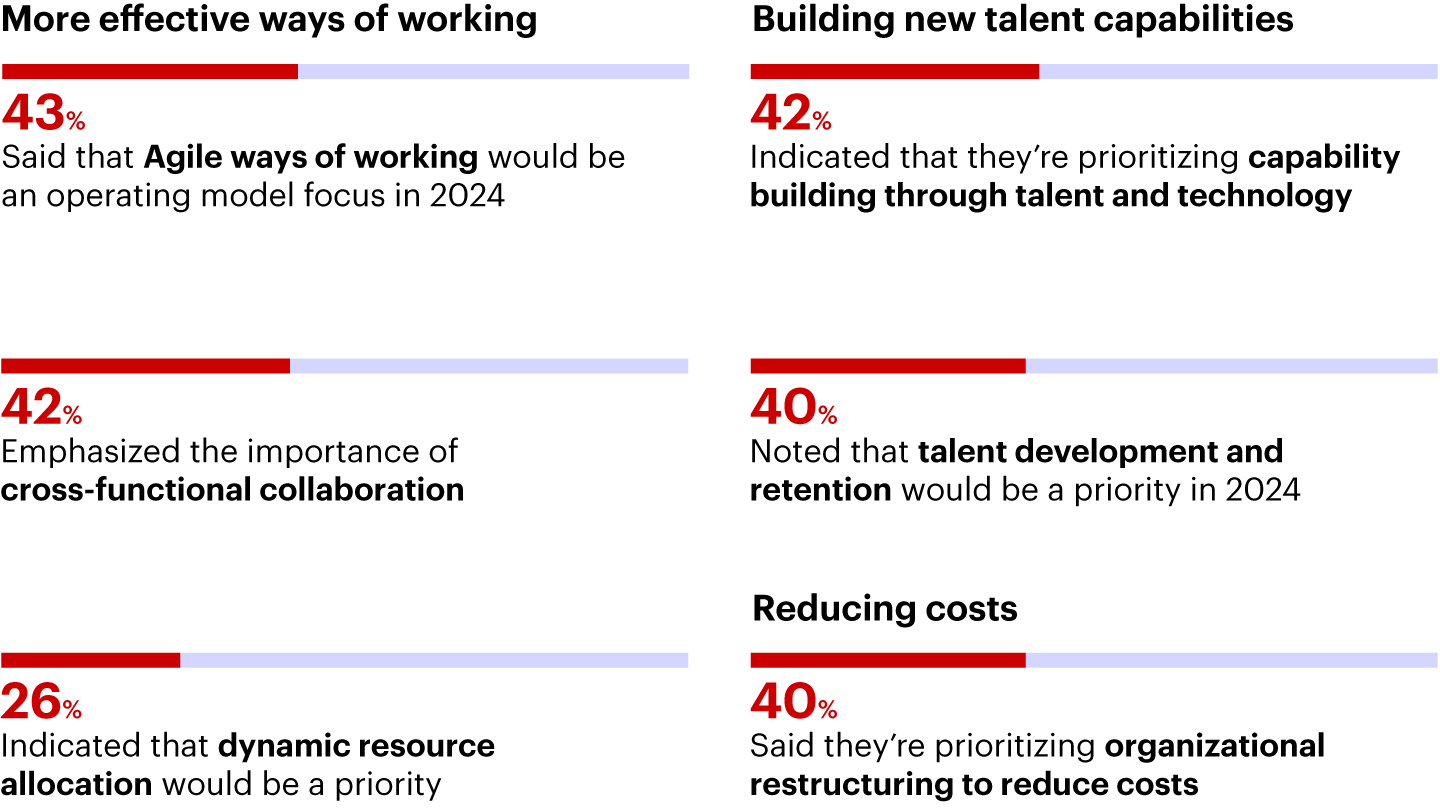
      Operating model: Priorities are diverse, but they focus on new ways of working, building new capabilities, and cost reduction

      Note: Executives were asked to rank their top-three priorities

      Source: Bain 2023 Consumer Products Annual Report Executive Survey (n=77)

      Leading consumer products companies are moving in the right direction for building dynamic organizations. They’re setting up different delivery systems for innovation, connecting sales and marketing with analytics to maximize returns on commercial investments, and making investments in platforms that deliver new benefits of scale, for example. It can be challenging, however, to reap the full benefits of these actions without taking a thoughtful review of the broader organizational design. A single example: A company may create a leadership role in generative AI, but that leader won’t be nearly as effective on their own as they would be if the company also sets up a cross-functional generative AI team to deliver on clear missions for the new capability.

      Many companies wait for a trigger event (for instance, a new CEO, a refreshed strategy, an acquisition, or pressure from activist investors) before taking a major look at their organization. Or they make only incremental organizational changes to meet a cost plan without stepping back to fully consider the higher-level strategic requirements that are needed today. Yet, leading companies across industries are now starting to recognize the need to nurture and refine their organizational design on a continuing basis instead of relying on one-time resets. Such organizations are fueled by collaborative teams that stay focused on clear missions, and they are governed by quarterly action reviews. The aim is to achieve a new organizational nirvana of flexibility, focus, and speed.

      How to create a modern consumer goods organization? We see three pillars.

      Organize to disrupt

      The most effective companies focus their top talent and resources on “change the business” efforts that position the company to innovate and adapt to shifting consumer preferences, emerging technologies, and competitive disruptions. At the same time, they work to manage “run the business” activities as efficiently as possible.

      Procter & Gamble has been a leader when it comes to looking for new ways to unearth consumer innovations. For example, its Connect + Develop program enables cross-functional teams within the company to seamlessly collaborate with a host of external partners, each bringing different perspectives. The ability to break down both internal and external silos has helped P&G develop products such as Olay Regenerist and Swiffer Dusters.

      Other companies create dedicated change teams focused on building the capabilities that spur transformative change within the organization. Similar to many other tech leaders, Spotify uses cross-functional teams comprising marketers, designers, and developers that are all focused on specific new features for its platform. The act of empowering cross-functional teams has become a recipe for success across industries, with companies assembling a diversity of thought and skills to tackle critical missions.

      Introduce dynamic resource allocation

      The ability to continuously respond to changing environments and priorities often means upending traditional planning and budgeting structures that can be rigid and challenging. By contrast, a dynamic model allows for in-year adaptability, positioning the company to put the best people and investments toward the most valuable opportunities at any given time. Companies discovered this need to quickly shift during the Covid-19 pandemic, when many reallocated supply chain resources to the few highest-demand hero SKUs. It’s what industry leaders do, such as Hershey when it diverts significant resources to improve efficiency in the face of all-time-high cocoa prices.

      Companies can maintain a strategic backlog of initiatives aligned with the organization's overall strategy. Then they can use rolling forecasts and quarterly action reviews to continuously monitor and adjust financial and operational plans based on changing market conditions and performance indicators. This enables the company to make data-driven decisions, anticipate risks, and seize opportunities in real time. Companies also can take a venture capital approach to allocating resources based on the planned return on investment, strategic alignment of initiatives, and proven progress in market.

      Winning companies establish governance structures that pursue the appropriate mix of run and change activities. For example, some companies aim for allocating 50% of leadership’s time to building the future company. They also require roles to be 100% dedicated to distinct run vs. change missions. Within IT, for example, they might have a leader whose job is to run the foundational elements of IT as efficiently as possible while they also have a leader who works on driving the growth and developing new digital products.

      Become a talent maker

      Many incumbent consumer goods companies are losing the war for top talent. Less than 5% of Fortune’s “100 Best Companies to Work For” are consumer products companies. Some have struggled to keep up with tech companies’ dynamism, opportunities to innovate, and perks, as well as with financial services companies’ potential for substantial compensation.

      There’s no denying that a new generation of employees with a new set of needs has entered the workforce. Major changes such as hybrid work and alternatives to career ladders have emerged as the norm, and many companies within and beyond consumer goods are grappling with ways to attract, retain, and inspire this next generation.

      Moreover, many companies are striving to link their new business imperatives to the specific capabilities, skills, and talent they need. Frequently, it means taking a future-back view of talent needs and more proactively managing the talent pipeline to get there. It means upskilling existing talent to broaden their career path. It means attracting new talent with a differentiated employee value proposition. In our experience, the most effective C-suite leaders devote 30% of their time to talent development.

      Companies can use better workforce planning to identify current and future talent needs, gaps, and opportunities that are aligned with business objectives and market trends. For example, a skills-based approach helps a company better assess, develop, and fully leverage each employee’s strengths while highlighting where there are also gaps to fill. Also important: Companies can emphasize career passports that expose managers to functions across the organization as opposed to single-function career ladders that can result in siloed thinking. It’s a way to retain top talent, offer mobility, encourage cross-functional collaboration, and foster a culture of continuous learning and growth.

      Johnson & Johnson is piloting a skills-based talent management approach, with emerging success. The company is assessing and mapping the skills of its workforce through data analytics to enable targeted development and mobility opportunities. It’s a move that allows J&J to better understand and utilize employees' skills, leading to improved talent retention and adaptability as well as allowing the organization to meet changing market demands.

      Workforce planning and a skills-based approach are essential to a company’s talent strategy being successful. It’s also critical to thoughtfully establish an employee value proposition to acquire, retain, and inspire the best talent. For example Nvidia, Glassdoor’s 2024 No. 2 “Best Place to Work,” offers robust employee training and education programs, including specialized workshops within its Deep Learning Institute, as well as financial support for higher education through a graduate fellowship program.

      Many consumer products companies fully acknowledge the need for a modern and adaptable organization. Some have made substantial progress on these three pillars; others have trouble getting started. Those struggling can begin by asking (and answering) five fundamental questions.

      • Is your operating model (including structure, processes, and talent) evolving continuously or is it reset by irregular (and often, disruptive) external events?
      • Do you use dynamic resource allocation to deploy resources to the best opportunities and redeploy as you learn?
      • Do you separate run vs. change activities for prioritization, resource allocation, and business reviews?
      • Do you have dedicated, cross-functional teams constantly improving capabilities within the business and working with the front line to test solutions?
      • Do your business leaders own talent development and spend at least 30% of their time on it?
      Authors
      • Headshot of Joost Spits
        Joost Spits
        Partner, Boston
      • Headshot of Rebecca Russell
        Rebecca Russell
        Partner, Atlanta
      • Headshot of Grégoire Schaub
        Grégoire Schaub
        Partner, Brussels
      Related Industries
      • Consumer Products
      Related Consulting Services
      • Operating Model & Org Design
      • People and Organization
      Consumer Products
      Organizing for Sustainability

      Most companies are way behind on their sustainability goals. Focusing on four things can accelerate progress.

      Read more
      Consumer Products
      Shift to Vertical: David Haines, Group CEO, Flora Food Group

      What does it take to stay connected to your customers when scale and complexity threaten to pull you away? 

      Read more
      People and Organization
      Linking Organizational Effectiveness and Employee Engagement

      A Bain analysis shows that efforts to make an organization more effective also improve employee engagement.

      Read more
      Consumer Products
      Consumer Products M&A

      In their quest for profitable growth, more companies are divesting brands or buying insurgents.

      Read more
      People and Organization
      A Modern Organization For Modern Technology

      In a digital world, the challenge isn’t adopting new technologies. It’s integrating them across organizational silos.

      Read more
      First published in outubro 2024
      Tags
      • Consumer Products
      • Operating Model & Org Design
      • People and Organization

      How We've Helped Clients

      A Personal Care and Cosmetics Brand Charts a Course for Sustainability

      See more related case studies

      A sweet new branding strategy

      See more related case studies

      How Micro-battles Powered a Brand and Sales Lift at BeautyCo

      See more related case studies

      Quer saber mais?

      Ajudamos líderes do mundo todo a lidar com desafios e oportunidades cruciais para suas organizações. Juntos, criamos mudanças e resultados duradouros.

      Bain Insights. Our perspectives on critical issues global businesses face in today's challenging environment, delivered monthly.

      *I have read and understand Bain’s Privacy Notice.

      Please read and agree to the Privacy Policy.
      Bain & Company
      Contact us Sustainability Accessibility Terms of use Privacy Cookie Policy Sitemap Log In

      © 1996-2026 Bain & Company, Inc.

      Contact Bain

      How can we help you?

      • Business inquiry
      • Career information
      • Press relations
      • Partnership request
      • Speaker request
      See all offices