
Skip to Content
  • Offices

    Offices

    North & Latin America
    • Atlanta
    • Austin
    • Bogota
    • Boston
    • Buenos Aires
    • Chicago
    • Dallas
    • Denver
    • Houston
    • Los Angeles
    • Mexico City
    • Minneapolis
    • Monterrey
    • Montreal
    • New York
    • Rio de Janeiro
    • San Francisco
    • Santiago
    • São Paulo
    • Seattle
    • Silicon Valley
    • Toronto
    • Washington, DC
    Europe & Africa
    • Amsterdam
    • Athens
    • Berlin
    • Brussels
    • Copenhagen
    • Dusseldorf
    • Frankfurt
    • Helsinki
    • Istanbul
    • Johannesburg
    • Kyiv
    • Lisbon
    • London
    • Madrid
    • Milan
    • Munich
    • Oslo
    • Paris
    • Rome
    • Stockholm
    • Vienna
    • Warsaw
    • Zurich
    Middle East
    • Doha
    • Dubai
    • Riyadh
    Asia & Australia
    • Bangkok
    • Beijing
    • Bengaluru
    • Brisbane
    • Ho Chi Minh City
    • Hong Kong
    • Jakarta
    • Kuala Lumpur
    • Manila
    • Melbourne
    • Mumbai
    • New Delhi
    • Perth
    • Seoul
    • Shanghai
    • Singapore
    • Sydney
    • Tokyo
    See all offices
  • Alumni
  • Media Center
  • Subscribe
  • Contact
  • Brazil | Português

    Select your region and language

    Global
    • Global (English)
    North & Latin America
    • Brazil (Português)
    • Argentina (Español)
    • Canada (Français)
    • Chile (Español)
    • Colombia (Español)
    Europe, Middle East, & Africa
    • France (Français)
    • DACH Region (Deutsch)
    • Italy (Italiano)
    • Spain (Español)
    • Greece (Elliniká)
    Asia & Australia
    • China (中文版)
    • Korea (한국어)
    • Japan (日本語)
  • Saved items (0)
    Saved items (0)

    You have no saved items.

    Bookmark content that interests you and it will be saved here for you to read or share later.

    Explore Bain Insights
  • Industries
    Main menu

    Industries

    • Aeroespacial e Defesa
    • Agronegócio
    • Química
    • Construção e Infraestrutura
    • Bens de Consumo
    • Serviços Financeiros
    • Healthcare & Life Sciences
    • Máquinas e Equipamentos Industriais
    • Mídia e Entretenimento
      Industries
      Mídia e Entretenimento
      • Media Lab
    • Metais
    • Mineração
    • Petróleo e Gás
    • Papel e Embalagens
    • Private Equity
      Industries
      Private Equity
      • Due Diligence
      • Exit Planning
      • Firm Strategy & Operations
      • Portfolio Value Creation
    • Setor Público e Social
    • Varejo
    • Tecnologia
    • Telecomunicações
      Industries
      Telecomunicações
      • Capital Expenditure
      • Telco Digital Transformation
    • Transporte
    • Turismo & Lazer
    • Energia & Renováveis
  • Consulting Services
    Main menu

    Consulting Services

    • Customer Experience
    • Sustainability
    • Innovation
    • M&A
    • Operations
    • People & Organization
    • Private Equity
    • Sales & Marketing
    • Strategy
    • AI, Insights, and Solutions
    • Technology
    • Transformation
  • Digital
  • Insights
    Main menu

    Insights

    • Industry Insights
    • Services Insights
    • Bain Books
    • Webinars
    • Bain Futures
    View all Insights
    Featured topics
    • Tariff Response
    • Artificial Intelligence
    • Thriving in Uncertainty
    • Executive Conversations
    • Macro Trends
    • M&A Report
    • Healthcare Private Equity Report
    • Paper & Packaging Report
    • Technology Report
    • CEO's Guide to Sustainability
    • CEO Insights
    • CFO Insights
    • COO Insights
    • CIO Insights
    • CMO Insights
    View all featured topics
  • About
    Main menu

    About

    • What We Do
    • What We Believe
    • Our People & Leadership
    • Client Results
    • Awards & Recognition
    • Global Affiliations
    Further: Our global responsibility
    • Sustainability
    • Social Impact
    • World Economic Forum
    Learn more about Further
  • Carreiras
    Main menu

    Carreiras

    • Trabalhe Conosco
      Carreiras
      Trabalhe Conosco
      • Find Your Place
      • Nossas áreas de trabalho
      • Equipes integradas
      • Estudantes
      • Programas e estágios
      • Eventos de Recrutamento
    • A Vida na Bain
      Carreiras
      A Vida na Bain
      • Histórias de carreira
      • Nossas pessoas
      • Onde trabalhamos
      • Apoioao seu crescimento
      • Grupos de afinidade
      • Benefícios
    • Impact Stories
    • Nosso Processo Seletivo
      Carreiras
      Nosso Processo Seletivo
      • O Que Esperar
      • Entrevistas
    FIND JOBS
  • Offices
    Main menu

    Offices

    • North & Latin America
      Offices
      North & Latin America
      • Atlanta
      • Austin
      • Bogota
      • Boston
      • Buenos Aires
      • Chicago
      • Dallas
      • Denver
      • Houston
      • Los Angeles
      • Mexico City
      • Minneapolis
      • Monterrey
      • Montreal
      • New York
      • Rio de Janeiro
      • San Francisco
      • Santiago
      • São Paulo
      • Seattle
      • Silicon Valley
      • Toronto
      • Washington, DC
    • Europe & Africa
      Offices
      Europe & Africa
      • Amsterdam
      • Athens
      • Berlin
      • Brussels
      • Copenhagen
      • Dusseldorf
      • Frankfurt
      • Helsinki
      • Istanbul
      • Johannesburg
      • Kyiv
      • Lisbon
      • London
      • Madrid
      • Milan
      • Munich
      • Oslo
      • Paris
      • Rome
      • Stockholm
      • Vienna
      • Warsaw
      • Zurich
    • Middle East
      Offices
      Middle East
      • Doha
      • Dubai
      • Riyadh
    • Asia & Australia
      Offices
      Asia & Australia
      • Bangkok
      • Beijing
      • Bengaluru
      • Brisbane
      • Ho Chi Minh City
      • Hong Kong
      • Jakarta
      • Kuala Lumpur
      • Manila
      • Melbourne
      • Mumbai
      • New Delhi
      • Perth
      • Seoul
      • Shanghai
      • Singapore
      • Sydney
      • Tokyo
    See all offices
  • Alumni
  • Media Center
  • Subscribe
  • Contact
  • Brazil | Português
    Main menu

    Select your region and language

    • Global
      Select your region and language
      Global
      • Global (English)
    • North & Latin America
      Select your region and language
      North & Latin America
      • Brazil (Português)
      • Argentina (Español)
      • Canada (Français)
      • Chile (Español)
      • Colombia (Español)
    • Europe, Middle East, & Africa
      Select your region and language
      Europe, Middle East, & Africa
      • France (Français)
      • DACH Region (Deutsch)
      • Italy (Italiano)
      • Spain (Español)
      • Greece (Elliniká)
    • Asia & Australia
      Select your region and language
      Asia & Australia
      • China (中文版)
      • Korea (한국어)
      • Japan (日本語)
  • Saved items  (0)
    Main menu
    Saved items (0)

    You have no saved items.

    Bookmark content that interests you and it will be saved here for you to read or share later.

    Explore Bain Insights
  • Industries
    • Industries

      • Aeroespacial e Defesa
      • Agronegócio
      • Química
      • Construção e Infraestrutura
      • Bens de Consumo
      • Serviços Financeiros
      • Healthcare & Life Sciences
      • Máquinas e Equipamentos Industriais
      • Mídia e Entretenimento
      • Metais
      • Mineração
      • Petróleo e Gás
      • Papel e Embalagens
      • Private Equity
      • Setor Público e Social
      • Varejo
      • Tecnologia
      • Telecomunicações
      • Transporte
      • Turismo & Lazer
      • Energia & Renováveis
  • Consulting Services
    • Consulting Services

      • Customer Experience
      • Sustainability
      • Innovation
      • M&A
      • Operations
      • People & Organization
      • Private Equity
      • Sales & Marketing
      • Strategy
      • AI, Insights, and Solutions
      • Technology
      • Transformation
  • Digital
  • Insights
    • Insights

      • Industry Insights
      • Services Insights
      • Bain Books
      • Webinars
      • Bain Futures
      View all Insights
      Featured topics
      • Tariff Response
      • Artificial Intelligence
      • Thriving in Uncertainty
      • Executive Conversations
      • Macro Trends
      • M&A Report
      • Healthcare Private Equity Report
      • Paper & Packaging Report
      • Technology Report
      • CEO's Guide to Sustainability
      • CEO Insights
      • CFO Insights
      • COO Insights
      • CIO Insights
      • CMO Insights
      View all featured topics
  • About
    • About

      • What We Do
      • What We Believe
      • Our People & Leadership
      • Client Results
      • Awards & Recognition
      • Global Affiliations
      Further: Our global responsibility
      • Sustainability
      • Social Impact
      • World Economic Forum
      Learn more about Further
  • Carreiras
    Popular Searches
    • Agile
    • Digital
    • Strategy
    Your Previous Searches
      Recently Visited Pages

      Content added to saved items

      Saved items (0)

      Removed from saved items

      Saved items (0)

      Brief

      Strategic Planning That Produces Real Strategy

      Strategic Planning That Produces Real Strategy

      Is your planning process a competitive weapon or a waste of time?

      By Mark Judah, Dunigan O'Keeffe, David Zehner and Lucy Cummings

      • min read
      }

      Brief

      Strategic Planning That Produces Real Strategy
      en

      The email arrives and your jaw clenches: It’s planning time again and there’s nothing you can do about it. No matter what else is on your plate, you know that the next month or so will be dominated by filling out templates and sitting through endless planning sessions. The irony is that you have some strategic ideas you’re really excited about but you figure you’ll have to work the back channels to get them in front of the right people. Previous experience has taught you that your company’s formal planning process is where the best ideas go to die.

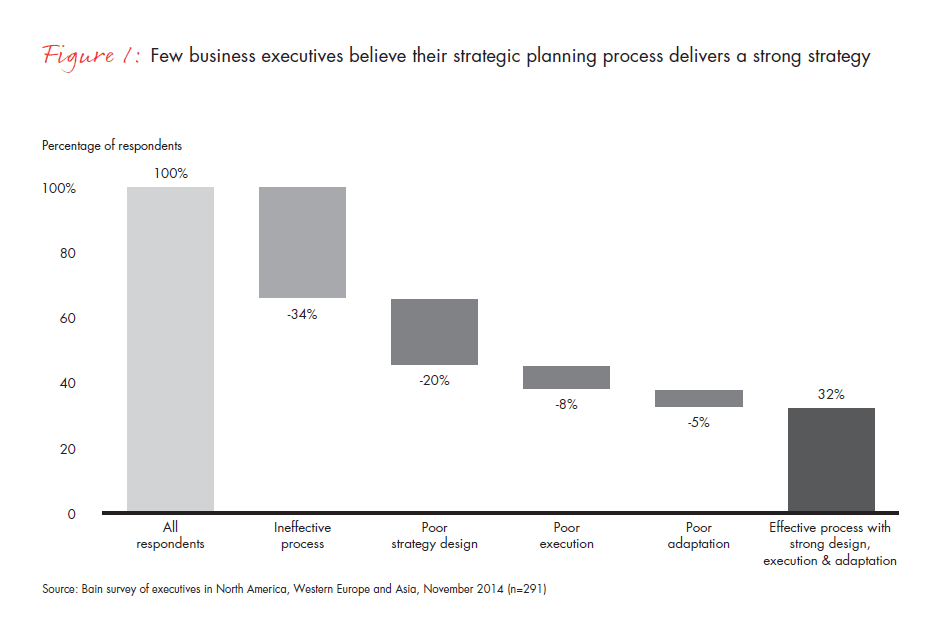
      If this sounds familiar it’s because the typical strategic planning process is not delivering what it should at most companies. When we asked nearly 300 global executives to rate their company’s planning process, only one in three said that the strategy it produced met three vital criteria: bold ambition, adaptability in the face of changing market conditions and concrete guidance for management and the front line (see Figure 1).

      strategic-planning-that-produces-real-strategy-fig-01_embed

      In our experience, few companies have a strong strategic planning process that is well-supported across the organization. Yet more than 60% of the executives we surveyed said they are satisfied with the very processes that lead to such mediocre strategy. Why? Some executives may have a different conception of what a good strategy looks like, but most have simply lowered their expectations. They either believe their strategic planning process is as good as it’s ever going to get, or they feel that fixing it would mean devoting even more time and effort to a difficult and tedious process—the last thing they want to do.

      The companies that produce great strategy take a different approach. They treat strategic planning as a critical capability that can and should be world class. It is as much a reason for their success as continuous improvement is for a low-cost manufacturer or service excellence is for a high-end retailer. These companies have invested in the people, processes and tools that allow them to identify the most important strategic priorities and adjust as needed to remain sharp and relevant as conditions change. The process creates time for focused strategic debates, dials up the cadence of decision making, and engages the organization at all levels to both think strategically and translate strategy into action.

      There is no one-size-fits-all approach. But we find that world-class strategic planning incorporates five key principles.

      Principle 1: Strategic planning and budgeting are both essential, but they aren’t the same thing

      A great strategy strikes a careful balance between bold ambition and practical implementation, but ambition leads the way. Too many companies conflate strategy and budgeting in a single process that muddies the discussion and turns priorities on their head. Instead of the smartest, most ambitious strategic ideas determining where the company should invest to support both today’s growth engine and tomorrow’s, the organization spends an inordinate amount of time debating math and updating budget targets, resulting in only incremental improvement each year. At the other end of the spectrum, the top leaders at some companies devise strategy in a bubble, coming up with big, lofty ideas that they never ground in operational reality.

      Interactive

      Interactive: Is Your Strategic Planning World Class?

      Answer 12 questions to assess where your company's strategic planning process stands.

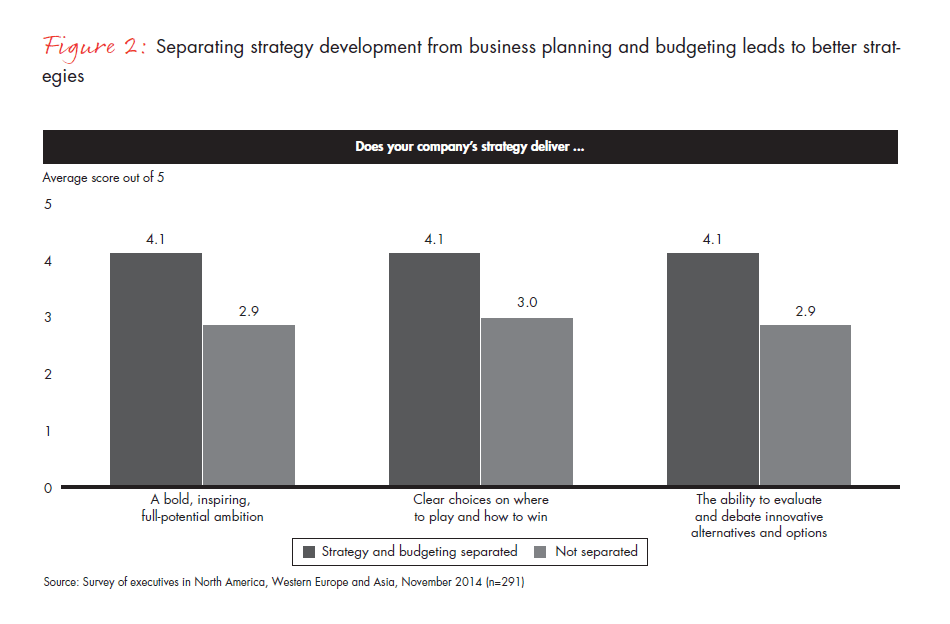
      Our research suggests that separating strategic planning and budgeting can improve the quality of strategy dramatically—as much as 40% (see Figure 2). That’s because it forces leadership teams to schedule ample time for healthy debate about customer needs, competitive dynamics and business conditions. The most effective teams are careful to develop processes that link strategy to budgetary and operational planning. But the budget is always an outcome of the strategic aspiration, not the other way around.

      strategic-planning-that-produces-real-strategy-fig-02_embed

      Top leadership at one global resource company, for instance, focuses the first part of each year on strategy development. This is the company’s chance to take stock—to train its sights outward and debate how markets are changing and what opportunities are emerging. Executives then spend the next few months on the practical implications of strategy, developing detailed budgets, operational plans and goals against key performance indicators.

      Budgeting remains a top priority, but it doesn’t get in the way of more expansive thinking.

      Principle 2: Strategy amplifies the voices of the front line and customers

      Strategic planning is traditionally viewed as the realm of the C-suite executive. Planners and analysts set the agenda and top executives mull over alternatives, eventually meting out decisions that will guide action for the next 12 months or longer. The problem with this approach is that it isolates decision makers from the customers they are trying to serve. The company’s “doers”—those on the front line who execute strategy—are separated from the “thinkers”—those who make decisions. Not surprisingly, this very often leads to strategy that lacks real customer insight and is exceptionally difficult to execute.

      The most effective strategic development processes amplify the voice of the customer. They tap the best thinking of those closest to the market by establishing deep ties to the people on the front line who deliver the customer promise every day. Instead of pushing a fully formed strategy down through the organization, these processes incorporate the voice of the customer and translate it into a set of behaviors that the front line can embrace wholeheartedly. This eliminates distance between the C-suite and customers and builds the kind of organizational will that leads to strong execution.

      Principle 3: Resource allocation is purposely undemocratic

      Many planning processes default to “last year plus” when allocating resources across the organization. Planners spread investment around democratically, divvying up precious resources among every unit that has received an allocation in the past with little regard to real future potential. As each unit lobbies on its own behalf, it only seems “fair” to reward satisfactory performance.

      But a winning strategy demands ruthless prioritization; satisfactory is not good enough. The planning process should be biased toward defining the company’s most critical future growth opportunities and purposely allocating the largest share of dollars, time and even talent against them. It should encourage the company to staff “big jobs with big people”—recruiting the best performers from the lower-value areas where they may have become entrenched. Strategy isn’t figuring out how to make the most of every opportunity but a rigorous exercise to determine how the company can redeploy trapped resources and overwhelm the opportunities that really matter.

      Principle 4: Don’t let the earth’s rotation around the sun determine when you make decisions

      Most strategic planning processes leave little opportunity for free-flowing debate outside of the annual planning window, which is typically highly formal and jam-packed with other priorities. Many important issues receive minimal airtime or never see the light of day. This tends to encourage a parallel, informal process in which leaders make many critical decisions ad hoc, influenced by those with the loudest voices—not necessarily those with the best ideas or the most critical priorities.

      Keeping pace with today’s dynamic markets requires breaking the stranglehold of the typical annual planning cycle. Our research shows that companies are 60% more likely to make timely, high-stakes decisions if business needs, not the calendar, determine the cadence of their strategic planning process. That often means creating a continuous, issues-based strategic agenda that runs throughout the year. Top decision makers need regularly scheduled opportunities for real, no-holds-barred debates on strategic alternatives ranked by dollar value and urgency. This avoids one-and-done thinking and promotes a more flexible cycle in which critical initiatives are deployed, monitored and adjusted in real time.

      One large software company discovered the limitations of a static, calendar-based planning process several years ago when market changes during the year created a sudden disconnect between strategic needs and the resources required to pursue them. A year-end shortfall forced the company to make a number of decisions that were both painful and distracting. The solution was to create a process that set ambitious multiyear goals but then institute a continuous planning forum to debate and resolve the highest value issues on a real-time basis—tracking, tuning and reconciling resource allocation along the way. The new process created a rolling, decision-focused dialogue around the most critical strategic and operational issues facing the company. And it enabled the organization to respond to changes in the market or competitive landscape more quickly and effectively.

      Principle 5: Leaders focus on the most important decisions and simplify the rest

      How do companies create time for a regular cadence of strategic debate? They radically simplify the leadership agenda to exclude many of the “business as usual” issues that tend to drag strategic discussions into the weeds. That means empowering the finance function and business units to make decisions about budgeting and operational issues that are important but can be handled just as effectively by capable staff.

      Companies also need to zero-base the planning process itself. One particularly noteworthy finding in our research was that C-level executives were 37% more likely to declare satisfaction with their company’s strategic planning process than others we surveyed. The reason: Top leaders are very often isolated from the worst of the annual planning ritual—the thousands of hours spent filling out templates or preparing the boss for meetings with thick binders of information. Zero-basing forces leaders to imagine the process with a clean sheet of paper and determine what information is truly critical to making robust strategic decisions. Leadership can’t afford a planning process layered with bureaucratic complexity that just diverts focus from what really matters: figuring out how to serve customers better than the competition, both now and in the future.

      Mark Judah, a Partner in Bain's Strategy practice in Asia-Pacific, outlines five best practices that allow companies to tailor their strategic planning to their organizational needs.

      Conclusion

      A world-class strategic planning capability based on these five principles eliminates the noise from the planning process, creating essential time for debate and distilling the agenda down to the critical issues that will truly propel the company to sustained profitability and leadership. However, hardwiring a strategic capability at any company is a multiyear, multiphase process. Through our client work and research, we have found that many companies are still struggling with the basics. And not every organization will want—or need—to develop a world-class capability across the board. Market dynamics, cultural issues and other organization-specific considerations will likely determine what the end state should look like for any particular company.

      A critical first step is self-diagnosis: Is your strategic planning process an annual ritual that your organization reluctantly endures? Or is it a means to empower the entire company—from the front line to the C-suite—to dream big, define a mission and drive toward it relentlessly? At a time when unprecedented turbulence in global markets requires bold vision, world-class execution and quick adaptation, the answer can be a game changer. It may spell the difference between settling for satisfactory underperformance or stretching toward full potential.

      Mark Judah is a Bain partner based in Sydney and a leader in the firm’s Strategy practice in the Asia-Pacific region. Dunigan O’Keeffe is a partner based in Mumbai and leads Bain’s Asia-Pacific Strategy practice. David Zehner is the managing partner of Bain’s Australia and New Zealand offices and a Strategy practice leader. Lucy Cummings is a director in Bain’s Global Strategy practice based in Washington, DC.


      strategic-planning-that-produces-real-strategy-fig-01_full

      strategic-planning-that-produces-real-strategy-fig-02_full
      Authors
      • Headshot of Mark Judah
        Mark Judah
        Partner, Melbourne
      • Headshot of Dunigan O'Keeffe
        Dunigan O'Keeffe
        Partner, San Francisco
      • Headshot of David Zehner
        David Zehner
        Partner, Sydney
      • Headshot of Lucy Cummings
        Lucy Cummings
        Alumni, Washington, DC
      Related Consulting Services
      • Strategy
      Strategy
      A Strategy for Thriving in Uncertainty

      How leaders prepare and adapt to succeed in an impossible to predict world.

      Read more
      Strategy
      James Dixon: Strategy as a Capability

      Bain Partner James Dixon shares five key principals to ensure that planning is a strategic weapon and not a waste of time.

      Read more
      Strategy
      What Business Leaders Need to Know About AI Sovereignty

      Aligning business strategy with national AI priorities is necessary to compete and scale.

      Read more
      Strategy
      Don’t Underestimate the Cost of Overcapacity

      Overcapacity is endemic to the paper and packaging industry, but these actions can help you maintain margins.

      Read more
      Strategy
      What CEOs Bring Home: A Holiday Special

      As the year winds down, Founder’s Mentality: The CEO Sessions takes a festive turn.

      Read more
      First published in fevereiro 2016
      Tags
      • Strategy

      How We've Helped Clients

      Jump-starting innovation for a telecom solutions provider

      See more related case studies

      New products propel profitability for metals manufacturer

      See more related case studies

      An auctioneer makes a winning online bid

      See more related case studies

      Quer saber mais?

      Ajudamos líderes do mundo todo a lidar com desafios e oportunidades cruciais para suas organizações. Juntos, criamos mudanças e resultados duradouros.

      Bain Insights. Our perspectives on critical issues global businesses face in today's challenging environment, delivered monthly.

      *I have read and understand Bain’s Privacy Notice.

      Please read and agree to the Privacy Policy.
      Bain & Company
      Contact us Sustainability Accessibility Terms of use Privacy Cookie Policy Sitemap Log In

      © 1996-2026 Bain & Company, Inc.

      Contact Bain

      How can we help you?

      • Business inquiry
      • Career information
      • Press relations
      • Partnership request
      • Speaker request
      See all offices