
Skip to Content
  • Offices

    Offices

    North & Latin America
    • Atlanta
    • Austin
    • Bogota
    • Boston
    • Buenos Aires
    • Chicago
    • Dallas
    • Denver
    • Houston
    • Los Angeles
    • Mexico City
    • Minneapolis
    • Monterrey
    • Montreal
    • New York
    • Rio de Janeiro
    • San Francisco
    • Santiago
    • São Paulo
    • Seattle
    • Silicon Valley
    • Toronto
    • Washington, DC
    Europe & Africa
    • Amsterdam
    • Athens
    • Berlin
    • Brussels
    • Copenhagen
    • Dusseldorf
    • Frankfurt
    • Helsinki
    • Istanbul
    • Johannesburg
    • Kyiv
    • Lisbon
    • London
    • Madrid
    • Milan
    • Munich
    • Oslo
    • Paris
    • Rome
    • Stockholm
    • Vienna
    • Warsaw
    • Zurich
    Middle East
    • Doha
    • Dubai
    • Riyadh
    Asia & Australia
    • Bangkok
    • Beijing
    • Bengaluru
    • Brisbane
    • Ho Chi Minh City
    • Hong Kong
    • Jakarta
    • Kuala Lumpur
    • Manila
    • Melbourne
    • Mumbai
    • New Delhi
    • Perth
    • Shanghai
    • Singapore
    • Sydney
    • Tokyo
    See all offices
  • Alumni
  • Media Center
  • Subscribe
  • Contact
  • Global

    Select your region and language

    Global
    • Global (English)
    North & Latin America
    • Brazil (Português)
    • Argentina (Español)
    • Canada (Français)
    • Chile (Español)
    • Colombia (Español)
    Europe, Middle East, & Africa
    • France (Français)
    • DACH Region (Deutsch)
    • Italy (Italiano)
    • Spain (Español)
    • Greece (Elliniká)
    Asia & Australia
    • China (中文版)
    • Korea (한국어)
    • Japan (日本語)
  • Saved items (0)
    Saved items (0)

    You have no saved items.

    Bookmark content that interests you and it will be saved here for you to read or share later.

    Explore Bain Insights
  • Industries
    Main menu

    Industries

    • Aerospace & Defense
    • Agribusiness
    • Chemicals
    • Construction & Infrastructure
    • Consumer Products
    • Financial Services
    • Healthcare & Life Sciences
    • Industrial Machinery & Equipment
    • Media & Entertainment
      Industries
      Media & Entertainment
      • Media Lab
    • Metals
    • Mining
    • Oil & Gas
    • Paper & Packaging
    • Private Equity
      Industries
      Private Equity
      • Due Diligence
      • Exit Planning
      • Firm Strategy & Operations
      • Portfolio Value Creation
    • Social Impact
    • Retail
    • Technology
    • Telecommunications
      Industries
      Telecommunications
      • Capital Expenditure
      • Telco Digital Transformation
    • Transportation
    • Travel & Leisure
    • Utilities & Renewables
  • Consulting Services
    Main menu

    Consulting Services

    • Customer Experience
    • Sustainability
    • Innovation
    • M&A
    • Operations
    • People & Organization
    • Private Equity
    • Sales & Marketing
    • Strategy
    • AI, Insights, and Solutions
    • Technology
    • Transformation
  • Digital
  • Insights
    Main menu

    Insights

    • Industry Insights
    • Services Insights
    • Bain Books
    • Webinars
    • Bain Futures
    View all Insights
    Featured topics
    • Tariff Response
    • Artificial Intelligence
    • Thriving in Uncertainty
    • Executive Conversations
    • Macro Trends
    • M&A Report
    • Healthcare Private Equity Report
    • Paper & Packaging Report
    • Technology Report
    • CEO's Guide to Sustainability
    • CEO Insights
    • CFO Insights
    • COO Insights
    • CIO Insights
    • CMO Insights
    View all featured topics
  • About
    Main menu

    About

    • What We Do
    • What We Believe
    • Our People & Leadership
    • Client Results
    • Awards & Recognition
    • Global Affiliations
    Further: Our global responsibility
    • Sustainability
    • Social Impact
    • World Economic Forum
    Learn more about Further
  • Careers
    Main menu

    Careers

    • Work with Us
      Careers
      Work with Us
      • Find Your Place
      • Our Work Areas
      • Integrated Teams
      • Students
      • Internships & Programs
      • Recruiting Events
    • Life at Bain
      Careers
      Life at Bain
      • Blog: Inside Bain
      • Career Stories
      • Our People
      • Where We Work
      • Supporting Your Growth
      • Affinity Groups
      • Benefits
    • Impact Stories
    • Hiring Process
      Careers
      Hiring Process
      • What to Expect
      • Interviewing
    FIND JOBS
  • Offices
    Main menu

    Offices

    • North & Latin America
      Offices
      North & Latin America
      • Atlanta
      • Austin
      • Bogota
      • Boston
      • Buenos Aires
      • Chicago
      • Dallas
      • Denver
      • Houston
      • Los Angeles
      • Mexico City
      • Minneapolis
      • Monterrey
      • Montreal
      • New York
      • Rio de Janeiro
      • San Francisco
      • Santiago
      • São Paulo
      • Seattle
      • Silicon Valley
      • Toronto
      • Washington, DC
    • Europe & Africa
      Offices
      Europe & Africa
      • Amsterdam
      • Athens
      • Berlin
      • Brussels
      • Copenhagen
      • Dusseldorf
      • Frankfurt
      • Helsinki
      • Istanbul
      • Johannesburg
      • Kyiv
      • Lisbon
      • London
      • Madrid
      • Milan
      • Munich
      • Oslo
      • Paris
      • Rome
      • Stockholm
      • Vienna
      • Warsaw
      • Zurich
    • Middle East
      Offices
      Middle East
      • Doha
      • Dubai
      • Riyadh
    • Asia & Australia
      Offices
      Asia & Australia
      • Bangkok
      • Beijing
      • Bengaluru
      • Brisbane
      • Ho Chi Minh City
      • Hong Kong
      • Jakarta
      • Kuala Lumpur
      • Manila
      • Melbourne
      • Mumbai
      • New Delhi
      • Perth
      • Shanghai
      • Singapore
      • Sydney
      • Tokyo
    See all offices
  • Alumni
  • Media Center
  • Subscribe
  • Contact
  • Global
    Main menu

    Select your region and language

    • Global
      Select your region and language
      Global
      • Global (English)
    • North & Latin America
      Select your region and language
      North & Latin America
      • Brazil (Português)
      • Argentina (Español)
      • Canada (Français)
      • Chile (Español)
      • Colombia (Español)
    • Europe, Middle East, & Africa
      Select your region and language
      Europe, Middle East, & Africa
      • France (Français)
      • DACH Region (Deutsch)
      • Italy (Italiano)
      • Spain (Español)
      • Greece (Elliniká)
    • Asia & Australia
      Select your region and language
      Asia & Australia
      • China (中文版)
      • Korea (한국어)
      • Japan (日本語)
  • Saved items  (0)
    Main menu
    Saved items (0)

    You have no saved items.

    Bookmark content that interests you and it will be saved here for you to read or share later.

    Explore Bain Insights
  • Industries
    • Industries

      • Aerospace & Defense
      • Agribusiness
      • Chemicals
      • Construction & Infrastructure
      • Consumer Products
      • Financial Services
      • Healthcare & Life Sciences
      • Industrial Machinery & Equipment
      • Media & Entertainment
      • Metals
      • Mining
      • Oil & Gas
      • Paper & Packaging
      • Private Equity
      • Social Impact
      • Retail
      • Technology
      • Telecommunications
      • Transportation
      • Travel & Leisure
      • Utilities & Renewables
  • Consulting Services
    • Consulting Services

      • Customer Experience
      • Sustainability
      • Innovation
      • M&A
      • Operations
      • People & Organization
      • Private Equity
      • Sales & Marketing
      • Strategy
      • AI, Insights, and Solutions
      • Technology
      • Transformation
  • Digital
  • Insights
    • Insights

      • Industry Insights
      • Services Insights
      • Bain Books
      • Webinars
      • Bain Futures
      View all Insights
      Featured topics
      • Tariff Response
      • Artificial Intelligence
      • Thriving in Uncertainty
      • Executive Conversations
      • Macro Trends
      • M&A Report
      • Healthcare Private Equity Report
      • Paper & Packaging Report
      • Technology Report
      • CEO's Guide to Sustainability
      • CEO Insights
      • CFO Insights
      • COO Insights
      • CIO Insights
      • CMO Insights
      View all featured topics
  • About
    • About

      • What We Do
      • What We Believe
      • Our People & Leadership
      • Client Results
      • Awards & Recognition
      • Global Affiliations
      Further: Our global responsibility
      • Sustainability
      • Social Impact
      • World Economic Forum
      Learn more about Further
  • Careers
    Popular Searches
    • Agile
    • Digital
    • Strategy
    Your Previous Searches
      Recently Visited Pages

      Content added to saved items

      Saved items (0)

      Removed from saved items

      Saved items (0)

      Report

      Healthcare Private Equity Market 2020: The Year in Review

      Healthcare Private Equity Market 2020: The Year in Review

      Despite new uncertainties, the healthcare profit pool showed remarkable resilience.

      Nirad Jain, Kara Murphy, Franz-Robert Klingan, Dmitry Podpolny, and Vikram Kapur

      • min read
      }

      Report

      Healthcare Private Equity Market 2020: The Year in Review
      en
      Резюме
      • Healthcare private equity deal volume increased by 21% to a total of 380 deals in 2020, compared with 313 the year earlier, despite a 14% decline in total global PE activity.
      • Total disclosed deal value fell 17% to $66 billion, which is robust considering the effects of Covid-19. The average size of deals with disclosed values dropped 57%, due in part to a lack of very large deals. The average declines were most pronounced in North America and Europe.
      • For the first time, the Asia-Pacific region logged the most buyouts—41% of global deals—driven primarily by the biopharma sector. North America remained the leader for disclosed value, with 53% of global value.
      • The healthcare provider and biopharma sectors were the most active, despite Covid-19’s damage to patient volumes and provider margins, with nearly 150 deals in each sector.
      • M&A contracted more than private equity as many corporates retrenched during the economic downturn. M&A fell to $339 billion from $541 billion in 2019, with deal count falling to 2,845 from 3,137.

      This article is part of Bain's 2021 Global Healthcare Private Equity and M&A Report.

      Explore the report

      Private equity, like the broader economy, faced acute challenges in 2020 brought on by the global pandemic. Yet buyers and sellers still managed to complete deals at a brisk pace, and healthcare showed remarkable resilience given the extent of the disruption caused by Covid-19 and the lockdowns imposed in most countries. In fact, healthcare buyouts posted record-setting volumes in 2020, albeit at reduced total and average deal values (see Figure 1).

      Figure 1
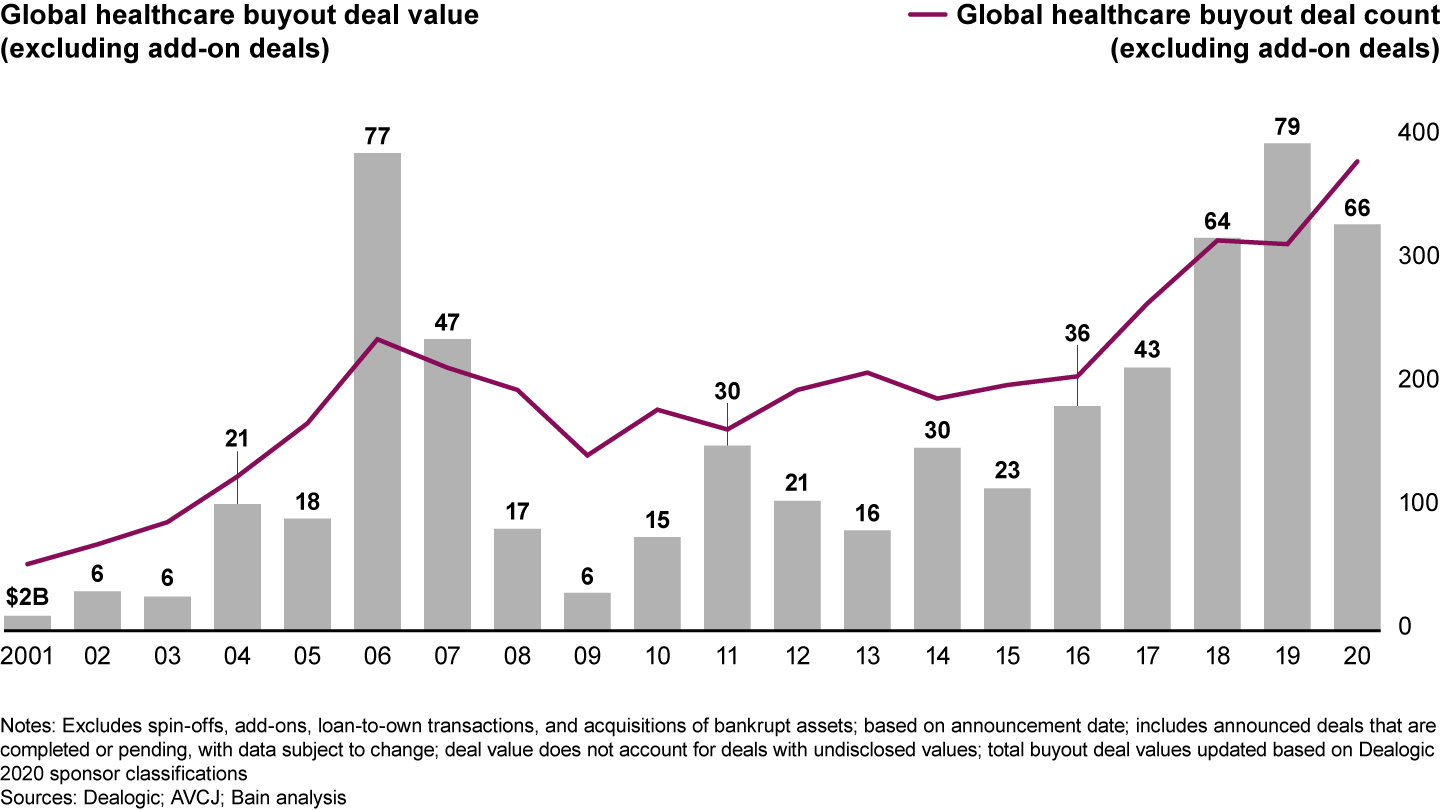
      Healthcare private equity deal values dropped from a banner 2019
      Healthcare private equity deal values dropped from a banner 2019
      Healthcare private equity deal values dropped from a banner 2019

      For global private equity as a whole, the number of deals fell to 3,096 in 2020, compared with 3,600 in 2019. However, disclosed deal values increased by 7.5% to $592 billion.

      In contrast to the overall private equity market, healthcare private equity deal volume actually rose. However, disclosed healthcare deal values were more negatively affected. Over the past five years, total healthcare deal value outgrew the value of private equity deals overall, going from 7% of total disclosed value in 2015 to 18% in 2019. That trend reversed in 2020 as the industry’s share of disclosed value fell to 14%, in line with 2018 levels (see Figure 2). This may seem surprising, given healthcare’s record of providing superior returns through economic downturns. However, we believe this is a logical outcome considering some of the structural features of the Covid-driven downturn.

      Figure 2
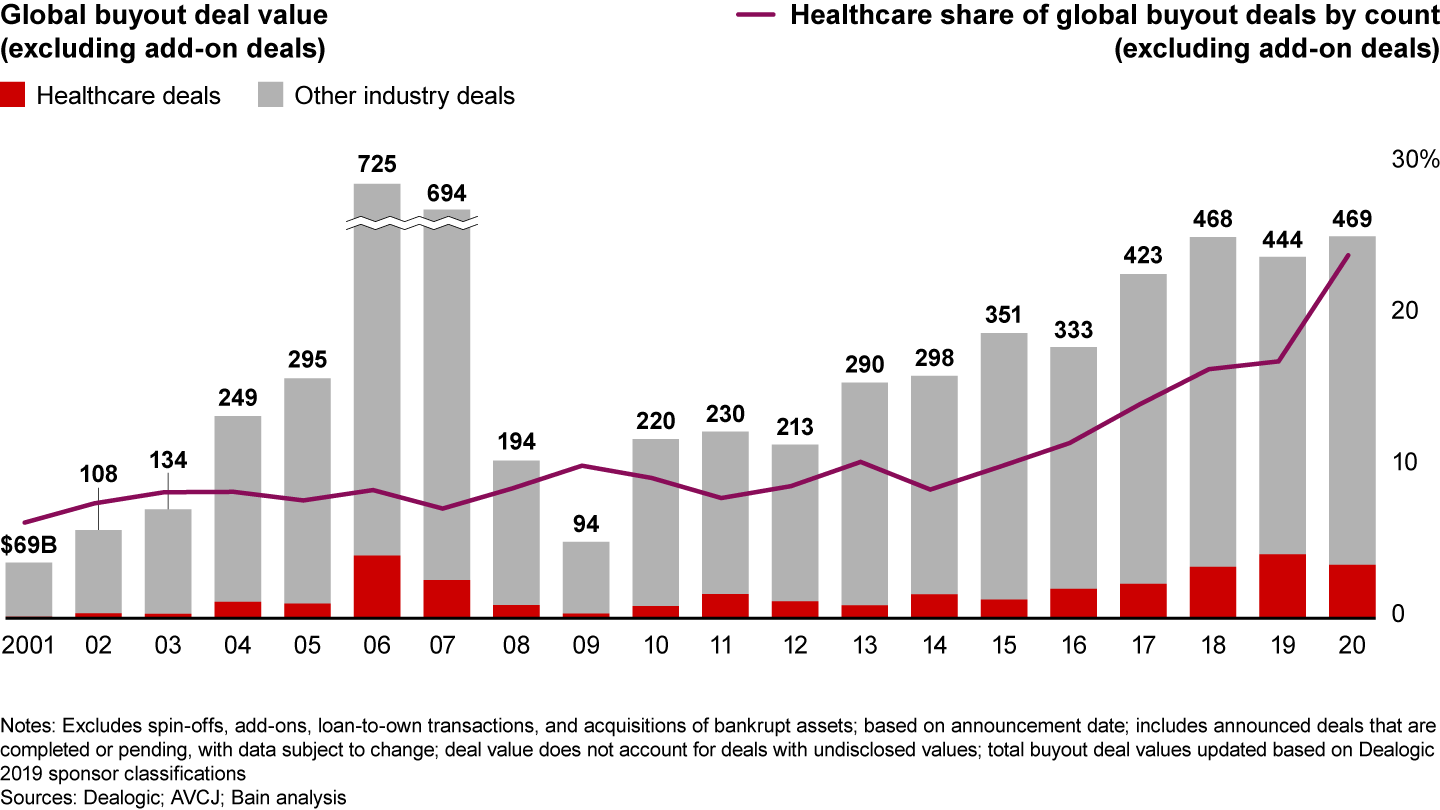
      Healthcare deals accounted for a record share of global buyout deal volume, though the share of value dipped
      Healthcare deals accounted for a record share of global buyout deal volume, though the share of value dipped
      Healthcare deals accounted for a record share of global buyout deal volume, though the share of value dipped

      Unlike prior economic shocks, such as the financially driven Great Recession and the 2015 industrial mini-recession, Covid-19 had a more direct and significant impact on the healthcare industry. Previous recessions saw healthcare private equity offering a flight to quality, as volumes and profit margins tended to come under less pressure than other, more discretionary industries. By contrast, this pandemic’s systemic effects concentrated intensely on healthcare. While demand related specifically to Covid-19 medical treatment, prevention, or management clearly rose, other forms of healthcare experienced substantial volume losses, treatment deferrals, capacity and supply constraints, and countless other disruptions. This trend varied within sectors and subsectors, where specific secular and cyclical factors prompted different responses (as detailed in “The Covid-19 Paradox”).

      Meet the members of Bain’s Healthcare Private Equity practice.

      Our team

      Such an upheaval inserted substantial uncertainty for buyers and sellers of assets, thereby reducing deal appetite, especially for the largest deals that have been a hallmark of prior years. For example, between 2015 and 2018 the top 10 healthcare buyouts represented roughly $20 billion to $40 billion of disclosed value, or about 60% to 75% of disclosed value for all healthcare deals. 2019 was also a blowout year for large deals, with 54 total deals of disclosed value above $1 billion, and the largest single deal, Nestlé Skin Health, accounting for 13% of total disclosed value on the year.

      In 2020, however, the top 10 deals represented only 43% of total value, the largest being DXC Technology at $5 billion (see Figure 3). Among deals with disclosed values, the average size of a check fell to $296 million in 2020 from $686 million the year earlier as large volumes of lower-value deals jumped in 2020, especially in the Asia-Pacific region. Despite ample reserves of available capital, private equity sponsors and corporates alike hesitated to make mega-acquisitions in a time of straitened balance sheets and depressed equity valuations. Further, sellers with particularly strong assets held off on exiting on the thesis that a better valuation could be achieved after the pandemic.

      Figure 3
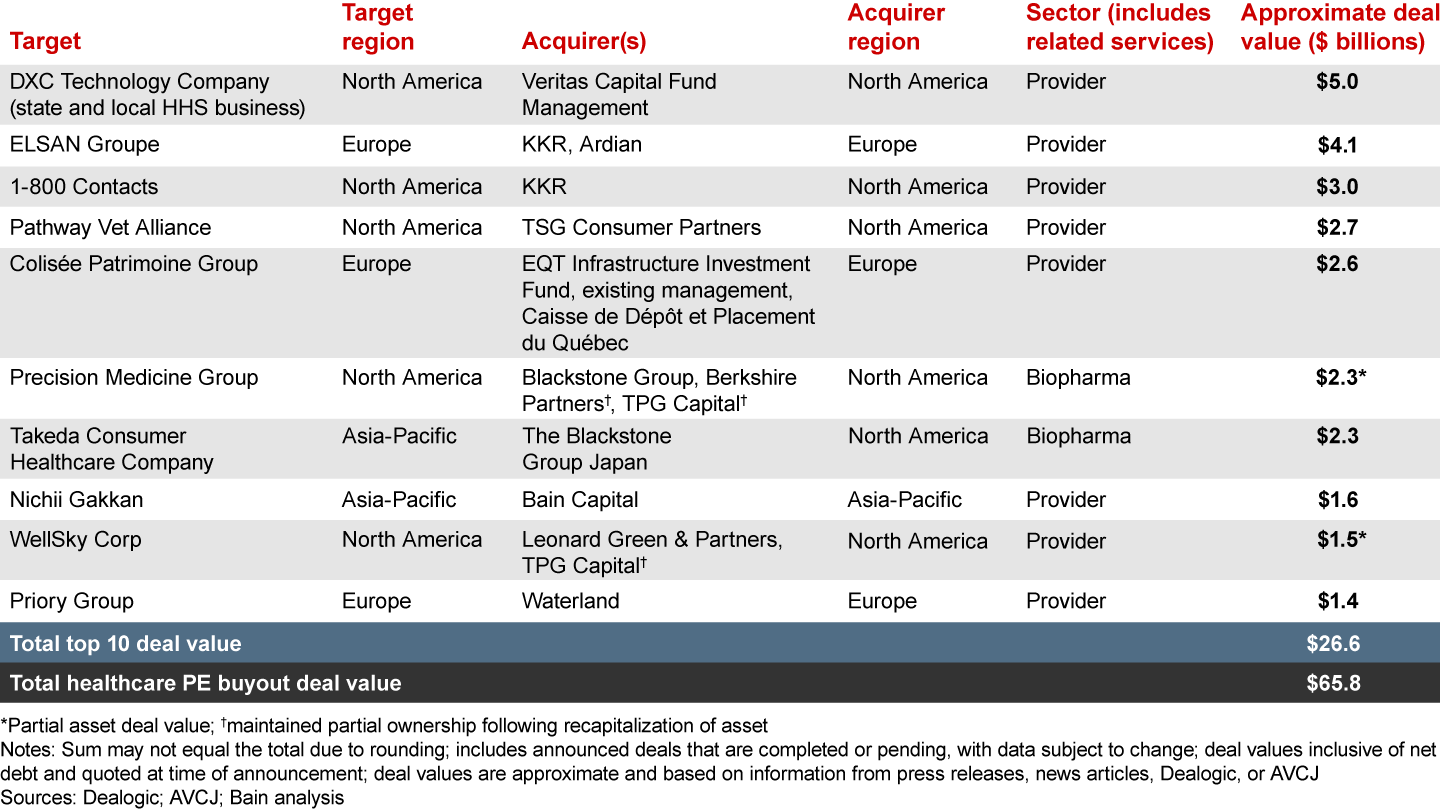
      The 10 largest announced buyouts in 2020 accounted for 40% of disclosed value
      The 10 largest announced buyouts in 2020 accounted for 40% of disclosed value
      The 10 largest announced buyouts in 2020 accounted for 40% of disclosed value

      Given investors’ gravitation to healthcare in 2020, we expect that it will remain difficult for investors to pick and choose large deals. Competition will intensify for attractive assets that come to market in high-interest segments, as many investors are looking to enter growth areas. Investors will need to diversify their search and forge strong relationships across the industry, in order to position themselves to access high-value, accretive opportunities.

      Covid-19 was not the only relevant factor dampening disclosed value. For instance, a number of large assets traded without disclosing value. Also, capital markets showed a greater appetite for initial public offerings (IPOs), with a number of the largest healthcare assets going public after passing through one or more private equity owners. In previous years, these assets might have passed to another sponsor and counted toward total activity (see “SPAC appeal”).

      At the same time, even amid a turbulent macro environment, many investors were able to secure rapid financing, allowing them to move quickly on available assets and shore up tightened balance sheets. In the US and Europe, debt-to-EBITDA multiples remained high (6.6 for US and 5.9 for the European Union), a sign of good access to credit for investors (see Bain’s Global Private Equity Report 2021).

      Why the profit pool should keep growing

      Taking a broader perspective, healthcare companies continue to enjoy favorable underlying trends that strengthen the case for a relatively rapid return to past levels and growth trajectories of demand as the pandemic crisis recedes. An aging population, rising incidence of chronic illness, rising income levels and healthcare access, innovation in treatment and technology, and likely moderate pricing growth will combine to increase healthcare profit pools by roughly 5% annually in the next five years, we estimate.

      To be sure, legislative and regulatory risks could cloud the picture, especially in the wake of the pandemic and the significant changes it will likely usher in to countries’ health systems, infrastructure, and historic pricing tailwinds. Nevertheless, we don’t anticipate a comprehensive overhaul of most countries’ current healthcare systems. Instead, we expect to see a mix of continued pricing growth outpacing inflation, increased demand, and the creation of new market niches for firms to explore.

      Corporate M&A’s mixed relationship with private equity funds

      Despite the weaker growth in deals, exits posted the third consecutive year of growth. Disclosed deal values rose by 79% to $73 billion, with absolute increases in the value of IPOs and corporate deals, and a drop in sponsor-to-sponsor exits.

      Turning to M&A, activity contracted further than private equity as many corporates retrenched during the economic downturn. M&A fell to $339 billion in 2020 from $541 billion the year earlier, with deal count falling to 2,845 from 3,137. Still, M&A finished the year over five times larger in value than buyout activity, with many corporate entities acquiring attractive assets.

      The presence of corporates continues to have mixed effects on private equity investors. They create new competition for target assets, especially when they assemble large-scale platforms that can plausibly outbid private equity funds for complementary assets on the strength of potential synergies. At the same time, they can serve as avenues of exit and sources of differentiated capabilities and creative partnerships for certain assets. One such creative partnership is Humana’s $600 million joint venture with Welsh, Carson, Anderson & Stowe to open additional Medicare-focused primary care facilities.

      Asia-Pacific’s surge

      From a geographic perspective, regional performance varied to some extent in 2020. North American and European deal volume and value fell, but the Asia-Pacific region grew on both counts due to increases in biopharma and healthcare provider deals. North America continued to concentrate most of its activity in the provider sector, especially provider services, followed by biopharma. Europe’s sector mix appeared similar to North America, and both saw increased activity in alternate care sites and retail health providers.

      Across regions, several trends became prominent over the course of the year:

      • a wider appetite for new types of risk, including payer risk and molecule risk;
      • pick-and-shovel strategies, or investing in the tools and services used to produce a product, especially in life sciences and biotech; and
      • continued demand for compelling targets with defensible niches and strong category leadership positions in their segments.

      SPAC appeal

      Once a bit player, the special purpose acquisition company, or SPAC, gained more prominence in 2020 across private equity as an exit alternative to the traditional IPO or sponsor-to-sponsor deal, and this was no different within healthcare. Low interest rates, easy access to financing, concerns about the effectiveness of a traditional IPO pricing mechanism in the midst of Covid, and strong performance by public equities all raised the appeal of SPACs.

      As a proven investment sector, healthcare attracted its share of newly formed SPACs and a few fast-moving groups were able to complete deals last year. Among the notable examples:

      • Multiplan, a healthcare services and technology solutions provider, merged with Churchill Capital III in a deal valued at $9.7 billion.
      • Cano Health, which provides value-based care to seniors, merged with Jaws Acquisition in a deal valued at $3 billion.
      • Cerevel Therapeutics, a biotech firm spun out of Pfizer’s neuroscience division, merged with Arya Sciences Acquisition II in a deal valued at $780 million.

      Private equity investors increasingly view the SPAC as an attractive exit channel. Compared with an IPO, it offers cash up front to funds looking to exit a portion of their position in an asset, and to do so perhaps sooner than a traditional IPO. Compared with traditional buyouts, it allows a fund to maintain some stake in assets that the fund is confident will continue to grow. In short, the SPAC serves as an efficient method for taking some value off the table in a volatile market. The next year or two will serve as a “make or break” time for SPACs, which typically are allowed two years to deploy their capital. If few deals are completed, that could indicate sponsor reluctance to exit via SPACs in the future.

      More from the report

      • Welcome Letter: Fertile Conditions for Healthcare Private Equity Investment

      • Healthcare Private Equity Market 2020: The Year in Review

      • The Covid-19 Paradox: Widespread Repercussions for Demand, but New Healthcare Investment Opportunities as Well

      • Healthcare Private Equity in North America: Bring On the Gem Assets

      • Healthcare Private Equity in Europe: Steady Dealmaking despite Many Deferrals

      • Healthcare Private Equity in Asia-Pacific: Riding a Wave of Domestic Innovation

      • Healthcare Providers: New Roll-Up Candidates and a New Look for Risk-Bearing Providers

      • Healthcare Payers: A Bid to Reduce Costs for Patients and Employers

      • Biopharma: Commercialization Support Services Are Thriving

      • Medtech: Four Themes Fueled Deals despite the Pandemic

      • Healthcare IT: Technologies Help Improve Patient Experiences at Lower Costs

      • Healthcare M&A: A Pandemic-Induced Slowdown in Every Sector

      • Healthcare Exit Activity: Robust Capital Markets Spur a Surge of IPOs

      • Healthcare Private Equity Outlook: 2021 and Beyond

      Read our 2021 Global Healthcare Private Equity and M&A Report

      Explore the full report Download the PDF
      Authors
      • Headshot of Nirad Jain
        Nirad Jain
        Партнер, New York
      • Headshot of Kara Murphy
        Kara Murphy
        Партнер, Boston
      • Headshot of Franz-Robert Klingan
        Franz-Robert Klingan
        Партнер, Vienna
      • Headshot of Dmitry Podpolny
        Dmitry Podpolny
        Партнер, London
      • Headshot of Vikram Kapur
        Vikram Kapur
        Партнер, Singapore
      Contact us
      Related Industries
      • Здравоохранение
      • Прямые инвестиции
      Здравоохранение
      The Covid-19 Paradox: Widespread Repercussions for Demand, but New Healthcare Investment Opportunities as Well

      Three demand scenarios can inform investment strategies.

      Read more
      Здравоохранение
      Healthcare Private Equity Outlook: 2021 and Beyond

      What are the implications of “healthcare as national defense”?

      Read more
      Global Healthcare Private Equity Report
      New Models of Value Creation for Physician Groups

      Investors are retooling their physician group approach, building performance-driven platforms for the long term and positioning assets for strategic exits.

      Read more
      Global Healthcare Private Equity Report
      Healthcare Private Equity Market 2025: Resurgence and Record Growth

      Healthcare private equity investment posted a very strong year for deal value and volume, paired with a strong rebound in exits.

      Read more
      Global Healthcare Private Equity Report
      What Differentiates Winning Healthcare IT Investments

      Amidst continued high-valuation multiples and competitive deal processes, a disciplined focus on value-creation levers distinguishes winning bids and successful exits.

      Read more
      First published in март 2021
      Tags
      • Здравоохранение
      • Прямые инвестиции
      • Global Healthcare Private Equity Report

      How We've Helped Clients

      Стратегия Pharma oncology growth strategy

      Read case study

      Стратегия Review focuses biotech on portfolio potential

      Read case study

      Повышение эффективности деятельности Turning bottlenecks into growth opportunities

      Read case study

      Хотите продолжить обсуждение?

      Мы помогаем мировым лидерам бизнеса решать самые сложные проблемы и находить наилучшие возможности. Работая вместе, мы добиваемся устойчивых положительных изменений и результатов.

      Bain Insights. Our perspectives on critical issues global businesses face in today's challenging environment, delivered monthly.

      *I have read the Privacy Policy and agree to its terms.

      Please read and agree to the Privacy Policy.
      Bain & Company
      Contact us Sustainability Accessibility Terms of use Privacy Modern Slavery Act Statement Cookie Policy Sitemap Log In

      © 1996-2026 Bain & Company, Inc.

      Contact Bain

      How can we help you?

      • Business inquiry
      • Career information
      • Press relations
      • Partnership request
      • Speaker request
      See all offices