Skip to Content
  • 오피스

    오피스

    미주
    • Atlanta
    • Austin
    • Bogota
    • Boston
    • Buenos Aires
    • Chicago
    • Dallas
    • Denver
    • Houston
    • Los Angeles
    • Mexico City
    • Minneapolis
    • Monterrey
    • Montreal
    • New York
    • Rio de Janeiro
    • San Francisco
    • Santiago
    • São Paulo
    • Seattle
    • Silicon Valley
    • Toronto
    • Washington, DC
    유럽, 중동, 아프리카
    • Amsterdam
    • Athens
    • Berlin
    • Brussels
    • Copenhagen
    • Doha
    • Dubai
    • Dusseldorf
    • Frankfurt
    • Helsinki
    • Istanbul
    • Johannesburg
    • Kyiv
    • Lisbon
    • London
    • Madrid
    • Milan
    • Munich
    • Oslo
    • Paris
    • Riyadh
    • Rome
    • Stockholm
    • Vienna
    • Warsaw
    • Zurich
    아시아, 호주
    • Bangkok
    • Beijing
    • Bengaluru
    • Brisbane
    • Ho Chi Minh City
    • Hong Kong
    • Jakarta
    • Kuala Lumpur
    • Manila
    • Melbourne
    • Mumbai
    • New Delhi
    • Perth
    • Seoul
    • Shanghai
    • Singapore
    • Sydney
    • Tokyo
    오피스 전체보기
  • 얼럼나이
  • 미디어 센터
  • 구독
  • 연락처
  • Korea | 한국어

    지역 및 언어 선택

    글로벌
    • Global (English)
    미주
    • Brazil (Português)
    • Argentina (Español)
    • Canada (Français)
    • Chile (Español)
    • Colombia (Español)
    유럽, 중동, 아프리카
    • France (Français)
    • DACH Region (Deutsch)
    • Italy (Italiano)
    • Spain (Español)
    • Greece (Elliniká)
    아시아, 호주
    • China (中文版)
    • Korea (한국어)
    • Japan (日本語)
  • Saved items (0)
    Saved items (0)

    You have no saved items.

    관심 있는 내용을 북마크하여 Red 폴더에 저장할 수 있습니다. Red 폴더 에서 저장된 내용을 읽거나 공유해보세요.

    Explore Bain Insights
  • 산업
    메인 메뉴

    산업

    • 우주항공, 방산 및 정부 서비스
    • 농업 관련 산업
    • 화학
    • 인프라, 건설 및 건축 자재
    • 소비재
    • 금융 서비스
    • 헬스케어
    • 산업용 기계 및 장비
    • 미디어 및 엔터테인먼트
    • 금속
    • 광업
    • 석유 및 가스
    • 제지 및 패키징 산업
    • 사모펀드
    • 사회 및 공공 부문
    • 유통
    • 기술
    • 텔레콤
    • 운송
    • 여행·여가
    • 유틸리티 및 재생가능 에너지
  • 컨설팅 서비스
    메인 메뉴

    컨설팅 서비스

    • Customer Experience
    • ESG
    • Innovation
    • M&A
    • 운영
    • 조직
    • 사모펀드
    • 고객 전략 및 마케팅
    • 전략
    • AI, 인사이트 및 솔루션
    • Technology
    • 변화 혁신
  • Digital
  • 인사이트
  • 베인 소개
    메인 메뉴

    베인 소개

    • 업무 소개
    • 베인의 신념
    • 구성원 및 리더십 소개
    • 고객 성과
    • 주요 수상 경력
    • 글로벌 파트너사
    Further: Our global responsibility
    • 다양성과 포용
    • 사회 공헌 활동
    • Sustainability
    • World Economic Forum
    Learn more about Further
  • Careers
    메인 메뉴

    Careers

    • Work with Us
      Careers
      Work with Us
      • Find Your Place
      • Our Work Areas
      • Integrated Teams
      • Students
      • Internships & Programs
      • Recruiting Events
    • Life at Bain
      Careers
      Life at Bain
      • Blog: Inside Bain
      • Career Stories
      • Our People
      • Where We Work
      • Supporting Your Growth
      • Affinity Groups
      • Benefits
    • Impact Stories
    • Hiring Process
      Careers
      Hiring Process
      • What to Expect
      • Interviewing
    FIND JOBS
  • 오피스
    메인 메뉴

    오피스

    • 미주
      오피스
      미주
      • Atlanta
      • Austin
      • Bogota
      • Boston
      • Buenos Aires
      • Chicago
      • Dallas
      • Denver
      • Houston
      • Los Angeles
      • Mexico City
      • Minneapolis
      • Monterrey
      • Montreal
      • New York
      • Rio de Janeiro
      • San Francisco
      • Santiago
      • São Paulo
      • Seattle
      • Silicon Valley
      • Toronto
      • Washington, DC
    • 유럽, 중동, 아프리카
      오피스
      유럽, 중동, 아프리카
      • Amsterdam
      • Athens
      • Berlin
      • Brussels
      • Copenhagen
      • Doha
      • Dubai
      • Dusseldorf
      • Frankfurt
      • Helsinki
      • Istanbul
      • Johannesburg
      • Kyiv
      • Lisbon
      • London
      • Madrid
      • Milan
      • Munich
      • Oslo
      • Paris
      • Riyadh
      • Rome
      • Stockholm
      • Vienna
      • Warsaw
      • Zurich
    • 아시아, 호주
      오피스
      아시아, 호주
      • Bangkok
      • Beijing
      • Bengaluru
      • Brisbane
      • Ho Chi Minh City
      • Hong Kong
      • Jakarta
      • Kuala Lumpur
      • Manila
      • Melbourne
      • Mumbai
      • New Delhi
      • Perth
      • Seoul
      • Shanghai
      • Singapore
      • Sydney
      • Tokyo
    오피스 전체보기
  • 얼럼나이
  • 미디어 센터
  • 구독
  • 연락처
  • Korea | 한국어
    메인 메뉴

    지역 및 언어 선택

    • 글로벌
      지역 및 언어 선택
      글로벌
      • Global (English)
    • 미주
      지역 및 언어 선택
      미주
      • Brazil (Português)
      • Argentina (Español)
      • Canada (Français)
      • Chile (Español)
      • Colombia (Español)
    • 유럽, 중동, 아프리카
      지역 및 언어 선택
      유럽, 중동, 아프리카
      • France (Français)
      • DACH Region (Deutsch)
      • Italy (Italiano)
      • Spain (Español)
      • Greece (Elliniká)
    • 아시아, 호주
      지역 및 언어 선택
      아시아, 호주
      • China (中文版)
      • Korea (한국어)
      • Japan (日本語)
  • Saved items  (0)
    메인 메뉴
    Saved items (0)

    You have no saved items.

    관심 있는 내용을 북마크하여 Red 폴더에 저장할 수 있습니다. Red 폴더 에서 저장된 내용을 읽거나 공유해보세요.

    Explore Bain Insights
  • 산업
    • 산업

      • 우주항공, 방산 및 정부 서비스
      • 농업 관련 산업
      • 화학
      • 인프라, 건설 및 건축 자재
      • 소비재
      • 금융 서비스
      • 헬스케어
      • 산업용 기계 및 장비
      • 미디어 및 엔터테인먼트
      • 금속
      • 광업
      • 석유 및 가스
      • 제지 및 패키징 산업
      • 사모펀드
      • 사회 및 공공 부문
      • 유통
      • 기술
      • 텔레콤
      • 운송
      • 여행·여가
      • 유틸리티 및 재생가능 에너지
  • 컨설팅 서비스
    • 컨설팅 서비스

      • Customer Experience
      • ESG
      • Innovation
      • M&A
      • 운영
      • 조직
      • 사모펀드
      • 고객 전략 및 마케팅
      • 전략
      • AI, 인사이트 및 솔루션
      • Technology
      • 변화 혁신
  • Digital
  • 인사이트
  • 베인 소개
    • 베인 소개

      • 업무 소개
      • 베인의 신념
      • 구성원 및 리더십 소개
      • 고객 성과
      • 주요 수상 경력
      • 글로벌 파트너사
      Further: Our global responsibility
      • 다양성과 포용
      • 사회 공헌 활동
      • Sustainability
      • World Economic Forum
      Learn more about Further
  • Careers
    최근 검색어
      최근 방문 페이지

      Content added to saved items

      Saved items (0)

      Removed from saved items

      Saved items (0)

      Brief

      2023 Healthcare Provider IT Report: Doubling Down on Innovation

      2023 Healthcare Provider IT Report: Doubling Down on Innovation

      Health system IT leaders are using emerging technologies to address labor shortages and financial pressures.

      글 Aaron Feinberg, Eric Berger, and Rebecca Hammond

      • 읽기 소요시간
      }

      Brief

      2023 Healthcare Provider IT Report: Doubling Down on Innovation
      en
      한눈에 보기
      • US healthcare providers continue to accelerate their spending on IT and software, as nearly 80% of healthcare executive respondents in our new survey increased spending materially over the past year, spurred by emerging technologies, labor shortages, and cost pressures.
      • Revenue cycle management and clinical workflow optimization remain top areas of investment, while patient engagement has moved up the list of priorities, particularly among more advanced or digitally mature providers.
      • Providers continue to express a preference for fewer vendors, with nearly two-thirds of respondents saying they look first to existing vendors, especially electronic health record providers, for new functionality before evaluating new vendors and offerings.
      • While almost 6% of health system respondents have a generative artificial intelligence (AI) strategy today, about 50% are actively developing one or are planning to in the near future, highlighting the transformative potential impact of AI.

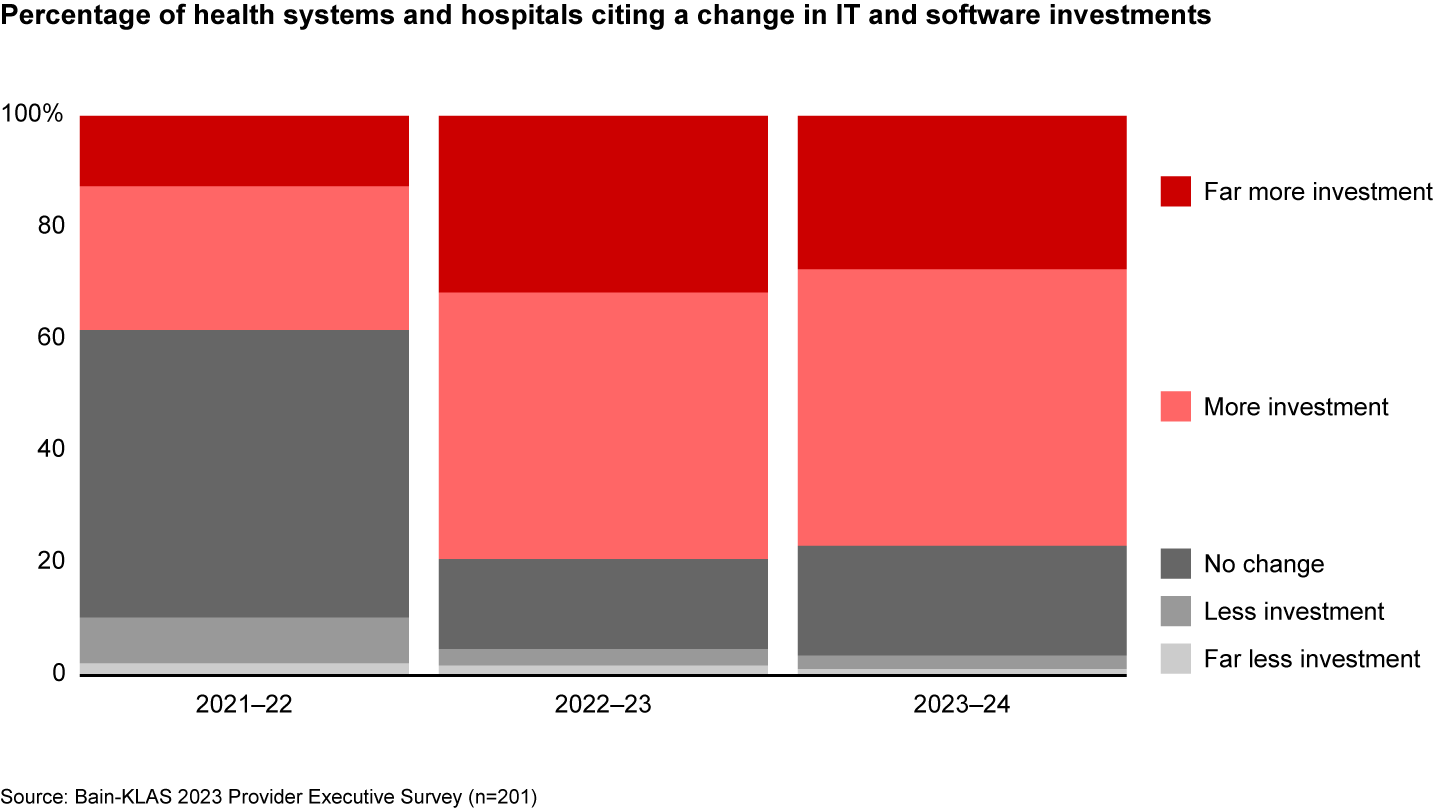
      US healthcare providers are spending heavily on IT, reflecting how technology has become a leading strategic priority. In a survey of 201 US healthcare provider executives conducted in June 2023 by Bain & Company and KLAS Research, 56% of the respondents cited software and technology as one of their top three strategic priorities, compared with 34% in 2022 (see Figure 1). Around 75% of respondents expect growth in software and technology spending to continue over the next 12 months (see Figure 2). Across the different provider types, academic medical centers (AMCs) and large hospitals and health systems expect a stronger increase in their own spending than smaller operators due to a greater focus on innovation and financial flexibility.

      Written in collaboration with

      Written in collaboration with

      KLAS_logo_2021-arch_blue_200x55.png


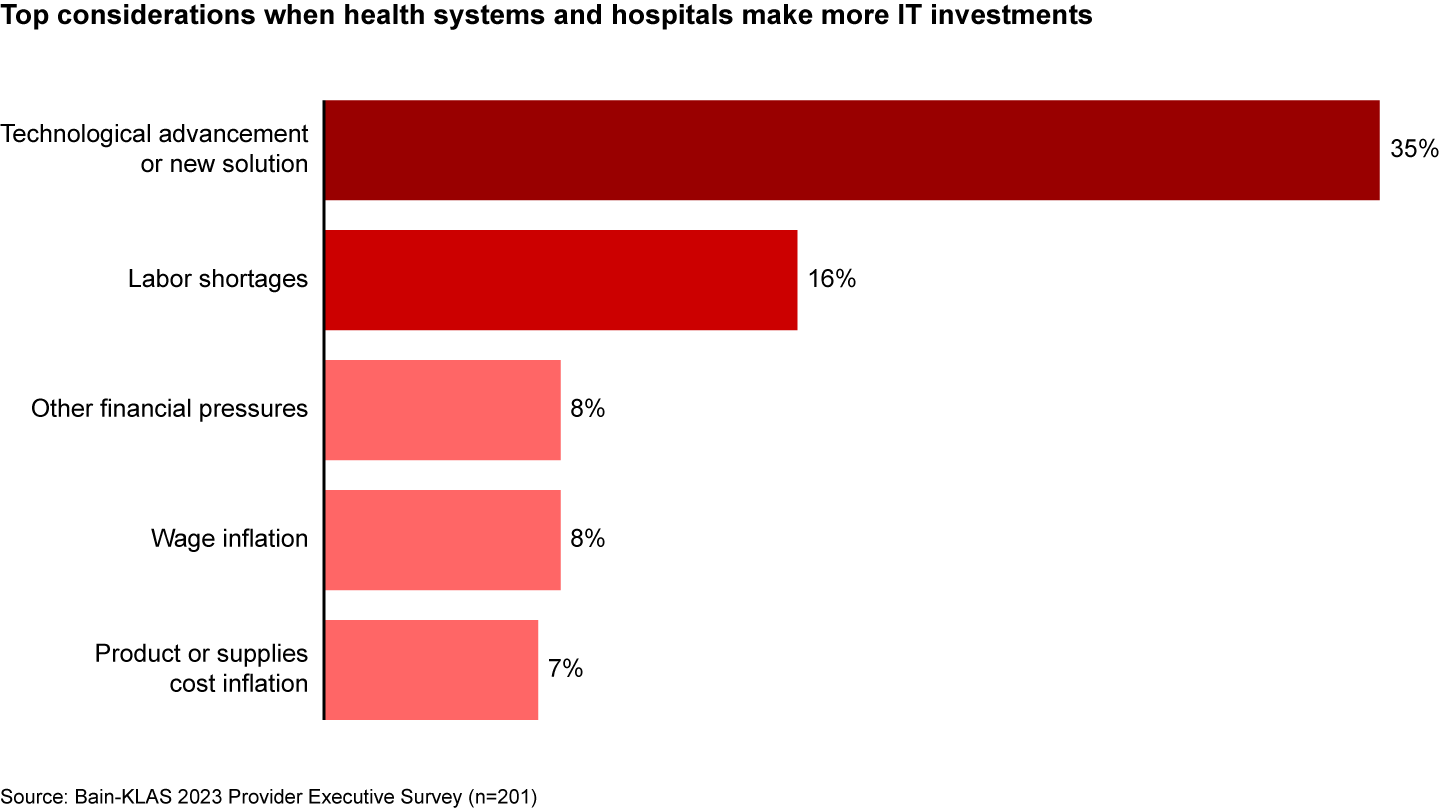
      Respondents cited technological advances and the availability of new solutions, particularly around patient engagement and cybersecurity, as the top drivers for new investments (see Figure 3). Respondents also mentioned that more intense labor shortages and financial pressures have spurred spending.

      Figure 1
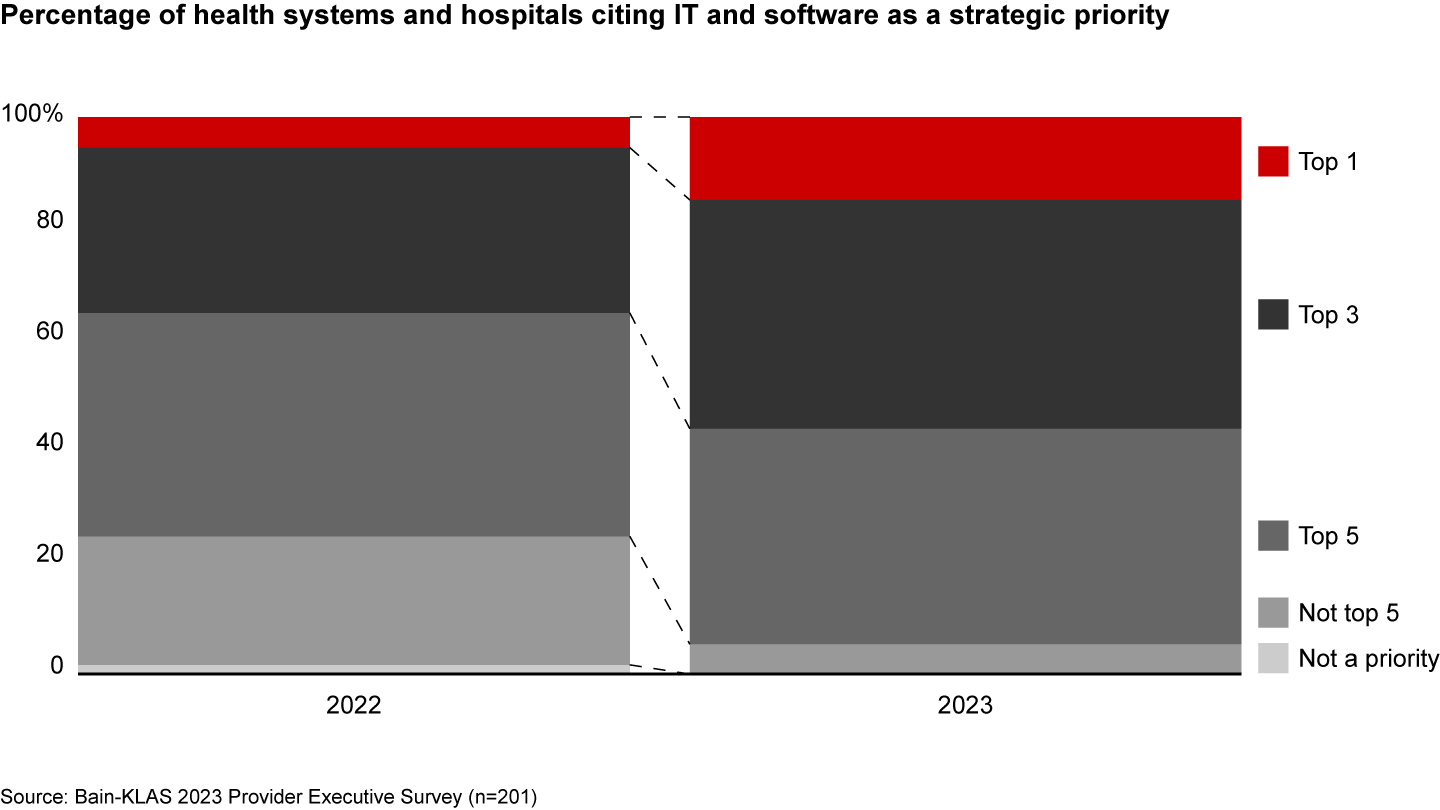
      IT has become more important to healthcare providers
      IT has become more important to healthcare providers
      IT has become more important to healthcare providers
      Figure 2
      Health systems and hospitals are spending more on IT and software
      Health systems and hospitals are spending more on IT and software
      Health systems and hospitals are spending more on IT and software
      Figure 3
      Two factors account for much of healthcare IT investments
      Two factors account for much of healthcare IT investments
      Two factors account for much of healthcare IT investments

      Revenue cycle management and clinical workflow optimization remain priorities, while patient engagement is on the rise

      Due to financial challenges and shrinking margins, investments in areas with clear, near-term return on investment (ROI), such as revenue cycle management (RCM) and clinical workflow optimization software, are now high on the agenda.

      RCM software is critical in the current environment given its direct link to both revenue (enhanced collections) and cost (streamlining labor-intensive processes). Providers cite RCM as a top priority for the next year, anticipating investments across a broad set of subsegments including revenue integrity, charge capture, and complex claims.

      Clinical workflow solutions help increase health system throughput and efficiency. For example, patient flow software improves throughput by identifying and mitigating potential barriers to discharge such as missing tests. These solutions can help optimize provider productivity and asset utilization while improving patient satisfaction via a more seamless, retail-like experience.

      Aside from RCM and workflow optimization, freestanding hospitals and physician groups are catching up on other core systems, namely electronic health records (EHR) and IT infrastructure (see Figure 4).

      Figure 4
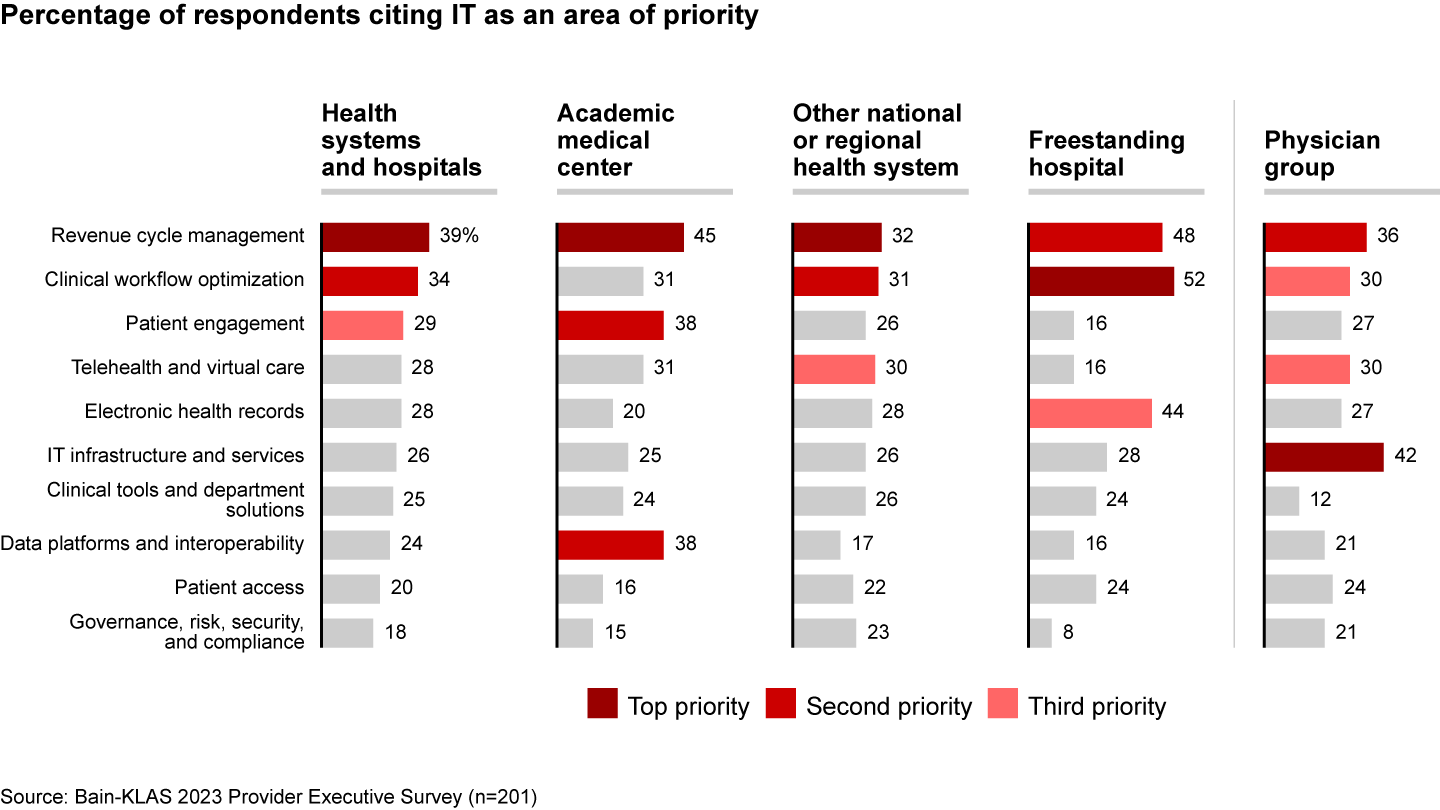
      Freestanding hospitals and physician groups are catching up in key IT areas
      Freestanding hospitals and physician groups are catching up in key IT areas
      Freestanding hospitals and physician groups are catching up in key IT areas

      By contrast, academic medical centers (AMCs) now focus more on enhancing patient engagement capabilities to improve the experience, as well as data platforms to prepare for longer-term opportunities such as value-based care (VBC) and data monetization.

      Despite being less frequently cited by survey respondents, cybersecurity remains table stakes given patient data sensitivity and regular cyberattacks on providers, particularly in light of the rapid deployment of new generative AI technology.  

      Providers seek simplified tech stacks and vendors offering broader suites

      With current IT solutions, healthcare providers cite cost and EHR integration and interoperability as critical pain points. AMCs emphasize interoperability given generally more complex tech stacks and data use cases, while freestanding hospitals experience more financial pressure and overwhelmingly cite cost as a pain point.

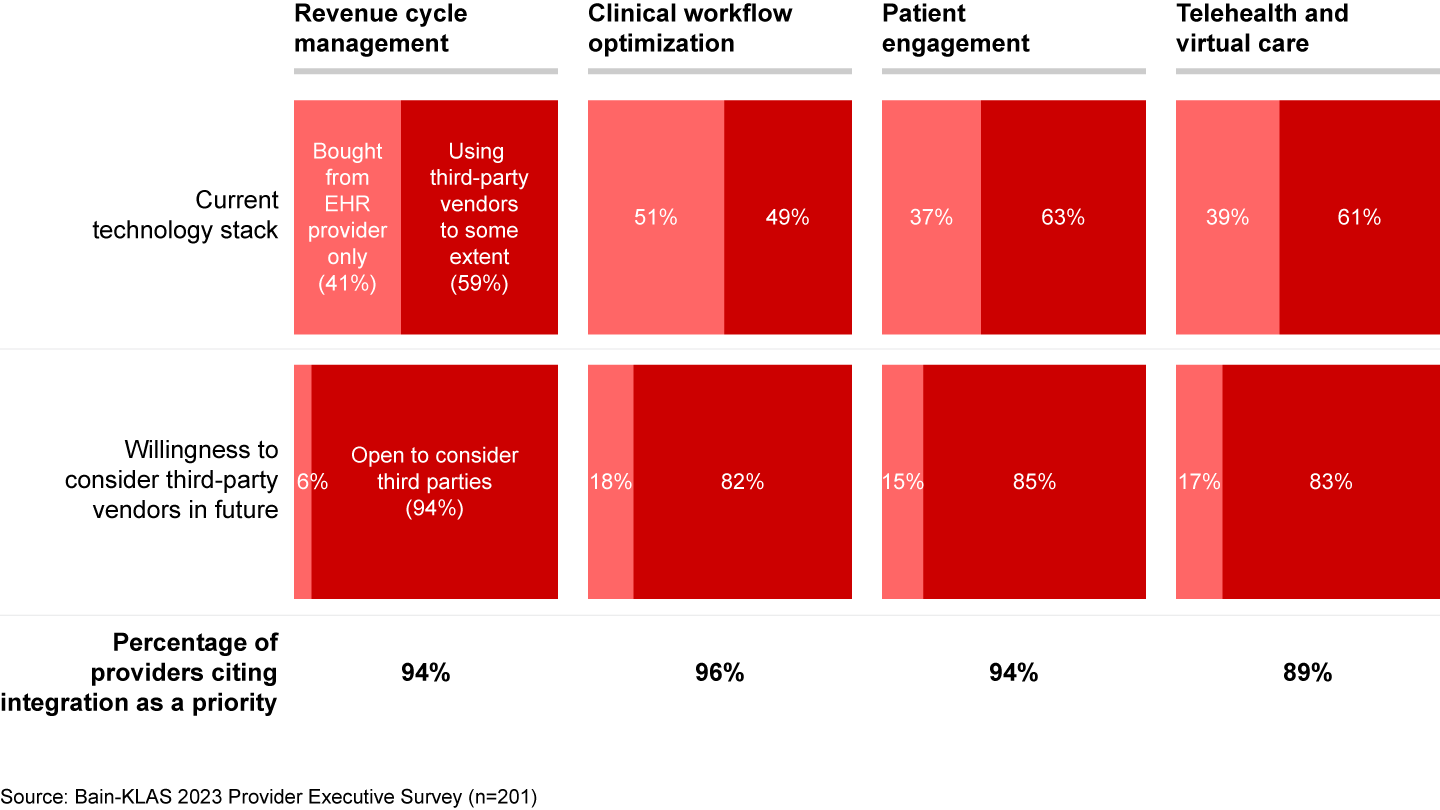
      Provider organizations are addressing these issues by streamlining tech stacks and buying from EHR vendors and other suite providers where possible (see Figure 5). This trend has intensified since 2022, helping Epic, in particular, to grow its market share to more than 60% of total US hospital net patient revenue (NPR).     

      While respondents are open to look elsewhere if existing vendors lack a solution or have a significant functionality gap, tight EHR integration remains a key purchasing criterion for all healthcare providers evaluating IT solutions (see Figure 6).

      Figure 5
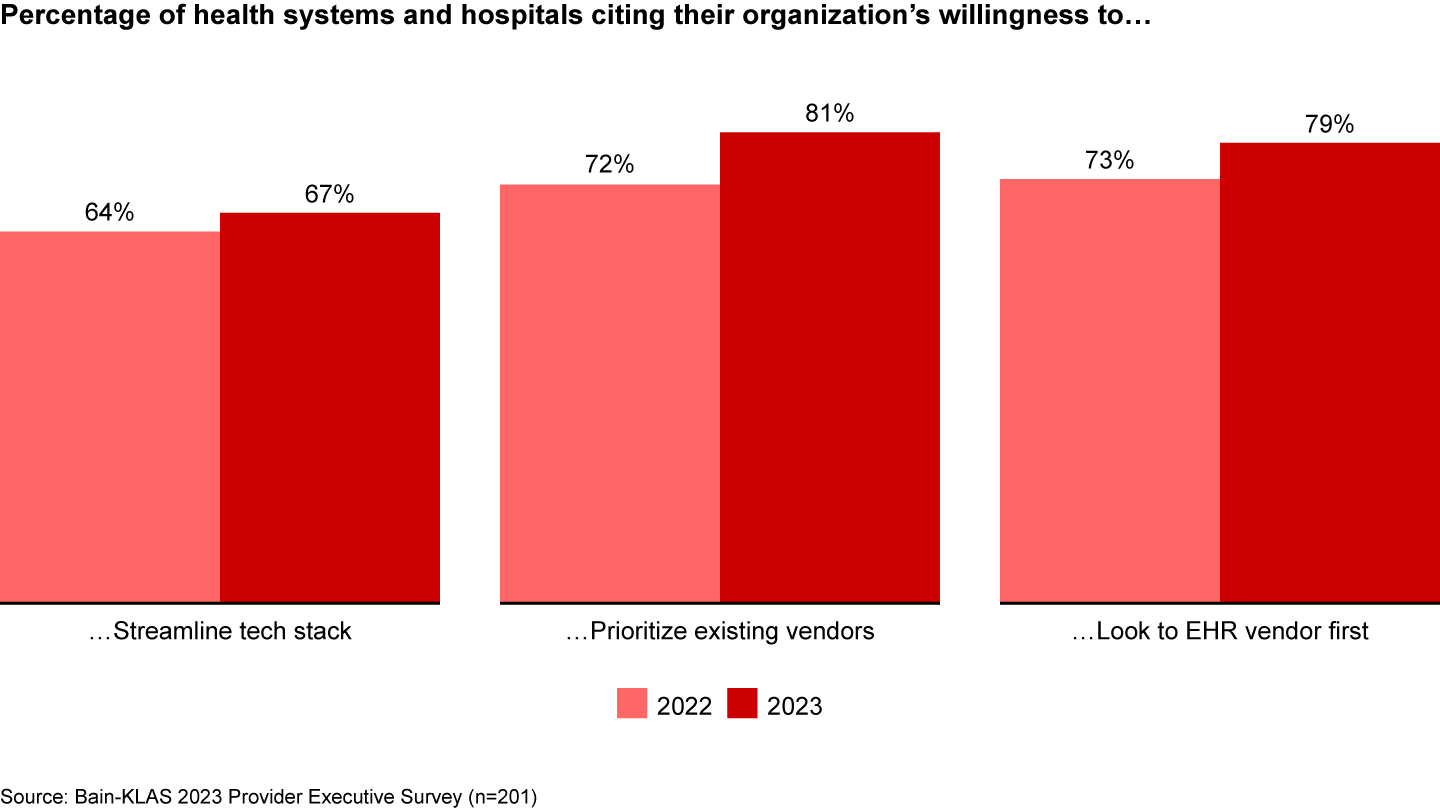
      Providers confront cost and interoperability pain points
      Providers confront cost and interoperability pain points
      Providers confront cost and interoperability pain points
      Figure 6
      Most providers would look elsewhere to close the functionality gap
      Most providers would look elsewhere to close the functionality gap
      Most providers would look elsewhere to close the functionality gap

      Despite growing interest in artificial intelligence, sentiment remains mixed

      The emergence of generative AI has brought the broader technology back into the spotlight: Today, around 70% of health system respondents indicate that they believe AI will have a greater impact on their organization than last year, moving AI strategies from the IT department to the C-suite. While almost 6% of respondents have a generative AI strategy today, this number is expected to climb tenfold in the next year. Relative to other provider segments in respondents’ projections, AMCs lead in AI adoption both today and over the next year (see Figure 7).

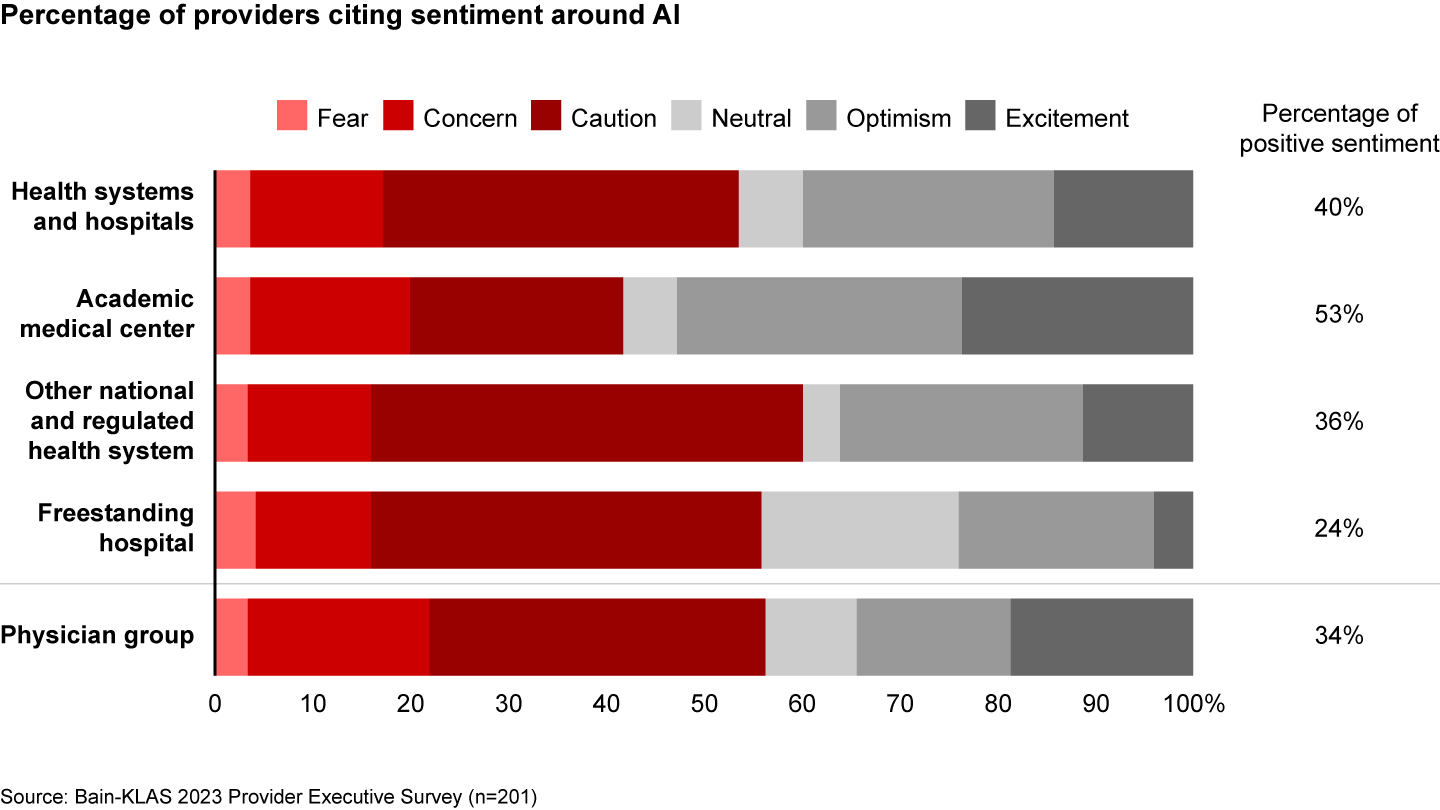
      While attitudes toward AI are mixed, providers with more advanced AI strategies, especially AMCs, have slightly more positive sentiments overall (see Figure 8). The potential for greater efficiency, improved patient outcomes, and cost savings underlies that enthusiasm. Concerns around security, privacy, cost, and ethics, as well as ongoing issues around accuracy and reliability, are cited by providers that are less positive.

      Figure 7
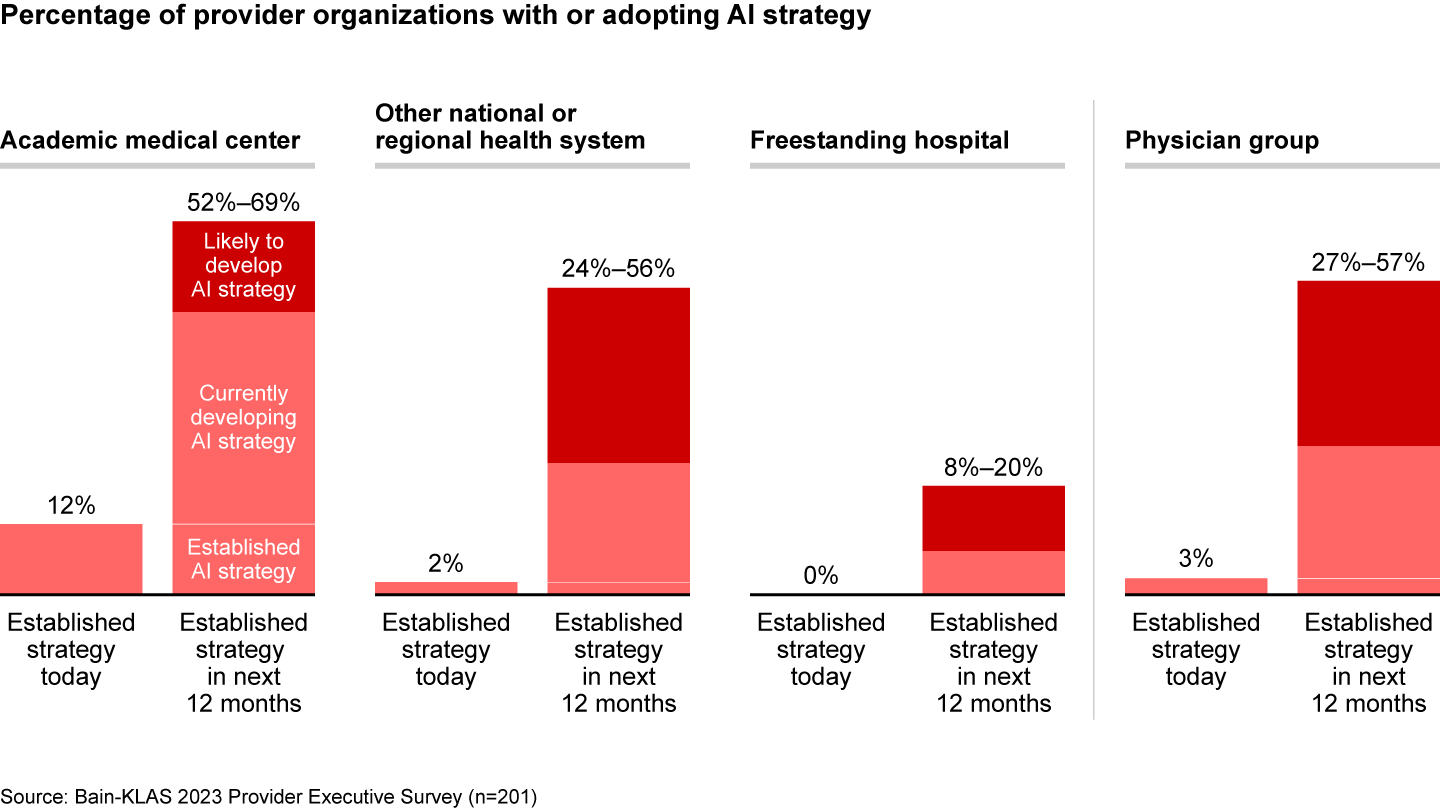
      Generative AI puts artificial intelligence back in the spotlight
      Generative AI puts artificial intelligence back in the spotlight
      Generative AI puts artificial intelligence back in the spotlight
      Figure 8
      Provider sentiment around AI ranges from fear to excitement
      Provider sentiment around AI ranges from fear to excitement
      Provider sentiment around AI ranges from fear to excitement

      Barriers to further AI adoption vary based on provider sophistication and internal capability: AMCs are more concerned with clinical risk and regulatory considerations, while smaller providers consider unclear benefits, lack of expertise, and resource constraints as top barriers (see Figure 9).

      Use cases that improve quality of care, such as clinical decision support and diagnostics, are cited as top priorities and are expected to become increasingly important. Additionally, as is the case with overall IT investment priorities, providers prefer AI use cases with a strong bottom-line impact, such as predictive analytics and workflow optimization (see Figure 10).

      Figure 9
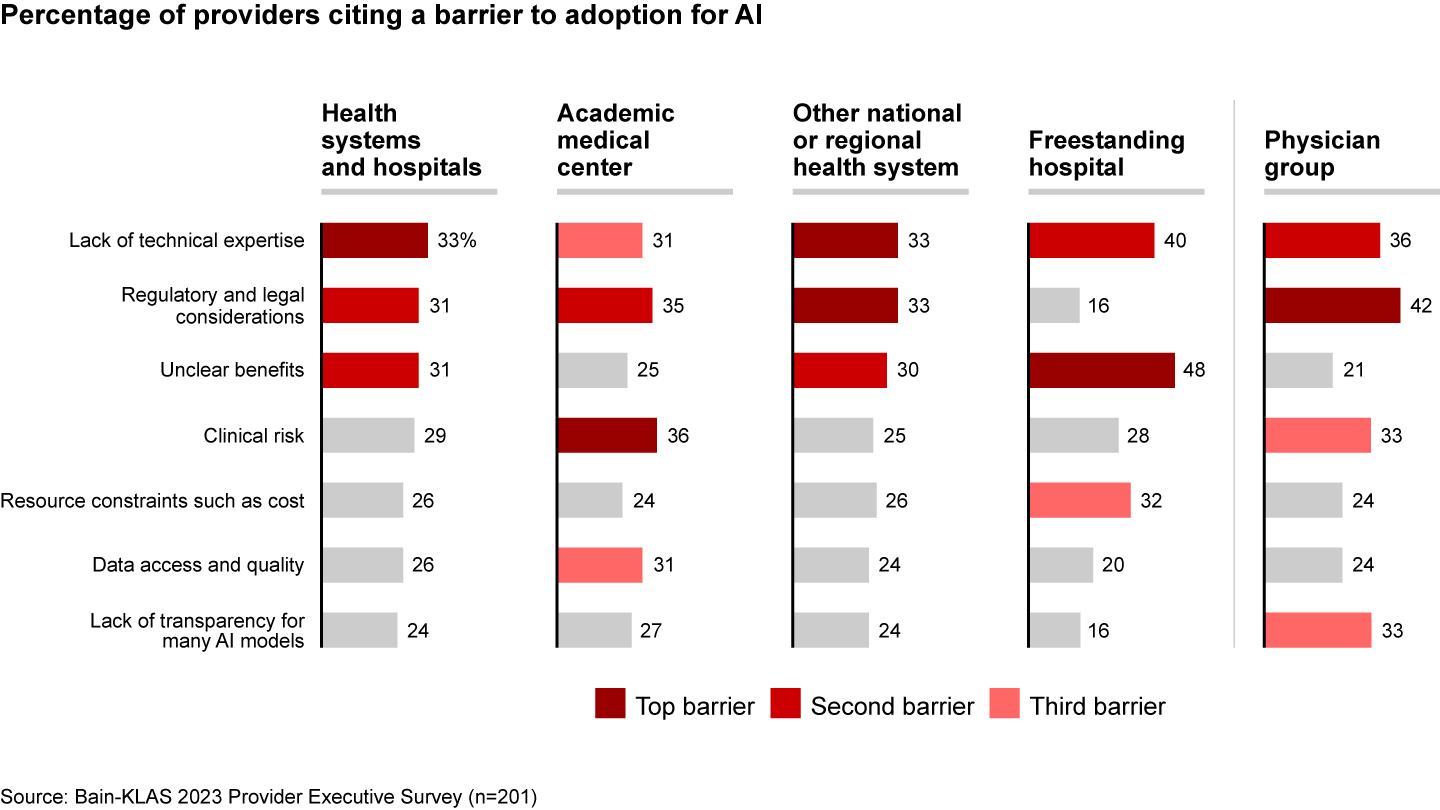
      Several barriers are hindering AI adoption
      Several barriers are hindering AI adoption
      Several barriers are hindering AI adoption
      Figure 10
      AI use cases that improve quality of care will grow in importance
      AI use cases that improve quality of care will grow in importance
      AI use cases that improve quality of care will grow in importance

      Catalyzed by the rapid growth in awareness of generative AI and the technology’s longer-term potential, healthcare organizations have been eager to experiment with it. For example, Epic (powered by Microsoft Azure OpenAI Service) facilitates drafting responses to common patient messages in its MyChart portal. Mayo Clinic is reportedly testing a tool powered by Google to search through disparate internal data for both research and clinical purposes. Similarly, NYU Langone has piloted a tool to analyze unstructured EHR notes and improve predictive analytics around readmission and insurance-claim denial rates. Finally, Microsoft’s subsidiary Nuance is developing a tool that automatically transcribes physician-patient interactions and drafts or auto-completes forms with relevant information natively within Epic’s EHR.

      AI may present an opportunity for large technology firms to deepen their presence in the provider IT segment, a category that has historically been challenging for them to crack. Many leading tech firms are partnering with healthcare-focused vendors and provider organizations. These partnerships allow the tech firms to commercialize their large language models and healthcare organizations to benefit from years of transferable R&D. Consequently, more than half of the surveyed providers said they expect to accelerate IT spending with large tech firms, an increase of 12 percentage points from the previous year.

      The outlook: accelerated IT investments

      While there are many moving pieces and competing trends in the market today, providers in our survey made it clear that they will continue to accelerate their investments in IT and tech solutions, including AI.

      As providers continue to face an array of structural challenges—including secular provider shortages, an aging population, and financial pressures—they will increasingly prioritize IT solutions that produce a tangible ROI and will more frequently look to simplify their tech stacks. Vendors will need to offer best-of-breed solutions or compelling suites in order to differentiate themselves.

      AI has the power to transform many processes and workflows; however, this shift hinges on the technology’s ability to demonstrate productivity gains in real-world applications without increasing clinical risk. The best vendors will offer AI and other technologies that create clear returns to providers and help to mitigate structural challenges facing the US healthcare industry.

      • Acknowledgments (click to expand)

        The authors thank Joel Sanchez, Emily Paxman, Robbie Bullough, Sarah Verseman, Kelsey Lauder, John Day, Jan Heine, Leon Wang, Jaye Zhang, Krutika Pursnani, Perry Wallack, Kit Wiggin, Vikrant Ragula, and Thomas Gonzalez for leading the research supporting this report; Kara Murphy, Nirad Jain, Laila Kassis, Caitlin Dowling, Jason Slocum, Ben Cooke, Quinn Solomon, Alan Barnes, Ishaan Anand, and Brian Swanson for their contributions and expertise; and Robert Rosenberg, John Campbell, and Tim Reason for their editorial support. We’re grateful to IncQuery® for the valuable data and service it provided.

      About KLAS Research

      KLAS is a research and insights firm on a global mission to improve healthcare. Working with thousands of healthcare professionals and clinicians, KLAS gathers data and insights on software and services to deliver timely reports and performance data that represent provider and payer voices and act as catalysts for improving vendor performance. The KLAS research team publishes reports covering the most pressing questions facing healthcare technology today, including emerging technology insights, that provide early insights on the future of healthcare technology solutions. KLAS also fosters measurement and collaboration between healthcare providers and payers and best practice adoption. Learn more at https://klasresearch.com/.

      저자
      • Headshot of Aaron Feinberg
        Aaron Feinberg
        파트너, New York
      • Headshot of Eric Berger
        Eric Berger
        Alumni, Boston
      • Rebecca Hammond
        Chief Delivery Officer, KLAS Research, Salt Lake City
      문의하기
      관련 산업
      • 사모펀드
      • 헬스케어
      • Healthcare Providers and Services
      • IT Services
      관련 컨설팅 서비스
      • 정보기술(IT)
      최적의 솔루션 찾기
      • Firm Strategy & Operations
      • Institutional Investors
      • Tech Due Diligence
      사모펀드
      Inside Bain’s 2023 Healthcare Provider IT Report

      Bain partners and industry experts share key insights from our annual Healthcare Provider IT Report.

      자세히 보기
      사모펀드
      AI Investors: Act Fast, Act Wisely

      Lower barriers to experimentation open the door to more disruption, but incumbents have advantages, too.

      자세히 보기
      사모펀드
      Healthcare IT Spending: Innovation, Integration, and AI

      Providers and payers are more willing to experiment with advanced technologies.

      자세히 보기
      정보기술(IT)
      How Businesses Can Prepare for Post-Quantum Cybersecurity Threats

      Your company will soon face attackers armed with quantum technology. Will you be ready?

      자세히 보기
      사모펀드
      Takeaways from Bain’s 2024 Healthcare Private Equity Report

      Bain partners Nirad Jain and Kara Murphy share key insights from our annual report.

      자세히 보기
      First published in 9월 2023
      태그
      • 사모펀드
      • 정보기술(IT)
      • 헬스케어
      • Firm Strategy & Operations
      • Healthcare Providers and Services
      • Institutional Investors
      • IT Services
      • Tech Due Diligence

      프로젝트 사례

      Rapid Tech Due Diligence Helped a Private Equity Firm Invest with Confidence

      See more related case studies

      A Pension Fund Finds New Opportunities in Private Equity

      See more related case studies

      An Asian Sovereign Wealth Fund Expands Its Tech Investing

      See more related case studies

      베인에 궁금하신 점이 있으신가요?

      베인은 주저 없이 변화를 마주할 줄 아는 용감한 리더들과 함께합니다. 그리고, 이들의 담대한 용기는 고객사의 성공으로 이어집니다.

      급변하는 비즈니스 환경에서 살아남기 위한 선도자의 시각. 월간 Bain Insights에서 글로벌 비즈니스의 핵심 이슈를 확인하십시오.

      *개인정보 정책을 읽었으며 그 내용에 동의합니다.

      Privacy Policy를 읽고 동의해주십시오.
      Bain & Company
      문의하기 환경정책 Accessibility 이용약관 개인정보 보호 쿠키 사용 정책 Sitemap Log In

      © 1996-2026 Bain & Company, Inc.

      문의하기

      무엇을 도와드릴까요?

      • 프로젝트 문의
      • 채용 정보
      • 언론
      • 제휴 문의
      • 연사 초청
      오피스 전체보기