
Skip to Content
  • 오피스

    오피스

    미주
    • Atlanta
    • Austin
    • Bogota
    • Boston
    • Buenos Aires
    • Chicago
    • Dallas
    • Denver
    • Houston
    • Los Angeles
    • Mexico City
    • Minneapolis
    • Monterrey
    • Montreal
    • New York
    • Rio de Janeiro
    • San Francisco
    • Santiago
    • São Paulo
    • Seattle
    • Silicon Valley
    • Toronto
    • Washington, DC
    유럽, 중동, 아프리카
    • Amsterdam
    • Athens
    • Berlin
    • Brussels
    • Copenhagen
    • Doha
    • Dubai
    • Dusseldorf
    • Frankfurt
    • Helsinki
    • Istanbul
    • Johannesburg
    • Kyiv
    • Lisbon
    • London
    • Madrid
    • Milan
    • Munich
    • Oslo
    • Paris
    • Riyadh
    • Rome
    • Stockholm
    • Vienna
    • Warsaw
    • Zurich
    아시아, 호주
    • Bangkok
    • Beijing
    • Bengaluru
    • Brisbane
    • Ho Chi Minh City
    • Hong Kong
    • Jakarta
    • Kuala Lumpur
    • Manila
    • Melbourne
    • Mumbai
    • New Delhi
    • Perth
    • Seoul
    • Shanghai
    • Singapore
    • Sydney
    • Tokyo
    오피스 전체보기
  • 얼럼나이
  • 미디어 센터
  • 구독
  • 연락처
  • Korea | 한국어

    지역 및 언어 선택

    글로벌
    • Global (English)
    미주
    • Brazil (Português)
    • Argentina (Español)
    • Canada (Français)
    • Chile (Español)
    • Colombia (Español)
    유럽, 중동, 아프리카
    • France (Français)
    • DACH Region (Deutsch)
    • Italy (Italiano)
    • Spain (Español)
    • Greece (Elliniká)
    아시아, 호주
    • China (中文版)
    • Korea (한국어)
    • Japan (日本語)
  • Saved items (0)
    Saved items (0)

    You have no saved items.

    관심 있는 내용을 북마크하여 Red 폴더에 저장할 수 있습니다. Red 폴더 에서 저장된 내용을 읽거나 공유해보세요.

    Explore Bain Insights
  • 산업
    메인 메뉴

    산업

    • 우주항공, 방산 및 정부 서비스
    • 농업 관련 산업
    • 화학
    • 인프라, 건설 및 건축 자재
    • 소비재
    • 금융 서비스
    • 헬스케어
    • 산업용 기계 및 장비
    • 미디어 및 엔터테인먼트
    • 금속
    • 광업
    • 석유 및 가스
    • 제지 및 패키징 산업
    • 사모펀드
    • 사회 및 공공 부문
    • 유통
    • 기술
    • 텔레콤
    • 운송
    • 여행·여가
    • 유틸리티 및 재생가능 에너지
  • 컨설팅 서비스
    메인 메뉴

    컨설팅 서비스

    • Customer Experience
    • ESG
    • Innovation
    • M&A
    • 운영
    • 조직
    • 사모펀드
    • 고객 전략 및 마케팅
    • 전략
    • AI, 인사이트 및 솔루션
    • Technology
    • 변화 혁신
  • Digital
  • 인사이트
  • 베인 소개
    메인 메뉴

    베인 소개

    • 업무 소개
    • 베인의 신념
    • 구성원 및 리더십 소개
    • 고객 성과
    • 주요 수상 경력
    • 글로벌 파트너사
    Further: Our global responsibility
    • 다양성과 포용
    • 사회 공헌 활동
    • Sustainability
    • World Economic Forum
    Learn more about Further
  • Careers
    메인 메뉴

    Careers

    • Work with Us
      Careers
      Work with Us
      • Find Your Place
      • Our Work Areas
      • Integrated Teams
      • Students
      • Internships & Programs
      • Recruiting Events
    • Life at Bain
      Careers
      Life at Bain
      • Blog: Inside Bain
      • Career Stories
      • Our People
      • Where We Work
      • Supporting Your Growth
      • Affinity Groups
      • Benefits
    • Impact Stories
    • Hiring Process
      Careers
      Hiring Process
      • What to Expect
      • Interviewing
    FIND JOBS
  • 오피스
    메인 메뉴

    오피스

    • 미주
      오피스
      미주
      • Atlanta
      • Austin
      • Bogota
      • Boston
      • Buenos Aires
      • Chicago
      • Dallas
      • Denver
      • Houston
      • Los Angeles
      • Mexico City
      • Minneapolis
      • Monterrey
      • Montreal
      • New York
      • Rio de Janeiro
      • San Francisco
      • Santiago
      • São Paulo
      • Seattle
      • Silicon Valley
      • Toronto
      • Washington, DC
    • 유럽, 중동, 아프리카
      오피스
      유럽, 중동, 아프리카
      • Amsterdam
      • Athens
      • Berlin
      • Brussels
      • Copenhagen
      • Doha
      • Dubai
      • Dusseldorf
      • Frankfurt
      • Helsinki
      • Istanbul
      • Johannesburg
      • Kyiv
      • Lisbon
      • London
      • Madrid
      • Milan
      • Munich
      • Oslo
      • Paris
      • Riyadh
      • Rome
      • Stockholm
      • Vienna
      • Warsaw
      • Zurich
    • 아시아, 호주
      오피스
      아시아, 호주
      • Bangkok
      • Beijing
      • Bengaluru
      • Brisbane
      • Ho Chi Minh City
      • Hong Kong
      • Jakarta
      • Kuala Lumpur
      • Manila
      • Melbourne
      • Mumbai
      • New Delhi
      • Perth
      • Seoul
      • Shanghai
      • Singapore
      • Sydney
      • Tokyo
    오피스 전체보기
  • 얼럼나이
  • 미디어 센터
  • 구독
  • 연락처
  • Korea | 한국어
    메인 메뉴

    지역 및 언어 선택

    • 글로벌
      지역 및 언어 선택
      글로벌
      • Global (English)
    • 미주
      지역 및 언어 선택
      미주
      • Brazil (Português)
      • Argentina (Español)
      • Canada (Français)
      • Chile (Español)
      • Colombia (Español)
    • 유럽, 중동, 아프리카
      지역 및 언어 선택
      유럽, 중동, 아프리카
      • France (Français)
      • DACH Region (Deutsch)
      • Italy (Italiano)
      • Spain (Español)
      • Greece (Elliniká)
    • 아시아, 호주
      지역 및 언어 선택
      아시아, 호주
      • China (中文版)
      • Korea (한국어)
      • Japan (日本語)
  • Saved items  (0)
    메인 메뉴
    Saved items (0)

    You have no saved items.

    관심 있는 내용을 북마크하여 Red 폴더에 저장할 수 있습니다. Red 폴더 에서 저장된 내용을 읽거나 공유해보세요.

    Explore Bain Insights
  • 산업
    • 산업

      • 우주항공, 방산 및 정부 서비스
      • 농업 관련 산업
      • 화학
      • 인프라, 건설 및 건축 자재
      • 소비재
      • 금융 서비스
      • 헬스케어
      • 산업용 기계 및 장비
      • 미디어 및 엔터테인먼트
      • 금속
      • 광업
      • 석유 및 가스
      • 제지 및 패키징 산업
      • 사모펀드
      • 사회 및 공공 부문
      • 유통
      • 기술
      • 텔레콤
      • 운송
      • 여행·여가
      • 유틸리티 및 재생가능 에너지
  • 컨설팅 서비스
    • 컨설팅 서비스

      • Customer Experience
      • ESG
      • Innovation
      • M&A
      • 운영
      • 조직
      • 사모펀드
      • 고객 전략 및 마케팅
      • 전략
      • AI, 인사이트 및 솔루션
      • Technology
      • 변화 혁신
  • Digital
  • 인사이트
  • 베인 소개
    • 베인 소개

      • 업무 소개
      • 베인의 신념
      • 구성원 및 리더십 소개
      • 고객 성과
      • 주요 수상 경력
      • 글로벌 파트너사
      Further: Our global responsibility
      • 다양성과 포용
      • 사회 공헌 활동
      • Sustainability
      • World Economic Forum
      Learn more about Further
  • Careers
    최근 검색어
      최근 방문 페이지

      Content added to saved items

      Saved items (0)

      Removed from saved items

      Saved items (0)

      Brief

      A Three-Part Game Plan for Delivering Sustainability Digitally

      A Three-Part Game Plan for Delivering Sustainability Digitally

      Digital technologies can do much more than measure progress to net zero. They can support your entire sustainability strategy.

      글 James Anderson and Greg Caimi

      • 읽기 소요시간
      }

      Brief

      A Three-Part Game Plan for Delivering Sustainability Digitally
      en
      At a Glance
      • Digital technologies will be critical to achieving the sustainability goals of most companies and industries.
      • Digital tools not only make it possible to measure and track progress against sustainability goals, but they also foster the collaboration and innovation needed to solve our greatest sustainability challenges.
      • Yet digital creates its own sustainability risks that organizations need to address now—among them, data privacy and trust, AI ethics, and the impact of automation on jobs.
      • By following a three-part game plan, executives can build a comprehensive sustainability strategy that makes the most of digital technologies while minimizing their risks.

      Digital strategy and sustainability are increasingly important and increasingly intertwined. Public discourse on these topics is growing louder and more interconnected as it becomes clear that digital technologies have a critical role to play in addressing key sustainability challenges (see Figure 1).

      Figure 1
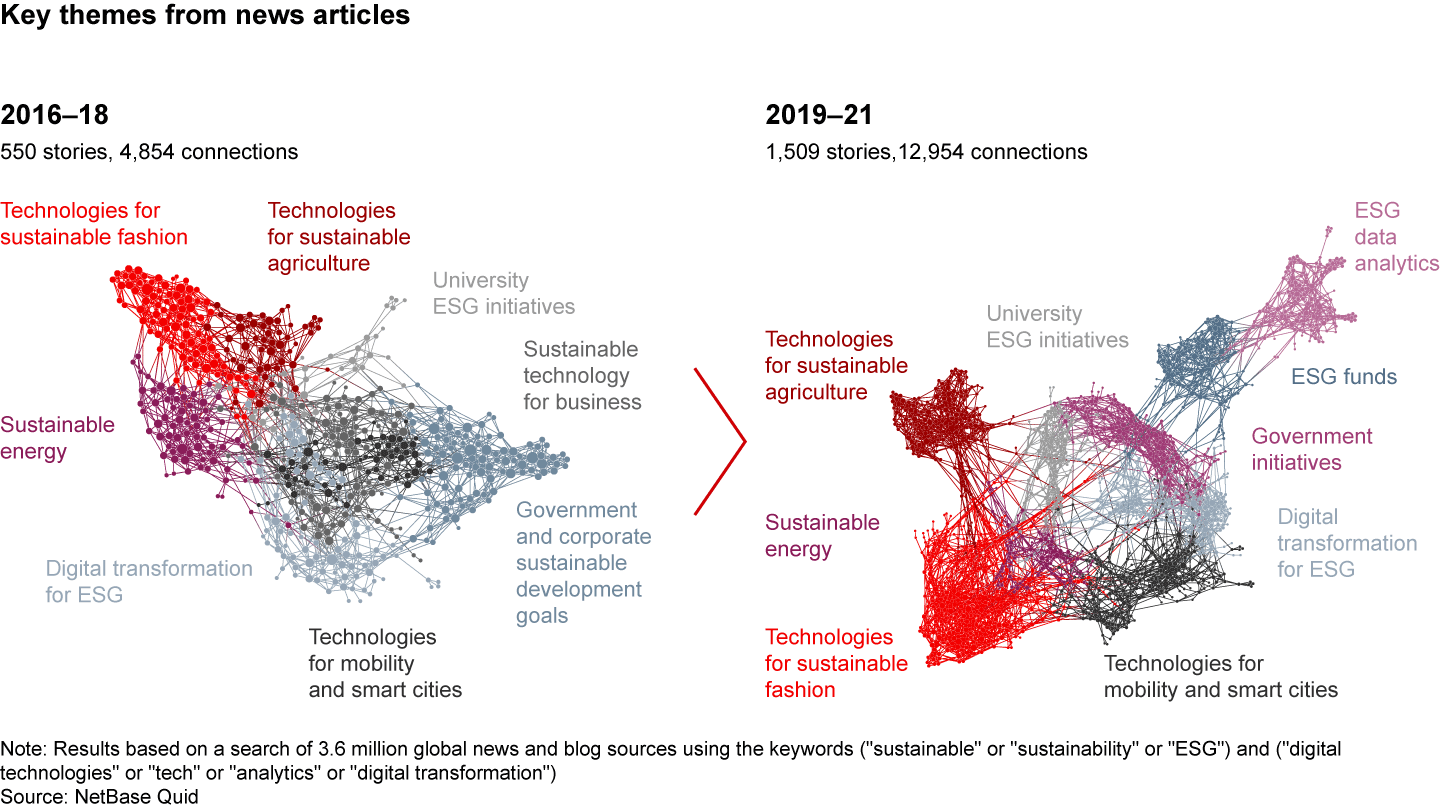
      The conversation around digital and sustainability has become louder and more interconnected
      The conversation around digital and sustainability has become louder and more interconnected
      The conversation around digital and sustainability has become louder and more interconnected

      These technologies are already having a profound impact on every aspect of ESG. In the environmental arena, Tesla, for example, is harnessing electrification and digital to disrupt the automotive sector and reduce vehicle emissions. Consider the impact of digital on social imperatives, such as the debate surrounding social media platforms, misinformation, and freedom of speech, or digital’s relevance to governance issues, as exemplified by the antitrust and taxation questions facing global Internet companies.

      The urgent demand for companies to make progress on sustainability is now coming loud and clear from all corporate stakeholders: customers, employees, investors, and regulators. They expect companies to make sustainability central to their mission, and executives recognize that they need digital technologies to meet those expectations.

      In a recent survey of 400 executives from various industries and regions conducted by Bain & Company and the World Economic Forum, 40% of respondents said they believe digital technologies are already having a positive impact on their sustainability goals. But along with many benefits, digital also brings downsides, and 10% of those surveyed believe digital technologies represent a risk to sustainability (see Figure 2). They are especially concerned about the impact on mental health and wellness, data privacy, skills for the future, and diversity and inclusion.

      Figure 2
      Executive views diverge on digital impact

      Using digital to operate more sustainably

      Digital technologies are already used to measure and track sustainability progress, optimize the use of resources, reduce greenhouse gas emissions, and bring about a more circular economy (see Figure 3), though their most prevalent uses vary by industry (see Figure 4).

      Figure 3
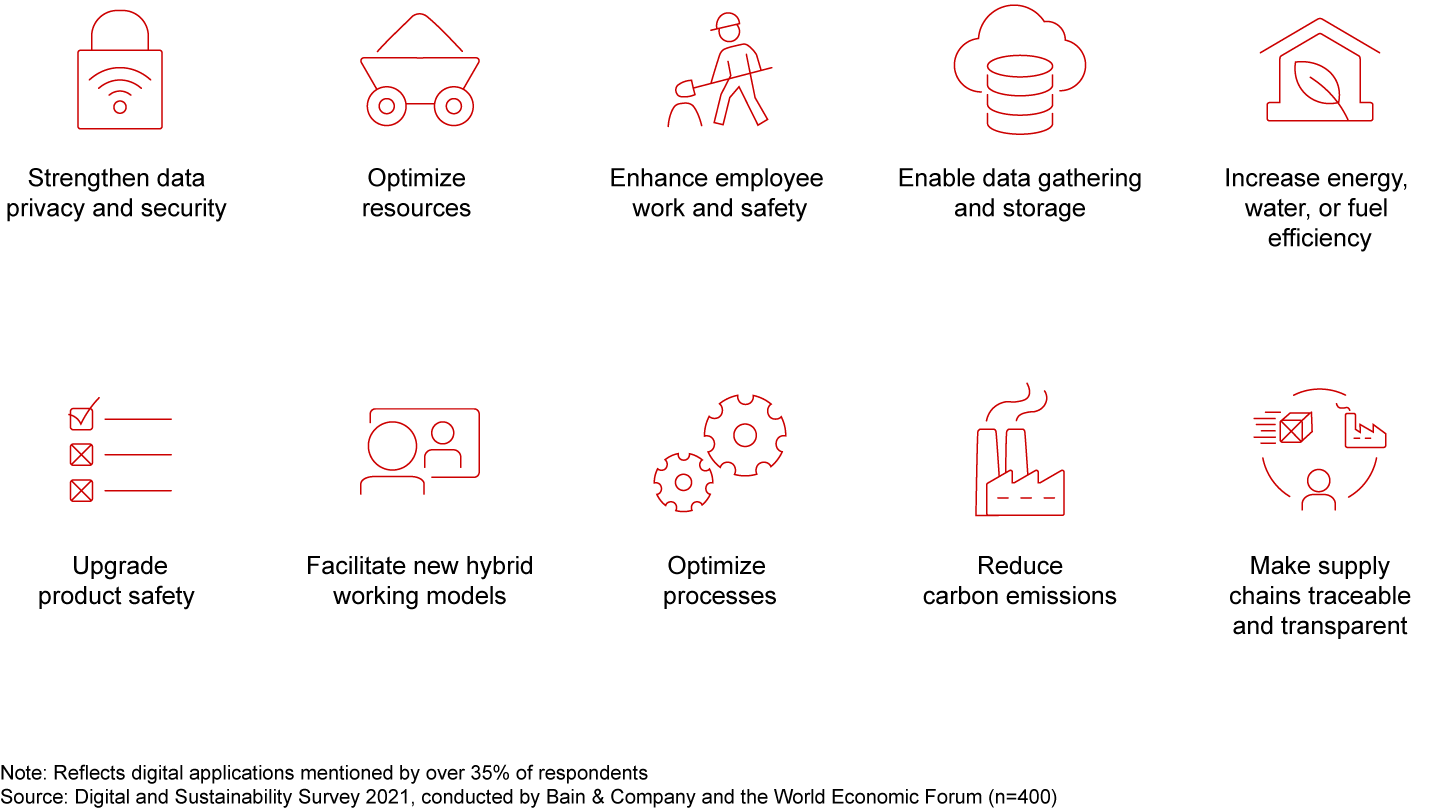
      Top 10 ways companies are using digital to improve sustainability
      Top 10 ways companies are using digital to improve sustainability
      Top 10 ways companies are using digital to improve sustainability
      Figure 4
      The top ways digital technologies are improving sustainability, by industry

      Measuring and minimizing environmental impact by improving supply chain transparency, for example, or optimizing energy use are two common applications. But digital technologies also enable innovation and collaboration. In 2020, more than 1,000 digital sustainability patents were issued globally, and venture capitalists invested $5.7 billion in the space. Both measures are climbing fast. Artificial intelligence (AI) in design, additive manufacturing, and digital twins are powerful tools for creating the next wave of climate change solutions. Internet of Things–enabled sensors, blockchain-based authentication, data-sharing platforms, and gamified apps foster collaboration across the value chain and align participants on common metrics and goals.

      Mitigating digital’s sustainability risks

      Digital does bring sustainability risks of its own. The executives we surveyed voiced concern about social issues, data privacy and security, electronic waste, and job losses due to automation, among other worries (see Figure 5).

      Figure 5
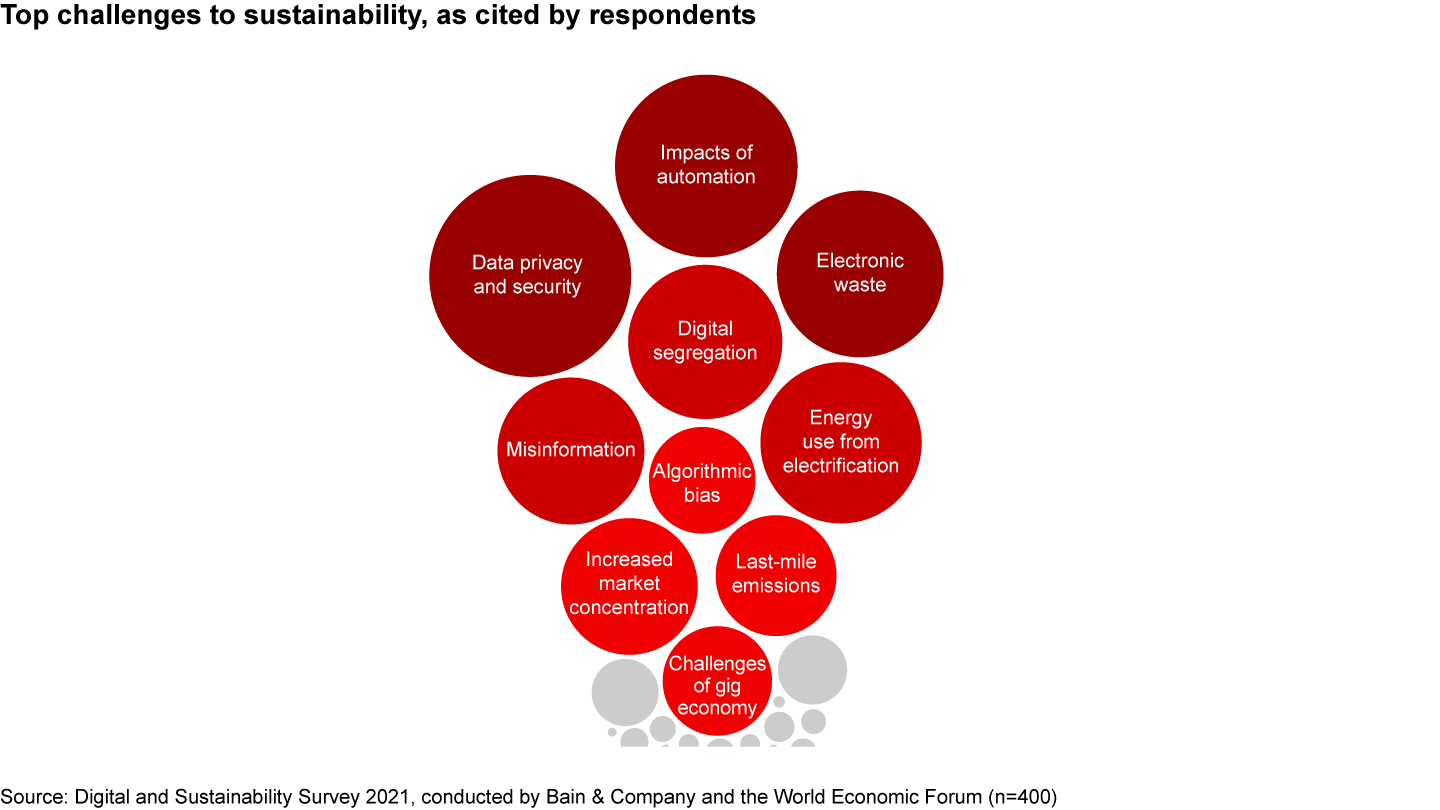
      Of executives’ many worries about the impact of digital, privacy, waste, and automation are at the very top
      Of executives’ many worries about the impact of digital, privacy, waste, and automation are at the very top
      Of executives’ many worries about the impact of digital, privacy, waste, and automation are at the very top

      It’s important to mitigate these issues now, not wait for problems to manifest and then react. Two hundred years passed before we fully realized the climate impact of the first industrial revolution and began to address it. The effects of the fourth industrial revolution will affect us exponentially faster, especially as more of the economy and our daily lives transfers from the physical world to a virtual metaverse. Any strategy for building sustainability must account for both the positives and negatives of digital technology.

      Designing a three-part game plan

      Executives integrating digital technologies and sustainability can benefit from thinking of this transformation as a three-part game plan, pressing across offense, midfield, and defense to create an aligned and effective team (see Figure 6).

      Figure 6
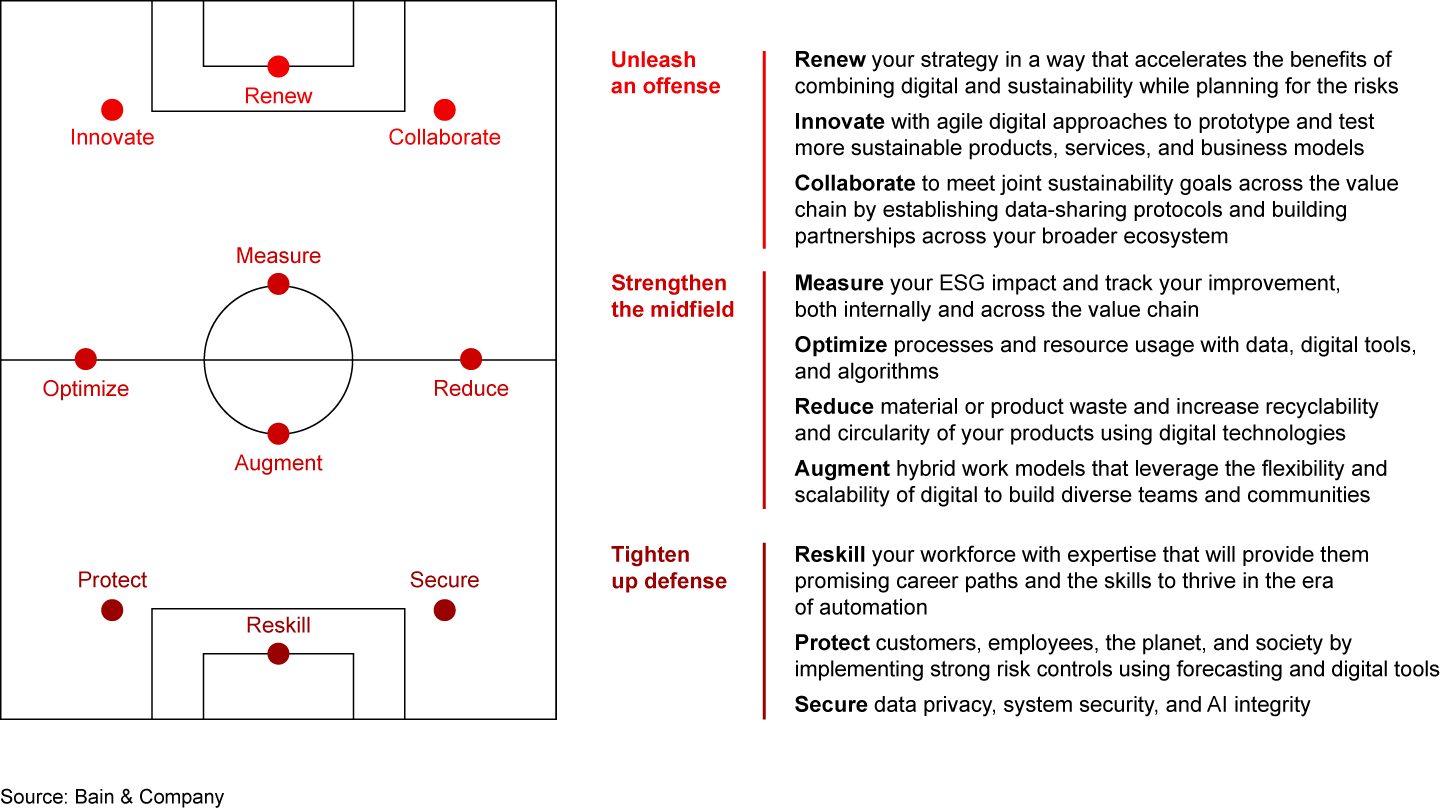
      How to combine digital and sustainability into a winning game plan
      How to combine digital and sustainability into a winning game plan
      How to combine digital and sustainability into a winning game plan

      1. Unleash a creative offense: renew, innovate, collaborate

      Going on offense harnesses the positive energy around digital and sustainability. It begins with renewing your strategy through a future-back lens, focused on how digital technology can help create a more sustainable future for your company and industry. At the heart of that strategy is innovation that addresses your customers’ raw needs—the essence of what they want—with new products and services, new economic models, and new operating models. As you set that strategy, recognize the importance of collaboration. How can your enterprise have a positive effect on all stakeholders, and how can you work with the participants in your industry’s value chain to deliver on an inspiring purpose?

      Consider agriculture, a field in which companies have set ambitious goals to lower greenhouse gas emissions, reduce waste, and improve the livelihoods of farmers but often struggle to get the collaboration needed to meet those ambitions. Three years ago, Olam International, a global agribusiness company with nearly $27 billion in annual revenue, took a big step forward by launching AtSource. A groundbreaking digital sustainability platform, AtSource makes it possible for customers to trace their products’ origin, measures the environmental and social impact of those supply chains, and offers insights on how to influence them for the better. Customers can view the journey from source to factory for more than 20 ingredients and over 60 supply chains, and in many cases they can trace crops to specific groups of farmers, calculating the environmental footprint of a particular crop by volume, origin, and destination.

      Olam aims to have 100% of its physical (nontraded) products on the platform by 2025, and the company’s efforts have already measurably helped farmers become more prosperous, reduced fertilizer and input usage, and minimized carbon footprint. Now Olam is exploring the possibility to collaborate with more agribusiness, brand, and retail partners to expand the platform into a resource for the entire industry.

      2. Strengthen the midfield: measure, optimize, reduce, augment

      In soccer, good midfielders work together to feed the offense and support the defense. Many organizations already recognize the value of getting these basics right in their own business. To meet sustainability goals, they ensure they can measure their impact in areas like CO2 emissions. With that data, organizations can put in place tools and algorithms to optimize operations to minimize environmental impact and lay the foundations for circular business models that seek to reduce waste in the economy. Armed with good data and tools, organizations augment their ability to make faster, more effective decisions and support new ways of working with more diverse teams and communities. While perhaps unsurprising, these moves are critical to success.

      The connection between measurement, optimization, augmentation, and waste reduction is clear in the experience of Grupo Bimbo, a $16.6 billion baking company. Operating in 33 countries and delivering to nearly 3 million stores, Bimbo was struggling with inefficient ordering and waste when it began to test a new ordering system. Combining advanced analytics, machine learning, frontline input, and ongoing feedback, the system improved forecast accuracy by 20% to 50%. This led to a 50% reduction in product waste, a 190-million-unit decline in returns, and a significant improvement in the work lives of frontline employees.

      Part of an overarching video series, this story highlights the digital transformation efforts led by Bain at Grupo Bimbo and the impacts these efforts had on the overall organization.

      Read the Case Study

      Better Forecasts, Less Waste Boost Profitability

      Facing a mounting waste problem, Grupo Bimbo issued a bold challenge to improve forecast accuracy and take the guesswork out of ordering.

      3. Tighten up the defense: reskill, protect, secure

      The defense manages risk. Organizations increasingly use forecasting tools to protect business operations and strengthen risk controls. When Covid-19 hit, one major retailer built a hub to pull together data from disparate internal and external sources and make it accessible to teams across the company. That helped them make decisions based on real-time information and protect both employees and customers during a period of great uncertainty and difficulty. 

      The more data driven organizations become, the more important it is to manage data privacy and security well. Safeguarding systems is a must-have, but there are other risks too, including how data is used, and the ethics and integrity of the AI algorithms and platforms used by many enterprises today. Arguably the biggest worry for executives is the impact of automation on the jobs of their employees. Reskilling employees is imperative, as is creating promising new career paths to ensure they have the training to thrive in an era of automation.

      To build a sustainable digital future, it’s necessary to manage all parts of the game at once—offense, midfield, and defense. That’s the only way to harness the positive energy of digital to deliver the innovative and collaborative sustainability solutions we need today and, at the same time, recognize and manage the risks digital may pose for the future.

      저자
      • Headshot of James Anderson
        James Anderson
        파트너, London
      • Greg Caimi
        Former Partner, San Francisco
      문의하기
      관련 컨설팅 서비스
      • 지속 가능성 및 기업의 사회적 책임
      • Digital
      세계경제포럼(WEF)
      How Digital Technology Can Accelerate Food Sustainability

      Retailers and consumer products companies can innovate to solve the food industry’s sustainability challenges.

      자세히 보기
      세계경제포럼(WEF)
      Circular Business Models Unlock New Profit and Growth

      Companies are using circular strategies to reap economic benefits.

      자세히 보기
      Digital
      AI and Power: A Marriage of Necessity

      Tech and utilities are an unlikely pair, but how well they balance data center electricity demand and finite energy resources will have huge implications.

      자세히 보기
      세계경제포럼(WEF)
      Circular Transformation of Industries: Unlocking Economic Value

      In collaboration with the World Economic Forum and the University of Cambridge, this report explores how circularity can boost resilience, revenues, and cost savings.

      자세히 보기
      Digital
      Energy Executive Agenda 2025: New Challenges, New Innovations

      Our latest survey finds executives facing rising costs, surging demand, and a long to-do list.

      자세히 보기
      First published in 1월 2022
      태그
      • 세계경제포럼(WEF)
      • 지속 가능성 및 기업의 사회적 책임
      • Digital

      프로젝트 사례

      지속 가능성 및 기업의 사회적 책임 Voluntary Carbon Markets: A Bank Moves Early to Seize the Opportunity

      See more related case studies

      Digital A Strategic Separation Enables New Growth for GSK and Haleon

      See more related case studies

      Digital Omnichannel strategy boosts fashion company

      See more related case studies

      베인에 궁금하신 점이 있으신가요?

      베인은 주저 없이 변화를 마주할 줄 아는 용감한 리더들과 함께합니다. 그리고, 이들의 담대한 용기는 고객사의 성공으로 이어집니다.

      급변하는 비즈니스 환경에서 살아남기 위한 선도자의 시각. 월간 Bain Insights에서 글로벌 비즈니스의 핵심 이슈를 확인하십시오.

      *개인정보 정책을 읽었으며 그 내용에 동의합니다.

      Privacy Policy를 읽고 동의해주십시오.
      Bain & Company
      문의하기 환경정책 Accessibility 이용약관 개인정보 보호 쿠키 사용 정책 Sitemap Log In

      © 1996-2026 Bain & Company, Inc.

      문의하기

      무엇을 도와드릴까요?

      • 프로젝트 문의
      • 채용 정보
      • 언론
      • 제휴 문의
      • 연사 초청
      오피스 전체보기