
Skip to Content
  • 오피스

    오피스

    미주
    • Atlanta
    • Austin
    • Bogota
    • Boston
    • Buenos Aires
    • Chicago
    • Dallas
    • Denver
    • Houston
    • Los Angeles
    • Mexico City
    • Minneapolis
    • Monterrey
    • Montreal
    • New York
    • Rio de Janeiro
    • San Francisco
    • Santiago
    • São Paulo
    • Seattle
    • Silicon Valley
    • Toronto
    • Washington, DC
    유럽, 중동, 아프리카
    • Amsterdam
    • Athens
    • Berlin
    • Brussels
    • Copenhagen
    • Doha
    • Dubai
    • Dusseldorf
    • Frankfurt
    • Helsinki
    • Istanbul
    • Johannesburg
    • Kyiv
    • Lisbon
    • London
    • Madrid
    • Milan
    • Munich
    • Oslo
    • Paris
    • Riyadh
    • Rome
    • Stockholm
    • Vienna
    • Warsaw
    • Zurich
    아시아, 호주
    • Bangkok
    • Beijing
    • Bengaluru
    • Brisbane
    • Ho Chi Minh City
    • Hong Kong
    • Jakarta
    • Kuala Lumpur
    • Manila
    • Melbourne
    • Mumbai
    • New Delhi
    • Perth
    • Seoul
    • Shanghai
    • Singapore
    • Sydney
    • Tokyo
    오피스 전체보기
  • 얼럼나이
  • 미디어 센터
  • 구독
  • 연락처
  • Korea | 한국어

    지역 및 언어 선택

    글로벌
    • Global (English)
    미주
    • Brazil (Português)
    • Argentina (Español)
    • Canada (Français)
    • Chile (Español)
    • Colombia (Español)
    유럽, 중동, 아프리카
    • France (Français)
    • DACH Region (Deutsch)
    • Italy (Italiano)
    • Spain (Español)
    • Greece (Elliniká)
    아시아, 호주
    • China (中文版)
    • Korea (한국어)
    • Japan (日本語)
  • Saved items (0)
    Saved items (0)

    You have no saved items.

    관심 있는 내용을 북마크하여 Red 폴더에 저장할 수 있습니다. Red 폴더 에서 저장된 내용을 읽거나 공유해보세요.

    Explore Bain Insights
  • 산업
    메인 메뉴

    산업

    • 우주항공, 방산 및 정부 서비스
    • 농업 관련 산업
    • 화학
    • 인프라, 건설 및 건축 자재
    • 소비재
    • 금융 서비스
    • 헬스케어
    • 산업용 기계 및 장비
    • 미디어 및 엔터테인먼트
    • 금속
    • 광업
    • 석유 및 가스
    • 제지 및 패키징 산업
    • 사모펀드
    • 사회 및 공공 부문
    • 유통
    • 기술
    • 텔레콤
    • 운송
    • 여행·여가
    • 유틸리티 및 재생가능 에너지
  • 컨설팅 서비스
    메인 메뉴

    컨설팅 서비스

    • Customer Experience
    • ESG
    • Innovation
    • M&A
    • 운영
    • 조직
    • 사모펀드
    • 고객 전략 및 마케팅
    • 전략
    • AI, 인사이트 및 솔루션
    • Technology
    • 변화 혁신
  • Digital
  • 인사이트
  • 베인 소개
    메인 메뉴

    베인 소개

    • 업무 소개
    • 베인의 신념
    • 구성원 및 리더십 소개
    • 고객 성과
    • 주요 수상 경력
    • 글로벌 파트너사
    Further: Our global responsibility
    • 다양성과 포용
    • 사회 공헌 활동
    • Sustainability
    • World Economic Forum
    Learn more about Further
  • Careers
    메인 메뉴

    Careers

    • Work with Us
      Careers
      Work with Us
      • Find Your Place
      • Our Work Areas
      • Integrated Teams
      • Students
      • Internships & Programs
      • Recruiting Events
    • Life at Bain
      Careers
      Life at Bain
      • Blog: Inside Bain
      • Career Stories
      • Our People
      • Where We Work
      • Supporting Your Growth
      • Affinity Groups
      • Benefits
    • Impact Stories
    • Hiring Process
      Careers
      Hiring Process
      • What to Expect
      • Interviewing
    FIND JOBS
  • 오피스
    메인 메뉴

    오피스

    • 미주
      오피스
      미주
      • Atlanta
      • Austin
      • Bogota
      • Boston
      • Buenos Aires
      • Chicago
      • Dallas
      • Denver
      • Houston
      • Los Angeles
      • Mexico City
      • Minneapolis
      • Monterrey
      • Montreal
      • New York
      • Rio de Janeiro
      • San Francisco
      • Santiago
      • São Paulo
      • Seattle
      • Silicon Valley
      • Toronto
      • Washington, DC
    • 유럽, 중동, 아프리카
      오피스
      유럽, 중동, 아프리카
      • Amsterdam
      • Athens
      • Berlin
      • Brussels
      • Copenhagen
      • Doha
      • Dubai
      • Dusseldorf
      • Frankfurt
      • Helsinki
      • Istanbul
      • Johannesburg
      • Kyiv
      • Lisbon
      • London
      • Madrid
      • Milan
      • Munich
      • Oslo
      • Paris
      • Riyadh
      • Rome
      • Stockholm
      • Vienna
      • Warsaw
      • Zurich
    • 아시아, 호주
      오피스
      아시아, 호주
      • Bangkok
      • Beijing
      • Bengaluru
      • Brisbane
      • Ho Chi Minh City
      • Hong Kong
      • Jakarta
      • Kuala Lumpur
      • Manila
      • Melbourne
      • Mumbai
      • New Delhi
      • Perth
      • Seoul
      • Shanghai
      • Singapore
      • Sydney
      • Tokyo
    오피스 전체보기
  • 얼럼나이
  • 미디어 센터
  • 구독
  • 연락처
  • Korea | 한국어
    메인 메뉴

    지역 및 언어 선택

    • 글로벌
      지역 및 언어 선택
      글로벌
      • Global (English)
    • 미주
      지역 및 언어 선택
      미주
      • Brazil (Português)
      • Argentina (Español)
      • Canada (Français)
      • Chile (Español)
      • Colombia (Español)
    • 유럽, 중동, 아프리카
      지역 및 언어 선택
      유럽, 중동, 아프리카
      • France (Français)
      • DACH Region (Deutsch)
      • Italy (Italiano)
      • Spain (Español)
      • Greece (Elliniká)
    • 아시아, 호주
      지역 및 언어 선택
      아시아, 호주
      • China (中文版)
      • Korea (한국어)
      • Japan (日本語)
  • Saved items  (0)
    메인 메뉴
    Saved items (0)

    You have no saved items.

    관심 있는 내용을 북마크하여 Red 폴더에 저장할 수 있습니다. Red 폴더 에서 저장된 내용을 읽거나 공유해보세요.

    Explore Bain Insights
  • 산업
    • 산업

      • 우주항공, 방산 및 정부 서비스
      • 농업 관련 산업
      • 화학
      • 인프라, 건설 및 건축 자재
      • 소비재
      • 금융 서비스
      • 헬스케어
      • 산업용 기계 및 장비
      • 미디어 및 엔터테인먼트
      • 금속
      • 광업
      • 석유 및 가스
      • 제지 및 패키징 산업
      • 사모펀드
      • 사회 및 공공 부문
      • 유통
      • 기술
      • 텔레콤
      • 운송
      • 여행·여가
      • 유틸리티 및 재생가능 에너지
  • 컨설팅 서비스
    • 컨설팅 서비스

      • Customer Experience
      • ESG
      • Innovation
      • M&A
      • 운영
      • 조직
      • 사모펀드
      • 고객 전략 및 마케팅
      • 전략
      • AI, 인사이트 및 솔루션
      • Technology
      • 변화 혁신
  • Digital
  • 인사이트
  • 베인 소개
    • 베인 소개

      • 업무 소개
      • 베인의 신념
      • 구성원 및 리더십 소개
      • 고객 성과
      • 주요 수상 경력
      • 글로벌 파트너사
      Further: Our global responsibility
      • 다양성과 포용
      • 사회 공헌 활동
      • Sustainability
      • World Economic Forum
      Learn more about Further
  • Careers
    최근 검색어
      최근 방문 페이지

      Content added to saved items

      Saved items (0)

      Removed from saved items

      Saved items (0)

      M&A Report

      M&A in Aerospace and Defense: New Types of Deals in a Dynamic Industry

      M&A in Aerospace and Defense: New Types of Deals in a Dynamic Industry

      With defense missions and commercial flight markets being disrupted, historic leaders risk losing portions of their profit pools if they don’t react.

      글 Clark Herndon, Michael Sion, and Austin Kim

      • 읽기 소요시간
      }

      Report

      M&A in Aerospace and Defense: New Types of Deals in a Dynamic Industry
      en
      At a Glance
      • With challenges to volume and margins, commercial aviation profit pools have been under pressure.
      • Despite relative stability in the defense market, budgets still face a crowding-out effect from inflation, sustainment needs, and competing fiscal priorities.
      • Companies in both commercial aviation and defense will pursue deals to diversify or consolidate.
      • We anticipate private capital to participate more (less antitrust risk, substantial dry powder), seeking out pockets of undermanagement and stable/growing volumes.

      This article is part of Bain's 2023 M&A Report.

      Explore the report

      For years, aerospace and defense (A&D) was a relatively stable industry with steady air travel penetration growth, long-term increases in defense budgets, and long-duration programs. Now, executives and investors face new strategic questions as the industry changes due to the lasting impact of the Covid-19 pandemic, macroeconomic and geopolitical uncertainties, and technological and regulatory disruptions. Companies must confront disruption, consider diversifying exposure, and grow volume and scale within an environment of lower volumes and margin pressure. M&A is likely to be a key tool many employ to achieve these objectives.

      As commercial aerospace rose above the most acute pandemic clouds, it emerged into a less-than-hospitable macro environment. China’s recovery has been uneven at best. In Europe, environmental, social, and corporate governance pressures and potential regulation stand to intensify air travel headwinds. Worldwide, pilot shortages are creating a bottleneck. These and other changes hurt volumes at a time when margins are already feeling the impact of cost inflation and the growth of risk-transfer products such as power-by-the-hour maintenance. Commercial aviation profit pools have been under pressure (see Figure 1).

      Figure 1
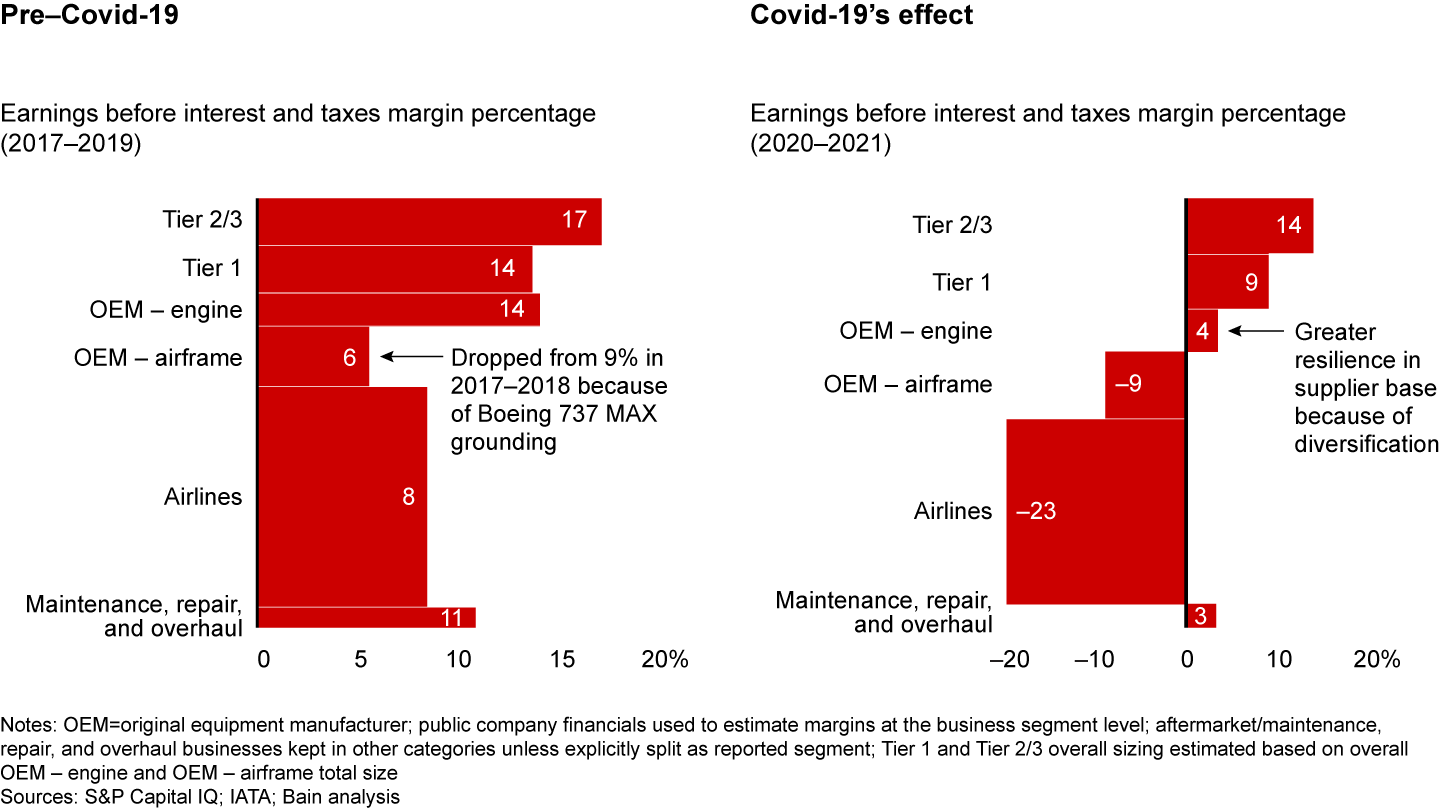
      Commercial aviation profit pools have been severely affected by the pandemic
      Commercial aviation profit pools have been severely affected by the pandemic
      Commercial aviation profit pools have been severely affected by the pandemic

      Conversely, the defense market has been relatively stable throughout Covid-19, and changes in the geopolitical environment along with lower levels of fiscal constraint have led to volume and budget tailwinds. Prepayments and government support helped stabilize the supply base during pandemic closures and supply chain disruptions. Russia’s invasion of Ukraine has increased spending commitments in Europe, and rising competition with China has the US and close allies (particularly Japan, South Korea, and Australia) shifting their spending priorities and increasing total spending. These countries are collectively building their own defense capabilities and deterrents, which will diversify what has been a US-oriented market. Using military aircraft suppliers as a proxy for the broader industry, profit pools have been much more stable as a result of these trends (see Figure 2).

      Figure 2
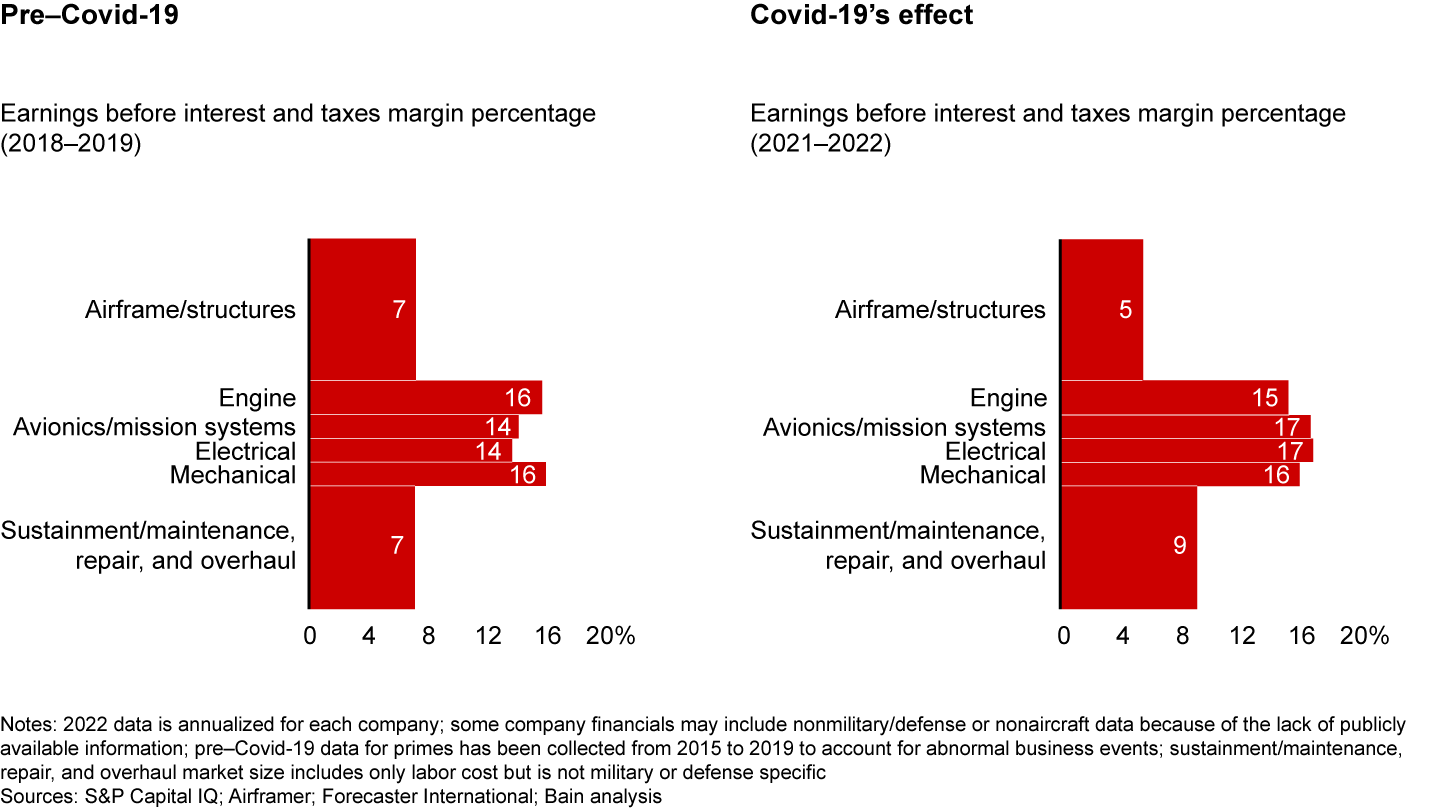
      Defense aircraft profit pools have remained relatively stable
      Defense aircraft profit pools have remained relatively stable
      Defense aircraft profit pools have remained relatively stable

      The shift to near-peer competition in the defense market has broader implications for the supply base. Requirements are growing, but budgets still face a crowding-out effect from inflation, sustainment needs, and competing governmental fiscal priorities. A macroeconomic downturn would likely exacerbate this disconnect between requirements and funding. The challenge for primes and suppliers is to meet demand for new capabilities in areas where commercial innovation and foreign spending are outpacing government investment—for example, cyber, autonomy, artificial intelligence, computing, and connectivity. Companies with exposure to these markets will find meaningful tailwinds, though they will also see competitive pressure from commercial players with innovative solutions that government buyers are increasingly willing to purchase.

      We see several important M&A trends as companies and financial investors navigate the marketplace.

      • Platform/segment diversification: Financial and strategic acquirers alike will continue to turn to M&A to diversify in attractive segments in commercial aviation (e.g., narrowbody, next-generation engines) and stable/growing segments in defense (e.g., major programs of record, advanced mission systems).
      • Defense adjacency growth/capability acquisitions: Companies in the defense industry will look to buy or partner for the capabilities they need to compete in nascent, high-growth markets. That was the reported objective of Raytheon Technologies’ acquisition of Blue Canyon in 2020 and SEAKR Engineering in 2021 in the space market as well as L3Harris’s 2022 purchase of Viasat’s tactical data links. We will see continued deals and partnerships seeking to benefit from faster time to market and lower development costs.
      • Commercial value chain consolidation: Scale matters in the aerospace supply chain, and consolidation is likely in segments that are fragmented despite benefits to site- or company-level scale. The recently announced Paradigm Precision and Whitcraft deal is a good example of this trend, and it is reasonable to expect further activity in Tiers 2 and 3. Another likely area of consolidation is maintenance, repair, and overhaul (MRO), which is fragmented today despite customer and operational benefits to site-level scale.
      • Consolidation in maturing markets: As nascent defense and commercial markets continue to grow, we expect to see consolidation as winners and losers emerge in crowded and highly competitive markets. For example, with space launch frequency increasing, vehicles and services will become more commoditized and smaller players will look for scale deals to lower costs and preserve margins.

      Budgets still face a crowding-out effect from inflation, sustainment needs, and competing governmental fiscal priorities.

      Given these trends, M&A is likely to be a critical tool in A&D in 2023 and beyond. We expect some activity in prime contracting/original equipment manufacturers and Tier 1 players (for example, L3Harris’s recent announcement of an agreement to acquire Aerojet Rocketdyne), although dealmaking is likely to be more muted vs. the past few decades because the degree of consolidation that regulators will permit remains an open question. We also expect more deals further down the supply chain, where margins can be attractive and there is fragmentation despite benefits to scale.

      And private capital will likely increase its participation in the sector, in line with recent trends. We expect more activity from both generalist funds as well as those that have traditionally focused on the sector. Private equity has less antitrust risk, substantial dry powder to invest, and is likely to seek out pockets of undermanagement and stable or growing volumes. And the industry has some fundamental traits that financial investors like—for example, enduring customer relationships, high backlog visibility, and stable cash flows.

      But not all investments will be winners. Below are the factors that can boost the odds of a successful deal.

      • Diversified exposure across platforms, programs, geographies: Recent disruptions caused by Covid-19 highlighted the advantages of diversified exposure. But the act of buying a company just to diversify won’t work unless there is a distinct parenting advantage—the acquirer won’t be able to justify the deal competition’s high multiple. Companies must have a clear deal thesis tied to a specific parenting advantage that unlocks value.
      • Exposure to narrowbody (commercial) and large programs of record such as the F-35 (defense): Backlogs are large and stable in major narrowbody and defense programs of record (e.g., Airbus’s A320, CFM’s LEAP, Pratt & Whitney’s PW1000 and F135, Lockheed-Martin’s F-35, and Northrop Grumman’s B-21); companies with exposure to these programs will tend to have scale advantages, higher margins, and more cash to reinvest in next-generation technologies.
      • Defensible intellectual property (IP): Suppliers that own critical design IP will continue to have an advantage and are more attractive targets, demanding higher multiples compared with contract manufacturers. Proprietary components and systems tend to generate higher margins, both in production and in the aftermarket.

      Private capital will likely increase its participation in the sector.

      • Operational excellence: Operational excellence is the differentiator in this industry and a key to margin expansion, particularly with long-running programs. Yet acquirers need to ensure that the operations expertise is fit for the mission. Some programs maintain low rates for long periods of time, and others benefit from high-rate production expertise that drives out cost through scale.
      • M&A/integration as a capability: The most successful acquirers in any industry are those that repeatably drive value and growth from acquisitions. From due diligence through to post-merger integration, a sound M&A strategy and execution capabilities that are disciplined and thesis focused are critical.

      M&A can be a valuable tool for diversification and access to new capabilities in aerospace and defense. For example, more diverse end-market exposure can help stabilize earnings and expose companies to higher growth segments (such as commercial narrowbody aircraft and major defense programs of record). In industries characterized by long program durations and sticky customer relationships, M&A can be a critical growth lever. And disruptions in both markets make acquisitions that deliver new capabilities to improve defensibility in a company’s core potentially attractive. For all of these reasons, winning aerospace and defense companies will develop focused, tailored investment theses that support and reinforce their broader corporate strategies—and pursue acquisitions that strengthen resilience and add value.

      Read the Next Chapter

      M&A in Automotive and Mobility: Finding Alternative Routes to the Future

      Read our 2023 M&A Report

      Download the PDF Explore the report
      저자
      • Headshot of Clark Herndon
        Clark Herndon
        파트너, Washington, DC
      • Headshot of Michael Sion
        Michael Sion
        파트너, Washington, DC
      • Headshot of Austin Kim
        Austin Kim
        Practice Vice President, Los Angeles
      문의하기
      관련 산업
      • 산업재 및 서비스
      • 우주항공, 방산 및 정부 서비스
      • 항공 및 운송
      관련 컨설팅 서비스
      • M&A
      M&A Report
      Defense M&A

      Bold moves will determine the winners as a continent rearms.

      자세히 보기
      M&A Report
      Banking M&A

      As conditions shift, leading banks are fusing scale with scope to create future-ready organizations.

      자세히 보기
      산업재 및 서비스
      Air Travel Forecast to 2040: Geopolitics and the Carbon Challenge

      Three charts illustrate how the aviation demand outlook remains stable, with uncertainties around tariffs and trade counterbalanced by evolving sustainability assumptions.

      자세히 보기
      M&A Report
      Consumer Products M&A

      In their quest for profitable growth, more companies are divesting brands or buying insurgents.

      자세히 보기
      M&A Report
      Media M&A

      AI and other tech tools can boost bidding confidence in this highly competitive environment.

      자세히 보기

      Overview

      • Looking Back at M&A in 2022

      • Looking Ahead to M&A in 2023

      Hot Topics

      • M&A in Times of Turbulence: Lessons from the Last Recession

      • When Buying (vs. Building) Is the Right Move for Engine 2

      • Tougher Times: Putting the Diligence Back in Due Diligence

      • How to Avoid the Fault Lines Sending Tremors through Cultural Integration in M&A

      Industry Views

      • Aerospace and Defense M&A

      • Automotive and Mobility M&A

      • Banking M&A

      • Consumer Goods M&A

      • Diversified Industrials M&A

      • Energy and Natural Resources M&A

      • Healthcare and Life Sciences M&A

      • Insurance M&A

      • Media and Entertainment M&A

      • Payments M&A

      • Retail M&A

      • Technology M&A

      • Telecommunications M&A

      • Wealth and Asset Management M&A

      Regional Perspectives

      • Brazil M&A

      • India M&A

      • Japan M&A

      • Middle East M&A

      First published in 1월 2023
      태그
      • 산업재 및 서비스
      • 우주항공, 방산 및 정부 서비스
      • 항공 및 운송
      • M&A
      • M&A Report

      프로젝트 사례

      An Airline’s Ancillary Revenue Soars Thanks to Test-and-Learn Experimentation

      See more related case studies

      How an Airline Used a Global Stall to Give Procurement a Lift

      See more related case studies

      성과 개선 Airline grounds planes to rise above financial cloud

      See more related case studies

      베인에 궁금하신 점이 있으신가요?

      베인은 주저 없이 변화를 마주할 줄 아는 용감한 리더들과 함께합니다. 그리고, 이들의 담대한 용기는 고객사의 성공으로 이어집니다.

      급변하는 비즈니스 환경에서 살아남기 위한 선도자의 시각. 월간 Bain Insights에서 글로벌 비즈니스의 핵심 이슈를 확인하십시오.

      *개인정보 정책을 읽었으며 그 내용에 동의합니다.

      Privacy Policy를 읽고 동의해주십시오.
      Bain & Company
      문의하기 환경정책 Accessibility 이용약관 개인정보 보호 쿠키 사용 정책 Sitemap Log In

      © 1996-2026 Bain & Company, Inc.

      문의하기

      무엇을 도와드릴까요?

      • 프로젝트 문의
      • 채용 정보
      • 언론
      • 제휴 문의
      • 연사 초청
      오피스 전체보기