Skip to Content
  • 오피스

    오피스

    미주
    • Atlanta
    • Austin
    • Bogota
    • Boston
    • Buenos Aires
    • Chicago
    • Dallas
    • Denver
    • Houston
    • Los Angeles
    • Mexico City
    • Minneapolis
    • Monterrey
    • Montreal
    • New York
    • Rio de Janeiro
    • San Francisco
    • Santiago
    • São Paulo
    • Seattle
    • Silicon Valley
    • Toronto
    • Washington, DC
    유럽, 중동, 아프리카
    • Amsterdam
    • Athens
    • Berlin
    • Brussels
    • Copenhagen
    • Doha
    • Dubai
    • Dusseldorf
    • Frankfurt
    • Helsinki
    • Istanbul
    • Johannesburg
    • Kyiv
    • Lisbon
    • London
    • Madrid
    • Milan
    • Munich
    • Oslo
    • Paris
    • Riyadh
    • Rome
    • Stockholm
    • Vienna
    • Warsaw
    • Zurich
    아시아, 호주
    • Bangkok
    • Beijing
    • Bengaluru
    • Brisbane
    • Ho Chi Minh City
    • Hong Kong
    • Jakarta
    • Kuala Lumpur
    • Manila
    • Melbourne
    • Mumbai
    • New Delhi
    • Perth
    • Seoul
    • Shanghai
    • Singapore
    • Sydney
    • Tokyo
    오피스 전체보기
  • 얼럼나이
  • 미디어 센터
  • 구독
  • 연락처
  • Korea | 한국어

    지역 및 언어 선택

    글로벌
    • Global (English)
    미주
    • Brazil (Português)
    • Argentina (Español)
    • Canada (Français)
    • Chile (Español)
    • Colombia (Español)
    유럽, 중동, 아프리카
    • France (Français)
    • DACH Region (Deutsch)
    • Italy (Italiano)
    • Spain (Español)
    • Greece (Elliniká)
    아시아, 호주
    • China (中文版)
    • Korea (한국어)
    • Japan (日本語)
  • Saved items (0)
    Saved items (0)

    You have no saved items.

    관심 있는 내용을 북마크하여 Red 폴더에 저장할 수 있습니다. Red 폴더 에서 저장된 내용을 읽거나 공유해보세요.

    Explore Bain Insights
  • 산업
    메인 메뉴

    산업

    • 우주항공, 방산 및 정부 서비스
    • 농업 관련 산업
    • 화학
    • 인프라, 건설 및 건축 자재
    • 소비재
    • 금융 서비스
    • 헬스케어
    • 산업용 기계 및 장비
    • 미디어 및 엔터테인먼트
    • 금속
    • 광업
    • 석유 및 가스
    • 제지 및 패키징 산업
    • 사모펀드
    • 사회 및 공공 부문
    • 유통
    • 기술
    • 텔레콤
    • 운송
    • 여행·여가
    • 유틸리티 및 재생가능 에너지
  • 컨설팅 서비스
    메인 메뉴

    컨설팅 서비스

    • Customer Experience
    • ESG
    • Innovation
    • M&A
    • 운영
    • 조직
    • 사모펀드
    • 고객 전략 및 마케팅
    • 전략
    • AI, 인사이트 및 솔루션
    • Technology
    • 변화 혁신
  • Digital
  • 인사이트
  • 베인 소개
    메인 메뉴

    베인 소개

    • 업무 소개
    • 베인의 신념
    • 구성원 및 리더십 소개
    • 고객 성과
    • 주요 수상 경력
    • 글로벌 파트너사
    Further: Our global responsibility
    • 다양성과 포용
    • 사회 공헌 활동
    • Sustainability
    • World Economic Forum
    Learn more about Further
  • Careers
    메인 메뉴

    Careers

    • Work with Us
      Careers
      Work with Us
      • Find Your Place
      • Our Work Areas
      • Integrated Teams
      • Students
      • Internships & Programs
      • Recruiting Events
    • Life at Bain
      Careers
      Life at Bain
      • Blog: Inside Bain
      • Career Stories
      • Our People
      • Where We Work
      • Supporting Your Growth
      • Affinity Groups
      • Benefits
    • Impact Stories
    • Hiring Process
      Careers
      Hiring Process
      • What to Expect
      • Interviewing
    FIND JOBS
  • 오피스
    메인 메뉴

    오피스

    • 미주
      오피스
      미주
      • Atlanta
      • Austin
      • Bogota
      • Boston
      • Buenos Aires
      • Chicago
      • Dallas
      • Denver
      • Houston
      • Los Angeles
      • Mexico City
      • Minneapolis
      • Monterrey
      • Montreal
      • New York
      • Rio de Janeiro
      • San Francisco
      • Santiago
      • São Paulo
      • Seattle
      • Silicon Valley
      • Toronto
      • Washington, DC
    • 유럽, 중동, 아프리카
      오피스
      유럽, 중동, 아프리카
      • Amsterdam
      • Athens
      • Berlin
      • Brussels
      • Copenhagen
      • Doha
      • Dubai
      • Dusseldorf
      • Frankfurt
      • Helsinki
      • Istanbul
      • Johannesburg
      • Kyiv
      • Lisbon
      • London
      • Madrid
      • Milan
      • Munich
      • Oslo
      • Paris
      • Riyadh
      • Rome
      • Stockholm
      • Vienna
      • Warsaw
      • Zurich
    • 아시아, 호주
      오피스
      아시아, 호주
      • Bangkok
      • Beijing
      • Bengaluru
      • Brisbane
      • Ho Chi Minh City
      • Hong Kong
      • Jakarta
      • Kuala Lumpur
      • Manila
      • Melbourne
      • Mumbai
      • New Delhi
      • Perth
      • Seoul
      • Shanghai
      • Singapore
      • Sydney
      • Tokyo
    오피스 전체보기
  • 얼럼나이
  • 미디어 센터
  • 구독
  • 연락처
  • Korea | 한국어
    메인 메뉴

    지역 및 언어 선택

    • 글로벌
      지역 및 언어 선택
      글로벌
      • Global (English)
    • 미주
      지역 및 언어 선택
      미주
      • Brazil (Português)
      • Argentina (Español)
      • Canada (Français)
      • Chile (Español)
      • Colombia (Español)
    • 유럽, 중동, 아프리카
      지역 및 언어 선택
      유럽, 중동, 아프리카
      • France (Français)
      • DACH Region (Deutsch)
      • Italy (Italiano)
      • Spain (Español)
      • Greece (Elliniká)
    • 아시아, 호주
      지역 및 언어 선택
      아시아, 호주
      • China (中文版)
      • Korea (한국어)
      • Japan (日本語)
  • Saved items  (0)
    메인 메뉴
    Saved items (0)

    You have no saved items.

    관심 있는 내용을 북마크하여 Red 폴더에 저장할 수 있습니다. Red 폴더 에서 저장된 내용을 읽거나 공유해보세요.

    Explore Bain Insights
  • 산업
    • 산업

      • 우주항공, 방산 및 정부 서비스
      • 농업 관련 산업
      • 화학
      • 인프라, 건설 및 건축 자재
      • 소비재
      • 금융 서비스
      • 헬스케어
      • 산업용 기계 및 장비
      • 미디어 및 엔터테인먼트
      • 금속
      • 광업
      • 석유 및 가스
      • 제지 및 패키징 산업
      • 사모펀드
      • 사회 및 공공 부문
      • 유통
      • 기술
      • 텔레콤
      • 운송
      • 여행·여가
      • 유틸리티 및 재생가능 에너지
  • 컨설팅 서비스
    • 컨설팅 서비스

      • Customer Experience
      • ESG
      • Innovation
      • M&A
      • 운영
      • 조직
      • 사모펀드
      • 고객 전략 및 마케팅
      • 전략
      • AI, 인사이트 및 솔루션
      • Technology
      • 변화 혁신
  • Digital
  • 인사이트
  • 베인 소개
    • 베인 소개

      • 업무 소개
      • 베인의 신념
      • 구성원 및 리더십 소개
      • 고객 성과
      • 주요 수상 경력
      • 글로벌 파트너사
      Further: Our global responsibility
      • 다양성과 포용
      • 사회 공헌 활동
      • Sustainability
      • World Economic Forum
      Learn more about Further
  • Careers
    최근 검색어
      최근 방문 페이지

      Content added to saved items

      Saved items (0)

      Removed from saved items

      Saved items (0)

      Report

      Bringing Order to Chaos in the Hybrid Cloud

      Bringing Order to Chaos in the Hybrid Cloud

      How can companies tame the complexity of merging their on-premise and multicloud computing environments?

      글 Mark Brinda and Bill Radzevych

      • 읽기 소요시간
      }

      Report

      Bringing Order to Chaos in the Hybrid Cloud
      en

      This article is part of Bain's 2021 Technology Report.

      Explore the report

      The case for the hybrid cloud has never been stronger, because enterprise computing environments are more complex than ever. As technology vendors try to capitalize on the hybrid cloud opportunity, they’re finding that one way to bring order to the chaos is to better understand the emerging customer archetypes in this fast-evolving, strategically important sector.

      Despite the accelerating shift to the public cloud, data will continue to be spread across on-premise and public cloud infrastructure for the next few years, and demand for interoperability is skyrocketing (see Figure 1). The bottom line is most companies need some sort of hybrid solution.

      Figure 1
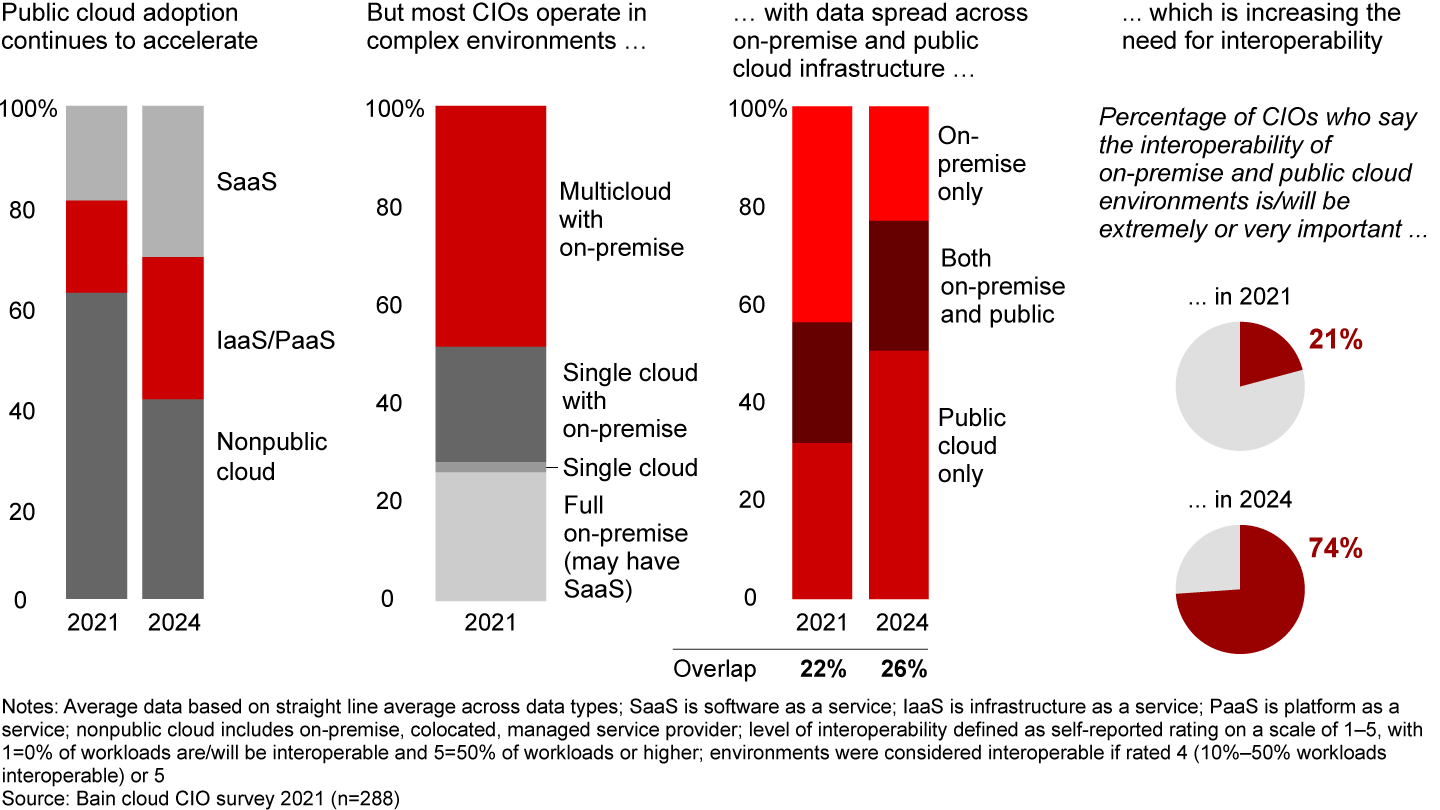
      The shift to the public cloud is increasing complexity and demand for interoperability

      Part of the challenge is that the lack of a standard hybrid cloud-adoption model has led some companies down misguided paths. We believe that two dimensions can help outline the emerging models: the complexity of the company’s on-premise and public cloud environments, and the level of interoperability across these two environments. For example, how many public clouds is the company using, and what percentage of its computing resources is running on public cloud servers? Do the two environments operate in silos, or are they managed through a single pane of (virtual) glass?

      Leading hybrid cloud technology vendors are starting to recognize that defining the major customer archetypes and deeply understanding each group’s varied challenges, priorities, and likely evolution can enable them to navigate the chaos. And for heritage technology vendors, this is all happening against a backdrop of cloud service providers attacking the on-premise estate with a promise of product fulfillment in weeks instead of months. Customer segmentation can help all of these vendors sharpen their focus and tailor their offerings to the priority customers they can serve best, ultimately strengthening the vendor’s position in this vibrant sector.

      Based on our analysis of the market and experience helping companies develop hybrid cloud strategies, we’ve identified seven main customer archetypes, each with distinct needs (see Figure 2).

      Figure 2
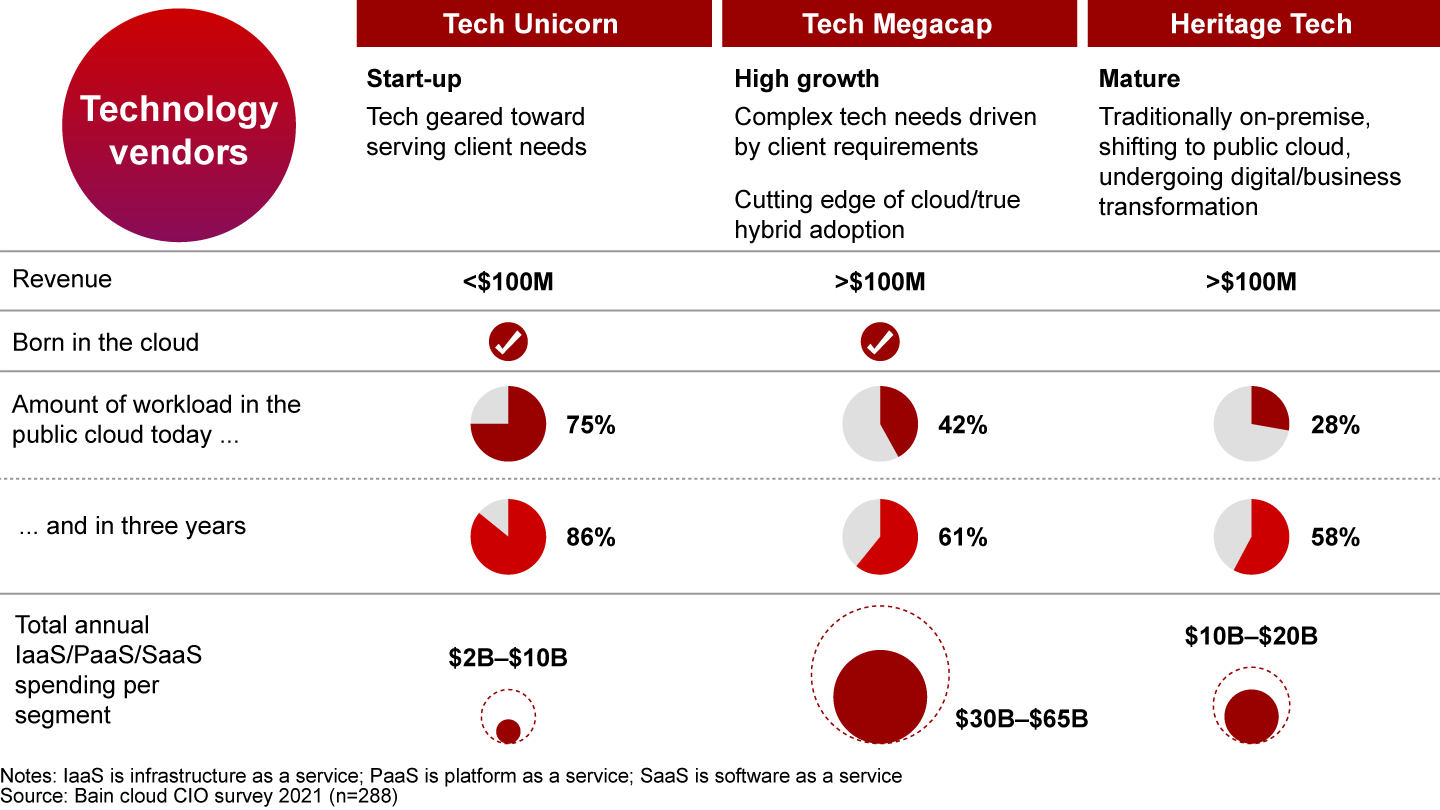
      Seven customer segments have emerged in the hybrid cloud market
      Figure 2
      Seven customer segments have emerged in the hybrid cloud market

      What might a customer segmentation project look like on a granular level? Let’s trace two companies’ distinct hybrid journeys in the context of these archetypes.

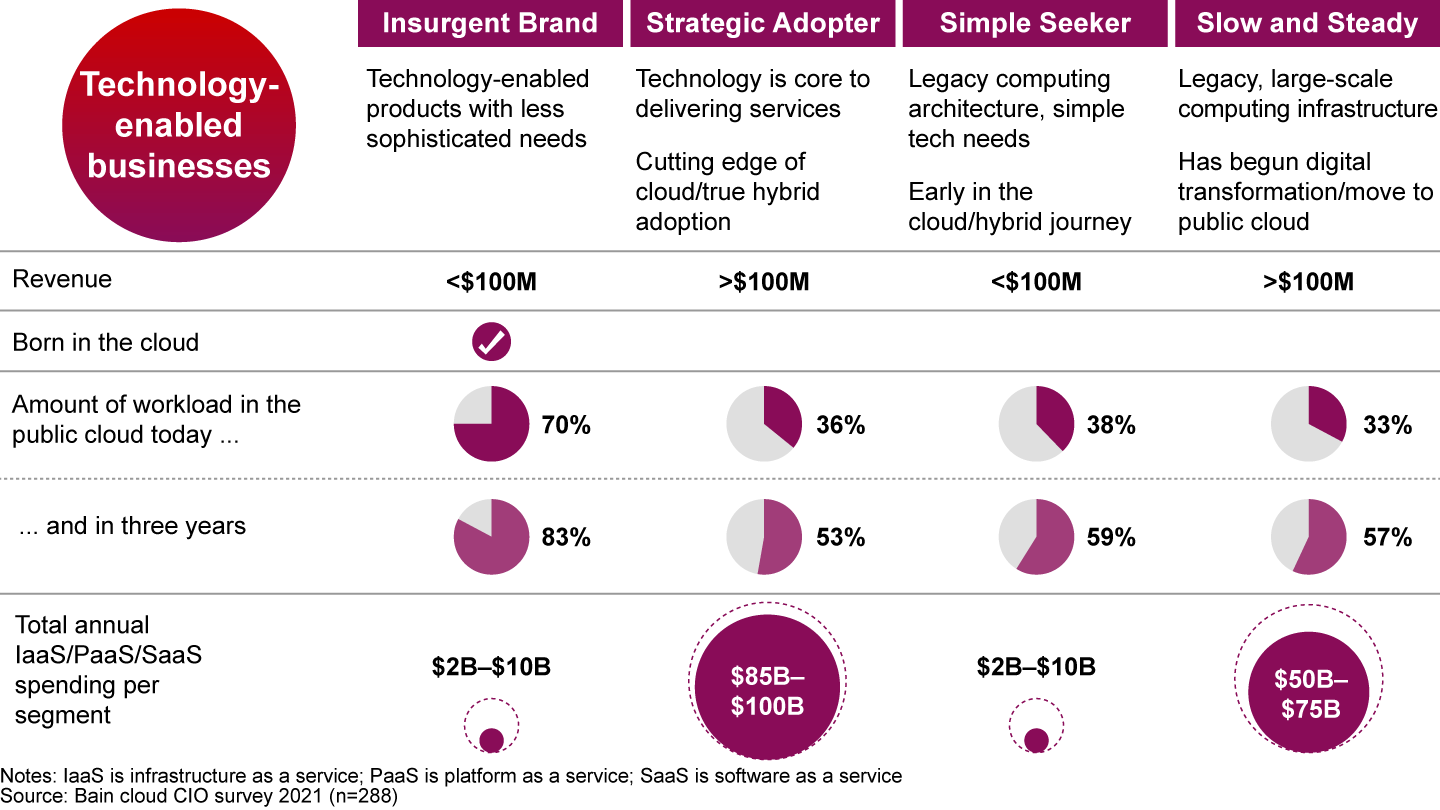
      Strategic Adopters: These large, tech-enabled enterprises typically spend at least 5% of their revenue on turning technology into a competitive advantage. They’ve shifted a meaningful chunk of their computing workloads to the cloud, but now they need to improve interoperability to realize the cloud’s full value and to modernize their remaining complex, legacy applications (see Figure 3).

      Figure 3
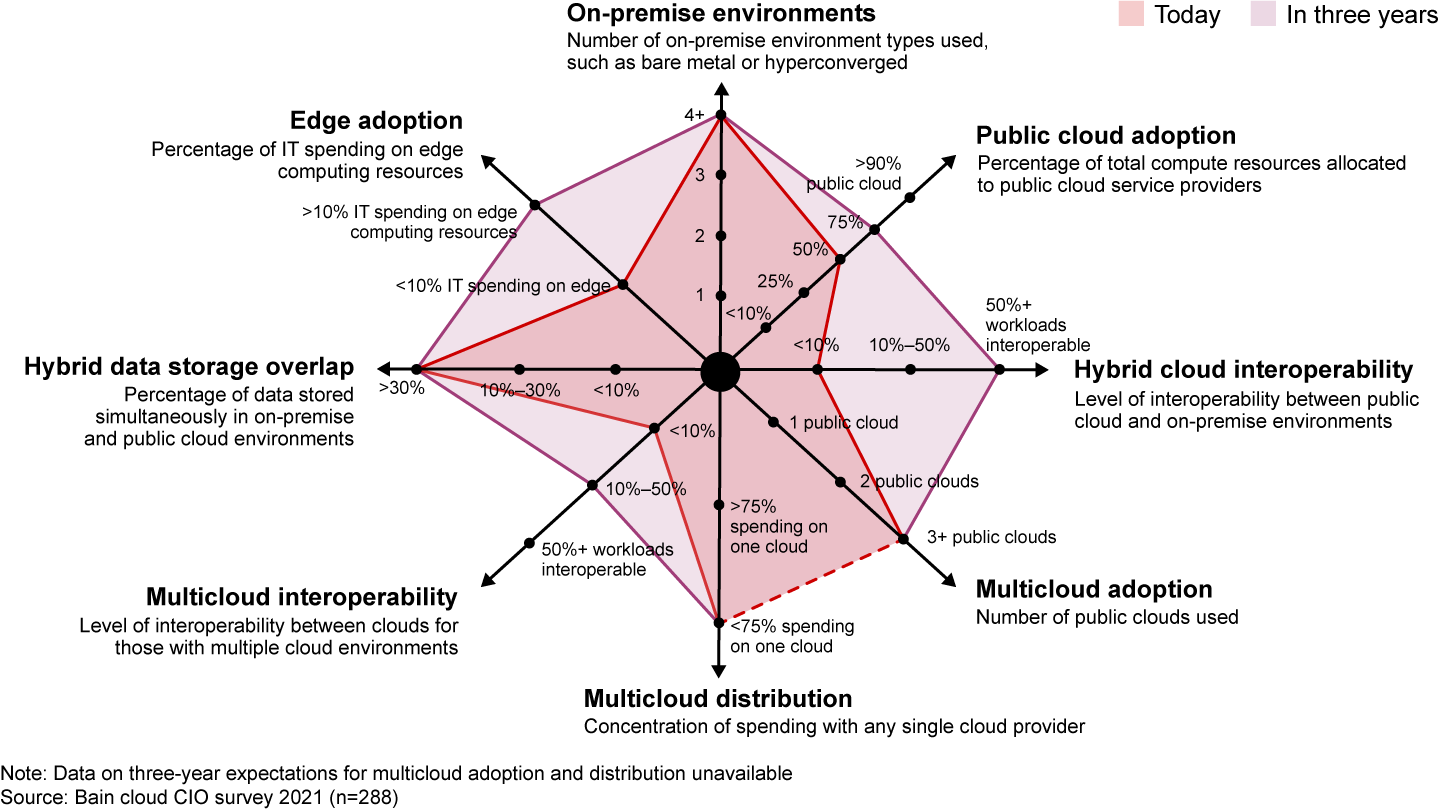
      Strategic Adopters are investing heavily in public cloud and interoperability

      One North American professional services firm has made substantial progress down its hybrid cloud path. About 15 years ago, each of its offices operated IT silos reliant on on-premise servers. This led to inconsistent computing performance and service. Management eventually determined the company was spending too much time and money managing its IT infrastructure. Since launching a hybrid transformation a few years ago, only 20% of its IT workloads and 20% of its data remain in on-premise servers, primarily to improve latency times for key business services. The rest of the workloads run on the public cloud and in a managed services environment, freeing up the company to focus on its core business. To date, the firm has primarily used one public cloud vendor because its leaders believe the benefits of multicloud don’t outweigh its added complexity.

      For the next phase, the company plans to continue shifting on-premise workloads to the public cloud, while investing more in interoperability. However, this could be the most complicated and slowest phase of its shift to the cloud: The company saved for last the on-premise workloads that will be the most time-consuming and resource-intensive to transition.

      Slow and Steady: This other cohort of large, tech-enabled enterprises has substantially different needs. These companies typically have yet to form a clear hybrid strategy. They’re also seeking a solution to move basic workloads to the cloud while ensuring bulletproof security, rigorous governance, and compatibility with their large, remaining on-premise footprint (see Figure 4).

      Figure 4
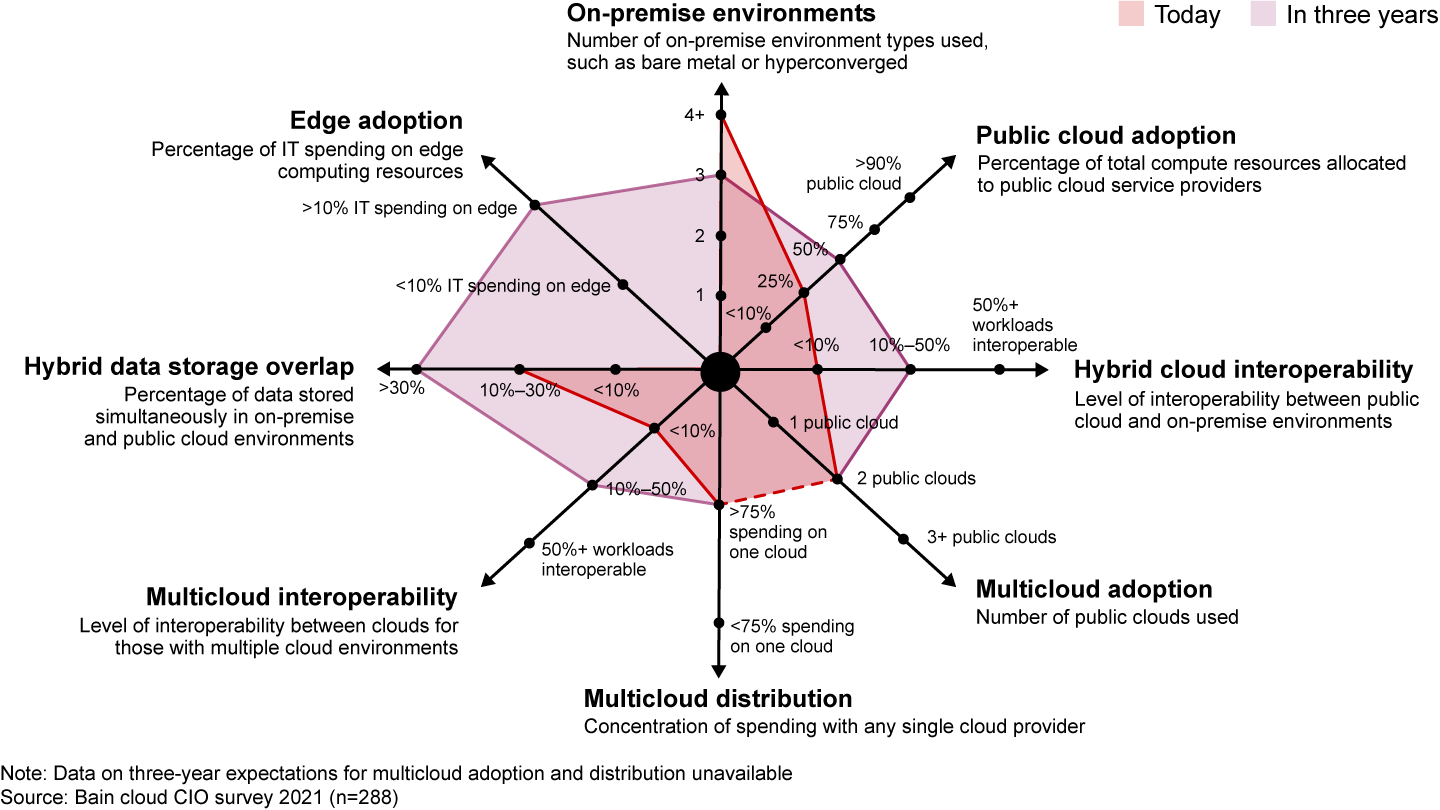
      Slow and Steady companies are more cautiously adopting cloud computing

      Consider a large healthcare company that has multiple clinics across the US. It relies on some software-as-a-service applications. But 60% of its computing workloads are on-premise, and its infrastructure-as-a-service usage and interoperability across environments are both minimal. The healthcare company plans to move more workloads to the public cloud, but its leaders are hesitant because of concerns about the security and privacy of patient data and potential compatibility issues with legacy computing workloads. At the same time, the company is under pressure from customers to use multiple public clouds because they want to tap into the different services each vendor offers, but it’s struggling to manage the complexity that comes with a multicloud approach. 

      What does all this mean for technology vendors?

      At a fundamental level, customer segment prioritization has profound implications for hybrid cloud vendors’ strategy. The most successful leaders start by making sure everyone across the organization is aligned on the priority customer segment(s). In other words, do the teams across brand marketing, product marketing, product roadmap, go to market, ecosystem strategy, and customer success all serve a common set of buyers in a consistent and optimal way?

      A helpful exercise is to contrast the way a buyer in one category―say, a Tech Unicorn―discovers and evaluates a product, with the approach of a buyer on the opposite end of the spectrum, like Slow and Steady.

      • Whom are we targeting with our marketing message? A Tech Unicorn has probably empowered individuals closer to the IT front line to make more choices, whereas Slow and Steady is more likely to require multiple senior stakeholders—CIO, CTO, CFO, business lead—to agree on a solution.
      • How do they want to buy? A Tech Unicorn will almost invariably want “pay-by-the-drink” or outcome-based pricing, with minimal up-front expenses. Slow and Steady might prefer to tap the capital budget to make a large, one-time purchase, perhaps via an enterprise license agreement.
      • What ecosystem partnerships do we need? A Tech Unicorn might evaluate the product through open-source projects, conversations with early-stage start-ups, and availability on marketplaces operated by Amazon Web Services, Microsoft Azure, and Google Cloud. For Slow and Steady, vendors might need to build awareness and capabilities within global IT system integrators; integrate their cloud products with legacy platforms; and tap traditional value-added reseller and distributor channels.

      The overarching takeaway is that if different functional leaders within the firm are aiming at different market segments and deploying inconsistent strategies, it’s almost certain to result in an incoherent mess that delights no one. Leading vendors are figuring out how to unite their teams around a cohesive plan that delivers what target customers want.

      Read the Next Chapter

      Winning Europe's Cloud Market

      More from the report

      • Welcome to the New Tech Economy

      • Tech-tonic Equity Shifts

      • The Case for Big Tech M&A

      • Tech Venture Capital Surges

      • SaaS Spurs Software Superperformance

      • Bringing Order to the Hybrid Cloud

      • Winning Europe’s Cloud Market

      • Shifting Semiconductor Equilibrium

      • Leading AI’s Next Era

      • US, China, and the Decoupling Push

      • The Tech Talent War Expands

      • Scaling DevOps

      • The Go-to-Market Orchestra

      • Chip Shortage Lessons

      Read our 2021 Technology Report

      Download the PDF Explore the report
      저자
      • Headshot of Mark Brinda
        Mark Brinda
        파트너, New York
      • Headshot of Bill Radzevych
        Bill Radzevych
        파트너, Seattle
      문의하기
      관련 산업
      • 기술
      • Cloud Computing
      • Internet of Things
      • Software
      관련 컨설팅 서비스
      • 전략
      • 정보기술(IT)
      CIO Insights
      Welcome to the New Technology Economy

      Technology-fueled growth across all sectors is poised to accelerate.

      자세히 보기
      CIO Insights
      Four Ways Leaders Can Make AI Redesigns Stick

      As companies redesign to scale AI, these four lessons help leaders ensure their organizations actually live the new operating model.

      자세히 보기
      CIO Insights
      Despite Tech Layoffs, Competition for Talent Remains Fierce

      Tech workers increasingly value career development opportunities and remote or hybrid work options, while compensation has soared.

      자세히 보기
      CIO Insights
      The Most Powerful AI Partnership? The CEO and CTO

      Real ROI from AI requires teaming and trust at the top.

      자세히 보기
      CIO Insights
      The 2026 Retail Executive Agenda

      Here are letters to the C-suite to help strengthen strategy, catalyze collaboration, and expand value creation in the AI age.

      자세히 보기
      First published in 9월 2021
      태그
      • 기술
      • 전략
      • 정보기술(IT)
      • CIO Insights
      • Cloud Computing
      • Internet of Things
      • Software

      프로젝트 사례

      지속 가능성 및 기업의 사회적 책임 Can Microchips Turbocharge Sustainability Improvement?

      See more related case studies

      Helping a Midsize ERP Player Compete against the Giants

      See more related case studies

      고객 전략 및 마케팅 Video: A Marketing Transformation Puts a Software Leader Back on Top

      See more related case studies

      베인에 궁금하신 점이 있으신가요?

      베인은 주저 없이 변화를 마주할 줄 아는 용감한 리더들과 함께합니다. 그리고, 이들의 담대한 용기는 고객사의 성공으로 이어집니다.

      급변하는 비즈니스 환경에서 살아남기 위한 선도자의 시각. 월간 Bain Insights에서 글로벌 비즈니스의 핵심 이슈를 확인하십시오.

      *개인정보 정책을 읽었으며 그 내용에 동의합니다.

      Privacy Policy를 읽고 동의해주십시오.
      Bain & Company
      문의하기 환경정책 Accessibility 이용약관 개인정보 보호 쿠키 사용 정책 Sitemap Log In

      © 1996-2026 Bain & Company, Inc.

      문의하기

      무엇을 도와드릴까요?

      • 프로젝트 문의
      • 채용 정보
      • 언론
      • 제휴 문의
      • 연사 초청
      오피스 전체보기