

Brief

한눈에 보기
- Four economic forecasting tools used in combination can help predict whether Covid-19 trends are permanent.
- Bain research shows nearly 60% of people using videoconferencing today plan to use it just as much or more after the pandemic is over.
- More than 60% percent of consumers expect to maintain or increase the use of food delivery platforms post–Covid-19, a Bain study shows.
Covid-19 has forced a radical shift in consumer and company behaviors. As industries adapted to the necessity of social distancing, new business models took off or accelerated. Now, many leadership teams are wondering which of these changes will endure beyond the pandemic, permanently reshaping businesses and industries.
Will a large number of employees decide to work from home in the future, shrinking the need for commercial office space? Is business travel bound to decline sharply now that executives realize many virtual meetings often are equally effective? Will the rise in e-commerce threaten retail stores?
Executive teams have long deployed economic forecasting tools to predict when a disruptive new technology or business system will hit a turning point for widespread adoption. The economic turning point is the moment when a rational consumer will switch from one technology or product to a new innovation, based on lower cost or perceived increase in value. Companies that have the ability to foresee such pivotal moments adapt faster and better in turbulent times.
Bain & Company research has shown four economic forecasting tools used in combination are more effective than any one alone at predicting the turning point for new technologies and the speed of market adoption. Leadership teams can also apply these tools to the business trends unleashed by Covid-19 to better understand the fundamental forces propelling change, the impact of rapid consumer adoption and the elements that may thrive postpandemic as well as those that may revert back. Importantly, a turning points approach can be used to explore the implications of new technologies or business trends on related industries.
Though leadership teams may feel Covid-19 has shattered traditional business norms, it has not changed the fundamentals of developing a strategy in uncertain times. At its core, a turning points analysis is about understanding the vital forces propelling a shift in market behavior. Below we use this powerful lens to examine two Covid-19 trends—the rapid adoption of videoconferencing and food delivery. Our step-by-step approach reveals the cost evolution of these new business systems; the Elements of Value® that consumers are willing to pay for and why; the conditions needed for maximum market penetration; and external factors that might speed adoption. The data and insights generated by these forecasting tools can help executive teams predict the trajectory of these and other trends during the pandemic and beyond.
Forecasting scenarios
The four components of a turning points approach include experience curves (e-curves,) which show how unit costs decline relative to increased production volume or usage; Elements of Value analysis to identify attributes customers value most in a product such as reduced cost or saving time; adoption curves (s-curves), which forecast the likely pace of adoption; and barriers and accelerators, such as technology, government policy or a pandemic, that could slow or speed the arrival of a new innovation (see Figure 1).
Figure 1
It may sound complex, but turning points analysis is a logical set of steps that can build a fuller picture of the future, much like putting together the pieces of a puzzle. The leadership teams that have used this combination of lenses know that it won’t predict the exact timing or speed of the next disruption. What it does provide is a set of insights around which executive teams can construct the most likely scenarios, understand the variables that matter most and monitor them to help decide when to act.
Leading companies have used these tools to anticipate important innovations as much as three years ahead of widespread market adoption, significantly increasing growth and shareholder value. General Motors, for instance, used a similar approach in building future scenarios for the autonomous vehicle market before it acquired a 69% stake in Cruise Automation, a San Francisco-based developer of autonomous vehicle technology, in 2016 for $581 million. The stake is now worth more than $13 billion, based on the latest funding round, accounting for more than 23% of GM’s current market valuation.
Lab-grown meat is another disruptive technology that companies are watching closely. One large meat producer, concerned about growing consumer awareness about the health risks of meat and the evolving technology to produce artificial meat, used turning points analysis to determine whether to invest in the innovation. The experience cost curve for artificial meat revealed that meat alternatives were likely to be roughly 20% cheaper than traditional meat by 2030. An assessment of the value proposition showed that consumers are willing to pay for certain attributes of meat alternatives, including health, environmental footprint and animal rights. The adoption curve projections showed that once the price reached a given turning point, based on cost improvements, consumer adoption was likely to rapidly increase from 2027 onwards. For the meat producer, the message was clear: Change is coming and it’s time to determine the right strategy.
We view Covid-19 as an unforeseen event that altered the trajectory of business trends across many industries. In a turning points context, the pandemic shows how barriers and accelerators of all kinds can dramatically affect the pace of adoption for a specific technology or platform. Specifically, Covid-19 has prompted companies and consumers to experiment with new technologies and business platforms and adopt them faster.
When lockdowns forced retailers to close physical shops, for example, online purchases soared as people bought many items online for the first time. Similarly, thousands of patients needing nonurgent medical treatments sought to avoid hospitals and instead choose to trial telemedicine portals. Companies forced to close offices deployed videoconferencing more broadly than ever before to keep operations running. Rapid trials of these platforms increased consumers’ appreciation of their various Elements of Value.
But will the sharp spike in demand speed the adoption of new products or services permanently—or just temporarily? A closer look at our two case studies highlights how a turning points analysis can shine a light on future market developments, even in turbulent times.
Videoconferencing. Our model shows that the accelerated adoption of videoconferencing has reached a turning point and that the surge in adoption during the pandemic is likely to result in a permanent change in the level of use, ultimately lowering the demand for commercial office space.
Before Covid-19, the growth of videoconferencing was tied to the trend of working from home, which was increasing slowly. Although providers were steadily improving quality and adding new features, adoption hadn’t passed the turning point. The pandemic was an unforeseen accelerator that increased market experience, with services like Zoom, Webex and Microsoft Teams pushing costs per usage down (see Figure 2). As millions of workers around the world were told to work from home, the trial of videoconferencing technology reached a pivotal milestone. Bain’s recent Global Consumer Watch Survey shows 48% percent of global videoconferencing users are spending more time on professional video calls and 59% plan to maintain or spend more time doing professional video chats after the pandemic is over. The number of Zoom videoconference meeting minutes has soared to 3 trillion in 2020, up from 6 billion in 2016.
Figure 2
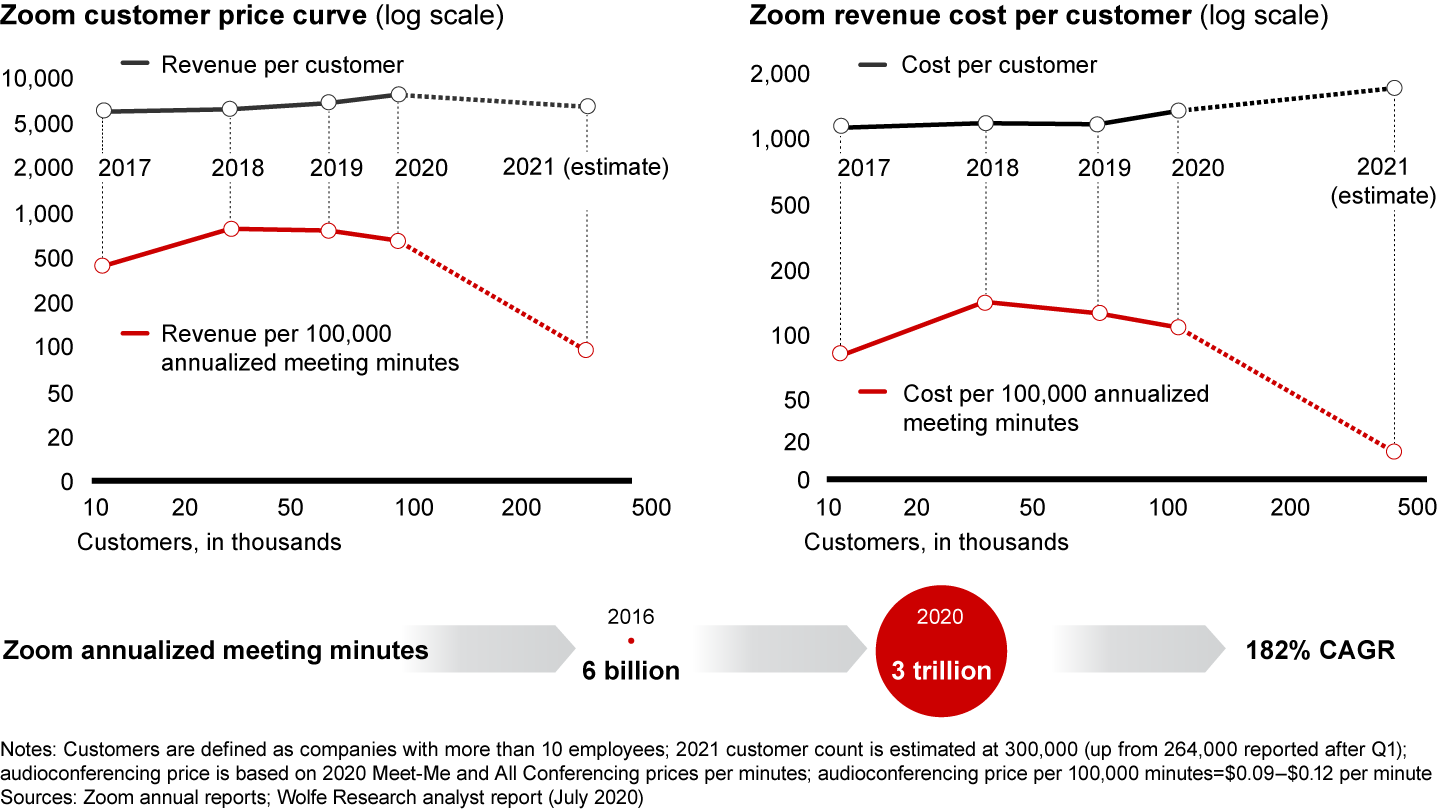

The key catalyst for that surge is users’ recognition of some new Elements of Value provided by videoconferencing. While the first web-based technologies provided virtual access to company teams or customers and reduced the cost of meeting, those Elements of Value alone were not sufficient to push consumer usage to a turning point. That shift was prompted by a pandemic lockdown plus improved quality and security, and features that enhanced collaboration and lowered the risk of digital meetings.
For businesses, the pandemic-induced increase in the volume of videoconferencing has brought down the adjusted cost, creating a strong incentive for continued use. Lower cost and new security features that reduce the risk of data breaches have significantly enhanced the value of videoconferencing for companies and propelled professional use to a turning point. Adoption is likely to continue to grow as the technology improves and the propensity to work from home increases. Already, 56% of US workers say they are willing to continue working from home once Covid-19 subsides, our research shows.
There is little public data available on the number of workers who are using videoconferencing for business meetings, but the market penetration of cloud-based communications—the technology that enables videoconferencing—is a reasonable proxy. Prior to Covid-19, 20% of companies were using cloud-based communications. Based on our turning points analysis, we forecast a rise to 50%–60% by 2030, particularly if the pandemic-inspired growth in videoconferencing continues. Zoom’s user adoption spiked in 2020 based on the number of meeting minutes, bringing its compound annual growth rate between 2016 and 2020 to 182%.
Food delivery. Before the pandemic, food delivery platforms were growing steadily as a growing number of restaurants turned to third-party delivery services, including Deliveroo and Grubhub. Covid-19-related restrictions on dining triggered a short-term spike in consumer adoption of food delivery services, increasing consumers’ appreciation for services that simplified their lives and saved time. And the rising demand to eat at home is likely to continue growing. Research by Bain’s Global Consumer Watch group shows 57% of consumers expect to dine less frequently in restaurants and bars than they did before Covid-19.
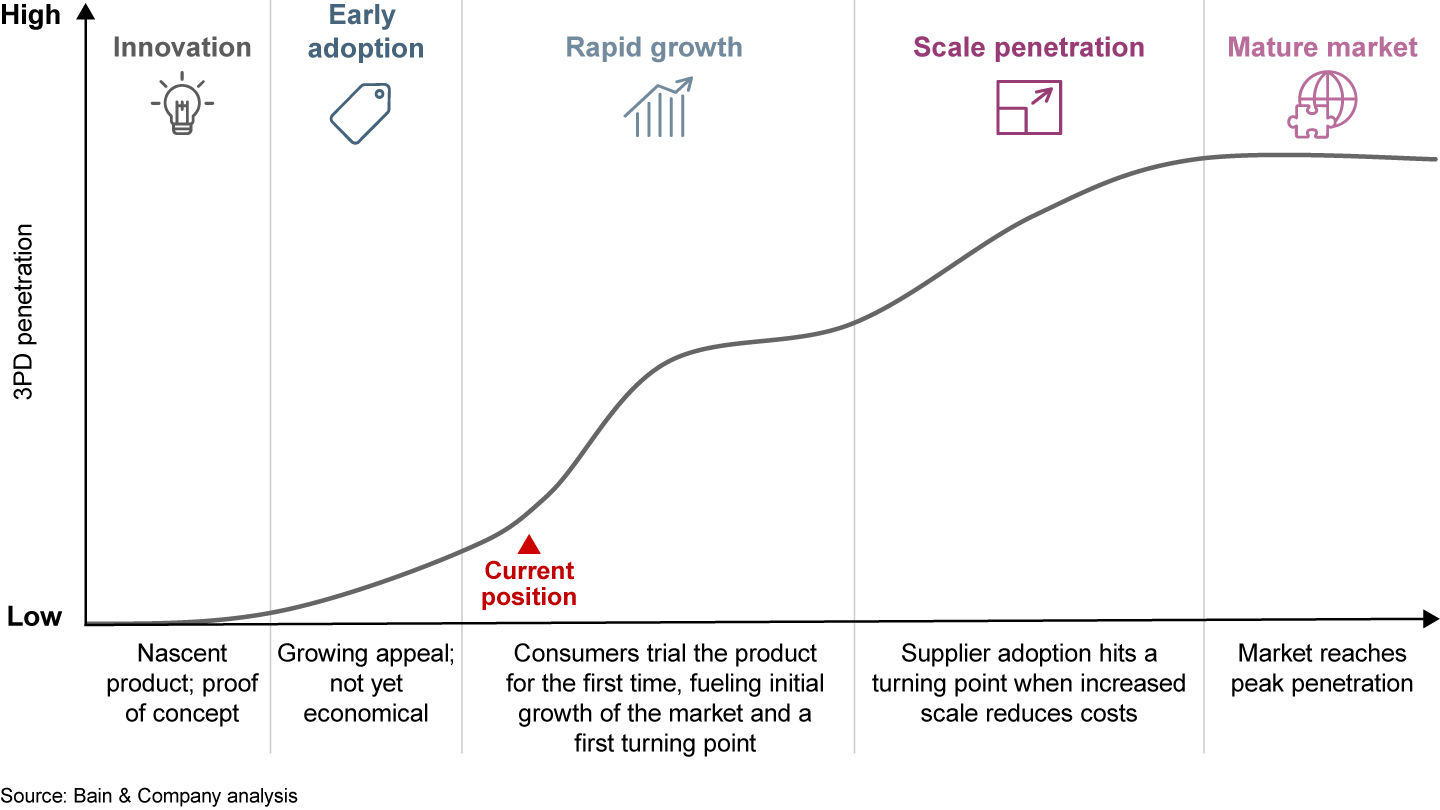
The pandemic also increased the use of food delivery platforms because segments of the population recognized new Elements of Value such as having access to restaurants that did not deliver previously or access to healthy food selections. Restaurants were intrigued by the opportunity to scale their businesses, offer an innovative new service and improve their top line, among other Elements of Value (see Figure 3). But the cost of the service remains high relative to the value received for most segments, and the margins low. As a result, food delivery still has not reached the turning point for rapid adoption by consumers or suppliers and remains far from peak penetration (see Figure 4). When the pandemic ends, we expect the use of food delivery platforms to decline from Covid-19-era highs, but remain higher than prepandemic levels. Data from Bain’s Global Consumer Watch shows 62% of consumers expect to maintain or increase the use of food delivery platforms post–Covid-19.
Figure 3
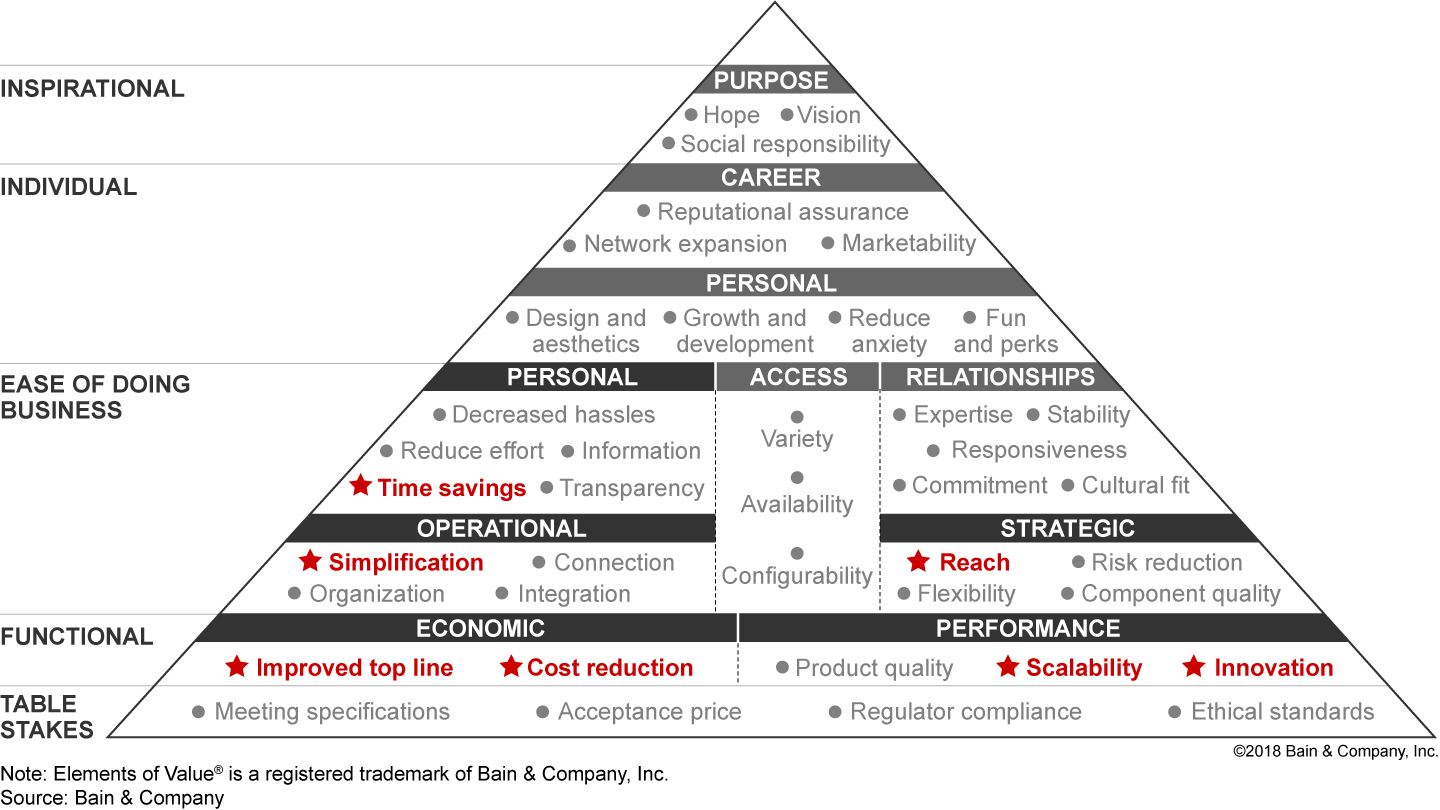

Figure 4

Broader effects
Covid-19 has shown how unexpected events can transform the pace of adoption of new technologies or business platforms. Others that leadership teams should watch for include catastrophic storms or floods resulting from climate change and cybersecurity attacks. In addition to these unexpected events, four types of barriers or accelerators can affect the pace of adoption of new technologies or business systems. They include regulation and policy, competing technologies, new product substitution and consumer preferences. Companies that understand the likely barriers and accelerators for the trends vital to their business can set up signposts that could signal a shift in the speed of adoption. Data security threats, for example, are one potential barrier to the continued rapid growth of videoconferencing. One signpost to monitor for this threat is the number of security-related incidents affecting videoconferencing platforms over time. By contrast, the speed of residential telecom networks could act as an accelerator to videoconferencing, if the number of residents with access to high-speed networks grows.
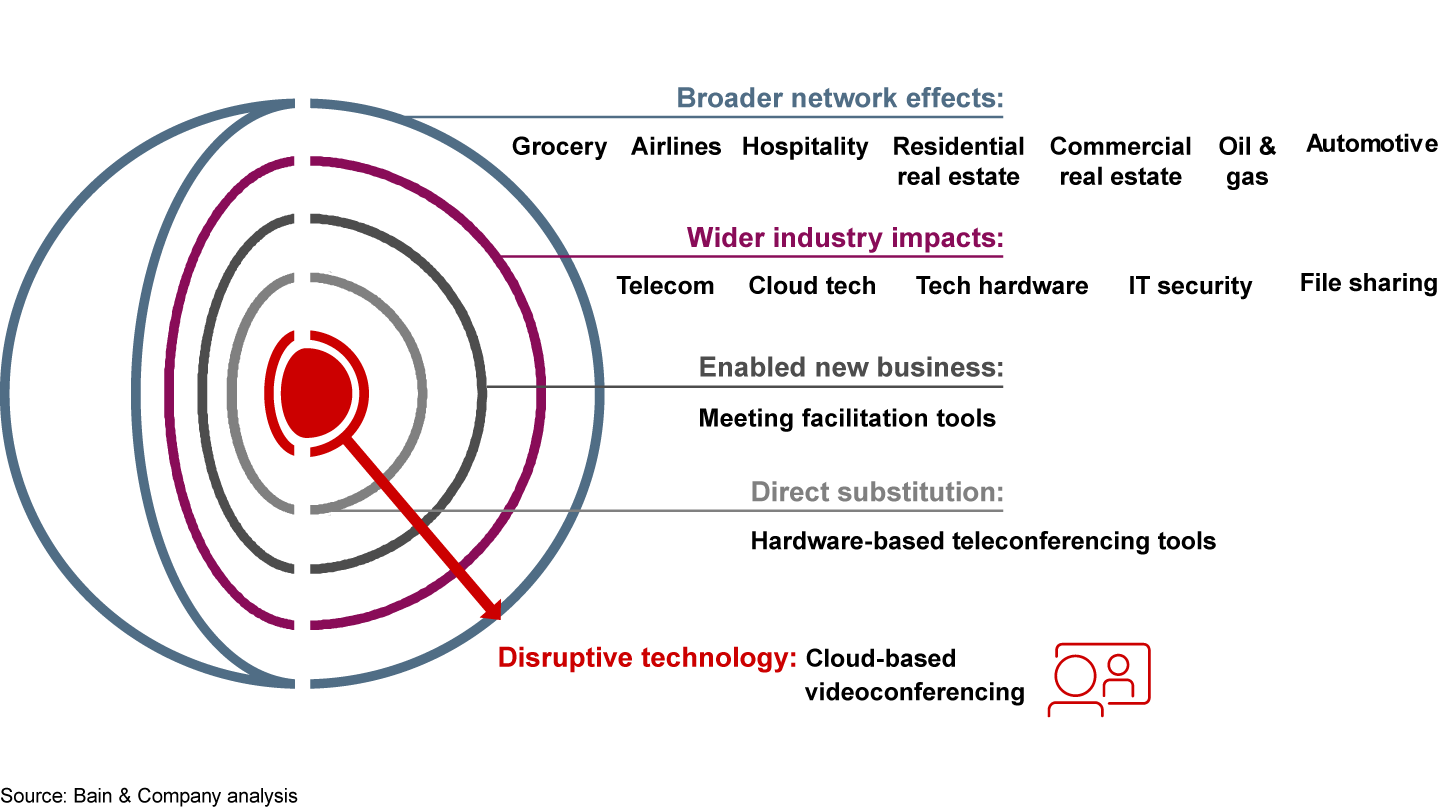
Commercial real estate prices and vacancy rates will be another important signpost to follow, as they could signal a pivotal shift toward home working. Before Covid-19, only 5% of working days were spent at home. A recent Stanford University study estimated that 42% of the US labor force is working full time from home. After the pandemic, that number is likely to fall to 20%—still four times as high as the pre-Covid number. That shift highlights just how significantly the turning point in one industry can affect another (see Figure 5). Corporate forecasts already show a sharp decline in expected demand for office space. A survey by Moody’s shows 35% of businesses plan to reduce office space in the future and none plan an increase. Similarly, the vacancy rates of commercial real estate buildings could rise as high as 19.8% by 2023, exceeding the highest vacancy rates during recessions over the past 30 years, according to Moody’s Analytics.
Figure 5

Despite the Covid-19 surge in eating at home, food delivery platforms have not yet reached the mass adoption turning point. While 36% of the population is using restaurant delivery more frequently, the costs remain high and the turning point for widespread adoption is not yet in sight.
Barriers to the continued growth of food delivery beyond Covid-19 could include changes to tax policy on treatment of employees or drivers and a consumer preference to dine in restaurants once the pandemic is over. Alternative transport systems, such as autonomous vehicles or drones, and declining costs could accelerate the adoption of food delivery. A key signpost for the food delivery trend will be the proportion of restaurants or independent businesses opening ghost kitchens, establishments dedicated to food delivery as opposed to dining—a market that could grow to $1 trillion by 2030, according to a forecast by Euromonitor. Mass-market launches of autonomous vehicles could also signal the growth of food delivery platforms.
Monday morning 8 AM
Covid-19 has turned markets upside down, set new trends in motion and exacerbated uncertainty across all industries. Companies are struggling to protect, recover and retool their businesses for a new and turbulent era. Leadership teams that adopt a turning points approach are better able to cut through the noise and adapt to sudden shifts—whether triggered by a pandemic or any other sudden change. The greater the uncertainty, the more powerful the four forecasting tools. To get started exploring how turning points might affect important future trends, executives can focus on a few high-gain questions:
- What is the one trend or technology that could shape the future of your industry?
- What are the big bets and hedges that companies need to consider?
- What are the critical signposts we should be watching, and what is the trigger to stop watching and start investing in a new market?
- What are the necessary conditions for maximum penetration of a new innovation?
- Which external factors might speed or slow the adoption of a new innovation and how can we track them?
Elements of Value® is a registered trademark of Bain & Company, Inc.

Coronavirus
The global Covid-19 pandemic has extracted a terrible human toll and spurred sweeping changes in the world economy. Across industries, executives have begun reassessing their strategies and repositioning their companies to thrive now and in the world beyond coronavirus.
First published in 12월 2020