

Brief

한눈에 보기
- Companies are using the Elements of Value approach to solve challenges such as growing revenue, earning customer loyalty and designing offers.
- Bain’s new survey of more than 45,000 US consumers shows how the elements link to revenue, market share, customer loyalty and willingness to pay in 22 consumer categories.
- Companies that deliver strong performances on more elements than competitors will attract more customers over time and can choose to price higher than rivals do.
- Adding elements over time also improves loyalty, revenue and market share; adding emotional elements is worth 50% more than adding functional elements.
It’s well known that Amazon has upended traditional retailers and steadily taken market share over the past two decades in categories such as general merchandise, furniture and apparel. Just as impressive, though, is how Amazon has redefined what consumers want from retailers. The company’s dominance has actually changed which Elements of Value—fundamental benefits in their most essential, discrete and concrete forms—matter most to consumers in mass merchandising.
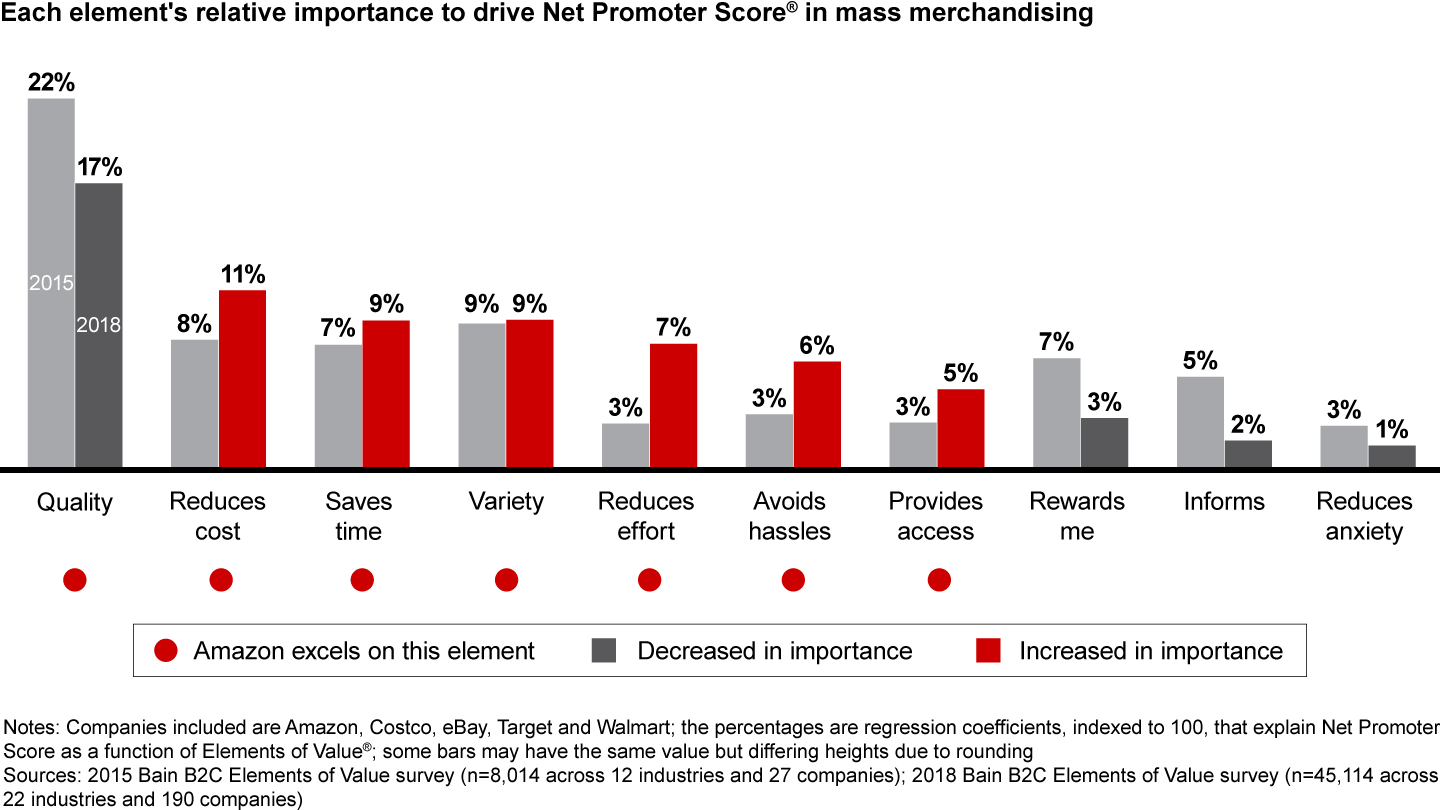
Over the past three years, elements such as reduces effort and avoids hassles have become more important catalysts for consumer loyalty in retail as measured by Net Promoter Score® (see Figure 1). Amazon delivers on these quite functional elements at a very high level, several consumer surveys by Bain & Company have shown. Its ascendance illustrates how some companies, as their innovative business models help them to expand their market share, can change what things really matter to consumers across a category.
Figure 1

The pet whisperer
No company is unbeatable, however. One powerful disrupter may change the rules of the game, but some rivals eventually figure out how to adapt by playing the game better or shifting the rules yet again.
Consider how Chewy has more than held its own against Amazon in one major e-commerce category, pet food and supplies. Since its founding in 2011, Chewy has emphasized customer service and a massive selection of products at affordable prices. And the company convinced manufacturers of premium products, which historically restricted their distribution only to independent pet stores, to supply it with their choice merchandise, thereby expanding its offerings.
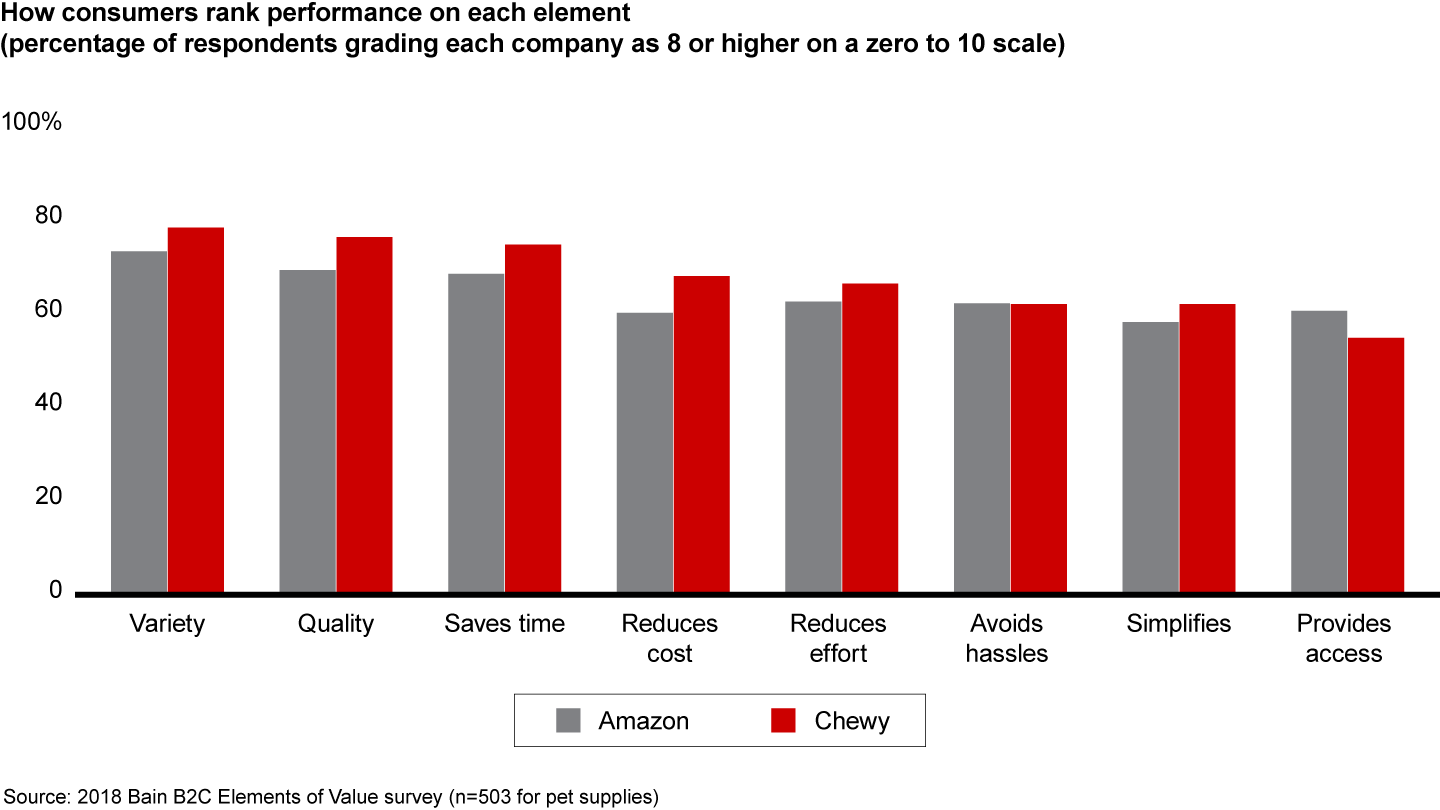
Throughout its evolution, Chewy has chosen to focus on functional Elements of Value such as variety, saves time, reduces effort and reduces cost. Today, Chewy delivers on the same eight elements in pet supplies as Amazon does, but, impressively, it outperforms Amazon on six of those eight elements (see Figure 2). Chewy worked deliberately on these elements by, for example, moving warehouse fulfillment in-house and building fulfillment centers around the country, and by adding a full-service online pet pharmacy. By figuring out which elements matter to pet owners and performing well on those elements, Chewy has realized outsized growth. Revenue has risen at an 89% compound annual growth rate from 2013 through 2017, and the company’s share of the online pet supplies market rose from 8% to 26%.
Figure 2

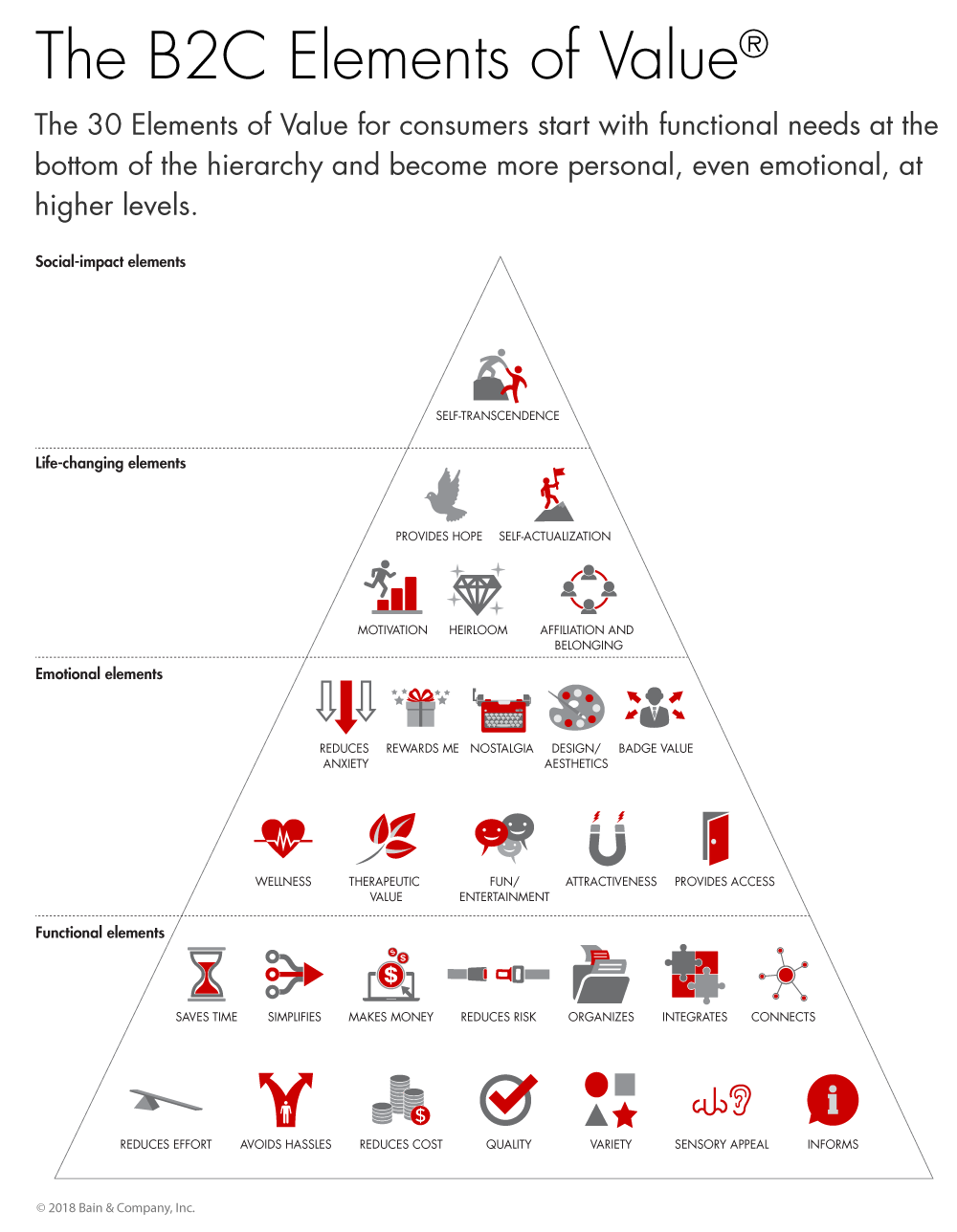
The amount and nature of value in a particular product or service always lies in the eye of the beholder. Yet universal building blocks of value do exist. As first described in a 2016 Harvard Business Review article, we have identified 30 Elements of Value that fall into four categories: functional, emotional, life changing and social impact (see Elements of Value pyramid). Our model traces its conceptual roots to psychologist Abraham Maslow’s “hierarchy of needs,” first published in 1943. Maslow argued that human actions arise from an innate desire to fulfill needs ranging from the very basic (security, warmth, food, rest) to the complex (self-esteem, altruism). The Elements of Value approach extends his insights by focusing on people as consumers, describing their behavior around products and services.

This approach has proven useful to two of the most vexing business challenges: growing revenue and remaining differentiated from competitors. Companies can improve on elements that form their core value. They can also judiciously add elements to expand their value to customers without completely overhauling their products or services. Nordstrom, for instance, acquired Trunk Club, a personal shopping subscription service that simplifies the process of selecting stylish, well-fitted apparel. Google expanded Google Maps to give users access to street views, restaurant menus and reviews, business hours and more. Domino’s introduced easy and engaging mobile pizza ordering and tracking to reduce effort for customers.
Links to market share, pricing, loyalty and revenue
To see how the Elements of Value link to company performance, through Research Now SSI, we recently surveyed 45,000 US consumers about their perceptions of 190 companies across 22 retail categories. Each respondent rated one company—from which he or she had bought a product or service during the previous six months—on each element, using a zero to 10 scale. We then looked at the relationships among these rankings, each company’s Net Promoter Score, and the company’s recent revenue growth and market share growth.
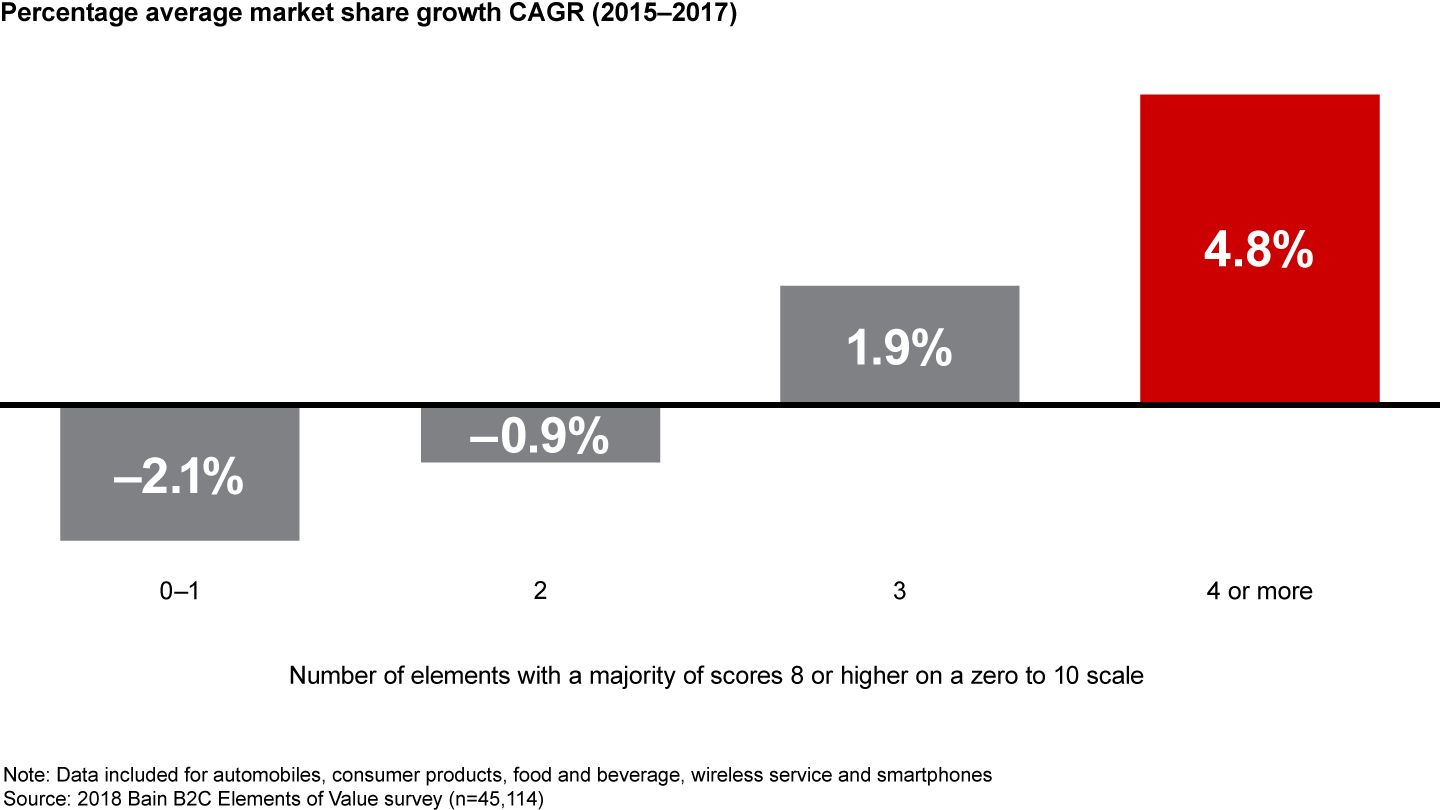
We first explored whether the elements could shed light on market share growth. Companies with high scores (defined as an 8 or above) on more elements from at least 50% of respondents do indeed realize higher gains in market share (see Figure 3). This phenomenon is playing out in the US telecommunications sector, for example. Since 2013, T-Mobile has invested in a number of elements and realized gains in Net Promoter Score along with its share of new customers, and its market capitalization grew from $14 billion in 2013 to $48 billion in 2017. But competitors were not standing still. Starting in 2017, Verizon responded with its own investment in elements such as access—through unlimited data plans and improved video add-ons. Verizon’s market share has started to rebound, and recently, its share of new customers surpassed T-Mobile.
Figure 3

Next, we explored whether delivering more value to consumers results in their willingness to pay more for products and services. The survey confirmed this hypothesis when we employed discrete choice modeling, a standard method for estimating consumer demand under different scenarios of pricing and product features developed by Joffre Swait and others in 1993. We showed consumers a series of offers from three brands, changing prices and product features systematically. Modeling responses allowed us to examine the pricing power of companies that deliver more elements than others do.
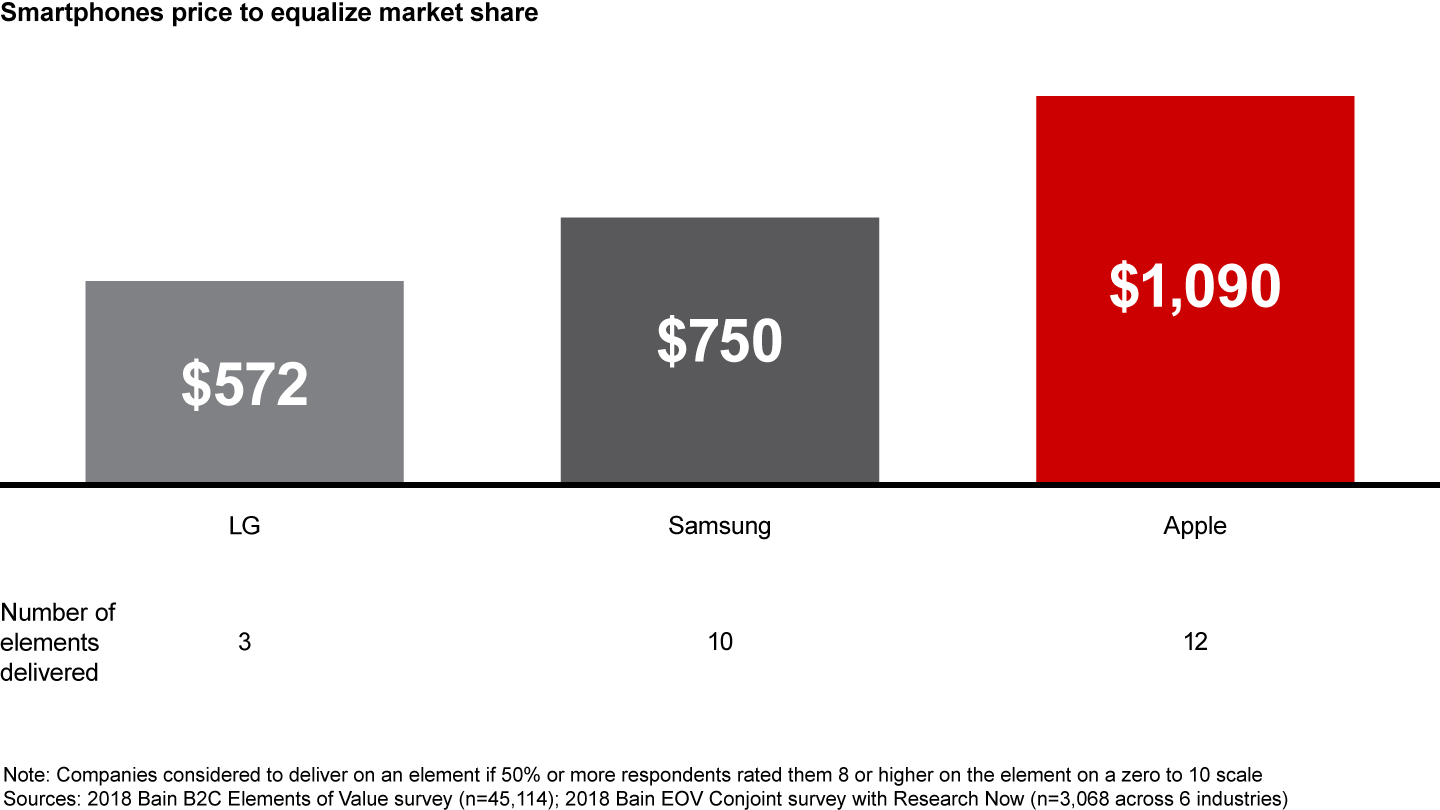
In smartphones, for example, Apple delivers 12 elements, Samsung 10 and LG 3. We set all features to be equal across the three brands, then adjusted prices up and down for the brands until the predicted market share was equal. As a result, at equal market share with Samsung, Apple can charge a premium of $340 more than Samsung. At equal share with LG, Samsung can charge $178 more. At equal share with LG, Apple can charge a whopping $518 premium (see Figure 4). Indeed, the analysis supports Apple’s strategy to set a high price for the iPhone X despite pundits initially saying it was a mistake. We found the same pattern in fast food restaurants, cars, hotels and other retail categories. In other words, if you deliver more value than your competitors, you have the luxury of charging more or taking that premium in increased market share.
Figure 4

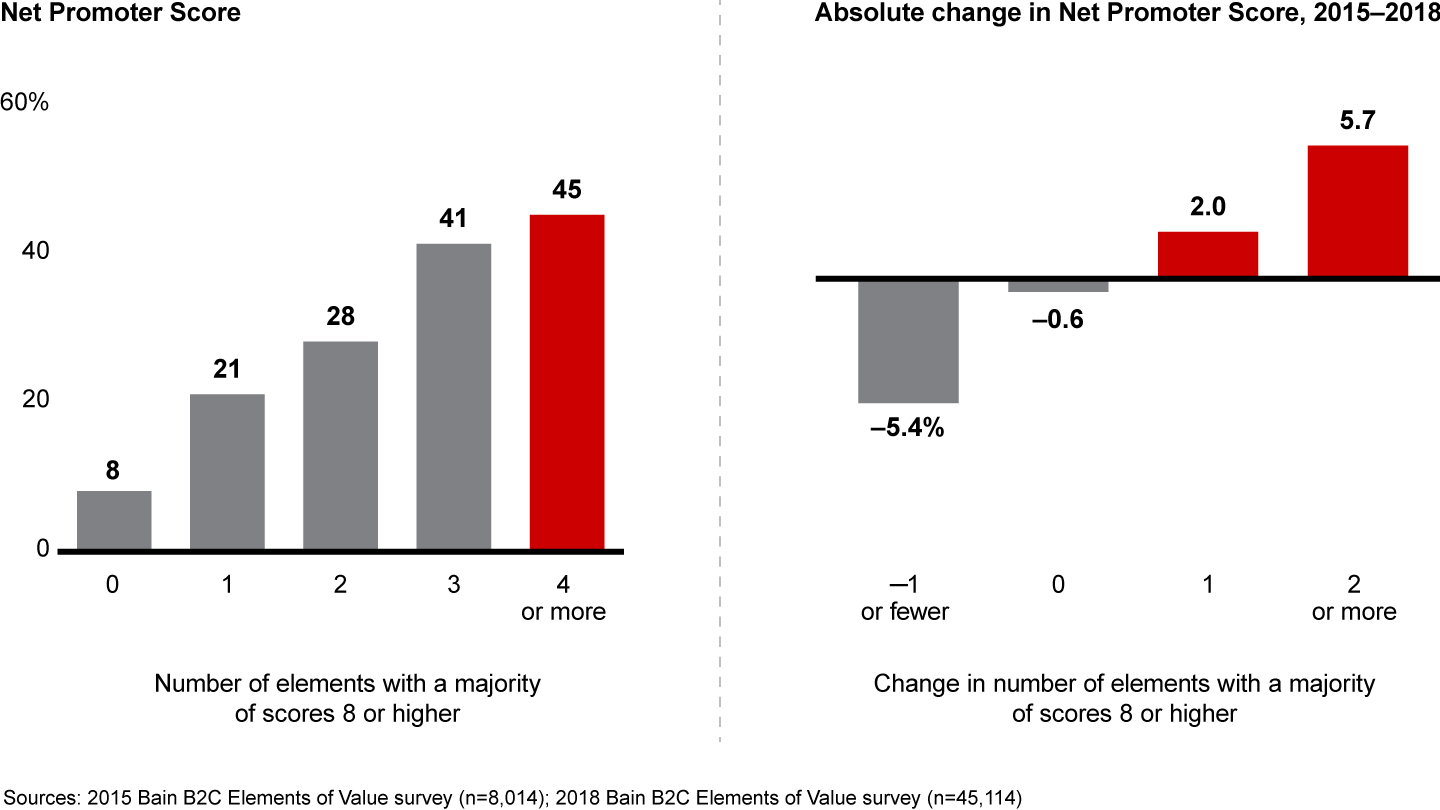
Some of our insights from two years ago now hold up with the much larger data set of the new survey. In the area of loyalty, companies that performed well on four or more elements had, on average, more than twice the Net Promoter Score of companies with just one high score, and more than five times the Net Promoter Score of companies with none. Furthermore, companies that add elements on which they have high performance see a sharp increase in their Net Promoter Score (see Figure 5).
Figure 5

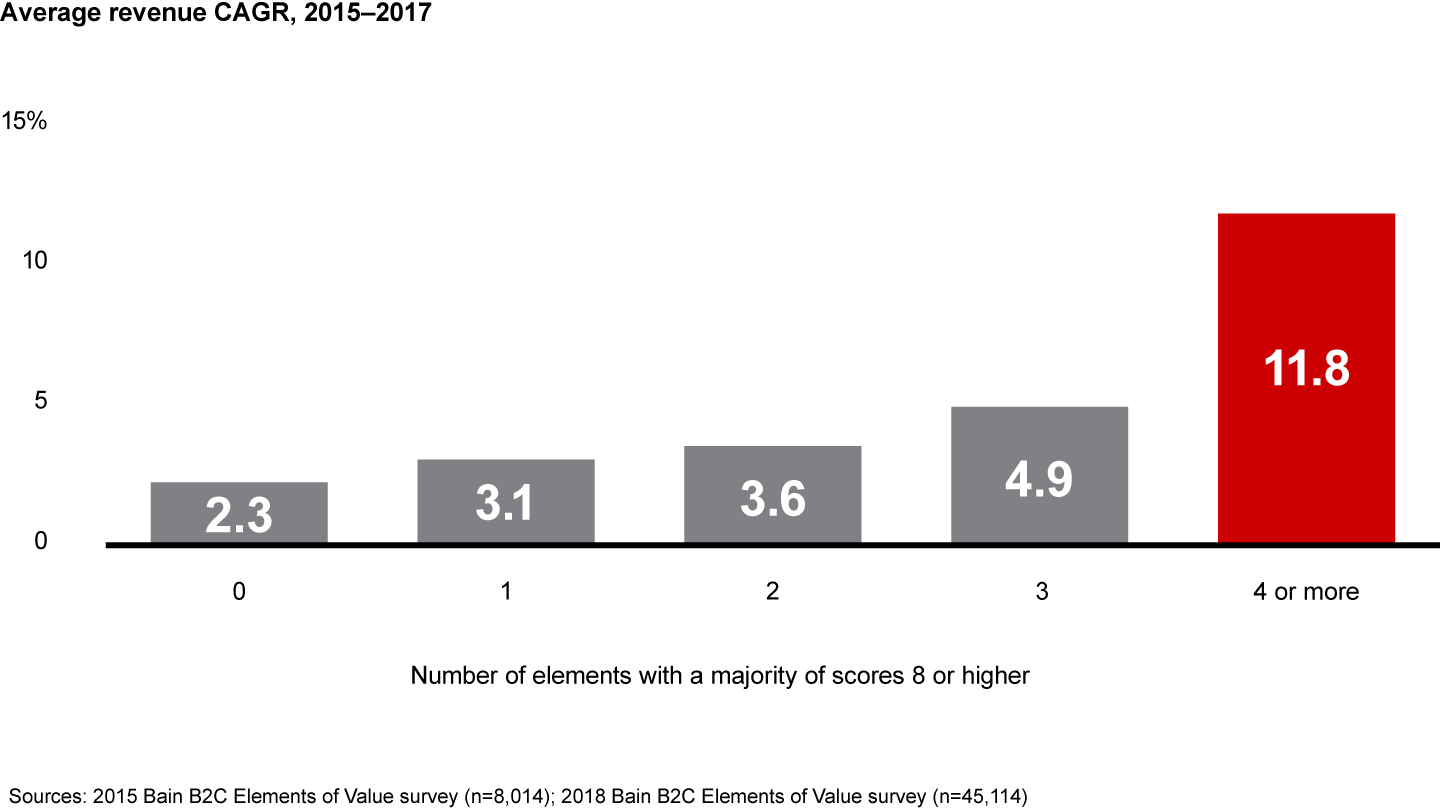
Strong performance on multiple elements also correlates closely with higher and sustained revenue growth (see Figure 6). The large boost companies get for excelling on four or more elements suggests that outsize growth depends on mastering a broad set of dimensions.
Figure 6

Emotional bonds on a functional base
The final key finding in our analysis answers a question that many business executives and professionals have been asking us: Are emotional elements higher in the hierarchy worth more than functional elements? The definitive answer is yes: Delivering on one more emotional element will add 1.5 times the amount of Net Promoter Score, on average, when compared with delivering on one more functional element.
Across all the retail categories, perceived quality affects customer advocacy more than any other element. Products and services must attain a certain minimum level, and no other element can make up for a significant shortfall on this one. But emotional elements obviously allow companies to connect with consumers on a deeper level—and that’s worth a great deal in the ongoing battle to earn loyalty.
Yet it’s also clear that companies cannot build a strong and enduring emotional bond in a functional vacuum. We know of no company that made the leap to excelling on emotional elements over a sustained period without a strong performance on some functional elements. In fact, companies that perform well on three or more functional elements also deliver significantly more higher-order elements than companies that excel on fewer than three functional elements. As just one example, mutual fund giant Vanguard, which over the past three years has added high performance on reduces anxiety, provides access (with a low minimum initial investment for ETFs) and provides hope, had to strengthen its functional elements as well, such as simplifies (by consolidating all of a household’s investments on one website).
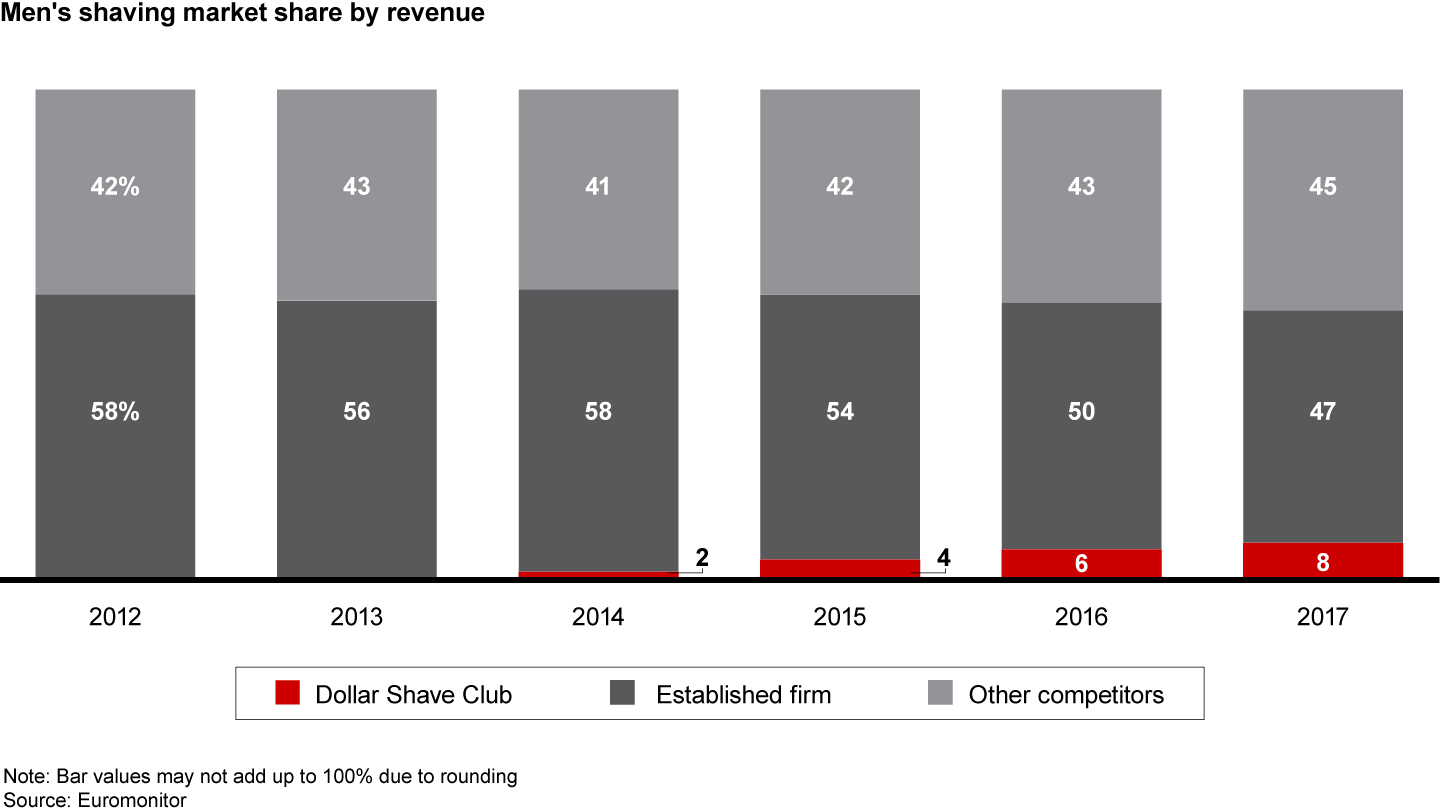
Whether a retailer sells through physical stores or online, or is trying to deliver on emotional elements, not just functional ones, the leaders are able to immerse customers in a distinctive experience that delivers value. Men’s shaving was a sleepy market when Dollar Shave Club started in 2011 with an affordable, convenient direct-to-consumer model. Founded by entrepreneurs who found the price of razors high (and the goods often locked in store cases), Dollar Shave Club steadily added Elements of Value to its business and now excels on eight elements, seven of which are functional—a performance that’s far ahead of the established competitors. Dollar Shave carefully tailors the convenience of a subscription, direct shipping, low price points, and simple, understated imaging and marketing to its customer base. Since 2015, as Dollar Shave added elements, its revenue nearly doubled, and market share doubled as well (see Figure 7). Unilever acquired the company for $1 billion in 2016, and Dollar Shave Club continues to grow.
Figure 7

Putting the elements to use
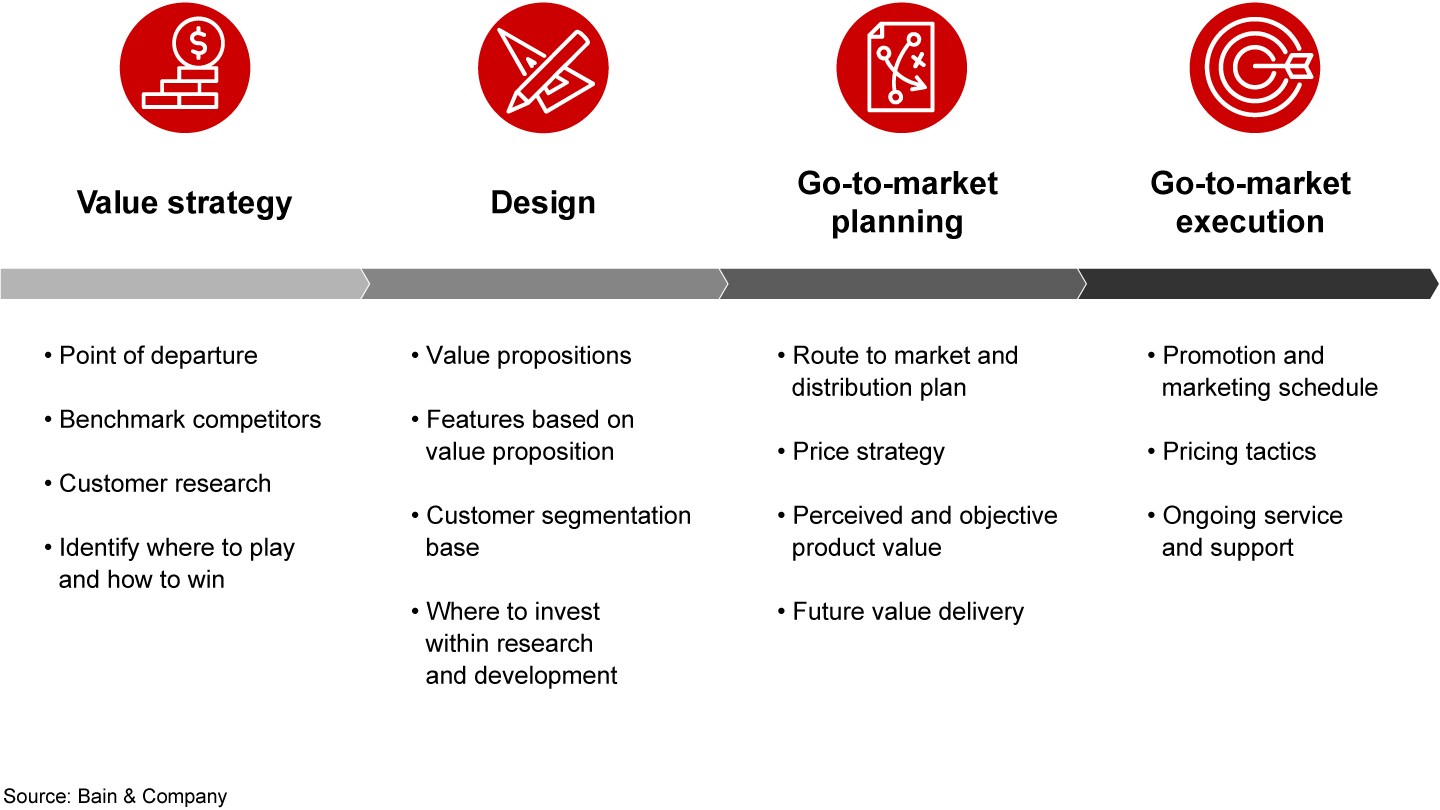
Companies have been using the Elements of Value at many points during the product life cycle (see Figure 8). When forming a value strategy for a new or revamped product, this approach helps to identify where to play and how to win. As part of improving one’s value proposition, the elements guide selection of product or service features and choices about where to invest in research and development. During go-to-market planning, the elements give companies an analytical, objective anchor to understand how consumers perceive value and what they are willing to purchase. And before a company goes to market, the elements inform the marketing messages, pricing tactics and ongoing support.
Figure 8

Large organizations face a constant challenge of spending enough time with customers to learn how their behaviors and perceptions are changing. The Elements of Value give managers a way to identify what matters most to each segment of consumers and how the company can best fulfill their needs.
Eric Almquist is a partner with Bain & Company’s Customer Strategy & Marketing practice. Grace Wynn is a manager with Bain’s Consumer Products and Retail practices. Jamie Cleghorn is a partner with the firm’s Customer Strategy & Marketing practice. Lori Sherer is a partner with Bain’s Advanced Analytics practice. They are based, respectively, in Boston, Boston, Chicago and San Francisco.
Research Now SSI is a leading global provider of first-party consumer and professional data based on extensive, proprietary market research panels. Research Now SSI serves more than 5,800 market research agencies, media and advertising agencies, consulting and investment firms, and healthcare and corporate customers in the Americas, Europe, and Asia-Pacific. For more information on Research Now SSI’s range of data-driven offerings, go to www.researchnow.com and www.surveysampling.com.
Elements of Value® is a registered trademark of Bain & Company, Inc. Net Promoter®, Net Promoter System®, Net Promoter Score® and NPS® are registered trademarks of Bain & Company, Inc., Fred Reichheld and Satmetrix Systems, Inc.

Elements of Value® Insights
What do customers want? Bain's Elements of Value® represent the deeper aspirations behind the purchasing decisions of B2B and B2C customers. Our insights explore the ways companies can go beyond price to offer more value.
First published in 10월 2018