

Report

한눈에 보기
- In addition to changes in energy, companies are managing other large transitions that will affect their core businesses and offer new paths for growth.
- The shift from internal combustion engines to electric vehicles affects not only automakers and energy companies, but chemical, mining, and agriculture companies as well.
- Chemical producers must respond to the global push to reduce plastic waste. Bio-based polymers can produce plastics with fewer emissions, while other innovations will create more recyclable or biodegradable products.
- In agriculture, fertilizer is coming under scrutiny for its emissions, and agribusinesses are addressing consumers' changing diets, including alternatives to meat.
This article is part of Bain's 2021 Energy and Natural Resources Report.
The energy transition is already roiling the energy and natural resources (ENR) sectors, affecting long-term strategic planning, investments in infrastructure and equipment, allocation of resources, and so much more. But this isn’t the only resource transition that ENR companies are dealing with. Several others are in motion, aimed at reducing waste and improving the circularity of supply and production chains, and developing a more sustainable food supply to feed a growing population. Like the energy transition, these will transform the way ENR companies do business—and executives will have to adapt their business strategies and operating models in order to thrive.
These transitions all reflect shifting attitudes about the roles of industry, government, and consumers in managing resources. Consumers and shareholders are, increasingly, demanding change and accountability. As companies react, profit pools are bound to shift, and executives will want to identify these trends before they happen.
Leading companies will need to balance the needs of their existing core business while building new sources of growth. To succeed in their new lines of business, they’ll have to identify customers’ evolving needs and develop a differentiated position that addresses them. Some of their bets will be large, others small, and not all will pay off. To fund these second engines of growth, leaders will often reduce the costs of existing operations while making necessary improvements to the operating model, deploying innovations in operations and products.
To help develop a better understanding of these transitions, Bain looked at four that are underway:
- The shift to electric vehicles (EVs). Much has been written about the effect of EVs on the oil industry and renewables, but the chemical, mining, and agriculture sectors are also adapting.
- Ending plastic waste. Chemical makers and other companies in the industrial and consumer sectors will have to work together to improve the circularity of plastic and reduce pollution.
- Decarbonizing the fertilizer chain. A price on greenhouse gas (GHG) emissions and rising demand for ammonia in other applications such as marine fuel will increase the cost of fertilizer, setting off a chain reaction through the chemical and agricultural sectors.
- Responding to a changing diet. As more consumers adopt diets with less meat, the agricultural industry is investing in alternative proteins.
From vehicle exhausts to batteries, from platinum to lithium
The transition from internal combustion engines (ICEs) to electric vehicles is causing ripple effects across supply chains and into the chemicals, mining, and agribusiness sectors (see Figure 1).
Figure 1
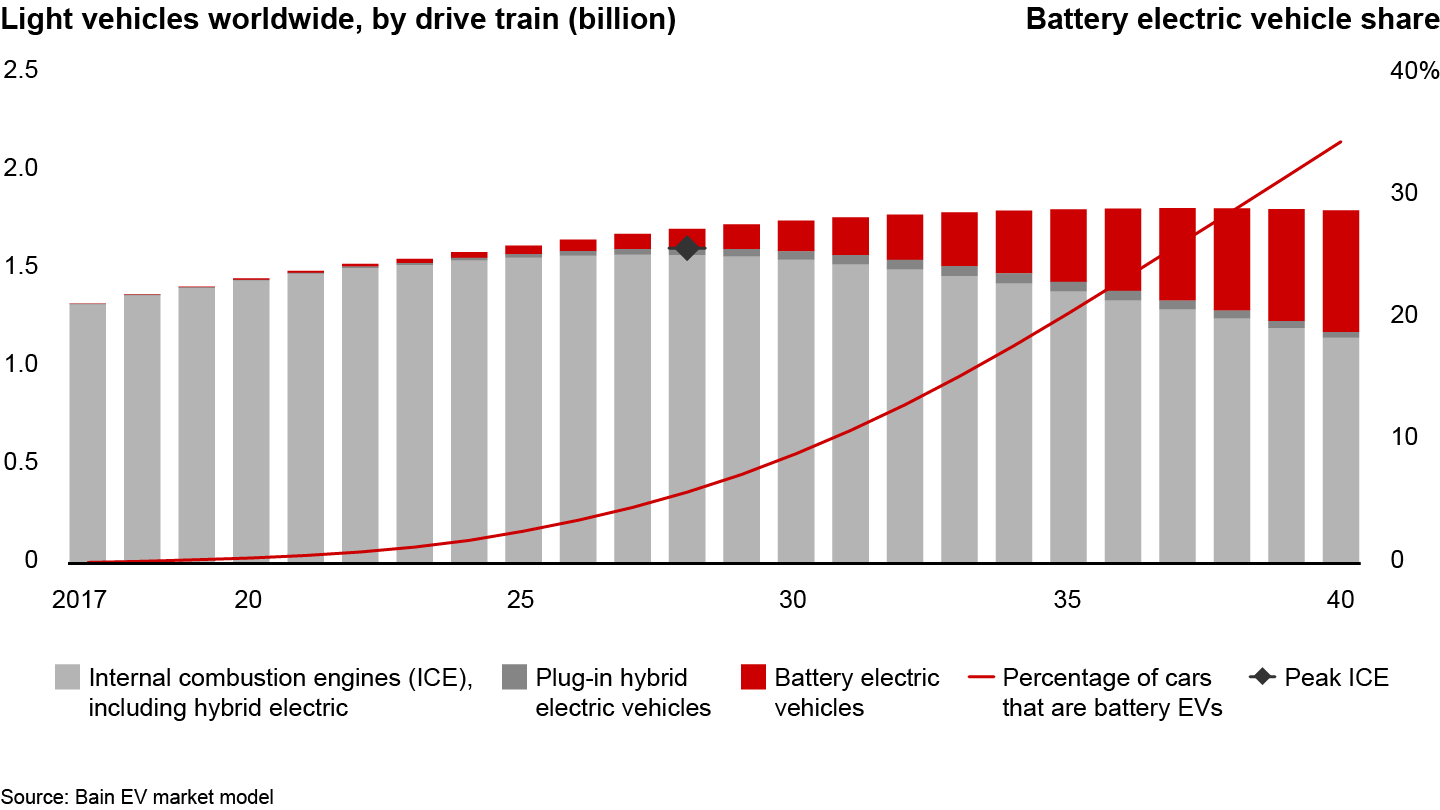

In chemicals, volumes may have peaked for the exhaust systems used in ICEs, which rely on chemical catalysts. Until now, stringent regulations have required automakers to use more chemical catalysts, resulting in a higher value per average vehicle. In fact, the total value of chemical catalysts in exhaust systems grew 7% per year since 2010. Over the coming five years, however, growth is expected to slow to 2% per year, and the global market may shrink afterwards.
This gloomy outlook has pushed the leading material suppliers—BASF, Johnson Matthey, and Umicore, which supply more than 90% of the market—to invest heavily in innovation by developing materials that will be needed for future power trains. These investments include cathode-active materials for batteries, which account for more than 30% of the battery’s cost, and membranes for fuel cells.
This pivot taps capabilities that suppliers already have, including fine metals chemistry and relationships with the automakers. They also must develop new muscles to succeed in markets with greater competitive intensity, faster development cycles (battery costs per kWh fell by more than 85% from 2010 to 2019), and large capital investment demands, around $1 billion for a scale factory. It also disrupts traditional, linear value chains and requires greater flexibility to work in constantly changing partnerships with more companies.
Mining companies will also be affected. The exhaust systems on ICE vehicles are the main market for the platinum group metals (PGMs), and while they’re also used in fuel cells, the market for fuel-cell EVs isn’t expected to be as large, resulting in less demand for PGMs in autos. As old ICEs are scrapped, their PGMs will be recycled. The net effect will be less demand for virgin PGMs, forcing mining companies to adjust.
On the other hand, more batteries will mean greater demand for nickel, lithium, and cobalt, with an average 60 kWh battery needing about 90 kilograms of these metals. As demand rises, so will prices of these metals.
Miners need to figure out their transition from a strong position in PGM mines to a new position of strength, for example, increasing their access to mines that produce cobalt or rare earth minerals, with an eye to maximizing the value of their investments.
The ripples spread further. Corn farmers in the US Midwest will feel the pinch because about 40% of all US corn becomes ethanol, which is blended at about 10% into gasoline. Our baseline EV penetration curve implies a reduction of 45% in corn tonnage requirements for ethanol in the US alone. Much of that prime cropland could switch to crops that require fewer inputs, creating other ripple effects for suppliers and retailers. In addition, some of the world’s ethanol mills could become stranded assets.
Changing how we create, use, and discard plastics
Plastics have come under increasing scrutiny due to the increase of plastic waste, which has created huge environmental challenges. However, many of the alternatives to plastic (including paper) can increase carbon emissions as much as five times. Plastic packaging also helps to extend the shelf life of perishable food, thereby reducing food waste, which is another major contributor to carbon emissions. Optimizing both waste and emissions involves complex trade-offs that are amplified as environmental, social, and corporate governance (ESG) targets for producers and customers of plastics become more ambitious.
There’s no silver bullet, of course. For each product or process, multiple solutions exist, each requiring trade-offs on product and environmental performance. Ultimately, we’ll have to change how we create, use, and discard plastics, and that will require innovations in technology and business models. This starts by understanding consumer needs for individual applications and finding the right alternatives to meet them. The solutions will combine ways to reduce the use of plastics where the application isn’t critical, replacing some of today’s plastics with bio-based or biodegradable plastics, improving recycling, and introducing alternative materials.
Producers of plastics are aiming to develop materials that are more recyclable and emit less carbon over their life cycle.
Producers of plastics are aiming to develop materials that are more recyclable and emit less carbon over their life cycle. The accounting for reductions in emissions isn’t yet standardized, but compared with virgin materials, recycling appears to emit less emissions during production and avoids emissions from products that end up in landfills. At the same time, packaging companies, retailers, and consumer products companies are designing products and packaging to improve traceability, compliance, and labeling of recycled content.
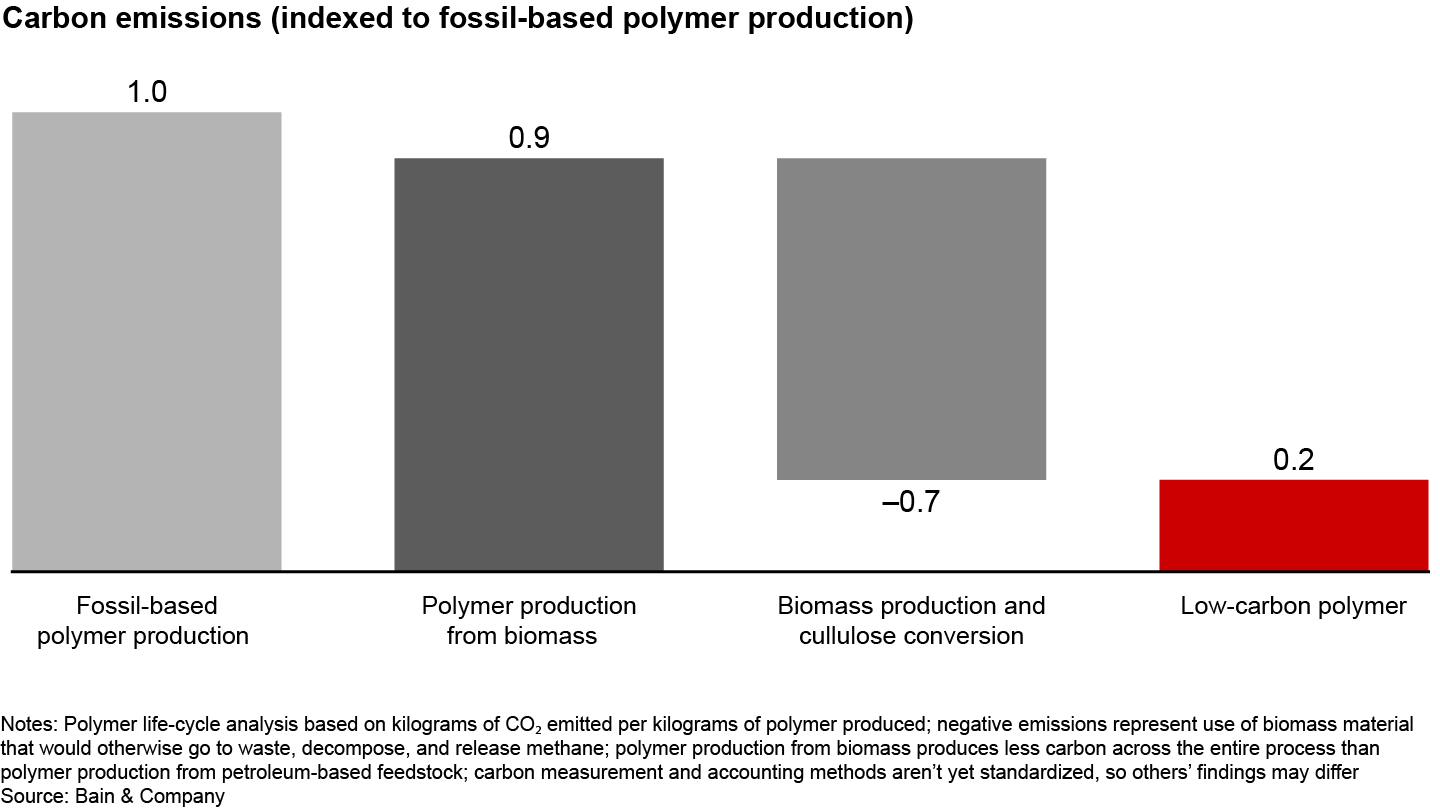
Bio-based plastics, which are made entirely or partly from renewable biological materials, are a solution that primarily addresses plastic process emissions. By using renewable biomass, which would otherwise decompose to produce methane (a powerful greenhouse gas), the life-cycle emission for a bio-based polymer can be reduced by 80% or more (see Figure 2), or even end up negative. Another approach is to combine hydrogen (made with renewable energy) with carbon dioxide to produce simple hydrocarbons that can then be turned into plastic—again creating a carbon-negative material.
Figure 2

Tackling the problem of plastic waste and emissions will also create new opportunities. Waste collection, sorting, and recycling requires major investment and technological innovation. Given the scarcity of high-quality plastic waste as feedstock for recycling, those who identify and develop markets for recycled materials will have a first-mover advantage. New profit pools may open up with market entrants, customers, and applications that draw investments to build scale and support a more circular value chain. Companies will need to continue shrinking costs in the core resin business to stay competitive and enable investments in new solutions.
Since no one player can solve these crises alone, plastics producers, converters, and brand owners need to think beyond the boundaries of their traditional value chain. Some will view sustainability as a limited action plan, but long-term winners will embrace sustainability as integral to their strategy, building on their strengths and finding partners with complementary capabilities.
Redefining the fertilizer chain
The production and use of fertilizer create about 2.5% of total greenhouse gas emissions. Fertilizer producers and growers have several options to mitigate emissions, including low-carbon feedstock (using ammonia made with blue or green hydrogen), shifting from commodity fertilizers to specialty NPK (nitrogen, phosphorus, and potassium) compounds and nitrates with more sophisticated dosages, deploying specialized seeds, switching to organic fertilizer, and adopting regenerative agriculture practices.
Governments may be cautious about prioritizing these emission reductions if they’ll increase food costs for consumers.
These alternatives add cost, and it’s not clear how quickly growers will shift to lower-carbon alternatives. Governments may be cautious about prioritizing these emission reductions if they’ll increase food costs for consumers. But eventually these shifts are likely to materialize, and demand will slow for commodity fertilizer producers.
Other changes will also disrupt business models and profit pools. Feedstock competitiveness could shift from regions with cheap natural gas to those with cheap renewable energy when green hydrogen becomes a bigger part of the supply. Specialty fertilizers will demand more customization and integration with customers. And the industry’s by-product revenues could erode as production processes change, reducing the supply of secondary products such as diesel exhaust fluid (DEF) or CO₂, which is often sold off today. Emerging demand for ammonia as a zero-carbon shipping fuel may provide growth opportunities for companies that make ammonia-based fertilizers.
Leading fertilizer producers are preparing for change, identifying their future positions in the commodity fertilizer market and determining what they need to do to continue delivering attractive returns. For most, this means reducing costs while investing in new products like specialty fertilizers. Their market and sustainability ambitions will inform these decisions. Finding ways to build on their current capabilities in production, logistics, and innovation will help them balance their progress in new growth areas with their current business in commodity fertilizer.
Responding to a changing diet
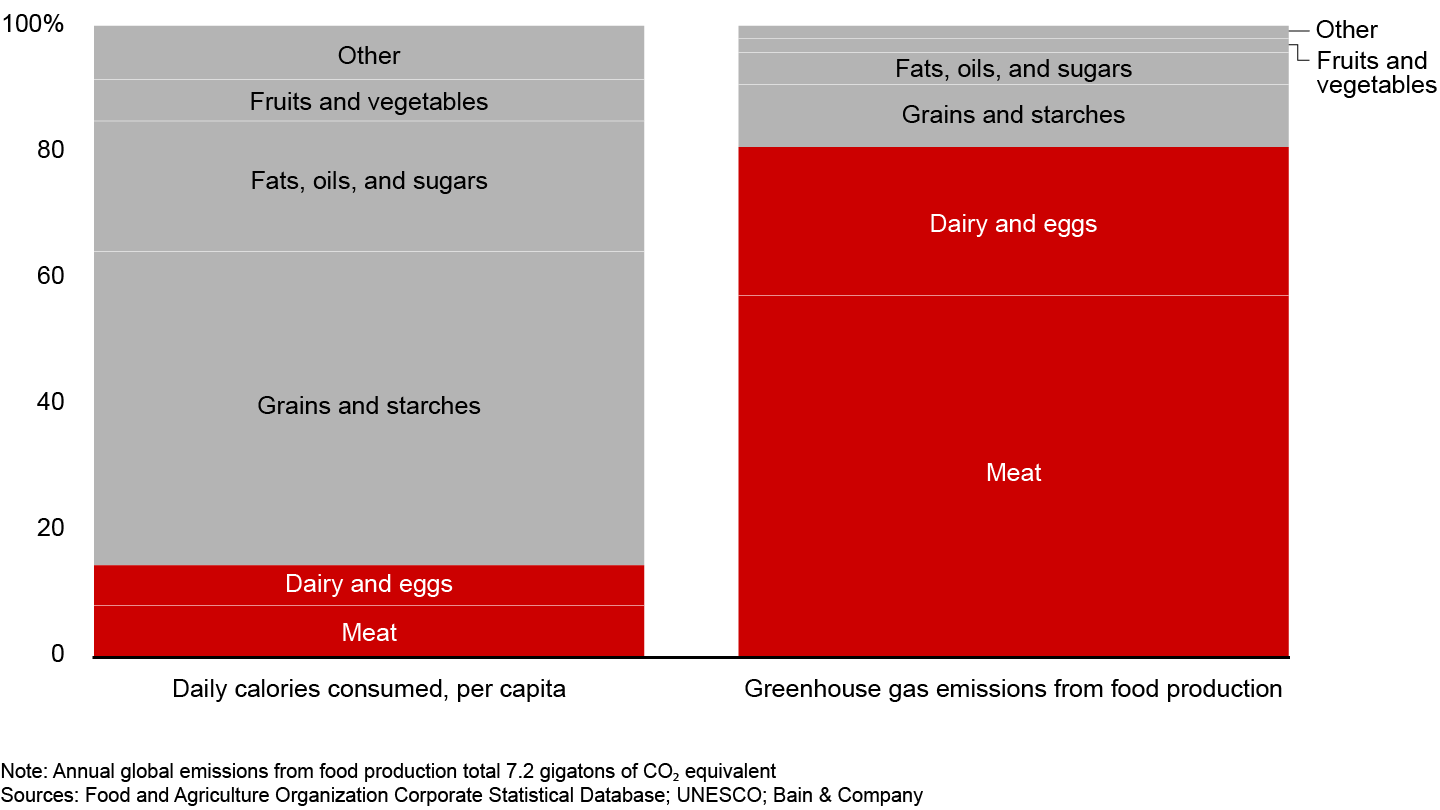
About 20% of all nutritional and caloric needs globally come from land-based animal protein sources: meats, eggs, and dairy products. Proteins are associated with healthy nutrition, growth, and balanced diets, and most governmental nutritional guidelines around the world encourage significant protein in diets. Yet those land-based animal proteins also take a toll on resources, accounting for about 14.5% of greenhouse gas emissions in agriculture and 80% of all food-related GHG emissions worldwide (see Figure 3). They use about one-fourth of the water and 80% of the land dedicated to food production.
Figure 3

Innovations in protein production and consumer packaging could reduce that resource intensity over time. Four lines of technology are particularly promising because they all deliver taste and texture similar to current proteins, and could cost about the same as the real thing in 5 to 10 years:
- plant-based dairy and meat alternatives, building on food technologies that have existed for a few decades, such as protein isolation and extrusion;
- precision fermentation of selected proteins in milk and meat, to enhance the taste and texture of the plant-based milks and meats;
- cultivation of tissue cells (or cellular protein agriculture), getting animal tissue cells to replicate, grow, and specialize in bioreactors; and
- mycelium fungus to simulate meat, especially pork or beef cuts.
The future of protein will probably combine these technologies, and as they become more cost-competitive, they may replace 15% to 35% of animal protein in the US by 2030 to 2035. Awareness of plant-based alternatives to meat has never been higher, following the successful introduction of several popular consumer brands. Precision fermentation should increase their appeal. Over time, cell cultivation will deliver ground-meat products nearly indistinguishable from the real thing. If mycelium and other materials prove adequate as scaffolding for cultivated cells, the disruption to protein will be even greater.
These technologies are undoubtedly a threat to incumbents, but also present an opportunity to tap a bigger pool of consumers and increase product innovation while reducing costs and resource footprints. Protein players have taken notice. Tyson Foods in North America and Fonterra in New Zealand have taken equity positions in promising insurgents in alternative meats and dairy. JBS, BRF Global, Vion Food Group, and Marfrig (in partnership with ADM) have developed or launched product lines. Kellogg’s and Kraft Heinz in the US have launched product lines and brands or are pivoting existing ones. Some other dairy and meat companies are heading the other way, proudly retrenching into the higher-end segments of the core protein market where, they believe, demand will remain strong for things like grass-fed Angus beef, cage-free eggs, organic beef and dairy, high-fat and high-protein yogurts, and artisan cheeses.
These companies and other incumbents should consider how to integrate new technologies into their core businesses. If, in the future, consumers get clean, safe meat from vats and reactors, an intermediate step will see old and new technologies coexisting, sometimes in the same facility. Bringing the investments and capabilities to scale production of alternative proteins will help the industry accelerate the resource transition, and help early adopters establish a foothold with key customers in the food and retail industries.
How to act
For every company, balancing the needs of the current business while investing in innovation and new product lines will become a key strategic task. Five actions can help executives get started.
- Develop a perspective on existing profit pools and your path to new ones.
- Move quickly to gain experience and build a leading position before the rest of the market catches up. Partnering with other companies along the value chain can speed up this process and fill capability gaps.
- Develop the commercial proposition for customers’ evolving needs, and determine which changes you need.
- Align your operations, including purchasing, supply chain, manufacturing, and planning, to meet new customer demands.
- Update the way teams work in your company, emphasizing the need for more cross-functional coordination, and adjusting resource allocation to consider both long-term priorities and short-term demands.
Managing these priorities over what could take decades may feel overwhelming. The best way to get started is to clearly define long-term goals, root out the new opportunities, and begin building the muscles necessary to capture them.
Read our 2021 Energy and Natural Resources Report
More from the report
-
Two out of Three Won’t Do
-
Harnessing the Energy and Resource Transition
-
Net Zero: From Political Targets to Industry Action
-
Energy Is Only One Part of the Sustainability Transition
-
Redesigning Value Chains to Deliver More Sustainable Goods
-
Time for ESG Investors and Energy and Natural Resources Companies to Work Together
-
Business Opportunities in Low-Carbon Hydrogen
-
Raising Productivity in Energy and Natural Resources Capital Projects
-
Creating Resilience, Sustainability, and Accountability in Supply Chains
-
Engine 2: How to Grow a Sustainable New Business
-
Accelerating the Journey to Net Zero
-
Four Ways to Scale Digital in Energy and Natural Resources Companies
First published in 6월 2021