

Report
Now that risk figures so prominently in European banking, it’s time to raise the profile of a metric that has played a minor role to date.
This benchmark—the rate of return on risk-weighted assets, or RoRWA—reliably integrates a balance-sheet-management perspective with the revenue and cost side of the business. Based on a comprehensive analysis of 121 banks across Europe by Bain & Company, RoRWA clearly emerges as the single most practical measure to help senior bank executives manage their companies’ performance and make savvy risk-reward decisions.
Our analysis shows how and where the quality of management plays a major role in determining performance. That’s especially true in the core European countries, where banks can’t rely on economic growth to lift their fortunes.
Why does RoRWA deserve more respect now? Five years since the global financial crisis, bankers across Europe still find themselves waging battle on many fronts. Low interest rates, a loss of customers’ trust, stiff new target capital requirements and regulatory mandates have compounded the difficulty of operating in weak eurozone economies. On the cost side, moreover, banks are reconfiguring their distribution networks and streamlining operations. Yet even as revenue growth flattens and new digital technologies push up capital investments, banks are not making much headway on reining in costs.
Indeed, the banking industry is going through a major restructuring, and only the fittest will survive this Darwinian process. The traditional tools that bankers have used to chart their competitive courses provide an inadequate map for navigating treacherous new terrain. With capital adequacy, asset quality and broad macroeconomic trends playing more prominent roles in shaping a bank’s financial performance, it is the balance sheet, not the profit-and-loss statement, which better captures the bank’s overall health and points to the areas that most need improvement. Today’s environment of disruptive change calls for a holistic yet simple view of the returns that banks generate on every unit of capital they commit to their businesses, on a risk-adjusted basis.
RoRWA fits the bill. Other measures may be more precise in understanding risk theoretically, but they’re impractical to use in managing the enterprise. RoRWA’s strength lies in using a well-understood measure— risk-weighted assets—as a denominator, making it a good proxy for risk.
For business leaders, RoRWA and the analysis of key components can provide practical guidance to optimize bank performance across four dimensions:
- First, RoRWA tracks how well a bank manages its balance sheet and appetite for risk. Managers can see whether they are properly pricing offerings to reflect their risk and cost, and how well they are allocating capital to business areas and products that generate higher returns.
- Second, the benchmark guides decisions on how a bank factors in risk to its cross-selling opportunities that bring in fees, commissions and other revenues.
- Third, on the cost side, a RoRWA approach reveals the cost efficiency per unit of risk for the volume of business a bank generates.
- Fourth, RoRWA shines a light on the cost of risk by disclosing how well a bank is able to minimize its loan-loss provisions on a risk-adjusted basis.
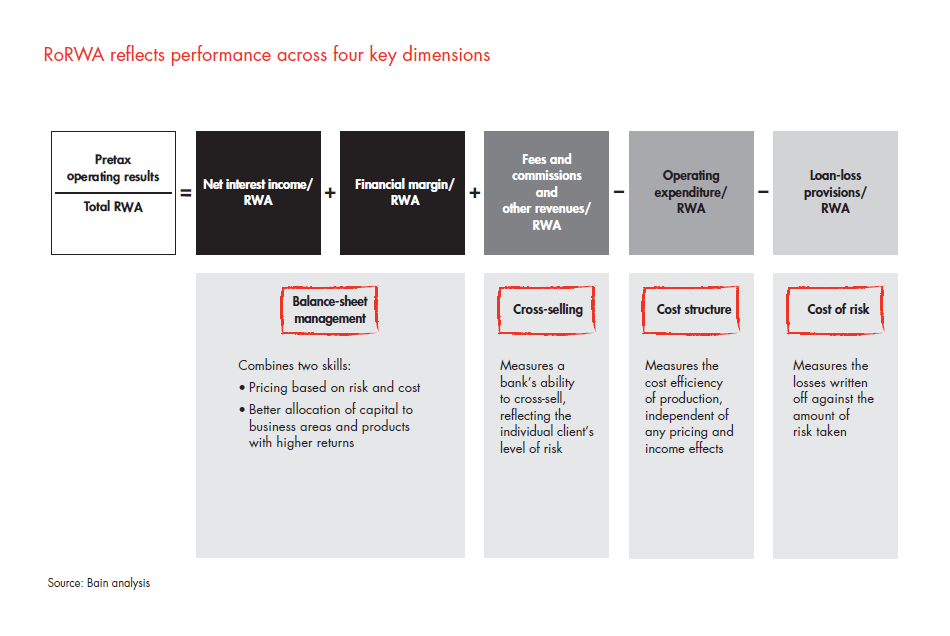
Beyond its value as a guide for bringing risk and capital to the forefront in managing a bank’s internal performance, RoRWA also can serve as a powerful tool for external communications. Executives, regulators and investors can see in a single number (supported by a few key components) how a bank stacks up against its direct competitors across different regions.
Based on the RoRWA metric, Bain undertook a comprehensive analysis of conditions influencing risk-weighted returns across Europe. Our analysis spans 12 core EU countries and the four fast-growing markets of the Commonwealth of Independent States (CIS), Poland, South Africa and Turkey from the onset of the global economic crisis in 2008 through the end of 2012. We conducted an in-depth examination of 121 banks, ranging from the largest globe-spanning institutions headquartered in Europe and other large banks that operate subsidiaries beyond their home countries to smaller local or regional banks. Together, the institutions we evaluated cover at least 70% of their respective markets.
The charts on the following pages highlight three major findings.
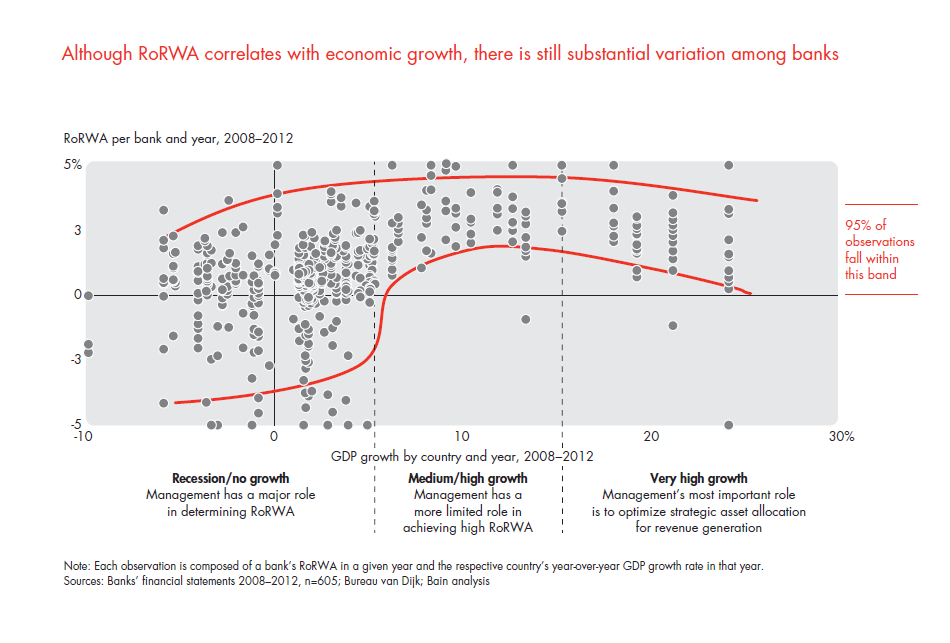
Economic growth counts, but management effectiveness plays a critical role. Overall, RoRWA correlated strongly with GDP growth trends in the markets we examined. Our analysis revealed a dramatic gap between the general underperformance of banks in the core European countries—whose economies have largely stagnated or remained mired in recession—and the stronger risk-weighted returns posted by banks based in markets that experienced more rapidly expanding GDP.
Yet analysis of bank-level data also showed a wide variance in the performance of institutions competing within individual markets. For example, in the slow-growth, mostly core European markets, where GDP ranged from negative 10% to 5% over the five-year period, RoRWA by bank varied widely in every year. Clearly, for these markets, the quality of an individual bank’s management plays a major role in determining performance.
In markets where GDP growth exceeded 5%, by contrast, we found considerably less variation in bank-level RoRWA performance. As the rising tide lifted all banks, management’s role in shaping returns appears to have been more circumscribed.
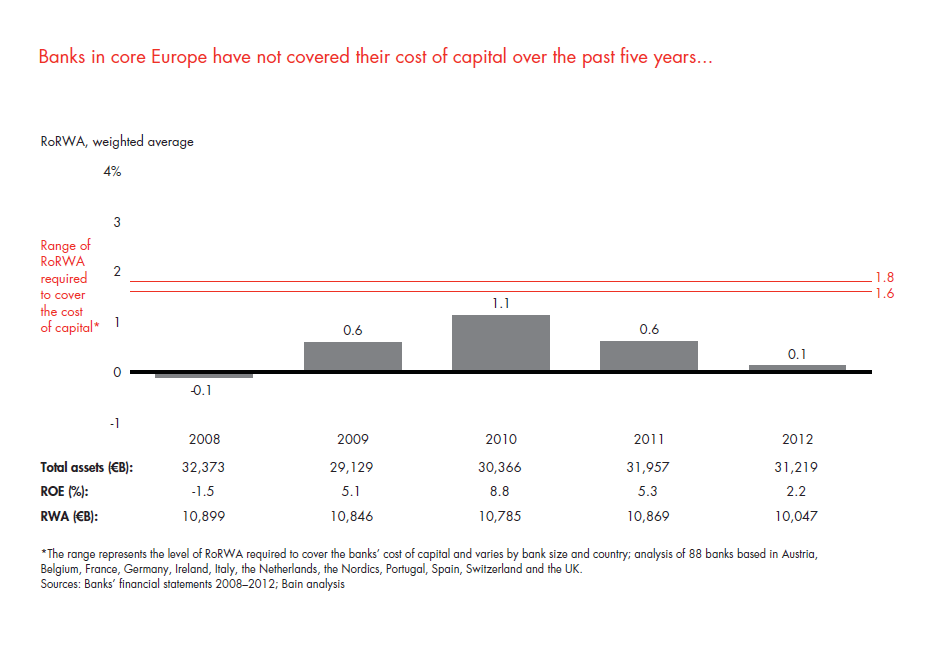
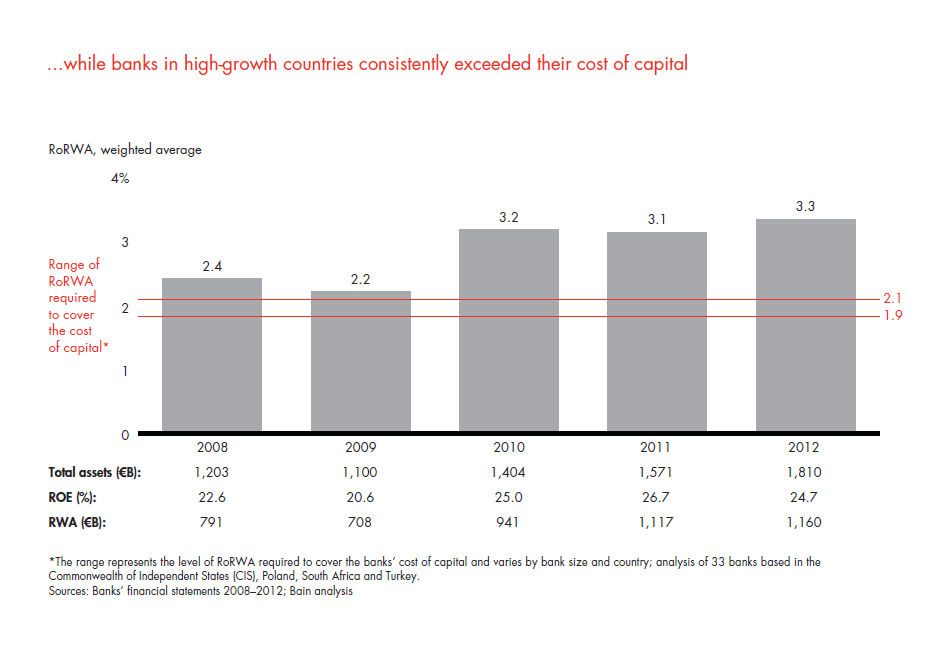
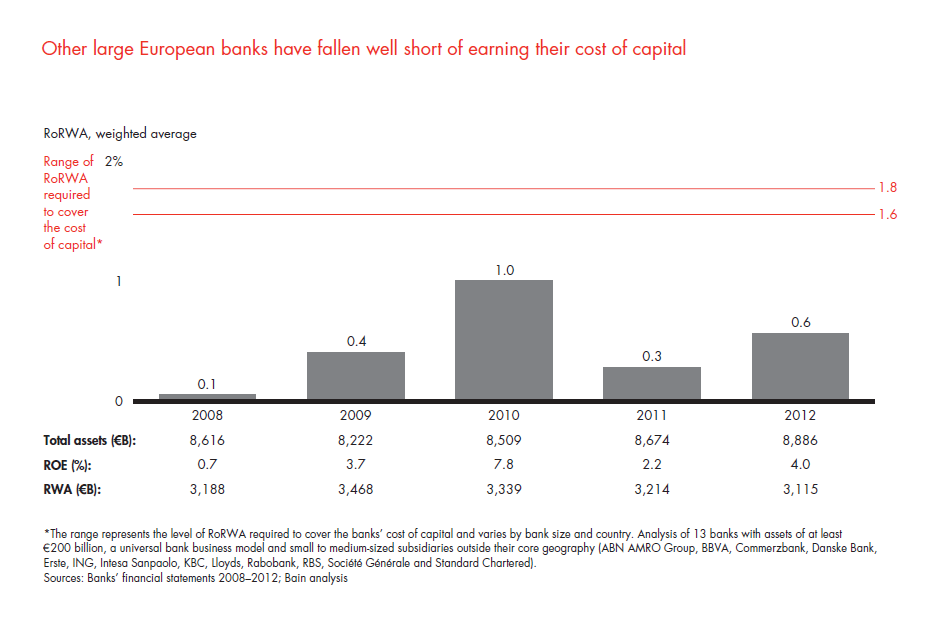
Most banks fail to earn their cost of capital. Bain determined that the RoRWA required for banks to cover their cost of capital fell within a range of 1.6% to 2.1%, depending on a bank’s size and the country in which it is based. The RoRWA of most banks has failed to clear that cost-of-capital hurdle, on average, in any year since 2008, falling well short in every year except 2010. Once again, however, we found a wide variation between the bank performance in the core European countries, where RoRWA was consistently below the cost of capital, and that in the high-growth countries, where RoRWA easily cleared the capital-cost bar.
Looking at the banks’ underlying strengths and weaknesses by market, we identified several major pain points that pinched banks’ RoRWAs in the core European countries.
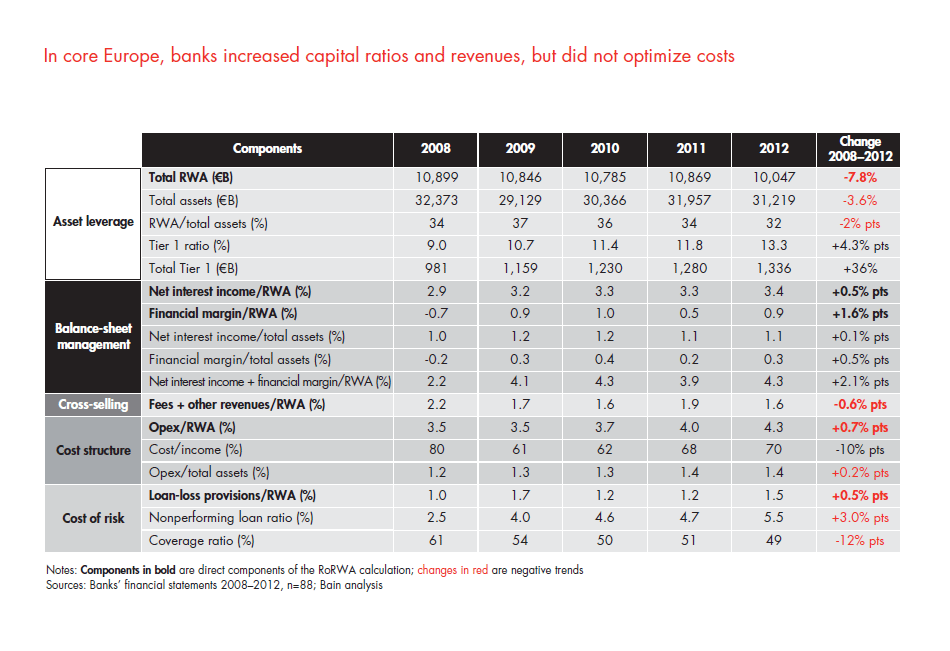
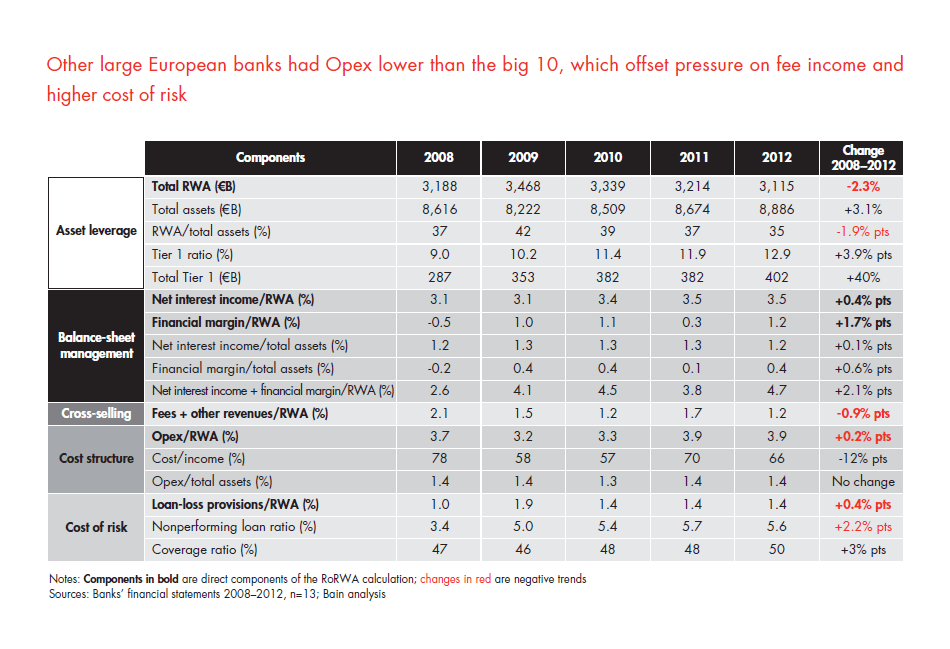
The need to shed debt and rely on higher-cost equity to strengthen their balance sheets reduced these banks’ total risk-weighted assets by nearly 8% between 2008 and 2012. Meanwhile, their cost of risk increased sharply, as stagnant or shrinking economies forced them to boost their loan-loss provisions in the face of steeper write-offs of bad credit. Interest margins that remained at low levels, shrinking fee incomes and higher operating costs also added downward pressure to banks’ RoRWAs.
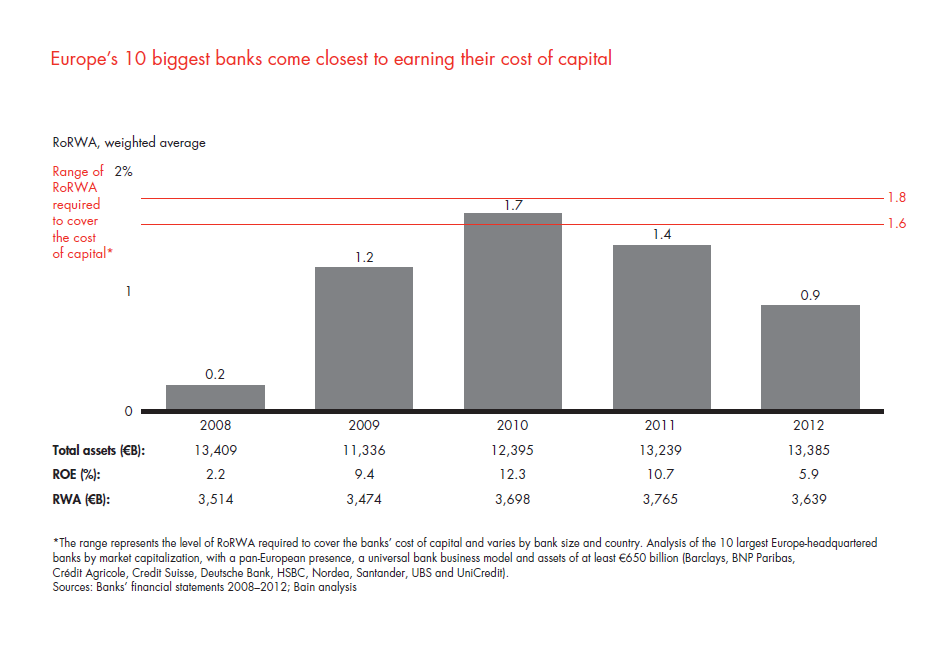
Size matters. Within core Europe, the 10 biggest pan-European banks (by total assets and market capitalization) fared best overall. Helped by large increases in net interest income and strong improvements in financial margins, their RoRWAs came closest to earning their cost of capital.
Other large European banks with subsidiaries outside their home countries reduced their operating costs, partially offsetting declines in risk-weighted fee income and higher loan-loss provisions. But the RoRWAs for these banks still failed to clear their cost-of-capital hurdle.
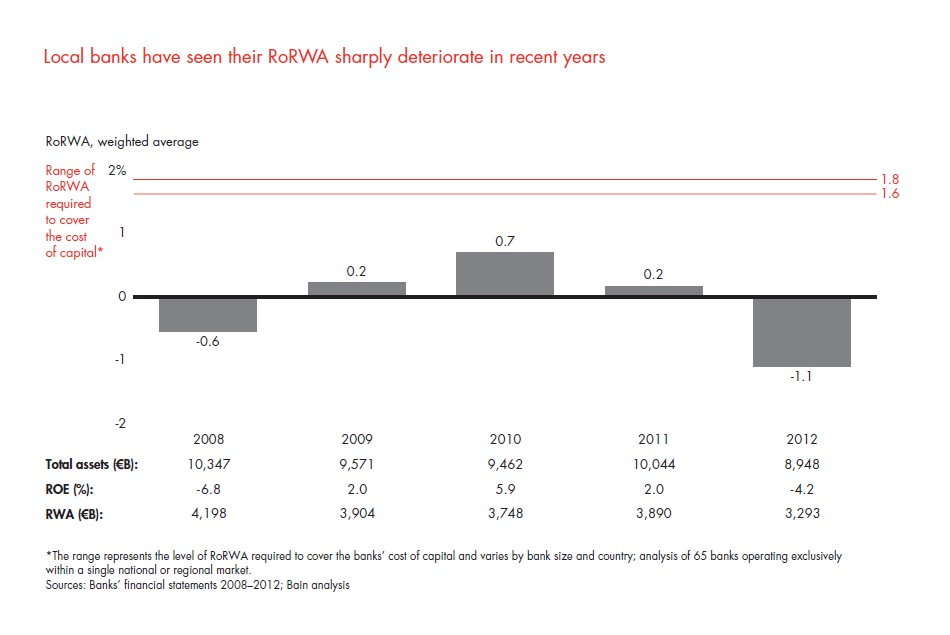
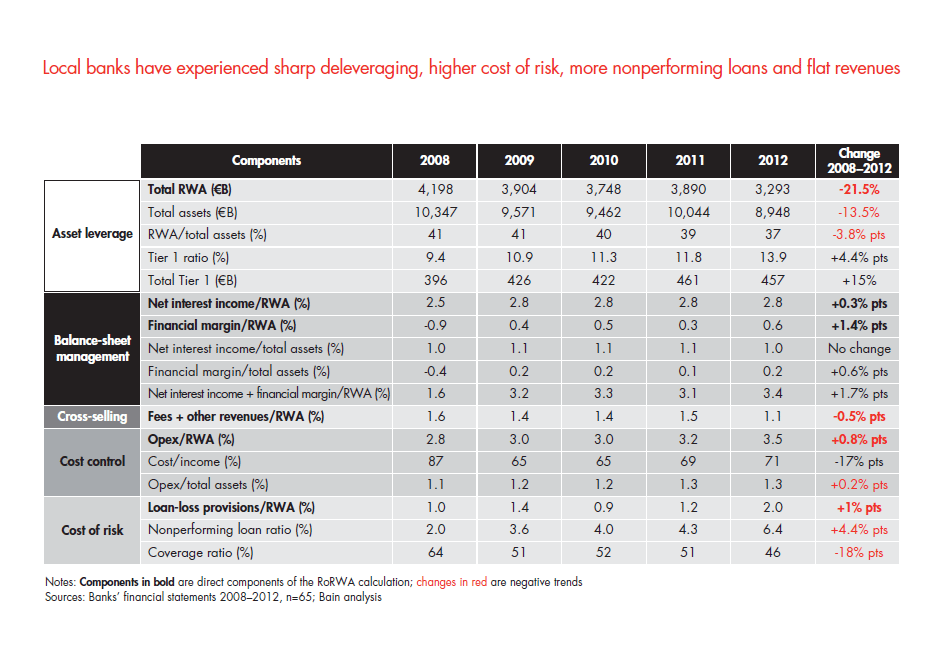
Local banks in core Europe struggled, weighed down by nonperforming loans and flat revenues. Their RoRWAs were negative in both 2008 and 2012 and did not come close to covering their cost of capital.
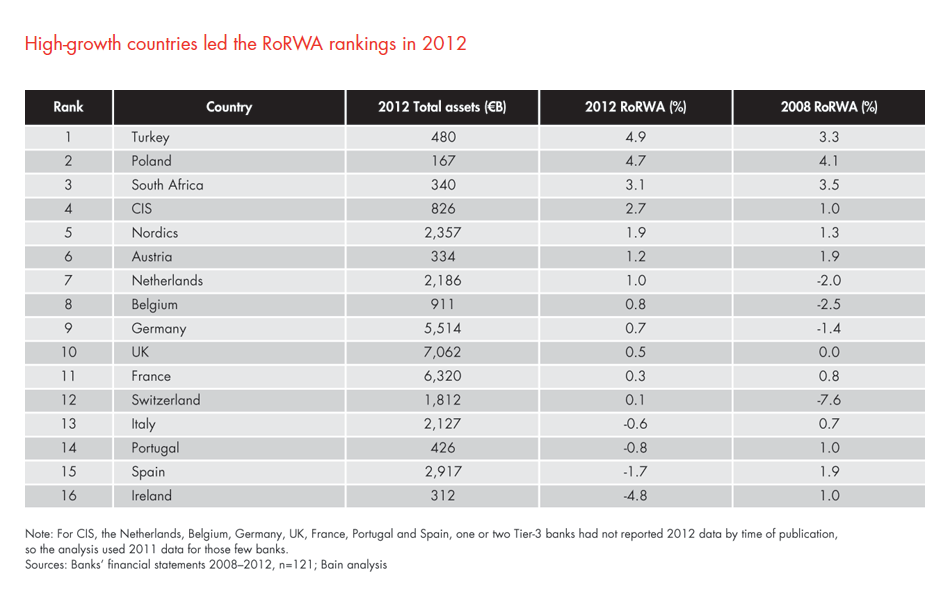
Turning to country differences, the four high-growth countries on the fringe of Europe, the Middle East and Africa have the wind at their backs. Turkey ranked first in RoRWA for 2012, and it has jockeyed for top billing with Poland and South Africa over the past five years.
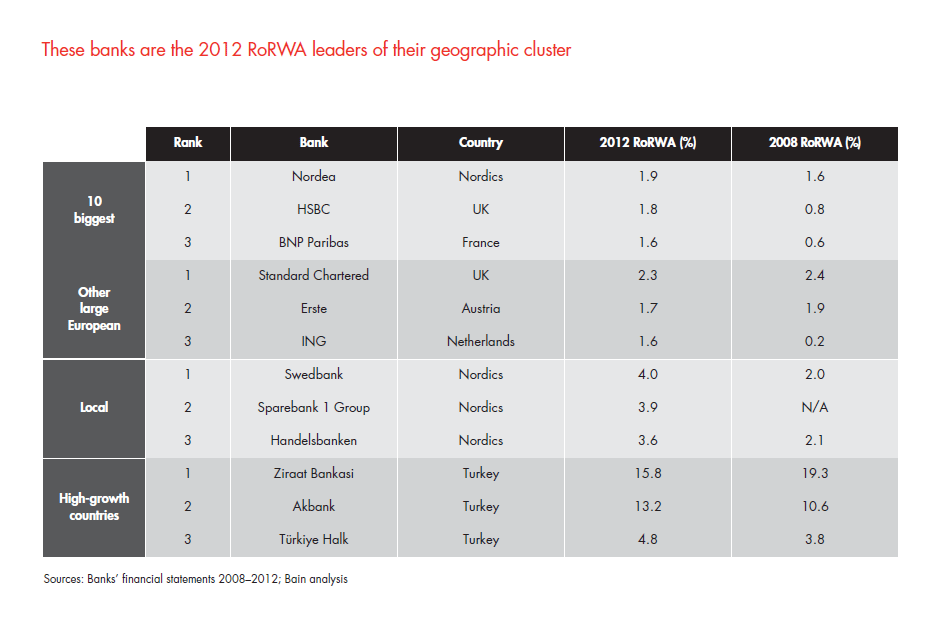
Countries in core Europe’s northern tier occupied the middle ranks of the national league tables, with the Nordic and Austrian banks showing the most consistent performance since 2008. Dutch, Belgian and German banks have been on an upswing since the financial crisis hit. UK and French banks have been treading water, although Standard Chartered Bank and HSBC in the UK and BNP Paribas in France all ranked among the top 15 banks in core European countries.
Not surprisingly, banks in Italy, Portugal, Spain and Ireland—all feeling the sting of the sovereign debt crisis and deep economic recessions—have turned in the weakest RoRWAs.
Illuminating the road ahead
While most European banks are moving in the right direction to meet Basel III requirements, they could benefit from using RoRWA to better anticipate and navigate the road ruts that lie ahead.
Devising sustainable business models and bringing profitability back to attractive levels—meaning above the cost of capital—will not be easy. In the current market environment, we expect continued pressure on interest as well as on fee income. For most banks, managing the cost of risk will also be a challenge, as stagnant economies tend to drive up this cost.
Getting a better grip on operating cost, therefore, will lead the agenda for most banks. Structural costs can be addressed using several means: adopting new digital technologies and modernizing IT platforms, optimizing processes from end to end through such approaches as outsourcing and offshoring, and expanding global procurement initiatives.
Local banks in core European countries face perhaps the stiffest challenges, as restructuring will continue in the face of stagnant economies and a higher cost of risk. We expect to see further consolidation in this group. For the surviving institutions, higher performance will hinge on better management of the deleveraging process, containment of the cost of raising new capital and more accurate factoring of risk into their price structures.
High-growth countries still offer the most promising opportunities for the 10 biggest and other large pan-European players that aim to diversify their portfolios. The best performers will be those banks that keep tight control of the reins as they ride these booming economies.
Regardless of a bank’s home country, asset size or loan portfolio, RoRWA analysis illuminates the ruts and holes on the road ahead. With just a few metrics, senior managers can understand how their bank compares with its peers and which factors to work on in order to create value—a highly pragmatic means of improving the bank’s risk-return profile.
1. Five years of RoRWA in Europe: A bumpy landscape
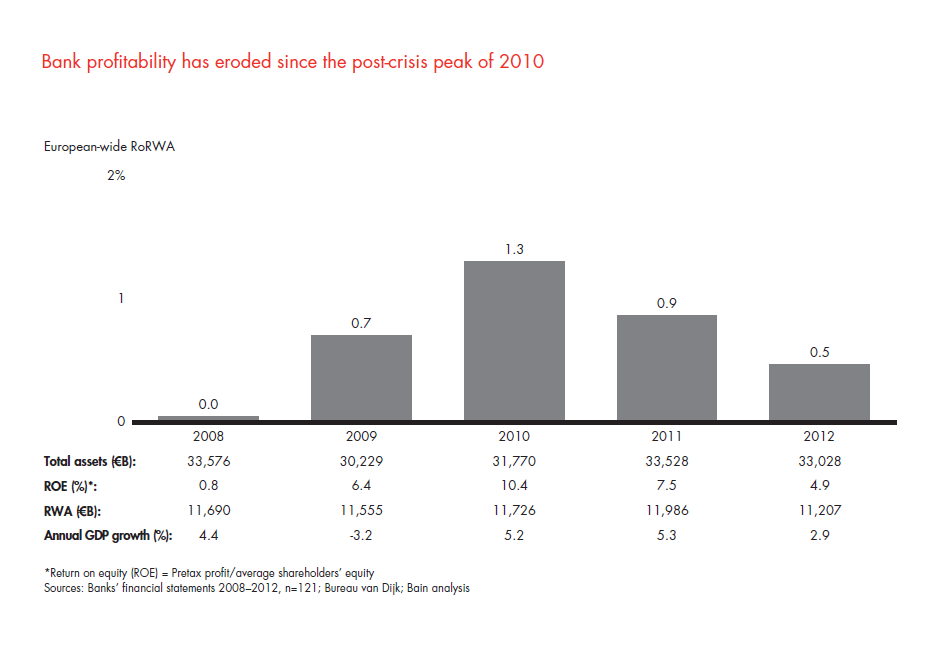
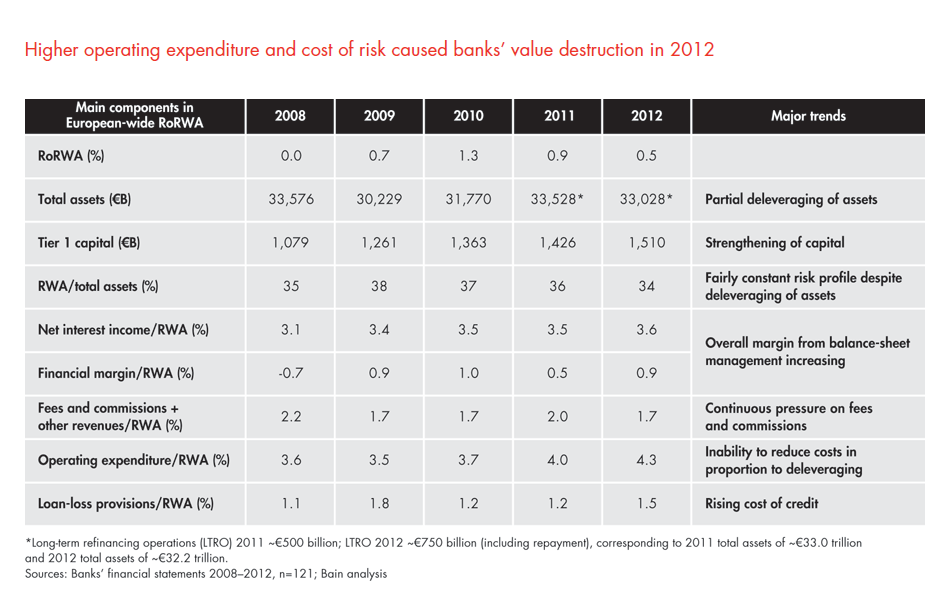
- European banks’ return on risk recovered from the 2008 financial crisis, peaking in 2010 with an average 1.3% RoRWA. Since then, however, RoRWA has declined to 0.5% on average. This translates to a level of profitability below the cost of capital, which means banks are destroying value.
- Looking beneath the average, European banks’ RoRWAs correlated closely with economic growth over the past five years. Banks in countries that saw strong GDP growth, like Turkey, posted dramatically higher performance and growth in both assets and risk-weighted assets (RWA) than those in the core European countries.
- Banks in high-growth countries also consistently exceeded their cost of capital, whereas banks in core Europe have not covered their cost of capital, only coming close to that bar in 2010. Core Europe experienced a major amount of deleveraging despite extraordinary initiatives such as the European Central Bank’s long-term refinancing operation (LTRO).
- The quality of management plays a major role in individual bank performance, particularly in the slow-growth countries. There was a wide range of RoRWAs among banks in those markets for each of the five years.
- In 2012, the biggest factors determining significant value destruction were cost of risk, as loan-loss provisions rose, and increased operating cost, which trended up as a percent of risk-weighted assets. More active management of the balance sheet helped raise revenues, but fees and commissions progressively declined.
- The larger the bank, the better its performance, on average. The 10 biggest banks used their improvements in financial margins and lower risk costs to come close to earning their cost of capital.
- Other large regional banks managed to keep operating costs lower than the 10 biggest, but still fell well short of their capital hurdle. Smaller local banks fared the worst, posting a negative RoRWA in 2012. They have been forced to undertake a major deleveraging of their balance sheets.


2. Country and cluster league tables
- Countries with strong economic growth led the 2012 RoRWA rankings. Turkey took pole position with a 4.9% RoRWA. In core Europe, the Nordic countries posed the strongest performance with a 1.9% RoRWA, followed by Austria and the Netherlands. The largest economies of Germany, the UK and France trailed behind.
- Banks in Italy, Portugal, Spain and Ireland, which have been mired in the sovereign debt crisis and deep economic recessions, turned in the weakest RoRWA performances.
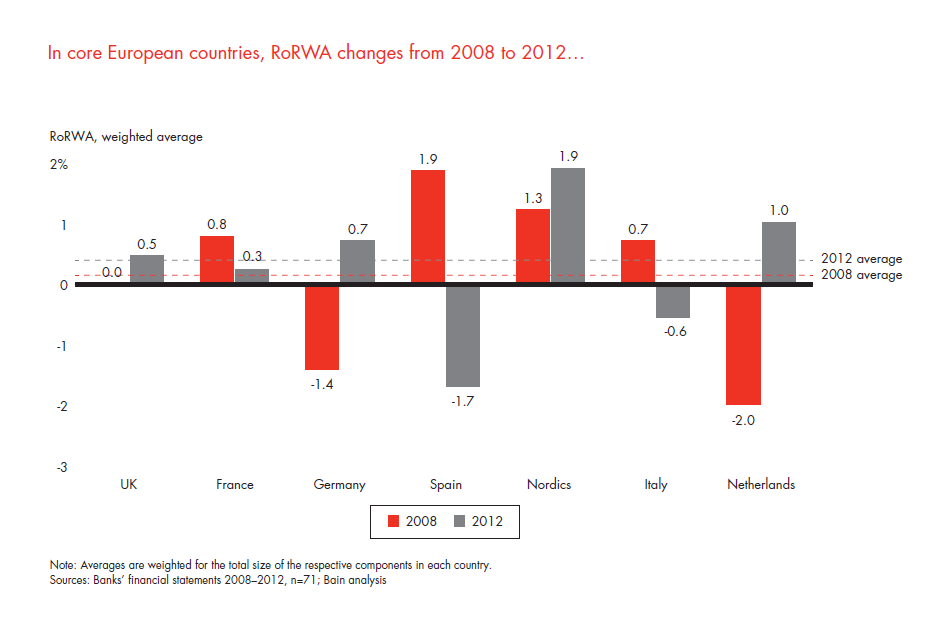
- Among the core European countries, changes in RoRWAs from 2008 to 2012 stemmed mainly from changes in three components: net interest income, financial margin and loan-loss provisions.
- Countries that posted large positive changes— including Germany, the Netherlands, the Nordic countries and the UK—benefited from higher financial margins, more control of operating expenditure and lower cost of risk. Countries with large drops in RoRWAs were hurt by inflexible cost structures, which prevented them from shrinking their production costs, and a cost of risk that was almost double the average.
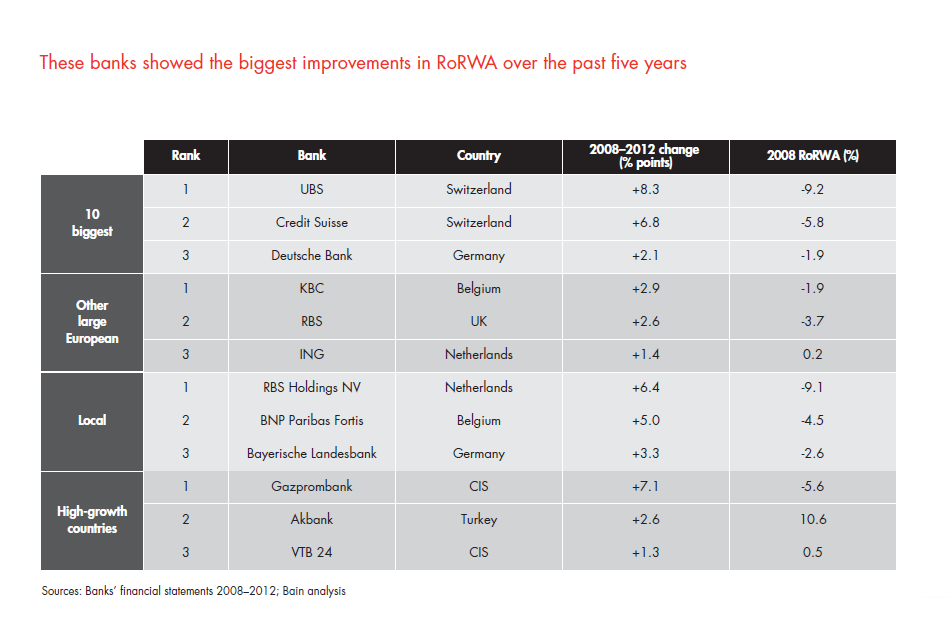
- Northern Europe dominated the league tables, whether one looks at the 2012 leaders or the most improved banks. For example, the RoRWA leaders among both local and the 10 biggest banks included banks in the Nordic countries, followed by those in the UK, France, Austria and the Netherlands.
- In the most improved group, banks in Switzerland, the Netherlands and Germany made a strong showing.
- In high-growth countries, Turkey and the Commonwealth of Independent States (CIS) took leading positions for the most improved banks and Turkey for the 2012 leaders.

3. Strategic perspectives and implications for management
- Europe’s environment continues to be volatile, and investors are seeking better information about a bank’s stability, asset quality and key factors that generate value. RoRWA plays a useful role here by focusing on the balance sheet—which enables comparison between a bank and its peers—and by identifying the factors influencing bank performance.
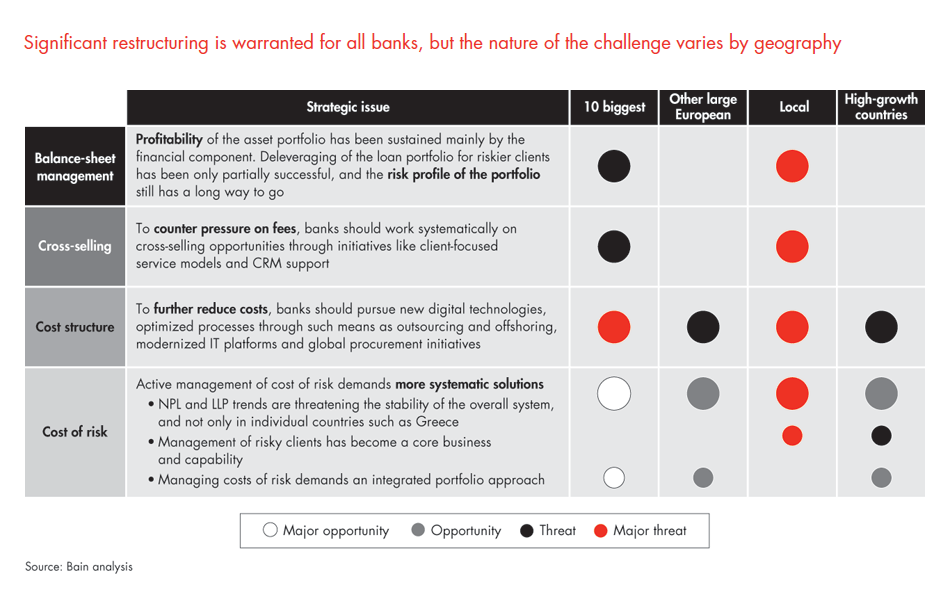
- Banks still need to address challenges along each dimension of RoRWA, in order to lift their profitability levels above the cost of capital. In recent years, the profitability of lending assets has been sustained mainly by the financial components, including a boost from LTRO. To raise asset profitability, banks will have to better manage their capital allocations and risk profiles.
- The pressure on fee income will continue. To offset that trend, banks should turn to their close client relationships for new sources of revenues.
- Lowering operating costs is the dimension that warrants management’s attention at any bank, regardless of size or location. Initiatives that have the greatest potential for tackling structural costs include adopting digital technologies and modernizing IT platforms; optimizing processes from end to end through outsourcing, offshoring and other means; and expanding global procurement. Such initiatives are essential for survival in an industry going through discontinuous change.
- Deleveraging the loan portfolio for riskier clients is a pressing issue, which still poses significant threats for local banks. In countries with a higher cost of risk and stagnant or negative GDP growth rates, local banks may face further painful restructuring.
- Astute management of the cost of risk, including taking a portfolio perspective, offers opportunities for most banks—in part to meet the new requirements of Basel III and reassure rating agencies.
- Further consolidation of the local and other large banks over the coming years will likely benefit the 10 biggest banks and those in high-growth countries. These high-growth countries offer the greatest opportunities for RoRWA growth for large and pan-European players looking to diversify their portfolios.
For a list of banks analyzed, by country and assest, see the full PDF
Walter Sinn is a Bain & Company partner based in the firm’s Frankfurt office. Rocco D’Acunto is a partner based in Bain’s Milan office. Andrea Oldrini is a manager based in Milan. They are all members of Bain’s European Financial Services practice.
First published in 7월 2013