

Brief

At a Glance
- As procedure volumes move from large acute care settings to smaller, highly fragmented ambulatory care settings, medtech companies’ traditional sales strategies are no longer fit for purpose.
- Recognizing buyers’ increasing interest in virtual engagement, some medtech leaders are using digital capabilities and inside sales teams to develop hybrid sales models.
- By bringing together sales, marketing, and service teams to pilot, test, and learn, leading medtech companies will not only evolve how, but what, they sell to win this growing segment.
Medtech sales organizations’ go-to-market models have been cemented in place for decades. Since the model worked well, few revisited processes, questioned decisions, or evolved their approach.
That wasn’t a problem, until now. The movement of procedure volumes from large, traditional acute care settings to smaller, highly fragmented ambulatory care settings is gaining momentum (see Figure 1). Outpatient visits in some specialties, like radiation therapy, have rapidly ramped up. For other procedures, like medical imaging and endovascular, the shift has started slowly but is poised to expand in the next five years.
Figure 1
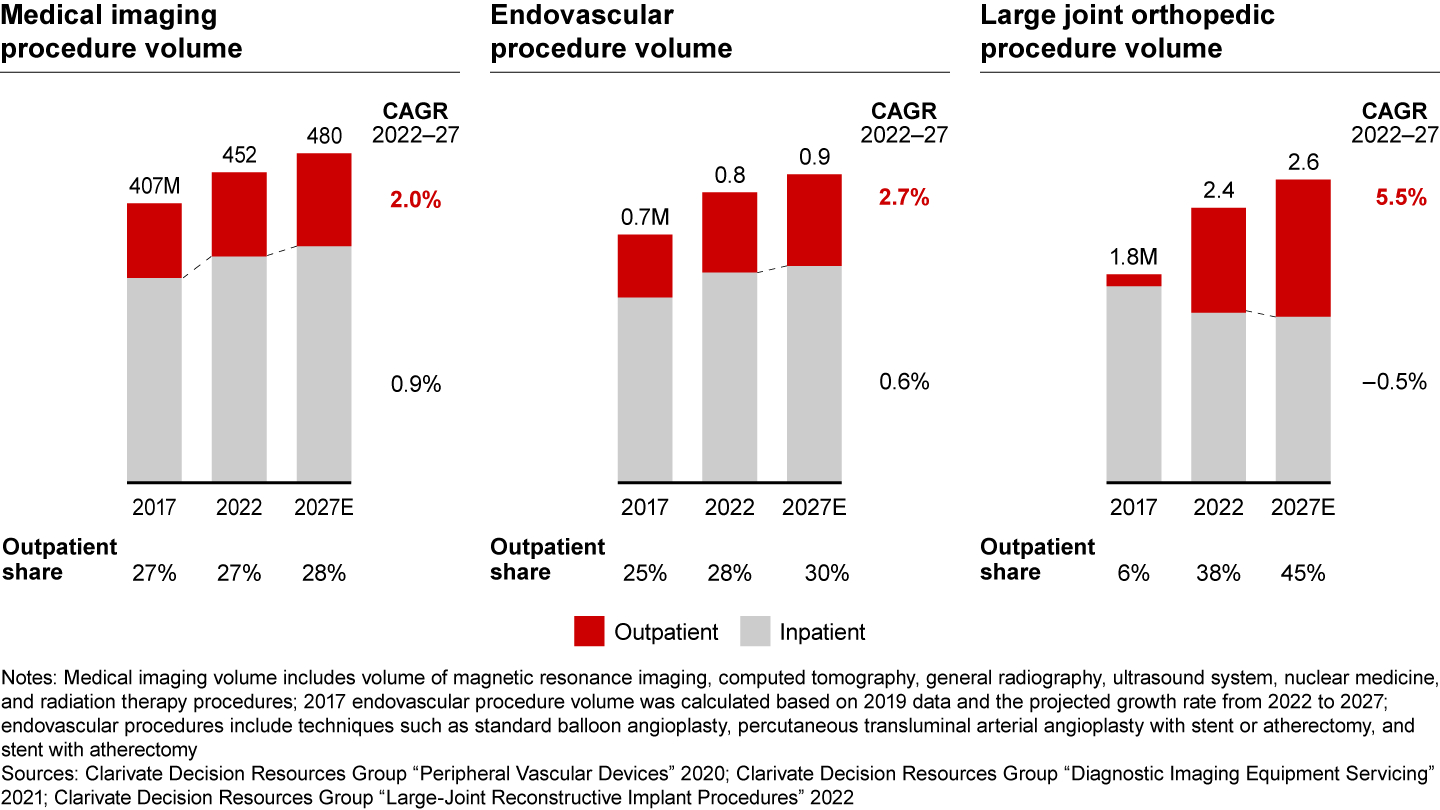

Covid-19 certainly accelerated a growing trend. But lower operating costs, favorable reimbursement changes, a streamlined patient experience, improved clinical outcomes through technological innovation, and physicians’ increasing desire for autonomy have been quietly propelling the shift for some time now.
In this changing environment, medtech companies are finding that the one-size-fits-all sales model they’ve perfected for large hospital systems is no longer fit for purpose. Ambulatory care sites require a much more nuanced and targeted approach. Medtech companies will have to evolve not only how, but eventually what, they sell.
The stakes are as high as ever. Amid languishing economic uncertainty, medtech sales leaders feel the pressure building to raise return on investment (ROI) and bring down overall cost to serve. Stakeholders are calling for market outperformance through lower-risk growth and boosted sales productivity. Some industry leaders are also keenly aware of the rare opportunity to launch a new go-to-market model ahead of the curve, win the ambulatory care segment, and gain share.
These companies are embracing change, by building a drastically different skill set and operating model than they’ve relied on in the past, complete with inside sales and digital marketing teams, test-and-learn capabilities, and integrated feedback loops. With a more flexible, hybrid go-to-market model, these companies are meeting the needs of the growing ambulatory care segment and securing their future in an evolving landscape.
Why one-size-fits-all no longer works
Ambulatory care lends itself to a starkly different selling environment. First, there’s size: With more than 25,000 sites in the US, the market has five times the number of call points than that of acute care. These sites have much lower procedure volumes and higher geographic distribution relative to an integrated delivery network or hospital system.
As a result, ambulatory care sites generally have lower revenue potential per site, smaller tickets, newer call points, and faster sales velocity. Buyers place a much stronger emphasis on price and value, and a much lower emphasis on advanced technical features, compared with acute care sites.
Comprising hospital outpatient departments, free-standing imaging centers, ambulatory surgery centers, office-based labs, urgent care centers, independent physician offices, and retail clinics, ambulatory care sites are highly diversified. Each has its own ownership model, key decision makers, product and service needs, and, thus, unique purchasing criteria. In some segments, like orthopedics, medtech reps will be able to lean on their strong existing relationships with surgeons. But in other cases, the face of the customer has changed: Whereas many reps were once accustomed to dealing with hospitals’ professionalized procurement departments, they are now essentially selling to thousands of small business owners.
With this highly variable customer segment, the traditional emphasis on feet-on-the-street, generic marketing messages and siloed sales and marketing organizations won’t cut it—especially not when growth is slowing and costs are climbing amid a heightened risk of recession.
Perhaps the most critical issue that medtech companies face is the need for increased coordination between sales, marketing, and services. Coordination is the foundation of an effective go-to-market model, particularly when catering to ambulatory care buyers.
Today, marketing involvement is often isolated at the beginning of the buyer journey. Product-centric content is rarely tailored to address buyer needs. That’s a major issue with a broad, heterogeneous customer segment, as efforts to build awareness and education can fall flat.
When it comes to sales, most medtech companies still rely heavily on field teams. But this approach is far too costly for this fragmented and widely dispersed segment. And as ambulatory care buyers grow their procedure volumes, few field teams have found their footing. Many are flying blind, without high-quality prospect databases and lead-generation engines for this key cohort. There is little to no institutionalization of best sales practices for ambulatory care customers, and few reps feel confident selling holistic business solutions.
Like sales, services are also primarily configured for larger, traditional care sites. Few companies have tapped into remote services, leading to above-average cost to serve and missed opportunities for self-service. And field sales and services teams often lack account coordination, overlooking chances to upsell.
Learning and addressing the many nuances of ambulatory care buyers while improving coordination across functions is no simple feat. But given the large—and growing—opportunity, medtech companies can’t afford to ignore those distinctions and cling to old ways of working.
Building a flexible, fit-for-purpose model
The good news? Bain research shows that physicians, administrators, and other ambulatory care buyers are increasingly open to virtual engagement with sales reps. In fact, 50% of physicians now say they prefer all or mostly virtual engagement, compared with just 20% pre-pandemic. And 80% of administrators say the same, up from 33% before Covid-19.
Some leading companies are hearing customers and breaking the mold with new hybrid selling models (see Figure 2). They are combining digital outreach and marketing, inside sales teams, and self-service tools with field teams to extend their reach and accelerate the discovery process for potential buyers.
Figure 2
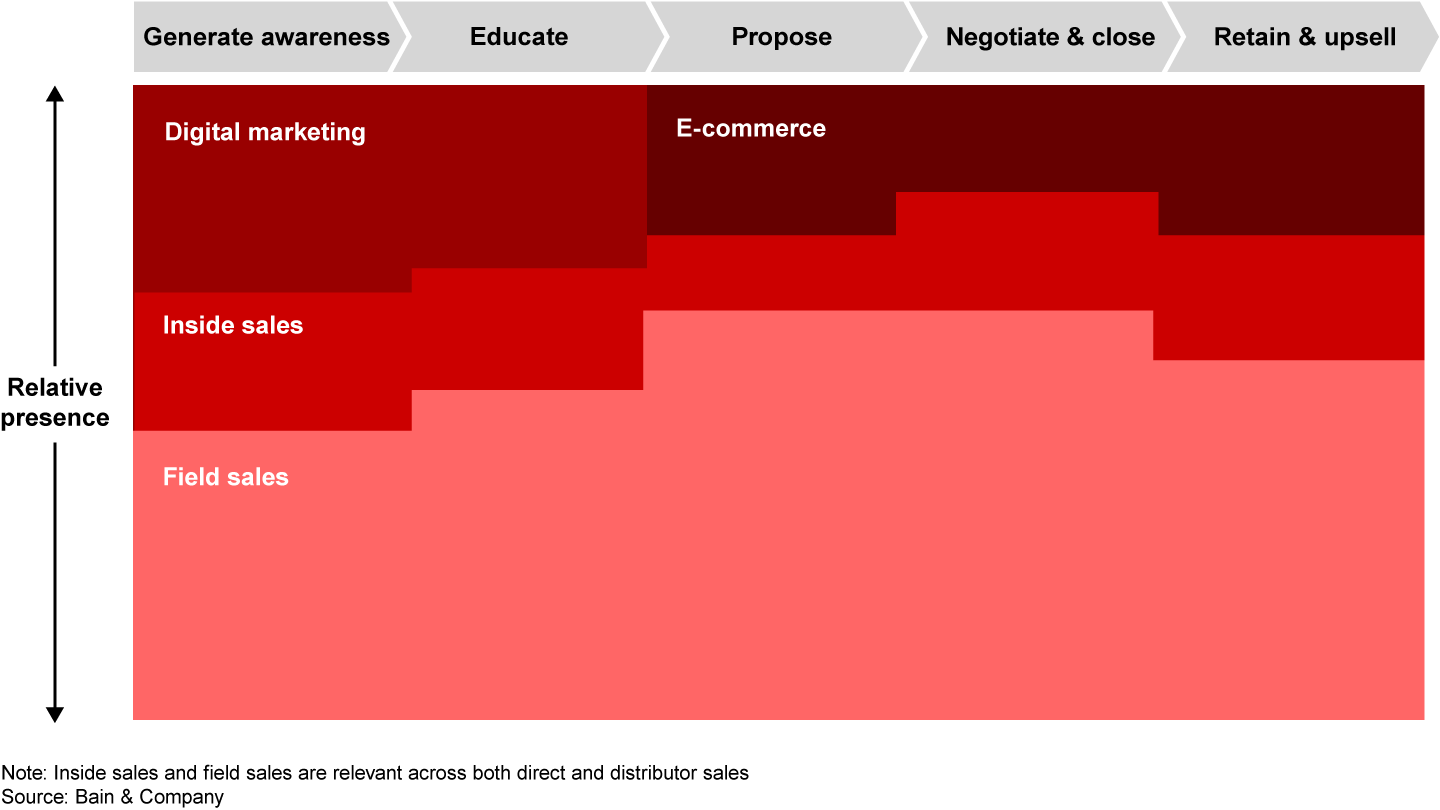

Under the hybrid model, digital marketing teams grow awareness and generate marketing-qualified leads (MQLs) with business solution-oriented, not product-oriented, content. That content is served up throughout the buyer journey, at the right times, to stay top of mind and keep buyers engaged, boosting retention, upselling, and cross-selling. These companies also rely on e-commerce capabilities. They understand that in addition to in-person meetings, buyers appreciate the convenience of self-serve and on-demand ways to research and purchase medical products. And this increased reliance on digital and virtual touchpoints doesn’t just satisfy that customer need—it also significantly lowers the costs of sales.
The introduction of an inside sales team is another key component of a winning flexible, hybrid model. Inside sales reps source leads, educate buyers on opportunities and solutions through established trust, advance MQLs into sales-qualified leads—and even close deals when virtual engagement is sufficient.
Inside sales teams don’t replace field sales reps. Instead, they build awareness and trust, provide a steady flow of qualified leads, deepen buyer relationships, and capture the key insights needed to negotiate proposals. These upfront digital activities reduce the burden on in-person field reps, ultimately boosting their productivity, improving their return on investment, and reducing costs.
Finally, when it comes to services, some industry leaders are already moving from one-size-fits-all offerings to fit-for-purpose packages. They understand that ambulatory care customers need more vendor support for routine maintenance, since they rarely have the resources for in-house teams like large hospital systems. Leading companies are also prioritizing remote service offerings to lower the cost of maintenance across geographically scattered locations.
A growth flywheel
A flexible hybrid selling model cannot succeed without complete coordination across sales, marketing, and services. As they build hybrid selling engines, medtech leaders break down old silos and take a cross-functional approach (see Figure 3). These companies stand up “win rooms” or “learning labs” that bring together key decision makers across all three functions to perfect messages, content, solutions, and offerings for ambulatory care customers.
Figure 3
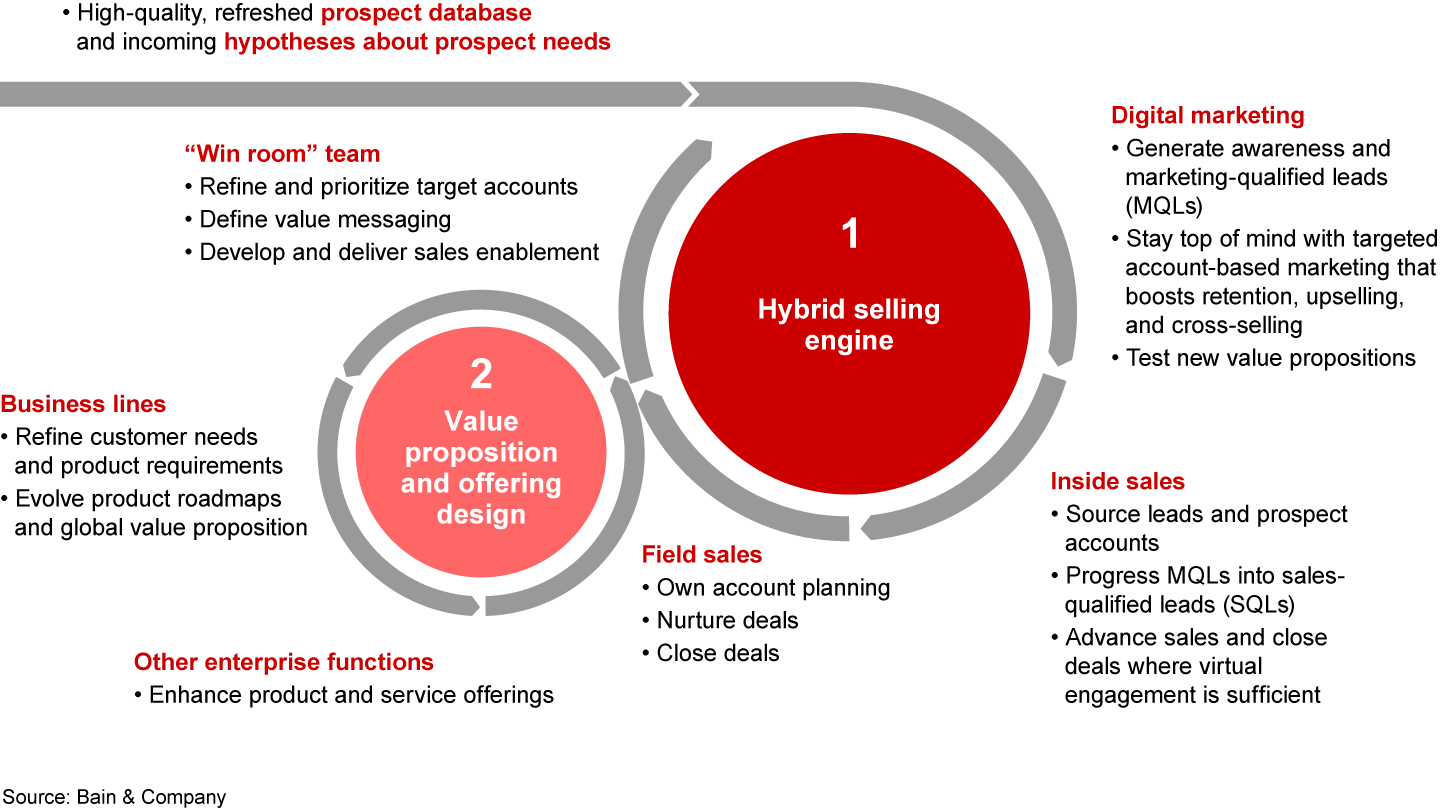

Accelerated learning will be one of the most powerful sources of competitive advantage as the landscape evolves, bringing medtech companies up to speed on this relatively new, highly diversified customer segment. Future industry leaders are starting with systematic digital marketing experiments with short feedback loops to quickly test media and messaging. As they test and learn, marketers home in on buyer preferences, refining messages and offerings. When executed well, they build up a trove of data and a deep understanding of customers across various ambulatory care settings. Their discoveries flow through to the inside sales reps, field sales, and product management teams, arming each with the information they need to succeed.
Testing and sharing insights with tight feedback loops is the fastest way to learn buyers’ hearts and minds. It ensures consistent, relevant messaging throughout the buyer journey and targets customers in a more effective, cost-efficient way. But it’s easier said than done. The best cross-functional teams are starting small with pilots.
Eventually, experienced companies will pick up the pace and scale their approach, using cross-functional learning loops to enrich marketing and communications, support sales negotiations, improve interactions between functions, and more. For example, feedback loops between inside sales reps and field services can determine best practices to optimize field teams’ time and accelerate sales. Similarly, ensuring a steady flow of information between inside sales reps, account executives, and services teams can enable more proactive upselling.
Ultimately, the marketing-sales feedback loop informs the company’s longer-term value proposition and offering design. With a nuanced view of the customer, companies can enhance product and service offerings, address changing customer needs, refine product requirements, and evolve product roadmaps. A company might invest in more connected equipment for remote servicing to meet the needs of small sites without in-house tech teams. Or given that many ambulatory care sites lack space for in-room surgical support, they may focus on smaller, more mobile surgical robots.
The hybrid selling engine launches a growth flywheel, guaranteeing that everything from the messaging to the product feels relevant to ambulatory care buyers. What’s more, as the cross-functional teams uncover best practices, they can apply lessons learned to serving inpatient acute care facilities as well, improving productivity throughout the business.
Jump-starting a hybrid selling engine
Industry leaders are already reaping the rewards of overhauling their go-to-market approach. Take one global medtech company that had fallen into a laggard position. As it lost market share and grappled with suboptimal operating costs, stakeholders intensified pressure and growth targets became increasingly ambitious.
A consensus-based decision-making style was the root of the company’s sluggishness, preventing it from keeping pace with fast-changing customer expectations and competitor moves. Marketing underutilized its digital spending and lacked strong test-and-learn capabilities. Field teams commanded sales, as leaders held on to the misconception that inside sales wouldn’t be effective for their organization.
But within three to four months, executives had jump-started the sales and marketing function. With an integrated demand generation approach, they brought both sales and marketing teams together, instilling joint accountability for success.
The cross-functional team started by focusing on critical conversion points in the buying journey. They assessed their test-and-learn capabilities against best-in-class examples to pinpoint gaps and map a path to improvement. These efforts started with email and paid search tests, where the team learned to optimize messaging for future digital campaigns.
Leaders also integrated marketing and sales motions throughout the buyer journey. It now begins with marketing-led nurturing, scoring, and qualification. From there, marketing and sales work together on the routing and handover. After accepting the account, the sales team leads the conversion, purchase, retention, and expansion motions.
Finally, the company established an inside sales organization from the ground up, complete with a charter, clearly defined roles, a target headcount, career pathway and talent strategy, and scaling plan.
None of this would have been possible without the utmost commitment from the executive leadership team. Leaders had to engineer behavior change to make space for the inside sales organization and launch hybrid selling. But the challenge was well worth it: Another large global company that made the transition to hybrid has tripled sales in its target segment in just four years and increased its operating margin by 300 basis points.
The accelerated trajectory of ambulatory care sites is expected to increase. It’s time to align resources, invest in new digital capabilities, and tear down silos. But with focus and determination, executives can seize the opportunity and fire up an engine of growth in just a few months, readying the organization for the potential storm and ensuing market shifts ahead.
First published in 5월 2023